What Is the Silk Road: History, Goods, and Main Routes
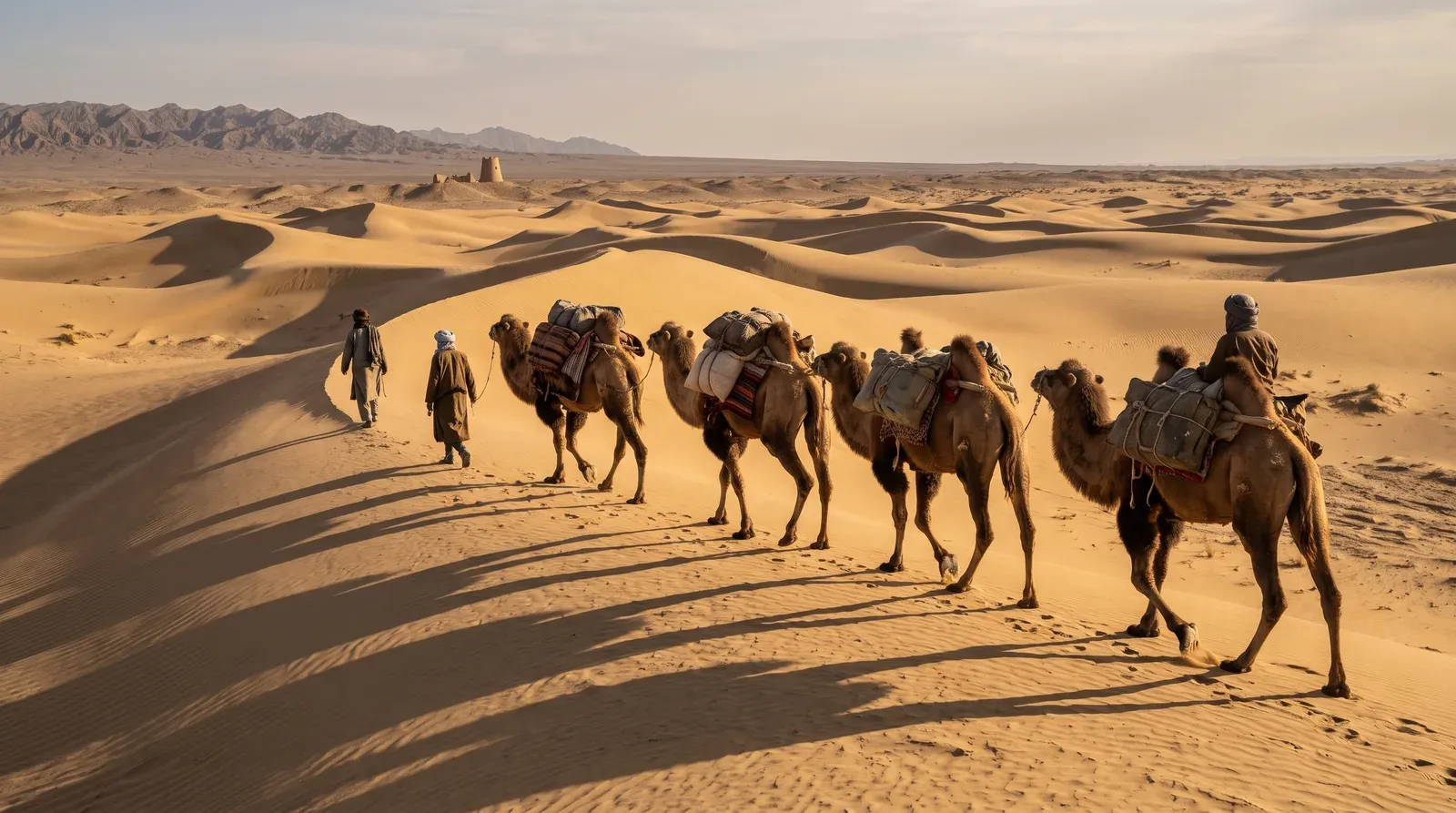
Historians define the Silk Road as a trans-Eurasian trade and cultural exchange network connecting ancient China with the Western world, spanning about 7,500 kilometers in a straight line and over 35,000 kilometers along specific routes. Across this network, China exported silk, tea, porcelain, lacquerware, and dyes, while importing fine horses, camels, woolen textiles, gold and silver vessels, and various crops from Central Asia and the West. Trade along the route operated mainly as a relay system, where goods passed through different middlemen across oases and market towns. Very few traders ever traveled the entire distance on their own.
How Did the Name Silk Road Originate?
The Silk Road was not a single unified name used by ancient nations. German geographer and geologist Ferdinand von Richthofen first coined the term in 1877. Ancient trade routes lacked a common title, so Richthofen named this complex network after silk, which was China's primary bulk export starting in the Han Dynasty.
About 300 years before official Silk Road trade opened, Darius I of the Persian Achaemenid Empire built the Persian Royal Road, running over 1,600 miles between Susa and Sardis. Sections of this ancient royal road were later incorporated directly into the western trade corridors of the Silk Road.
How Did Zhang Qian Open China's Route to Central Asia During the Han Dynasty?
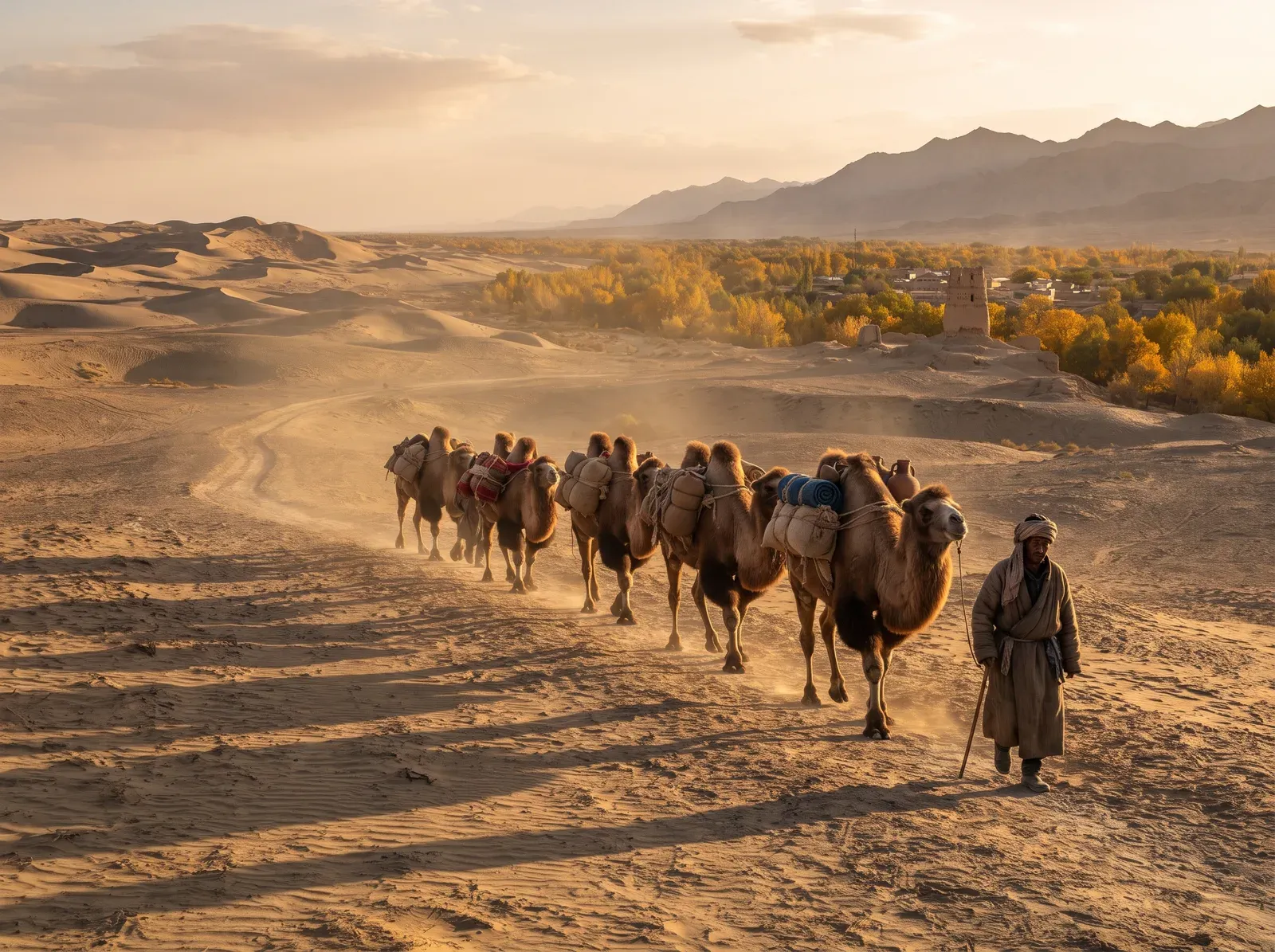
Official routes between China and Central Asia were formally opened by Zhang Qian during the Western Han Dynasty. Emperor Wu sent Zhang Qian on an embassy to the Western Regions between 139 and 138 BC to make contact with the Yuezhi. Captured and held for 13 years, Zhang Qian eventually escaped back to the Han court, later departing on a second diplomatic mission to the Western Regions in 119 BC.
Zhang Qian's diplomatic missions officially established early governmental routes connecting China with Central Asia. Historical records note that during his second journey in 119 BC, he brought alfalfa seeds back from Dayuan, which were initially used as forage for Han cavalry horses and the emperor's imperial mounts.
What Goods and Products Were Traded Along the Ancient Silk Road?
Traded items along the routes encompassed handicrafts, spices, metals, and living plant and animal species. Silk served as China's core export during the Han Dynasty. After reaching the Roman Empire in the 1st century BC, it became a prized luxury craze, prompting Roman authorities to pass edicts to curb runaway silk prices.
Beyond silk and brocade, ancient China sent bulk shipments of tea, porcelain, lacquerware, and dyes westward along the route. In technology, papermaking spread west along the Silk Road after its invention in China. Records indicate that it reached Samarkand in Central Asia around AD 700 before entering Europe through ports in Islamic Sicily and Spain.
Goods flowing into China from Central Asia and the West included woolen textiles, gold, silver, fine horses, camels, Egyptian glass bottles, frankincense and myrrh from Somalia, Indian sandalwood, and dates and pistachios from Persia. Over 50 cultivated crops grown in China today originated abroad. Introduced through overland and maritime routes during the Han and Tang dynasties, these were mainly fruits, vegetables, and cash crops, including grapes, alfalfa, pomegranates, fava beans, walnuts, coriander, garlic, and cucumbers.
| Direction of Trade | Category | Specific Goods or Technology | Historical Context and Records |
|---|---|---|---|
| Chinese Exports | Core Textiles | Silk, brocade | Core Han Dynasty exports; reached the Roman Empire in the 1st century BC, prompting price control edicts |
| Chinese Exports | Bulk Crafts and Commodities | Tea, porcelain, lacquerware, dyes | Major commodities shipped westward from ancient China along the route |
| Chinese Exports | Manufacturing Technology | Papermaking | Reached Samarkand around AD 700, then entered Europe via Islamic Sicily and Spanish ports |
| Western and Central Asian Imports | Livestock and Textiles | Fine horses, camels, woolen textiles | Commodities brought into China from Central Asia and the West |
| Western and Central Asian Imports | Precious Metals and Crafts | Gold, silver, Egyptian glass bottles | Hard currency and vessels imported into China along the trade routes |
| Western and Central Asian Imports | Spices and Medicinal Herbs | Somali frankincense and myrrh, Indian sandalwood | Significant aromatics brought into China via Central Asia and the West |
| Western and Central Asian Imports | Dried Fruits and Edibles | Persian dates, pistachios | Foodstuffs imported from the Persian region |
| Western and Central Asian Imports | Fruits, Vegetables, and Cash Crops | Grapes, alfalfa, pomegranates, fava beans, walnuts, coriander, garlic, cucumbers | Introduced during the Han and Tang dynasties; over 50 current Chinese crops originate abroad |
How Was the Ancient Silk Road Map Divided by Major Routes?
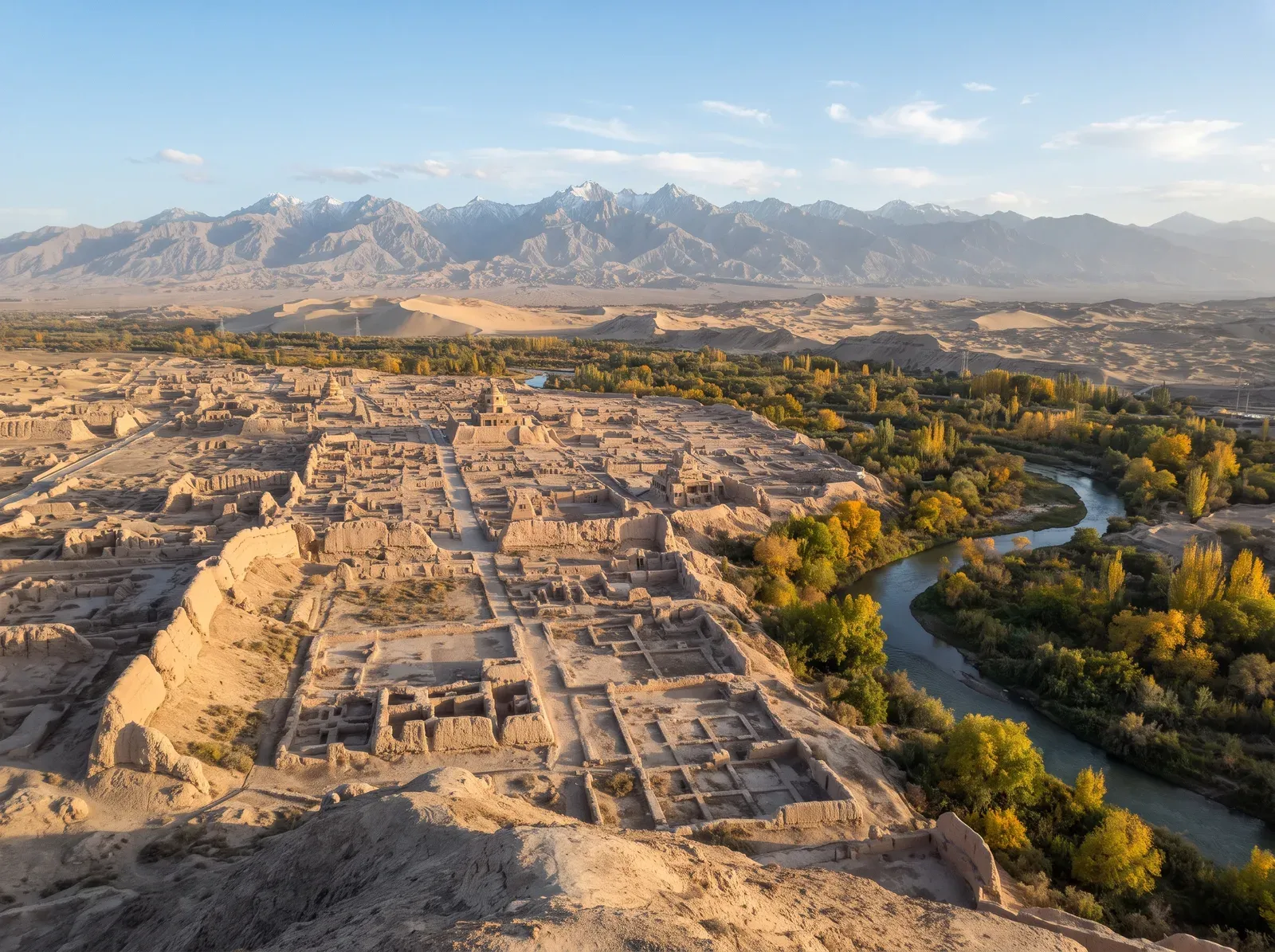
The Silk Road was not a single path, but a trade network comprising multiple overland corridors and maritime sea routes. The Chang'an-Tianshan Corridor recognized by UNESCO spans about 5,000 kilometers. Starting from the Han and Tang capitals of Chang'an and Luoyang, it passed through the Hexi Corridor and Qilian Mountains to Yumenguan near Dunhuang, then continued along the northern and southern flanks of the Tianshan Mountains into Central Asia's Semirechye region, including the Ili, Chu, and Talas valleys.
After exiting the Hexi Corridor, the overland Silk Road split to skirt the Taklamakan Desert and Lop Nur. The northern route followed the northern edge of the desert or traversed Turpan along the northern foothills of the Tianshan Mountains to converge at Kashgar, before crossing mountain passes into Central Asian cities. The southern route crossed the Karakoram Mountains (today's Karakoram Highway and Khunjerab Pass connecting China and Pakistan), traversed the Pamir Plateau and Afghanistan, and cut westward across Iran and Mesopotamia to reach the Levant and the Mediterranean.
Settlements and commerce along the route relied on hydraulic engineering. In the arid Turpan Basin, communities depended on the underground karez canal system, while around Suoyang City in the Hexi Corridor, roughly 90 kilometers of open irrigation canals still survive. The Maritime Silk Road, also called the Spice Route, began taking shape in the 2nd century BC. By the 8th century, regular transoceanic shipping operated between Arab lands and China, carrying spices, ceramics, and textiles across the sea.
What Cultural Exchanges and Famous Travelers Defined the Silk Road?
The Silk Road served as a vital artery for the intercontinental spread of world religions and productive technologies. From Kucha to Luoyang, extensive Buddhist grotto complexes lined the route from west to east, accompanied by historical traces of Zoroastrianism practiced by Sogdian merchants, Manichaeism, Nestorian Christianity, and Islam.
Several celebrated historical figures left detailed accounts of their journeys along the route. The Tang Dynasty monk Xuanzang traveled west along the Silk Road between 629 and 654 to seek Buddhist scriptures, recording his observations of the Western Regions after returning home. Venetian traveler Marco Polo reached the Yuan capital of Dadu along the overland route in 1275, spending 24 years traveling across Asia.
Silk production technology also moved westward along this path. Historical accounts record that around AD 550, monks who had mastered sericulture smuggled silkworm eggs to the Byzantine Empire, presenting them to Emperor Justinian I. Byzantium subsequently began cultivating mulberry trees to raise silkworms and produce its own silk.
Why Did the Silk Road Decline in the 15th Century and Revive in Modern Times?
The decline of the traditional overland Silk Road stemmed directly from shifting geopolitical power and trade routes. In 1453, the Ottoman Empire captured Constantinople, boycotting and heavily taxing overland trade. This prompted European nations to search for new maritime routes, launching the Age of Discovery and causing traditional overland corridors to fade.
In modern times, cross-border Silk Road corridors have become protected global heritage. UNESCO inscribed the Silk Roads: the Routes Network of Chang'an-Tianshan Corridor onto the World Heritage List in 2014, followed by the Zarafshan-Karakum Corridor in 2023.
Sources
Silk Road | Facts, History, & Map | Britannica
Silk Roads: the Routes Network of Chang'an-Tianshan Corridor - UNESCO World Heritage Centre
About the Silk Roads | UNESCO
Silk Road - Facts, History & Location | HISTORY
Silk Road - Wikipedia
ScienceNet: Crops Introduced via the Silk Road
China Digital Science and Technology Museum: Chinese Plants from the Western Regions
Sources verified on November 6, 2026.
FAQ
What was the Silk Road: was it a single paved highway?
The Silk Road was never a single paved road. It was a complex trade network across Eurasia with specific route segments totaling over 35,000 kilometers. After exiting the Hexi Corridor, the paths split to bypass the Taklamakan Desert, relying on water management projects like the Turpan karez channels and Suoyang City open canals to sustain oasis relay stations.
Did ancient traders lead camels across the entire Silk Road?
Almost no ancient merchant traveled the entire route alone. Commerce operated as a relay trade, with goods handed off across multiple oasis towns by intermediaries such as Sogdian merchants.
Which everyday Chinese crops entered the country along the Silk Road?
Over 50 cultivated crops grown in China today originated abroad. Major introductions during the Han and Tang dynasties included grapes, alfalfa, pomegranates, fava beans, walnuts, coriander, garlic, and cucumbers. Alfalfa was notably brought back from Dayuan by Zhang Qian in 119 BC.
How did Western nations acquire sericulture and silk-making techniques?
According to historical accounts, around AD 550, monks who learned silk production methods smuggled silkworm eggs to the Byzantine Empire and presented them to Emperor Justinian I. Byzantium then began raising silkworms on mulberry leaves to manufacture its own silk.