Sichuan Chinese Food Guide: Classic Dishes to Order
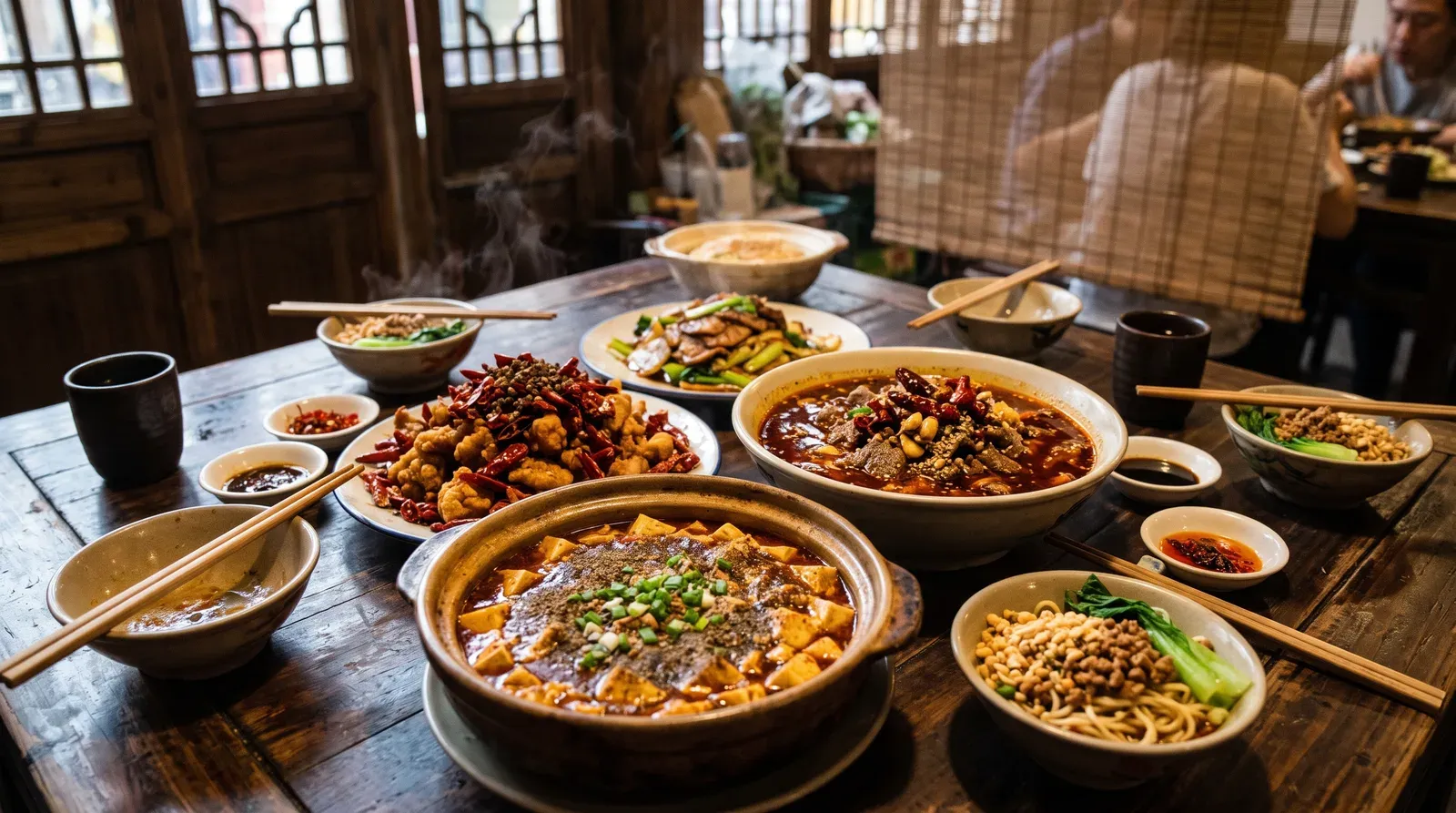
As of the first half of 2023, mainland China had 320,000 Sichuan cuisine restaurants, ranking first among all major regional culinary styles. Sichuan Chinese food is famous for its bold, numbing heat and features 24 classic compound flavor profiles, creating a distinct tradition where each dish has its own character. Classic dishes include Mapo tofu, twice-cooked pork, boiled beef, and Kung Pao chicken. Meals usually follow a family-style sharing approach, ordering one main dish per diner at the table.
| Item | Details |
|---|---|
| Core cuisine features | 24 classic compound flavor profiles with seven tastes and eight flavors, known for bold spicy and numbing aromas |
| Classic dishes | Mapo tofu, twice-cooked pork, boiled beef, Kung Pao chicken, Fuqi feipian (sliced beef and offal in chili oil) |
| Family-style ordering | Chinese restaurants generally order one main dish per person to share across the table |
| Spice level advice | Options include mild, medium, and extra spicy; first-time diners should choose mild |
| Cooling sides | Hot steamed rice, plenty of drinking water, or bingfen (ice jelly made from apple of Peru seeds) |
First Time Trying Sichuan Chinese Food: Which Classic Dishes to Order?
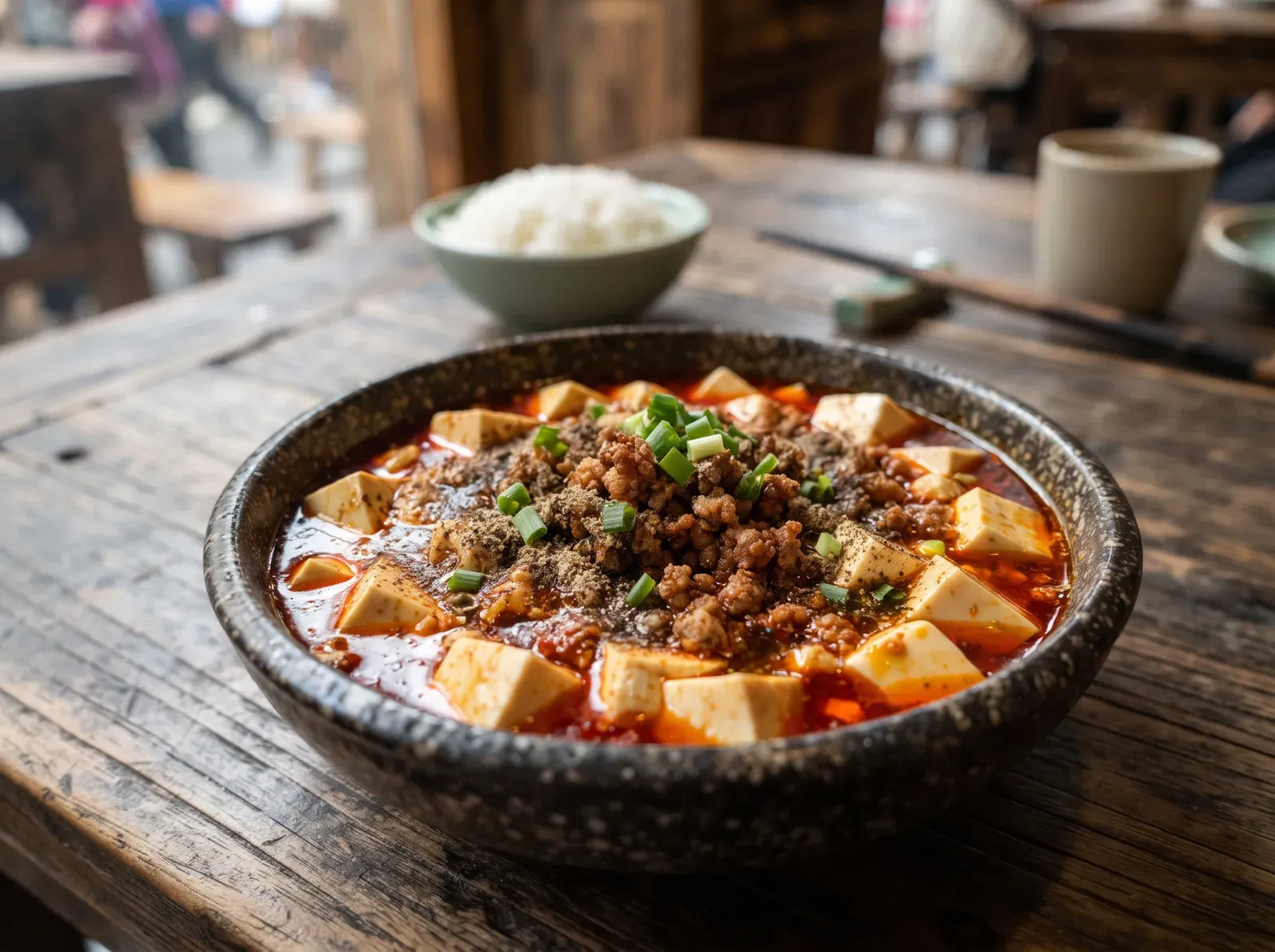
When trying the cuisine for the first time, hot dish choices to consider include Mapo tofu, twice-cooked pork, boiled beef, and Kung Pao chicken, while recommended cold dishes include Fuqi feipian and mouthwatering chicken. Mapo tofu originated during the Tongzhi era of the Qing dynasty at the Chen Xingsheng Restaurant near Wanfu Bridge north of Chengdu. It was nicknamed Chen Mapo tofu after the proprietor, whose face bore small pockmarks. The dish follows seven taste principles: numbing, spicy, piping hot, fresh, tender, aromatic, and crispy. Twice-cooked pork involves boiling a slab of pork belly until cooked, letting it cool, slicing it thin, and returning it to the wok to stir-fry over high heat with broad bean paste and garlic sprouts.
Boiled beef (shuizhu niurou) or boiled pork slices is far from plain boiled meat. Sliced meat is poached and placed over a bed of vegetables, covered with dried chili powder, ground Sichuan pepper, and minced garlic, and then doused with boiling oil to unleash intense numbing and spicy aromas. Kung Pao chicken takes its name from Ding Baozhen, a late Qing dynasty governor of Sichuan. Adapted from his favorite stir-fried diced chicken with peanuts, its flavor profile is scorched chili and lychee rather than heavy spice, emphasizing mild numbing heat, a gentle kick, and a sweet-and-sour finish. Fuqi feipian was created in 1930s Chengdu by the husband-and-wife team Guo Chaohua and Zhang Tianzheng. The character fei in the name originally meant scrap parts, referring to beef heart, tongue, and tripe rather than actual lungs.
Mouthwatering chicken features tender, poached chicken bathed in a sauce of chili oil, Sichuan pepper, scallions, ginger, garlic, and sesame seeds, offering a blend that is sweet with heat, fragrant through spice, and numbing at the finish. Geleshan spicy chicken (Laziji) is known for crispy, bone-in chicken bits buried beneath a small mountain of fried dried chilies and Sichuan peppercorns. Diners hunt for chicken pieces among the chilies, which are usually not eaten directly. According to the dining etiquette guide, restaurants across the region serve dishes on large platters for family-style sharing, usually with serving chopsticks and spoons provided.
| Dish | Category | Core Ingredients and Seasonings | Flavor Profile |
|---|---|---|---|
| Mapo tofu | Hot dish | Tofu, minced meat, broad bean paste, ground Sichuan pepper | Seven characteristics: numbing, spicy, piping hot, fresh, tender, aromatic, crispy |
| Twice-cooked pork | Hot dish | Thin pork belly slices, garlic sprouts, broad bean paste | Savory and fragrant, tender yet rich |
| Boiled beef | Hot dish | Sliced beef, vegetable base, chili powder, ground Sichuan pepper, minced garlic | Searing oil poured over top, delivering intense spicy and numbing aroma |
| Kung Pao chicken | Hot dish | Diced chicken, peanuts, dried chilies, Sichuan pepper | Scorched chili and lychee flavor, mildly spicy and numbing with sweet-and-sour undertones |
| Fuqi feipian | Cold dish | Beef offal such as heart, tongue, and tripe, chili oil sauce | Tender texture with aromatic, mildly spicy chili oil |
| Mouthwatering chicken | Cold dish | Cooked chicken, chili oil, Sichuan pepper, scallions, ginger, garlic, sesame | Sweet and spicy, aromatic and numbing |
Tip: Chinese restaurants generally follow a family-style dining tradition rather than serving individual plates. You usually order one main dish per diner to share, so aim for a balanced mix of hot and cold dishes alongside meats and vegetables on your first visit.
What Non-Spicy Dishes Can You Order for Kids or Older Travelers?
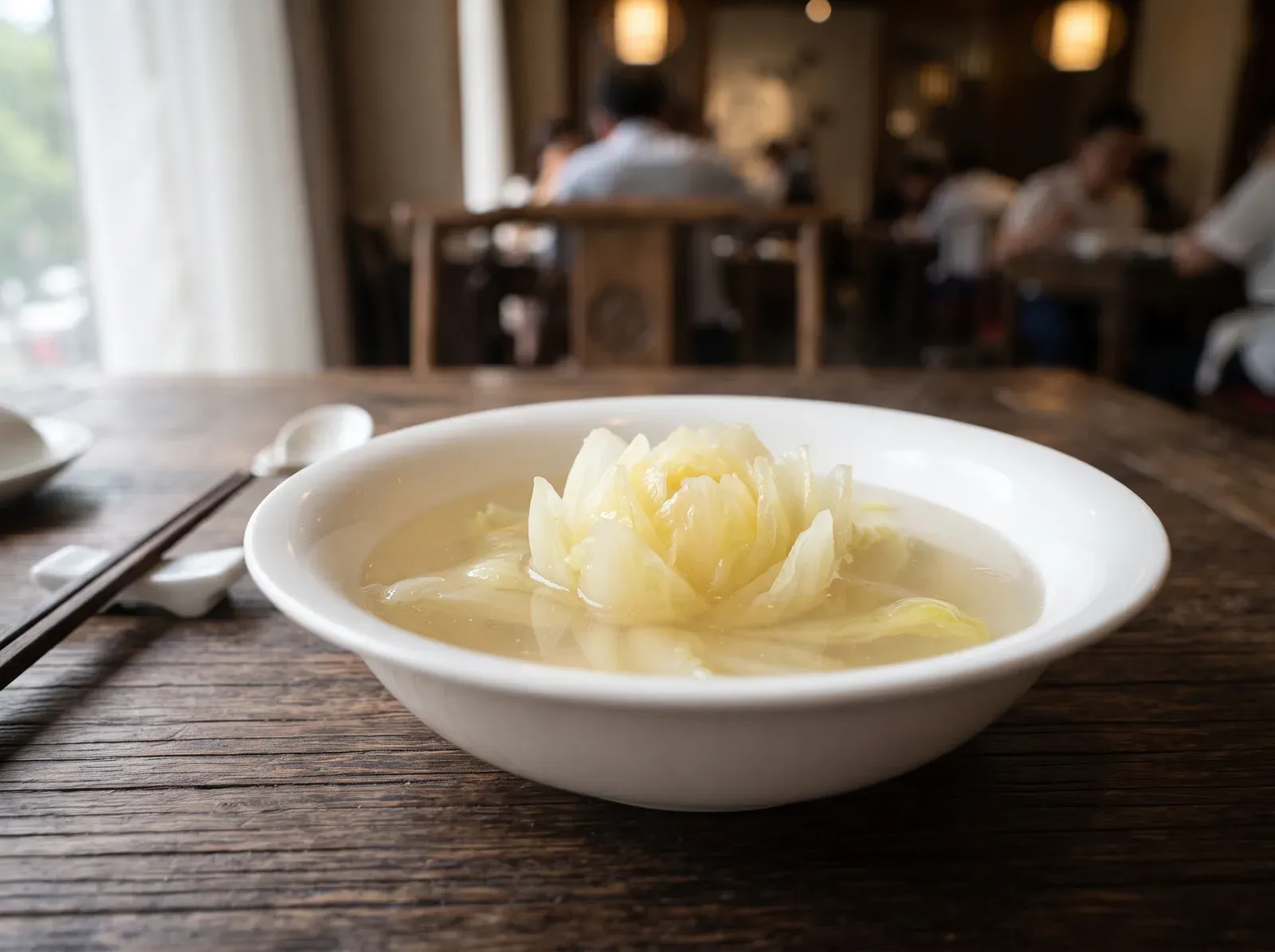
The cuisine is not solely about fiery heat; it is built on seven tastes and eight flavor profiles. Diners who avoid spicy food can easily order clear broth banquet dishes like boiled Chinese cabbage (Kaishui baicai) or non-spicy and mild home-style dishes, which are also simpler to adjust to vegan options in regular restaurants. The seven tastes are sweet, sour, numbing, spicy, bitter, aromatic, and salty. The eight flavor profiles include fish-fragrant, sour and spicy, peppercorn numbing, strange-flavor (guaiwei), mala, chili oil, dry-braised, and dry-stir-fried. Seasoning relies on three peppers (Sichuan pepper, black or white pepper, chili), three aromatics (scallion, ginger, garlic), and fermented staples like Pixian broad bean paste and fermented black soybeans.

Boiled Chinese cabbage is the benchmark for high-end banquet clear soups. The 'boiled water' is actually a rich chicken broth repeatedly clarified with minced meat until crystal clear, oil-free, and mild, used to gently poach tender cabbage hearts. Fish-fragrant pork shreds (Yuxiang rousi) pairs pork tenderloin slivers with bamboo shoots and wood ear mushrooms in a traditional fish-fragrant sauce made from pickled red chilies, scallions, ginger, garlic, sugar, and vinegar. The dish contains no fish at all. Its light glaze shows oil rather than soupy sauce, creating a balanced savory, spicy, sweet, and sour profile. Regionally, the cuisine splits into four branches: Shanghe style centered on Chengdu and Leshan, Xiaohe style represented by Zigong salt gang cuisine along with Yibin and Luzhou, Xiahe style centered on Chongqing and Dazhou, and Buddhist vegetarian traditions.
In regular, non-vegetarian dining spots, dishes from southwestern cuisines like Sichuan, Guizhou, and Yunnan are easier to adapt into vegan versions, while dedicated vegetarian restaurants are most concentrated in Beijing, Shanghai, Guangzhou, and Shenzhen. If you are dining with children or older companions who cannot handle spice, start with clear broth dishes like boiled Chinese cabbage alongside fish-fragrant pork shreds. If others at your table crave intense spice, round out the spread with classic boiled beef or Mapo tofu.
Tip: If anyone in your group cannot eat spicy food, let the staff know in advance to leave out chilies or pick savory, non-spicy flavor profiles. Fresh vegetables and tofu dishes at regular restaurants can usually be prepared without any heat.
How Do You Choose Spice Levels, Dry Pots, and Hotpots?
When ordering for the first time, asking for mild (weila) is sensible. For dry pot or spicy stir-fry pot, choosing 4 to 5 main ingredients is enough for two people, alongside rice and cooling drinks. According to Chinese Wikipedia, dry pot originated in Deyang, Sichuan, with early versions featuring freshly butchered chicken, rabbit, and vegetables cooked with generous oil and salt. The finished dish has no broth and carries a dry, savory aroma. In some traditional dining customs, diners finish the main ingredients and then add fresh broth to simmer leafy greens.
When ordering spicy stir-fry pot (Mala xiangguo), staff will ask for your preferred spice level: mild, medium, or extra spicy. Food bloggers recommend that newcomers pick mild to enjoy a comfortable balance of tingling spice. For dry pot or stir-fry pot, 4 to 5 main ingredients work well for two diners, while a group of 4 should select 8 to 10 ingredients, yielding a finished dish weighing 3 to 4 pounds. With its heavy seasoning and rich spice, it is usually eaten with hot steamed rice, and keeping plenty of water or cooling drinks on hand is strongly advised.
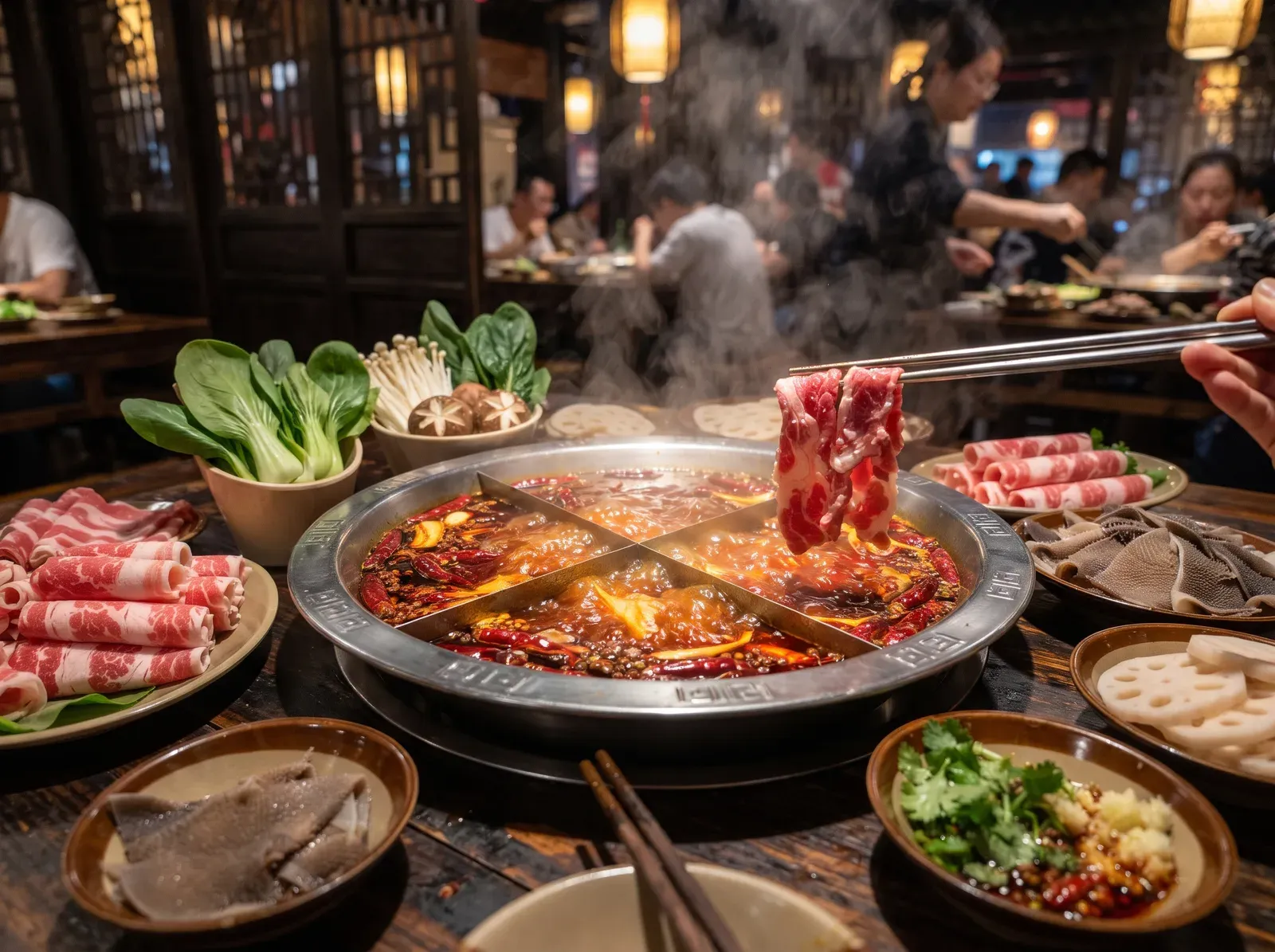
Sichuan hotpot is defined by its bubbling, red chili broth. Diners swish raw meats and vegetables in the boiling pot and dip them into sesame oil dips, a tradition locally believed to dispel dampness caused by the humid climate. If you prefer rich, sauce-free dishes with concentrated seasonings, go with a dry pot served over hot rice. If you want to simmer a wide variety of meats and greens in simmering broth, spicy red hotpot with a sesame oil dip offers the classic local experience.
Which Chengdu Street Snacks and Noodles Are Worth Trying?
In 2010, UNESCO approved Chengdu to join the Creative Cities Network as a City of Gastronomy, making it the first city in Asia to earn this recognition. Inside the city, Jinli Pedestrian Street gathers specialties like Zhang Fei beef, sandapao rice cakes, and pork intestine noodles, alongside folk crafts like clay figurines, sugar paintings, and paper cutting. For neighborhood layouts and walking routes, see our Chengdu city guide.
Authentic Dandan noodles in Sichuan are served dry in a small bowl without soup, resting over seasoned minced pork with preserved yacai greens, chili oil, and ground peppercorn sauce; large noodle bowls in broth evolved later in other regions. At Chengdu's heritage brand Zhong Dumplings, the filling is pure pork without any vegetables. Boiled and drained, they are drizzled with a house chili oil and sweetened soy sauce, yielding a tender, thin-skinned bite with a mild sweet heat. Bingfen (ice jelly) is a quintessential summer street treat across southwestern China (Sichuan, Guizhou, and Yunnan), traditionally made by rubbing apple of Peru seeds in water until clear jelly forms, topped with brown sugar syrup, hawthorn flakes, and goji berries.
In terms of meat traditions, the Sichuan Basin and Chongqing consume around 70% of China's rabbit meat, with spicy rabbit head, cold-tossed rabbit (lengchitu), and dry pot rabbit being distinctive local flavors. If your tongue tingles from chili heat, a chilled bowl of sweet brown sugar ice jelly helps soothe the burn. If you want to experience authentic local late-night street dining, give cold-tossed rabbit or spicy rabbit head a try.
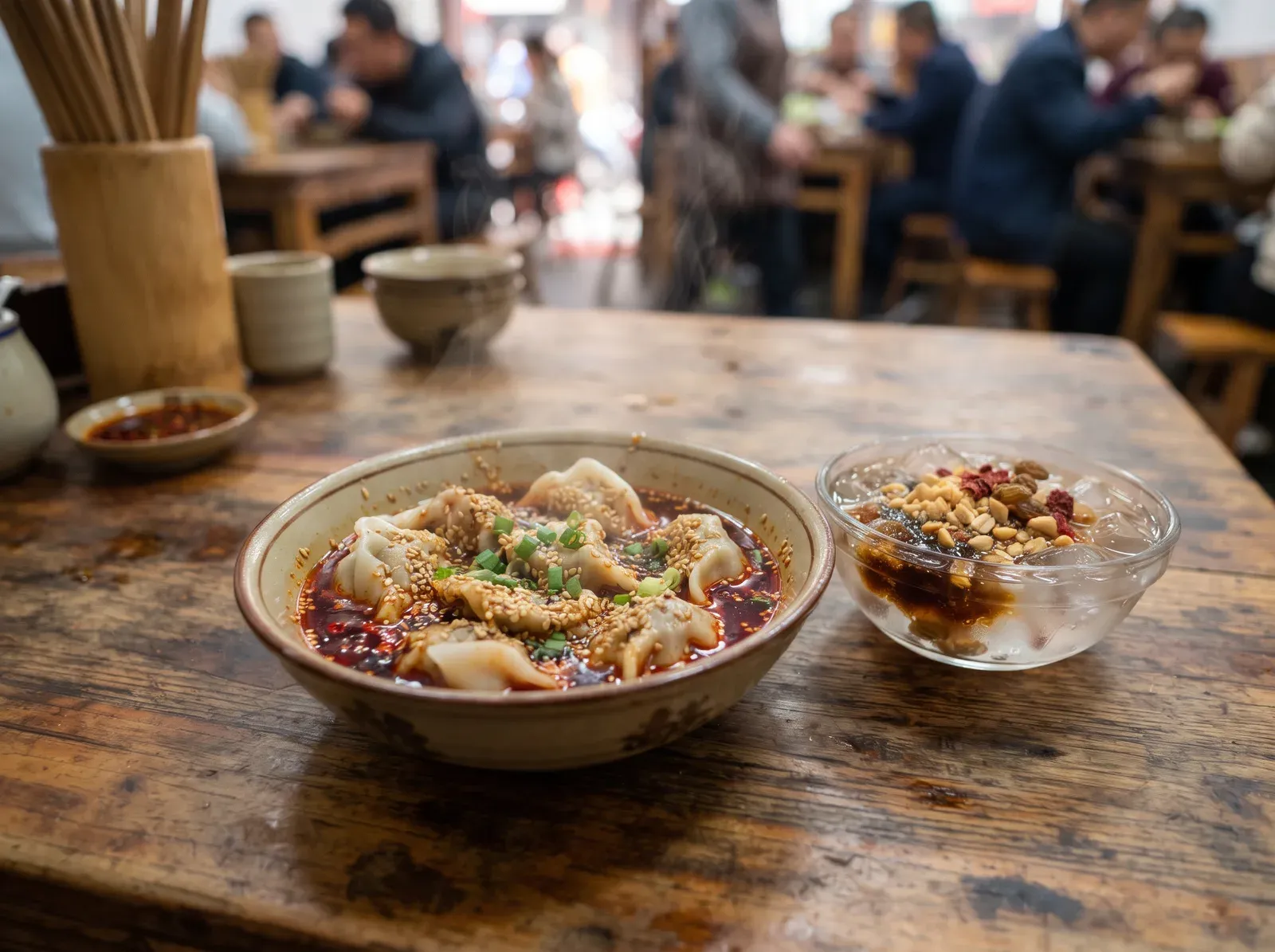
Tip: When sampling snacks in bustling streets like Jinli, Dandan noodles and Zhong Dumplings are served in small snack-sized bowls, suited for tasting between meals rather than ordering as full-sized main courses.
Common Ordering Mistakes and How to Avoid Them
When ordering at a Sichuan restaurant for the first time, misunderstandings easily arise around literal dish names, cooking styles, and portion sizes. Many classic dishes carry historical backstories, so literal names rarely indicate the actual ingredients. The table below outlines common misconceptions and practical ordering pointers.
| Dish or Step | Common Literal Misconception | Actual Reality | Ordering Advice |
|---|---|---|---|
| Fuqi feipian | Assuming the dish contains beef lungs | Created by Guo Chaohua and Zhang Tianzheng, the name refers to beef offal scraps like heart, tongue, and tripe, not lungs | Order with confidence if you enjoy cold beef offal, offering a tender texture and fragrant chili oil |
| Fish-fragrant pork shreds | Assuming it contains fish or seafood | Seasoned with pickled red chilies, scallions, ginger, garlic, sugar, and vinegar to create fish fragrance, using pork tenderloin with bamboo shoots and wood ear mushrooms | Suited for diners who prefer sweet, sour, and mildly spicy flavors over heavy heat |
| Boiled beef / pork slices | Assuming it is plain meat boiled in clear water | Sliced meat is poached over vegetables, coated in chili and Sichuan pepper powder and garlic, then splashed with sizzling hot oil | Very spicy, numbing, and oily; skip or request low heat if sensitive to heavy spice |
| Dry pot and stir-fry pot portions | Assuming individual ingredient portions are tiny and ordering too much | Choosing 4 to 5 ingredients for two or 8 to 10 for four yields a dish weighing 3 to 4 pounds with heavy oil and salt | Stick strictly to ingredient counts based on party size, and pair with steamed rice and water |
| Dandan noodles | Assuming it arrives as a large bowl of noodle soup | Authentic Sichuan Dandan noodles are served dry in small bowls with minced pork, yacai greens, and chili-peppercorn sauce at the bottom | Toss thoroughly with chopsticks as soon as it arrives and eat while hot |
Beyond name confusion, spice expectations can also surprise diners. Mild heat in Sichuan and Chongqing restaurants still carries a pronounced numbing spice for those unaccustomed to it. When trying it for the first time, explicitly ask for mild heat and pair your meal with rice and ice jelly to ease the tingling warmth.
Sources
Jinli - Wikipedia
Sichuan cuisine - Wikipedia
Customs and etiquette in Chinese dining - Wikipedia
Chengdu - Wikipedia
Dry pot - Wikipedia
Bingfen - Wikipedia
Sichuan cuisine - Chinese Wikipedia
Mapo tofu - Wikipedia
Twice-cooked pork - Wikipedia
Kung Pao chicken - Wikipedia
Shuizhu - Wikipedia
Fuqi feipian - Wikipedia
Yuxiang shredded pork - Wikipedia
Laziji - Wikipedia
Koushui ji - Wikipedia
Boiled Chinese cabbage - Wikipedia
Dandan noodles - Wikipedia
Chengdu snacks - Wikipedia
Sources verified on November 17, 2026
FAQ
Does Fuqi feipian actually contain beef lungs?
No. The dish was created in 1930s Chengdu by the couple Guo Chaohua and Zhang Tianzheng. The character fei originally meant scrap offal, referring to cuts like beef heart, tongue, and tripe rather than lungs.
Why is there no fish in fish-fragrant pork shreds?
The dish uses a traditional fish-fragrant seasoning made from pickled red chilies, scallions, ginger, garlic, sugar, and vinegar, which reflects how local cooks seasoned freshwater fish. It pairs shredded pork tenderloin with bamboo shoots and wood ear mushrooms, containing no fish or seafood at all.
Are boiled beef and boiled pork slices plain boiled dishes?
No. Far from plain boiled food, sliced meat is poached and set over greens, topped with dried chili powder, ground Sichuan pepper, and garlic, and then splashed with boiling hot oil to release intense numbing spice. It is a rich, fiery classic.
What can non-spicy eaters order at a Sichuan restaurant?
You can order state banquet clear soup dishes like boiled Chinese cabbage (cabbage hearts poached in rich clarified chicken broth, clear and mild) or balanced dishes like fish-fragrant pork shreds. Tofu and fresh seasonal vegetables at standard dining spots can also be easily prepared without chili.
How many ingredients should you pick for spicy dry pot or stir-fry pot?
Selecting 4 to 5 main ingredients is recommended for two diners, while a group of 4 should choose 8 to 10 ingredients, resulting in a dish weighing 3 to 4 pounds. Given its intense seasoning, choosing mild heat and pairing it with steamed rice and cooling drinks is recommended.