
Representative Dishes in Hakka Cuisine
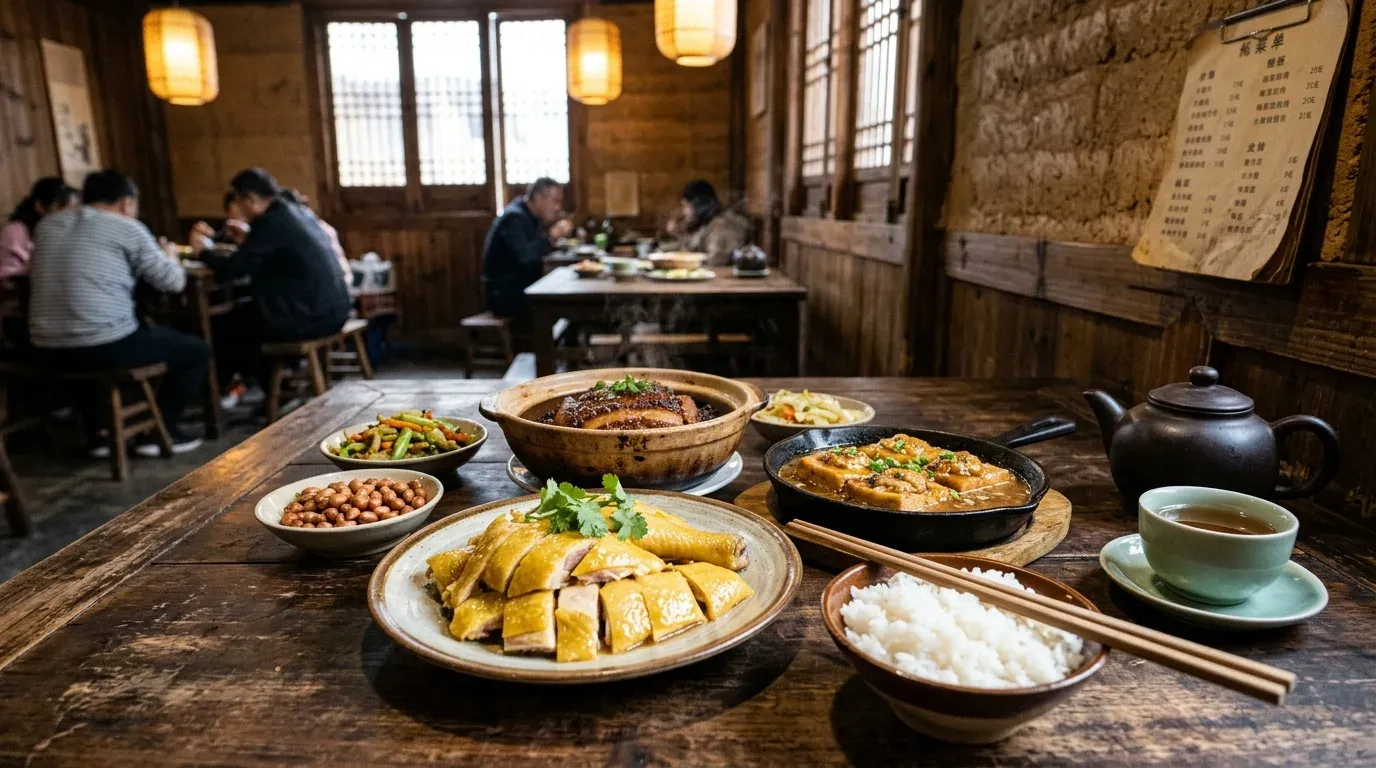
The most iconic Hakkanese food dishes are the Three Treasures: pork belly with preserved mustard greens, salt-baked chicken, and stuffed tofu. As the culinary tradition of the Hakka people, this cuisine is mainly found in Guangdong, Fujian, and Jiangxi provinces, as well as in Taiwan and overseas Hakka communities. In 2014, it was inscribed on the first intangible cultural heritage inventory of Hong Kong.
| Item | Key Information |
|---|---|
| Three Treasures Dishes | Pork belly with preserved mustard greens, salt-baked chicken, stuffed tofu |
| Traditional Flavor Profile | Very few seasonings and spices, known for being salty, piping hot, and rich |
| Three Main Regional Names | Dongjiang cuisine (Guangdong), Gannan cuisine (Jiangxi), Minxi cuisine (Fujian) |
| Famous Festive Dishes | Abacus beads, Meizhou radish balls, poon choi (basin dish), four braised and four stir-fried dishes |
| Cultural Heritage Inscription | Added to Hong Kong's first intangible cultural heritage inventory in 2014 |
Why Is Traditional Hakkanese Food Known for Salty, Hot, and Fatty Flavors?
Traditional Hakka cooking is known for being salty, served piping hot, and fatty. It uses very few seasonings and spices, aiming for deep, rich flavors rather than mild ones. Historically, the Hakka people migrated frequently and settled in hilly, mountainous areas. They relied heavily on salt to preserve food during journeys and needed to replenish electrolytes during hard physical labor, leading to a diet naturally higher in oil and salt.
Because the Hakka settled at the junction of Guangdong, Jiangxi, and Fujian provinces, the cooking is often known locally as Dongjiang cuisine in Guangdong, Gannan cuisine in Jiangxi, and Minxi cuisine in Fujian. Hakka cooks frequently use preserved greens as ingredients, such as pickled mustard greens (suancai), fermented mustard greens (fucai), dried preserved mustard greens (meicai), and Chinese mustard greens.
Tip: If you prefer lighter flavors, pair Hakka meat dishes with steamed white rice on your first visit, as dishes braised with preserved greens are rich and salty, making them much more balanced over rice.
How Are the Three Treasures of Hakka Cuisine Prepared?
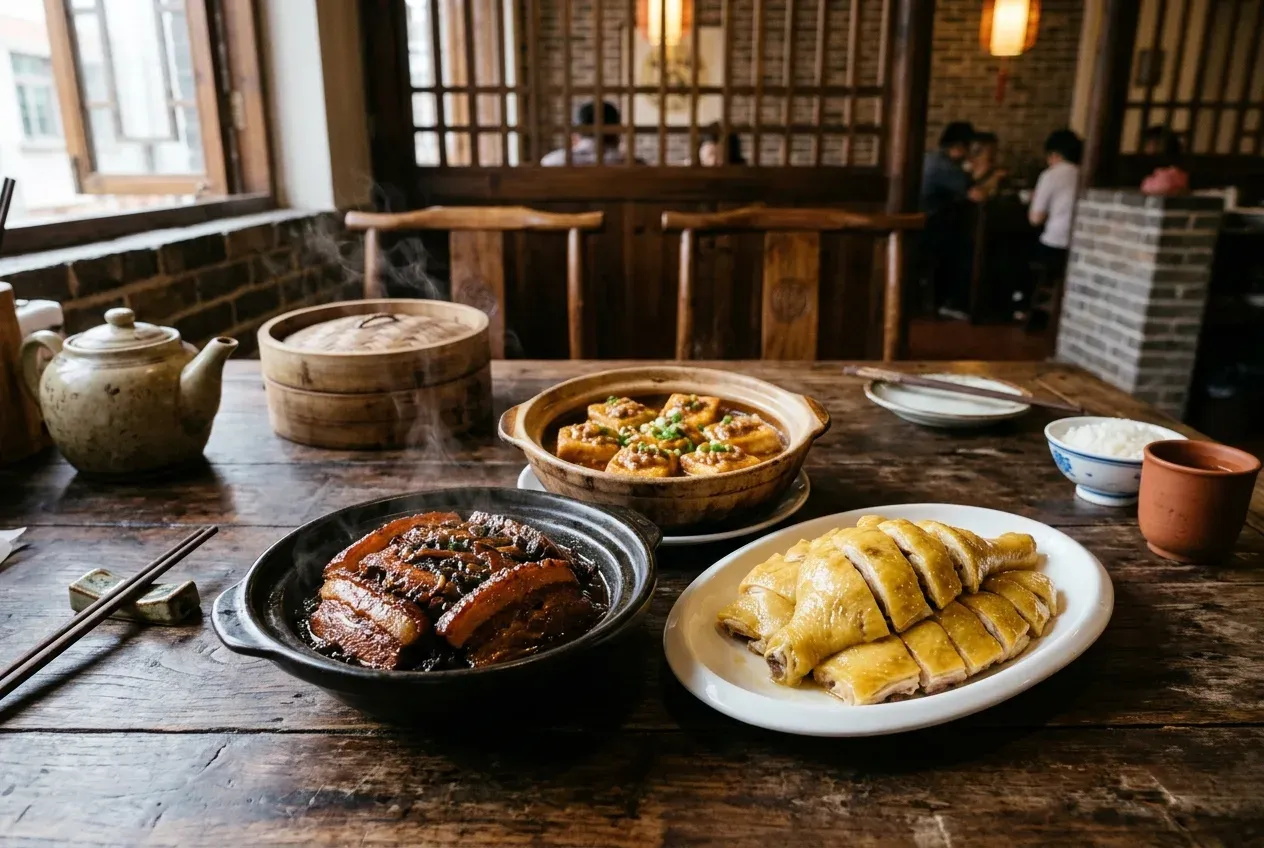
Pork belly with preserved mustard greens, salt-baked chicken, and stuffed tofu form the Three Treasures of Hakka cooking, serving as staple dishes for banquets and family meals alike. Pork belly with preserved mustard greens uses pork belly and meicai as main ingredients. Prepared by braising and steaming, the dried greens absorb the rich fat and cooking juices, creating a dish that is savory with a touch of sweetness, rich without feeling greasy.
In one traditional method for salt-baked chicken, the cavity is rubbed with salt and sand ginger, the whole chicken is wrapped in straw paper, buried in a pile of stir-fried hot salt, and baked over low heat for about half an hour until done. Another recipe seasons the whole chicken with ginger powder, sesame oil, and cooking wine, wraps it in paper, and simmers it in a pot buried under coarse salt for about an hour. In 2013, the culinary technique for Hakka salt-baked chicken from Meijiang District was recognized as a representative item in Guangdong's fifth batch of intangible cultural heritage.
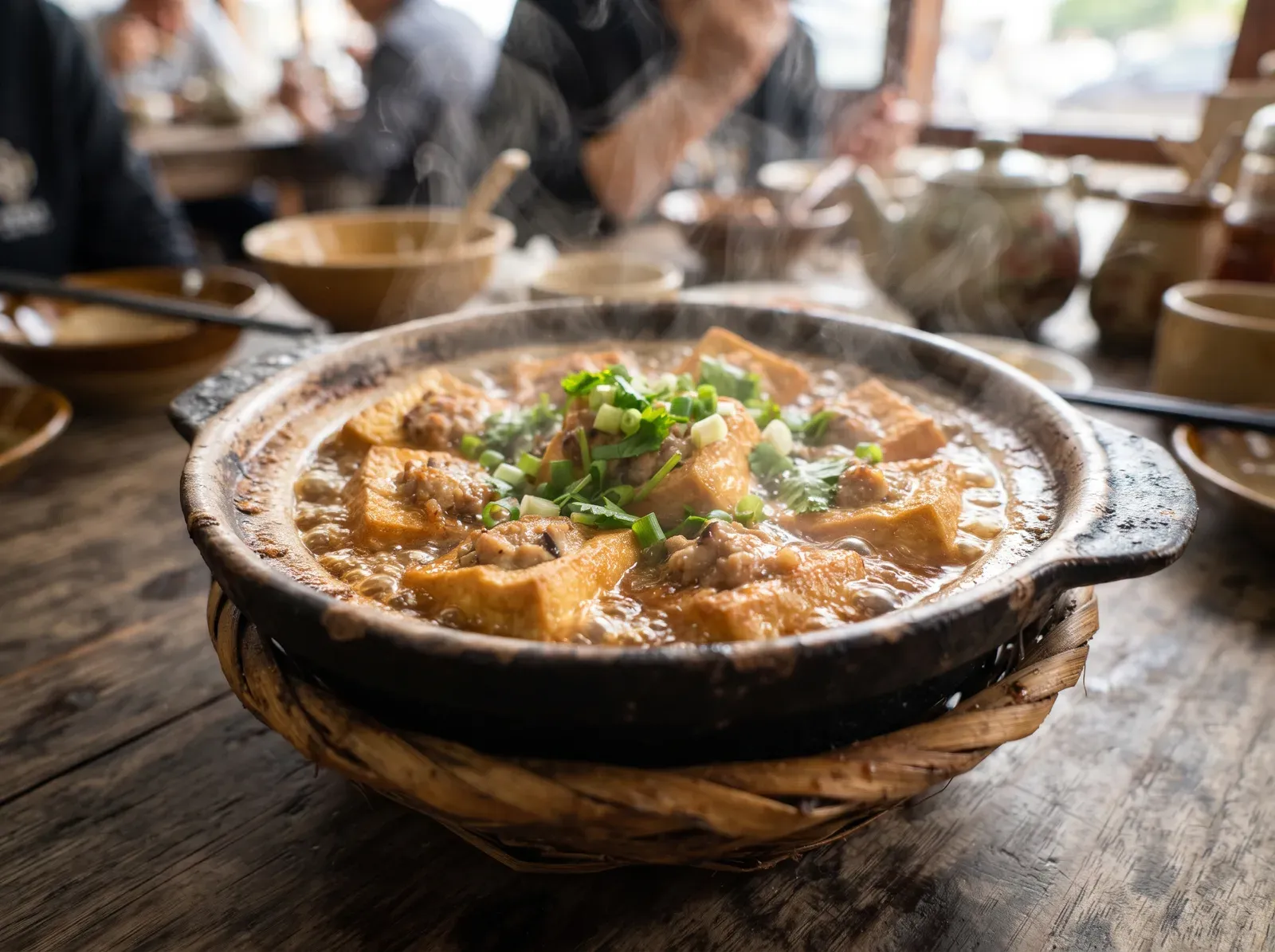
In stuffed tofu (niang tofu), niang is a Hakka verb meaning to insert or stuff a filling, so the name simply means tofu stuffed with meat. Cooks cut a cross or poke a small pocket into tofu blocks, stuff them with a minced meat filling, and cook them by pan-frying, braising, claypot simmering, deep-frying, or steaming. According to legend, after migrating south, Hakka people could not easily get wheat flour to make northern Chinese New Year dumplings, so they stuffed tofu with meat instead.
Tip: When ordering stuffed tofu, choose the cooking style you like: pan-fried and braised pieces offer a fragrant, crisp crust, while claypot and steamed versions retain more broth and meat juices.
Beyond the Three Treasures: What Other Dishes Do Hakka Families Eat?
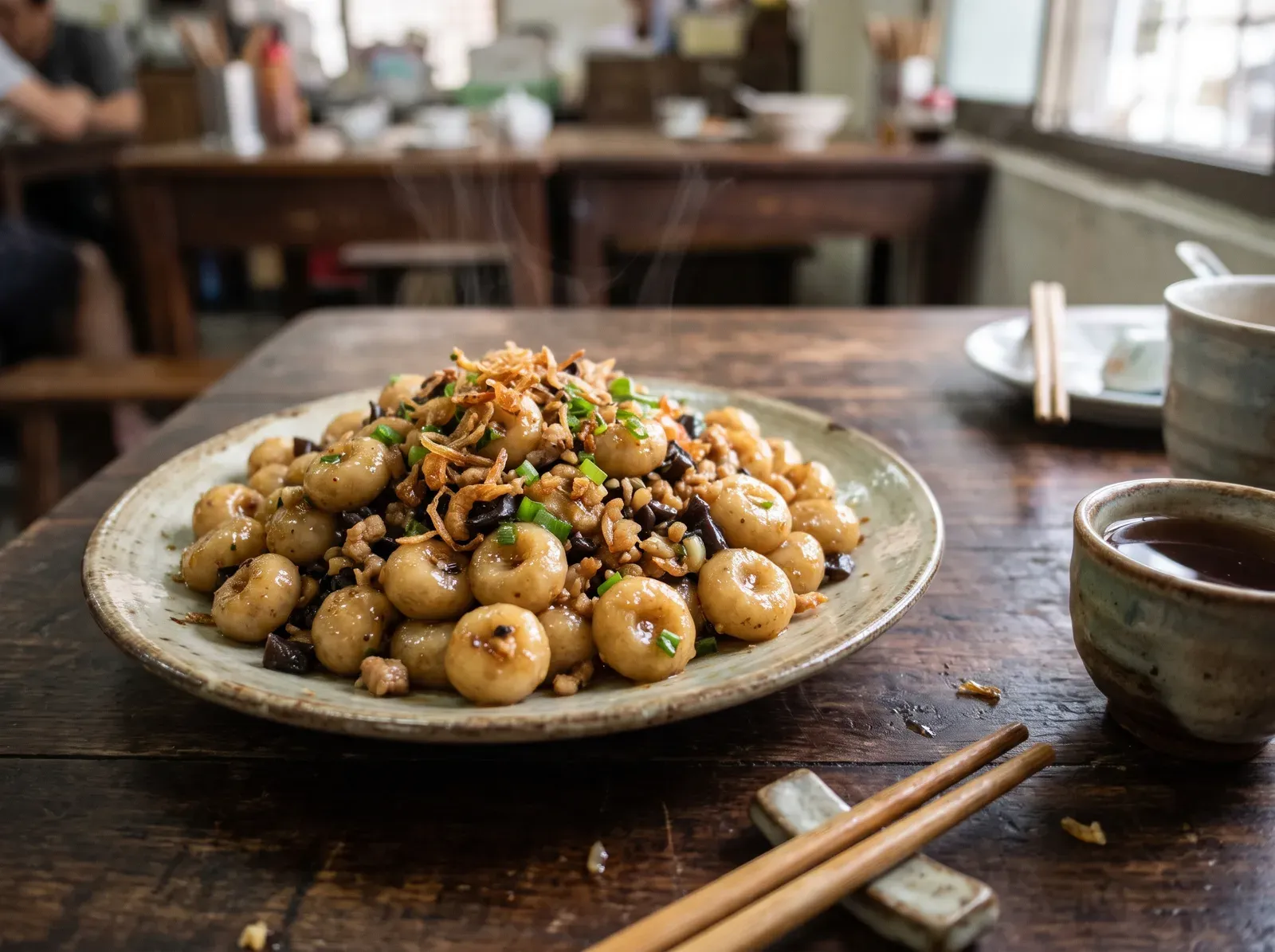
Beyond the Three Treasures, Hakka communities developed various specialties and snacks for festivals and daily life. Abacus beads (suan pan zi) are made by mixing steamed taro with tapioca starch into dough beads with an indentation in the center, resembling beads on an abacus. Stir-fried with minced pork, dried shrimp, bamboo shoots, and wood ear mushrooms along with a little chicken broth, the dish symbolizes rolling wealth and is a popular Lunar New Year specialty.
Not all Hakka households make abacus beads. Families from Meixian, where daikon radish grows in abundance, are more likely to make Meizhou radish balls for the New Year. Shredded daikon is kneaded into balls with minced pork, minced bream, dried shrimp, dried squid, and starch, then steamed. In Meizhou, these savory balls symbolize reunion and remain an essential festive food.
Thunder tea (lei cha) is a thick paste that sits between a beverage and a porridge, prepared by grinding tea leaves, grains, and other ingredients into a powder before mixing with hot water. The word lei means to grind in Hakka. Traditionally served to welcome honored guests at weddings or family visits, the version in Guangdong and Guangxi typically grinds millet, peanuts, sesame seeds, fresh ginger, and soybeans into a paste with boiling water. Hakka families also eat poon choi (basin dish) during the New Year, layering white radish, pig trotters, chicken, and shrimp inside a large basin.
In addition, ban refers to Hakka rice-based snacks, similar to the Minnan and Teochew kueh, traditionally made as offerings for deities and ancestors. Among them, yiziban features a glutinous rice skin filled with minced pork, dried tofu, shiitake mushrooms, dried squid, and dried shrimp.
| Dish Name | Main Ingredients | Cooking Method and Traditions |
|---|---|---|
| Pork Belly with Preserved Mustard Greens | Pork belly, meicai (preserved mustard greens) | Stewed and steamed; savory with sweetness, rich without being greasy |
| Salt-Baked Chicken | Whole chicken, salt, sand ginger (or ginger powder, sesame oil, cooking wine) | Wrapped in paper and slow-baked in hot stir-fried salt, or simmered in a pot of coarse salt |
| Stuffed Tofu | Tofu, meat-based filling | Tofu scored with cross cuts or pocketed to stuff meat filling, cooked by pan-frying, braising, clay-pot simmering, deep-frying, or steaming |
| Abacus Beads | Taro, tapioca starch, minced pork, dried shrimp, bamboo shoots, wood ear mushrooms | Taro dough indented to resemble abacus beads, stir-fried together with a little chicken broth; a New Year dish symbolizing rolling wealth |
| Meizhou Radish Balls | Shredded daikon radish, minced pork, minced bream, minced dried shrimp, dried squid, starch | Rolled into balls and steamed; symbolizes family reunion in Meizhou, eaten during festivals and holidays |
| Pounded Tea (Lei Cha) | Tea leaves, millet, peanuts, sesame seeds, fresh ginger, soybeans, etc. | Ground into powder and mixed with boiling water into a paste; traditionally served as refreshments for honored guests |
| Poon Choi | Daikon radish, pig trotters, chicken, shrimp, etc. | Ingredients layered in a pot, eaten by Hakka people during Chinese New Year |
| Yiziban | Glutinous rice flour skin, filling of minced pork, dried tofu, shiitake mushrooms, dried squid, dried shrimp | Hakka rice-based food, traditionally used for offerings to deities and ancestors |
How Does Hakka Food Differ Across Meizhou, Fujian, Taiwan, Hong Kong, and Southeast Asia?
Meizhou is recognized as the world Hakka capital, marking where the Hakka people finally coalesced, settled, and multiplied. Regional dishes vary widely across areas. Dabu is famous for stuffed tofu. In Jiaoling, sanjidi soup uses pickled mustard greens, fermented red wine lees, and three pork cuts: liver, small intestine, and lean pork, representing the top three placements in the imperial examinations. In Fengshun, chunguanchang is made by pouring beaten egg into cleaned pig intestines and steaming them into sausage-like links, eaten mostly during festivals.
Preserved foods from western Fujian are collectively known as the Eight Dried Delicacies of Minxi: Yongding dried greens, Shanghang dried radish, Wuping dried pig gallbladder, Liancheng dried sweet potato, Changting dried tofu, Ninghua dried field rat, Qingliu dried bamboo shoots, and Mingxi dried meat jerky. In Taiwan, Hakka traditions feature the Four Braises and Four Stir-Fries. The four braises are braised pork belly, braised pork tripe with pickled greens, braised pork ribs with daikon, and braised dried bamboo shoots in rich broth. The four stir-fries are stir-fried pork, duck blood with Chinese chives, pork intestine with ginger shreds, and pork lung with pineapple and wood ear mushrooms. Miaoli is also famous for Hakka stir-fry, while Meinong in Kaohsiung is known for pork trotters braised with peanuts.
In Hong Kong, because Hakka communities mostly settled along coastal ports, their cooking includes more seafood, abundant greens, and fewer expensive cuts of meat, featuring salt-baked chicken, poon choi, and deep-fried pork intestines. In Singapore, yong tau foo stalls are widespread in food courts and hawker centres. Most stalls use fish paste instead of minced pork for stuffing, offering stuffed bitter gourd and stuffed eggplant alongside tofu. Thunder tea rice (lei cha fan) is also common in food courts and coffee shops, tracing its roots to Hakka communities in Hopo and the Hailufeng area (modern Shanwei) of Guangdong.
| Region | Regional Background and Dish Characteristics | Local Representative Dishes |
|---|---|---|
| Meizhou and Surrounds, Guangdong | Hakka capital of the world, historically where the Hakka people formed, settled, and multiplied | Dabu stuffed tofu, Jiaoling sanjidi soup, Fengshun stuffed sausage, Meizhou radish balls |
| Western Fujian (Minxi) | Preserved Hakka foods known collectively as the Eight Dried Delicacies of Minxi | Yongding dried greens, Shanghang dried radish, Wuping dried pig gallbladder, Liancheng dried sweet potato, Changting dried tofu, Ninghua dried field rat, Qingliu dried bamboo shoots, Mingxi dried meat jerky |
| Taiwan, China | Miaoli is known for Hakka stir-fry; Meinong in Kaohsiung is known for peanut pork trotters | Four Braises and Four Stir-Fries (four braised dishes and four stir-fried dishes), Hakka stir-fry, Meinong peanut pork trotters |
| Coastal Hong Kong, China | Hakka communities mostly settled along ports and coasts, featuring more seafood, plentiful vegetables, and rare use of expensive meats | Salt-baked chicken, poon choi, deep-fried pork intestines |
| Singapore and Southeast Asia | Stuffed tofu is common in food courts and hawker centres, often using fish paste instead of minced pork for filling | Stuffed tofu (also selling stuffed bitter melon and stuffed eggplant), thunder tea rice originating from Hopo and Hailufeng |
What Do First-Time Diners Often Misunderstand About Hakka Food?
In several countries abroad, the name Hakka cuisine means something completely different from traditional Hakka food. Dishes called Hakka cuisine in India and Pakistan are actually Indian Chinese or Pakistani Chinese food, commonly serving chilli chicken and Hakka noodles. In Toronto, Hakka Chinese food almost always refers to this Indian Chinese style rather than traditional Hakka cooking.
Misunderstandings also happen when ordering specific dishes. Stuffed tofu is tofu with a meat filling, not plain tofu served with dipping sauce, though stalls in Singapore often substitute fish paste for minced pork. In addition, traditional Hakka cuisine strictly has no desserts, a practice elders used to remind younger generations to endure hardship. Sweet-filled ban and modern desserts appeared only in later eras.
Tip: If you spot ban or yiziban on a menu, keep in mind that traditional yiziban is savory, filled with minced pork, dried tofu, shiitake mushrooms, dried squid, and dried shrimp, not an after-dinner dessert.
Sources
Hakka cuisine - Wikipedia
Hakka Cuisine - Wikipedia
Salt-Baked Chicken - Wikipedia
Hakka Food in Singapore - Singapore Chinese Cultural Centre Culturepaedia
Hakka Stuffed Tofu - Wikipedia
Lei Cha - Wikipedia
Sources verified on November 18, 2026
FAQ
Which eight dishes make up the Four Braises and Four Stir-Fries?
The four braises are braised pork belly, braised pork tripe with pickled greens, braised pork ribs with daikon, and braised dried bamboo shoots in rich broth. The four stir-fries are stir-fried pork, duck blood with Chinese chives, pork intestine with ginger shreds, and pork lung with pineapple and wood ear mushrooms.
What are the Eight Dried Delicacies of Minxi?
The Eight Dried Delicacies of Minxi are preserved specialties from Hakka communities in western Fujian, including Yongding dried greens, Shanghang dried radish, Wuping dried pig gallbladder, Liancheng dried sweet potato, Changting dried tofu, Ninghua dried field rat, Qingliu dried bamboo shoots, and Mingxi dried meat jerky.
What is the story behind the name of Hakka sanjidi soup?
Sanjidi soup is a specialty from Jiaoling in Guangdong. It uses pickled mustard greens, fermented red wine lees, and three pork cuts: liver, small intestine, and lean pork, representing the top three honors in the imperial civil examinations.
Is thunder tea sweet or savory?
Traditional thunder tea is not a sweet drink, but a thick paste between a beverage and a porridge. The preparation by Hakka people in Guangdong and Guangxi grinds ingredients such as millet, peanuts, sesame seeds, fresh ginger, and soybeans into powder and stirs them with boiling water. Known in Singapore English as thunder tea rice, it is often served over rice as a main meal.