
Classic Cantonese Food: What to Order in China
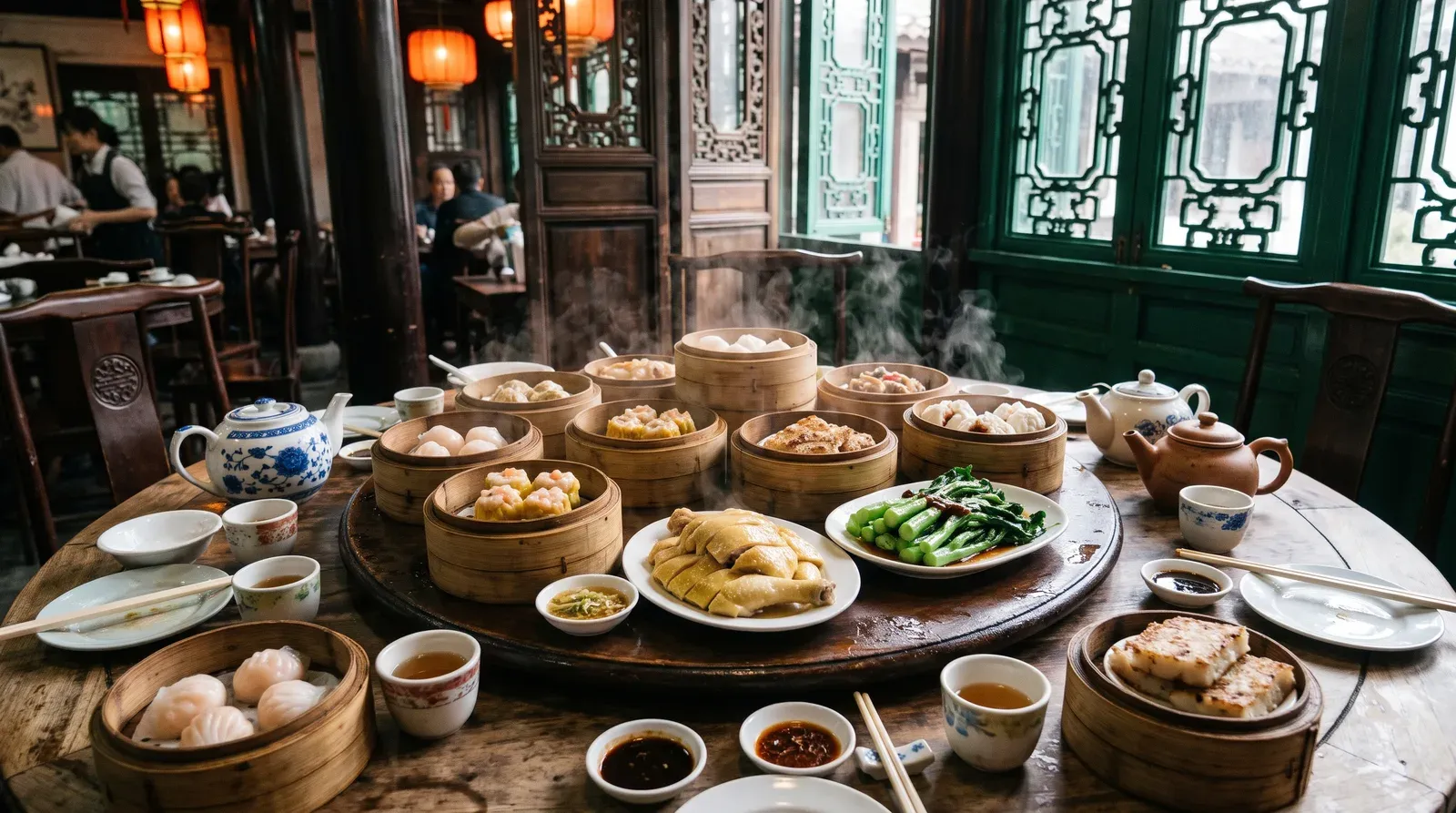
Cantonese food focuses on balanced flavors without being greasy, using spices sparingly to highlight the natural taste of ingredients. In Guangdong province alone, morning tea offers over 1,000 dim sum varieties. Meals in authentic restaurants follow a communal sharing style, where guests usually order one main dish per person for everyone at the table to share. When exploring classic Cantonese dishes for the first time, you can begin with morning tea featuring one pot of tea and two dim sum baskets, paired with signature white cut chicken and beef chow fun.
What are the main styles and cooking features of Cantonese food?
In a strict sense, the cuisine refers to the flavors of Guangzhou or Cantonese-speaking people, while in a broader sense it covers the cooking of all Cantonese-speaking areas in Guangdong. Scholars usually divide Guangdong cuisine into three main branches based on dialect: Guangzhou (Guangfu), Hakka, and Teochew (Chaozhou).
The cuisine places high demands on the freshness and quality of ingredients, emphasizing light flavors, little oil, and taste balance. Its signature culinary concept is "wok hei," or the breath of the wok, which refers to the intense heat and energy released during high-heat stir-frying that brings out the full flavor of the ingredients.
How should you choose and order dim sum for morning tea?
Morning tea in Guangzhou carries the traditional concept of "one pot, two pieces," meaning guests order a pot of hot tea along with two delicate dim sum items to enjoy at a leisurely pace. The peak time to enjoy morning tea in Guangzhou is between 8:00 and 10:00 AM. Lines tend to form at traditional heritage teahouses on weekends, so arriving early is recommended.
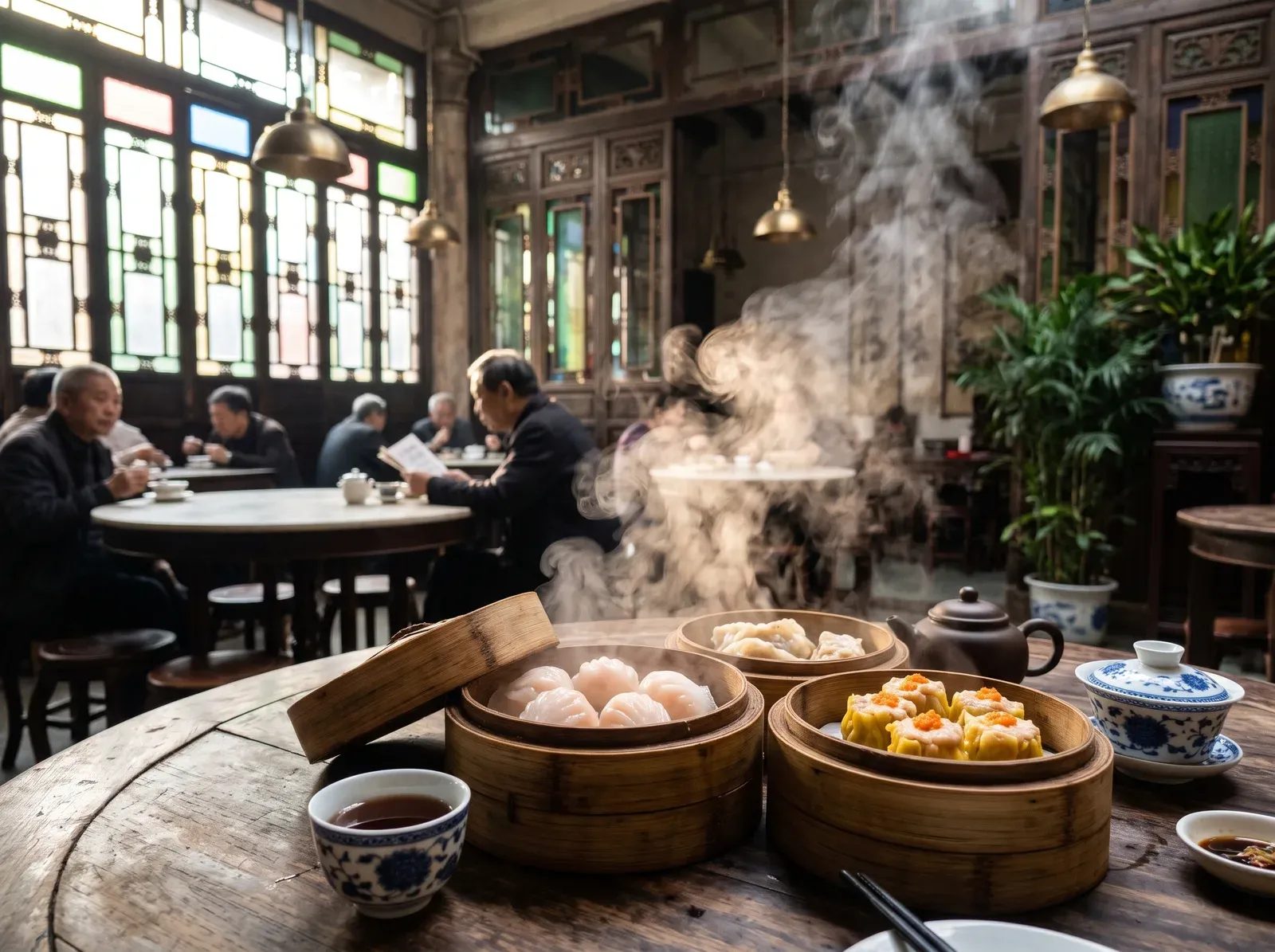
Tao Tao Ju, a China Time-Honored Brand at No. 20 Dishifu Road on Shangxiajiu Pedestrian Street, was founded in 1880 and serves over 100 dim sum items daily. Signature traditional items include Tao Tao prawn dumplings, pork siu mai with crab roe, honey-glazed barbecue pork buns, and two-style egg tarts.
Traditional snacks along Shangxiajiu also include double-skin milk and ginger milk curd from Nanxin, fresh prawn wontons in broth from Ou Cheng Ji, Jidi congee from Wu Zhan Ji, sweetheart cakes from Lin Heung Tea House, beef rice rolls with soy sauce from Yin Ji, and duck liver dumplings from Jin Zhong Ge. The southern section of Beijing Road also gathers budget eateries selling wonton noodles, beef brisket rice noodles, fish ball noodles, and rice rolls, alongside historic restaurants such as Tai Ping Koon, Jubao Roast Pigeon, and Yin Ji Rice Rolls.
Which classic Cantonese dishes should you order for a full meal?
White cut chicken is prepared by submerging a whole chicken into gently simmering water, turning off the heat, and letting it steep in the residual warmth for about 30 minutes to keep the skin crisp and the meat tender and juicy. After being chopped into bite-sized pieces, it is usually served with a minced ginger and scallion dip mixed with grated ginger, minced garlic, chopped scallions, salt, and hot oil.
The flat rice noodles in beef chow fun originate from Shahe Town in Guangzhou, made by grinding rice into slurry, steaming it into sheets, and cutting it into wide strips. Beef chow fun requires quick tossing over a roaring fire to concentrate rich wok hei, while keeping the noodles intact and leaving no excess oil on the plate. It has long been regarded as an important test of a Cantonese chef's basic skills.
Cantonese claypot rice is typically simmered over low heat in an earthenware pot, forming a layer of golden, fragrant crust at the bottom. Whether it is white cut chicken, beef chow fun, or claypot rice, each focuses on highlighting the original taste of the ingredients.
What is the standing of Shunde cuisine and Foshan snacks?
Shunde cuisine, also known as Fengcheng cuisine, is the most representative branch of Cantonese cooking. Many Cantonese dishes originated in Shunde, giving rise to the local saying that "the best chefs come from Fengcheng." On November 30, 2014, UNESCO officially approved Shunde to join the Creative Cities Network, designating it a City of Gastronomy.
Signature Shunde dishes include Daliang double-skin milk, Daliang milk flakes, stir-fried milk, deep-fried milk, Daliang benglian biscuits, Daliang "wild pheasant" pork rolls, Shunde raw fish salad, Jun'an pan-fried fish patties, Lunjiao rice cake, pan-fried stuffed dace, Chencun rice noodles, and Jun'an steamed whole pork. Shunde's classic cooking method of steaming fish with only oil, salt, and water originated from the traditional boat-dwelling Tanka people, using no soy sauce or MSG to bring out the natural flavor of freshwater fish.
Foshan's traditional Mangong cake was created during the Jiaqing period of the Qing Dynasty by a blind fortune teller named He Shengchao, baked from glutinous rice flour dough, white sugar, peanuts, sesame seeds, pork, and peanut oil. Traditional Foshan specialties also include Zhuhou paste, Zhuhou chicken, Xiqiao big cake, Jiujiang Shuangzheng liquor, and Lecong fish curd. When tasting food along Huagai Road Pedestrian Street in Shunde, ordering small portions of each snack lets you sample a variety of flavors in one visit, such as double-skin milk, raw fish salad, Chencun noodles, and Lunjiao cake.
| Food Item | Period or Year | Key Process and Preparation | Flavor Profile and Category |
|---|---|---|---|
| Tao Tao Ju Dim Sum | 1880 | Over 100 traditional dim sum items served daily | Includes shrimp dumplings, siu mai, and barbecue pork buns |
| Shunde Double-Skin Milk | 1890s | Stewed in water using local high-fat buffalo milk with two skin layers | Sweet delicacy with a silky texture |
| Chencun Rice Noodles | 1927 | Made from rice ground on blue-stone mills and steamed | Thin, refreshing, smooth, and soft |
| Lunjiao Cake | Ming Dynasty | Fermented and steamed using rice and white sugar | Translucent, sweet, chewy, and clean |
| Mangong Cake | Jiaqing Period, Qing Dynasty | Baked from glutinous rice dough with sugar, peanuts, sesame, and pork | Traditional baked pastry |
| White Cut Chicken | Traditional Classic | Whole chicken steeped in residual heat of simmering broth for about 30 minutes | Crisp and tender skin, served with minced ginger and scallion dip |
What dining etiquette should you follow in Guangdong teahouses and restaurants?
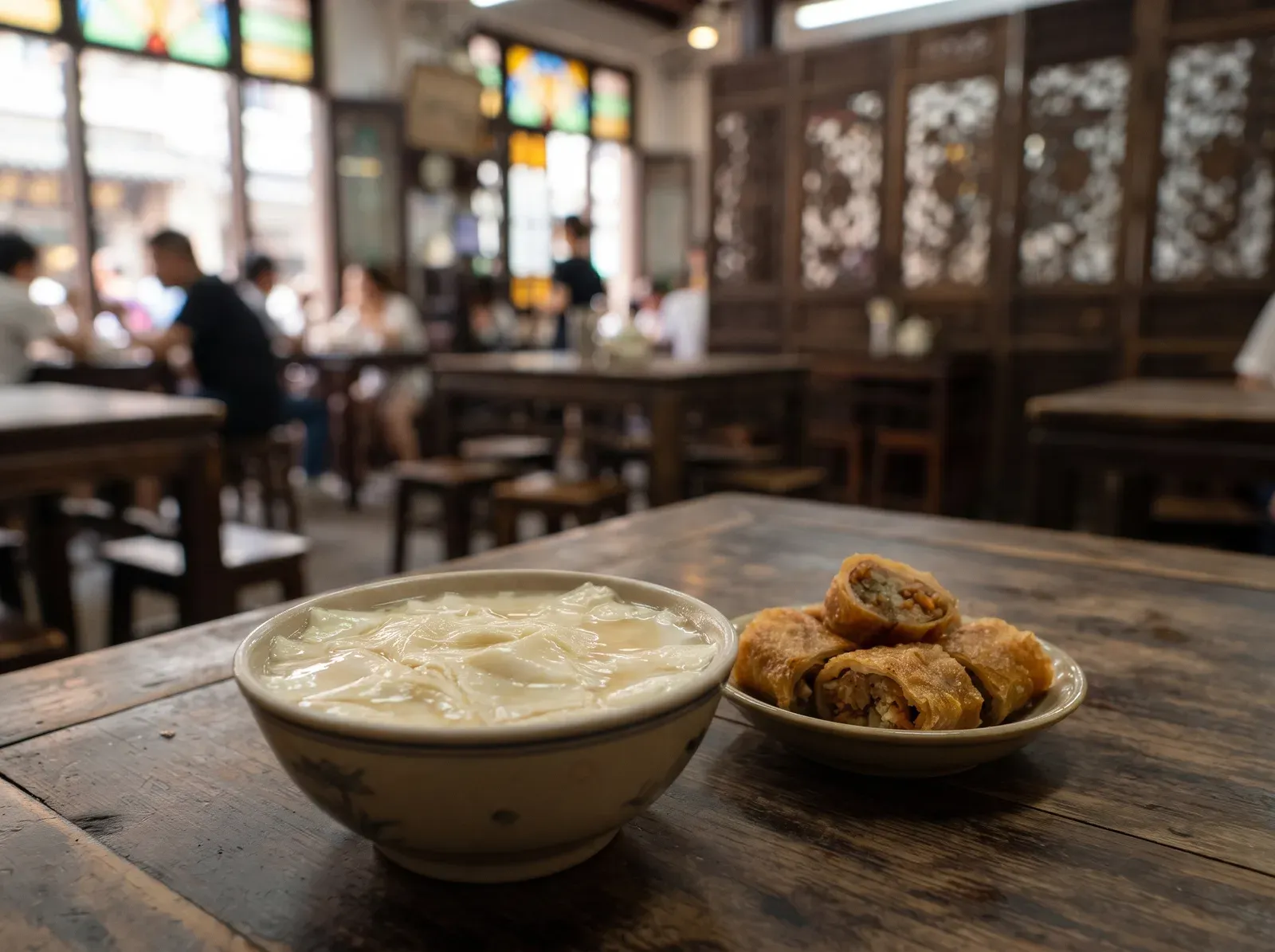
After sitting down, local diners usually keep the custom of scalding teacups and tableware with the first pour of hot tea. Dining tables typically provide a large water bowl or basin specifically for pouring away this rinse water. When pouring tea during morning tea, cups are usually filled to about 80%, stemming from the Cantonese saying, "tea poured full disrespects the guest, while wine poured full honors them."
When someone pours tea for you, tap the table lightly with the index and middle fingers or a single finger of one hand to say thank you. This finger-tapping gesture is said to originate from the Qianlong Emperor of the Qing Dynasty traveling incognito. If your teapot runs out and needs more hot water, lift the teapot lid or rest it halfway across the rim, and the staff will come over to refill it.
When dining in Guangdong, never stick chopsticks upright into rice or steamed buns, as this resembles incense burned for the deceased in traditional customs. Learning this table body language helps you blend into the local dining atmosphere smoothly.
How should you handle group ordering and special dietary needs?
Dining in Chinese restaurants centers on communal sharing rather than individual portions, typically ordering one main dish per person for everyone at the table to share. The food focuses on natural flavors and balance, with moderate seasoning and low grease, making it suitable for older relatives and children who cannot eat spicy food.
On Uncle Panda's private chartered tours, meals follow the communal sharing style, and your driver helps select a balanced mix of meat and vegetable dishes that suit both seniors and children. If travelers have food allergies or vegetarian dietary needs, you can inform your travel designer before the trip, and your driver will convey these requirements directly in Chinese to the kitchen at each meal.
Sources
Beijing Road (Yuexiu District) - Wikipedia
Shangxiajiu Pedestrian Street - Wikipedia
Tao Tao Ju - Wikipedia
Cantonese cuisine - Wikipedia
Customs and etiquette in Chinese dining - Wikipedia
Shunde cuisine - Wikipedia
Shunde District - Wikipedia
Double skin milk - Wikipedia
Chencun rice noodles - Wikipedia
Lunjiao cake - Wikipedia
Mangong cake - Wikipedia
Foshan - Wikipedia
Guangzhou & Foshan 3-Day Private Tour: Old Town & Lion Dance
Dim sum - Wikipedia
Yum cha - Wikipedia
White cut chicken - Wikipedia
Beef chow fun - Wikipedia
Claypot rice - Wikipedia
Eating in China: ordering, spice levels and dietary needs
Sources verified on November 7, 2026
FAQ
What time is recommended for morning tea in Guangzhou?
The peak time for morning tea in Guangzhou is from 8:00 to 10:00 AM. Lines are common at traditional teahouses on weekends, so arriving early is recommended.
How do you signal for more hot water in a Guangdong teahouse?
There is no need to call out to the staff. Simply take off the teapot lid or rest it across the rim, and the staff will notice and refill the hot water.
Why do people tap their fingers on the table when tea is poured?
This is the morning tea finger-tapping custom. Diners tap the table lightly with the index and middle fingers or a single finger to say thank you, a gesture said to date back to the Qing Dynasty Qianlong Emperor traveling incognito.
What is the standing of Shunde cuisine in Cantonese cooking?
Shunde cuisine is the most representative branch of Cantonese cooking, known for the saying that the best chefs come from Fengcheng. On November 30, 2014, UNESCO officially approved Shunde to join the Creative Cities Network, designating it a City of Gastronomy.