
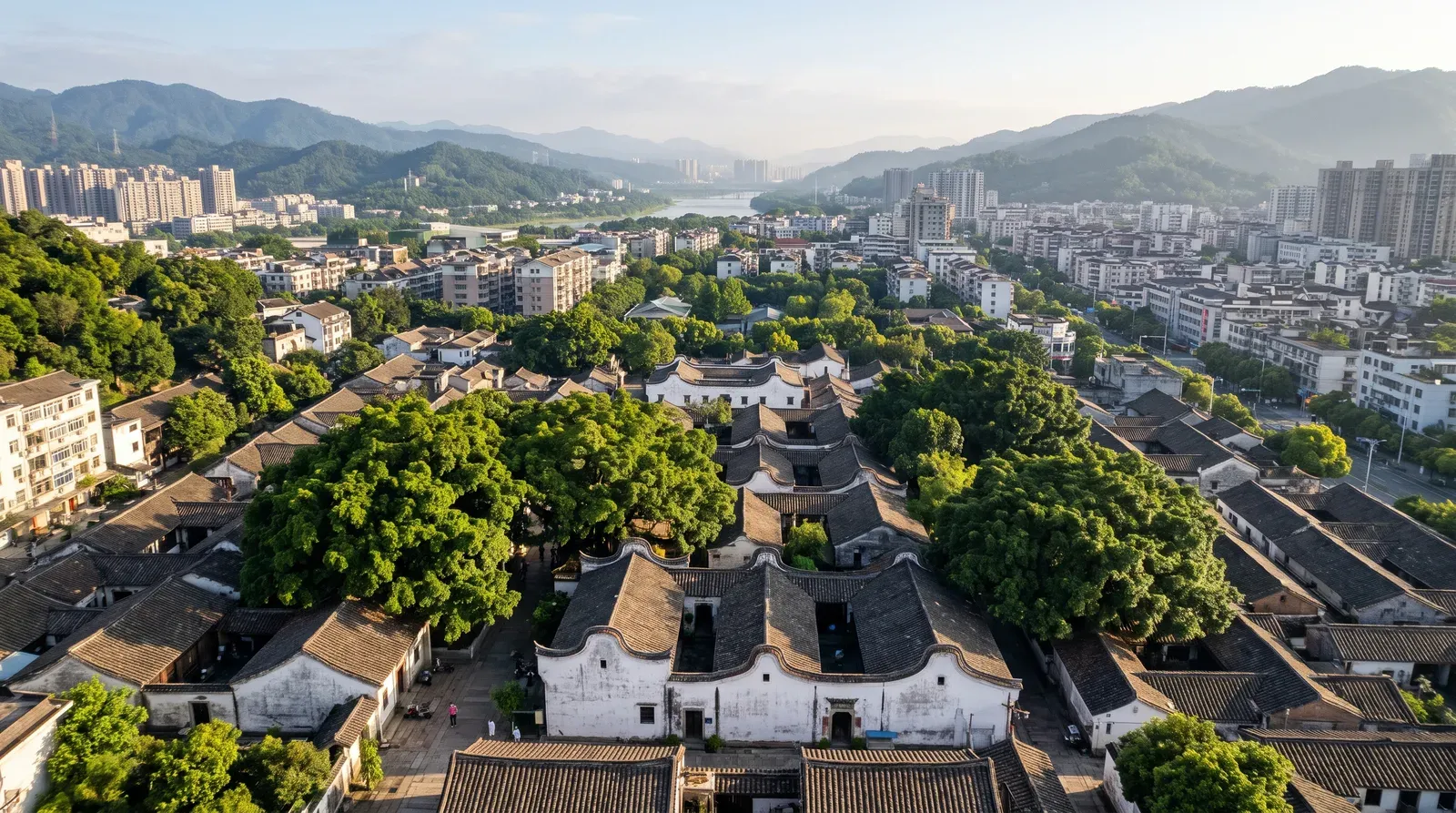
Fuzhou
Fuzhou is the capital of Fujian Province. Founded in 306 BC, Fuzhou City in China has a history of over 2,300 years and was designated a National Famous Historical and Cultural City in 1986. By the end of 2025, its permanent resident population reached 8.521 million, and its gross regional product (GRP) reached 1.51 trillion yuan in 2025. The city is also known as the City of Three Mountains because an expansion during the Five Dynasties period brought Mount Ping, Mount Wu, and Mount Yu within the city walls. It is nicknamed the Banyan City because banyan trees have been widely planted here since the Song Dynasty; the banyan is the city tree, and jasmine is the city flower. The destination suits travelers who appreciate Min culture, modern international architecture, and urban forest walkways. For the core urban area and main sights, visitors usually plan a stay of 2 to 3 days.
Key points
A stay of 2 to 3 days is recommended to explore the core urban sights of Fuzhou City in China, including Sanfang Qixiang and Yantai Mountain. Because summers are hot and typhoons are frequent through autumn, heading to Guling at an altitude of over 800 meters offers a cooler escape. High-speed trains also connect the city to Xiamen in under 1 hour.
Fuzhou is the capital of Fujian Province. Founded in 306 BC, Fuzhou City in China has a history of over 2,300 years and was designated a National Famous Historical and Cultural City in 1986. By the end of 2025, its permanent resident population reached 8.521 million, and its gross regional product (GRP) reached 1.51 trillion yuan in 2025. The city is also known as the City of Three Mountains because an expansion during the Five Dynasties period brought Mount Ping, Mount Wu, and Mount Yu within the city walls. It is nicknamed the Banyan City because banyan trees have been widely planted here since the Song Dynasty; the banyan is the city tree, and jasmine is the city flower. The destination suits travelers who appreciate Min culture, modern international architecture, and urban forest walkways. For the core urban area and main sights, visitors usually plan a stay of 2 to 3 days.
When Is the Weather Best for Visiting Fuzhou?
Fuzhou has a subtropical marine monsoon climate, with an average annual temperature of about 19.6°C. Typhoons are frequent in summer and autumn, and summers can be quite hot. If you visit in summer, Guling is recommended as a summer retreat on the north side of Drum Mountain (Gushan) in Jin'an District. With an altitude of over 800 meters, Guling keeps its maximum summer temperature under 30°C and has served as a well-known summer resort for Chinese and international visitors since the late 19th century.
How to Get to Fuzhou and Travel Around the City?
For arriving by air, Fuzhou Changle International Airport sits on the eastern coast of Changle District, about 45 kilometers from downtown Fuzhou. It serves as a hub airport for Fuzhou Airlines and Xiamen Airlines. High-speed rail is especially convenient. The Fuzhou-Xiamen High-Speed Railway opened on September 28, 2023, with a design speed of 350 km/h and a total length of 277.42 kilometers, linking Fuzhou, Putian, Quanzhou, Xiamen, and Zhangzhou. High-speed trains connect Fuzhou and Xiamen in under 1 hour. You can refer to the guide to taking high-speed trains in China to plan intercity trips. For public transit within the city, you can check the guide to using city metros in China. As of December 2024, the Fuzhou Metro operates 5 lines, including Line 1, Line 2, the first section of Line 4, Line 5, and Line 6, covering a total distance of about 138.94 kilometers across 90 stations. If you are traveling with family or large luggage, your travel designer can also arrange your driver to provide point-to-point transfers throughout your trip.
What Places Are Worth Visiting in Fuzhou?
Fuzhou combines ancient neighborhood layouts, modern historic architecture, and mountain-and-water trails. Several key spots stand out: Sanfang Qixiang (Three Lanes and Seven Alleys) in Gulou District centers on north-south Nanhou Street. It preserves the ancient lifang urban grid system and is China's largest preserved downtown historical and cultural block, as well as a national 5A-level tourist attraction. It serves as the core place to explore the thousand-year lane culture of the Min capital. The Shangxiahang Historical and Cultural Block (Shuanghang) in Taijiang District was historically Fuzhou's commercial center and shipping dock, as well as the birthplace of modern Fujian merchant groups and a hub for guild halls and trade associations. It offers a taste of traditional waterside commercial life. Yantai Mountain (Yantaishan), on the north of Nantai Island in Cangshan District, became a foreign settlement with consulates, churches, and trading firms after Fuzhou opened as a treaty port following the Opium War. It preserves many modern international-style buildings and was rated a national 3A-level tourist attraction in 2021, making it a pleasant place to stroll among blended Chinese and Western buildings with river views. Drum Mountain (Gushan) in Jin'an District has its highest peak, Dading Peak, at an altitude of 919.1 meters. Halfway up sits Yongquan Temple, founded in 783 during the fourth year of the Jianzhong era in the Tang Dynasty, alongside more than 300 ancient cliff carvings by famous masters such as Cai Xiang and Zhu Xi. It is a key site for exploring mountain temples and calligraphic stone art. The Fuzhou Urban Forest Trail (Fudao), running across four mountain ridges including Xiangshan and Jinniushan, is China's first elevated steel-structure skywalk, with a main axis of about 6.3 kilometers and a total loop of about 19 kilometers. Walking along it provides views blending forested hills with the cityscape from multiple angles.
What Local Flavors Can You Taste in Fuzhou?
Fuzhou cuisine is known for being fresh, light, crisp, and tender, and serves as the core origin of Fujian cuisine. The signature dish, Buddha Jumps Over the Wall (Fotiaoqiang), is said to originate from the Guangxu reign of the Qing Dynasty, simmering assorted delicacies from land and sea slowly inside a Shaoxing wine jar over low heat. Rouyan (pork wonton wrapper swallow dumpling) features paper-thin skins hand-pounded from lean pork leg meat and starch; it is often boiled with duck eggs as Taiping Yan to symbolize good fortune. Originating in the early Qing Dynasty, traditional Fuzhou fish balls are made with beaten eel or shark meat for the casing and stuffed with minced pork; when cooked, they float on the soup like stars, earning the name Seven-Star Fish Balls. A classic street breakfast, Dingbianhu (pot-side rice paste soup), uses a seafood broth boiled with oysters and dried shrimp; rice slurry is poured along the rim of a hot wok to sear dry and then scraped into the boiling broth, creating a mild and savory flavor. To explore more regional dishes, you can also consult the Chinese food travel guide.
How to Plan Your Travel Itinerary in Fuzhou?
A stay of 2 to 3 days is usually recommended for touring Fuzhou. On Day 1, visit Sanfang Qixiang in Gulou District and the Shangxiahang Historical and Cultural Block in Taijiang District to experience ancient alleys and modern merchant heritage, sampling rouyan, Seven-Star Fish Balls, and dingbianhu along the way. On Day 2, stroll through Yantai Mountain in Cangshan District to explore modern international architecture, and head to the elevated steel Fudao walkway in the evening to look out over the city skyline. If you have extra time on Day 3, travel to Jin'an District to climb Drum Mountain, visiting the thousand-year-old Yongquan Temple and cliff carvings; during hot summer days, you can switch to Guling for cooler air. If you plan a multi-city journey, the Fuzhou-Xiamen High-Speed Railway reaches Xiamen within 1 hour. You can also contact your travel designer to combine Fuzhou with exploring Fujian Tulou for a relaxed private tour of Fujian.
Sources
Sanfang Qixiang - Wikipedia
Fuzhou-Xiamen High-Speed Railway - Wikipedia
Bianrouyan - Wikipedia
Buddha Jumps Over the Wall - Wikipedia
Fuzhou_ Regions_ Fujian Provincial People's Government
Fuzhou - Wikipedia
Mount Gu - Wikipedia
Shangxiahang - Wikipedia
Yantai Mountain (Fuzhou) - Wikipedia
Fudao - Wikipedia
Guling - Wikipedia
Fish ball - Wikipedia
Dingbianhu - Wikipedia
Sources verified on November 16, 2026
Related travel tips
Replies 08:30–22:00 your time · Free to ask.