
Hakka People in China: Fujian Tulou Guide
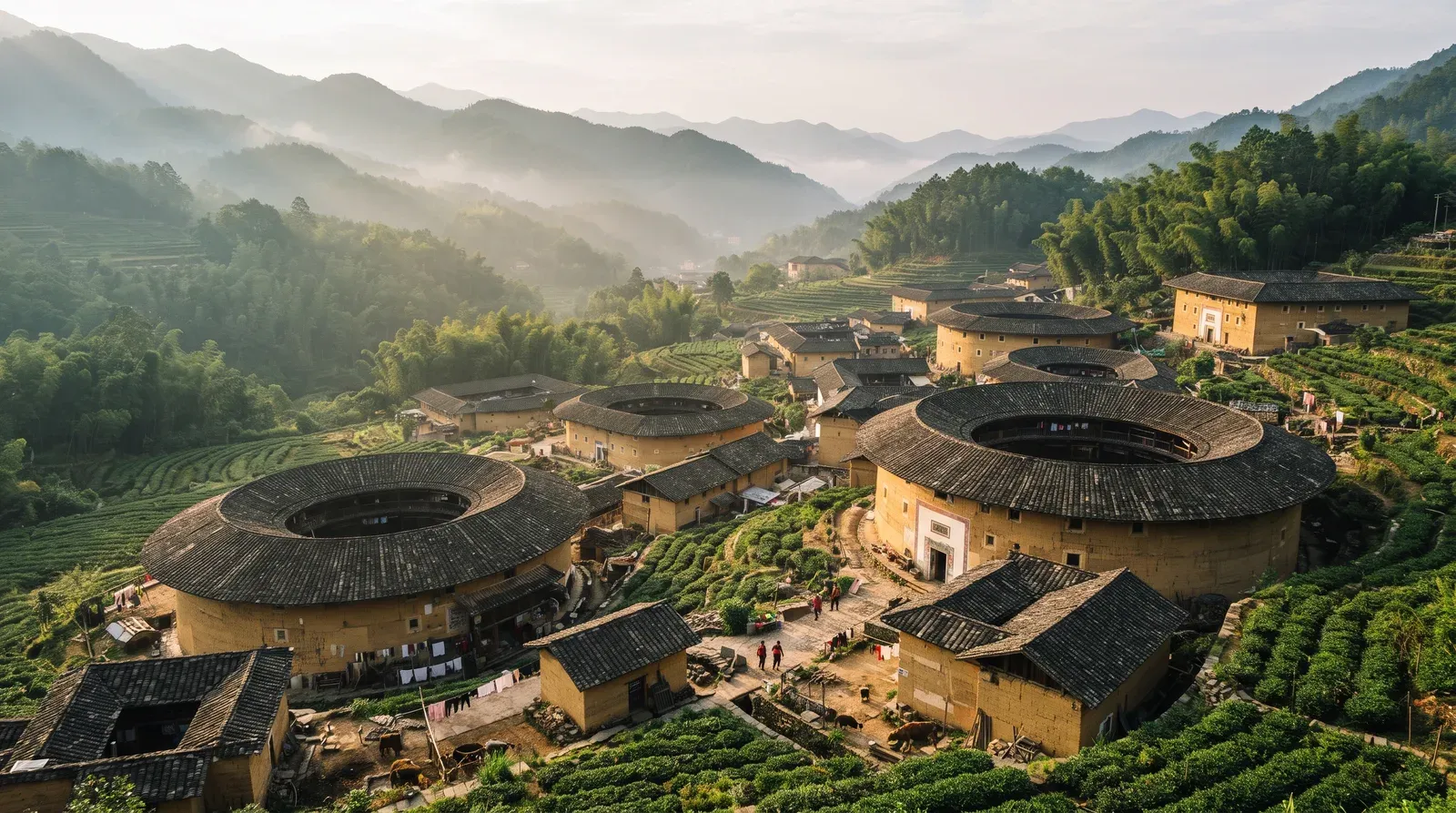
The Hakka people in China built the Fujian tulou across southwest Fujian, within a span of more than 120 km, and 46 of the buildings are on the World Heritage list. Public transport from Xiamen works two ways: take a train to Nanjing railway station and change outside the station to a shuttle bus that runs straight to the scenic areas; or take a direct bus from Xiamen's Hubinnan station to Yunshuiyao old town. Which buildings to see starts with the area. In Yongding, Chengqi Lou and Zhencheng Lou. In Nanjing, the Tianluokeng cluster, plus Hegui Lou and Huaiyuan Lou at Yunshuiyao.
Where Are the Fujian Tulou, and How Do Yongding and Nanjing Differ?
Fujian tulou were usually built between the 15th and 20th centuries, spread over more than 120 km in southwest Fujian. Most are round or square multi-storey buildings of rammed earth, and a single one could house up to 800 people.
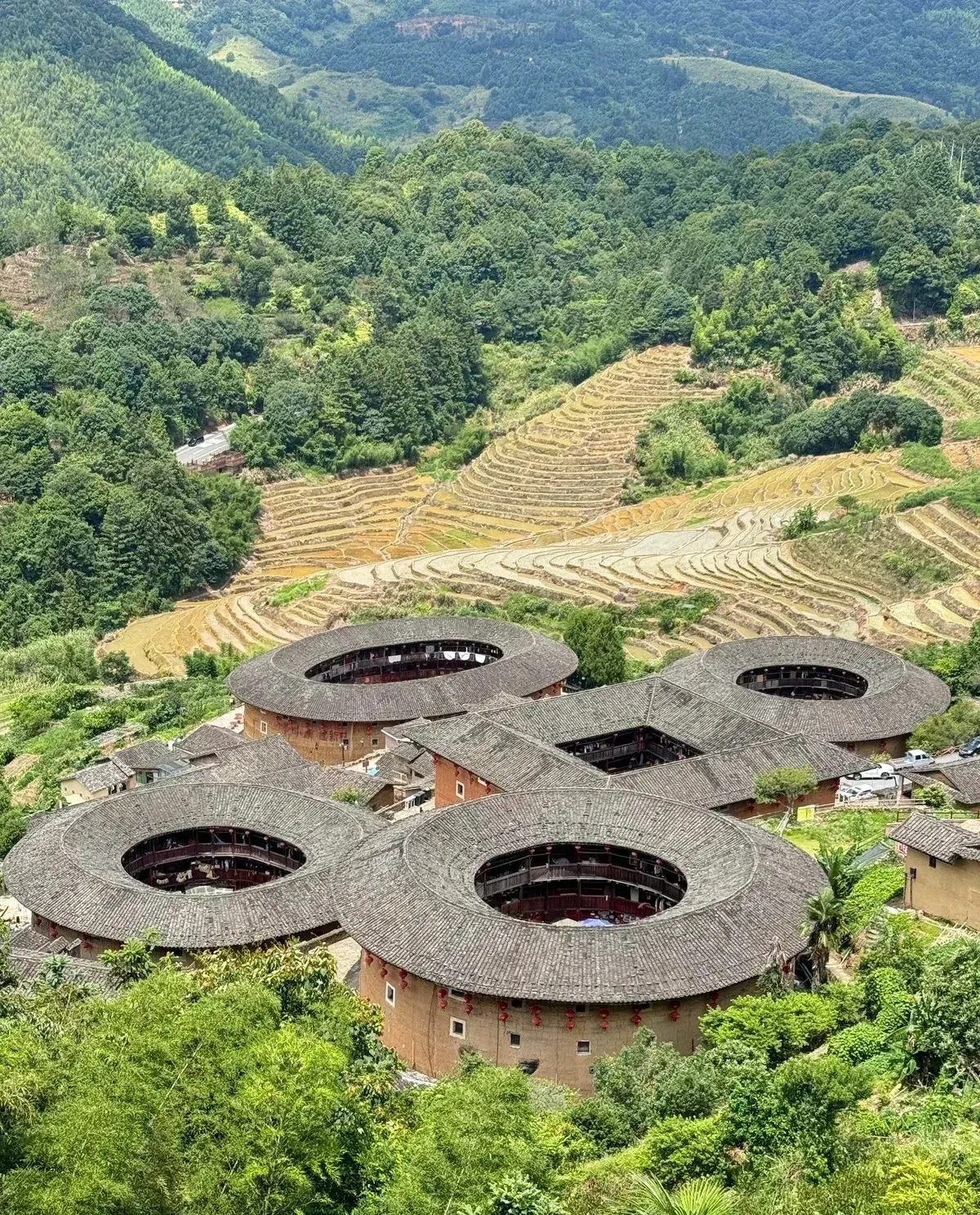
Yongding is in Longyan city, and its best-known buildings are giant round ones: Chengqi Lou in Gaobei village, Zhencheng Lou in Hongkeng village, and Jiqing Lou in the Chuxi cluster. Nanjing is in Zhangzhou city, with the four dishes and one soup layout of the Tianluokeng cluster, Yuchang Lou in Xiaban village of Shuyang town, and Hegui Lou and Huaiyuan Lou in the Yunshuiyao scenic area.
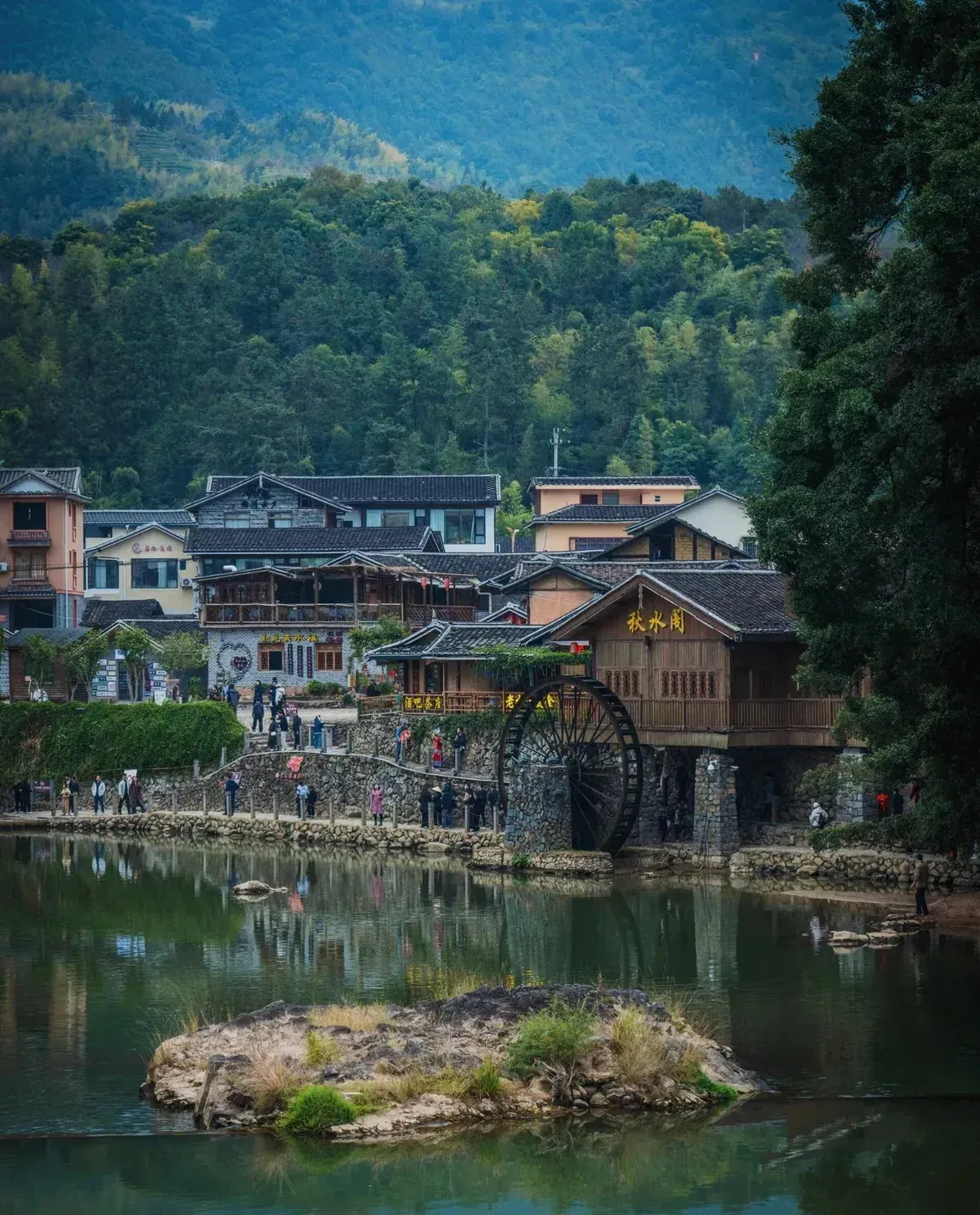
The Yunshuiyao scenic area in Nanjing includes Hegui Lou, a square tulou built on marshland, and Huaiyuan Lou, a well-preserved double-ring round tulou. Old paths, water wheels and a stand of century-old banyan trees link the two.
On a First Trip, Which Tulou Should You See?
Which ones you see depends on the area you go to. Yongding and Nanjing sit in Longyan and Zhangzhou, and each has a few buildings that get named again and again. The table below puts five representative tulou together with their location, year of building and structure.
| Tulou | Location | Year built | Structure and highlights |
|---|---|---|---|
| Chengqi Lou | Gaobei village, Yongding, Longyan | 1709 | Called the king of tulou, with four concentric rings; the outer ring is 62.6 m across and 4 storeys high, 72 rooms on each floor of the outer ring, 288 in that ring, and 370 rooms in the whole building |
| Zhencheng Lou | Hongkeng village, Yongding, Longyan | 1912 | Called the prince of tulou, a double-ring structure; the outer ring has 4 storeys and 184 rooms, the inner ring 2 storeys and 32 rooms, laid out by bagua, and the pillars of the ancestral hall have Greek-style details |
| Jiqing Lou | Chuxi tulou cluster, Yongding | 1419 (17th year of Yongle, Ming dynasty) | Double ring; the outer ring is 4 storeys with 53 rooms on each floor, and it has 72 staircases |
| Yuchang Lou | Xiaban village, Shuyang town, Nanjing | 1308 (Yuan dynasty) | Called the leaning tulou, 5 storeys high; the wooden pillars inside lean left and right, and each of the 25 ground-floor kitchens has its own well |
| Tianluokeng tulou cluster | Nanjing | Buyun Lou built in 1796 | A square Buyun Lou in the middle, plus three round tulou and one oval one, Wenchang Lou; seen from above the shape is called four dishes and one soup |
If you only want one or two, go to Gaobei village in Yongding for the scale of Chengqi Lou's concentric rings; go to Tianluokeng in Nanjing to see several buildings grouped together; and to walk old paths, water wheels and old banyan trees in one go, put Hegui Lou and Huaiyuan Lou on the same day.
How Do You Get to the Tulou from Xiamen?
Public transport from Xiamen to the Nanjing tulou works two ways. One is a train to Nanjing railway station, then a shuttle bus from outside the station that runs straight to the scenic areas. The other is a direct bus from Xiamen's Hubinnan station to Yunshuiyao old town.
Once inside the scenic areas, both Tianluokeng and Yunshuiyao in Nanjing have shuttle buses at 15 yuan per person for the full route. How you move from the visitor reception point to each village follows the arrangements in place that day.
How Much Are Tickets, and Is the Shuttle Extra?
Under approvals from the Fujian Provincial Development and Reform Commission, the scenic areas in Nanjing and Yongding sell tickets separately, and the prices are in the table below. Shuttle buses inside the areas are sold on their own and are not bundled with tickets.
| Scenic area | Ticket | Notes |
|---|---|---|
| Nanjing Tulou Tianluokeng scenic area | 90 yuan per person | Under approval from the Fujian Provincial Development and Reform Commission |
| Yunshuiyao old town scenic area, Nanjing | 90 yuan per person | Under approval from the Fujian Provincial Development and Reform Commission |
| Hekeng Folk Culture Village, Nanjing | 40 yuan per person | Under approval from the Fujian Provincial Development and Reform Commission |
| Yongding Tulou Hakka Folk Culture Village | 90 yuan per person | Under approval from the Fujian Provincial Development and Reform Commission |
| Gaobei tulou cluster, Yongding | 50 yuan per person | Under approval from the Fujian Provincial Development and Reform Commission |
| Joint ticket for the two Yongding areas | 98 yuan per person | Valid 2 days |
| Shuttle buses inside Tianluokeng and Yunshuiyao | 15 yuan per person for the full route | Visitors choose whether to ride; sold separately, not bundled with tickets |
Who Are the Hakka People in China, and Why Did They Live in Tulou?
The Hakka are a branch of the Han Chinese. Their name literally means guest families, and their ancestral homes are spread across the hills of southern Gannan, western Fujian and northeastern Guangdong.
Living in mountain areas and needing defence against outside trouble, they developed a way of living together in large tulou. Women in these families historically did not bind their feet and took on farm work.
When Would This Plan Change?
Ticket prices and bus times are the two things that change most easily. The ticket numbers above follow approvals from the Fujian Provincial Development and Reform Commission, and if prices are adjusted the ticket window at the scenic area is the final word. Shuttle buses inside the areas cost 15 yuan per person for the full route, are optional and are not bundled with tickets, so your total depends on whether you ride.
The 98 yuan joint ticket in Yongding works at both the Tulou Hakka Folk Culture Village and the Gaobei tulou cluster, and it is valid 2 days. If you go to only one of them, buy that area's single ticket.
The routes here cover Xiamen to Nanjing: both the shuttle bus from the railway station and the direct bus from Hubinnan station to Yunshuiyao depend on that day's schedule, so check the station notice before you set out. For public transport towards Yongding we have no figures we can verify, so go by the station notice on the day you leave.
Sources
Fujian Tulou - UNESCO World Heritage Centre
Fujian tulou - Wikipedia
Guanyang Village, Nanjing County, Zhangzhou - Fujian Provincial Department of Culture and Tourism
Notice of the Fujian Provincial Development and Reform Commission on ticket prices and supporting transport service prices in the Nanjing Tulou scenic area - Other information to be made public - Provincial Development and Reform Commission
Notice of the Fujian Provincial Development and Reform Commission on ticket prices and supporting transport service prices in the Yongding Tulou scenic area - Other information to be made public - Provincial Development and Reform Commission
Hakka people - Wikipedia
All sources checked on November 5, 2026.
FAQ
How many people can one tulou house?
A single tulou can house up to 800 people. Chengqi Lou has 370 rooms in all, with 72 rooms on each floor of the outer ring, 288 in that ring.
Is there a direct bus from Xiamen to Yunshuiyao?
Yes. A direct bus runs from Xiamen's Hubinnan station to Yunshuiyao old town. You can also take a train to Nanjing railway station and change outside the station to a shuttle bus into the scenic area.
Do I have to take the shuttle bus inside a scenic area?
No. The shuttle buses inside Tianluokeng and Yunshuiyao in Nanjing both cost 15 yuan per person for the full route; visitors choose whether to ride, they are sold separately and are not bundled with tickets.
Do Nanjing and Yongding share the same tickets?
Tianluokeng, Yunshuiyao and Hekeng in Nanjing sell separate tickets at 90 yuan, 90 yuan and 40 yuan per person. In Yongding there is a 98 yuan joint ticket for the Tulou Hakka Folk Culture Village and the Gaobei tulou cluster, valid 2 days.
Which of these tulou is the oldest?
Yuchang Lou is the oldest of the ones here, built in 1308 (Yuan dynasty); Jiqing Lou was built in 1419, Chengqi Lou in 1709 and Zhencheng Lou in 1912.