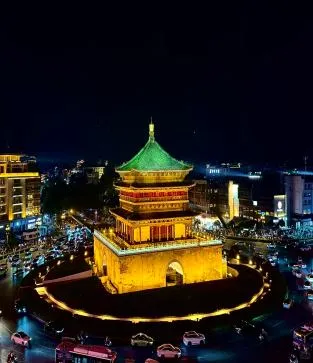
Yang Guifei: Her Life and Huaqing Palace Relics
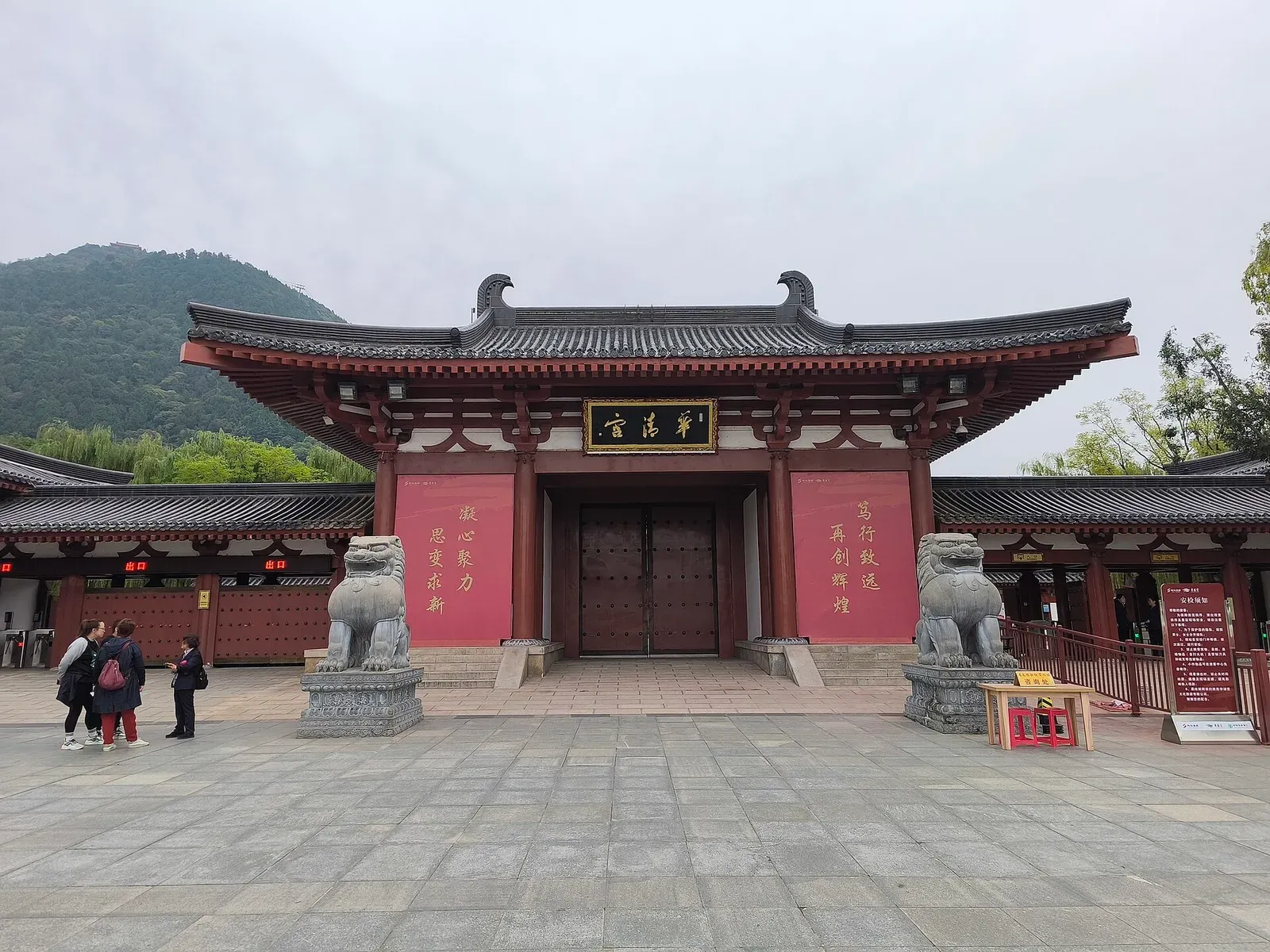
Photo: 源義信 / Wikimedia Commons, CC BY-SA 4.0
Yang Guifei (Yang Yuhuan, born in 719) was the most favored consort of Emperor Xuanzong in his later years, regarded as one of ancient China's Four Beauties. Located about 25 kilometers east of Xi'an in Shaanxi, Huaqing Palace originated from Tangquan Palace built in 644 during the reign of Emperor Taizong. It served as the primary imperial resort where she stayed and bathed alongside Emperor Xuanzong during the height of her favor.
| Item | History and Site Overview |
|---|---|
| Yang Guifei lifespan | 719 to July 15, 756 |
| Huaqing Palace location | Northern foot of Mount Li in the Qinling Mountains, about 25 km east of Xi'an, Shaanxi |
| Scenic area rating and protection | National 5A Tourist Attraction, Major Historical and Cultural Site Protected at the National Level |
| Operating organization | Managed and operated by Shaanxi Tourism Group |
| Imperial bath excavation and opening | Five sets of Tang dynasty bath ruins excavated in 1982, officially opened to the public in 1990 |
| Mawei Post ruins today | Mawei Post Folk Culture Park and Yang Guifei Tomb west of Xingping, Shaanxi |
From Prince's consort to imperial favorite: What were the key turning points in Yang Guifei's life?
In 735, Yang Yuhuan attended the wedding of Emperor Xuanzong's daughter, Princess Xianyi, in Luoyang, where she first met Li Mao, Prince of Shou. On February 10, 736, at age 17, she officially married Li Mao, son of Xuanzong and Consort Wu, becoming Princess of Shou. Because she was already his son's wife, Xuanzong secretly arranged for her to enter a Daoist convent as a priestess under the religious name Taizhen to avoid public scrutiny and criticism.
After Xuanzong arranged a new marriage for Li Mao to the daughter of Wei Zhaoxun, he officially invested Taizhen as Guifei (Noble Consort) on September 19, 745, placing her at the head of the imperial harem. Her fuller figure was often contrasted with the slender frame of Empress Zhao Feiyan from the Han dynasty, inspiring the Chinese idiom huan fei yan shou to describe contrasting feminine beauties. When she first arrived at Huaqing Pool in the 28th year of the Kaiyuan era, Xuanzong had his signature musical composition, the Rainbow Feather Garment Dance, performed to welcome her.
Once favored, her three older sisters received the titles of Duchess of Han, Duchess of Guo, and Duchess of Qin, enjoying banquet privileges that surpassed those of Xuanzong's own sister, Princess Yuzhen. When military governor An Lushan arrived in Chang'an in 747 and received imperial permission to enter the inner palace, Xuanzong had him honor the consort as his adoptive mother. Because fresh lychees only grew in the south, the imperial court used relay stations and fast courier horses riding day and night to deliver fresh lychees to Chang'an for her table.
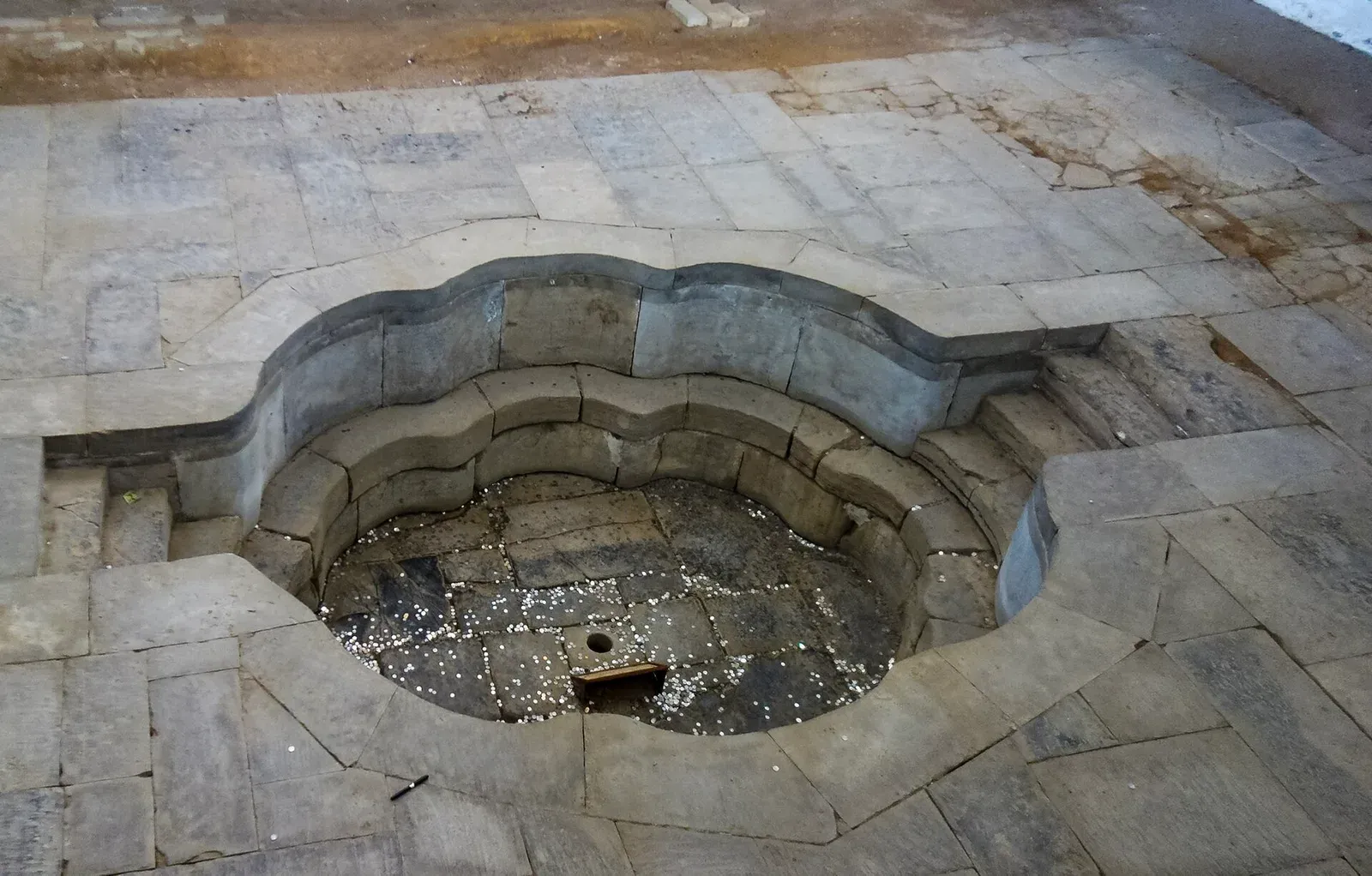
Tip: Yang Guifei received special permission to use imperial baths normally reserved for the emperor, and the outline of her right handprint remains carved into stone at the site, which you can look for during your visit to the imperial pool ruins.
The Tianbao Crisis and Mawei Post Mutiny: What Happened to Yang Guifei?
The Mawei Post Mutiny occurred on July 15, 756 (the sixth lunar month of the 15th year of Tianbao), west of Xingping in Shaanxi Province, resulting in the deaths of Chancellor Yang Guozhong and the consort. Facing mutinous imperial troops who refused to march, Emperor Xuanzong was forced to order his trusted eunuch Gao Lishi to strangle her under a pear tree in front of a Buddhist hall to appease the army.

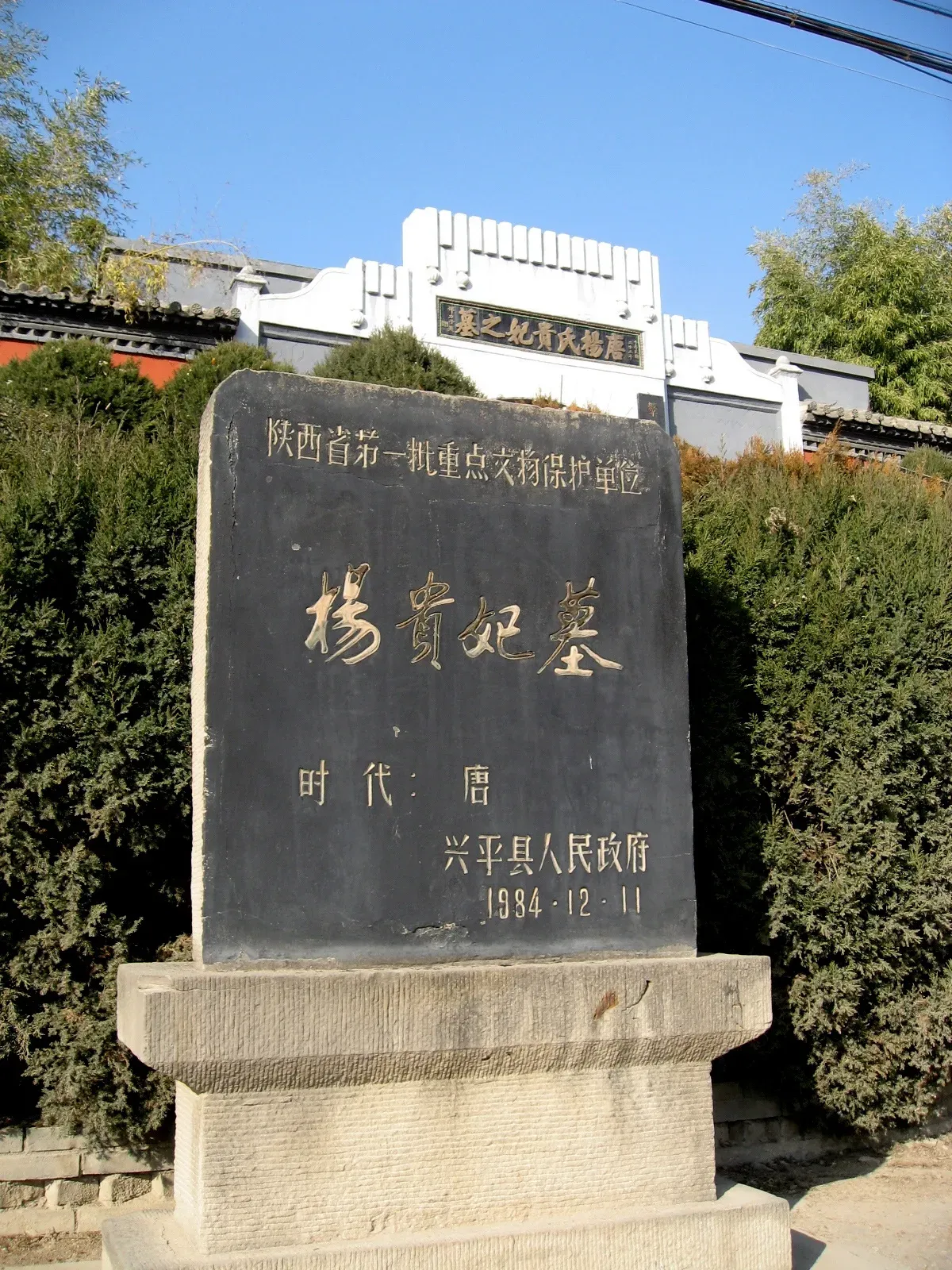
The original site of Mawei Post now houses the Mawei Post Folk Culture Park and Yang Guifei Tomb, designated a national 4A tourist attraction on December 10, 2015. In 806, while serving as a local official in Zhouzhi, poet Bai Juyi met with his friends Chen Hong and Wang Zhifu at Xianyou Temple, discussing folk stories of Xuanzong and his consort before composing the classic narrative poem Song of Everlasting Sorrow.
Tip: Xianyou Temple, where Bai Juyi wrote his poem, sits in Zhouzhi, while Yang Guifei Tomb lies west of Xingping, both west of Xi'an. Huaqing Palace sits in Lintong District east of the city, so plan separate east and west day trips.
Visiting Huaqing Palace: How to Explore the Eight Tang Dynasty Pools and Modern History
In 747 (the sixth year of the Tianbao era), Emperor Xuanzong renamed the site Huaqing Palace and expanded it into an imperial resort covering about 1,300 mu. Built along the slopes of Mount Li, it was enclosed by outer walls and divided into front administrative courts and rear gardens. The southern half of the palace enclosure forms the hot spring bath area, where eight pools run from east to west: Jiulong Pool (Lotus Pool), Guifei Pool (Haitang Pool), Xingchen Pool, Crown Prince Pool, Shaoyang Pool, Shangshi Pool, Yichun Pool, and Chang Pool.
Archaeological excavations at Huaqing Palace in 1982 uncovered five groups of Tang imperial bath ruins, which gained national protection in 1996. Alongside Tang dynasty relics, Chiang Kai-shek stayed at the Five-Room Pavilion in 1936 as his temporary headquarters, where Zhang Xueliang and Yang Hucheng launched the Xi'an Incident on December 12 of that year.
Mount Li (also known as Xiuling) sits south of Lintong District, about 30 kilometers from downtown Xi'an, and combines with the palace to form the scenic area. Historical sites along the mountain include Bingjian Pavilion, Laomu Temple, Laojun Temple, and the Beacon Tower. If you are interested in Tang dynasty imperial baths, focus on the Haitang and Lotus pool ruins in the southern section; if modern history is your focus, continue up the mountain trail to Bingjian Pavilion after seeing the Five-Room Pavilion.
| Structure or Pool Relic | Historical Facts and Highlights | Area |
|---|---|---|
| Guifei Pool (Haitang Pool) | Hot spring pool specially granted for Yang Guifei, with a stone carving of her right handprint outline | Southern half of Huaqing Palace grounds |
| Jiulong Pool (Lotus Pool) | Imperial pool originally reserved for Tang emperors | Southern half of Huaqing Palace grounds |
| Xingchen, Crown Prince, Shaoyang, Shangshi, Yichun, and Chang Pools | Hot spring pools distributed from east to west alongside Lotus Pool and Haitang Pool | Southern half of Huaqing Palace grounds |
| Five-Room Hall | Chiang Kai-shek's residence in 1936 where the Xi'an Incident took place | Huaqing Pool |
| Bingjian Pavilion, Laomu Temple, Laojun Temple, and Beacon Tower | Historic sites along the route that form the scenic area together with Huaqing Palace | Mount Li, south of Lintong District |
Getting to Huaqing Palace and the Terracotta Army: Lintong Route and Transport Guide
Xi'an Metro Line 9 stretches 25.2 kilometers across 15 stations, opening on December 28, 2020, to connect downtown Xi'an with Lintong District. After exiting the station, travelers can transfer to connecting shuttle buses to reach the Terracotta Army. In addition, Xi'an Bus 307 connects Tang Wall Ninth District Bus Station with the Terracotta Army, stopping at Giant Wild Goose Pagoda and Huaqing Pool. The first and last departures from Tang Wall Ninth District run from 6:30 to 18:30, with a full-route fare of 8 yuan.
| Transport Option | Route and Stops | Operations and Connections |
|---|---|---|
| Xi'an Metro Line 9 | Connects downtown Xi'an and Lintong District, running 25.2 km with 15 stations | Passengers can transfer to connecting shuttle buses to the Terracotta Army (opened Dec 28, 2020) |
| Xi'an Bus 307 | Connects Tang Wall Ninth District Bus Terminal and the Terracotta Army via Giant Wild Goose Pagoda and Huaqing Pool | First and last departures from Tang Wall Ninth District run from 6:30 to 18:30, with a full fare of 8 yuan |
On our Beijing, Xi'an & Shanghai 14-Day Private Tour, Slow Pace itinerary, your travel designer arranges the Lintong eastern route (the Terracotta Army and Huaqing Palace) as a dedicated single day. Downtown sights are grouped across separate days covering the City Wall morning market, Bell and Drum Towers, Yongxingfang, Giant and Small Wild Goose Pagodas, and the Grand Tang Mall. Daily walking comes to around 9,500 to 10,500 steps, paired with private transport from your driver to keep the touring pace unhurried.
Sources
Beijing, Xi'an & Shanghai 14-Day Private Tour, Slow Pace
Huaqing Palace Ruins - Wikipedia
Xi'an Metro Line 9 - Wikipedia
Yang Guifei - Wikipedia
Mawei Station Mutiny - Wikipedia
Huaqing Pool - Wikipedia
Huaqing Palace Ruins - Wikipedia
Huaqing Pool - Wikipedia
Mount Li - Wikipedia
Rainbow Feather Garment Dance - Wikipedia
Song of Everlasting Sorrow - Wikipedia
All sources verified as of November 17, 2026
FAQ
Which pool at Huaqing Palace was reserved for Yang Guifei?
The pool specially granted for Yang Guifei's use was Guifei Pool, also known as Haitang Pool, located in the hot spring section on the southern side of Huaqing Palace. She received imperial permission to bathe in waters once reserved exclusively for emperors, and the outline of her right handprint remains carved on a stone slab at the excavation site.
Are Yang Guifei Tomb and the Mawei Post site inside Huaqing Palace?
No, they are not. The Mawei Post Mutiny occurred at Mawei Post west of Xingping, Shaanxi. Today, that site hosts the Mawei Post Folk Culture Park and Yang Guifei Tomb (a 4A attraction), located west of Xi'an, whereas Huaqing Palace is in Lintong District east of the city.
How do you get to Huaqing Palace and the Terracotta Army from downtown Xi'an?
You can take Xi'an Metro Line 9 straight to Lintong District and then transfer to a connecting shuttle bus to the Terracotta Army. Alternatively, you can take Xi'an Bus 307, which connects Tang Wall Ninth District Bus Station to the Terracotta Army via Giant Wild Goose Pagoda and Huaqing Pool, with an 8 yuan fare for the entire route.
What else is worth seeing at Huaqing Palace besides the Tang dynasty bath ruins?
Huaqing Palace preserves the Five-Room Pavilion, Chiang Kai-shek's 1936 headquarters where the Xi'an Incident took place. Mount Li also forms an integral part of the scenic area, featuring historical sites such as Bingjian Pavilion, Laomu Temple, Laojun Temple, and the ancient Beacon Tower.