Sichuan Noodles: Dan Dan and Classic Regional Bowls
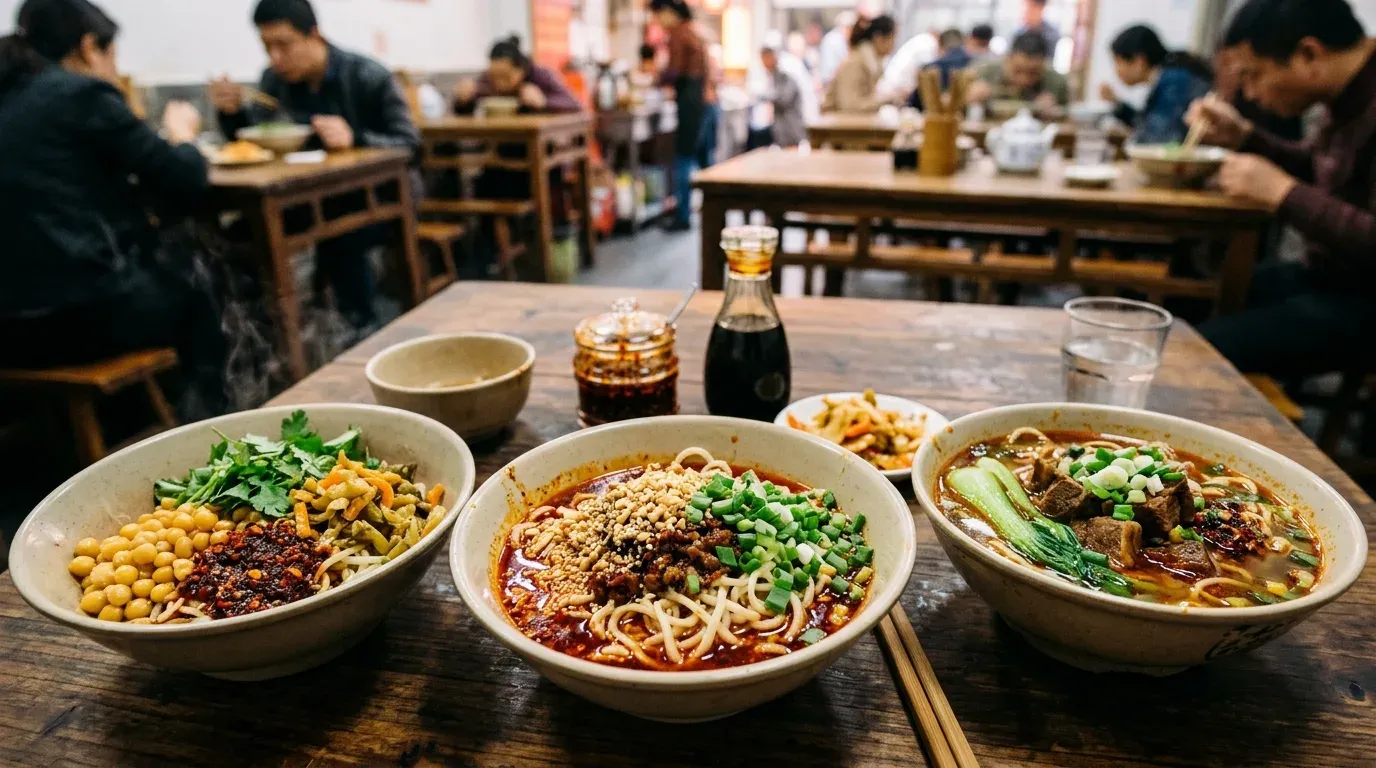
According to Sichuan cuisine master Peng Ziyu, the main strength of Sichuan noodles lies in the endless variety of toppings and seasonings, known for small broth-free bowls, rich oil, deep flavors, and crispy minced meat toppings. In Chengdu, named a UNESCO City of Gastronomy in 2010, a one-liang portion at old-town noodle shops usually costs between 8 and 12 RMB. Locals often order a one-liang bowl of several different noodles to share, pairing them with chili oil wontons or Zhong dumplings.
| Noodle Dish | Key Ingredients and Toppings | Seasoning and Preparation |
|---|---|---|
| Dan Dan Noodles | Crispy golden minced pork (cuisao), Yibin yacai, crushed peanuts, chopped scallions | Dry-tossed in a broth-free small bowl with red chili oil and Sichuan pepper sauce at the bottom; mildly tart and refreshing with moderate heat |
| Yibin Flame Noodles (Ranmian) | Minced Yibin yacai, crushed peanuts, chopped scallions; comes in vegetarian versions or meat versions topped with fragrant sauteed minced pork | Boiled, shaken dry, and tossed with cooked rapeseed oil, then seasoned with local soy sauce and chili oil; heavy in oil and completely water-free, it catches fire when lit |
| Sujiao Zajiang Noodles | Minced pork simmered over low heat with sweet bean paste and broad bean paste | Heavily seasoned with sesame-peanut paste; the most widespread classic variety across Chengdu neighborhood noodle shops |
| Sichuan Shredded Chicken Cold Noodles | Shredded chicken, julienned cucumber, mung bean sprouts, fried crushed peanuts | Made with noodles tossed in cooked oil and fanned cool, mixed with soy sauce, red chili oil, sesame oil, Baoning vinegar, and ginger-scallion sauce |
Are Dan Dan Noodles Served with Broth or Dry-Tossed?
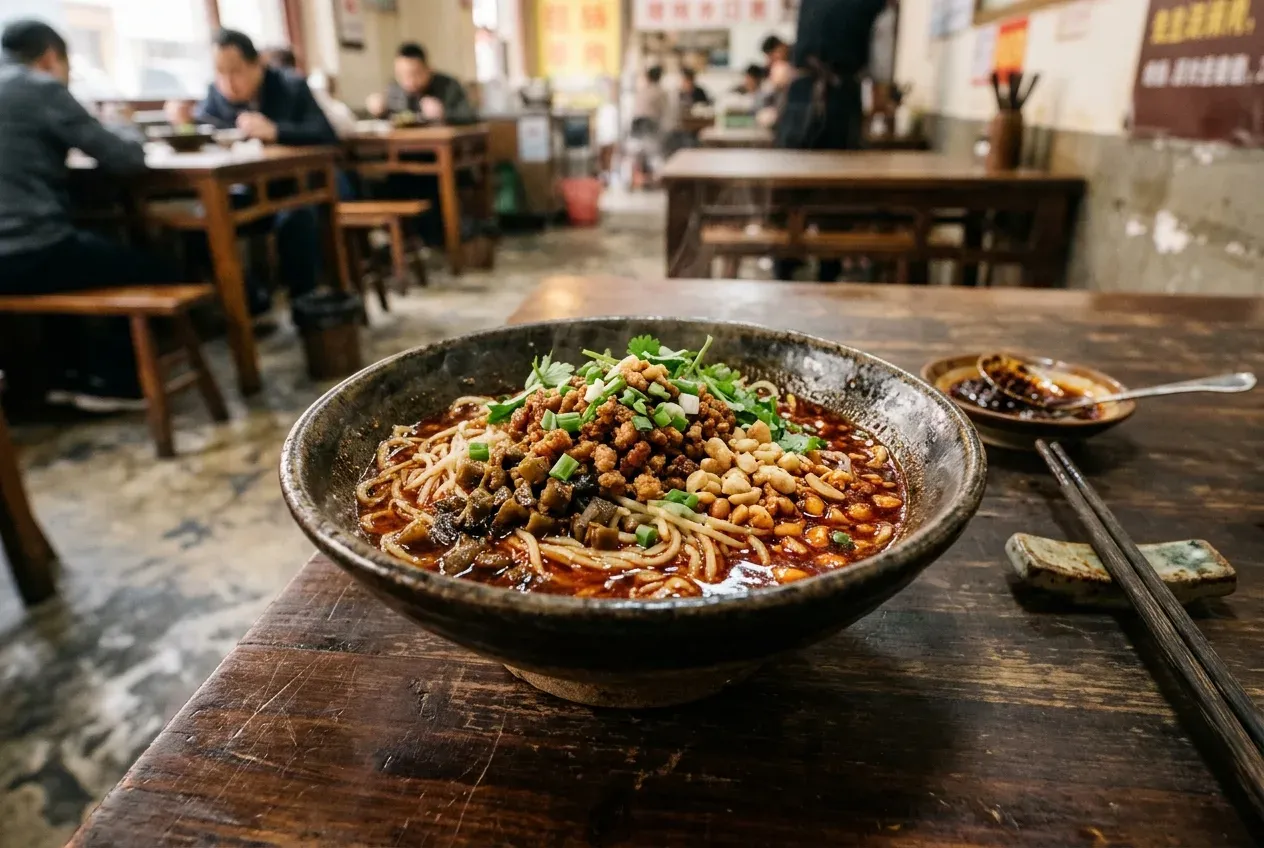
Authentic Sichuan Dan Dan noodles are served as small broth-free dry-tossed bowls, topped with numbing-spicy minced pork and minced yacai, then sprinkled with crushed peanuts and chopped scallions. The mild, large-bowl soup version comes from Hong Kong adaptations and is rare in Sichuan. The version introduced to Japan by Sichuan-born chef Chen Kenmin evolved into a style of Japanese ramen. In 2013, Dan Dan noodles, praised for their mildly tart, refreshing taste and moderate spice, were selected among the "Top 10 Famous Noodles in China" by China's Ministry of Commerce and the China Hotel Association.
According to local tradition, a street vendor nicknamed Chen Baobao created Dan Dan noodles in 1841 in Zigong. The dish was named after the shoulder pole (dan dan) he used to carry his wares through the streets, and Chengdu residents often bought a bowl at night as a quick snack to ward off hunger. When eating Dan Dan noodles in Chengdu, the tradition is to mix the bowl thoroughly from the bottom for about a minute and a half as soon as it arrives, until the sauce coats every strand and no plain white noodles show.
Tip: The soul of Dan Dan noodles is the crisp minced pork topping. Pork front shoulder or skinless pork belly is chopped into rice-grain-sized bits and stir-fried over medium-low heat until dry, golden, and crispy. When tossing your noodles, mix this crispy pork thoroughly with the seasoning sauce settled at the bottom of the bowl.
Why Do Yibin Flame Noodles Catch Fire, and What Are the Meat and Vegetarian Options?
Yibin flame noodles (Ranmian) take their name from the fact that they are cooked dry, tossed in heavy oil, and can be lit with a flame like a wick when lifted. This specialty has been passed down since the Guangxu reign of the Qing dynasty. During preparation, the noodles are boiled just until cooked through, then shaken dry vigorously in a bamboo strainer to remove excess water. Tossed hot into a bowl, they are drizzled with cooked rapeseed oil to prevent sticking, and mixed with local soy sauce, special chili oil, minced Yibin yacai, crushed peanuts, and chopped scallions.
If you want to taste the traditional dry-tossed flavor, you can order meatless vegetarian flame noodles (su ranmian) or meat flame noodles (hun ranmian) topped with a spoonful of fragrant stir-fried minced pork. If you prefer hot broth, you can choose broth flame noodles (ran tangmian) served with bone broth.

Tip: Noodle shops in Yibin offer a wide variety of toppings. Beyond traditional flame noodles, you will find 10 to 20 options such as beef, pork intestine, three-delicacy combination, pork ribs, button mushrooms, minced pork, and pork trotter, which you can order separately or combine as you like.
How Do Daily Chengdu Zhajiang Noodles Differ from Dan Dan Noodles?
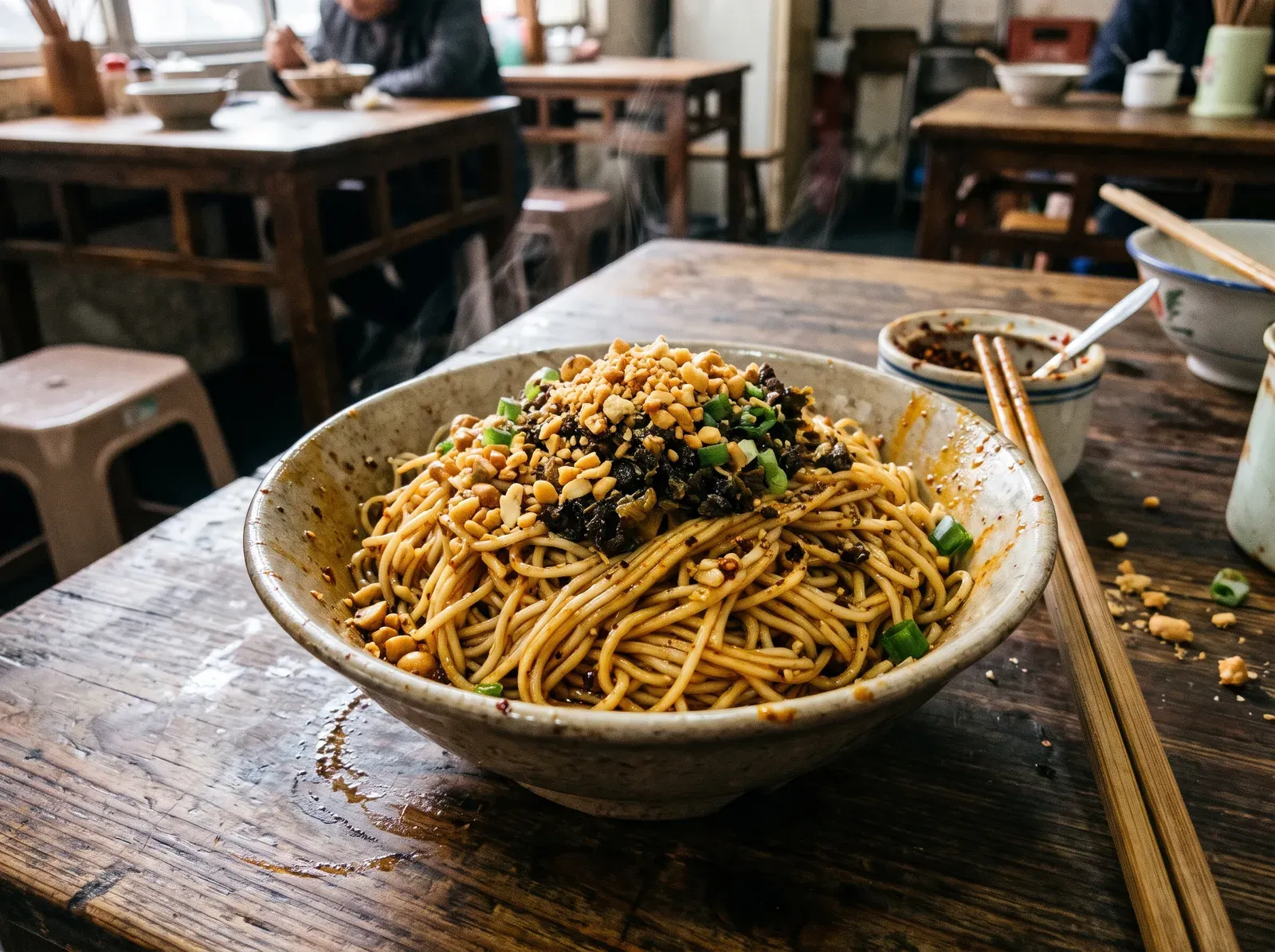
Among the top 50 specialty noodle shops selected in Chengdu, 14 feature sujiao zhajiang, pea zhajiang, or zhajiang noodles as their signature dish. Zhajiang noodles have become the most common style in Chengdu street noodle shops. The core difference between sujiao zhajiang noodles and traditional Dan Dan noodles lies in the meat topping and the sauce: zhajiang meat sauce is simmered slowly with sweet bean paste and broad bean paste, with a generous base of sesame and peanut paste, while traditional Dan Dan noodles do not use sweet bean paste or sesame paste.
On hot summer days, Chengdu locals often turn to Sichuan cold noodles and shredded chicken cold noodles. These dishes use cooked noodles tossed in oil and cooled with a fan, topped with shredded cucumber, mung bean sprouts, fried crushed peanuts, and shredded chicken, all dressed in a sauce of soy sauce, red chili oil, sesame oil, Baoning vinegar, ginger, and scallions.
Tip: After eating chili oil noodles in Chengdu, if the spice feels intense, you can follow the local habit of enjoying a refreshing bowl of iced tofu pudding or brown sugar lianggao (rice jelly cake) to soothe your palate.
How Do Sichuan Noodles Follow the Classic Flavor System of Sichuan Cuisine?
The seasoning of Sichuan noodles relies on the 24 classic compound flavor profiles of Sichuan cuisine, emphasizing the "Seven Tastes and Eight Flavors." The seven tastes are sweet, sour, numbing, spicy, bitter, fragrant, and salty. The eight flavors include fish-fragrant, hot and sour, pepper-numbing, strange-flavor (guaiwei), numbing-spicy, red chili oil, dry-braised, and dry-stir-fried. Regionally, Sichuan cuisine is divided into Shanghe (Upper River), Xiaohe (Small River), Xiahe (Lower River), and Buddhist vegetarian traditions, with noodle styles evolving across different river basins.
The plain chili oil noodles created by Chen Baobao spread to Zigong, where they evolved into Ziliujing Dan Dan noodles; they reached Chongqing and developed into Chongqing Xiaomian; and when they arrived in Chengdu, local diners added crisp fried minced pork and yacai to suit their preference for meat toppings, creating the classic Chengdu Dan Dan noodles.
Tip: Yibin yacai is a National Geographical Indication product. Along with Fuling Zhacai, Nanchong Dongcai, and Neijiang Datoucai, it is counted among the "Four Famous Pickled Vegetables of Sichuan." Made by curing tender mustard green stems with salt and brown sugar, it provides the essential layer of savory umami in local noodles.
What Unique Knife Skills and Traditions Shaped Sichuan Noodle History?
Golden thread noodles (Jinsimian) are a variation of Dan Dan noodles defined by precision knife work. Developed in 1989 by chef Li Hongkai, they rely on a special dough-kneading method that allows the dough to be cut into ultra-thin strands that hold together even during boiling, fine enough to thread through the eye of a needle.
According to official historical research by Chengdu Fabu, street vendors carrying shoulder poles in the past hung a honeycomb briquette stove with a divided copper pot on one end (one compartment for boiling noodles, the other for simmering chicken broth), while the other end held bowls, chopsticks, seasonings, and a wash bucket. Wandering noodle vendors in old Chengdu also used divided copper pots with one compartment for noodles and the other for pork trotter broth, accompanied by main seasonings including red chili oil, Sichuan preserved vegetable or yacai, crushed peanuts, ground Sichuan pepper, and spiced dark soy sauce.
Sources
Chengdu - Wikipedia
Ranmian - Wikipedia
Sichuan Cuisine - Wikipedia
Sichuan cuisine - Wikipedia
Dandan noodles - Wikipedia
Dan Dan Noodles - Wikipedia
Ranmian - Wikipedia
Cold Noodles - Wikipedia
Sources verified on November 19, 2026
FAQ
Are Dan Dan noodles slightly sour or mildly spicy?
Authentic Dan Dan noodles rely primarily on chopped scallions, yacai, and lard, offering a mildly tart, refreshing taste with moderate heat. The bottom of the bowl holds minced pork with yacai, red chili oil, and Sichuan pepper sauce, delivering a dry-fragrant, gently numbing finish once mixed.
Why do Yibin flame noodles taste so dry?
Yibin flame noodles focus on rich oil without water. Once boiled just until cooked through, the noodles are shaken vigorously in a bamboo strainer to drain excess water, then drizzled with cooked rapeseed oil and tossed with seasonings. If you prefer broth, you can order flame noodle soup served with bone broth.
How should you order portions when visiting a Sichuan noodle shop for the first time?
Noodle shops in old neighborhoods usually let you order in one-liang portions. Locals often order a one-liang bowl of several different noodles to try together, alongside chili oil wontons or Zhong dumplings.
What is the thinnest type among Sichuan noodles?
Golden thread noodles are a knife-cut variation of Dan Dan noodles. Using a specialized dough technique, they are sliced into exceptionally fine strands that do not break apart during boiling, fine enough to pass through the eye of a needle.