
Qixi Festival: Customs and Legends of Chinese Valentine's
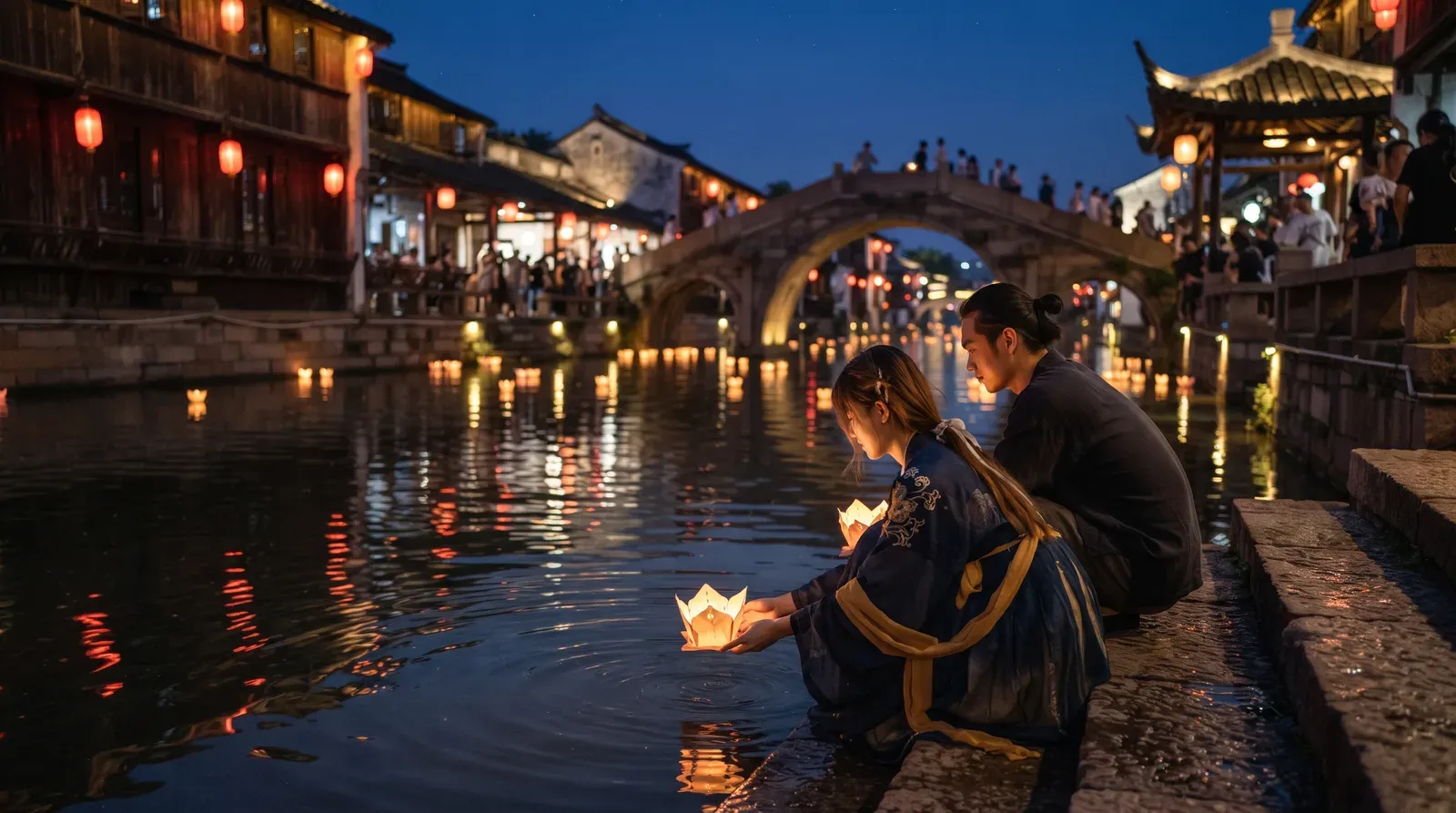
The Qixi Festival is celebrated on the seventh day of the seventh lunar month, falling on August 8 in 2027 on the Gregorian calendar. In Chinese folk tradition, it is often called Chinese Valentine's Day or the Qiqiao Festival. Celebrations traditionally center on young women threading needles in dim light to pray for dexterity, worshiping the Cowherd and Weaver Girl, listening for whispered heavenly words, and making qiaoguo pastries. Its folklore draws on Warring States star records and Eastern Han folk tales, recounting how the Cowherd and the Weaver Girl reunite across the Milky Way over a bridge of magpies on the seventh day of the seventh lunar month.
When is the Qixi Festival on the Gregorian calendar?
The festival takes place on the seventh day of the seventh lunar month, so its Gregorian date changes every year. On the Gregorian calendar, it falls on August 29 in 2025, August 19 in 2026, and August 8 in 2027. According to the Gregorian-Lunar Calendar Conversion Table from the Hong Kong Observatory, the seventh day of the seventh lunar month in 2025 falls on Friday, August 29.
| Year | Lunar Date | Gregorian Date |
|---|---|---|
| 2025 | 7th day of the 7th lunar month | August 29 (Friday) |
| 2026 | 7th day of the 7th lunar month | August 19 |
| 2027 | 7th day of the 7th lunar month | August 8 |
How did the Qixi Festival become known as Chinese Valentine's Day?
As a traditional day of romance, the festival centers on the legend of the Cowherd (Niulang) and the Weaver Girl (Zhinü). Star records about the two figures date back to the Warring States period. By the Eastern Han dynasty, the legend took shape that the Queen Mother of the West drew a line across the sky with her silver hairpin to form the Milky Way, decreeing that the lovers could only meet once a year on the seventh day of the seventh lunar month over a bridge formed by magpies.
Folk tradition preserves this deep emotional yearning to reunite across the river of stars. Each year on the night of the seventh day of the seventh lunar month, people look up at the starry sky to honor their meeting. This romantic tale turned the holiday into a traditional occasion for expressing devotion and longing.
Which constellations correspond to the Cowherd and Weaver Girl stars?
In astronomy and legendary lore, the Weaver Girl star corresponds to Vega in the constellation Lyra. The Cowherd star corresponds to Altair in the constellation Aquila. In the night sky, Deneb in Cygnus symbolizes the magpie bridge stretching across the Milky Way.
On clear summer nights, these three bright stars shine across the Milky Way. Folklore linked these natural celestial bodies to the myth of the Cowherd and the Weaver Girl, while Deneb in Cygnus symbolizes the magpie bridge across the Milky Way.
What rituals and customs are traditionally practiced during the Qiqiao Festival?
Also known as the Qiqiao Festival or the Daughters' Festival, celebrations traditionally focus on blessings for women. Beyond the Han majority, ethnic groups including the Manchu, Korean, Zhuang, Dong, Miao, and She also observe the day. During the festivities, young women pray to the Weaver Girl for needlework skills, wisdom, and a good marriage.
Traditional customs mainly include paying homage to the Cowherd and Weaver Girl, listening for heavenly whispers under melon trellises, floating needles in water to divine luck, and forming seven-sister pacts. People also gather morning dew, sprout seedlings, and hold sacrificial ceremonies. These customs reflect the diverse practices of the holiday.
How were needle threading contests and farewell ceremonies carried out?
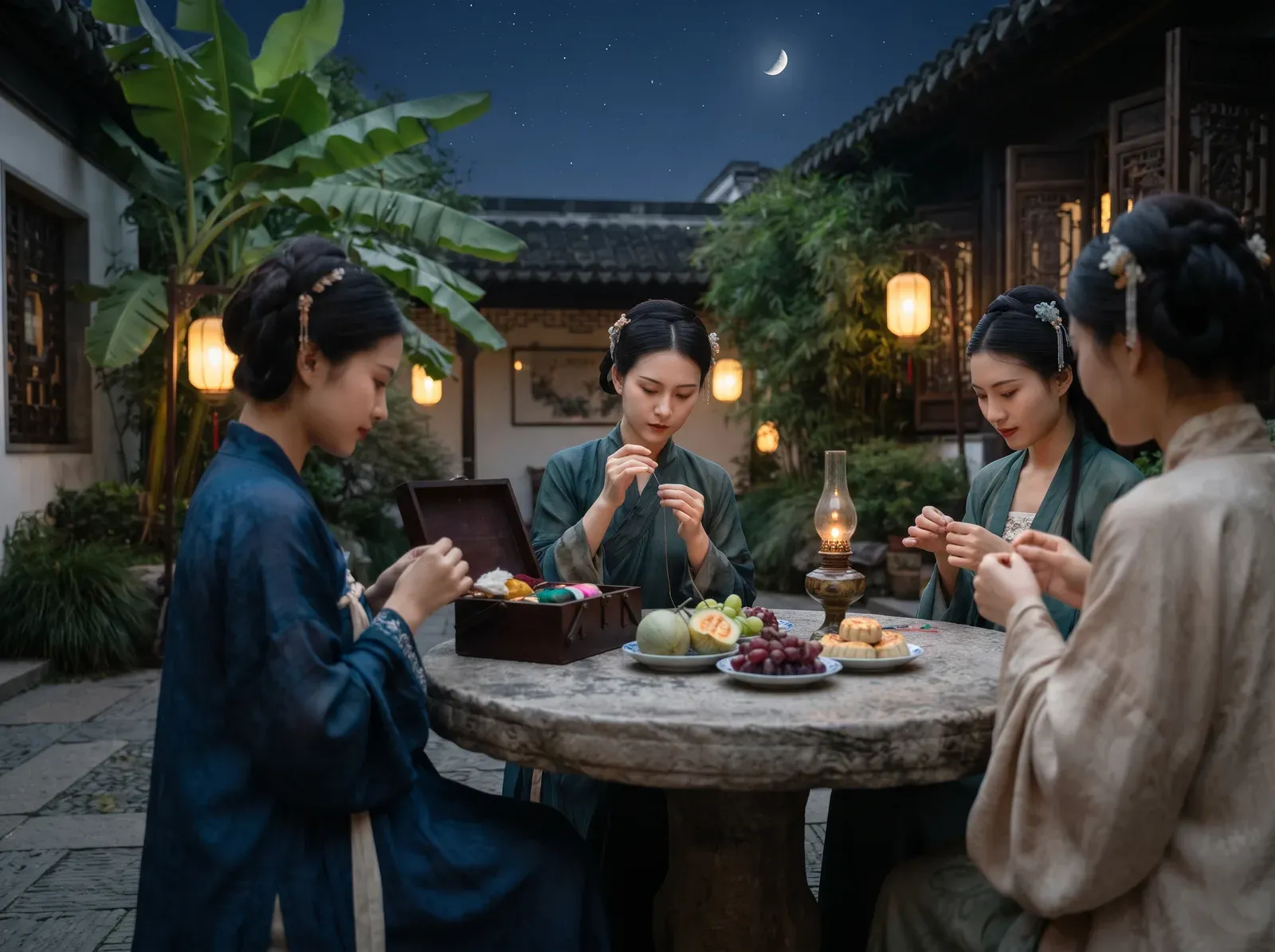
In the needle-threading contest, young women raced to thread needles under dim lighting, such as moonlight or dusk. Ancient maidens used this test to display their sewing skills, eyesight, and dexterity. Competing for skill in low light added lively fun to the evening.
The occasion was also meaningful for newly married couples in ancient times. A newlywed bride would hold a farewell ceremony to bid goodbye to the immortal lovers. This traditional ritual symbolized a harmonious marriage and conveyed that she was deeply valued by her husband's family.
What ingredients are used to make traditional qiaoguo pastries?
The main ingredients of the traditional festival pastry qiaoguo are flour, oil, and honey. When making them, families sometimes add sesame seeds, peanuts, nuts, or rose petals. After kneading and shaping the dough into decorative molds, the pastries are deep-fried until crisp.
Qiaoguo is the signature snack of the holiday. Relatives and friends often gather to share these treats. Eating them expresses hopes for clever hands, nimble craftsmanship, and a sweet, happy life.
What is the festival's standing in heritage preservation and overseas spread?
The festival is a recognized national intangible cultural heritage item in China. In 2006, the State Council inscribed it onto the first batch of the national list of representative intangible cultural heritage, categorized under folk customs with item number X-4.
The festival culture also had a lasting impact across East Asia. This traditional custom inspired Tanabata in Japan, Chilseok in Korea, and That Tich in Vietnam. Through cross-border exchange, it became a shared cultural bond across multiple regions in Asia.
What variations and cultural context should be noted about the holiday?
Traditional customs surrounding the holiday belong to folk heritage, and specific rituals vary across regions and ethnic groups. Practices like needle threading and floating needles to divine luck are traditional activities rather than scientific guides for modern life.
Different ethnic groups focus on different aspects of the celebration. Minorities such as the Manchu, Korean, Zhuang, Dong, Miao, and She have their own customs, so festivities differ from one community to another.
Sources
Qixi Festival - Wikipedia
Hong Kong Observatory: Gregorian-Lunar Calendar Conversion Table
Qixi Festival - China Intangible Cultural Heritage Digital Museum
Sources verified on November 8, 2026.
FAQ
Why is the Qixi Festival also called the Daughters' Festival?
The holiday is also known as the Qiqiao Festival or the Daughters' Festival. In ancient times, unmarried young women prayed to the Weaver Girl on this day for wisdom, nimble hands, and a good marriage, testing their needlework in dim light. This focus made it a folk celebration centered primarily on women.
What is the meaning of the farewell ceremony held by newly married brides during the festival?
In ancient times, newlywed brides held a ceremony to bid farewell to the Cowherd and Weaver Girl. This traditional ritual symbolized marital harmony and reflected that the bride was cherished by her husband's family, marking an important transition from maidenhood into married life.
What ingredients are used to fry traditional qiaoguo pastries?
The main ingredients for qiaoguo are flour, oil, and honey, which are mixed, shaped, and deep-fried. Depending on family customs, additional ingredients such as sesame seeds, peanuts, nuts, or rose petals are sometimes added.
Which constellations do the Cowherd and Weaver Girl stars belong to?
In astronomy, the Weaver Girl star corresponds to Vega in Lyra, while the Cowherd star corresponds to Altair in Aquila. In addition, Deneb in Cygnus symbolizes the magpie bridge arching across the Milky Way.
Which ethnic minorities in China celebrate the Qixi Festival besides the Han?
Besides the Han majority, ethnic groups such as the Manchu, Korean, Zhuang, Dong, Miao, and She also celebrate the holiday, each developing distinctive folk traditions over generations.