
Chinese New Year and Red Envelope Customs and Etiquette
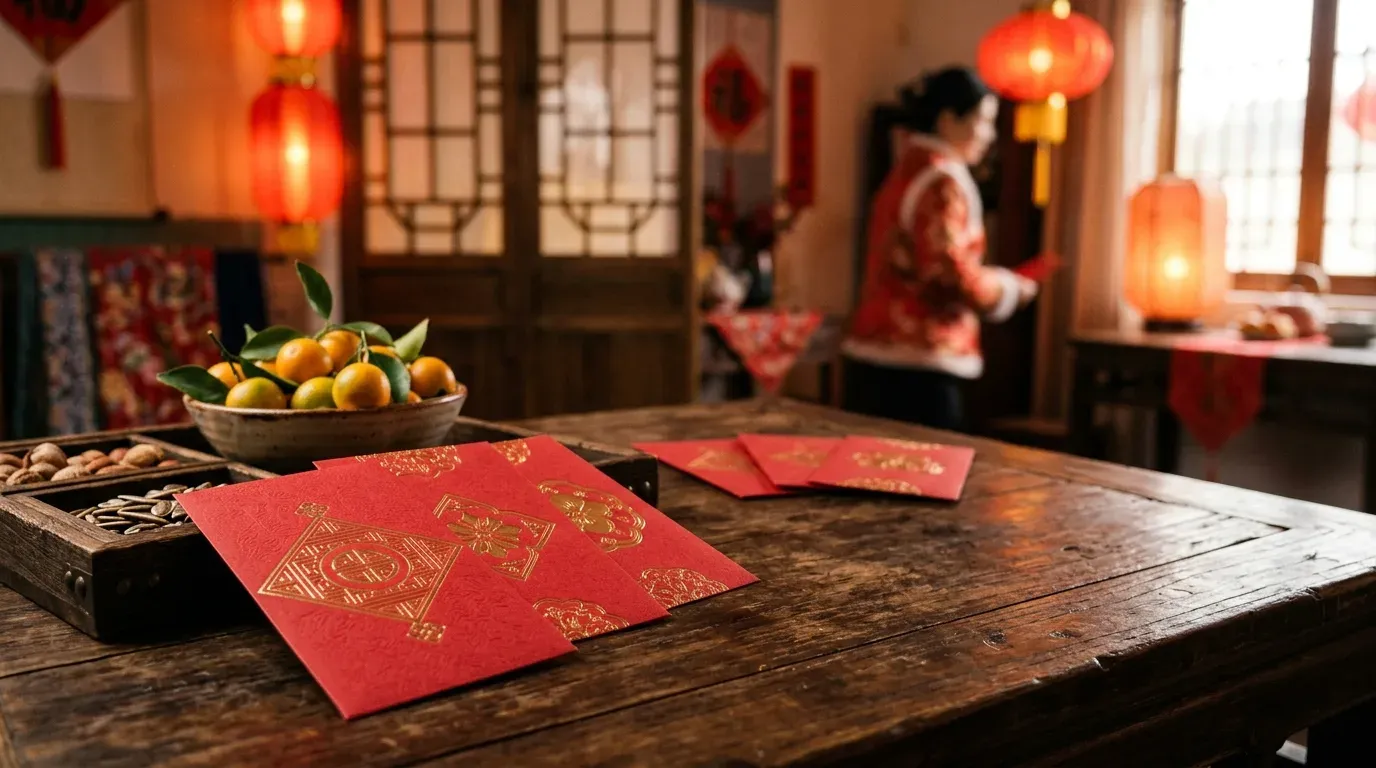
Chinese New Year and red envelope customs focus on warding off evil spirits, praying for good luck, and sharing New Year wishes. Gift amounts usually range from 50 to 2,000 yuan depending on how close you are to the recipient. Tradition calls for even numbers, passing envelopes with both hands, and never opening them in front of the giver.
Quick Guide to Chinese New Year Red Envelopes: What Are the Key Rules?
| Item | Key Rules and Customs |
|---|---|
| When to give | After New Year's Eve dinner, during New Year's Day visits, or on Day 2 when visiting maternal parents |
| Common amount range | 50 to 2,000 yuan depending on closeness |
| Lucky number preferences | Ending in even numbers, favoring 8, 6, and 9 |
| Taboo numbers | Strictly avoid 4, 250, 400, and 740 |
| Hand gesture | Always use both hands to give and receive envelopes |
| When to open | Never open or count the money in front of the giver; open it later |
After the family reunion dinner on Chinese New Year's Eve, elders hand out prepared lucky money to younger family members to wish them healthy growth. On the morning of New Year's Day, when younger relatives pay their New Year respects, elders give lucky money to ward off bad luck. On the second day, when married daughters and sons-in-law visit the wife's parents, they bring paired gifts and red envelopes for the children in the maternal home.
When Did Lucky Money and Paper Red Envelopes Begin?
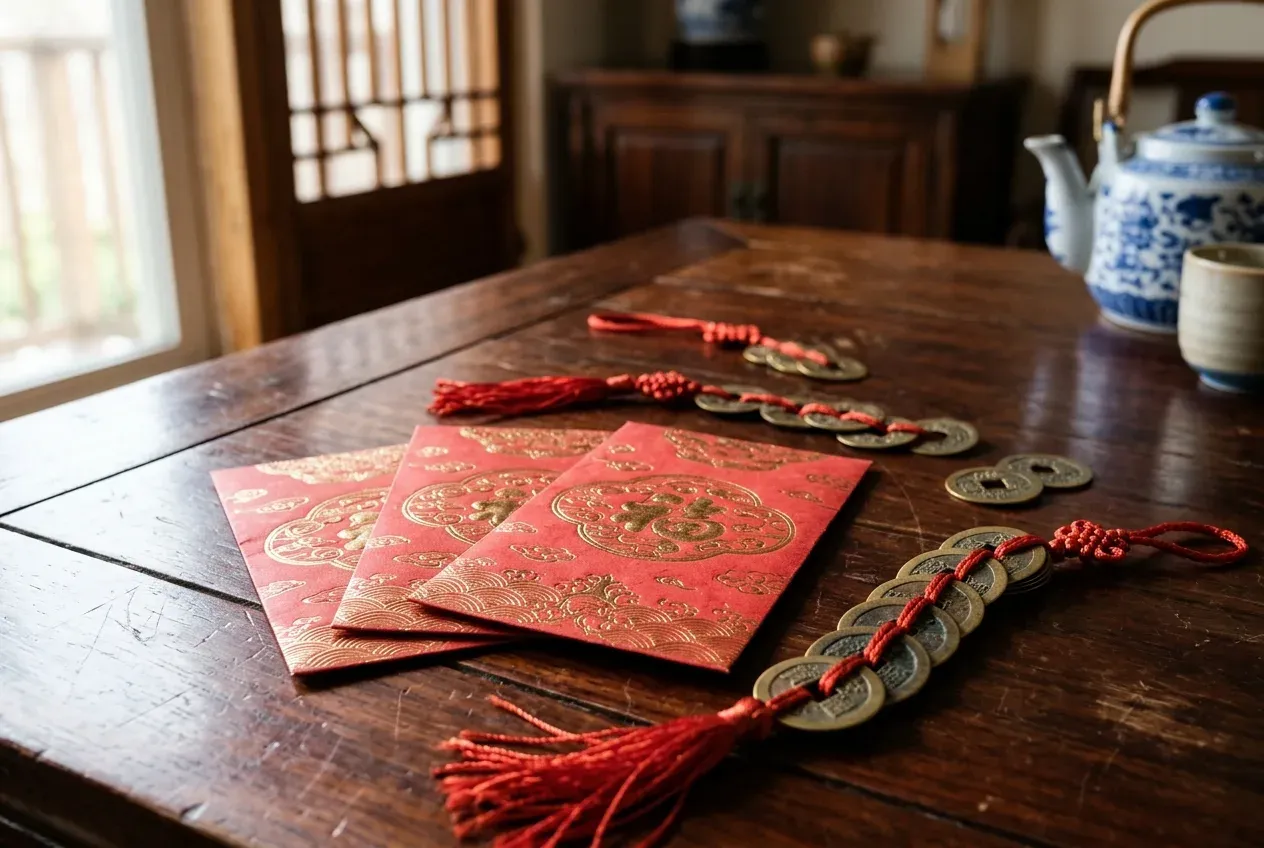
Lucky money dates back to the Han dynasty as yashengqian, amulets minted with phrases like "Live for ten thousand years" and "Drive away disaster" rather than spending money. In the Song dynasty, people began gifting real currency to children at New Year, called suinianqian. According to Wulin Jiushi (Former Affairs of the Martial Grove), imperial consorts prepared 120 coins of suinian money hung at the bedposts for young princes and princesses on New Year's Eve to wish them long lives.
In the Qing dynasty, Gu Lu's Qing Jialu recorded elders threading 100 copper coins on red cords for children under the name yasuiqian. During the Republic of China era, this evolved into wrapping 100 copper coins in red paper to symbolize living to 100. The first paper red envelopes appeared around 1900 with the rise of modern printing. Early versions used red paper with yellow oil ink and gold powder for a gilded effect, replacing the older tradition of stringing coins on red cords.
Folk legend tells of a demon named Sui that touched sleeping children's heads on New Year's Eve, causing fever and illness. A family in Jiaxing wrapped eight copper coins in red paper and placed them under their child's pillow, scaring the demon away. The coins were said to be the Eight Immortals in disguise. Because "sui" (demon) sounds like "sui" (age or year), the coins became known as yasuiqian, meaning money that wards off evil spirits.
Tip: In traditional Jiangnan customs around Suzhou, children place the lucky money under their bed or pillow on New Year's Eve to ward off harm, and they do not spend it until the New Year holiday ends.
Who Should You Give Red Envelopes to and How Much?
Once young adults enter the workforce and start earning money, their role shifts to giving red envelopes. They hand them out to children and elders in the family, and rarely receive any themselves. As working adults supporting their households, they give envelopes to their parents and grandparents to show respect and gratitude for raising them.
If you are an adult with your own income, the money given to parents and elders is called filial money or age-adding money. In Chinese social and workplace customs, you do not give cash envelopes to supervisors or bosses who earn far more than you, as this can feel awkward or improper.
| Recipient | Common Amount Range |
|---|---|
| Parents and grandparents | 500 to 2,000 yuan |
| Direct or close younger relatives | 200 to 1,000 yuan |
| Other elder relatives | 300 to 1,000 yuan |
| Children of acquaintances and friends | 50 to 100 yuan |
| Lucky money from companies to employees | 50 to 500 yuan |
Which Numbers Are Lucky and Which Amounts Are Taboo?
In traditional custom, celebratory red envelope amounts end in an even number, symbolizing good things coming in pairs. Odd numbers are traditionally tied to funerals and condolence gifts. The number 4 (such as 40, 400, or 444 yuan) is strictly avoided because "four" sounds like "death" in Chinese, which is considered very bad luck during celebrations.
In northern China, people prefer round and even numbers, strictly avoiding unlucky amounts like 250, 400, or 740. The most popular lucky number is 8, which sounds like wealth and prosperity, making 88 yuan very common. In the south, amounts like 666 or 999 yuan are also popular choices.
| Number or Amount | Meaning and Traditional Saying |
|---|---|
| Number 8 (such as 88 or 888 yuan) | Sounds like "fa" (making a fortune), symbolizing wealth and good fortune |
| Number 6 (such as 666 yuan) | Symbolizes everything going smoothly |
| Number 9 (such as 999 yuan) | Sounds like "jiu" (long-lasting) and is the largest single digit, symbolizing eternity |
| Even and round numbers (such as 100 or 200 yuan) | Ending in an even number, symbolizing good things coming in pairs |
| Number 4 (such as 40, 400, or 444 yuan) | Sounds like "si" (death), regarded as an unlucky taboo |
| Amount of 250 yuan | Belongs to folk slang insults, strictly avoid giving this amount |
| Amount of 740 yuan | Belongs to unlucky amounts, strictly avoid giving this amount |
How Does Cantonese Lai See Differ From Other Traditions?
In Cantonese-speaking areas like Guangdong, Guangxi, Hong Kong, and Macau, red envelopes are called lai see. Traditionally, married individuals give them to unmarried younger people, colleagues, and relatives. Asking for these envelopes is known as dau lai see.
On the first workday after the New Year holiday, many managers in offices and companies hand out back-to-work lai see to all returning employees. Married managers also give envelopes to junior staff for good fortune. In Hong Kong, Macau, and Chinese communities across Singapore and Malaysia, people often give small packets to building guards, cleaners, domestic helpers, and doormen during the first few days of the New Year to share good luck and say thank you.
Tip: In Hong Kong tradition, people usually do not open their envelopes during the first few days of the holiday. Instead, they save them until the seventh day of the first lunar month, known as Renri (the birthday of humankind), or even later to open all of them together.
What Red Envelope Etiquette Mistakes Do Beginners Make?
In Chinese New Year etiquette, both giving and receiving an envelope require using both hands, as using only one hand is seen as rude and disrespectful. Before accepting, younger people usually cup their hands in greeting and say auspicious wishes like Gongxi Facai or good health, then thank the elder. Elders rarely say "here is your money" when handing it over. Instead, they offer gentle wishes like "may you grow up healthy and do well in school", showing traditional Chinese subtlety.
Never open an envelope or count the cash in front of the giver. In traditional etiquette, this is considered greedy and very impolite. Simply thank them, put it away, and open it later. Red paper symbolizes joy and fortune, so red envelopes are never used for funerals or hospital visits. Condolence gifts use plain white envelopes, and white envelopes should never be used for New Year gifts.
People always put crisp, brand-new banknotes into the packets, symbolizing leaving behind the old and starting fresh. Weeks before the holiday, long lines often form outside commercial banks in China as people exchange old notes for crisp new bills with consecutive serial numbers.
Tip: Avoid putting coins into paper envelopes because they are heavy, rattle around, and are inconvenient. If you need to hand out different amounts to different people, prepare envelopes with different designs to tell them apart.
| Etiquette Step | Standard Practice | Common Taboo |
|---|---|---|
| Giving and receiving red envelopes | Always use both hands to give and receive | Using one hand (seen as impolite and disrespectful) |
| Words spoken by elders when giving | Gently offer auspicious blessings | Bluntly saying "here is your red envelope" |
| Timing of opening | Politely accept, put it away, and open it later | Opening immediately in front of the giver to check or count the cash |
| Envelope color | Use red paper envelopes (symbolizing good fortune and happiness) | Mistakenly using white envelopes (traditionally used for funeral condolences) |
| Banknotes or coins inside | Insert crisp, brand-new banknotes | Inserting coins (heavy, clinking noisily, and impractical) |
How Did WeChat Digital Red Packets Become a Modern Custom?
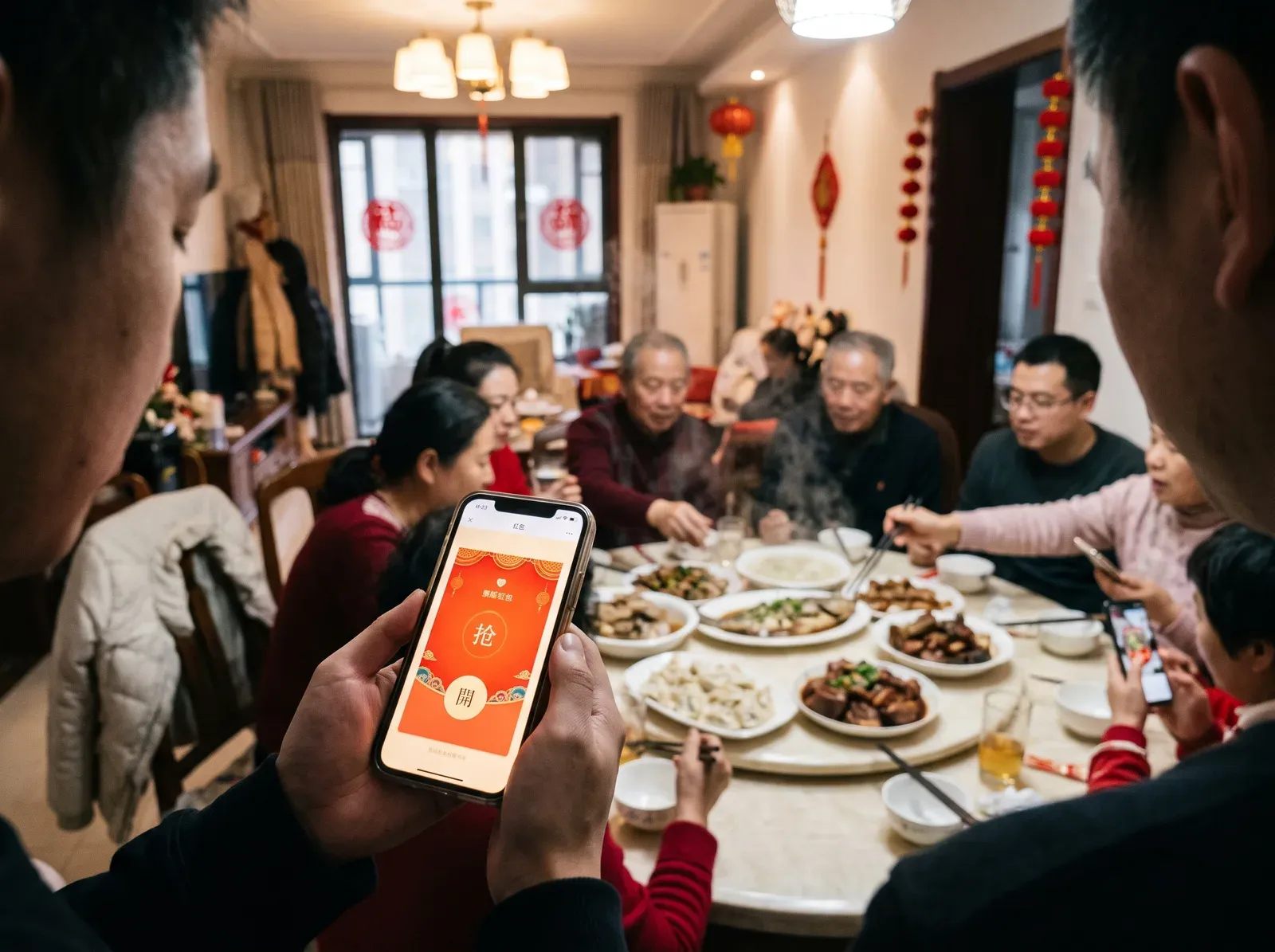
WeChat Pay launched virtual red packets during the 2014 Spring Festival in partnership with the CCTV Spring Festival Gala, and the feature spread rapidly. During the 2016 Chinese New Year holiday, the total number of digital red packets sent and received passed 32 billion, a tenfold increase from 2015, turning it into a nationwide modern custom.
Sources
Lucky Money - Wikipedia
Red envelope - Wikipedia
Chinese New Year - Wikipedia
Hongbao - Wikipedia
Guiyang Bureau of Education - Photo News
Tastes of Home Abroad: Chinese Americans Celebrate New Year - Overseas Chinese Affairs Office of Guangdong Province
Sources verified on Nov 18, 2026
FAQ
Can you open a Chinese New Year red envelope in front of elders to count the money?
No. Opening an envelope or counting cash in front of the giver is considered rude and greedy in traditional Chinese etiquette. You should accept it with both hands, say thank you, put it away politely, and open it later.
Why are amounts like 400 or 250 yuan taboo for New Year red envelopes?
The number 4 sounds like the word for death in Chinese, making it an unlucky taboo during celebrations. Meanwhile, 250 is a common folk insult meaning a fool, so people strictly avoid these amounts.
Why can a Chinese New Year red envelope contain 999 yuan when 9 is an odd number?
Festive red envelopes usually end in even numbers, but the number 9 sounds like the word for long-lasting. As the largest single digit, it symbolizes eternity, making it an auspicious exception among odd numbers.
What makes the Cantonese tradition of dau lai see unique?
In Cantonese-speaking areas, married adults give lai see to unmarried younger people, colleagues, and relatives as a gesture of good luck. Small envelopes are also given to building security and cleaners during the first few days of the year, and recipients traditionally wait until the seventh day of the lunar month (Renri) or later to open them.
Why do people line up at banks before the New Year to get new bills?
Red envelopes should always contain crisp, brand-new banknotes to symbolize leaving the old behind and welcoming a fresh start. Giving old or wrinkled bills is seen as disrespectful, so banks see long lines of people exchanging cash in the weeks before the holiday.