
How to Say Happy New Year in Chinese: Mandarin & Cantonese

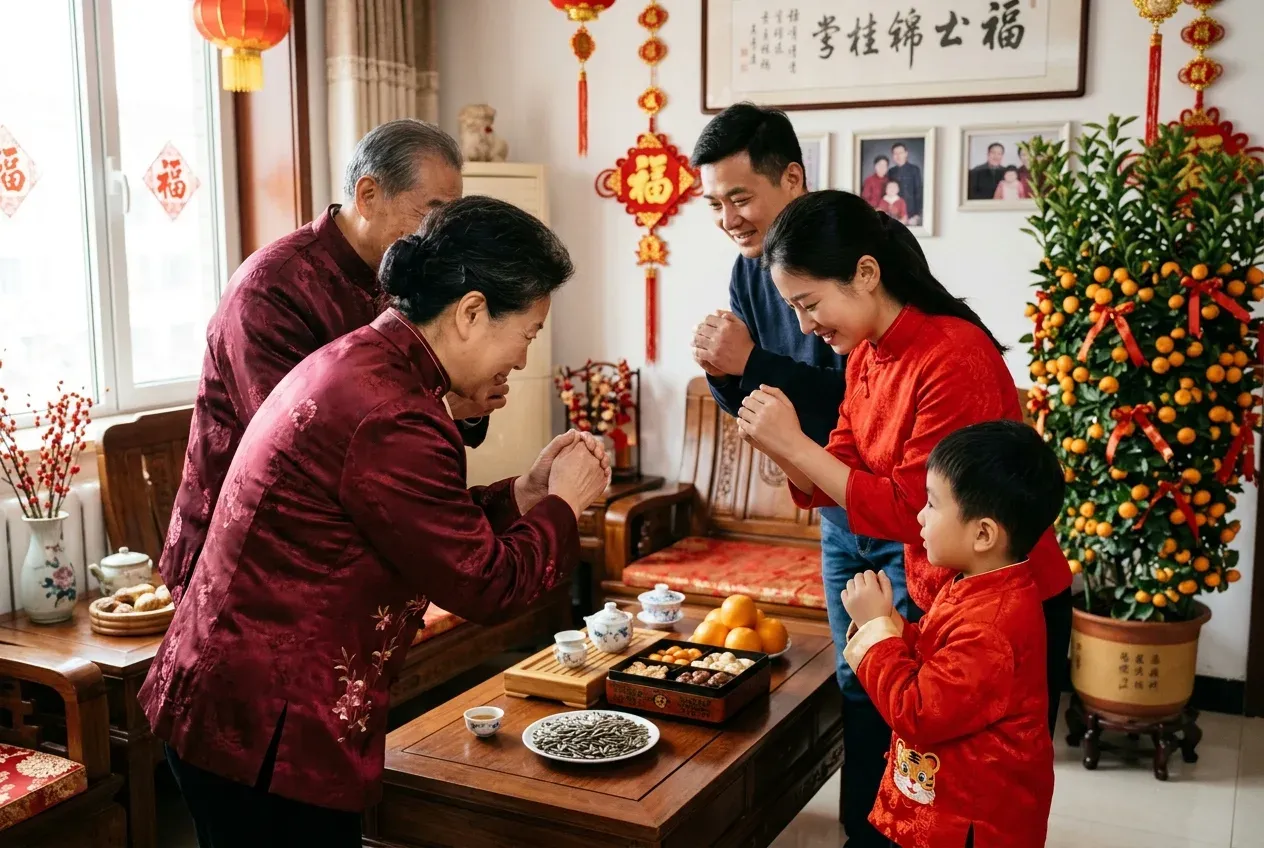
The phrase for Happy New Year in Chinese is xīn nián kuài lè in Mandarin pinyin and sun nin fai lok in Cantonese, while the greeting wishing for wealth and prosperity is gōng xǐ fā cái in Mandarin and gong hei fat choy in Cantonese. Xinnian Kuaile is a general Chinese New Year greeting, while Gongxi Facai is a greeting wishing people to make great wealth. Spring Festival celebrations usually last 15 days, during which relatives and friends visit one another, cupping their hands before the chest to exchange good wishes.
How do you say Happy New Year in Cantonese and Mandarin, and which greetings are common?
The Chinese characters for Happy New Year are 新年快乐, written as xīn nián kuài lè in Mandarin pinyin and pronounced sun nin fai lok in Cantonese. Visiting relatives and friends to greet one another for the new year is called bai nian in Mandarin pinyin and baai nin in Cantonese. When giving this greeting, people cup their hands before the chest to show respect.
| Chinese Phrase | Mandarin Pinyin | Cantonese Pronunciation | Meaning |
|---|---|---|---|
| 新年快乐 | xīn nián kuài lè | sun nin fai lok | Wishing a happy new year |
| 恭喜发财 | gōng xǐ fā cái | gong hei fat choy | Wishing wealth and prosperity |
| 身体健康 | shēn tǐ jiàn kāng | sun tai gin hong | Wishing good health |
| 大吉大利 | dà jí dà lì | dai gat dai lei | Wishing good luck and fortune |
| 万事如意 | wàn shì rú yì | maan si yu yi | Wishing everything goes smoothly |
| 心想事成 | xīn xiǎng shì chéng | sum seung si sing | Wishing all dreams come true |
| 阖家幸福 | hé jiā xìng fú | hap ga hang fuk | Wishing the whole family happiness |
| 生意兴隆 | shēngyì xīnglóng | sang yi hing lung | Wishing a thriving business |
What Is the Difference Between Gongxi Facai and Happy New Year?
The main difference between "Happy New Year" and "Gongxi Facai" lies in their meaning and background. "Xinnian Kuaile" offers a general festive greeting for the new year, while "Gongxi Facai" specifically wishes wealth and prosperity.
According to Wikipedia, Gongxi Facai originated in Hong Kong, Guangdong, and Fujian as a New Year greeting wishing people to make great fortunes. It later spread widely across Chinese communities with Hong Kong film and television culture.
When visiting relatives and friends, people often say "Gongxi Facai," "Xinnian Ruyi," and "Xinchun Kuaile" to each other. These greetings are also very common on the 1st day of the 1st lunar month when younger generations greet elders.

How to Choose Chinese New Year Greetings for Different People
When wishing elders and the entire family health and peace, people often choose "Shēn Tǐ Jiàn Kāng" (pronounced sun tai gin hong in Cantonese) to wish good health. To wish happiness for the whole family, the phrase is "Hé Jiā Xìng Fú" (pronounced hap ga hang fuk in Cantonese).
For business owners and commercial partners, the phrase to wish a thriving business is "Shēngyì Xīnglóng" (pronounced sang yi hing lung in Cantonese). To wish good luck and great fortune, the greeting is "Dà Jí Dà Lì" (pronounced dai gat dai lei in Cantonese).
To wish that everything goes smoothly, the phrase is "Wàn Shì Rú Yì" (pronounced maan si yu yi in Cantonese). To wish that all dreams come true, the blessing is "Xīn Xiǎng Shì Chéng" (pronounced sum seung si sing in Cantonese).
What Are the Timing Rules and Traditional Taboos for New Year Visits?
Spring Festival celebrations usually last 15 days. On the 1st day of the 1st lunar month, younger generations greet elders to show respect, and elders give lucky money in return. When friends and relatives visit to celebrate the new year, they cup one hand over the other fist in front of the chest to exchange greetings.
Folk tradition considers the 3rd day of the 1st lunar month as "Chi Kou" (Red Mouth), a day prone to arguments and disputes. Therefore, on this 3rd day, people usually avoid going out to visit relatives and friends.
What Is the Social Etiquette for Red Envelopes and Lai See?
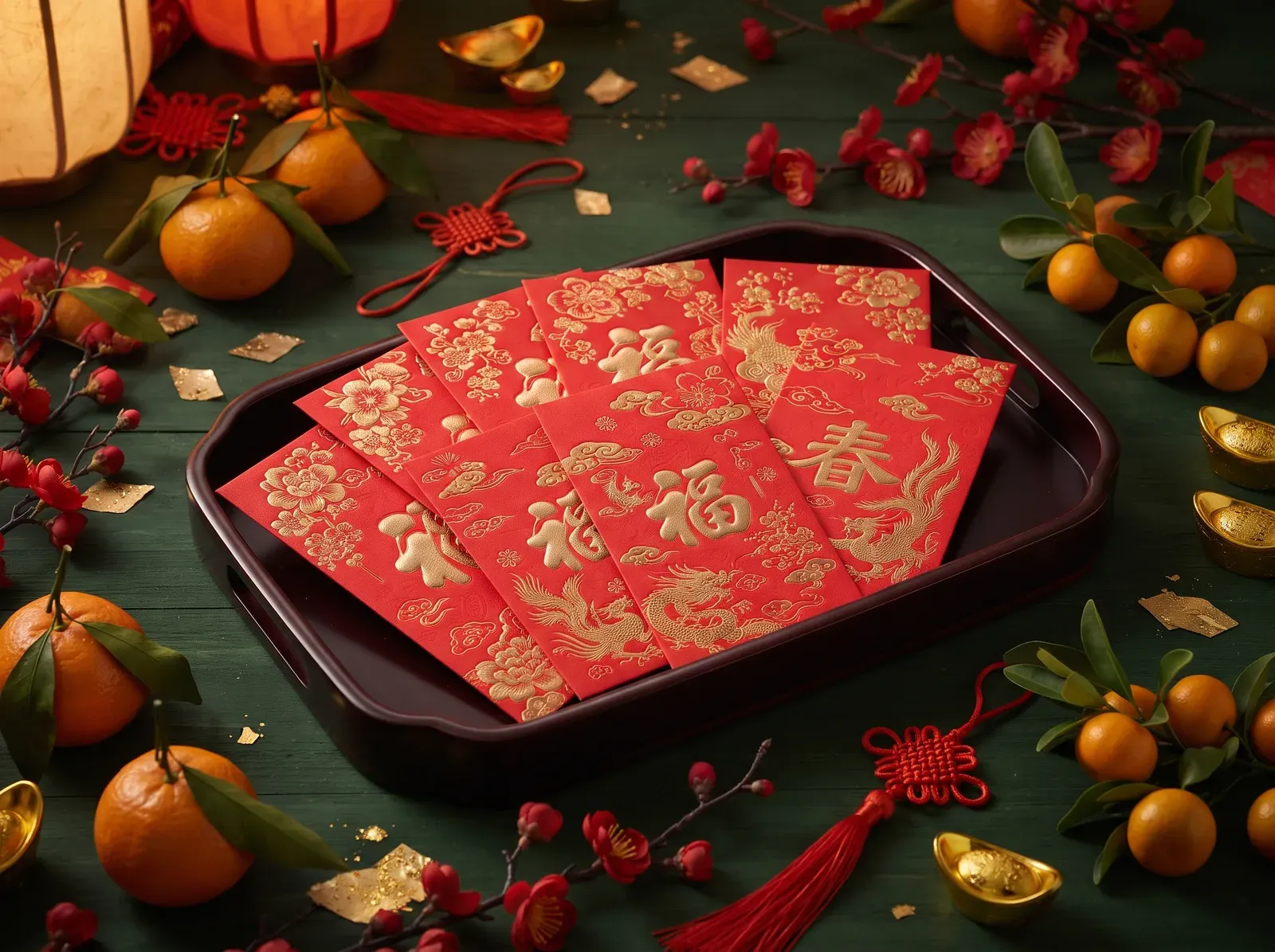
Red envelopes are called lai see in Cantonese, wrapped in red packets to represent good luck and celebration in traditional Chinese culture. In Cantonese-speaking areas, there is a custom of collecting lai see, where unmarried people may ask for red envelopes from married relatives and friends during the festival.
The money inside red envelopes usually ends in even numbers such as 2, 6, 8, or 10 for good luck. Folk tradition avoids odd amounts as well as the number 4 due to its unlucky homophone.
Receiving red envelopes during the Lunar New Year follows clear etiquette rules. The recipient must not take the money out of the red packet directly in front of the giver.
Sources
Gongxi Facai - Wikipedia
Bai Nian - Wikipedia
Red Envelope - Wikipedia
The sources above were verified on November 5, 2026.
FAQ
How should I reply if someone says "Xinnian Kuaile" or "Gongxi Facai" to me?
You can reply with the same phrase, "Xinnian Kuaile" or "Gongxi Facai", or offer wishes like "Wan Shi Ru Yi" or "Shen Ti Jian Kang". Cupping one hand over your fist in front of your chest shows polite respect during the greeting.
Why is Gong Hei Fat Choy heard so often in Cantonese-speaking regions and overseas Chinatowns?
Gongxi Facai originated in Hong Kong, Guangdong, and Fujian, and is pronounced gong hei fat choy in Cantonese. With the spread of Hong Kong film and television, this wish to make great wealth became widely popular across Chinese communities as a frequent holiday greeting.
Are there specific rules for the amounts inside Chinese New Year red envelopes?
The money inside red envelopes usually ends in even numbers such as 2, 6, 8, or 10 for good luck. Odd numbers are avoided, along with the number 4 because its pronunciation sounds like an unlucky word.
Why is the 3rd day of the 1st lunar month usually not suitable for visiting?
Folk tradition considers the 3rd day of the 1st lunar month as "Chi Kou" (Red Mouth), which easily invites quarrels and gossip. Following traditional custom, people usually avoid going out to visit relatives and friends on this day.
Can I open a red envelope in front of the elder or friend who gave it to me?
Social etiquette for receiving red envelopes during Lunar New Year states that recipients must not take the money out of the envelope directly in front of the giver.