
Tomb Sweeping Holiday: Traditional Customs and Rituals
Traditional customs of the Tomb Sweeping Festival fall into two main categories: ancestor worship and spring outings. They cover mounding soil on graves, worshiping the local earth god first, weighting grave paper, as well as flying kites, swinging, wearing willow branches, and eating cold food. People have practiced these activities in spring since ancient times. According to the Hong Kong Observatory calendar, Lichun (the Start of Spring) falls on February 4 from 2026 to 2028. This season of gentle sun and ample spring rain provides the right time for remembering ancestors and planting trees. During the tomb sweeping holiday, Cantonese families in Guangzhou maintain the tradition of whole clans visiting tombs together, known as xingqing, while Southern Min and Southeast Asian Chinese follow the custom of worshiping the local earth god before their own ancestors.
What Are the Main Categories of Qingming Festival Customs?
Traditional folk customs are mainly divided into three parts: ancestral rituals of the Tomb Sweeping Festival, spring outdoor games, and seasonal foods. Tomb sweeping focuses on weeding, adding fresh soil to mound graves, and offering sacrifices. Outdoor activities include flying kites, swinging, wearing or inserting willow branches, cuju (ancient football), tug-of-war, and planting trees. Food traditions involve eating cold spring rolls (runbing), herbal rice cakes (caozaguo), and river snails. The table below outlines major traditional customs and practices passed down in China.
| Category | Custom or Activity | Ritual Practice and Meaning | Regions and Documented Facts |
|---|---|---|---|
| Tomb sweeping and ancestor worship | Mounding soil and repairing graves | Clear weeds from the tomb and add fresh soil to heighten and strengthen the mound | Express remembrance and grief for ancestors |
| Tomb sweeping and ancestor worship | Worshiping the local earth god first | First worship the local earth god guarding the cemetery, then worship ancestors | Traditional rule among Southern Min and Southeast Asian Chinese |
| Tomb sweeping and ancestor worship | Weighting grave paper (zhezhi) | Use small stones to press grave paper onto the burial mound | Symbolizes that descendants have repaired and honored the grave |
| Tomb sweeping and ancestor worship | Clan grave sweeping (xingqing) | Entire clan visits the tombs together on the primary festival day | Traditional custom of Cantonese people in Guangzhou |
| Outdoor activities | Flying kites | Write disasters and illnesses on kites, fly them high, and cut the string | Ancient people believed this released bad luck and warded off disease |
| Outdoor activities | Wearing and inserting willow branches | Weave willow twigs into hats to wear, or tuck them under eaves and door lintels | Traditionally believed to protect against plagues and poisonous pests |
| Outdoor activities | Swinging (qianqiu) | Hang ribbons from tree branches or use two ropes with a footboard | Ancient festival custom meant to improve health and build courage |
| Outdoor activities | Cuju and tug-of-war | Ancient football and tug-of-war competitions formerly called qiangou | Popular during the Tang and Song dynasties; Emperor Xuanzong of Tang held large competitions |
| Outdoor activities | Planting trees | Plant saplings during mild spring sunshine and plentiful spring rain | Traditional folk custom passed down in China since ancient times |
| Seasonal food | Eating cold runbing | Eat cold spring rolls (runbing), caozaguo, or red tortoise cakes | Southern Min and Taiwan regions carry on the Cold Food Festival tradition |
| Seasonal food | Eating river snails | Stir-fry snails with scallions and ginger until cooked | Jiangnan and Suzhou say that Qingming snails rival geese |
| Eco-friendly rituals | Flower and fruit offerings | Offer fresh flowers and fruit by hand, and bury cleared weeds locally or bag them | Recommended by environmental departments to prevent wildfires and reduce pollution |
What Are the Core Rituals and Rules of Tomb Sweeping?
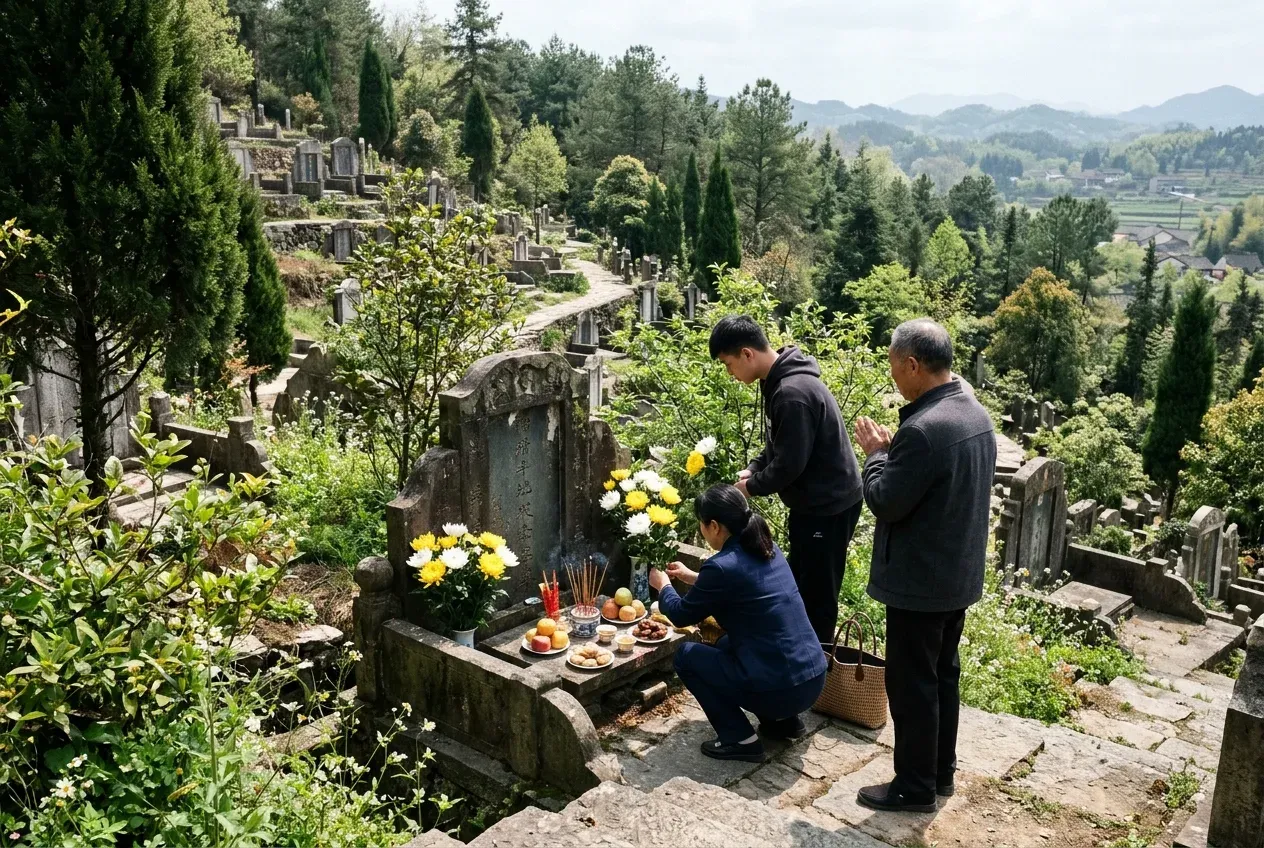
One of the central rituals of tomb sweeping is clearing weeds from the grave and using fresh soil to heighten and reinforce the mound. Folk tradition refers to this repair process as mounding soil or tending the resting place, expressing grief and remembrance for ancestors.
In the traditional customs of Southern Min and Southeast Asian Chinese, families are usually expected to worship the earth god guarding the cemetery (also called Houtu or Dabogong) before honoring their own ancestors. In addition, there is a folk custom called weighting grave paper (known in Southern Min as zhezhi), where small stones press colored paper onto the mound to show descendants have repaired and visited the grave. Cantonese people in Guangzhou place great importance on worshiping ancestors on the exact festival day, maintaining the xingqing custom of entire clans visiting the cemetery together.
What Outdoor Activities Take Place During the Tomb Sweeping Holiday?
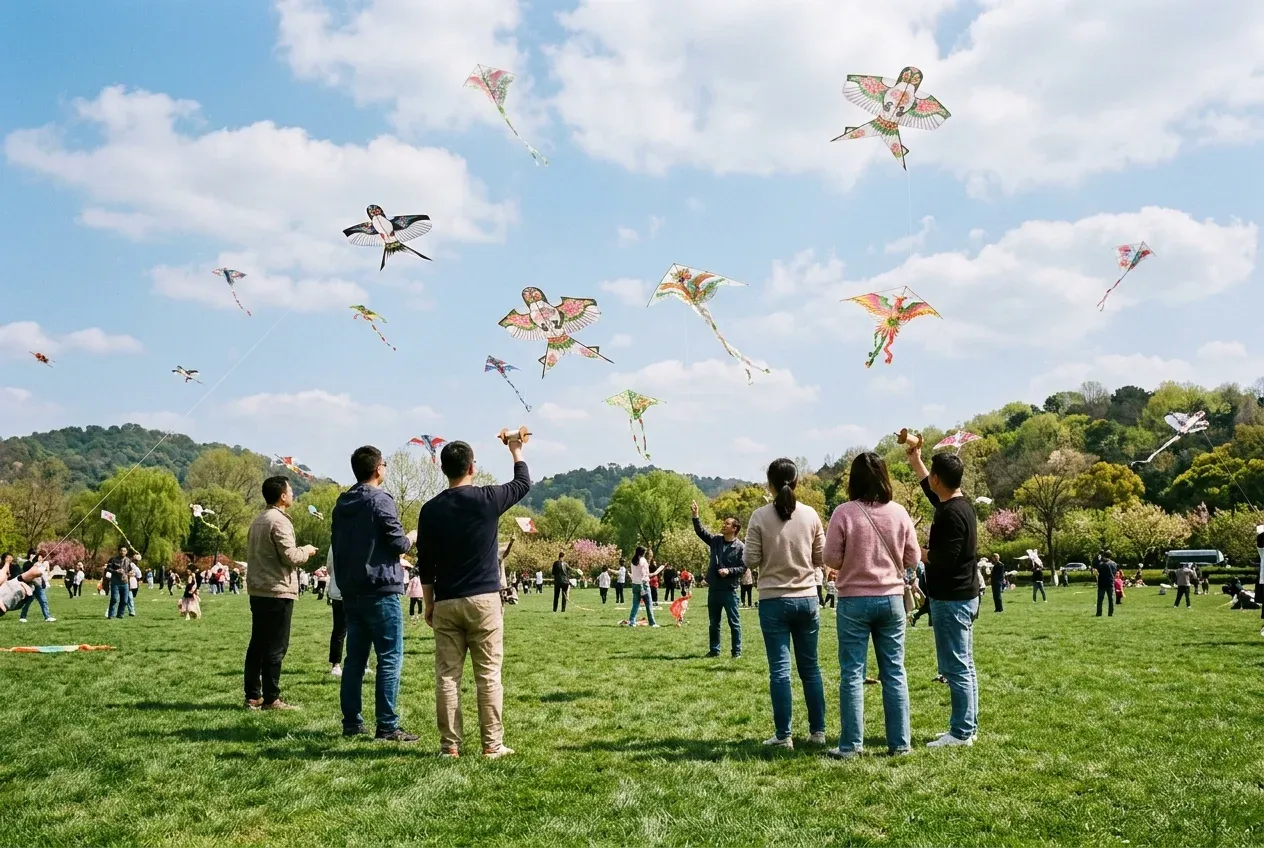
A wide variety of traditional outdoor games have been passed down during the holiday, with kite flying and wearing willow branches being the most common. Flying kites has a long history. Ancient people believed that flying kites could release bad luck from the body. They often wrote misfortunes and illnesses on kites, flew them high, and cut the string to let them drift away, symbolizing the removal of illness and disasters. People also maintained the custom of breaking, wearing, and inserting willow twigs. They wove willow branches into caps to wear or placed them on door lintels and eaves, which tradition held would ward off plagues and poisonous insects.
Swinging was another ancient custom during the festival. Originally called qianqiu, swings were first made by hanging ribbons from tree branches and later evolved into two ropes with a wooden footboard, symbolizing improved health and the cultivation of courage. Cuju, the ancient predecessor of modern soccer, was popular during the festival in the Tang and Song dynasties. The Tang dynasty poet Du Fu wrote lines describing playing cuju while leading young ones and observing swinging customs thousands of miles away, confirming how widespread these traditions were.
Tug-of-war was known in early times as qiangou. Emperor Xuanzong of Tang once held a large tug-of-war competition during the festival, making it part of ancient outdoor festivities. In addition, because mild sunshine and plentiful rain during this season help saplings survive, planting trees has been a traditional folk practice in China since ancient times.
What Traditional Foods Are Eaten During the Qingming Festival?
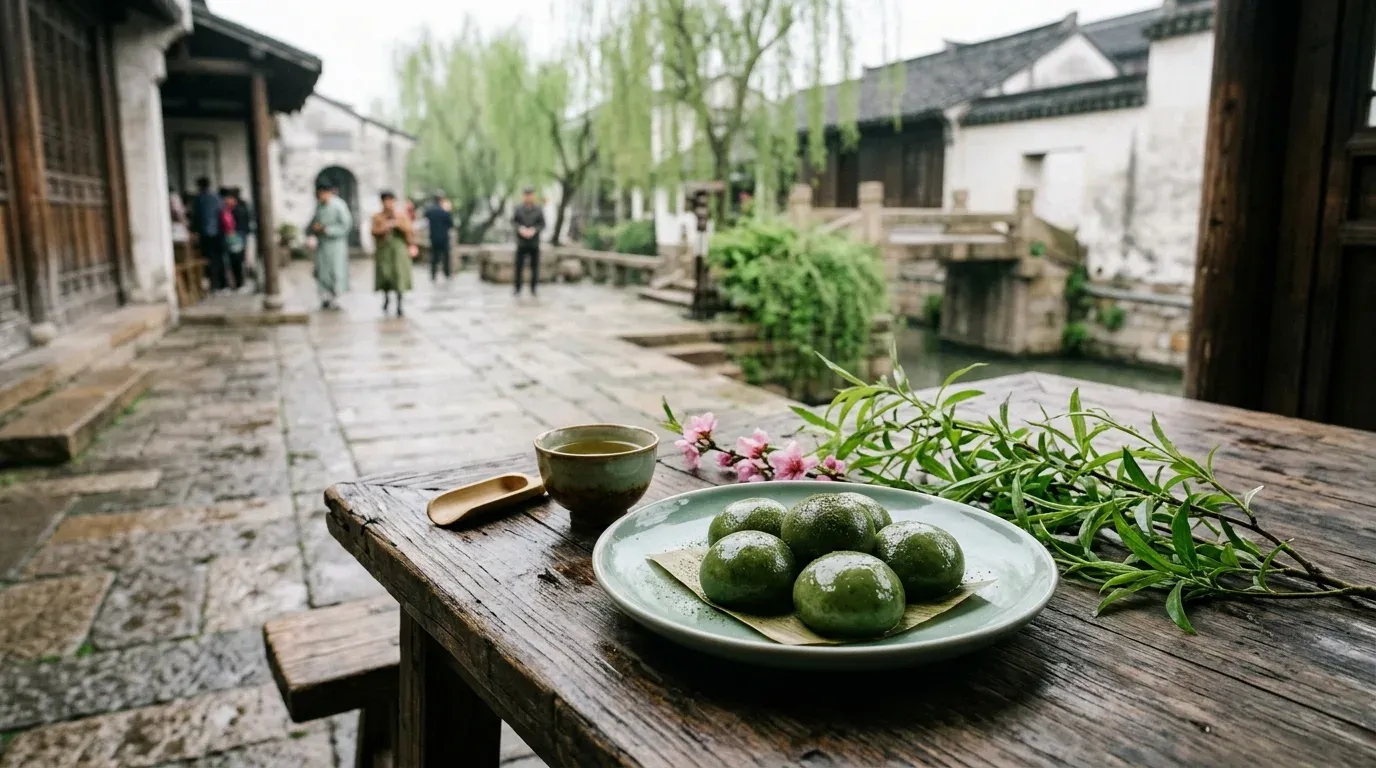
In Southern Min and Taiwan, people maintain the custom of eating cold dishes, continuing the tradition of the Cold Food Festival. They often eat cold runbing (spring rolls), caozaguo, or red tortoise cakes. This cold food custom has been passed down locally through generations.
In the Jiangnan region, including Suzhou, people traditionally eat river snails. A local saying claims that snails at Qingming are as rich as geese. Locals stir-fry the snails with scallions and ginger until thoroughly cooked before eating.
What Eco-Friendly Tips Apply to the Qingming Festival Holiday?
To prevent forest fires and reduce air pollution, environmental protection departments encourage eco-friendly worship. Officials recommend offering fresh flowers and fruits by hand instead of burning large amounts of incense and joss paper. When cleaning grave areas, they suggest burying cleared weeds on-site or bagging them to carry away.
Sources
Ten Traditional Customs of the Qingming Festival - News Center - China.org.cn
Qingming Festival - Wikipedia
The sources above were verified on November 16, 2026.
FAQ
Why is the earth god usually worshiped first during tomb sweeping?
In the traditional tomb sweeping rules of Southern Min and Southeast Asian Chinese, cemeteries are protected by the local earth god (also known as Houtu or Dabogong). Therefore, families are expected to worship the earth god first, followed by their own ancestors.
What is the symbolic meaning of weighting grave paper?
Pressing grave paper onto the burial mound with small stones (called zhezhi in Southern Min) is a traditional folk custom. It symbolizes that descendants have repaired and visited the grave.
Why did people in ancient times cut kite strings during the festival?
Ancient people believed flying kites could release bad luck from the body. They often wrote misfortunes and illnesses on kites, and once the kites flew high, they cut the strings to let them drift away, symbolizing the removal of misfortune and illness.
What does xingqing mean to Cantonese people in Guangzhou?
Cantonese people in Guangzhou place great importance on ancestral worship during the festival. Their custom of the entire clan visiting graves together on the exact festival day is known as xingqing.
Why were tug-of-war contests held during the ancient festival?
Tug-of-war was known earlier as qiangou. Emperor Xuanzong of Tang held a large tug-of-war competition during the festival, which made it part of ancient outdoor festival activities.