How to Eat Chengdu Hotpot: Broths, Timing and Ordering
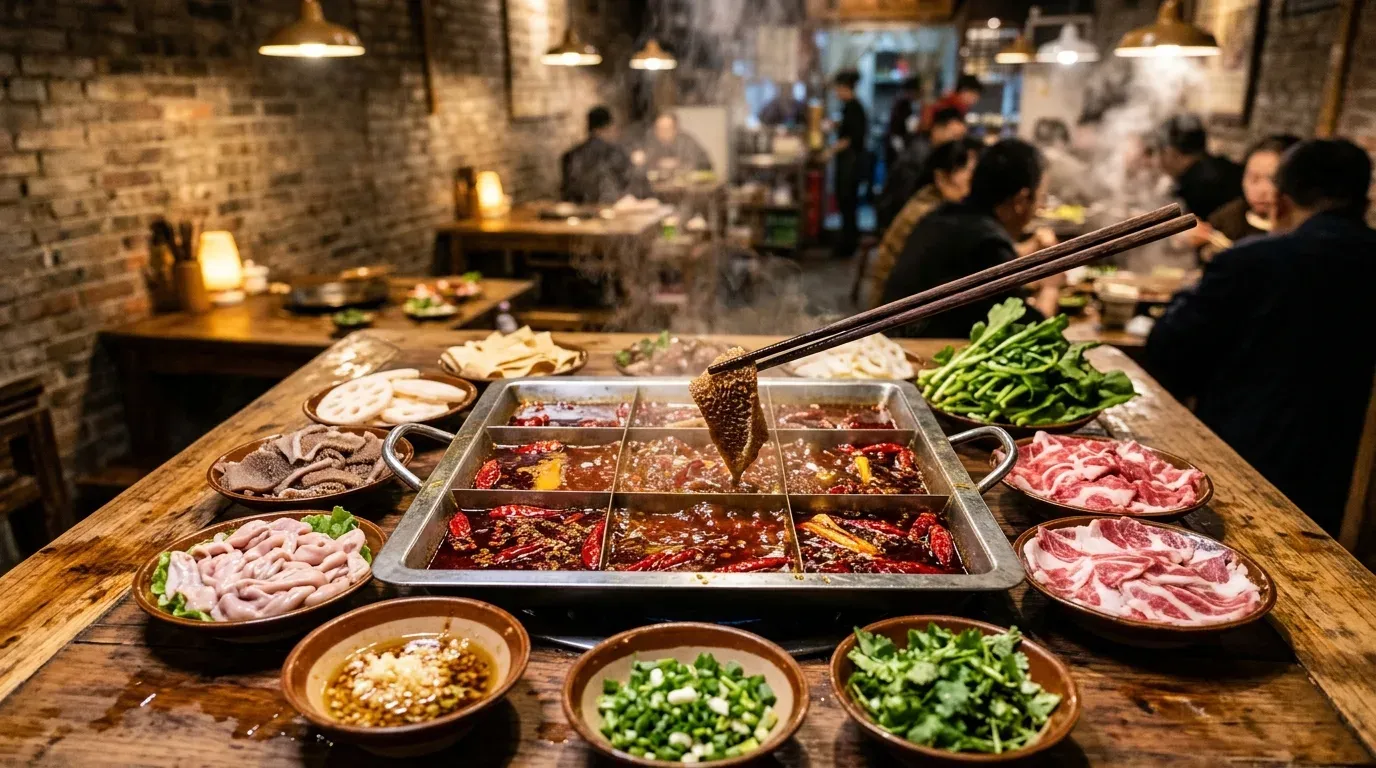
A full meal of Chengdu hotpot usually lasts about 90 to 120 minutes. Diners gather around a boiling pot, dipping fresh meats and vegetables in order into spicy red broth or clear broth, then coating cooked bites in a sesame oil dish. Folk tradition holds that this way of eating helps dispel dampness built up from the humid climate. In 2010, UNESCO designated Chengdu as Asia's first City of Gastronomy. The key points of eating it come down to choosing the right soup base, mixing your dipping dish, and keeping close track of cooking times.
| Item | Details |
|---|---|
| Suggested dining time | About 90 to 120 minutes |
| Recommended broth setup | Split pot recommended for first-timers (spicy red broth on one side, clear broth on the other) |
| Core dipping combination | Sesame oil dish (sesame oil, crushed garlic, and green onion, with optional oyster sauce, crushed peanuts, and more) |
| Peak dining hours | 7:00 PM to 9:00 PM (popular branches can have lines over 2 hours) |
| Options by preference | Spicy red broth fits spicy food lovers; tomato broth fits vegetarians, children, and diners who avoid spicy food |
First order: how to choose Chengdu hot pot broth and spice level?
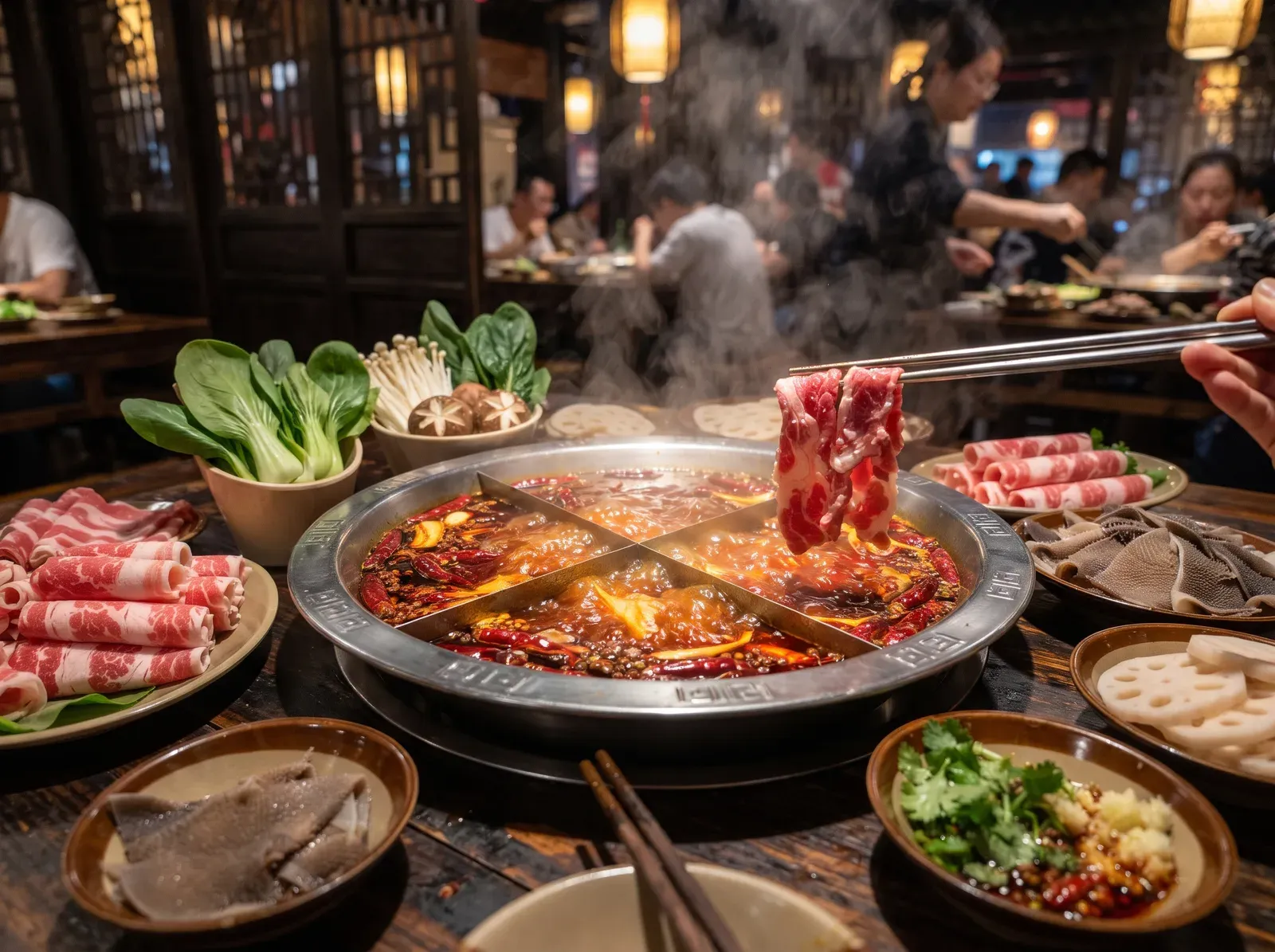
For your first time having Chengdu hot pot, the most recommended broth option is a split pot (yuanyang), with spicy red soup on one side and clear soup on the other. A split pot lets you taste authentic numbness and spice while giving your palate a break on the mild side. Traditional Sichuan spicy red broth uses beef tallow as its fat base, simmered slowly with dried chili peppers, Sichuan peppercorns, ginger, garlic, mixed spices, and bright red Pixian bean paste. Today, hotpot restaurants also commonly use rapeseed oil to fry vegetable oil soup bases. Unlike Chongqing hotpot, which leans into extreme heat and heavy beef tallow, Chengdu hotpot places more focus on a balanced layering of spice and aroma, blending more spices and herbal notes, and offering a broader selection of ingredients.
If you cannot eat spicy food at all, or if you are dining with children or vegetarians, you can choose a fresh tomato broth simmered from fresh tomatoes, or a clear or mushroom broth made from chicken, pork bone, or mushroom stock. If you want to taste authentic spice, it is recommended to start the red pot at mild spice (weila).
| Broth type | Base ingredients and preparation | Characteristics and notes |
|---|---|---|
| Beef tallow red pot | Simmered slowly with beef tallow, dried chilies, Sichuan peppercorns, Pixian bean paste, ginger, garlic, and mixed spices | Traditional Sichuan spicy and numbing red oil broth, balancing heat and layered aroma |
| Vegetable oil red pot | Broth base stir-fried with rapeseed oil | Widely used today as well, often chosen by diners mindful of saturated fat intake |
| Split pot (yuanyang) | Spicy red broth on one side, mild broth on the other | The most recommended option for first-timers, offering authentic spice alongside a mild broth for a break |
| Tomato pot | Fresh tomatoes simmered slowly into a sweet, sour, rich broth | Non-spicy, suitable for vegetarians, children, and diners who prefer not to eat spicy food |
| Mushroom or clear broth pot | Simmered from chicken, pork bone, or mushroom stock | Free of spice, suitable for cooking seafood, vegetables, tofu, and other delicate ingredients easily overwhelmed by heavy spice |
Tip: Spice levels usually come in four tiers: mild (weila), medium (zhongla), extra hot (tela), and fiery hot (baola). For your first time, choose one level lower than you think you can handle, because staff can add more chili oil to the table, but they cannot reduce the heat once it is set.
Once your broth is picked and your order is placed, head to the sauce counter to mix your dipping dish.
At the sauce counter: how to mix traditional oil dips and dry dips?
The most classic dipping dish for hotpot in Chengdu is the sesame oil bowl. The standard way to mix it is pouring plenty of sesame oil into your bowl, then adding minced garlic and chopped scallions. While Chongqing oil dips often stick to sesame oil, cilantro, garlic, and scallions, Chengdu versions regularly add oyster sauce, crushed peanuts, fermented black beans, and minced ginger. Sichuan peppercorns carry a sharp citrus aroma and produce a signature tingling numbness on the tongue, and coating foods in enough sesame oil coats the mouth and softens the burn of capsaicin. In addition to oil dishes, restaurants also provide dry dishes, mixed from chili powder, crushed peanuts, toasted sesame seeds, and other dry seasonings, which work well for dipping meats.

If your priority is easing the burning heat and cooling down freshly cooked food, use the sesame oil bowl as your main dip. If you prefer a more concentrated, nutty spice, lift meats straight from the pot and dip them into the dry spice dish.
Tip: Adding a splash of vinegar to your dipping bowl mellows out the spice, and if the pot itself feels too fiery, you can also add a little vinegar to the broth to soften the heat.
Food arrives: how many seconds to cook tripe, duck intestine, and vegetables?
When cooking at the table, offal items like fresh tripe and duck intestine require exact timing and should not sit in the pot for long. Dining in Chinese restaurants centers on shared eating, where groups generally order about one main dish per person to share among the table. At restaurants like Dalongyi, staff recommend cooking tripe for 15 seconds, duck intestine for 10 seconds, and fresh sliced beef for 8 seconds to ensure crisp, tender textures. Sichuan locals count seconds in their heads, often lifting tripe after roughly 7 seconds and pulling duck intestine out in 3 to 5 seconds.
As the red broth rolls and bubbles, hold the tripe or duck intestine firmly with your chopsticks, swish it up and down in the bubbling center for a few seconds, and lift it into your sesame oil bowl the moment its edges curl.
| Ingredient | Cooking time or stage | Notes and tips |
|---|---|---|
| Fresh tripe | Recommended by servers for 15 seconds (locals often count around 7 seconds) | Requires precise timing to ensure a crisp, tender texture |
| Duck intestine | Recommended by servers for 10 seconds (locals cook for 3 to 5 seconds) | Ready to eat as soon as it is lifted from the broth |
| Fresh sliced beef | Recommended by servers for 8 seconds | Ensures the best tender texture |
| Leafy greens | Cooked during the final stage of the meal | Quickly absorbs oil and chili from the red broth, and adding them too early can disrupt the broth flavor |
| Seafood and tofu | Best cooked in clear or mushroom broth | Delicate ingredients whose natural flavor is easily overwhelmed by heavy spice |
Tip: Save leafy greens for the final stage of your meal, because they soak up oil and spice from the red broth quickly and can change the balance of the soup base if added early.
When you break into a sweat, turn to drinks and desserts to cool the heat.
Feeling the heat: what drinks and desserts cool down Chengdu hotpot?
When the heat hits, pairing your meal with soy milk, yogurt drink, or sweetened herbal tea works better than water to calm the burn. Sichuan cuisine is known for intense spicy flavors, using garlic, chilies, and Sichuan peppercorns to build layered spice and numbness. Many diners order a bowl of bingfen (ice jelly), a cold street dessert popular across southwestern China (Sichuan, Guizhou, and Yunnan). Traditionally made from nicandra physalodes seeds rubbed in water to form a clear jelly, it is served with brown sugar syrup, hawthorn flakes, and goji berries. The Upper River style of Sichuan cuisine found around Chengdu and Leshan features rich, nuanced seasoning with a relatively mild touch, skillfully using fermented bean paste and sugar to balance flavors so sweet treats and spicy broth sit comfortably together.
Tip: Avoid drinking beer when your mouth feels burned by spicy broth, as alcohol can intensify the burning sensation across your tongue and throat.
Looking for variety: how to choose between skewers, dry hot pot, and traditional pot?
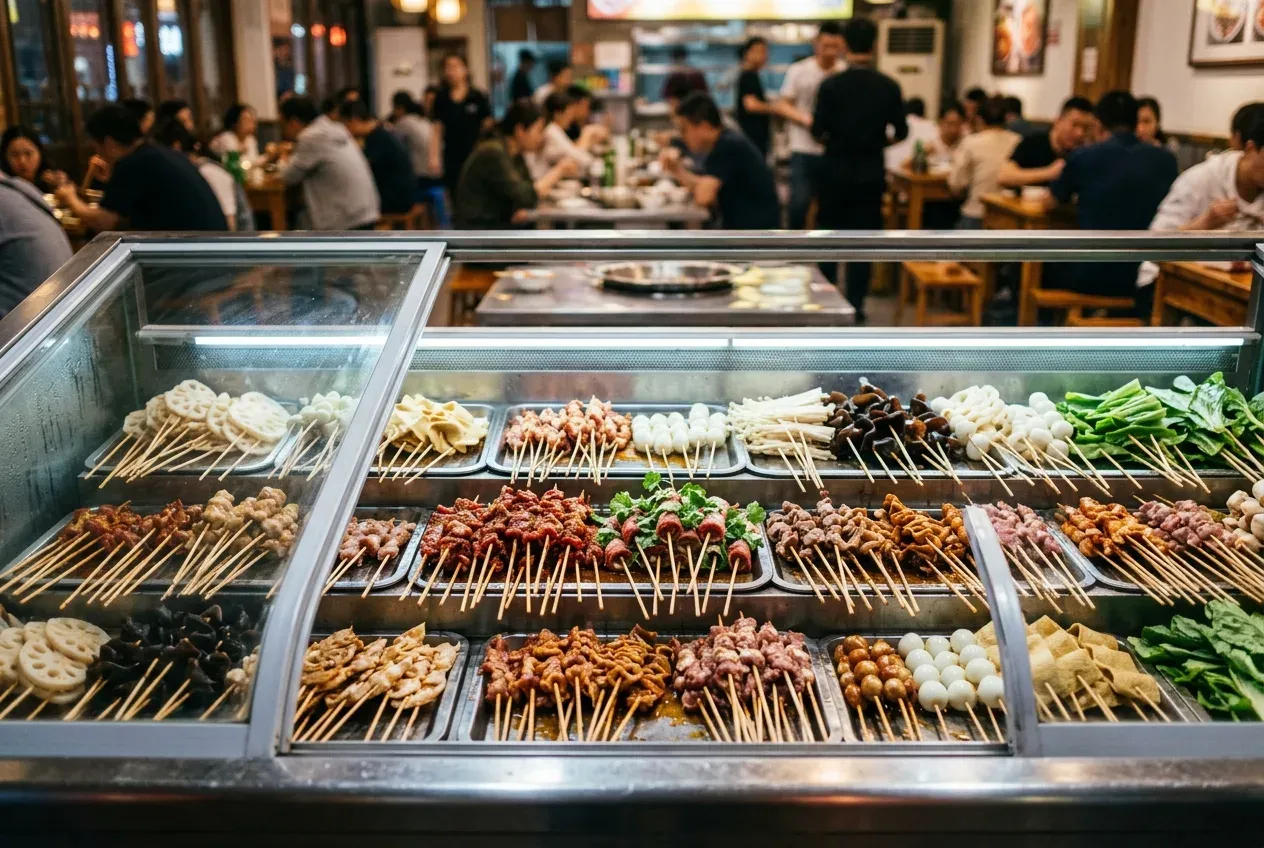
Beyond traditional hotpot, chuan chuan xiang and dry hot pot are widespread spicy specialties in Chengdu, though each uses a different dining format and cooking method. Chuan chuan xiang is Chengdu's signature skewered hotpot, where diners pick skewers of raw ingredients from display coolers and cook them in a shared broth, with skewers usually priced between 0.5 and 2 RMB each. Sichuan dry hot pot uses ingredients and seasonings similar to spicy hotpot, but it is stir-fried over high heat in oil rather than simmered in broth, leaving no excess liquid and delivering a savory, concentrated char. According to Chinese Wikipedia, dry hot pot originated in Deyang, Sichuan, initially featuring freshly prepared chicken, rabbit, and vegetables in a style known for heavy oil and salt; some traditional dining customs even add fresh broth to simmer vegetables after the main dry ingredients are eaten. The same distinction divides malatang and mala xiang guo: malatang cooks ingredients in hot broth, while mala xiang guo flash-fries them with spices and oil in a wok, creating bolder aroma with a higher amount of cooking oil.
If you want a full sit-down meal gathered around a large metal pot with the widest ingredient variety, pick traditional hotpot. If you want to hand-pick small portions on skewers at your own pace, choose chuan chuan xiang. If you prefer high-heat stir-fried flavors without broth, opt for dry hot pot.
| Food style | Cooking and dining method | Price and billing guide |
|---|---|---|
| Traditional Chengdu hot pot | Fresh meats and vegetables are cooked in a boiling pot and dipped in sesame oil before eating | Per-person spending is usually between 80 and 200 RMB |
| Chuan chuan xiang (skewered hot pot) | Diners pick skewered raw ingredients from open coolers and cook them in a shared pot | Skewers usually cost between 0.5 and 2 RMB each (older neighborhood spots average about 30 to 60 RMB per person) |
| Dry hot pot (spicy dry pot) | Spices and oil are stir-fried over high heat in a wok rather than simmered in broth, leaving no soup and a dry, fragrant taste | Typically heavy in oil and salt; in some traditional styles, fresh broth can be added after the main ingredients to simmer vegetables |
Dining out: how to avoid peak lines and plan your budget?
Most hotpot restaurants in Chengdu stay open late into the night or early morning. Peak dining hours run from 7:00 PM to 9:00 PM, when waits at popular spots can stretch past 2 hours. Brand categories and pricing tiers across the city are fairly clear: standard chains like Dalongyi Hotpot offer traditional Chengdu beef tallow red broths at about 80 to 120 RMB per person. Founded in 1986, Huangcheng Laoma represents Chengdu's upscale traditional hotpot; its flagship location features a Sichuan opera stage where diners can watch face-changing performances during dinner. If you visit an older neighborhood skewer shop tucked inside residential compounds, there is generally no English menu, you pick items directly from large coolers, and the bill typically runs about 30 to 60 RMB per person.
Tip: When heading to popular hotpot spots, arrive earlier in the evening or visit during late-night hours to avoid long waits during peak dining times.
Sources
Sichuan cuisine - Wikipedia
Customs and etiquette in Chinese dining - Wikipedia
Chengdu - Wikipedia
Dry pot - Wikipedia
Mala xiang guo - Wikipedia
Bingfen - Wikipedia
Spicy hot pot - Wikipedia
Hot pot - Wikipedia
Sources verified on November 18, 2026
FAQ
What broth options exist in Chengdu if you cannot handle any spice?
Diners who cannot eat spicy food can choose tomato broth, made by slowly simmering fresh tomatoes into a sweet, sour, rich soup with no heat, suitable for vegetarians and children. Another option is clear broth or mushroom broth simmered from chicken, pork bone, or mushroom stock.
How do Chengdu hotpot and Chongqing hotpot differ in broth and flavor?
Unlike Chongqing hotpot, which focuses on intense heat and heavy beef tallow, Chengdu hotpot prioritizes a balanced harmony of numbness, spice, and fragrance, incorporating more spices and herbal notes, alongside a wider selection of ingredients.
What can you do at the table if your hotpot turns out too spicy?
You can add a splash of vinegar to your dipping sauce or into the broth itself, which softens and rounds out the heat. Making sure your dipping bowl has plenty of sesame oil also helps coat your tongue and lessen the sting of capsaicin.
How do you pick ingredients and pay when eating chuan chuan xiang in Chengdu?
Ingredients for chuan chuan xiang are usually displayed in large open chillers for diners to choose themselves. Raw foods are skewered on thin bamboo sticks and cooked in a shared pot. At checkout, the bill is tallied by counting the sticks, with each skewer typically priced between 0.5 and 2 RMB.