
How to Celebrate Lunar New Year: Traditions and Customs
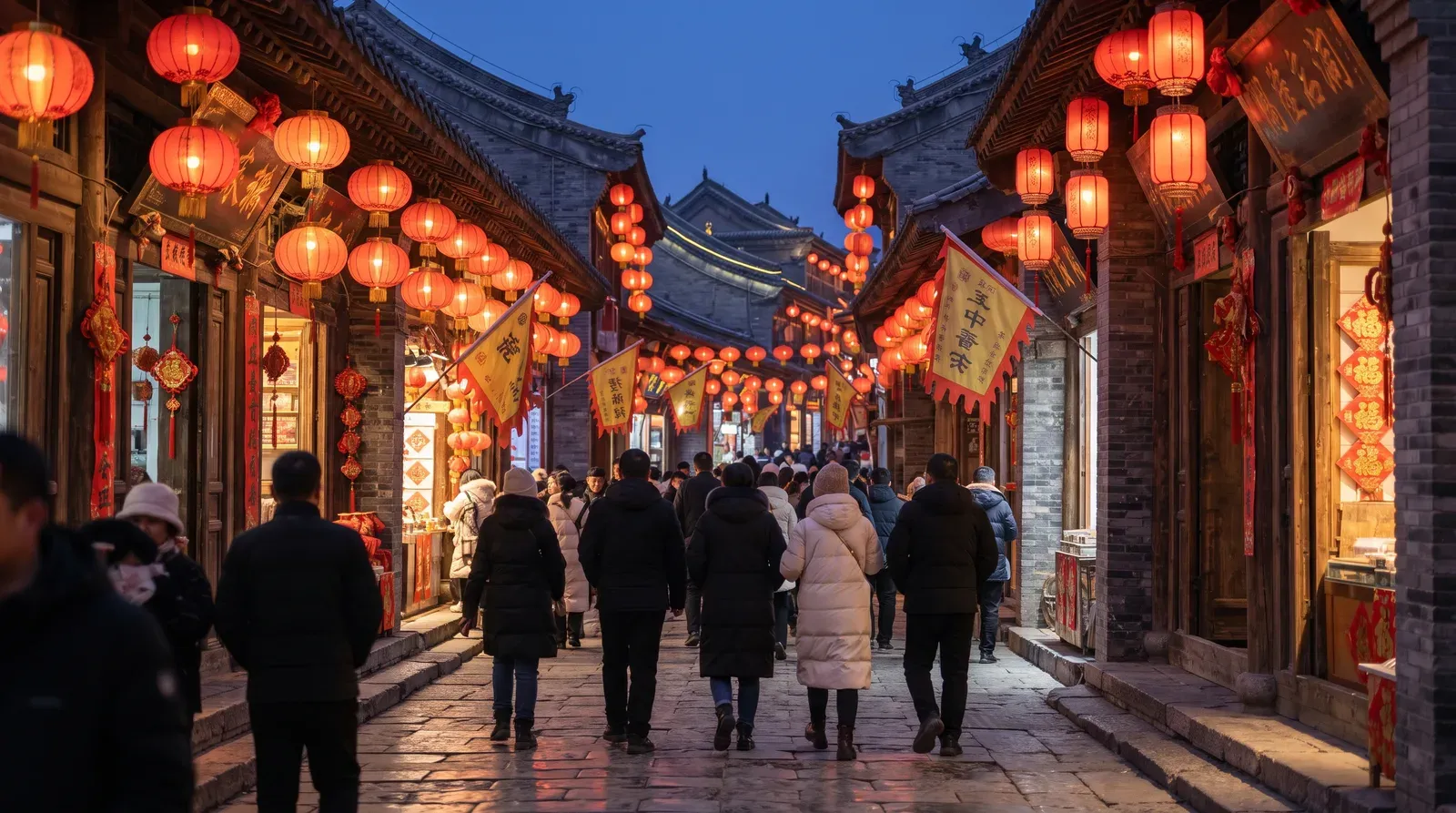
In folk tradition, understanding how to celebrate Lunar New Year begins with rituals for the Kitchen God on the 23rd or 24th day of the twelfth lunar month. The festivities continue through the Lantern Festival on the 15th day of the first lunar month, reaching a peak on New Year's Eve and New Year's Day. According to the Hong Kong Observatory's Gregorian-Lunar Calendar Conversion Table, the first day of the first lunar month usually falls on a new moon between Jan 21 and Feb 20. For example, Chinese New Year is on Feb 17, 2026, Feb 6, 2027, and Jan 26, 2028. Throughout the festival period, people welcome the new year and pray for good fortune through cleaning, pasting couplets, eating reunion dinner, staying up late, paying visits, and viewing lanterns.
How Do You Celebrate Lunar New Year: When Does It Start and How Long Does It Last?
In folk tradition, holiday celebrations usually start with Laba on the eighth day of the twelfth lunar month or with kitchen god rituals on the 23rd or 24th day, continuing until the Lantern Festival on the 15th day of the first lunar month. Folk tradition also holds that the Longtaitou Festival, or Dragon Head Raising, on the second day of the second lunar month marks the true end of the festival period. Spring plowing begins then, and people return to busy farm work.
In ancient times, the start of the lunar year was called Yuanri or Yuandan. In July 1913, Zhu Qiqian, then Minister of the Interior, submitted a petition to designate the lunar new year's day as Chunjie (Spring Festival). Since then, Lunar New Year has been known as the Spring Festival.
How Do You Celebrate the Chinese New Year Before New Year's Eve?
Preparations usually begin with Little New Year, kitchen god worship, and thorough housecleaning. Ancient custom divided Little New Year by saying "officials celebrate on the 23rd, common folk on the 24th, and boat people on the 25th." Because the north was historically the political center, it mostly marks Little New Year on the 23rd day of the twelfth lunar month, while the south mostly marks it on the 24th day. People offer malt melon candy and sesame sweets to the Kitchen God so he will speak good words in heaven.
A thorough housecleaning takes place on the 24th day of the twelfth lunar month, known as saofang (sweeping the house) in the north and danchen (dusting away dust) in the south. Households sweep courtyards and wash utensils and bedding to clear away the old and welcome the new.
Decorating the house before the holiday also follows customs. People hang spring couplets, paper window flowers, New Year pictures, and red lanterns. In parts of northern China, the character Fu (good fortune) is hung upside down, as the word for upside down (dao) sounds like the word for arrive, symbolizing that fortune has arrived. Folk legend says the monster Nian attacked villages on New Year's Eve. Because it feared red and loud explosions, traditions formed to wear red, paste red paper couplets, and set off firecrackers to ward off evil.
What traditional foods and activities take place on New Year's Eve?
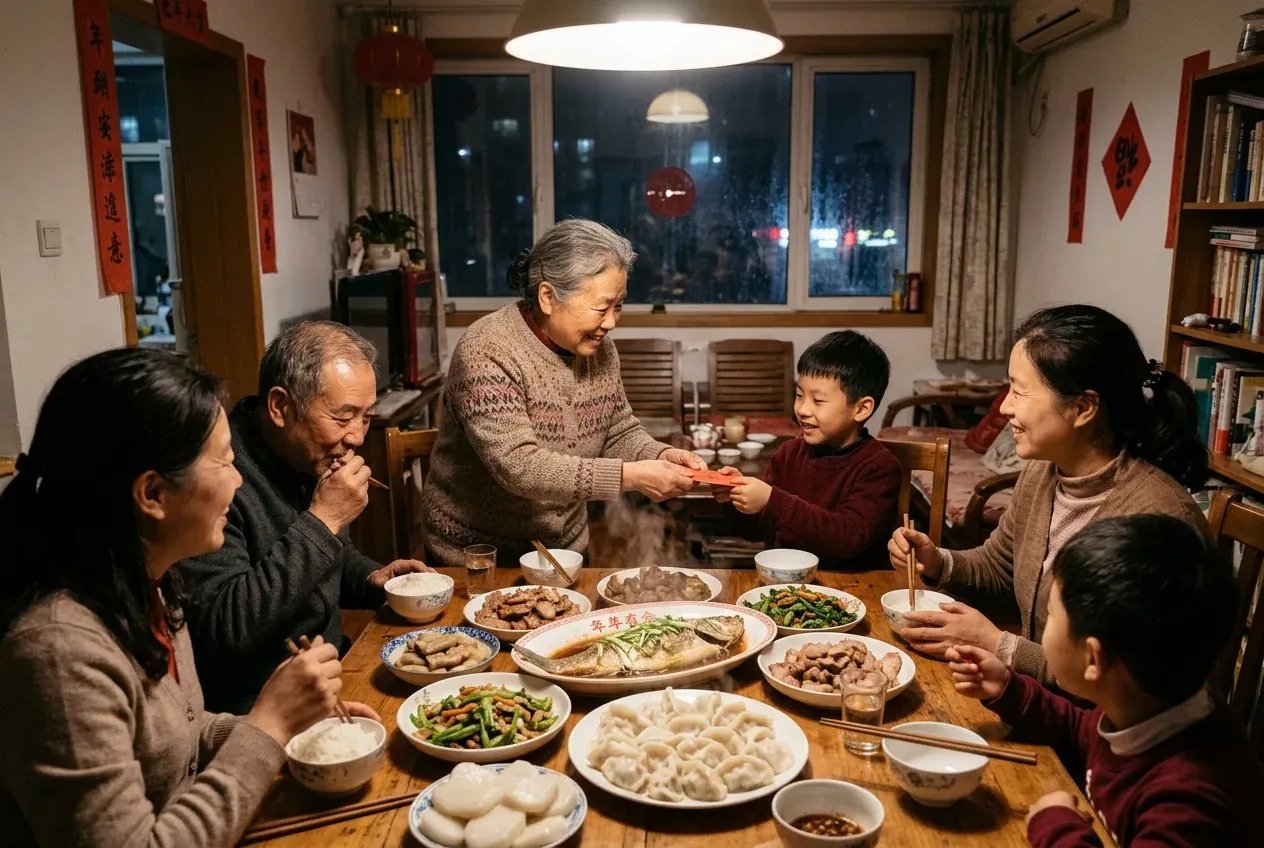
The New Year's Eve dinner is a reunion meal for the whole family. The table must have a fish dish because the word for fish sounds like surplus, symbolizing abundance year after year. In northern regions, dumplings are the highlight of the meal. Filled with meat, seafood, and vegetables, their shape resembles ancient silver ingots, symbolizing wealth. In the south, people often eat steamed rice cakes (niangao) made of glutinous rice and cane sugar, because niangao sounds like higher year, wishing for life and work to rise each year. Eating sweet soup balls (tangyuan) made of glutinous rice sounds similar to reunion (tuanyuan), symbolizing family happiness and togetherness.
After the meal, elders give younger members lucky money (yasuiqian) in red paper envelopes. Red represents good luck, and the money carries blessings for health and safe growth. Folk tradition also includes shousui (staying up late or through the night on New Year's Eve) to welcome the new year, reflecting nostalgia for the passing year and hope for the coming spring.
What are the daily customs from the 1st to the 15th day of the first lunar month?
From the 1st to the 15th day of the first lunar month, each day has specific rituals, food customs, and lifestyle rules. The following table details these daily activities and traditional customs:
| Lunar Date | Traditional Name and Core Activities | Food Customs and Taboos |
|---|---|---|
| 1st day of the 1st month | Open the door and set off firecrackers for good fortune, wear new clothes, and visit relatives and friends to exchange new year greetings | Avoid sweeping floors, dumping trash, or throwing out water to prevent sweeping good luck and wealth out of the home |
| 2nd day of the 1st month | Son-in-Law Welcoming Day: married daughters return to their parents' home with their husbands and children; worship the God of Wealth welcomed on New Year's Eve | Welcome blessings and good fortune |
| 3rd day of the 1st month | Minor Year Court: old customs included burning door-god paper | Old customs held that this day easily provoked quarrels, so people generally avoid visiting relatives and friends |
| 4th day of the 1st month | Goat Day (symbolizing the auspicious idiom san yang kai tai): welcome the Kitchen God back to the human realm | Families gather to eat zheluo (a dish made of leftover festival food) and clean courtyards to throw away poverty |
| 5th day of the 1st month | Po Wu (Breaking Five / Sending Off the Year): daily taboos from the 1st to the 5th day are officially lifted | In many places, the traditional food of the day is dumplings |
| 15th day of the 1st month | Lantern Festival: the first full moon night of the new year, when people view thousands of lanterns and set off fireworks | Eat yuanxiao or tangyuan, which symbolize reunion |
| 2nd day of the 2nd month | Longtaitou (Dragon Head Raising): marks the true end of the festival period | Spring plowing begins, and people return to farm work |
On the morning of the 1st day of the first lunar month, the first task upon opening the door is setting off firecrackers for good luck. People put on new clothes and head out to visit relatives and friends. Tradition advises against sweeping, throwing out trash, or pouring out water on this day, so wealth and good fortune are not swept away. The rules kept from the 1st to the 5th day officially end on the 5th day, called Po Wu. On the 15th day, the Lantern Festival marks the first full moon night, when people admire countless lanterns, light fireworks, and eat yuanxiao or tangyuan to conclude the festivities.
Chinese New Year: How to Celebrate in the North and South?
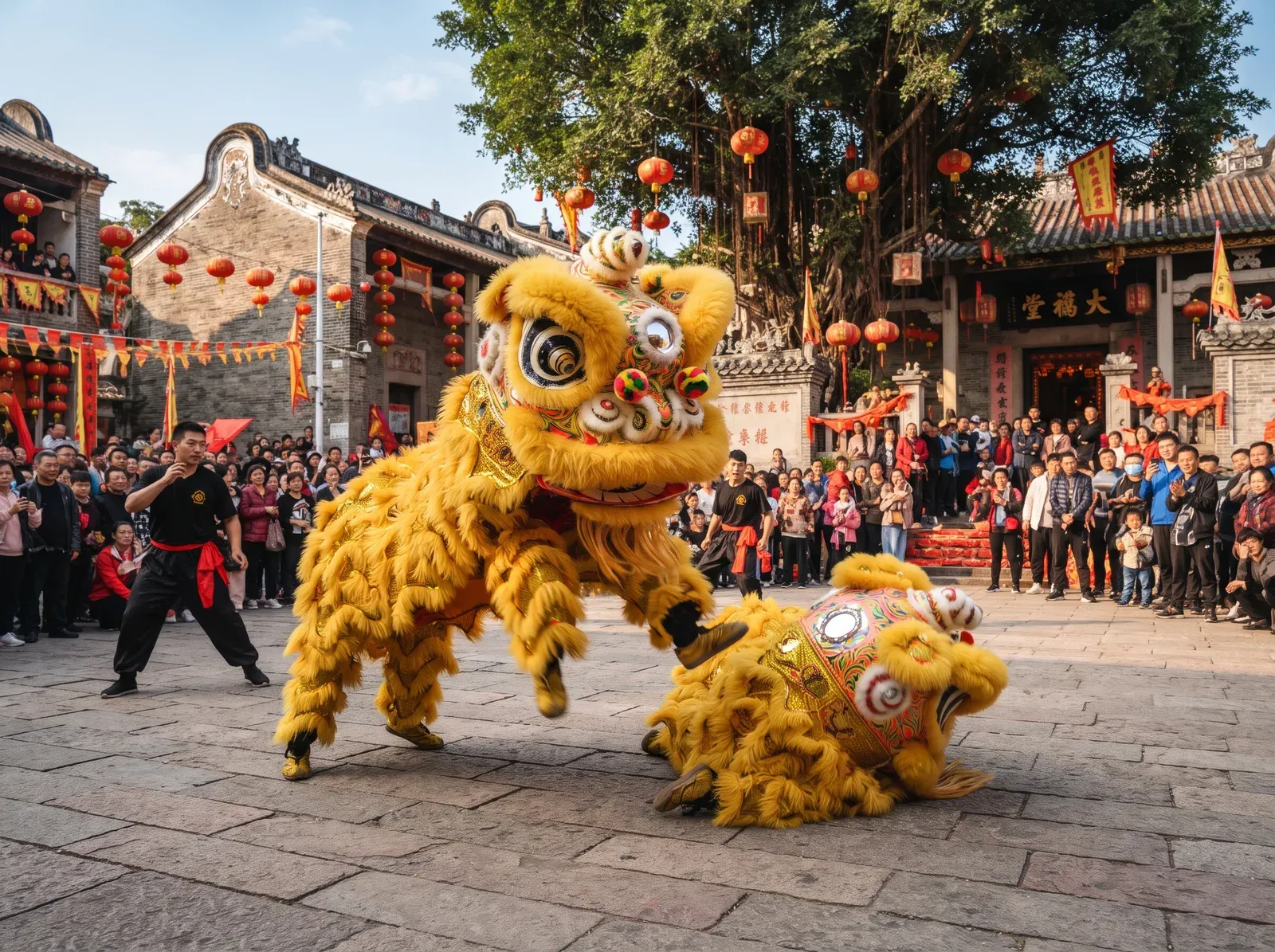
Folk performances differ between the north and south: dragon and lion dances are more common in the south, while northern folk prefer temple fairs. For Little New Year, ancient tradition noted that "officials celebrate on the 23rd, common folk on the 24th, and boat people on the 25th," leading the north to mark it mainly on the 23rd day of the twelfth lunar month and the south on the 24th day. During cleaning, the north calls it saofang while the south calls it danchen. For food, the north highlights dumplings on New Year's Eve, while the south widely steams rice cakes and boils sweet soup balls.
Under what conditions do these holiday customs apply?
Zodiac years, auspicious sayings, and daily customs are folk traditions passed down over time. They mainly convey hopes for peace and good luck rather than mandatory rules. For instance, old customs such as staying home on the 3rd day or not sweeping on the 1st day are often adapted in modern life according to personal schedules. In traditional practice, the various daily taboos observed from the 1st to the 5th day are themselves officially lifted on the 5th day, known as Po Wu.
Sources
Chinese New Year - Wikipedia
Walking into Chinese New Year: Appreciating Traditional Customs and Culture - Consulate General of the People's Republic of China in Barcelona
Spring Festival Was Called Yuandan in Ancient Times - Capital Window, The People's Government of Beijing Municipality
Chinese New Year Traditions | Facts Food & Festivals
Joyful Spring Festival Calendar - Central Commission for Discipline Inspection
The above sources were verified on Nov 6, 2026.
FAQ
Why does the Gregorian date of Chinese New Year change each year?
The Chinese calendar is a lunisolar calendar. Chinese New Year falls on the first day of the first lunar month, which is usually a new moon between Jan 21 and Feb 20. According to tables from the Hong Kong Observatory, the festival falls on Feb 17, 2026, Feb 6, 2027, and Jan 26, 2028.
Why is the Fu character pasted upside down during the festival?
In parts of northern China, people paste the red Fu character upside down. This custom relies on the wordplay between dao (upside down) and dao (arrive) in Chinese, symbolizing that good fortune has arrived.
Why is a fish dish served at the New Year's Eve dinner?
Fish is an essential dish at the reunion dinner. In Chinese, the word for fish sounds like surplus, symbolizing abundance year after year in folk food customs and representing a prosperous life.
When does Lunar New Year officially come to an end?
Celebrations in folk tradition usually run until the Lantern Festival on the 15th day of the first lunar month, concluding with lantern viewing and eating yuanxiao. Folk tradition also holds that Longtaitou (Dragon Head Raising) on the second day of the second lunar month marks the true end of the festival period, when spring plowing begins.