
Han Wu Di: Life of Emperor Wu and Han Dynasty Sites
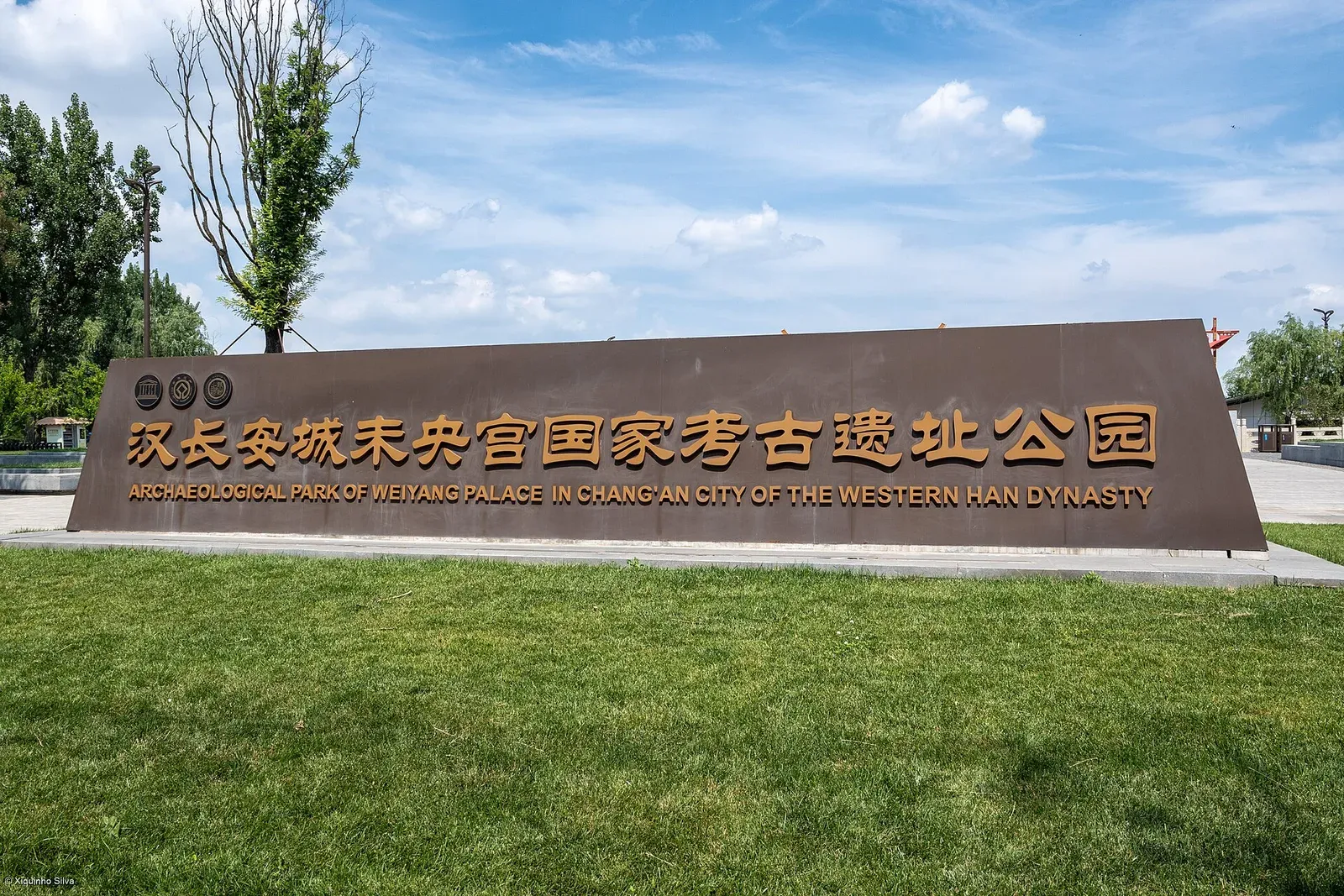
Photo: xiquinhosilva / Wikimedia Commons, CC BY 2.0
Han Wu Di (Liu Che) ruled for 54 years. By creating royal era names, fighting the Xiongnu to open the Silk Road, and establishing Confucianism as the state ideology, he shaped the territory and political foundation of the Han Empire. To retrace the emperor's life and Han culture, visiting the Maoling stone sculptures, the rammed-earth base of Weiyang Palace, and the Qinhan Branch on the Guanzhong Plain usually takes 2 to 3 days. Exploring these open-air ruins and underground galleries lets you see the institutional shifts and material relics from the Rule of Wen and Jing to the peak of the Western Han.
| Sites and Museums | Location | Admission and Booking | Core Highlights |
|---|---|---|---|
| Maoling Mausoleum and Huo Qubing Tomb (Maoling Museum) | Xingping, Xianyang (about 40 km west of Xi'an) | Ticket required | Han Wu Di main mound, 18 large stone sculptures including Horse Stepping on a Xiongnu, 14 national-treasure relics |
| Weiyang Palace Relics Park of Han Chang'an City | Northwestern suburbs of Xi'an | Free entry since 2013 | 4.8 sq km imperial palace ruins, elevated Front Hall platform, Tianlu Pavilion, inscribed bone slips discovery site |
| Shaanxi History Museum Qinhan Branch | Qinhan New City, Xixian New Area | Free reservation (tickets released 5 days in advance at 17:00) | Big Dipper architectural complex, Qin and Han civilization exhibition, "Cities and Mausoleums" exhibition |
| Hanyangling Museum (Mausoleum of Emperor Jing) | Xianyang Plateau | Ticket required | Completely underground exhibition hall, glass walkway overlooking painted clothed pottery figures and ancient tea remains |
After noting these core locations, we begin with the key milestones and institutional reforms of his reign.
What Major Reforms Did Emperor Wu Introduce to Reshape the Empire?
According to Encyclopædia Britannica, Emperor Wu was born in 156 BC and died on March 29, 87 BC. After Emperor Jing died in 141 BC, the 15-year-old crown prince Liu Che took the throne. He holds the record for the longest reign among ethnic Han emperors, established Confucianism as the state ideology, and created China's imperial era name system. The year 140 BC was the first year of the Jianyuan era, marking the official start of Chinese emperors using era names to record years. In 127 BC, adopting the advice of Zhufu Yan, he issued the Decree of Extending Grace (Tui'en Ling). This decree allowed vassal kings to divide their fiefs among their sons as marquisates under commandery control, peacefully weakening local lords and strengthening central authority.
For state finances and the calendar, the emperor banned private minting of coins, allowing only central government currency to circulate nationwide. He also forbade private iron smelting and salt boiling, introduced new taxes, and set up state monopolies on salt, iron, and liquor to replenish state reserves drained by years of warfare. In 104 BC, he introduced the Taichu Calendar. Proposed by officials such as Gongsun Qing, Hu Sui, and Sima Qian, and calculated by Deng Ping and Luoxia Hong, it established the first lunar month as the start of the year, a tradition that continues today.
His later years saw severe turmoil and strategic adjustments. In 91 BC, the Witchcraft Disaster erupted. Crown Prince Liu Ju was falsely accused of using witchcraft against the emperor and was forced to take up arms in self-defense, leading to thousands of deaths before his defeat and suicide by hanging. In 89 BC, the emperor rejected Sang Hongyang's proposal to establish military agricultural colonies in Luntai and issued the Luntai Edict of Self-Reproach. The edict stated that the current priority was to stop harsh oppression, end unauthorized levies, and focus on farming, marking a shift toward recovery and agricultural growth.
Scene: Inside the palace hall where the Luntai edict was proclaimed, the aging ruler faced the trauma of the witchcraft crisis and an empty treasury from ongoing wars. Setting aside the garrison farming plan in Luntai, he publicly reflected on his past policies in an official decree, steering imperial strategy back toward farming and peace for the people.

| Historical Year | Key Event or Institutional Reform | Historical Impact and Significance |
|---|---|---|
| 141 BC | 15-year-old Crown Prince Liu Che takes the throne | Began the peak era of the Western Han |
| 140 BC | Creation of the Jianyuan era name | Official start of Chinese emperors using era names to record years |
| 127 BC | Issuance of the Decree of Extending Grace on Zhufu Yan's advice | Peacefully weakened regional lords and strengthened central authority |
| 104 BC | Implementation of the Taichu Calendar and expedition to Dayuan | Established the first lunar month as the start of the year and acquired Heavenly Horses |
| 91 BC | Outbreak of the Witchcraft Disaster | Crown Prince Liu Ju died by suicide after defeat, leaving deep palace scars |
| 89 BC | Rejection of garrison farming and issuance of the Luntai Edict | Focused on ending harsh levies and boosting farming, shifting rule toward recovery |
What Did Opening the Western Regions and the Silk Road Leave on the Map?
Starting in 133 BC, Han Wu Di launched counteroffensives against the northern Xiongnu nomadic confederation, shifting Western Han foreign policy from defense to active expansion. Between 139 BC and 138 BC, he sent Zhang Qian to the Western Regions to form an alliance with the Yuezhi. Held captive for 13 years, Zhang Qian escaped back to the Han court and set out on a second diplomatic mission in 119 BC, formally opening China's early official overland route to Central Asia, the Silk Road. Han forces also marched into the Fergana Valley (Dayuan) in modern Uzbekistan. After an initial setback in 104 BC, the army advanced again, ultimately securing Fergana Heavenly Horses and bringing oasis city-states along the route into the Han sphere.
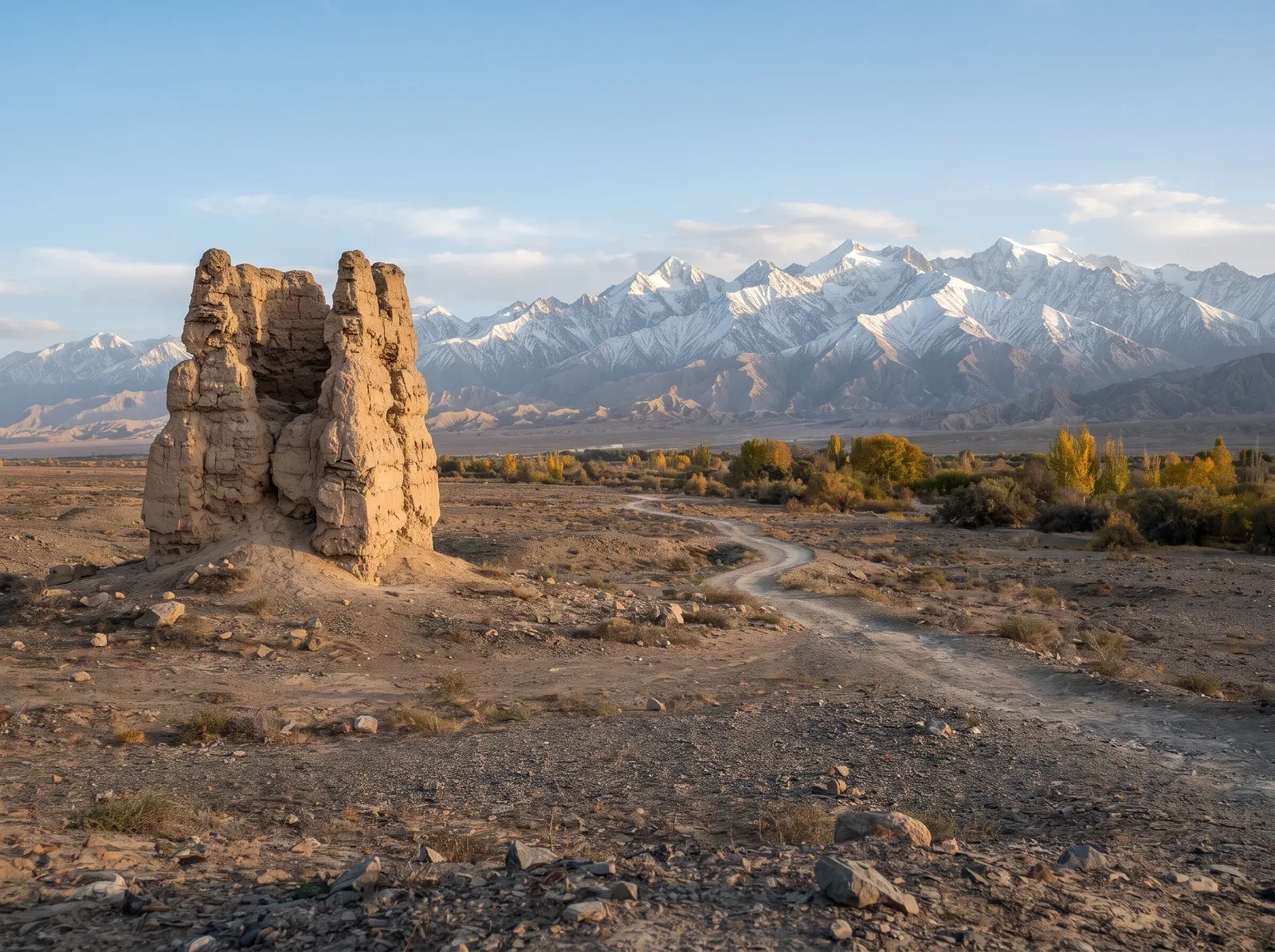
These military campaigns directly reshaped ancient geography. In 121 BC, the Han dynasty secured the Hexi region and established four commanderies: Wuwei, Zhangye, Jiuquan, and Dunhuang. This began imperial control over Central Asian trade routes and spurred the growth of the Silk Road. The Hexi Corridor stretches about 900 km, running from the southern tip of the Helan Mountains and the Yellow River loop in the east to Lop Nur and the Turpan Basin in the west. Bordered by the Qilian, Altun, and Beishan mountain ranges, it served as the vital choke point for the eastern Silk Road.
The UNESCO-recognized Chang'an-Tianshan Corridor spans about 5,000 km. It begins at the Han and Tang capitals of Chang'an and Luoyang, traverses the Hexi Corridor and the Qilian Mountains to Yumen Pass in Dunhuang, and extends along both sides of the Tianshan Mountains into the Ili, Chu, and Talas valleys of Central Asia's Zhetysu region. UNESCO inscribed Silk Roads: the Routes Network of Chang'an-Tianshan Corridor in 2014, followed by the Zarafshan-Karakum Corridor in 2023.
If you prefer an extended historical journey, you can head northwest along the Hexi Corridor to Yumen Pass in Dunhuang after visiting the ruins in Xi'an. If your travel time is limited, focus on the core Western Han capital and imperial mausoleum sites across Xi'an and Xianyang.
What Stone Sculptures and Relics Stand at Maoling and Huo Qubing's Tomb?
Maoling Mausoleum sits in Xingping, Shaanxi Province, about 40 km west of the provincial capital Xi'an, and is one of the Western Han imperial tombs. Construction began in 139 BC, the year after the emperor took power, and lasted 53 years until his death, consuming roughly one-third of the court's annual tax and tribute revenue. The burial mound forms a rammed-earth truncated pyramid, measuring 222 meters east to west, 217 meters north to south, and 47 meters high, making it the largest of all Han dynasty imperial mounds. In 1981, a gilded bronze horse was unearthed nearby, standing as the largest gilded bronze horse discovered in China from the Han period.
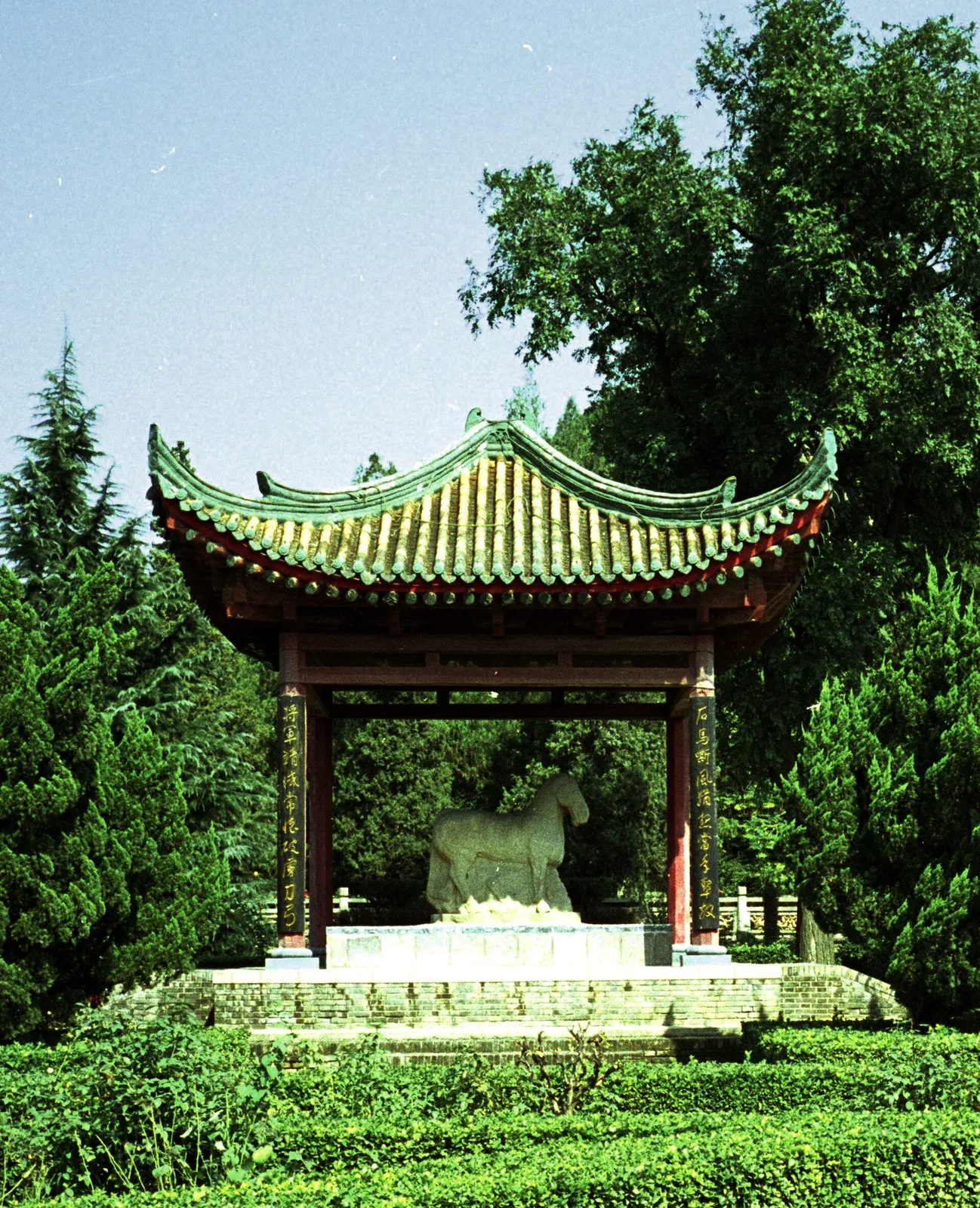
The Western Han military commander Huo Qubing died in 117 BC at the age of 24, and the emperor had him buried east of Maoling. His tomb retains 18 large stone sculptures, including Horse Stepping on a Xiongnu, representing China's earliest and best-preserved collection of ancient tomb stone carvings. Maoling Museum, built around Maoling and Huo Qubing's tomb, is a Western Han dynasty museum housing 14 national-treasure artifacts. Nearby companion tombs include those of Wei Qing, Huo Guang, Lady Li, and Jin Midi.
Tip: The main Maoling burial mound and Maoling Museum (where Huo Qubing's tomb is located) are about 1 km apart. Because the museum is set inside the Huo Qubing tomb area, you can view the stone sculptures first and then follow the outer road to the base of the main pyramid-shaped mound.
What Are the Main Sights at the Weiyang Palace Relics Park of Han Chang'an?
According to Encyclopædia Britannica, Chang'an was founded in 202 BC in the northwestern suburbs of modern Xi'an as the Western Han capital and was one of the greatest cities of the ancient world. The city walls stood 12 meters high with a base width of 12 to 16 meters, measuring 25,700 meters in perimeter and covering about 36 sq km. It was called the Dipper City because its southern wall curved like the South Dipper and its northern wall resembled the Big Dipper. In 200 BC, Emperor Gaozu (Liu Bang) ordered Chancellor Xiao He to construct Weiyang Palace. The palace site spans about 4.8 sq km and was inscribed as a UNESCO World Heritage Site in 2014 as part of the Silk Roads.
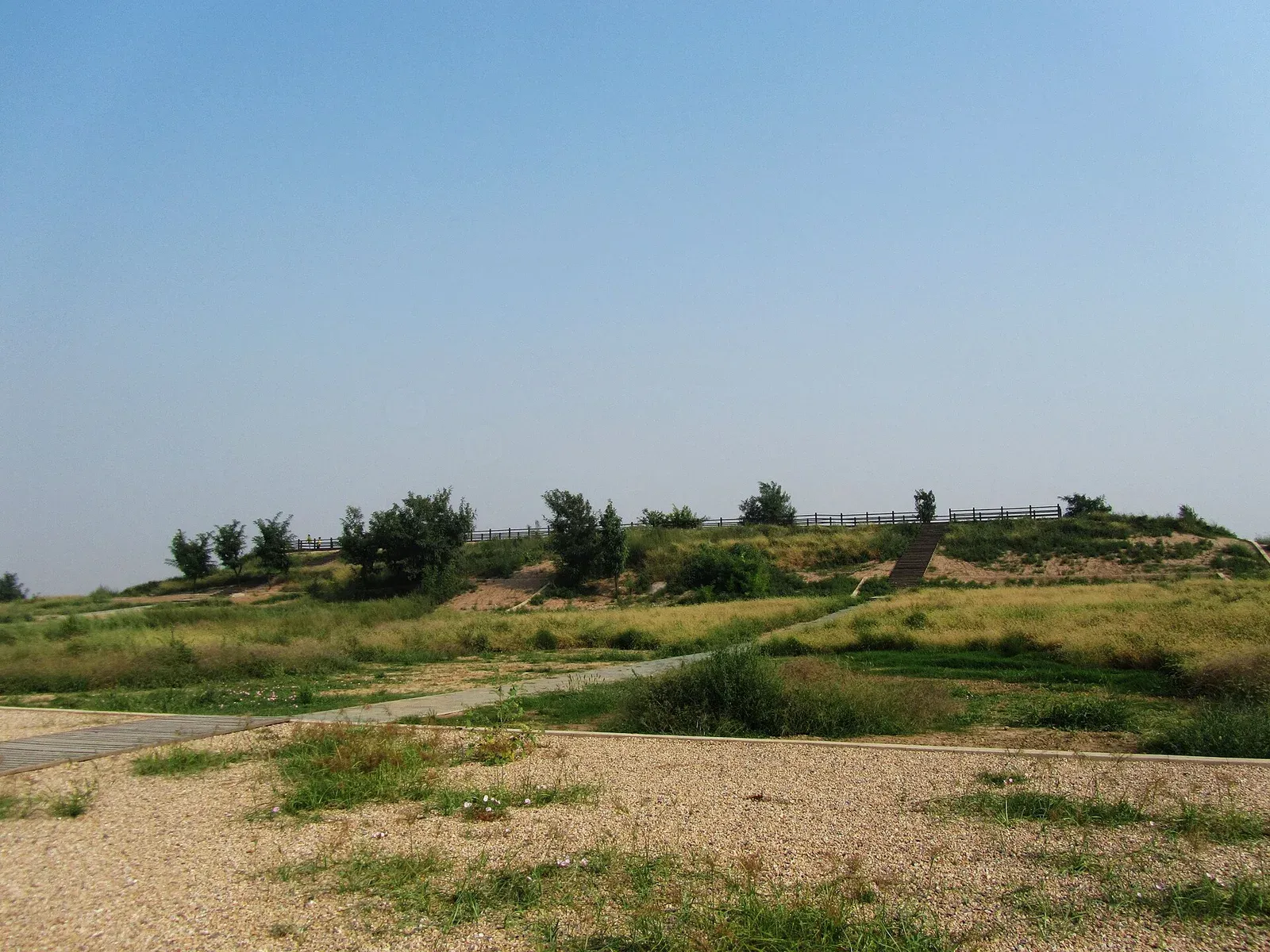
The Weiyang Palace Relics Park opened to the public for free in 2013. Key exposed sites include the Front Hall, Jiaofang Hall, Shiqu Pavilion, Tianlu Pavilion, and Zhicheng Gate. The Front Hall, the palace's central structure, sits on an elevated rammed-earth base measuring 350 meters north to south and 200 meters east to west. It rises in three tiers from south to north, reaching 15 meters at its highest northern point.
Another key structure, Tianlu Pavilion, held up to 3,090 scrolls of ancient texts and served as a vital archival source for Sima Qian while writing Records of the Grand Historian. Its remaining rammed-earth platform stands about 6 to 7 meters high, with sides over 20 meters long. Archaeologists at the central government offices of the palace also uncovered over 50,000 inscribed bone slips. Measuring about 6.8 to 7.2 cm and crafted mostly from cattle bone, they served as administrative records of tribute goods sent to the imperial court from across the empire.
Scene: Looking out from the top of the Front Hall platform's third tier, the open fields reveal orderly earthen foundations and the line of the ancient Zhicheng Gate. The administrative heart where Western Han decrees were proclaimed two thousand years ago spreads out under the open sky.
What Are the Highlights of the Shaanxi History Museum Qinhan Branch and Hanyangling?
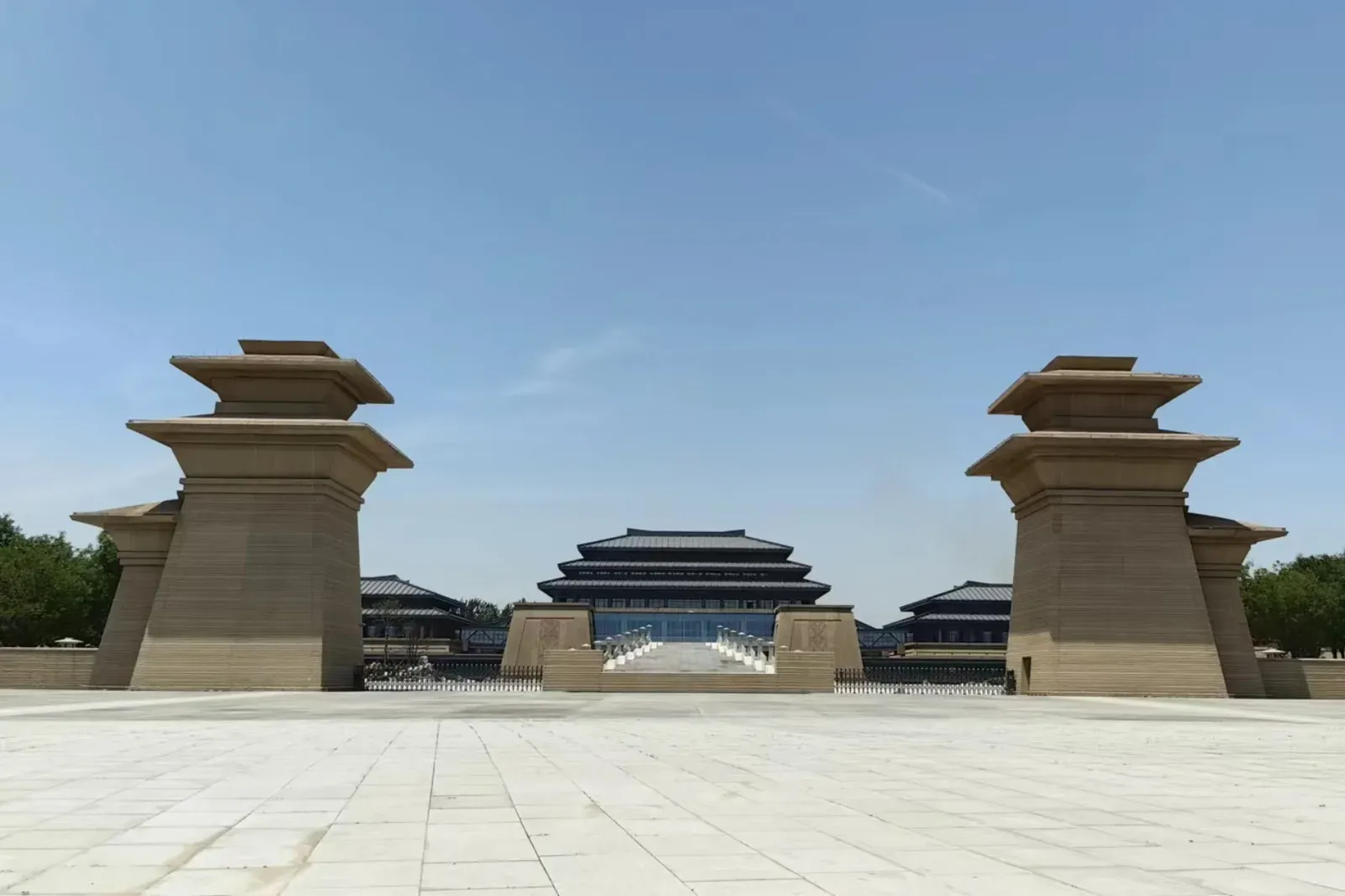
The Shaanxi History Museum Qinhan Branch officially opened to the public on May 18, 2024. Designed under the leadership of architect Zhang Jinqiu, its seven individual buildings follow the pattern of the Big Dipper and connect via elevated corridors, reflecting the ancient Chinese philosophy of modeling architecture after heaven and earth. The permanent galleries adopt an approach of broad history paired with focused themes, comprising the Qin and Han Civilization exhibition, the Cities and Mausoleums gallery, the Technology and Art gallery, and temporary exhibits. As of 2021, the Shaanxi History Museum held 1,725,754 cultural relics, including 21,023 rare artifacts.
Hanyangling, the tomb of Emperor Jing and one of the five major Western Han mausoleums, yielded over 50,000 painted clothed pottery figurines. Standing around 50 cm tall, their gentle, realistic style reflects court life and society during the Rule of Wen and Jing. The burial pit exhibition hall is built entirely underground over the actual excavation trenches, letting you look down at dense ranks of pottery figures and sacrificial offerings through elevated glass walkways and glass walls. In 2016, archaeological research identified 2nd-century BC tea remains among the artifacts, providing the earliest physical evidence of royal tea drinking found in the world.
If you want a systematic overview of Qin and Han history, prioritize the civilization and mausoleum galleries at the Qinhan Branch. If you want to experience the excavation layout up close, the underground glass walkway at Hanyangling lets you look straight down into the orderly burial pits of Han pottery figurines.
What Are Common Mistakes When Visiting Western Han Relics for the First Time?
Shaanxi History Museum releases admission slots 5 days in advance at 17:00 each day. Its Qinhan Branch opens daily from 8:30 to 18:00, with last entry at 17:00. You need to book your slot in advance through the official reservation system. Do not go directly to the main museum near the Giant Wild Goose Pagoda in downtown Xi'an, as the two locations are far apart and mistaking them can derail your schedule.
Maoling Museum sits beside Huo Qubing's tomb, where the stone sculptures and artifacts are gathered, while Emperor Wu's main mound lies about 1 km to the west. If you plan to visit both, budget time to walk or drive between them. The Weiyang Palace site covers a huge area of open earthen platforms, making for long walking routes. Rental carts and bicycles are available at the entrance, so picking a ride early saves you from walking long distances under the hot sun.
| Sites and Museums | Common Mistakes | Recommended Approach |
|---|---|---|
| Shaanxi History Museum Qinhan Branch | Assuming it shares the downtown site near Giant Wild Goose Pagoda; arriving without a ticket | Book tickets 5 days ahead at 17:00; verify the address in Qinhan New City, Xixian New Area |
| Maoling Mausoleum and Huo Qubing Tomb | Assuming the museum is at the main mound of Emperor Wu | The museum is by Huo Qubing's tomb; visit the museum for carvings, then head about 1 km west for the main pyramid mound |
| Weiyang Palace Relics Park | Assuming it is a miniature theme park; exhausting energy by walking the entire site | It is an in situ archaeological park of earthen platforms; rent an electric cart or bicycle at the entrance |
Tip: Last entry at the Qinhan Branch is 17:00. If you visit both Hanyangling and the Qinhan Branch on the same day, tour the underground pits of Hanyangling in the morning, and leave at least 3 hours in the afternoon for the permanent galleries at the Qinhan Branch.
Sources
About the Silk Roads | UNESCO
Silk Road - Facts, History & Location | HISTORY
Silk Roads: the Routes Network of Chang'an-Tianshan Corridor - UNESCO World Heritage Centre
Silk Road - Wikipedia
Shaanxi History Museum - Wikipedia
Hexi Corridor - Wikipedia
Xi’an | China, Map, History, & Attractions | Britannica
Emperor Wu of Han - Wikipedia
Timeline of Chinese History - Wikipedia
Han Chang'an City - Wikipedia
Weiyang Palace - Wikipedia
Yangling Mausoleum of Han - Wikipedia
Wudi | Han Dynasty Emperor & Reformer | Britannica
Maoling - Wikipedia
Tomb of Huo Qubing - Wikipedia
Han Maoling - Wikipedia
Decree of Extending Grace - Wikipedia
Luntai Edict - Wikipedia
Weiyang Palace - Wikipedia
Shaanxi History Museum Qinhan Branch - Wikipedia
Hanyangling - Wikipedia
Han Wudi
Sources checked on November 17, 2026
FAQ
Are Maoling and Huo Qubing's Tomb in the same scenic area?
Maoling and Huo Qubing's tomb lie in the same area but sit about 1 km apart. Maoling Museum is built around Huo Qubing's tomb and displays the stone sculptures and excavated artifacts. Emperor Wu's main mound is located to the west, and both can be visited together via connecting roads.
Does Weiyang Palace Relics Park require an admission ticket?
The Weiyang Palace Relics Park has been open to the public for free since 2013, requiring no general admission ticket. Because the archaeological park is vast and key points like the Front Hall and Tianlu Pavilion are far apart, renting an electric cart or bicycle at the entrance is recommended.
How do you book tickets for the Qinhan Branch, and what are its opening hours?
Tickets for the Qinhan Branch are released 5 days in advance at 17:00 daily. The museum opens daily from 8:30 to 18:00, with last entry at 17:00. You need to secure your reservation slot through the official booking channel before visiting.
What are the main highlights of Hanyangling, and how do they differ from the Terracotta Warriors?
Hanyangling exhibits the underground burial pits of Emperor Jing. Through suspended glass walkways, you can look down at rows of painted, clothed pottery figurines about 50 cm tall, which display a calm, realistic style. Excavations also revealed 2nd-century BC tea remains, offering a glimpse into imperial court life during the Rule of Wen and Jing.
How many days are recommended for exploring Western Han culture in Xi'an and Xianyang?
Two days are usually recommended. Spend the first day visiting the Weiyang Palace Relics Park and Hanyangling. On the second day, tour the Shaanxi History Museum Qinhan Branch, followed by Maoling and Huo Qubing's tomb in Xingping, providing a relaxed and coherent pace.