Life of Liu Bang and Han Dynasty Cultural Heritage Sites
Emperor Gaozu of Han, Liu Bang (256/247 BC to June 1, 195 BC), was one of the few dynasty founders in Chinese history from a peasant background. He defeated Xiang Yu at the Battle of Gaixia in 202 BC and formally took the throne to found the Han dynasty. His life included launching an uprising in Pei County of Chu, establishing three simple rules in Guanzhong, and making Chang'an his capital. Today, Xi'an and Xianyang in Shaanxi, along with Xuzhou in Jiangsu, preserve city and royal tomb sites such as the Weiyang Palace ruins, Han Changling, and Western Han Chu royal tombs.
What Were the Key Turning Points in Liu Bang's Life?
Liu Bang was born in Zhongyangli, Fengyi, Pei County, in the State of Chu during the late Warring States period, and served as the chief of Sishui Pavilion in his early years. In the story of slaying the white serpent, he released the convicts he was escorting, took refuge on Mount Mangdang, and drew his sword while drunk at night to kill a white snake, which established his reputation among his followers as an anti-Qin leader.
In 207 BC, he was the first to enter the Qin capital of Xianyang, where Ziying, the last ruler of Qin, surrendered. On the advice of Zhang Liang and Fan Kuai, he abolished harsh Qin laws and made three simple rules, winning the support of the people and army in Guanzhong. After the fall of Qin, Xiang Yu divided the realm among 18 princes. He was enfeoffed in the Bashu and Hanzhong regions as the King of Han. After entering Shu, he burned the plank roads to prevent pursuit and lower Xiang Yu's guard.
In 202 BC, he defeated Xiang Yu at the Battle of Gaixia, took control of the former Qin territory, and formally ascended the throne to establish the Han dynasty. In early 195 BC, after putting down the rebellion of Ying Bu, he returned to his hometown of Pei County. At a banquet for local elders, he played the zhu and composed the Song of the Great Wind: "A great wind rises, clouds fly high; my might covers the realm, and I return to my hometown; where shall I find brave warriors to guard the four corners of the land?"
What Traces of the Chu-Han Contention Remain in Hongmen and Xuzhou?
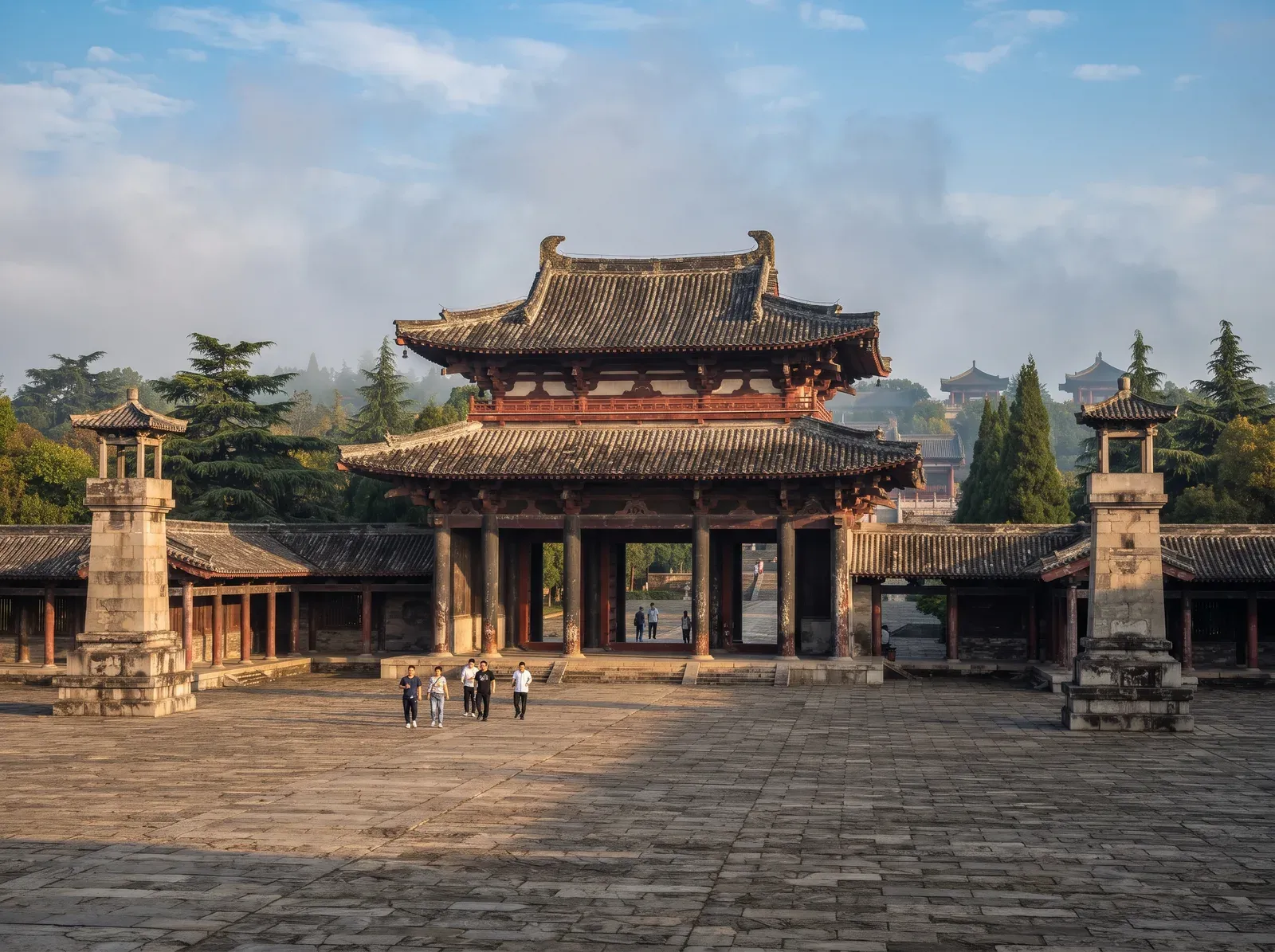
According to records, Xiang Yu hosted a banquet at Hongmen at the end of the Qin dynasty, located near Hongmenbao Village, Xinfeng Town, Lintong District, Xi'an, Shaanxi Province. During the feast, adviser Fan Zeng plotted to assassinate Liu Bang, who managed to slip away with the protection of Xiang Bo and the help of Fan Kuai.
Xuzhou in Jiangsu, anciently known as Pengcheng, became Xiang Yu's center of rule after he made it his capital in 206 BC. The Horse Training Terrace on Xiangwang Road, Hubu Mountain, Yunlong District, Xuzhou, was a raised terrace built by Xiang Yu to watch horses, and stands as the oldest surviving historical site in Xuzhou.

Which Capital and Mausoleum Sites from Gaozu's Era Remain in Xi'an and Xianyang?
According to Britannica, Chang'an, founded in 202 BC on the northwestern outskirts of present-day Xi'an, was the Western Han capital and once ranked among the most grand cities of the ancient world. The city wall of Han Chang'an was 12 meters high with a base width of 12 to 16 meters, a measured perimeter of 25,700 meters, and an interior area of about 36 square kilometers. It was called the Dipper City because its southern wall curved like the Southern Dipper and its northern wall curved like the Northern Dipper.
In 200 BC, he ordered Chancellor Xiao He to construct Weiyang Palace in Han Chang'an. Its site covers about 4.8 square kilometers and was inscribed as a UNESCO World Heritage site in 2014 as part of the Silk Roads.
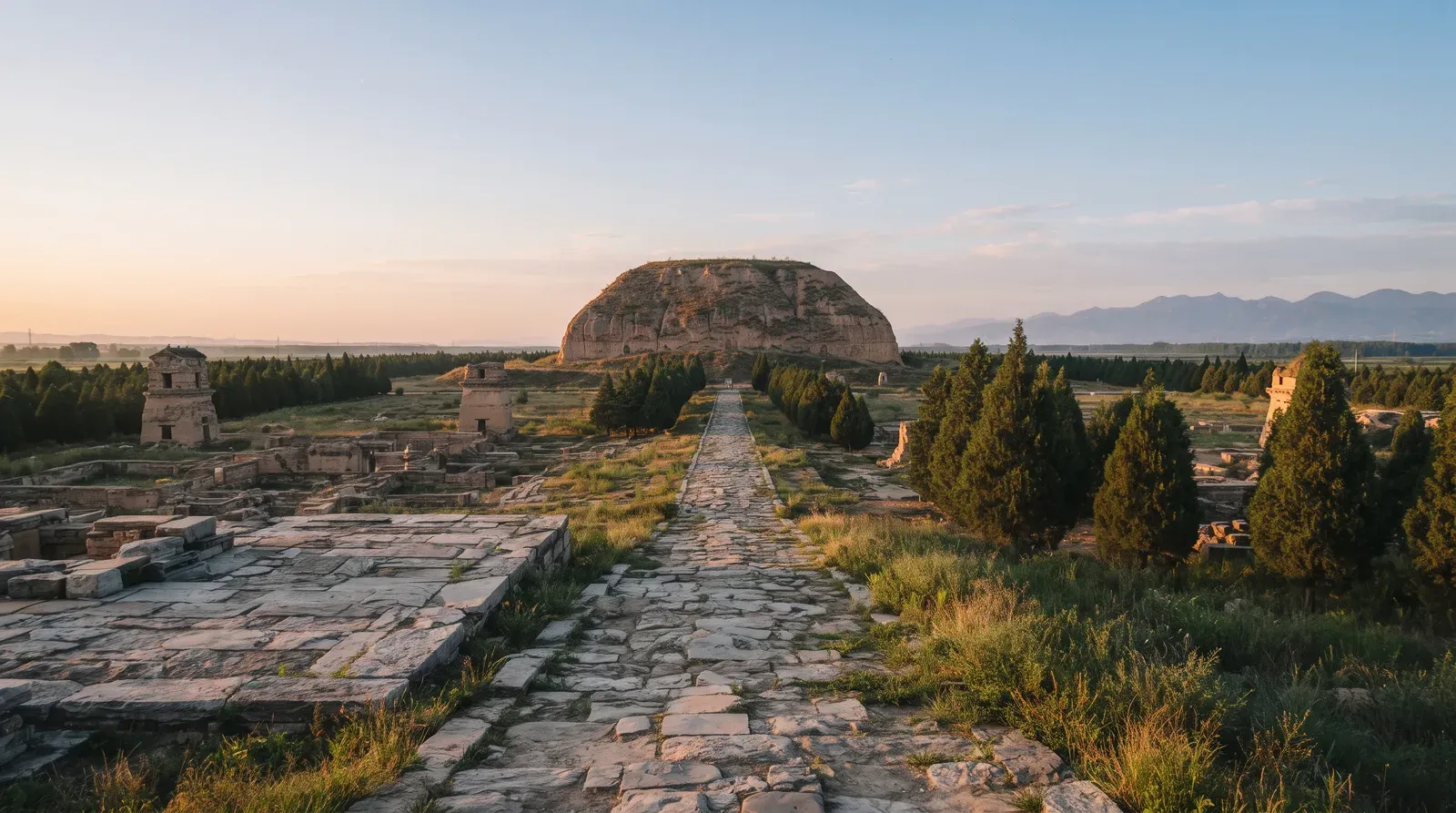
Han Changling is the joint mausoleum of Emperor Gaozu and Empress Lu, situated north of Sanyi Village, Yaodian Town, Weicheng District, Xianyang, Shaanxi Province, about 20 kilometers from central Xi'an. The mausoleum precinct measures 1,000 meters from north to south and 900 meters from east to west. To the west stands the emperor's burial mound, about 32 meters high, and to the east lies Empress Lu's mound. The attendant cemetery area extends about 7.5 kilometers to the east with around 60 surviving earthen mounds, making it the Western Han imperial tomb with the largest number of attendant tombs.
What Aspects of Han Culture Are Shown at Yangling and the Shaanxi History Museum Qinhan Hall?
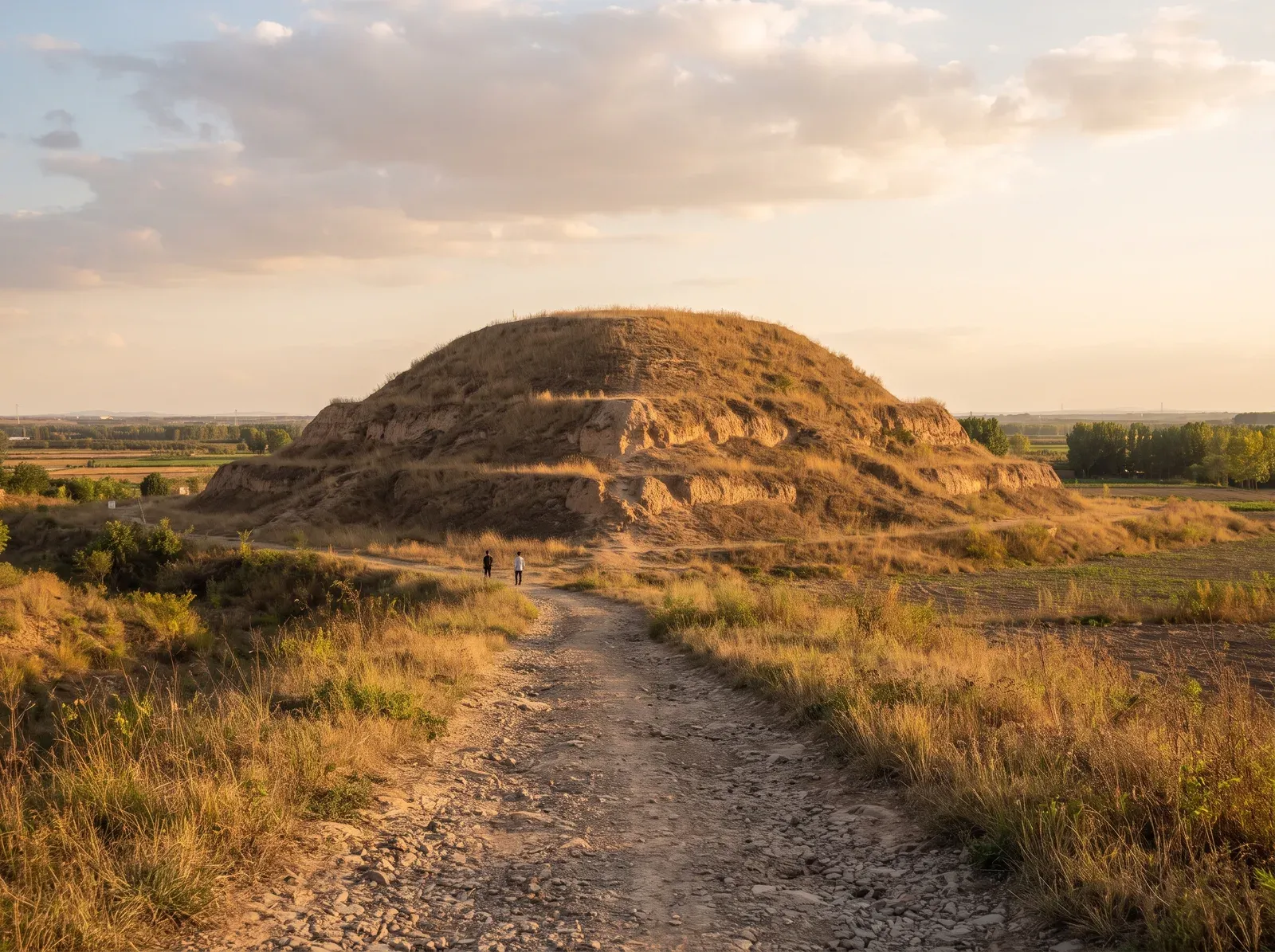
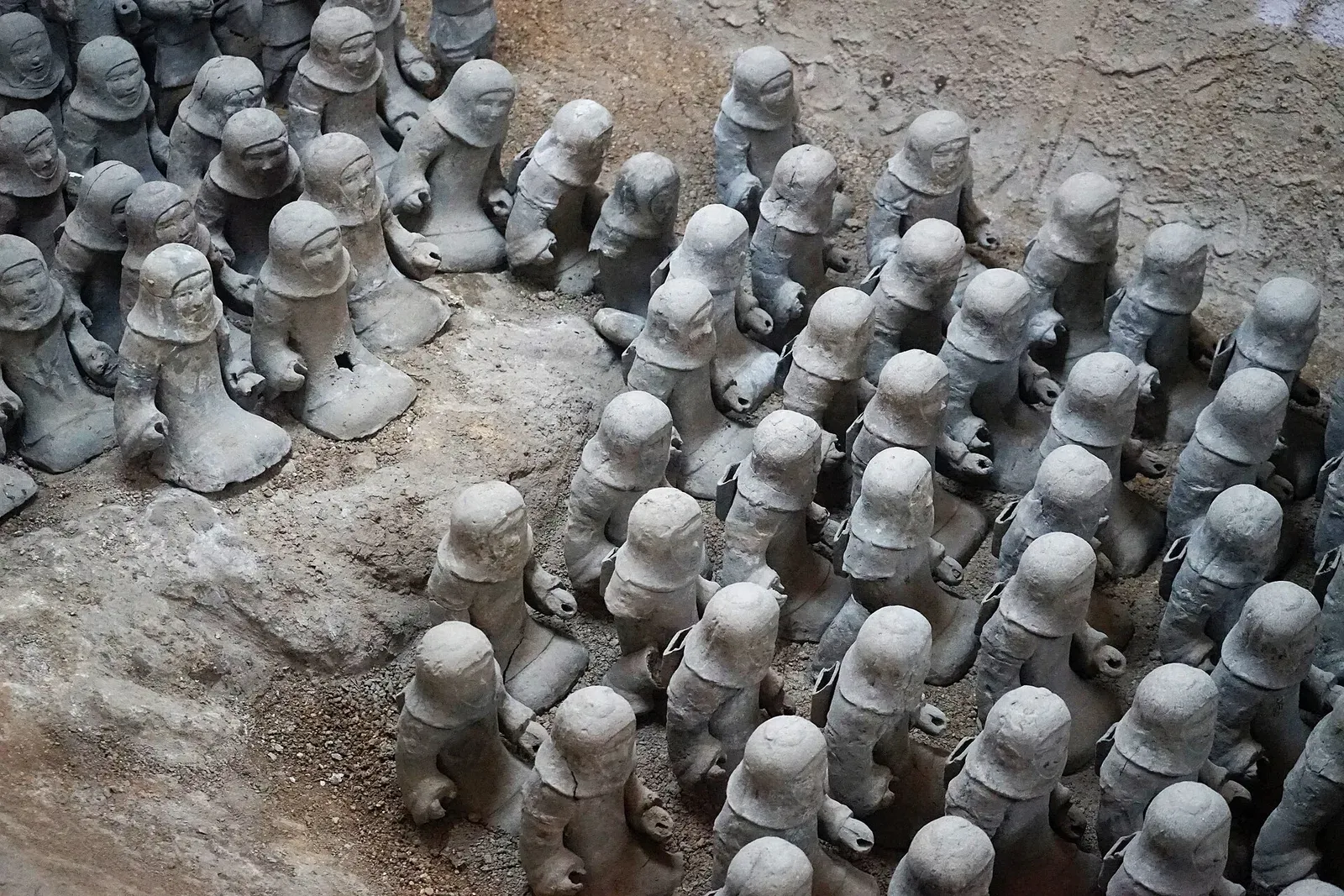
Han Yangling, one of the five Western Han imperial mausoleums and the resting place of Emperor Jing, unearthed more than 50,000 painted ceramic figurines dressed in real fabrics. Standing about 50 centimeters tall with gentle, realistic features, they show court life and society during the Rule of Wen and Jing.
The Qinhan Hall branch of Shaanxi History Museum opens daily from 8:30 to 18:00, with last entry at 17:00. Tickets for Shaanxi History Museum are released 5 days in advance daily at 17:00.
What Are the Main Highlights of Han Relics in Xuzhou?
Xuzhou in Jiangsu, formerly known as Pengcheng, is the ancestral home of the Han imperial family and is known for its dense concentration of archaeological relics from the Western and Eastern Han. The Xuzhou Museum houses a national treasure jade shroud sewn with gold thread from a Western Han Chu royal tomb, alongside permanent Han artifact exhibits such as Han Jade, War Chariots and Armaments, and Ancient Pottery Figurines.
Carved into the mountainside in Yunlong District, Xuzhou, the Shizishan Western Han Chu Royal Tomb has a total north-south length of 117 meters, a maximum east-west width of 13.2 meters, 12 chambers, and a total area of 851 square meters, preserved on-site for public visits. The Shizishan Han terracotta army, distributed across four pits, yielded over 2,300 painted pottery figures representing more than 10 categories, including officials, guards, and armored soldiers.
The Guishan Han Chu Royal Tomb in Xuzhou is the joint burial of King Liu Zhu of Chu and his wife. Its two smoothly polished passageways are about 56 meters long, leading to 15 rock-cut chambers with a total area of over 700 square meters and a volume of more than 2,600 cubic meters.
How Do Key Han Dynasty Cultural Relic Sites Compare?
From capital planning and imperial mausoleums to princely tombs, the Han dynasty preserves detailed survey records and archaeological measurements in architectural scale and unearthed relics. The table below summarizes measured data and historical context for key Han sites in Shaanxi and Jiangsu.
| Site Name | Location | Historical Association or Construction Date | Scale, Layout, and Core Data |
|---|---|---|---|
| Han Chang'an City Ruins | Northwestern outskirts of Xi'an | Began construction in 202 BC | Wall 12 m high with base 12 to 16 m wide, measured perimeter 25,700 m, area about 36 sq km |
| Weiyang Palace Ruins | Inside Han Chang'an | Built by Xiao He in 200 BC | Site covers about 4.8 sq km, listed as World Cultural Heritage in 2014 |
| Han Changling | North of Sanyi Village, Yaodian Town, Weicheng District, Xianyang | Joint tomb of Emperor Gaozu and Empress Lu | Precinct 1,000 m long and 900 m wide, Gaozu mound about 32 m high, attendant cemetery extends about 7.5 km with about 60 surviving mounds |
| Han Yangling | Western Han Five Mausoleums, Shaanxi | Mausoleum of Emperor Jing | Over 50,000 painted fabric-dressed figurines unearthed, figurines about 50 cm tall |
| Shizishan Western Han Chu Royal Tomb | Yunlong District, Xuzhou | Tomb of Western Han King of Chu | North-south length 117 m, max width 13.2 m, 12 chambers, area 851 sq m, over 2,300 terracotta figures unearthed |
| Guishan Han Chu Royal Tomb | Xuzhou, Jiangsu | Joint tomb of Western Han King Liu Zhu of Chu and his wife | Passageways about 56 m long, 15 chambers over 700 sq m, volume over 2,600 cubic meters |
| Horse Training Terrace | Xiangwang Road, Hubu Mountain, Yunlong District, Xuzhou | Built by Xiang Yu in 206 BC after making Pengcheng his capital | Raised horse-watching terrace, oldest surviving historical relic in Xuzhou |
| Qinhan Hall | Shaanxi | Branch of Shaanxi History Museum | Open daily 8:30 to 18:00 (last entry 17:00), tickets released 5 days in advance daily at 17:00 |
What Practical Tips Should You Know Before Visiting Han Dynasty Historical Sites?
Shaanxi History Museum admission requires reservations 5 days in advance, with tickets released daily at 17:00, so it is necessary to check release times before traveling. Last entry for its Qinhan Hall branch is 17:00 daily, after which admission is closed.
The Han Chang'an ruins cover an interior area of about 36 square kilometers, Weiyang Palace spans about 4.8 square kilometers, and the eastern attendant tomb area of Han Changling stretches about 7.5 kilometers. Because these outdoor sites cover vast ground, prepare for long-distance walking. Western Han Chu royal tombs, such as Shizishan and Guishan, are rock-cut underground chambers with long passageways, requiring careful footing during your visit.
Sources
Shaanxi History Museum - Wikipedia
Xi’an | China, Map, History, & Attractions | Britannica
Emperor Gaozu of Han - Wikipedia
Song of the Great Wind - Wikipedia
Han Chang'an - Wikipedia
Weiyang Palace - Wikipedia
Han Changling - Wikipedia
Yangling Mausoleum of Han - Wikipedia
Xuzhou - Wikipedia
Shizishan Han Chu Royal Tomb - Wikipedia
Guishan Han Chu Royal Tomb - Wikipedia
Xuzhou Museum - Wikipedia
Horse Training Terrace - Wikipedia
All sources verified on November 17, 2026
FAQ
Where is the tomb of Liu Bang?
Han Changling is located north of Sanyi Village, Yaodian Town, Weicheng District, Xianyang, Shaanxi Province, about 20 kilometers from central Xi'an, and serves as the joint mausoleum of Emperor Gaozu and Empress Lu.
What are the features of the Xuzhou Han terracotta army and Xi'an Han pottery figurines?
The Shizishan Han terracotta figures in Xuzhou were excavated from four pits, totaling over 2,300 painted pottery figures covering more than 10 categories, including officials and guards. The more than 50,000 painted fabric-dressed figurines from Han Yangling of Emperor Jing are about 50 centimeters tall, featuring gentle and realistic styling.
Why was Han Chang'an known as the Dipper City?
Han Chang'an had a measured perimeter of 25,700 meters, with southern walls curving like the Southern Dipper and northern walls curving like the Northern Dipper, which earned it the name Dipper City.
What hours should visitors note for the Qinhan Hall of Shaanxi History Museum?
Qinhan Hall opens daily from 8:30 to 18:00, with admission closing at 17:00. Tickets for Shaanxi History Museum are released 5 days in advance daily at 17:00.
What notable Han dynasty exhibitions are at the Xuzhou Museum?
The Xuzhou Museum preserves a national treasure jade shroud sewn with gold thread from a Western Han Chu royal tomb, and presents permanent special exhibitions including Han Jade, War Chariots and Armaments, and Ancient Pottery Figurines.