Chongqing Food Not Spicy: Authentic Local Eats
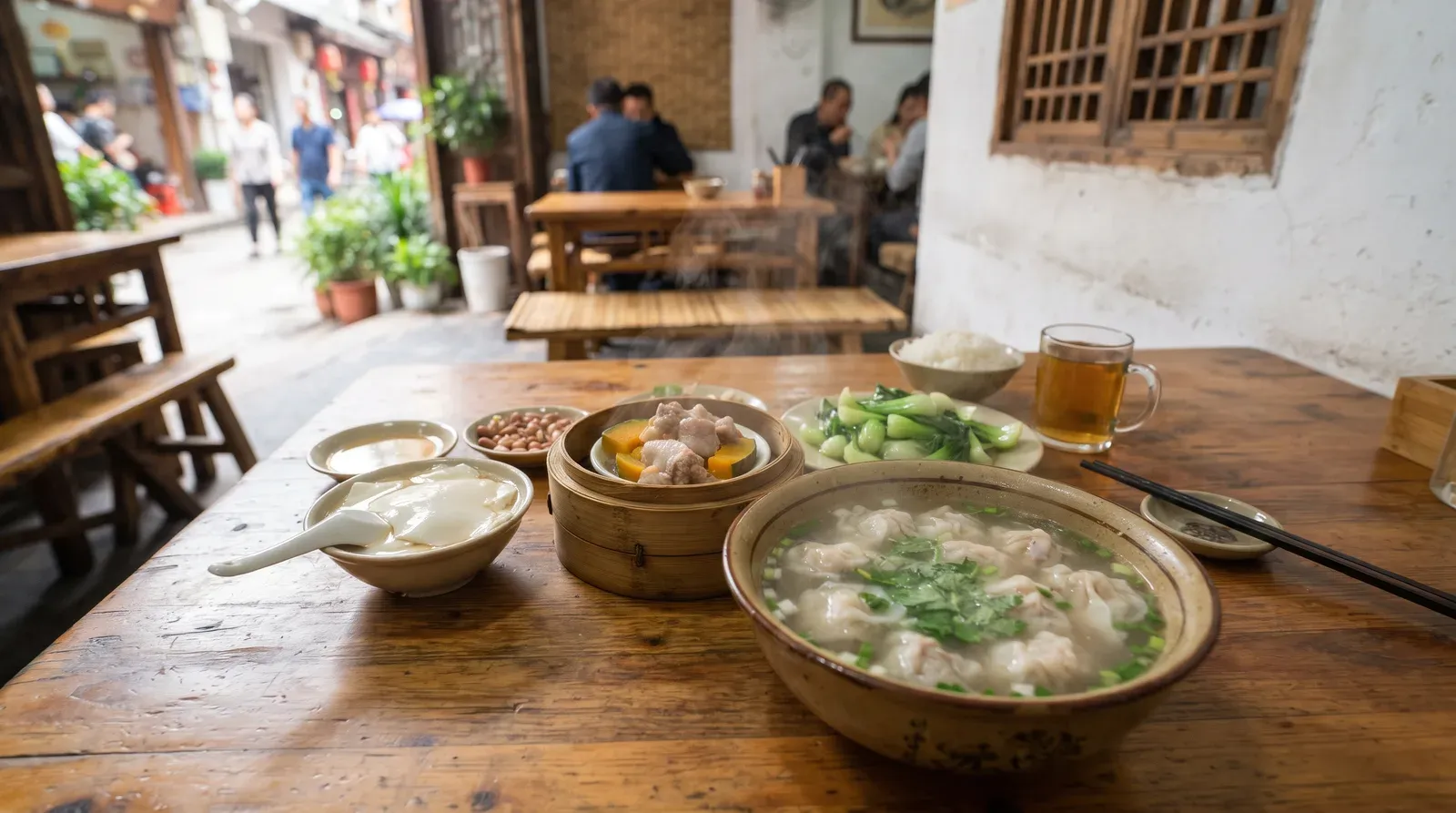
According to statistical data, Chongqing had 26,991 hot pot restaurants by 2019. While the city is famous for its bold, numbing spice, you can easily find Chongqing food not spicy with rich local flavors. From naturally mild old duck soup with pickled radish and pea pork trotter soup, to clear broth chaoshou (wontons) and three-delicacy clay pot rice noodles, diners who avoid spice can choose dishes free of red chili oil. Once you understand the soup bases and ordering phrases, you can enjoy gentle, comforting meals across the mountain city.
How to eat hot pot in Chongqing if you do not eat spicy food?
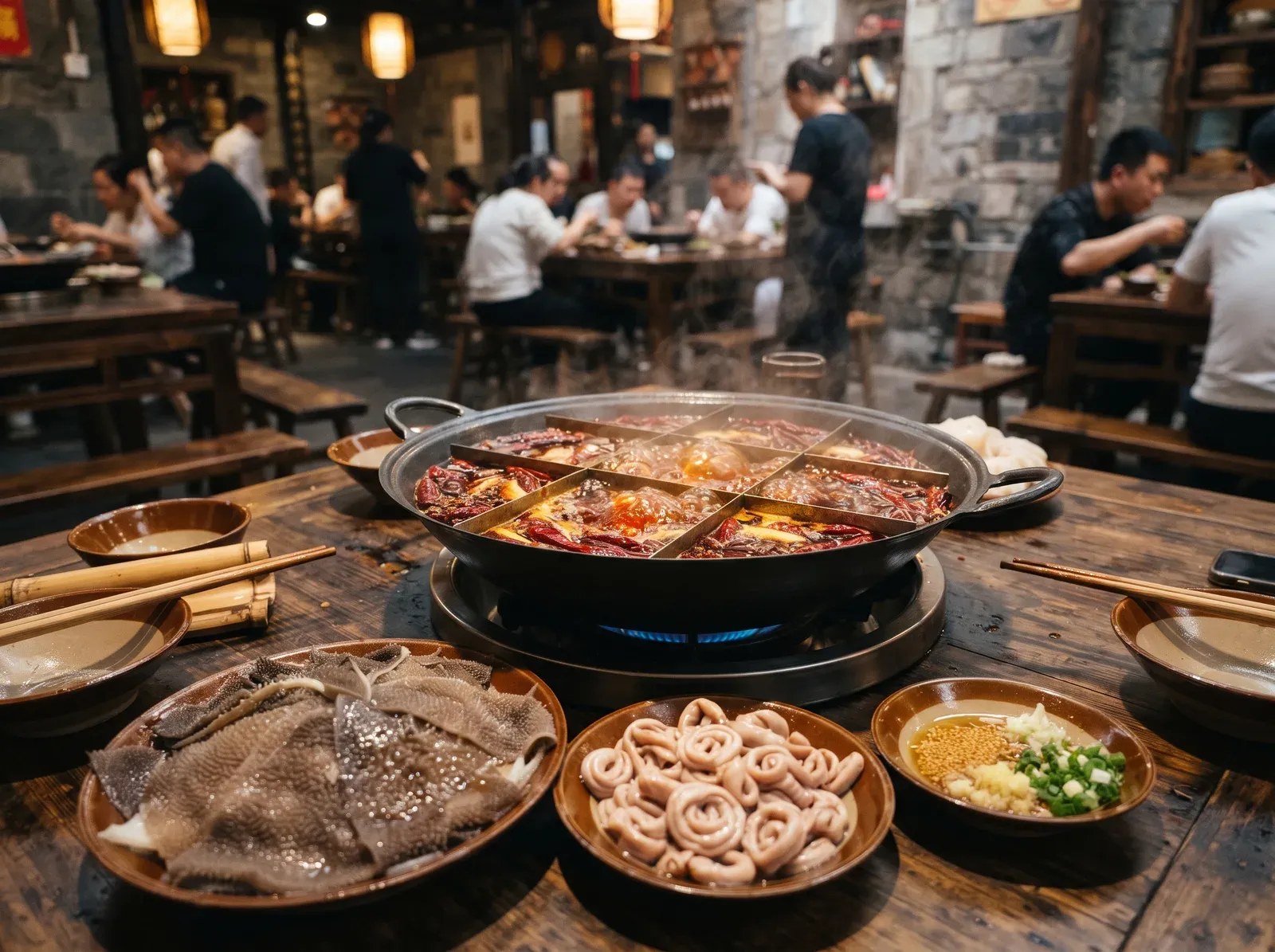
Diners who avoid spice can choose a split pot (yuanyang pot) with clear broth, mushroom broth, or tomato broth, but you should not order a nine-grid hot pot (jiugongge). Every compartment in a nine-grid pot contains beef tallow red broth with no variation in spice level, and some traditional old hot pot shops only serve pure red broth. The base of spicy Chongqing hot pot relies heavily on beef tallow and chili oil, simmered over time with chilies, beef tallow, garlic, broad bean paste, and spices like bay leaves, cloves, and cinnamon.
The nine-grid hot pot originated in the 1920s along the river docks of Jiangbei District in Chongqing. Vendors bought beef tripe, beef liver, and beef stomach, cut them into small pieces, and simmered them over clay stoves in an iron basin divided into sections so laborers could eat from their own grids. Traditional Chongqing hot pot is mainly paired with a dipping dish made of sesame oil, minced garlic, and chopped scallions. This oil dip cools the scalding ingredients, softens the spicy bite, and adds aroma.
Tip: Before sitting down, ask the restaurant staff whether they offer split pots with clear broth, mushroom broth, or tomato broth; if you do not eat spicy food at all, avoid old hot pot shops that only serve pure red broth.
Which local hot soups and soup pots in Chongqing are naturally not spicy?
Chongqing offers several naturally mild hot soups and soup pots. Signature dishes include duck soup with pickled radish (suanlaobo laoyatang), pea pork trotter soup (wandou tihuatang), and cured pork rib pot. The duck soup simmers mature duck with aged pickled radish, giving the rich broth a refreshing tart flavor with zero spice. The pea pork trotter soup commonly found on the street simmers pork trotters and white peas until tender and glutinous. Its broth is thick and rich without any chili, making it a classic gentle, comforting local dish.
Beyond the urban districts, mountainous areas around Chongqing such as Fairy Mountain (Xiannü Mountain) in Wulong popularize cured pork rib soup pot. Locals simmer cured pork ribs and cured pork trotters with dried yardlong beans, air-dried radishes, and corn, creating a mild, savory cured meat hot pot without chili heat.

According to the dining habits of local diners, in these soup restaurants, you can ladle out a bowl of tender white peas with pork trotters or rich duck soup with pickled radish and enjoy it directly without any spicy seasonings.
Which noodle and rice noodle dishes are not spicy?
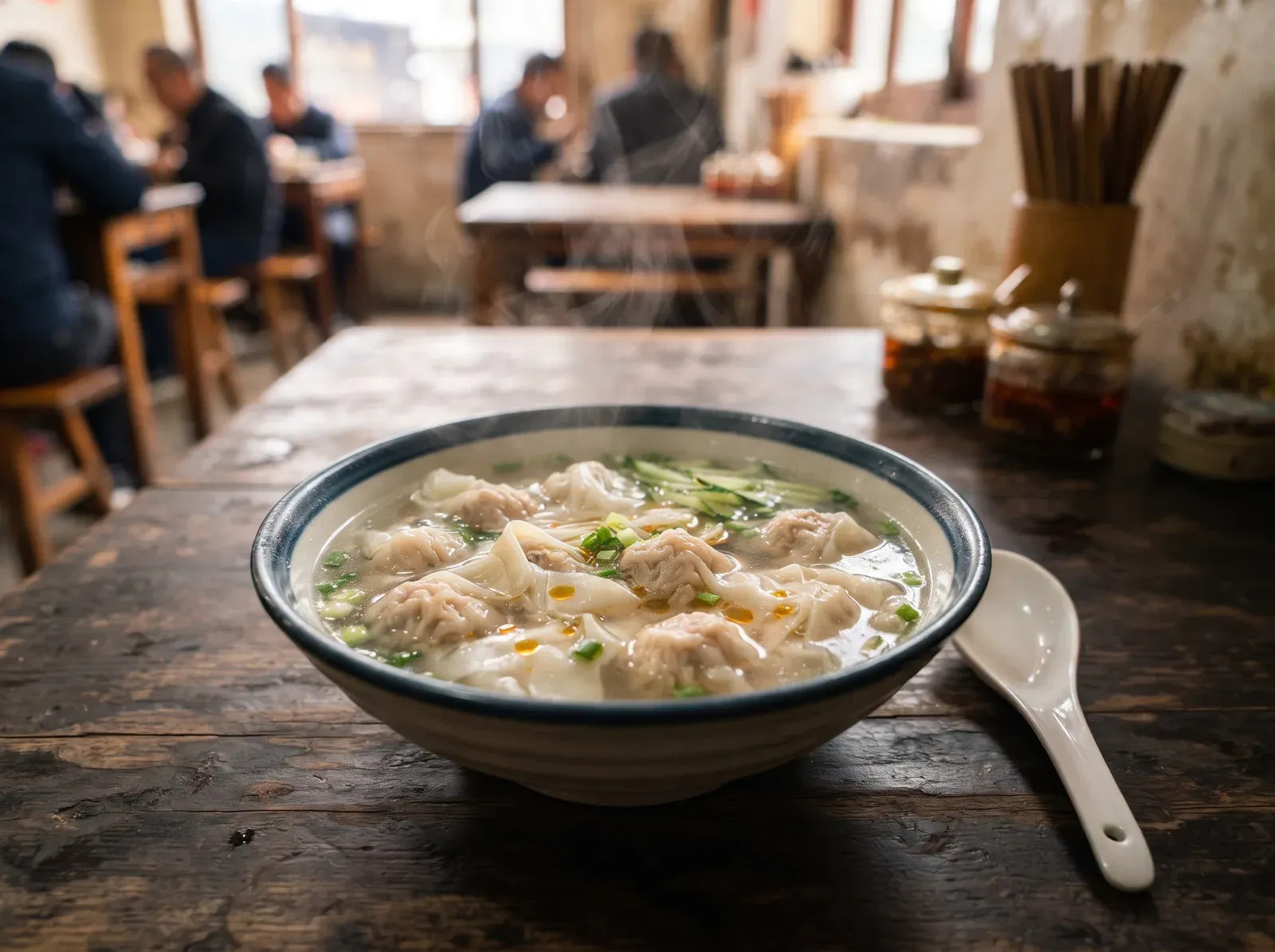
In the Sichuan-Chongqing region, wontons are called chaoshou. Aside from red chili oil chaoshou, noodle and wonton shops usually offer clear broth chaoshou (qingtang chaoshou), original broth chaoshou (yuantang chaoshou), and diving wontons (tiaoshui chaoshou). Diving wontons, also known as cross-bridge wontons (guoqiao chaoshou), are cooked in clear broth and served alongside cucumber slices. You can enjoy them directly in the fresh broth or use a separate dipping sauce, making them suitable for diners who avoid spicy food. Rice noodle eateries, besides their scorched chili red broth, widely serve clay pot rice noodles such as pickled radish duck paw rice noodles and three-delicacy rice noodles (sanxian mixian) with bean sprouts and kelp, which are flavorful and mild.
Chongqing noodles (xiaomian) are the go-to traditional breakfast for local residents. The dish requires fresh wet noodles made with local alkaline water, paired with more than ten seasonings including lard, chili oil, soy sauce, vinegar, scallions, ginger-garlic water, sesame, and Sichuan pepper powder. The noodle shops have their own ordering jargon: "ganliu" means dry noodles without broth, "tihuang" means boiling the noodles for a shorter time so they remain firm and chewy, and "duoqing" asks for extra blanched leafy greens.
If you want noodles in broth, you can order three-delicacy rice noodles or original broth chaoshou. If you order diving wontons, the broth and cucumber slices served to your table contain no spice, allowing you to enjoy the fresh flavor straight from the bowl.
Which traditional Sichuan main dishes and cooked deli meats are not spicy?
Among the four major branches of Sichuan cuisine, the tradition represented by Chongqing and Dazhou is known as Xiahebang (lower river cuisine), standing alongside Shanghebang (upper river cuisine) of Chengdu and Leshan. While Sichuan food is known for fiery and numbing flavors that use plenty of garlic, chili, and Sichuan pepper, traditional classic menus include non-spicy dishes. Hechuan sliced pork, Jiangjin sliced pork, sizzling rice crust with pork slices (guoba roupian), savory steamed pork belly (xianshaobai), sweet steamed pork belly (tianshaobai), and cabbage in clear broth (kaishui baicai) contain no chili, focusing instead on savory, sweet-and-sour, or lychee-flavor profiles.
In addition to full restaurant dishes, Chongqing offers renowned mild street deli foods alongside its spicy braised meats. Salted boiled duck, represented by the heritage brand Pangzima Yanshuiya on Jiefangbei Haochi Street (Food Street), uses white brine seasoned with brushed sesame oil, completely free of chili oil.
Tip: When ordering at a traditional Sichuan restaurant, savory steamed pork belly (xianshaobai) and Hechuan sliced pork feature savory or sweet-and-sour profiles without spice, making them direct choices for main entrees.
Which street snacks and desserts are completely non-spicy?
Brown sugar ciba (fried glutinous rice cakes) is a classic sweet snack common in Chongqing hot pot shops and street stalls, crispy on the outside, chewy inside, and completely non-spicy. Made by deep-frying glutinous rice cakes and drizzling them with thick brown sugar syrup, it is widely sold across snack streets and frequently paired with hot pot meals.
Throughout Chongqing streets, vendors also sell brown sugar lianggao (rice pudding) and bingfen (ice jelly) year-round. Both feature a bouncy, smooth texture served with brown sugar syrup. These two desserts are widely popular non-spicy treats across Sichuan and Chongqing, often eaten by diners to cool down after spicy food.
If you dine at a hot pot restaurant or a snack street, freshly fried ciba comes coated in rich brown sugar syrup. If you prefer a cooling dessert, you can choose a bowl of smooth brown sugar lianggao or ice jelly.

How do you clearly order food with zero spice in Chongqing?
When ordering food in Chongqing, do not merely ask "is it spicy?" or ask for "mildly spicy" (weila). Instead, clearly state: "no chili, no chili oil, no broad bean paste" (bu yao lajiao, bu yao hongyou, bu yao doubanjiang). Locals often consider mild spice as standard seasoning, and that level remains noticeable for anyone who cannot tolerate spice, so specific requests are necessary.
If you are also sensitive to numbing pepper, explicitly add "no Sichuan pepper" (bu yao huajiao) when ordering. Sichuan cuisine frequently pairs Sichuan pepper with chilies, and if you only request no chili, some kitchens may still add Sichuan pepper powder for flavor.
Quick reference table of authentic mild Chongqing dishes
| Dish Name | Category | Flavor Profile & Main Ingredients | Ordering Notes |
|---|---|---|---|
| Duck soup with pickled radish | Soups and hot pots | Simmered mature duck and pickled radish; rich and tangy broth | Naturally non-spicy broth; suitable to enjoy as a whole pot |
| Pea pork trotter soup | Street soups | Pork trotters and white peas simmered until tender; thick broth | Broth contains no chili; choose a non-spicy original dipping sauce if provided |
| Cured pork rib soup pot | Mountain hot pots | Cured ribs and trotters paired with dried yardlong beans, radishes, and corn | Popular around Fairy Mountain in Wulong; savory broth without spice |
| Clear broth chaoshou and original broth chaoshou | Noodle snacks | Thin-skin meat wontons served in clear broth | Request clear broth or original broth directly when ordering |
| Diving wontons (cross-bridge wontons) | Noodle snacks | Boiled in clear broth and served with cucumber slices; dipping sauce optional | Fresh broth is not spicy; make sure the dipping sauce has no chili |
| Three-delicacy clay pot rice noodles | Clay pot rice noodles | Includes bean sprouts and kelp; savory and not spicy | Order three-delicacy or pickled radish duck paw clear broth rice noodles |
| Hechuan sliced pork and crispy rice with pork slices | Traditional Sichuan dishes | Features savory, sweet-and-sour, or lychee flavor; completely mild | Classic Xiahebang dishes; suitable to order directly for meals |
| Savory and sweet steamed pork belly | Traditional steamed dishes | Pork steamed until tender; savory or lightly sweet | Classic heritage dishes; base seasonings contain no chili or Sichuan pepper |
| Pangzima salted boiled duck | Street deli foods | Salted white-brined deli meat seasoned with sesame oil | Heritage shop on Jiefangbei Haochi Street; contains no chili oil |
| Brown sugar ciba | Traditional sweets | Deep-fried glutinous rice cakes coated in thick brown sugar syrup; crispy outside and soft inside | Standard in hot pot shops and street stalls; completely mild |
| Brown sugar lianggao and ice jelly | Traditional desserts | Bouncy and smooth texture, served with brown sugar syrup | Common sweet street snacks; naturally free of spice |
Sources
Sichuan cuisine - Wikipedia
Chongqing hot pot - Wikipedia
Mala hot pot - Wikipedia
Xiaomian - Wikipedia
Still Need Spice Every Meal? These Refreshing Dishes Will Delight Your Palate - Hualong Net
Wonton - Wikipedia
Sichuan cuisine - Wikipedia
The above sources were verified on Nov 17, 2026.
FAQ
Can Chongqing hot pot be served completely non-spicy?
Yes. Diners who do not eat spicy food can choose a split pot with clear broth, mushroom broth, or tomato broth at hot pot restaurants. However, confirm whether non-spicy broths are available before sitting down, as some traditional old hot pot establishments only serve pure red broth.
Can a nine-grid hot pot have spicy on one side and non-spicy on the other?
No. Every compartment in a nine-grid hot pot contains beef tallow red broth. The grids were originally designed for individual diners to share a pot and cook in separate spaces. The broth flows between compartments with no spice level difference, so people who avoid spicy food should not order a nine-grid pot.
Can noodle shops in Chongqing prepare non-spicy bowls if requested?
Yes. You can directly order dishes that are naturally mild, such as clear broth chaoshou, original broth chaoshou, or three-delicacy rice noodles. If you order xiaomian, which includes over ten seasonings, clearly tell the staff: "no chili, no chili oil, no broad bean paste."
Is asking for "mildly spicy" suitable for people who do not eat spicy food at all?
No. Chongqing cuisine is famous for bold, numbing spice, and local mild spice is still noticeable for those who do not eat chili. When ordering, ask directly for no chili, no chili oil, and no broad bean paste, and specify no Sichuan pepper if you are sensitive to numbing pepper.