Chongqing Cuisine: Hot Pot and Street Food Guide
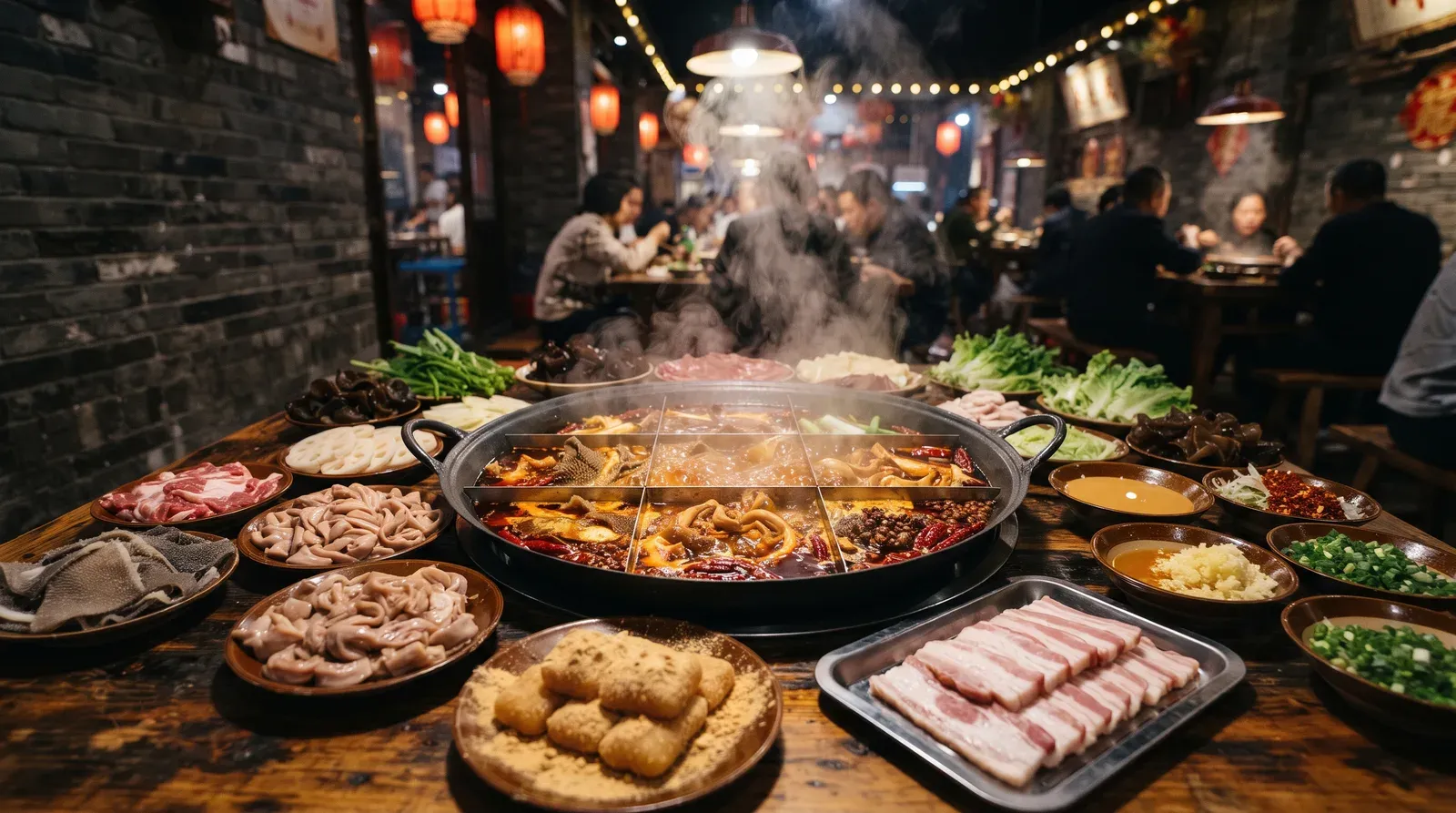
Chongqing cuisine is centered around spicy hot pot, Chongqing noodles, Geleshan spicy chicken, Ciqikou Maoxuewang, and hot and sour noodles. According to statistics, as of 2019, Chongqing had 26,991 hot pot restaurants, reflecting the mountain city's dining tradition rooted in beef-tallow broth and riverfront offal cuts. Within the four main traditions of Sichuan cuisine, the style represented by Chongqing and Dazhou is known as Xiahebang (lower river style), sitting alongside Shanghebang (upper river style) from Chengdu and Leshan.
How to Cook Traditional Chongqing Hot Pot in the Right Order?
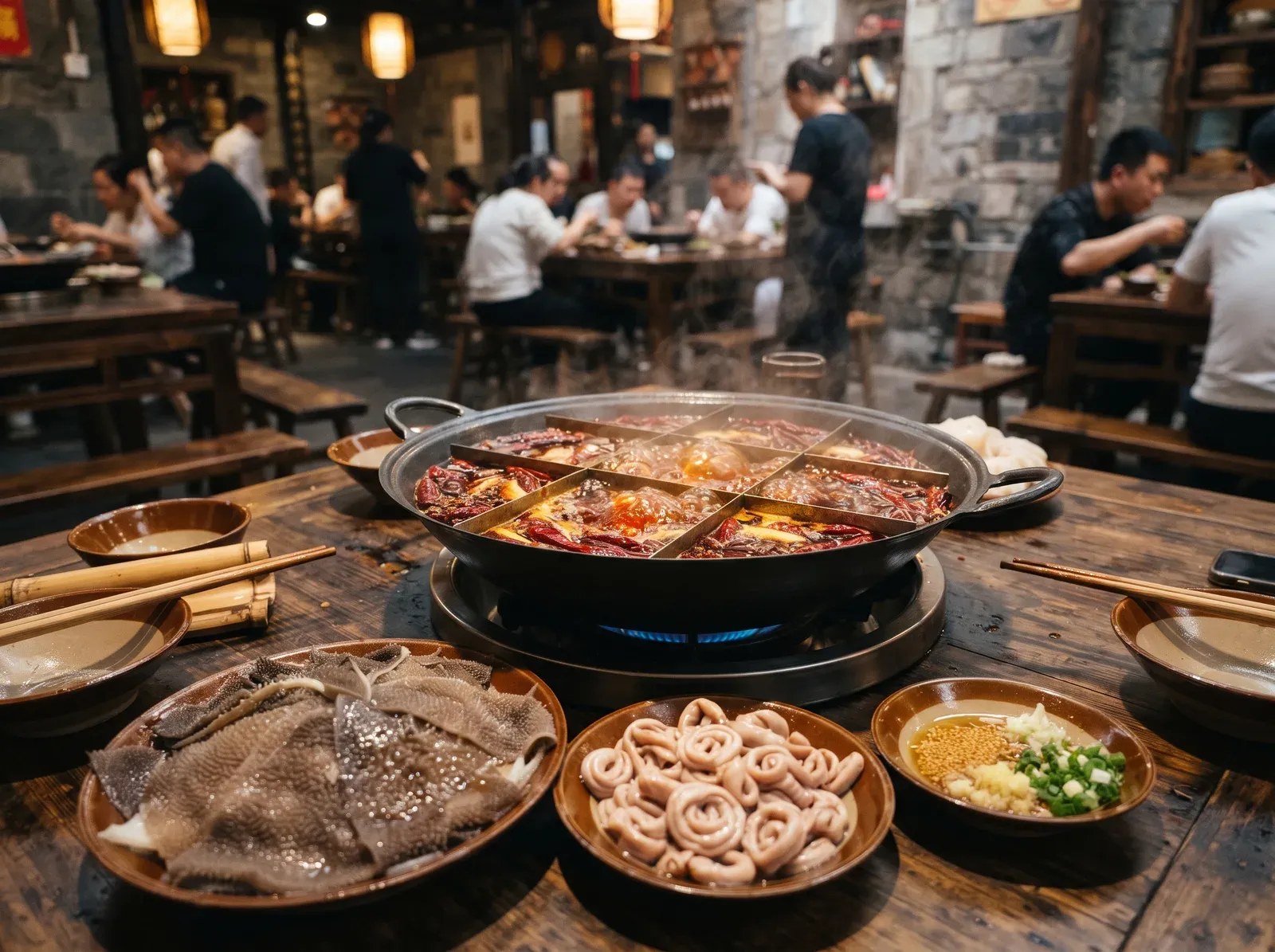
Chongqing hot pot originated in the 1920s along the river docks of Jiangbei District. Vendors bought beef tripe, beef liver, and beef stomach, cut them into small pieces over clay stoves, and simmered them in divided iron basins so dock workers could eat from their own sections. Today, the broth base focuses on beef tallow and chili oil, made by simmering chili peppers, beef tallow, garlic, broad bean paste, and spices like bay leaves, cloves, and cinnamon over low heat for a long time.
When eating hot pot, cooking time usually determines the order ingredients enter the pot. Diners typically start with offal like tripe, aorta, duck intestines, and duck blood. Next come meats like spicy beef, tender beef slices, and crispy fried pork. Finally, vegetables and starches like tribute greens, pea shoots, wide sweet potato noodles, and potato slices are added. Traditional Chongqing hot pot originally did not include seafood or river fish. That changed in the 1970s when chilled black scraper fish, locally known as "haor yu," entered the local market and became a signature hot pot ingredient.
For dipping sauce, authentic Chongqing hot pot relies on a simple sesame oil dip mixed with minced garlic and chopped scallions. The oil dip cools down scalding ingredients, softens the spicy burn, and adds aroma. Local folk belief holds that boiling fresh meats and vegetables in spicy broth and dipping them in sesame oil helps expel dampness caused by the humid climate.
How to Order Authentic Chongqing Noodles?
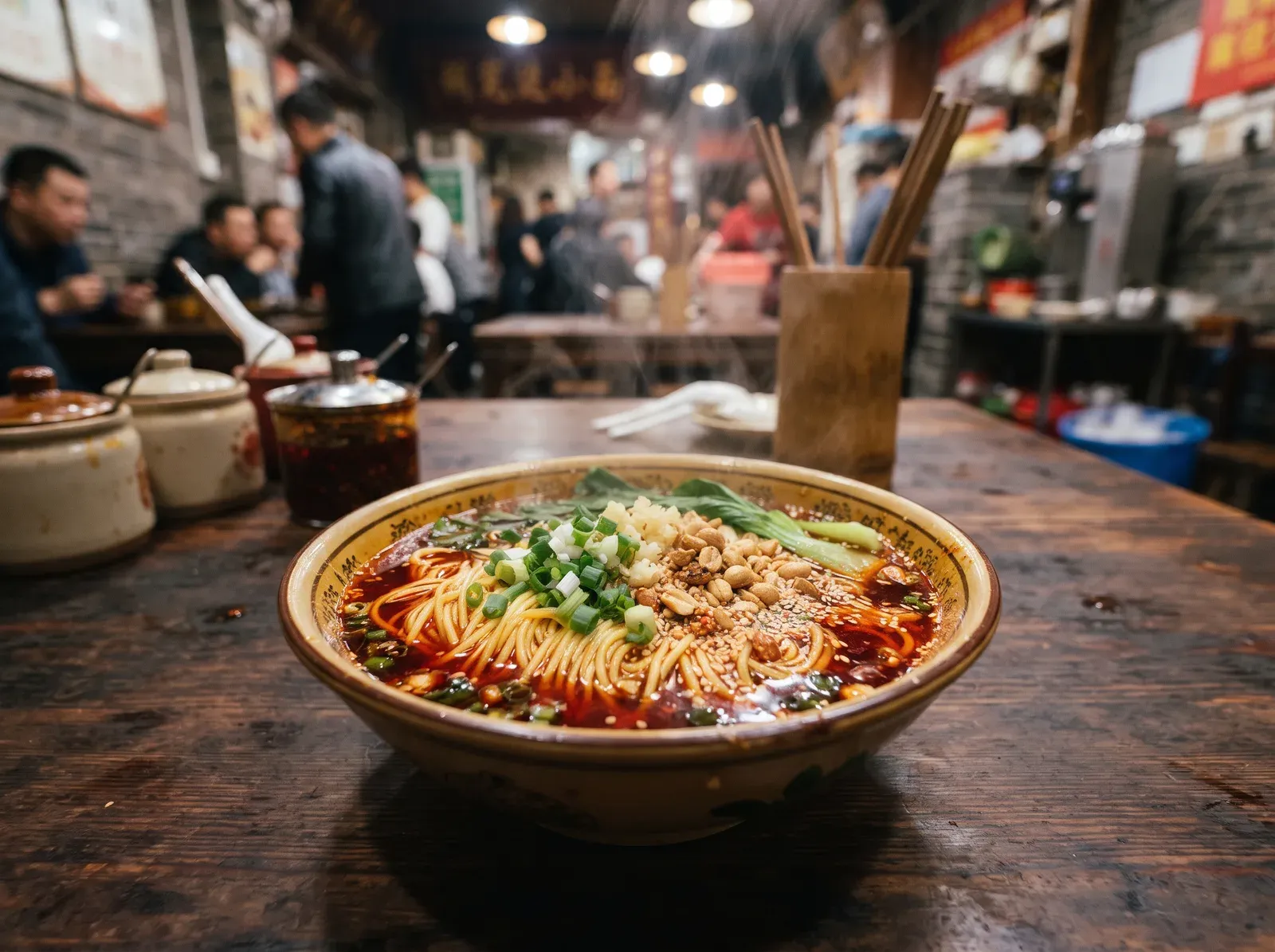
Chongqing noodles are the top breakfast choice for local residents. The dish requires fresh wheat noodles made with alkaline water. The seasonings include lard, chili oil, soy sauce, vinegar, scallions, ginger and garlic water, sesame seeds, Sichuan pepper powder, and more than ten other ingredients. The balance of seasonings creates a rich, complex spicy and numbing flavor.
When ordering at local noodle shops, diners often use unique ordering slang. "Ganliu" means dry noodles without broth, commonly chosen for minced meat noodles or pea and meat noodles. "Tihuang" means noodles boiled for a shorter time, keeping them firm and chewy. "Duoqing" asks the cook to add extra boiled leafy greens. Diners can customize each bowl to their own texture and flavor preferences.
What Are the Origins of Geleshan Spicy Chicken and Maoxuewang?
Geleshan spicy chicken, a classic Jianghu dish in Sichuan cuisine, originated in Geleshan Town in Chongqing's Shapingba District. Local cooks chop small, free-range chicken into tiny bone-in pieces to maximize seasoning absorption. The dish is known for crisp fried chicken pieces buried under heaps of dried red chilies and Sichuan peppercorns, requiring diners to search with chopsticks through the chilies to find the meat.
The traditional dish Maoxuewang originated in the 1940s at the river wharf of Ciqikou Ancient Town in Chongqing. A butcher's family started selling it from a roadside stall, simmering pork offal and blood curd in bean broth with heavy spices for dock workers. Modern Maoxuewang uses fresh duck blood or pig blood as the main ingredient, paired with duck intestines, tripe, luncheon meat, pig heart, and vegetables such as bean sprouts, celtuce, and wood ear mushrooms, all cooked in a spicy red broth.

What Other Dishes Define Xiahebang Sichuan Cooking?
Sichuan cuisine is known for bold, spicy, and numbing flavors, making heavy use of garlic, chili peppers, and Sichuan peppercorns. Xiahebang Sichuan cooking inherited these strong qualities and developed a bold, unrestrained culinary style.
Classic "boiled" Sichuan dishes involve poaching marinated meat slices in boiling water for 20 to 30 seconds just until cooked, then placing them over cooked vegetables. Dried chili flakes, Sichuan pepper, and minced garlic are spread on top before sizzling hot oil is poured over them to release the aroma. Another regional favorite, hot and sour noodles, balances sweet potato noodles with tangy vinegar and spicy chili oil, topped with crispy peanuts, roasted soybeans, scallions, and minced garlic.
What Are the Core Dishes of Chongqing Cuisine?
To help you understand the categories, origins, and flavor profiles of these classic Chongqing dishes, the table below outlines the key options:
| Dish Name | Category and Origin | Key Ingredients and Seasonings | Classic Dining Characteristics |
|---|---|---|---|
| Chongqing Hot Pot | Xiahebang specialty hot pot, 1920s Jiangbei District docks | Beef tallow chili oil, chilies, broad bean paste, spices, offal like tripe | Dip in sesame oil and garlic sauce; cook offal, then meat, then vegetables |
| Chongqing Noodles | Traditional breakfast snack, street stalls in Chongqing | Local fresh alkaline noodles, lard, chili oil, soy sauce, vinegar, Sichuan pepper | Can be ordered as "Ganliu" (no broth), "Tihuang" (firmer), or "Duoqing" (extra greens) |
| Geleshan Spicy Chicken | Classic Jianghu dish, Geleshan Town in Shapingba District | Small free-range chicken cut into tiny bone-in pieces, heaps of dried chilies and peppercorns | Crisp fried chicken hidden under chilies; diners use chopsticks to search for pieces |
| Ciqikou Maoxuewang | Famous wharf offal dish, 1940s Ciqikou river wharf | Fresh duck blood (or pig blood), duck intestines, tripe, luncheon meat, pig heart, bean sprouts | Offal and vegetables cooked in spicy red broth; originally simmered in bean soup with spicy seasoning |
| Hot and Sour Noodles | Traditional Sichuan-Chongqing snack | Sweet potato noodles, sour vinegar balanced with spicy chili oil | Topped with crunchy peanuts, roasted soybeans, scallions, and minced garlic; rich sour and spicy taste |
| Poached Pork Slices (Shuizhurou) | Classic Sichuan poached dish | Marinated meat slices, cooked vegetables, chili flakes, Sichuan pepper, minced garlic | Poached in boiling water for 20 to 30 seconds, topped with chili and pepper, and finished with sizzling oil |
| Hot Pot Haor Yu | Traditional hot pot seafood, entered local market in the 1970s | Chilled black scraper fish | Simmered in spicy beef-tallow broth, serving as a signature hot pot fish ingredient |
What Dining Tips and Flavor Differences Should You Keep in Mind?
Chongqing food builds on bold flavors from chilies, garlic, and Sichuan peppercorns, and its red broths are typically very spicy and numbing. For diners less used to intense heat, sesame oil dipping saucers help cool hot ingredients and soften the burn. In addition, different Sichuan culinary traditions have distinct styles: Xiahebang cooking is known for bold, intense profiles, while Shanghebang cooking from Chengdu and Leshan is relatively milder. You can try these dishes gradually based on your own spice tolerance.
Sources
Sichuan cuisine - Wikipedia
Chongqing hot pot - Wikipedia
Mala hot pot - Wikipedia
Xiaomian - Wikipedia
Laziji - Wikipedia
Maoxuewang - Wikipedia
Hot and sour noodles - Wikipedia
Shuizhu - Wikipedia
All sources verified on Nov 17, 2026.
FAQ
Why is Chongqing hot pot usually paired with a sesame oil dip?
Traditional Chongqing hot pot is served with a dipping sauce made of sesame oil, minced garlic, and chopped scallions. This dip cools down scalding ingredients, softens spicy heat, and adds aroma.
What does "Ganliu" mean when ordering Chongqing noodles?
"Ganliu" is local noodle shop slang for dry noodles without broth, commonly ordered for minced meat noodles or pea and meat noodles.
Are diners supposed to eat all the dried chilies in Geleshan spicy chicken?
Authentic Geleshan spicy chicken features crispy fried chicken hidden beneath heaps of dried red chilies and Sichuan peppercorns. Diners use chopsticks to pick out the meat, and the chilies are usually not eaten directly.
What ingredients are typically included in Maoxuewang?
Maoxuewang features fresh duck blood (or pig blood) as the main ingredient, cooked in spicy red broth alongside offal cuts like duck intestines, tripe, luncheon meat, and pig heart, along with vegetables like bean sprouts, celtuce, and wood ear mushrooms.