
Chinese New Year Decorations: Meanings and Placement
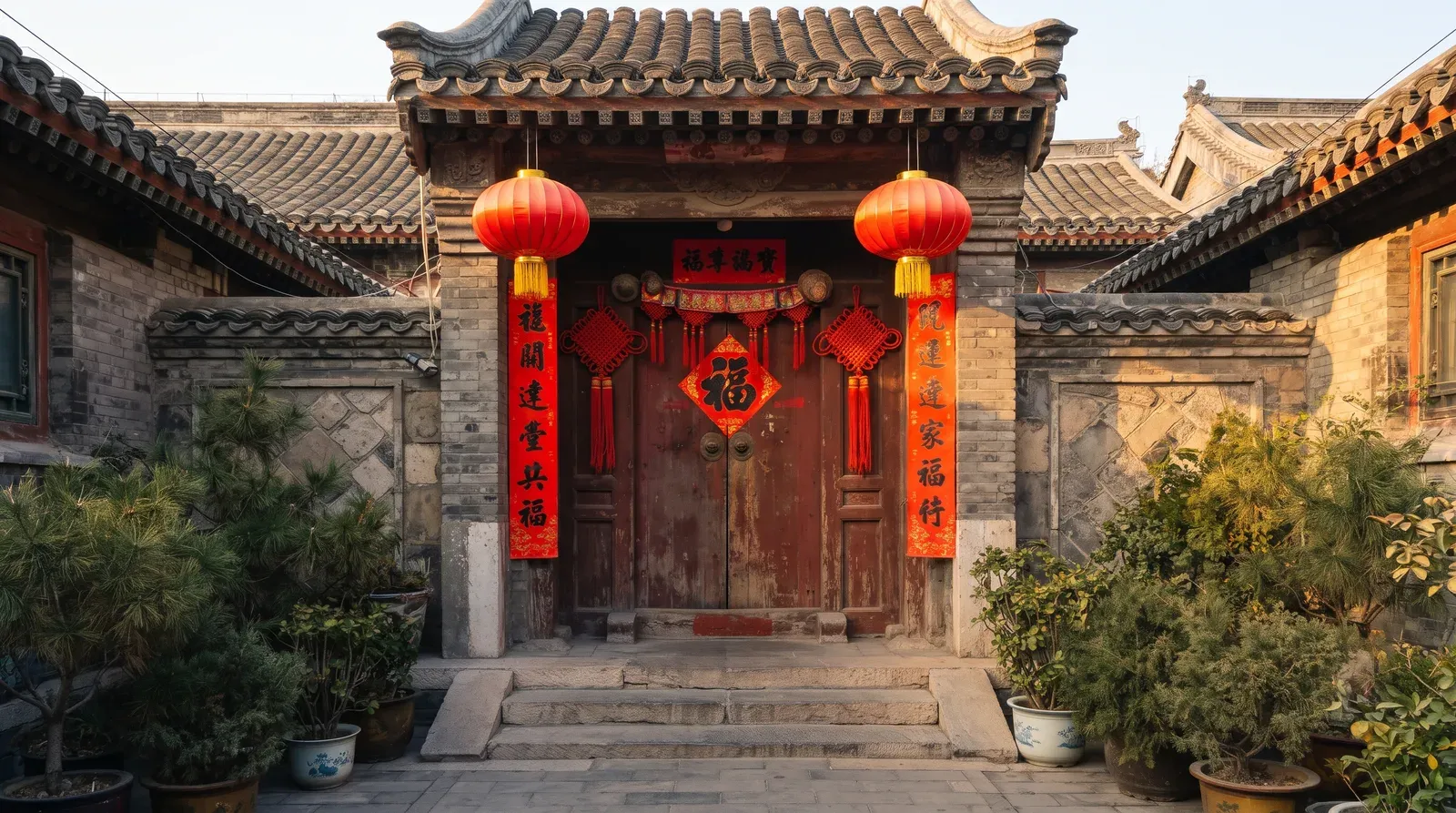
Chinese New Year decorations are a key visual tradition for welcoming the new year, with the custom of hanging the Fu character at home entrances dating back at least to the Song dynasty (AD 960 to 1279). Families put up spring couplets in pairs on doors, display the Fu character upside down, and hang red lanterns and Chinese knots to welcome peace and prosperity. These holiday decorations have clear guidelines for placement and orientation, and their colors, shapes, and wordplay each carry distinct cultural meanings.
Why do traditional holiday decorations use red?
In Chinese folklore, the beast Nian feared red and loud noises, so villagers hung red lanterns, posted red couplets on doors, and lit firecrackers to ward off evil and pray for peace. As a result, legends of warding off evil made red the main color for seasonal decorations.
Red represents joy and good fortune in Chinese culture. Paper-cuts used for window decoration during the holiday are usually cut from red paper, symbolizing auspiciousness and happiness. Chinese knots, also widely hung, are primarily bright red and symmetrically woven, carrying wishes for long-lasting continuity, endless vitality, peace, and good luck.
What are the placement rules for spring couplets and door gods?
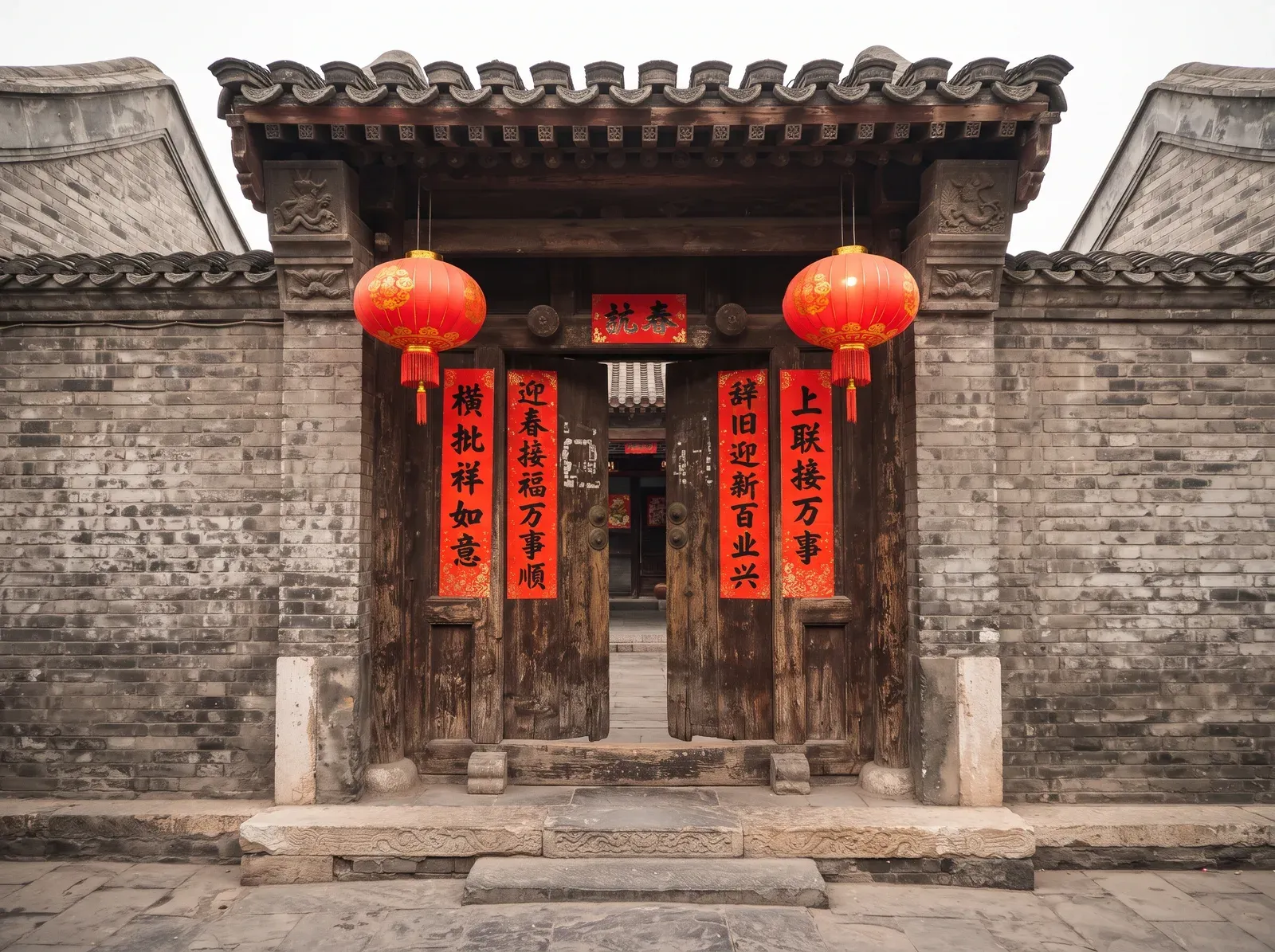
Spring couplets originated from taofu, peach wood plaques hung on both sides of a door to ward off evil and invite blessings. These ancient charms measured about 7 to 8 cun long and over 1 cun wide before evolving into auspicious lines of poetry written on red paper. According to traditional customs, couplets usually feature seven characters per scroll, posted in pairs on either side of the entrance. Their text expresses hopes for the new year following poetic antithetical rules, often paired with a four- to five-character horizontal scroll above the doorframe.
Door gods are usually hung in pairs on double doors and replaced every Lunar New Year. Under traditional etiquette, the two door gods must face each other; facing away from each other is considered improper and unlucky. Displayed facing inwards, they work together with the seven-character couplets on the doorframe to ward off evil and welcome good fortune.
Why is the Fu character displayed upside down?
Displaying the Fu character at home entrances is a widespread tradition that dates back at least to the Song dynasty (AD 960 to 1279). People paste the diamond-shaped paper with the character upside down, a practice based on Mandarin wordplay.
In Mandarin, the word for upside down (dao) sounds the same as the word for arrive (dao). Hanging the character upside down sounds like "good fortune has arrived," signaling that happiness and blessings are on their way. Beyond the written character, bats often appear in seasonal decorations and window paper-cuts as a visual symbol of good fortune, because the Chinese word for bat (fu) sounds identical to the word for blessing.
What do red lanterns and window paper-cuts symbolize?
Red lanterns hung during the festival are called heavenly lanterns (tiandeng), symbolizing vitality across heaven and earth, bountiful harvests, and a flourishing life, adding to the festive atmosphere. Paper lanterns were already widespread in the Tang dynasty, which established the annual Lantern Festival tradition, and later spread to neighboring regions in East Asia, Southeast Asia, and South Asia.
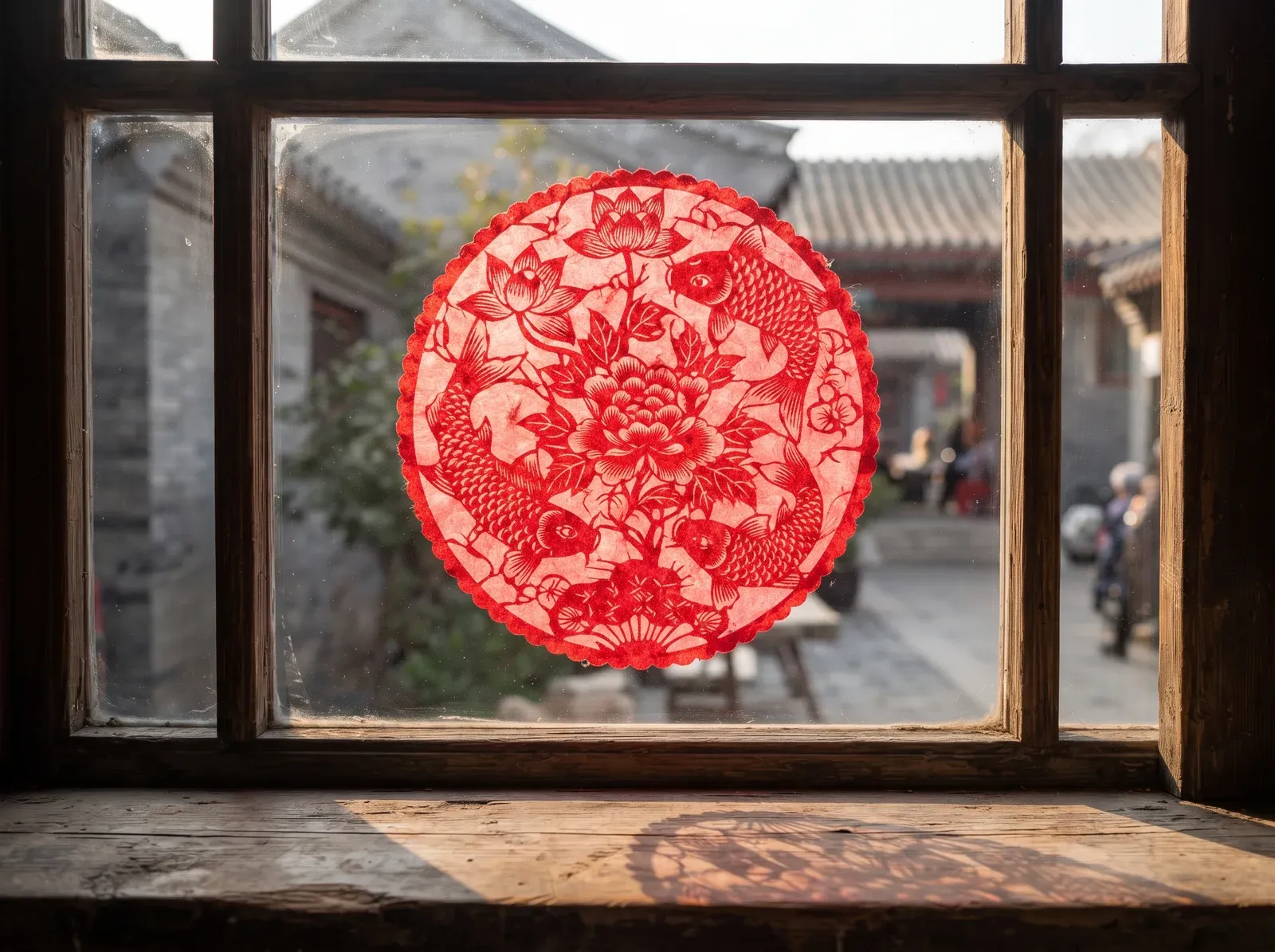
Paper-cuts used on windows during the holiday are known as window flowers (chuanghua). Chinese paper-cutting was inscribed on the UNESCO Representative List of the Intangible Cultural Heritage of Humanity in 2009. The motifs carry rich symbolic meanings: carp leaping over the dragon gate symbolizes career advancement and success, pomegranates represent many children and blessings, and peonies symbolize wealth and honor.
What customs surround Asian New Year decorations?
The Lunar New Year (lunisolar new year) is celebrated in many countries, including Vietnam, Singapore, Malaysia, and South Korea, and was designated as a UN floating holiday by the United Nations General Assembly in 2023. These Asian New Year decorations show shared traditions across neighboring countries as they welcome the new year.
For example, during Vietnamese Lunar New Year (Tết Nguyên Đán), locals also have a holiday tradition of hanging paper lanterns to welcome spring and pray for blessings. Displayed across different Asian countries, paper lanterns express hopes for light and peace.
Overview of Chinese New Year Decorations and Meanings
| Decoration Type | Common Form and Rules | Core Meaning | History and Sources |
|---|---|---|---|
| Spring couplets | Posted in pairs on both sides of the main door, usually seven characters each, paired with a four- to five-character horizontal scroll | Expresses hopes for the new year, following poetic antithetical rules | Originated from peach wood plaques (about 7 to 8 cun long and over 1 cun wide) hung on doors to ward off evil and invite blessings |
| Door gods | Hung in pairs on double doors and replaced yearly, the two figures must face each other | Wards off evil and welcomes peace; facing away from each other is considered improper and unlucky | In folklore, villagers hung red lanterns, posted red couplets, and set off firecrackers to ward off the beast Nian |
| Fu character square | Square red paper sheet, often pasted upside down at home entrances | In Mandarin, "upside down" sounds identical to "arrive," meaning good fortune has arrived | The custom of displaying Fu at entrances dates back at least to the Song dynasty (AD 960 to 1279) |
| Red lanterns | Bright red paper lanterns, those hung at the festival are called "heavenly lanterns" | Symbolizes endless vitality across heaven and earth, bountiful harvests, and a prosperous life | Became widespread in the Tang dynasty and established the Lantern Festival tradition, later spreading to East Asia, Southeast Asia, and South Asia |
| Window paper-cuts | Cut from red paper and pasted on windows, featuring carp, pomegranates, peonies, and bats | Carp symbolizes rising step by step, pomegranates represent many children, peonies symbolize wealth, and bats pun on "blessing" | Chinese paper-cutting was inscribed on the UNESCO Representative List of the Intangible Cultural Heritage of Humanity in 2009 |
| Chinese knots | Predominantly bright red, woven in symmetrical patterns | Carries meanings of deep roots, endless vitality, good fortune, and peace | A traditional folk decoration widely hung during the festival |
What are some Chinese New Year decoration ideas for modern homes?
When styling a modern home for the festive season, you can draw decoration ideas from these traditional rules. Place seven-character couplets in pairs by the front door along with a four- or five-character horizontal scroll, put up a pair of inward-facing door gods on double doors, and display an upside-down Fu square at the entrance.
Windows are well suited for red paper-cuts of peonies, pomegranates, or carp, while living rooms and higher spots work well for symmetrical red Chinese knots and paired red paper lanterns. These pieces follow folk customs while fitting comfortably into a modern home.
What are the caveats and exceptions to these decoration customs?
Displaying the Fu character upside down is a custom based on Mandarin wordplay, and pronunciations vary across different Chinese dialects. Inward-facing door gods apply mainly to traditional double doors, whereas single doors in modern apartments are handled differently. In addition, folk legends about the beast Nian, warding off evil spirits, and auspicious symbols are traditional cultural beliefs rather than scientific facts.
Sources
Fai chun - Wikipedia
Fu (character) - Wikipedia
Counselors' Office of the State Council
Paper lantern - Wikipedia
Chinese paper cutting - Wikipedia
Menshen - Wikipedia
Chinese New Year - Wikipedia
Lunar New Year - Wikipedia
Sources verified on November 5, 2026
FAQ
Can door gods be placed facing away from each other?
No. According to traditional customs, door gods are usually hung in pairs on double doors and replaced every Lunar New Year. The two figures must face each other, as facing away is considered improper and unlucky.
Why do bats appear in holiday decorations and window paper-cuts?
In traditional auspicious patterns, the Chinese word for bat (fu) sounds identical to the word for blessing or good fortune (fu). As a result, bats often serve as a visual symbol of good fortune in seasonal window paper-cuts and other holiday decorations.
Where are paper lanterns popular outside China?
After becoming widespread in the Tang dynasty and establishing the Lantern Festival tradition, paper lanterns spread to East Asia, Southeast Asia, and South Asia. For instance, during Vietnamese Lunar New Year (Tết Nguyên Đán), locals also hang paper lanterns to welcome spring and pray for blessings.
When was Chinese paper-cutting inscribed on the UNESCO intangible cultural heritage list?
Chinese paper-cutting was inscribed on the UNESCO Representative List of the Intangible Cultural Heritage of Humanity in 2009. Red window flowers used during the festival are among its most representative forms.