How to Order Chinese Dry Pot and Mala Xiangguo
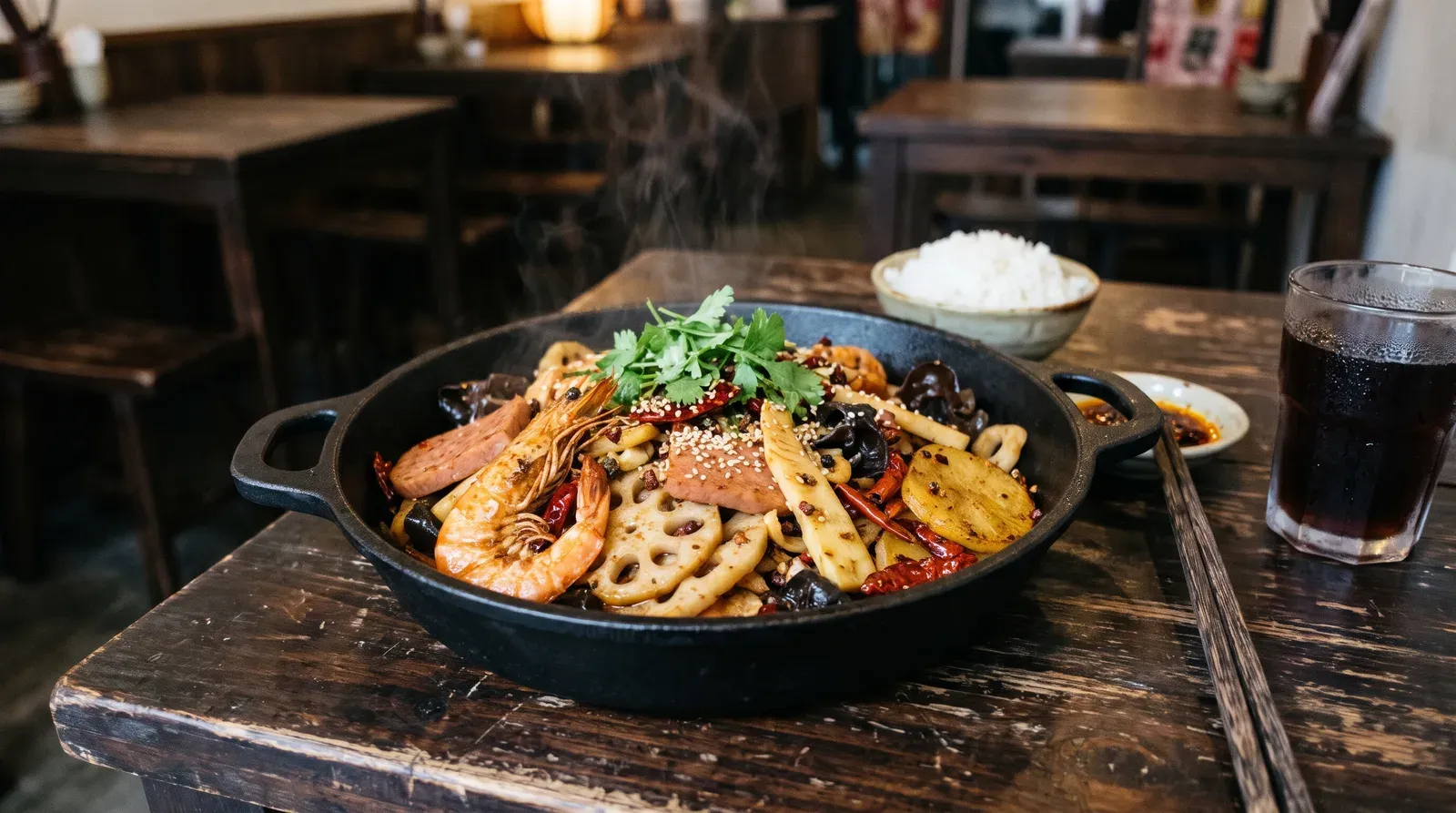
When ordering dry pot or mala xiangguo, two diners usually pick 4 to 5 main ingredients, while a group of 4 does well with 8 to 10 items, creating a cooked dish that weighs 3 to 4 pounds. Traditional versions grew popular in 2003 around a single featured meat, whereas spicy stir-fry pots bring together a much wider mix of meats and vegetables. Both styles share bold, numbing Sichuan heat. Getting familiar with portion sizing and pay-by-weight rules makes ordering straightforward and relaxed.
What Is the Difference Between Dry Pot and Mala Xiangguo?
The two dishes have different origins and culinary branches. Traditional accounts place the origin of the dish in Mianyang, Sichuan, as part of the Upper River school of Sichuan cuisine, with its popularity starting in 2003. According to Chinese Wikipedia, it originated in Deyang, Sichuan, where the earliest ingredients included freshly butchered chicken, rabbit, and vegetables. Mala xiangguo originated in the early 21st century among the Tujia people of Mount Jinyun in Chongqing. Chongqing belongs to the Lower River school among the four main branches of Sichuan cuisine, and the stir-fry pot likely evolved from Sichuan dry pot.
Unlike traditional pots built around fixed main meats, mala xiangguo mixes a wider variety of meats and vegetables. After 2004, the dish spread widely across Chongqing, and after 2005 it gradually gained popularity across eastern China and southern provinces such as Guangdong.
If you prefer a pot built around a single meat, you can lean toward the classic style. If you prefer freely combining multiple meats and vegetables, mala xiangguo suits you better.
How Do You Order by Weight or by Menu?
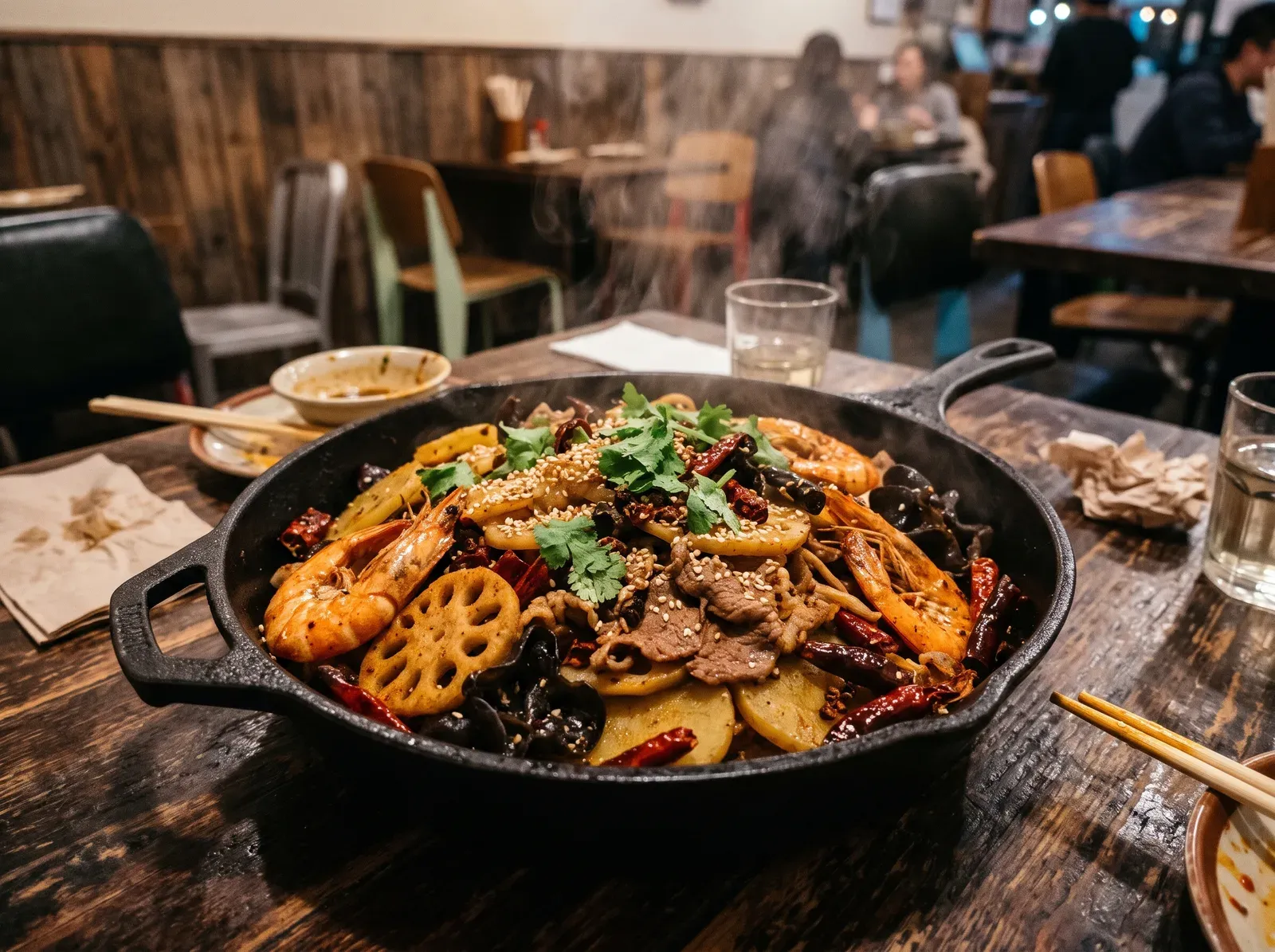
Restaurants generally use one of two ordering methods for mala xiangguo: weighing your ingredients or marking a paper checklist. In many small street shops, chain outlets, and food courts, you pick raw items yourself and pay by weight. Vegetables and meats are usually weighed separately because meats cost more per unit. In some sit-down restaurants, staff hand you a menu listing fresh ingredients with individual prices, allowing you to check off what you want before the kitchen cooks your order.
You need to manage portions according to group size to prevent food waste. Dining in Chinese restaurants centers on shared dishes rather than individual Western-style plates, and people generally order about one main dish per seated person for the table to share. For 4 to 6 diners, picking 8 to 10 ingredients for mala xiangguo gives you the right amount of food, while choosing too many can quickly leave you with an overwhelming pile of leftovers.

Tip: When gathering ingredients at a pay-by-weight shop, remember to place vegetables and meats into separate bowls so the cashier can weigh them accurately at their respective rates.
How Does the Kitchen Cook the Dishes?
Both dishes rely on precooking ingredients before a high-heat stir-fry rather than cooking raw food in the wok from start to finish. When cooking the classic style, all main ingredients are blanched, deep-fried, or lightly pan-fried beforehand, and then tossed quickly over high heat with seasoned paste. Mala xiangguo is likewise stir-fried over high heat in an iron wok with aromatics and oil. Before it leaves the kitchen, cooks usually garnish the dish with white sesame seeds and cilantro, and some places toss in crushed peanuts for extra aroma.
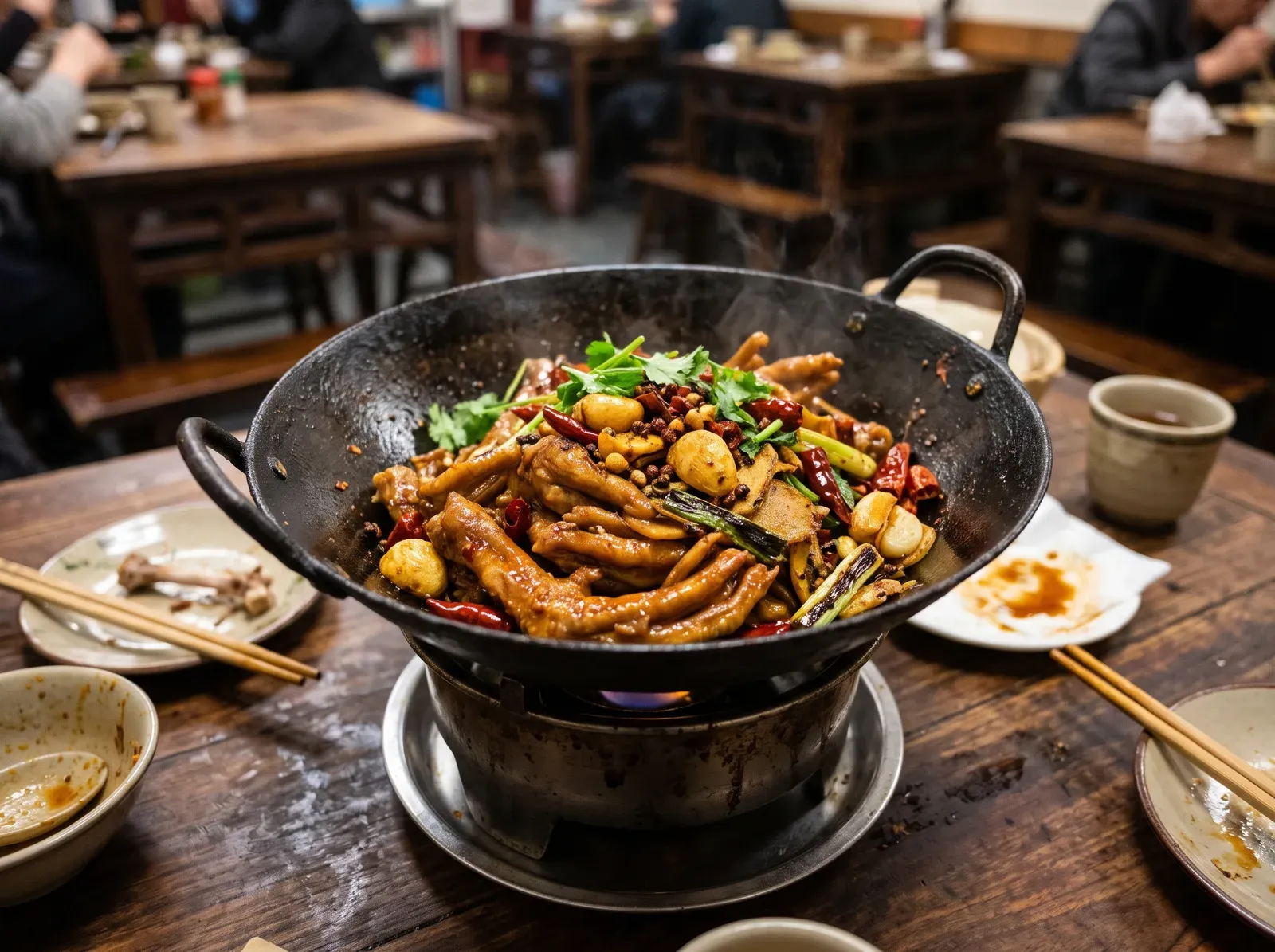
Cooking technique is also the core difference between mala xiangguo and malatang. While malatang simmers ingredients in hot broth, mala xiangguo stir-fries them in an iron wok with spices and oil, producing a deeper aroma alongside a higher amount of oil. Some restaurants follow the traditional style by placing a small burner under the metal bowl at the table, keeping the entire dish fragrant and warm throughout your meal.
The traditional dish arrives without broth, delivering a dry, fragrant flavor, and in some regional styles diners add fresh broth after finishing the meats to simmer vegetables. Tip: When eating from a pot kept warm by a tabletop burner, keep clothing and napkins away from the open flame beneath the bowl.
How Should You Pick Spice Levels and Drinks?
If you are trying mala xiangguo for the first time, starting with mild heat is sensible. Sichuan cuisine is famous for bold spice, using generous amounts of garlic, chili peppers, and distinctive Sichuan peppercorns to create a numbing, fragrant heat. In the name of the dish, "ma" refers to the tongue-numbing sensation, while "la" stands for spicy heat. Servers usually ask for your preferred spice level, such as mild (wei la), medium (zhong la), or extra spicy (te la). Food bloggers suggest first-timers choose mild to enjoy a balanced spicy and numbing kick.
Both dishes belong to a cooking style that leans heavy on oil and salt, requiring the right staple and drinks to balance each bite. Because mala xiangguo carries intense salt and spice, diners usually eat it alongside warm steamed rice, and having plenty of drinking water or cooling beverages nearby is strongly recommended.
Tip: If you are new to Sichuan spice, ask the server for a mild heat level when ordering, and keep warm rice and plenty of drinking water ready on the table.
What Are the Key Differences at a Glance?
To help you distinguish origins, cooking methods, and ingredient setups when ordering, the main differences are summarized in the table below:
| Comparison Aspect | Traditional Dry Pot | Mala Xiangguo |
|---|---|---|
| Culinary School & Origin | Upper River Sichuan (Mianyang or Deyang, Sichuan) | Tujia people of Mount Jinyun, Chongqing (Lower River Sichuan) |
| Time of Appearance | Became popular in 2003 | Originated in the early 21st century |
| Ingredient Format | Fixed main meats (such as duck webs, shrimp, rabbit, bullfrog, duck heads) | Self-selected mix of meats and vegetables with a wider variety |
| Early Common Ingredients | Freshly butchered chicken, rabbit, and vegetables | Diverse fresh ingredients picked by diners |
| Ordering Method | Order by pot with a fixed main ingredient | Self-service weighing (separate meats and vegetables) or menu checklist |
| Kitchen Cooking Technique | Precooking by blanching, frying, or pan-frying, then quick stir-frying | High-heat stir-frying with spices and oil, garnished with white sesame and cilantro |
| Serving Style & Extensions | Some diners add fresh broth to simmer vegetables after finishing the main meats | Usually served with warm steamed rice and plenty of drinking water or cooling drinks |
Sources
Sichuan cuisine - Wikipedia
Customs and etiquette in Chinese dining - Wikipedia
Mala xiang guo - Wikipedia
Dry pot - Wikipedia
Mala xiangguo - Wikipedia
Sources verified on Nov 17, 2026.
FAQ
How many ingredients should two people order for mala xiangguo?
When ordering dry pot or mala xiangguo, two diners usually pick 4 to 5 main ingredients. If you are in a pay-by-weight restaurant, keep in mind that meats and vegetables are usually weighed and billed separately.
What are the classic meats used in traditional dry pot?
Traditional dry pot became popular starting in 2003, with classic meats including duck webs, shrimp, rabbit, bullfrog, and duck heads. Early versions also commonly featured freshly butchered chicken, rabbit, and vegetables.
How does mala xiangguo differ from malatang?
Malatang cooks ingredients in hot broth, whereas mala xiangguo stir-fries them over high heat in an iron wok with spices and oil. The stir-fried pot has no broth and delivers a more concentrated aroma, though it uses a higher amount of oil.
Can you still enjoy mala xiangguo if you cannot eat very spicy food?
When you order mala xiangguo, staff will ask for your spice preference. First-timers should choose mild heat for an approachable spicy and numbing flavor, and pair the meal with warm steamed rice alongside plenty of drinking water or cooling drinks.