
China History: Dynasties and Ancient Imperial Capitals
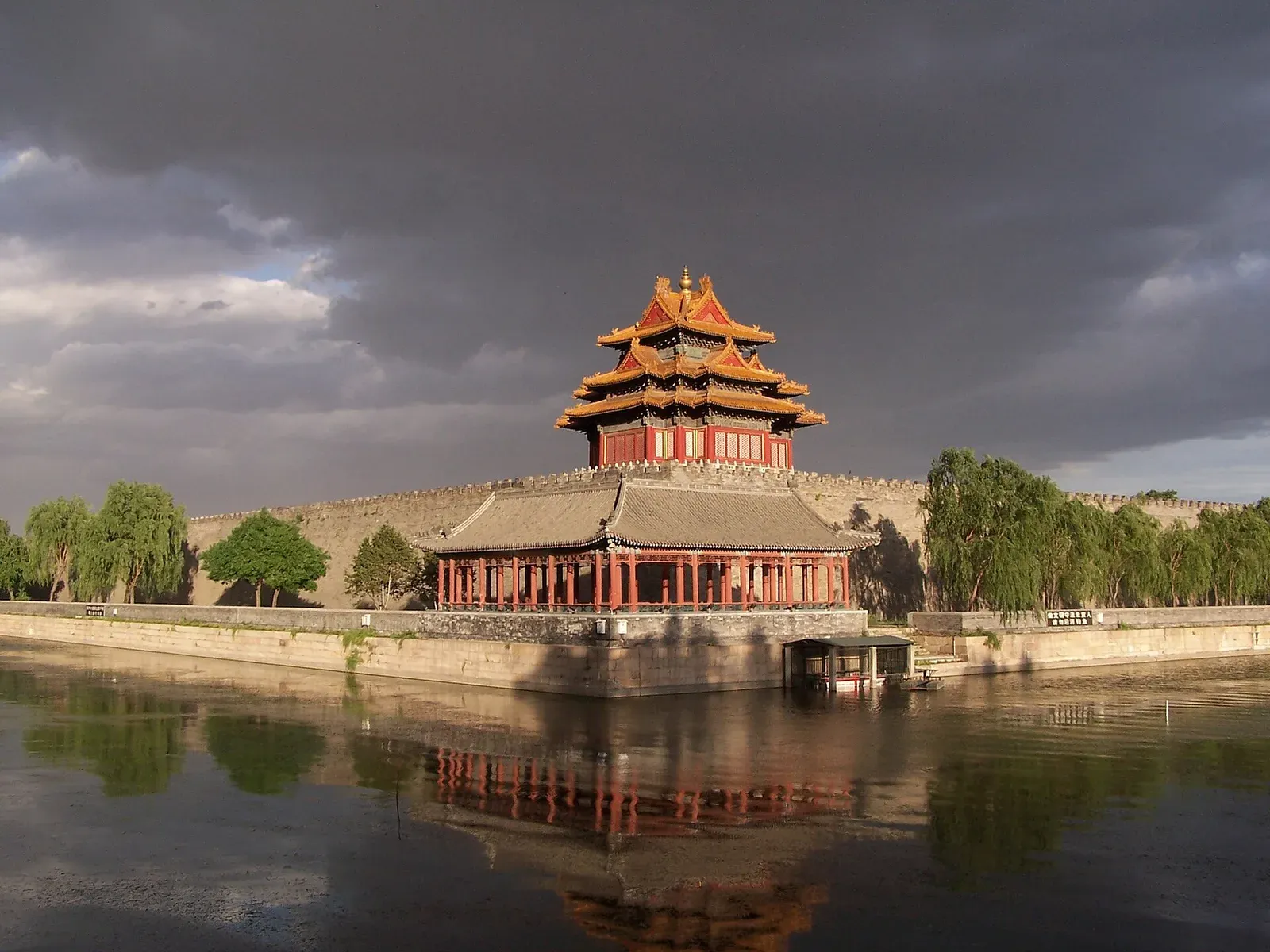
Photo: User:kallgan / Wikimedia Commons, CC BY-SA 3.0
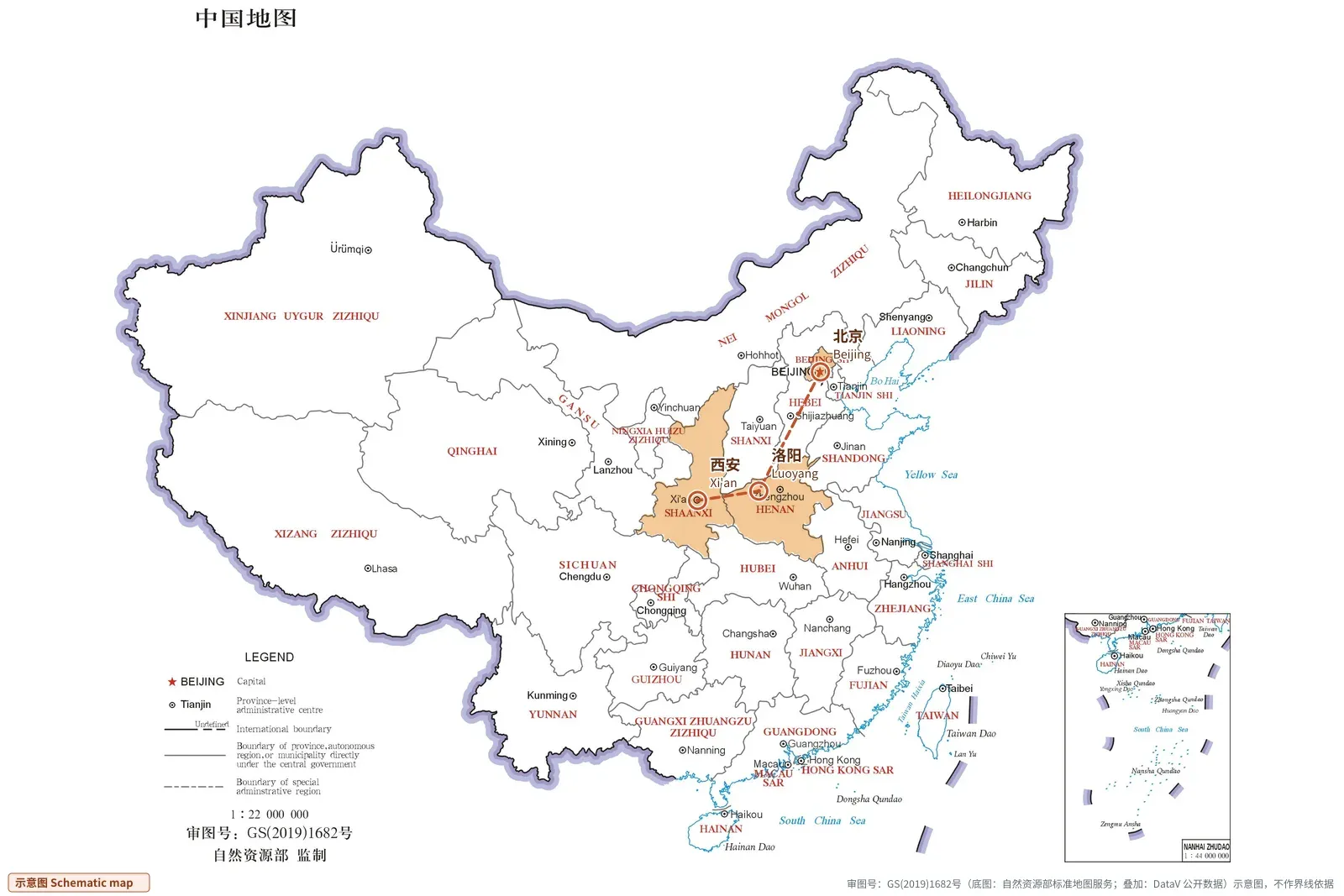
The history of China's dynasties runs for thousands of years. Hereditary monarchy lasted from the first dynasties until the Qing emperor Puyi stepped down on February 12, 1912, about four thousand years in all. Within that span, the dynasties that unified the whole empire were mainly the Qin, Han, Western Jin, Sui, Tang, Yuan, Ming and Qing. To see the old capitals themselves, the classic line follows three cities named by direction: Xi'an in the west, Luoyang in the east and Beijing in the north.
| Representative capital | Traditional directional name | Main dynasties and periods | Key sites |
|---|---|---|---|
| Xi'an | Western Capital (Chang'an) | Western Zhou (Fenghao), Qin, Han, Sui and Tang (Daxing City and Chang'an City) | Mausoleum of the First Qin Emperor and the Terracotta Army pits, Xi'an City Wall, Giant Wild Goose Pagoda, Shaanxi History Museum |
| Luoyang | Eastern Capital (Chengzhou, Shendu) | Western Zhou eastern capital, Eastern Han, Cao Wei, Sui, Wu Zhou, Northern Wei to Northern Song | Longmen Grottoes, White Horse Temple, the Sui-Tang Grand Canal water network hub, Luoyang Museum |
| Beijing | Northern Capital (Dadu, Jingshi) | Yuan (Dadu), Ming, Qing | Palace Museum, Wanchun Pavilion in Jingshan Park and the Beijing Central Axis |
Why follow the history of China through Xi'an, Luoyang and Beijing?
China's historic capitals were usually named by direction. Xi'an was the Western Capital, Chang'an. Luoyang was the Eastern Capital, Shendu. Beijing was the Northern Capital, Dadu and later Jingshi. Nanjing was the Southern Capital, Jiankang. The early Western Zhou capital stood at Fenghao, on the Wei River in today's Shaanxi near Xi'an. To hold its eastern territory, the Zhou also built an eastern capital at Chengzhou in Luoyang, on the middle Yellow River, and that set the pattern of two poles: Guanzhong in the west and the Central Plains in the east. The Sui dynasty (581 to 618 AD) ended centuries of division and reunified the country. Emperor Wen of Sui had the architect Yuwen Kai build Daxing City, the forerunner of Tang Chang'an, and Emperor Yang of Sui cut a canal network centred on Luoyang that ran more than 2,700 km by today's measure.
If you care more about the early systems of the Zhou, Qin, Han and Tang and about the start of the Silk Road, give Xi'an and Luoyang most of the time. If court rule and palace layout in the Ming and Qing matter more, make Beijing the core of the trip. Follow the Yellow River and the Central Plains corridor from west to east, from older to newer, and the run from early civilisation to a unified empire lines up in order.
Xi'an: the Zhou, Qin, Han and Tang centre and how to see it
Xi'an was the capital of 13 dynasties and the eastern end of the Silk Road, and the remains of the Zhou, Qin, Han and Tang run right through the city. The Mausoleum of the First Qin Emperor and its terracotta pits joined the UNESCO World Heritage List in 1987, and the excavation sites of pits 1, 2 and 3 are open to visitors. The site has two parts, the museum and Lishan Garden. Each takes about 1.5 hours, and your ticket covers the free shuttle between them.
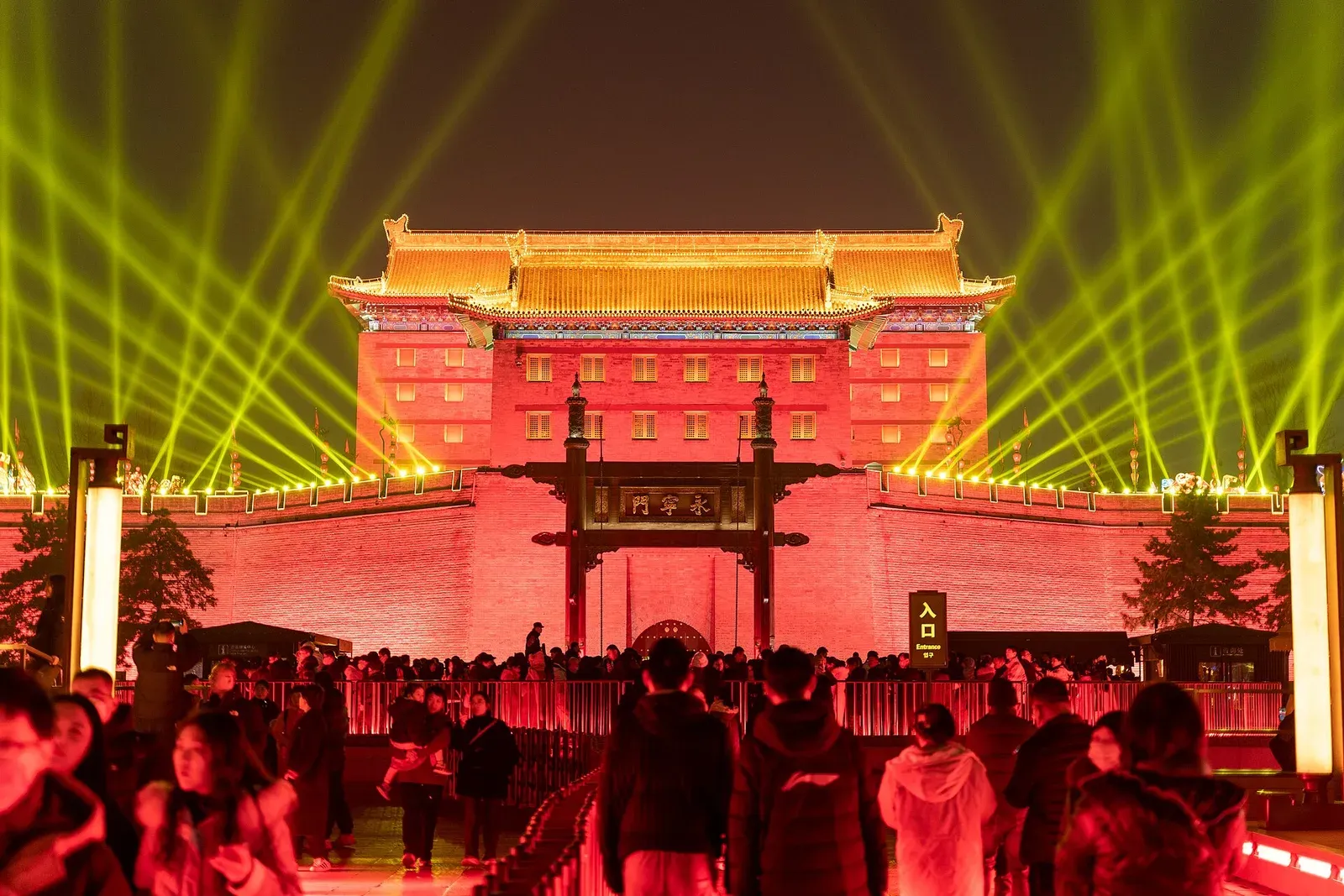
In 139 to 138 BC, Emperor Wu of Han sent Zhang Qian west to make contact with the Greater Yuezhi. Zhang Qian was held captive for 13 years before he got back to Han territory, and he set out again in 119 BC, opening the first official route into Central Asia. The Chang'an to Tianshan corridor recognised by UNESCO runs about 5,000 km, starting from Chang'an and Luoyang, crossing the Hexi Corridor and the Qilian Mountains and reaching the Seven Rivers area of Central Asia. In the Tang era, Xuanzang built the Giant Wild Goose Pagoda inside Da Ci'en Temple in 652 (the third year of Yonghui) to store the sutras and statues he brought back from the west. It began with five storeys; after rebuilding under Wu Zhou and repairs over the centuries, it is now a seven-storey square brick pagoda. The surviving Xi'an City Wall is 13.74 km around and 12 m high, its core rammed from a mix of lime, earth and glutinous rice, with layers of bricks on the outer face.
Tip: The Emperor Qinshihuang's Mausoleum Site Museum uses real-name reservations, and foreign visitors and ticket-exempt visitors all have to book ahead on the official website or WeChat account. The Shaanxi History Museum releases tickets five days ahead at 17:00 each day, and its Qin-Han branch is open daily from 8:30 to 18:00, with last entry at 17:00.
Luoyang: what to see in a 13-dynasty capital on the Luo River
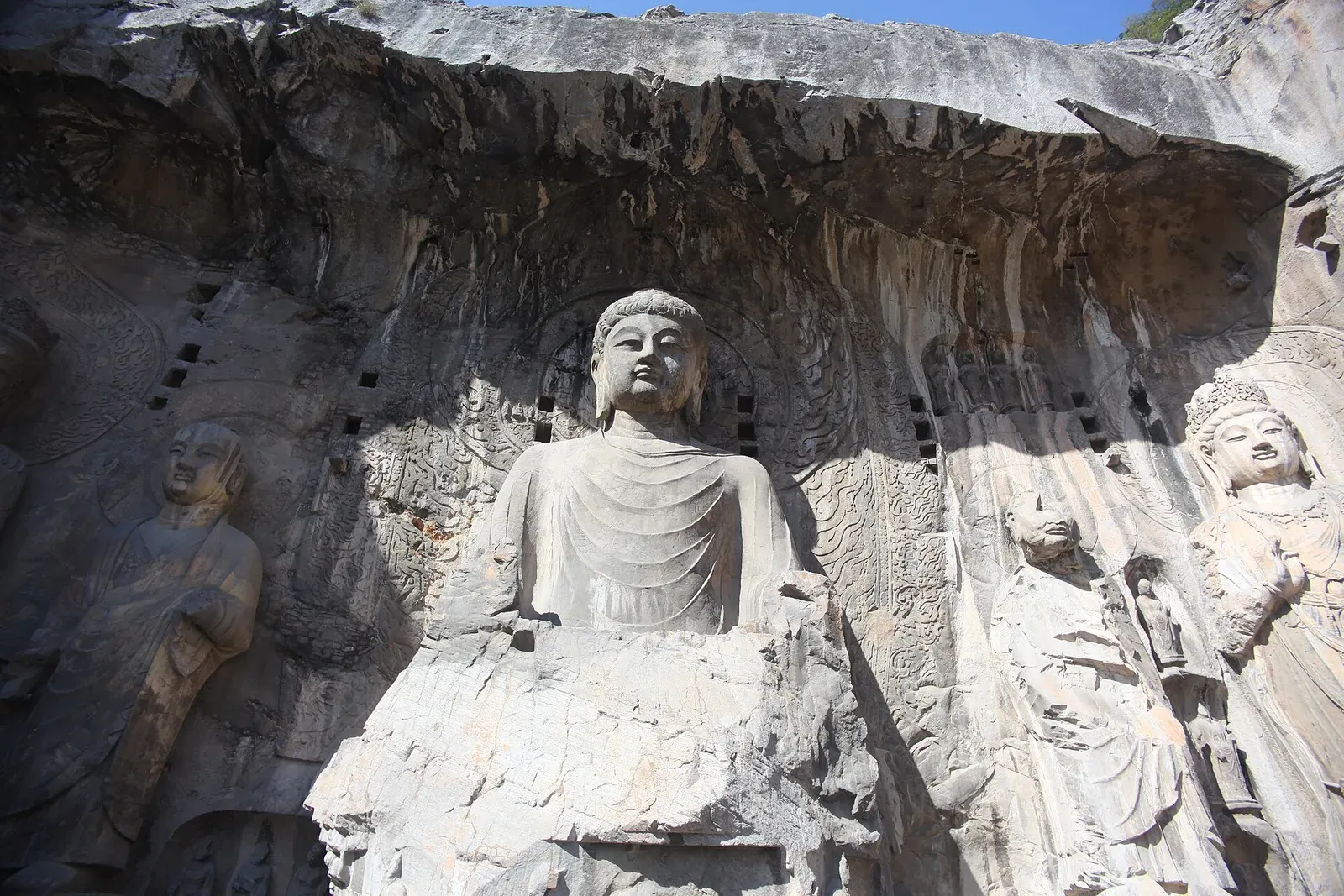
Luoyang sits in the middle of the Central Plains. From Chengzhou in the Eastern Zhou to Shendu under Wu Zhou, it gathered cave carving, the founding temples of Chinese Buddhism and the heritage of the Yellow River and Luo River. The Longmen Grottoes were cut mainly between the Northern Wei and the Northern Song, over more than 400 years. Some 2,100 caves and niches, more than 100,000 figures and 3,600 inscriptions survive, making it one of the three great cave art sites in China. The UNESCO Silk Road corridor also lists Luoyang alongside Chang'an as the eastern starting point, which shows how goods and ideas moved both ways.
East of Luoyang, White Horse Temple is the cradle of Chinese Buddhism. Its Mahavira Hall houses Yuan dynasty dry lacquer statues of the Buddhas of the Three Ages and eighteen arhats. Luoyang Museum is free to enter. Its collection includes an Eastern Han stone winged beast, a Cao Wei white jade cup, a Tang sancai horse with black glaze, and a Qing pagoda of golden silk nanmu. The Xia dynasty bronze jue with nipple pattern that used to be in the Luoyang Museum was transferred to the Erlitou Site Museum of the Xia Capital in 2019.
Tip: Luoyang Museum closes to the public from October 19, 2026 for renovation, expected to take about a year, so in that period plan on Longmen Grottoes and White Horse Temple. Longmen Grottoes sells real-name timed tickets and penalises no-shows: cancel before 20:00 on the visit day and it does not count; one no-show blocks booking for 3 days, two for 30 days, three for 180 days.
Beijing: the Yuan, Ming and Qing court and how to walk the Central Axis
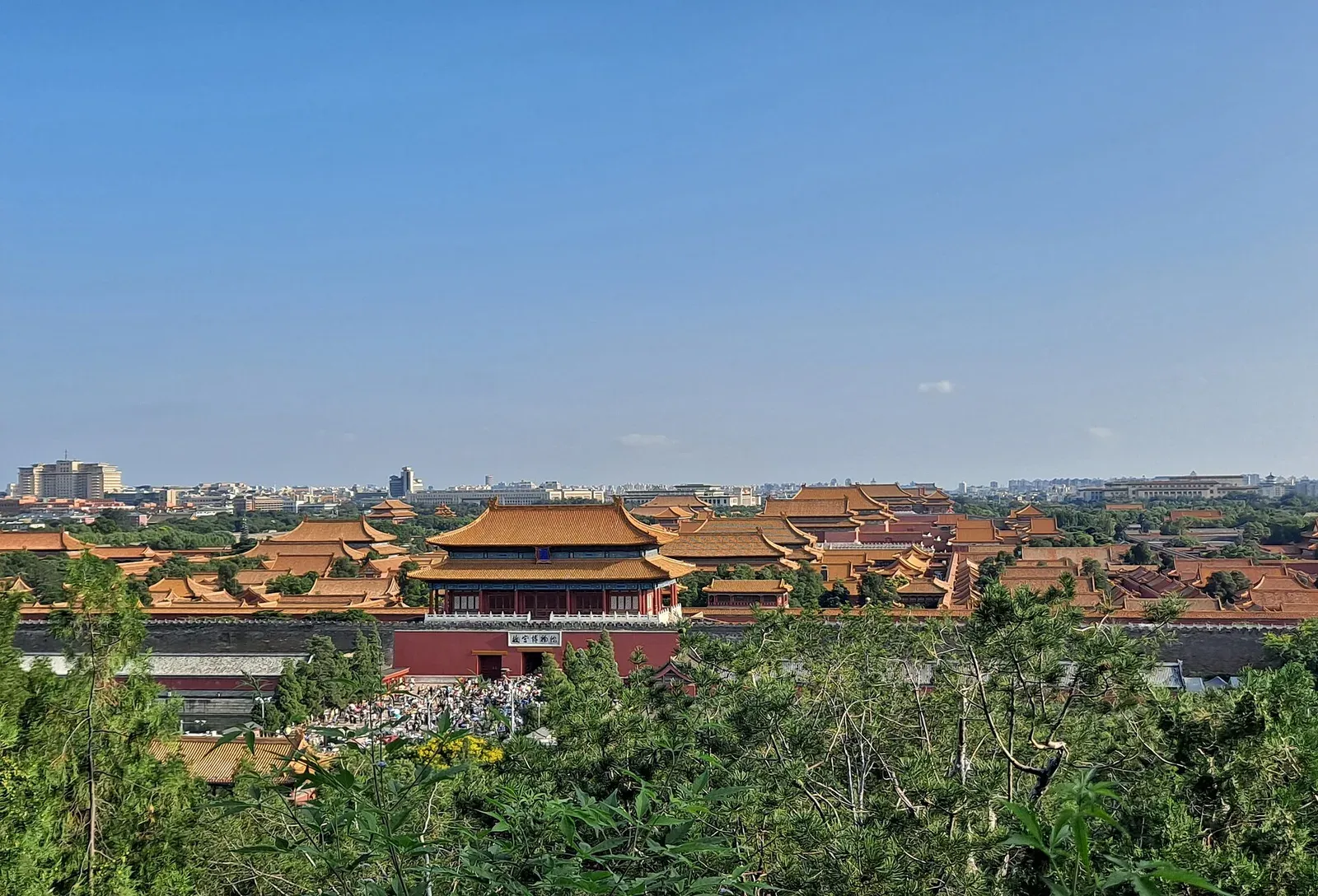
Beijing became the seat of government after the Yuan built Dadu, and it served the Yuan, Ming and Qing, keeping the Central Axis ensemble that shows how imperial order was laid out. The Palace Museum, the palace of the Ming and Qing, runs a strict one-way route. The Meridian Gate is the only entrance for visitors, and you leave at the Gate of Divine Prowess on the north side or the East Prosperity Gate on the east. To see the Nine Dragon Screen inside the Treasure Gallery you need a separate Treasure Gallery ticket on top of the main ticket, 10 yuan per person.
Jingshan Park faces the Gate of Divine Prowess across the street. It sits on the Central Axis of Ming and Qing Beijing and was once the highest point in the city. The hill is man-made, 89.2 m above sea level and 45.7 m above its surroundings, piled up in 1420 (the 18th year of Yongle) from rubble of demolished Yuan palaces and earth dug from the Forbidden City moat. Wanchun Pavilion at the top stands at the highest point of the Central Axis, and from there you look down on the whole Forbidden City, the axis itself and the imperial courtyards.
Tip: The Palace Museum closes on Mondays all year apart from statutory holidays, and tickets have to be booked ahead, with sales opening at 20:00 seven days before the visit. Once you leave by the Gate of Divine Prowess, the south gate of Jingshan Park is across the street, and the climb to Wanchun Pavilion is the usual way to take in the glazed roofs of the Forbidden City from above.
| Museum or site | Opening and ticket hours | Ticket price and paid extras | Ticket release and booking rules |
|---|---|---|---|
| Emperor Qinshihuang's Mausoleum Site Museum (Terracotta Army) | Peak season (March 16 to November 15): tickets 8:30 to 17:00, site closes 18:30; off season (November 16 to March 15): tickets 8:30 to 16:30, site closes 18:00 | Ticket covers the shuttle between the terracotta pits and Lishan Garden | Real-name booking; foreign visitors and ticket-exempt visitors also book on the official website or WeChat account |
| Shaanxi History Museum (Qin-Han branch) | Qin-Han branch open daily 8:30 to 18:00 (last entry 17:00) | Free with reservation | Tickets released 5 days ahead, at 17:00 each day |
| Palace Museum | Closed Mondays (except statutory holidays) | Main ticket 60 yuan in peak season, 40 yuan off season; Treasure Gallery 10 yuan extra per person | Booking opens at 20:00 seven days before the visit; one-way entry at the Meridian Gate |
| Longmen Grottoes | Real-name timed tickets for entry | As posted at the site | Refund before 20:00 on the visit day is not a no-show; 1 to 3 no-shows block booking for 3 to 180 days |
| Luoyang Museum | Closed Mondays (except statutory holidays and the peony festival); closed for renovation from October 19, 2026, for about a year | Free entry | Tickets released at 7:00 three days ahead, including the same day; non-mainland-China residents can book with a passport |
High-speed rail between the three capitals and how to plan the route
The modern high-speed network links Xi'an, Luoyang and Beijing, so moving between old capitals is quick. The Zhengzhou-Xi'an high-speed railway is the main line between Xi'an and Luoyang, with Luoyang Longmen Station on it; the fastest run from Zhengzhou East to Xi'an North is 1 hour 46 minutes. The Beijing-Guangzhou high-speed railway has a designed and maximum operating speed of 350 km/h, and its Beijing-Wuhan section was raised to 350 km/h from June 20, 2022, which ties Beijing, Tianjin and Hebei closely to the Central Plains.
On our 14-day Beijing, Xi'an and Shanghai private trip, the travel designer usually books high-speed trains across the North China Plain and the Yellow River basin. If you want to follow the dynasties in order, go from Xi'an (Zhou, Qin, Han, Tang) to Luoyang (Eastern Han, Wei, Jin, Sui, Tang) and then north to Beijing (Yuan, Ming, Qing). If you would rather see Ming and Qing palace architecture first and trace medieval civilisation afterwards, start in Beijing and ride south to Luoyang and Xi'an. Along the way your driver handles station pickups and the luggage, and the pace works for older family members and children.
| High-speed line | Old capitals linked | Design and maximum operating speed | Key operating facts |
|---|---|---|---|
| Zhengzhou-Xi'an high-speed railway | Luoyang to Xi'an | Runs to mainline high-speed standards | Calls at Luoyang Longmen Station; fastest run from Zhengzhou East to Xi'an North is 1 hour 46 minutes |
| Beijing-Guangzhou high-speed railway | Beijing to the Central Plains (Beijing-Wuhan section) | Design and maximum operating speed both 350 km/h | Beijing-Wuhan section raised to 350 km/h from June 20, 2022 |
First time at China's capital museums: what do people get wrong?
At museums and heritage sites in China's old capitals, the slips usually come from real-name ticket release times, the ID you book with, and no-show penalties. Learn each site's rules before you go and a multi-city trip runs smoothly.
| Common mistake | What to do instead |
|---|---|
| Assuming you can join a queue and buy on the day | Palace Museum releases tickets at 20:00 seven days ahead, Shaanxi History Museum at 17:00 five days ahead, Luoyang Museum at 7:00 three days ahead. Book under your real name in advance. |
| Not sure a foreign passport can book online | At the Emperor Qinshihuang's Mausoleum Site Museum, foreign visitors can book on the official website or WeChat account; Luoyang Museum accepts passport bookings. |
| Changing a Longmen Grottoes plan without cancelling | Refund before 20:00 on the visit day, or it counts as a no-show and brings a 3-day, 30-day or 180-day booking block. |
| Entering the Palace Museum at the Gate of Divine Prowess | The route is one-way. The Meridian Gate is the only entrance; the Gate of Divine Prowess and the East Glorious Gate are exits only. |
Sources
Zhou dynasty | History, Achievements, Art, & Facts | Britannica
Sui dynasty - Wikipedia
Sui dynasty - Wikipedia (Chinese)
Sui-Tang Grand Canal - Wikipedia (Chinese)
About the Silk Roads | UNESCO
Silk Road - Facts, History & Location | HISTORY
Silk Roads: the Routes Network of Chang'an-Tianshan Corridor - UNESCO World Heritage Centre
Emperor Qinshihuang's Mausoleum Site Museum official website
Palace Museum
Terracotta Army - Wikipedia (Chinese)
Palace Museum ticketing policy - Palace Museum
Palace Museum visitor guidelines - Palace Museum
Xi'an City Wall - Wikipedia (Chinese)
Shaanxi History Museum - Wikipedia (Chinese)
Giant Wild Goose Pagoda - Wikipedia (Chinese)
Jingshan Park - Wikipedia (Chinese)
Jingshan Park
Longmen Grottoes - Wikipedia (Chinese)
Luoyang Museum - Wikipedia (Chinese)
White Horse Temple - Wikipedia (Chinese)
Historical capitals of China - Wikipedia
Dynasties of China - Wikipedia (Chinese)
Zhengzhou-Xi'an high-speed railway - Wikipedia (Chinese)
Beijing-Guangzhou high-speed railway - Wikipedia (Chinese)
Sources checked on November 19, 2026
FAQ
Where should I start to follow the history of China's dynasties: Xi'an, Luoyang or Beijing?
You can go forward through the dynasties or backward. In order, start in Xi'an (Zhou, Qin, Han, Tang), take the Zhengzhou-Xi'an high-speed railway to Luoyang (Eastern Han, Wei, Jin, Sui, Tang) and then head north to Beijing (Yuan, Ming, Qing). If you want Ming and Qing palace architecture first, travel south from Beijing and work back to earlier periods.
How many days ahead do foreign visitors have to book the Palace Museum and the Terracotta Army, and can a passport be used?
The Palace Museum closes on Mondays apart from statutory holidays, and booking opens at 20:00 seven days before the visit. The Emperor Qinshihuang's Mausoleum Site Museum uses real-name reservations, and foreign visitors can book ahead with a passport on the official website and WeChat account.
While Luoyang Museum is closed for renovation, what other historic sites in Luoyang should I see?
Luoyang Museum closes for renovation from October 19, 2026 for about a year, so plan on Longmen Grottoes and White Horse Temple in that period. The Mahavira Hall of White Horse Temple holds the Yuan dynasty dry-lacquer three Buddhas and 18 arhat figures moved there from the Forbidden City in 1972. The Xia dynasty bronze jue with nipple pattern that used to be in Luoyang Museum went to the Erlitou Site Museum of the Xia Capital in 2019.
How much walking do the Longmen Grottoes and the Xi'an City Wall involve?
The surviving Xi'an City Wall is 13.74 km around and 12 m high, which is a long walk in one go, so cover it in sections. The Longmen Grottoes hold more than 2,100 caves and niches and over 100,000 figures, cut into the hillsides on both banks of the Yi River, and reaching the key areas such as Fengxian Temple means climbing stone steps. Wear light, flat shoes with good grip.