
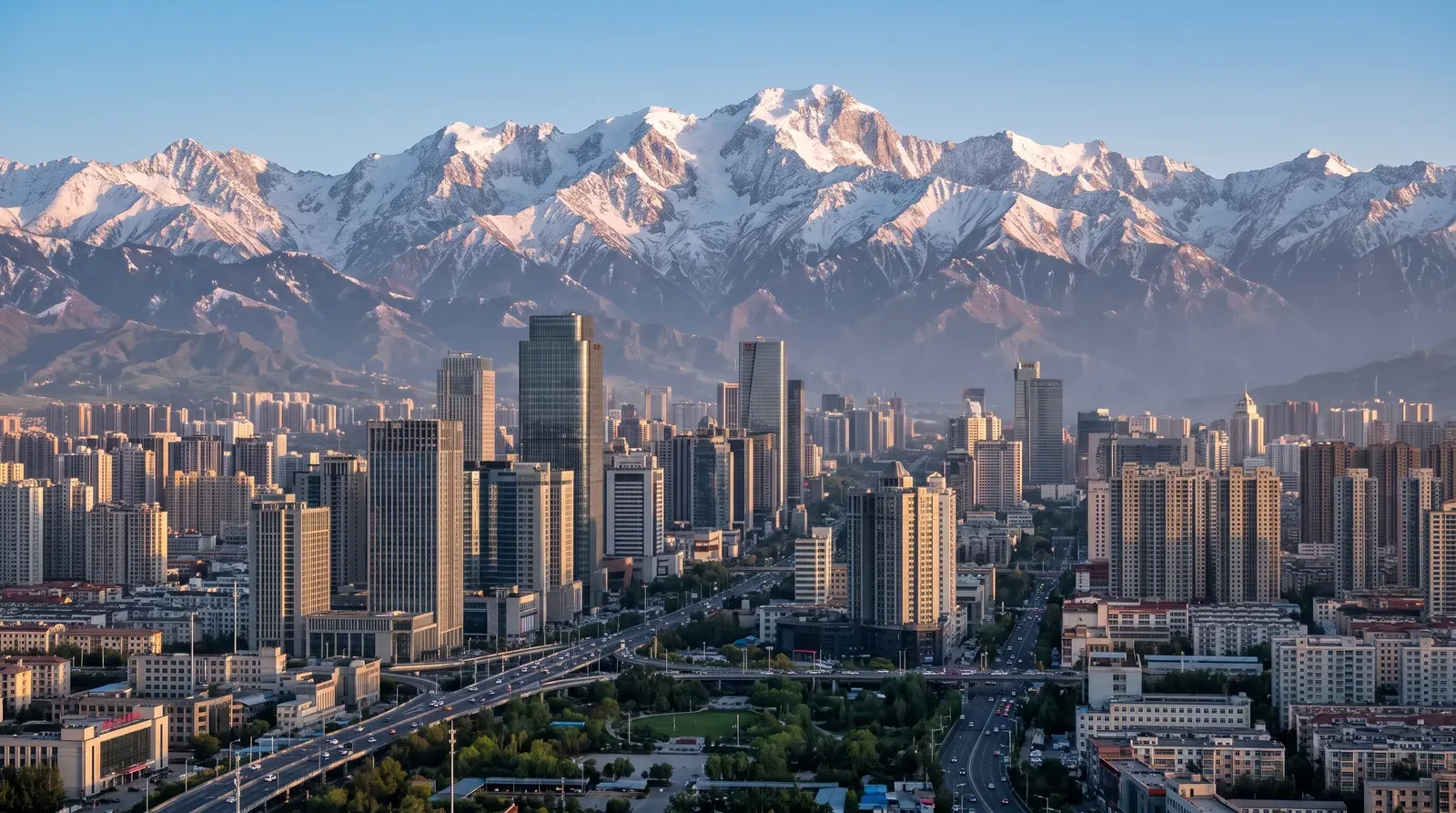
Urumqi
Located on the northern slope of the middle Tianshan Mountains and the southern rim of the Junggar Basin, Urumqi, China has an average urban altitude of 800 meters. It is recognized by Guinness World Records as the major city farthest from the sea in the world, at about 2,500 kilometers away. The name Urumqi comes from the Oirat Mongolian language and means "beautiful pasture," with a permanent population of 4.054 million. Serving as a gateway to the Tianshan Mountains and the northern route of the Silk Road, it is also a travel destination to experience multi-ethnic urban life. Visitors are usually recommended to stay for 2 to 3 days.
Key points
A trip to Urumqi, China usually requires 2 to 3 days to explore city landmarks like the Xinjiang Regional Museum and the International Grand Bazaar alongside alpine sights like Tianchi. Although Xinjiang uses Beijing time, local businesses and dining operate about 2 hours later, generally opening around 10:00, so you should adjust your schedule to match the delayed pace.
Located on the northern slope of the middle Tianshan Mountains and the southern rim of the Junggar Basin, Urumqi, China has an average urban altitude of 800 meters. It is recognized by Guinness World Records as the major city farthest from the sea in the world, at about 2,500 kilometers away. The name Urumqi comes from the Oirat Mongolian language and means "beautiful pasture," with a permanent population of 4.054 million. Serving as a gateway to the Tianshan Mountains and the northern route of the Silk Road, it is also a travel destination to experience multi-ethnic urban life. Visitors are usually recommended to stay for 2 to 3 days.
When to visit, and what is the local temperature like?
Urumqi has a mid-temperate semi-arid climate, with short springs and autumns, long winters and summers, and large temperature differences between day and night. Its average annual temperature is 6.9°C, with July averaging 23.7°C and January averaging -12.6°C. Before traveling, note that the local solar time is about 2 hours and 10 minutes behind Beijing time. Although Beijing time is used officially across Xinjiang, local dining, business hours, and daily routines are pushed back by about 2 hours. Businesses usually open around 10:00 in the morning, and lunch and dinner times are postponed accordingly, so you can adjust your schedule in advance. For more preparation tips, you can refer to practical China travel advice.
How do you get there and use local transit?
For air travel, Urumqi Tianshan International Airport is located 16 kilometers northwest of downtown. After Terminal 4 in the north terminal area begins operations in April 2025, its annual passenger handling capacity will reach 48 million passengers. If you need details on transfers at major domestic airports, you can read the China airport entry guide. For railways, Urumqi Railway Station is located in Saybagh District and serves as an important hub on the Lanzhou-Xinjiang High-Speed Railway, running direct one-stop trains to major cities across Xinjiang such as Yining, Kashgar, Aksu, Hami, and Karamay. For boarding procedures, see the China high-speed train guide.
For urban public transit, Urumqi Metro Line 1 has a total length of 27.615 kilometers with 21 stations. The starting fare of 2 yuan covers up to 5 kilometers, and it runs daily from 7:40 to 23:30, connecting Erdaoqiao, Balou, and the International Airport Station. Visitors can check the boarding steps in the guide to using the metro in China.
What are the places worth visiting in Urumqi?
The urban area and outskirts of the city bring together rich historical culture and alpine landscapes:
Xinjiang Uygur Autonomous Region Museum: A national first-grade museum with free admission. It exhibits the Han dynasty arm protector with the woven characters "Five stars rising in the east benefit China," a cultural relic on the first batch banned from being exhibited abroad, along with ancient mummies such as the roughly 3,800-year-old "Loulan Beauty." You can gain a deeper understanding from the Silk Road history and routes guide.
Xinjiang International Grand Bazaar: It has a building area of about 90,000 square meters. The 775-meter-long outdoor pedestrian street is divided into intangible cultural heritage creative items, local specialties, and special dining areas. The food street features over 70 stalls offering hundreds of snacks such as lamb skewers, sheep offal soup, and yogurt zongzi. The Silk Road Tower stands over 70 meters high, with replicas of Kizil Caves murals on its top floor and an observation deck on the lower floor. The performing arts theater presents regular performances of "Silk Road: Thousand-Year Impression," and the Afanti Grand Bazaar Naan Bakery showcases nearly 100 varieties of naan alongside bread-making experiences.
Hongshan Park: A 4A-level scenic area with free admission. The hilltop features the 10.5-meter-high Hongshan Pagoda built in 1788 during the 53rd year of Emperor Qianlong's reign. Climbing the park's scenic centerpiece, the Yuantiao Tower, a three-story Qing-style building nearly 22 meters high, offers a panoramic view of downtown Urumqi.
Tianchi (Heavenly Lake): A natural alpine moraine lake located halfway up the northern slope of Bogda Peak. The lake surface sits at an altitude of 1,928 meters, featuring 4 complete vertical natural landscape zones that blend forests, grasslands, snow peaks, and glaciers together.
Tianshan Grand Canyon: Located over 40 kilometers from the city center with an average altitude exceeding 2,000 meters, it features virgin Schrenk's spruce forests of national forest park standard and Kazakh nomadic culture.
How should you pace your visit?
A trip of 2 to 3 days is usually recommended for Urumqi. On Day 1, explore urban culture and architecture: visit the Xinjiang Uygur Autonomous Region Museum in the morning, head to Yuantiao Tower in Hongshan Park in the afternoon for a panoramic city view, and spend the evening at the pedestrian and food streets of Xinjiang International Grand Bazaar. On Day 2, head to Tianchi (Heavenly Lake) or Tianshan Grand Canyon in the suburbs to view alpine lakes or Schrenk's spruce forests. If you plan to take direct trains onward to Kashgar or Yining, you can contact our travel designer to coordinate rail connections, accompanied by your local driver. For more destination inspiration, browse the overview of China destinations and attractions.
Sources
Urumqi City - Wikipedia
Xinjiang International Grand Bazaar - Wikipedia
Tianchi (Heavenly Lake) - Wikipedia
Hongshan Park in Urumqi - Wikipedia
Urumqi Metro - Wikipedia
Urumqi Tianshan International Airport - Wikipedia
Urumqi Railway Station - Wikipedia
Ürümqi - Wikipedia
Xinjiang Uygur Autonomous Region Museum - Wikipedia
Tianshan Grand Canyon - Wikipedia
The above sources were verified on November 17, 2026.
Related travel tips
Replies 08:30–22:00 your time · Free to ask.