
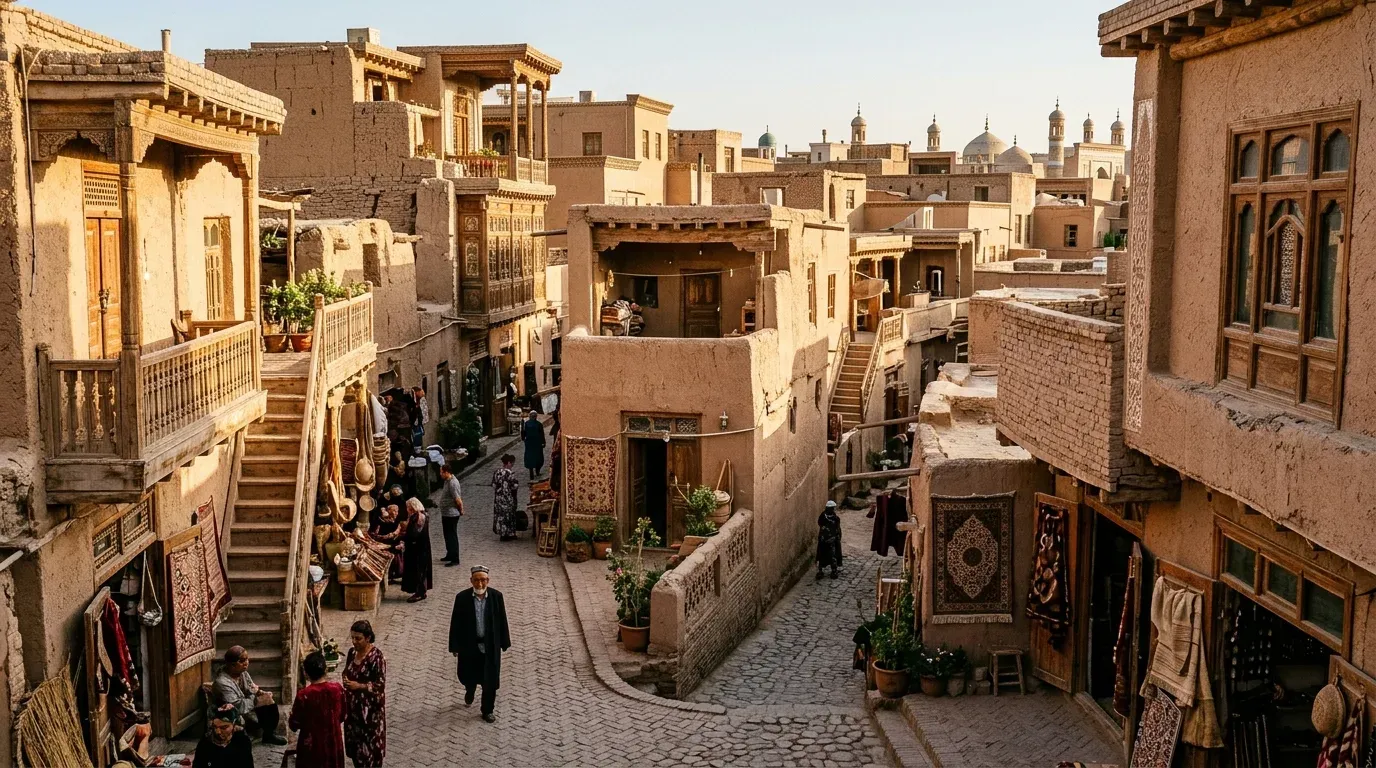
Kashgar
Historically known as Shule, Kashgar sits where the Pamir Plateau meets the Tarim Basin. It is China's westernmost city and a national historic and cultural city. It served as the western junction and trading hub for the northern, central, and southern routes of the ancient Silk Road, known as the kingdom of bazaars, with five ports opening to eight countries and one route linking Europe and Asia. In 2010, the city was officially designated as a special economic zone, the only city with this status in western China. For travelers exploring ancient towns and Silk Road culture in southern Xinjiang, 3 to 5 days are usually recommended for the city and its surrounding areas.
Key points
Visiting Kashgar and its surrounding areas typically requires 3 to 5 days. Allocate 1 full day to explore the Old Town, while Id Kah and the Afaq Khoja Mausoleum take 1 to 2 hours each. Traveling along the Karakoram Highway toward Khunjerab Pass at 4,714 meters elevation takes an additional 2 to 3 days round trip.
Historically known as Shule, Kashgar sits where the Pamir Plateau meets the Tarim Basin. It is China's westernmost city and a national historic and cultural city. It served as the western junction and trading hub for the northern, central, and southern routes of the ancient Silk Road, known as the kingdom of bazaars, with five ports opening to eight countries and one route linking Europe and Asia. In 2010, the city was officially designated as a special economic zone, the only city with this status in western China. For travelers exploring ancient towns and Silk Road culture in southern Xinjiang, 3 to 5 days are usually recommended for the city and its surrounding areas.
When to Visit Kashgar?
The city has a typical temperate desert climate, with an annual average temperature of 11.8°C and annual precipitation of 60 mm. The weather is generally dry and sunny with abundant sunshine. Before planning your itinerary, you can check the China travel seasons guide for more seasonal and weather information.
How to Arrive and Get Around?
By air, Laining International Airport has a runway 3,200 meters long and 41 meters wide, a terminal area of 23,800 square meters, and 8 boarding gates. In 2025, the airport handled 41,956 flights, with an annual passenger throughput of 5.2335 million. By rail, the Taklamakan Desert is encircled by a loop railway that connects the Southern Xinjiang Railway through the city and Hotan in the north with the Hotan-Ruoqiang Railway in the south. Taking the train allows you to reach oasis cities along the line.
Running through high mountains and gorges, the Karakoram Highway reaches its highest elevation of 4,714 meters near the Khunjerab Pass, making it one of the world's highest paved high-grade highways. When traveling, you can contact your travel designer to arrange your dedicated driver for a comfortable and easy private car service.
What to See in the City?
According to data from the Seventh National Population Census, as of midnight on November 1, 2020, the permanent resident population of the city was 782,662. Several representative historical sites and landmark buildings are preserved in and around the city:
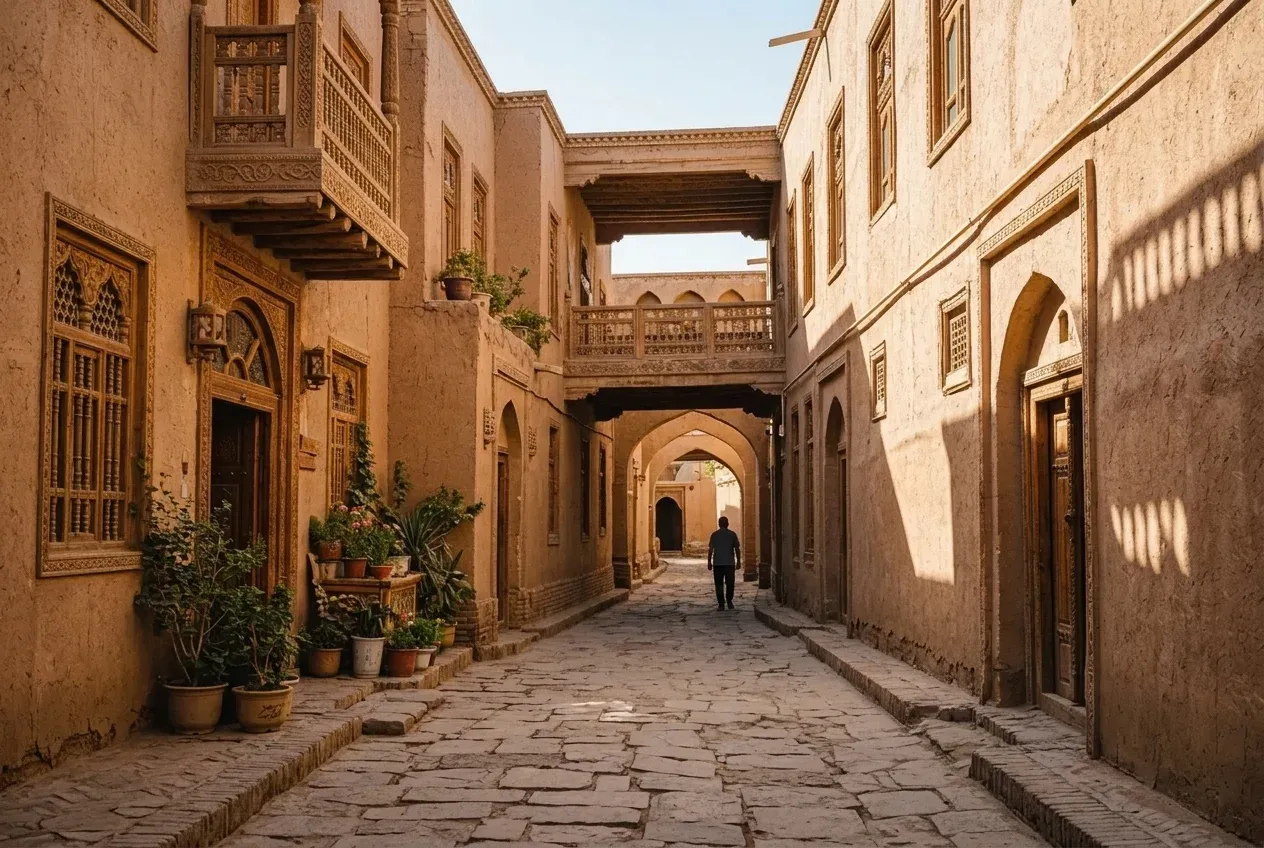
The Old Town: Located in the city center, it preserves numerous historical buildings and local daily life, and is listed as a national 5A-level tourist attraction.
Id Kah Architectural Complex: Covering an area of about 16,800 square meters, its gate tower is about 17 meters high and flanked by two 18-meter-high minarets, with the interior and courtyard accommodating 20,000 people.
Afaq Khoja Mausoleum: Built around 1640, it houses 72 members across five generations of the Afaq Khoja family. A dome with a span of 17 meters stands at the center, flanked at the four corners by minarets decorated with geometric and floral patterns.
How to Pace Your Trip?
When exploring the city, it is recommended to set aside ample time to wander the alleys of the Old Town and visit historic monuments such as Id Kah and the Afaq Khoja Mausoleum. If you plan to head toward the plateau and gorges, you can allow a few days to travel along the Karakoram Highway.
| Key Location or Route | Architectural and Geographic Features | Recommended Time |
|---|---|---|
| The Old Town | National 5A-level tourist attraction preserving historic buildings and daily life | 1 full day |
| Id Kah | Covers about 16,800 square meters, holding 20,000 people in the buildings and courtyard | 1 to 2 hours |
| Afaq Khoja Mausoleum | Built around 1640, featuring a 17-meter dome and patterned minarets | 1 to 2 hours |
| Karakoram Highway | Mountain gorge highway reaching a maximum elevation of 4,714 meters at Khunjerab Pass | 2 to 3 days round trip |
Sources
Taklamakan Desert - Wikipedia
Kashi City - Wikipedia
Kashgar - Wikipedia
Id Kah Mosque - Wikipedia
Afaq Khoja Mausoleum - Wikipedia
Laining International Airport - Wikipedia
Karakoram Highway - Wikipedia
Sources verified on November 16, 2026
Related travel tips
Replies 08:30–22:00 your time · Free to ask.