Zhujiajiao Water Town Guide: Sights, Food, and Tips
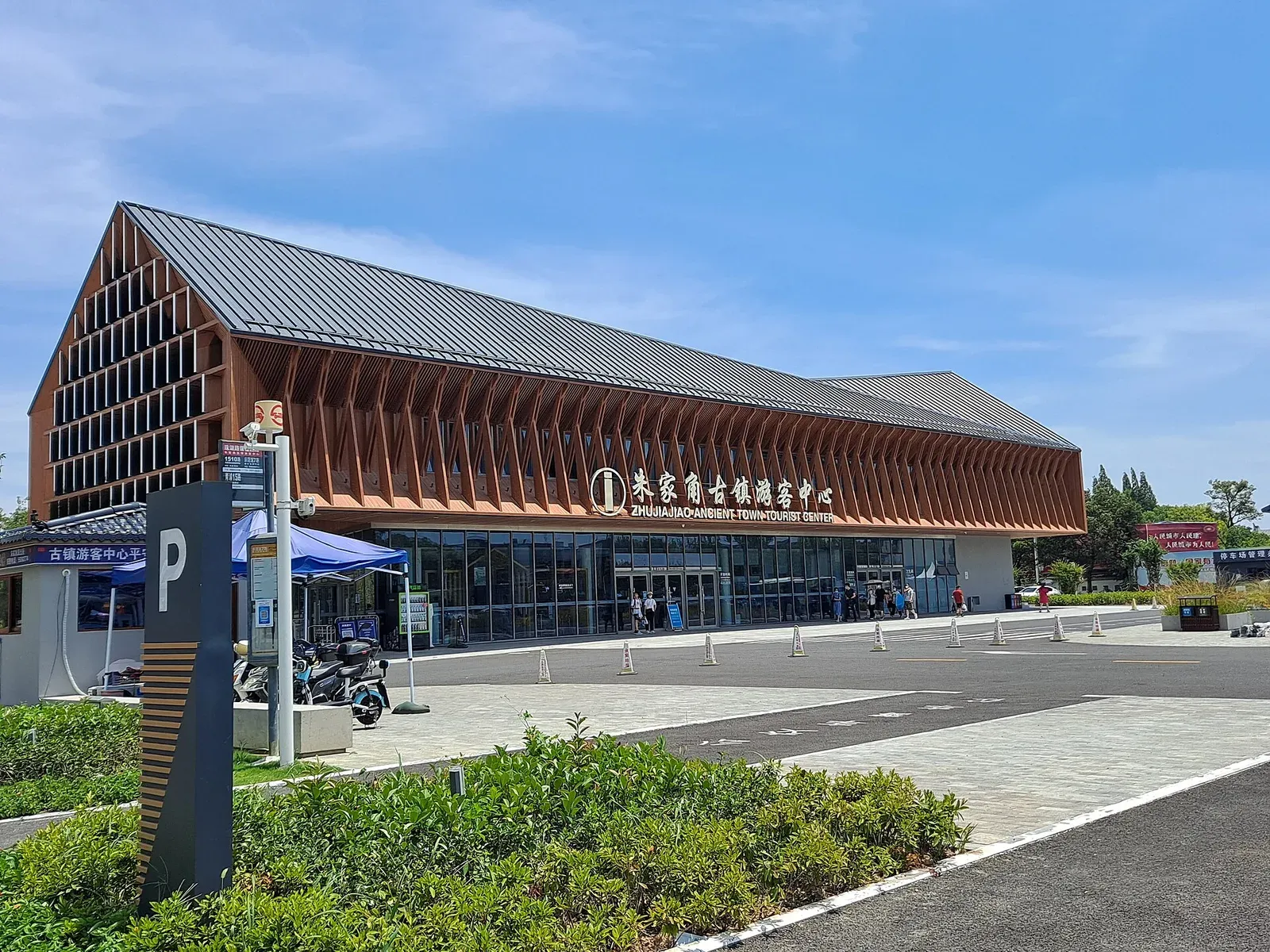
Photo: 钉钉 / Wikimedia Commons, CC BY-SA 4.0
Zhujiajiao Water Town allows free entry into its public streets, so you can stroll along canals and stone alleys without an admission ticket. The town sits about 48 kilometers from downtown Shanghai. Walking through the core historic area takes about 2 hours on foot. If you plan to stop at a riverside teahouse, sample local dishes, and take a wooden boat ride, allow 4 to 6 hours for your visit.
| Item | Details |
|---|---|
| Scenic area rating | National AAAA tourist attraction (passed inspection in 2004) |
| Main admission policy | Free entry into public street areas |
| Sight combo ticket | 35 RMB (4 sights) to 80 RMB (sights plus boat ride), valid on the day of purchase |
| Attraction hours | Most indoor sights close at 16:30 |
| Recommended duration | About 2 hours for walking; 4 to 6 hours including meals, tea, and a boat ride |
| Location | South-central Qingpu District, Shanghai; about 48 km from downtown Shanghai and 6 km east of Qingpu town |
How do you get to Zhujiajiao Water Town from downtown Shanghai?
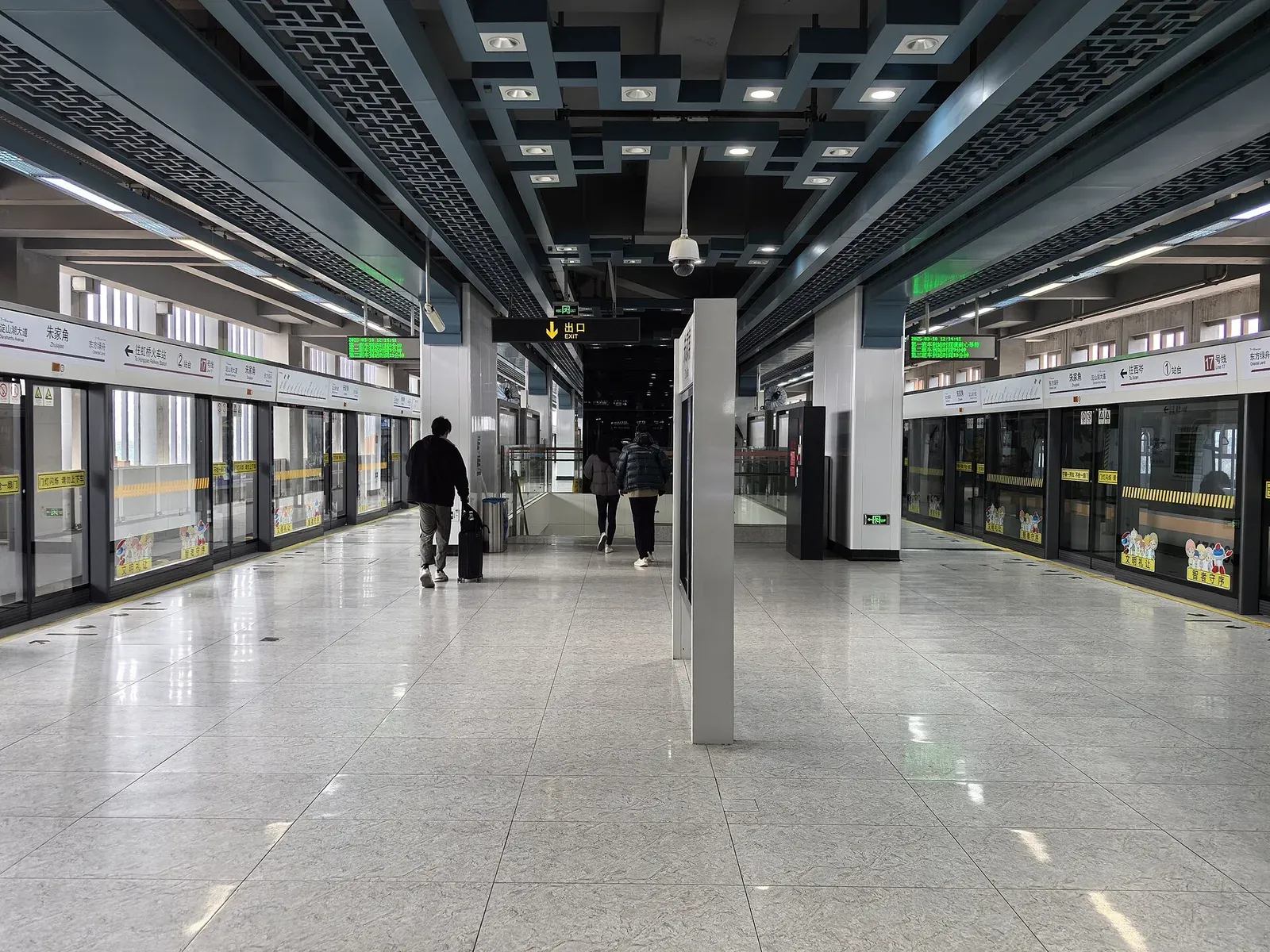
The fastest rail option to the town is Shanghai Metro Line 17. At Hongqiao Railway Station, you can transfer from Line 2 or Line 10 to Line 17 heading toward Xicen and get off at Zhujiajiao Station. A one-way metro trip starting from People's Square costs 9 RMB.
Direct buses called the Huzhu Express Line run from Pu'an Road or Shanghai Stadium to the Zhujiajiao Bus Terminal. Taking the expressway takes about 1 hour and costs around 12 RMB one way, with the last return bus departing around 21:00. If you take a taxi from downtown Shanghai, a one-way ride usually costs between 150 and 200 RMB.
| Transport option | Route and transfer | One-way fare | Travel time and notes |
|---|---|---|---|
| Metro (Line 17) | Transfer at Hongqiao Railway Station from Line 2 or 10, take Line 17 toward Xicen to Zhujiajiao Station | 9 RMB (from People's Square) | Fastest rail option |
| Huzhu Express Line bus | Direct from Pu'an Road or Shanghai Stadium to Zhujiajiao Bus Terminal | Around 12 RMB | About 1 hour via expressway, last return bus around 21:00 |
| Taxi | Direct from downtown Shanghai to the ancient town | 150 to 200 RMB | Direct one-way ride, supports DiDi ride-hailing |
Tip: Zhujiajiao Station on Metro Line 17 opened on December 30, 2017, at the intersection of Huqingping Highway and Zhuxi Road, about 1.5 kilometers from the core scenic area. After exiting, walk north along Zhuxi Road for one block, turn east onto Xiangningbang Road, and walk about 1 kilometer into town. Alternatively, catch Bus Zhujiajiao 2 on the south side of the street for 1 RMB, which takes you two stops directly to the South Gate of the ancient town.
How do hand-rowed wooden boat rides work and what do they cost?
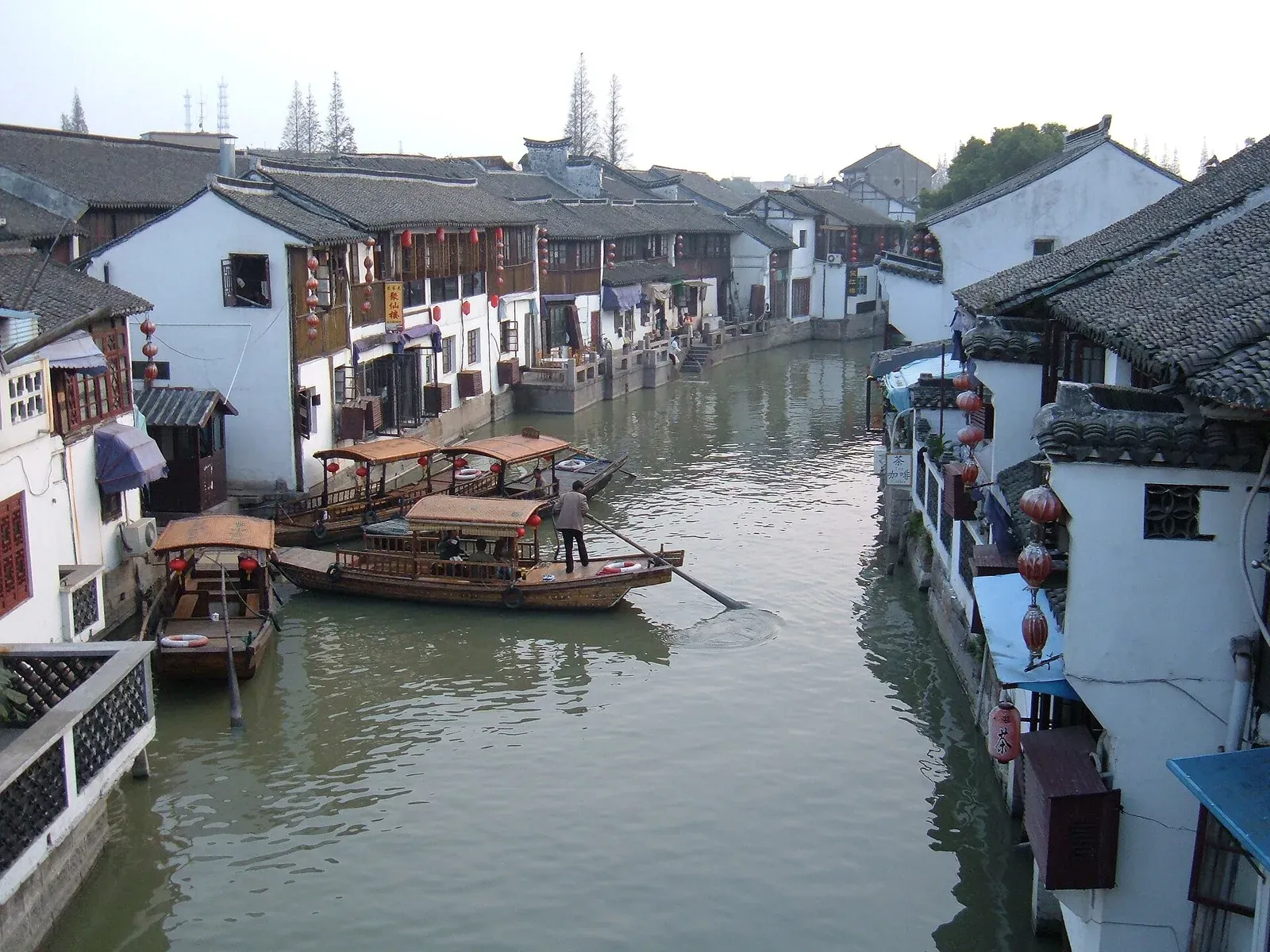
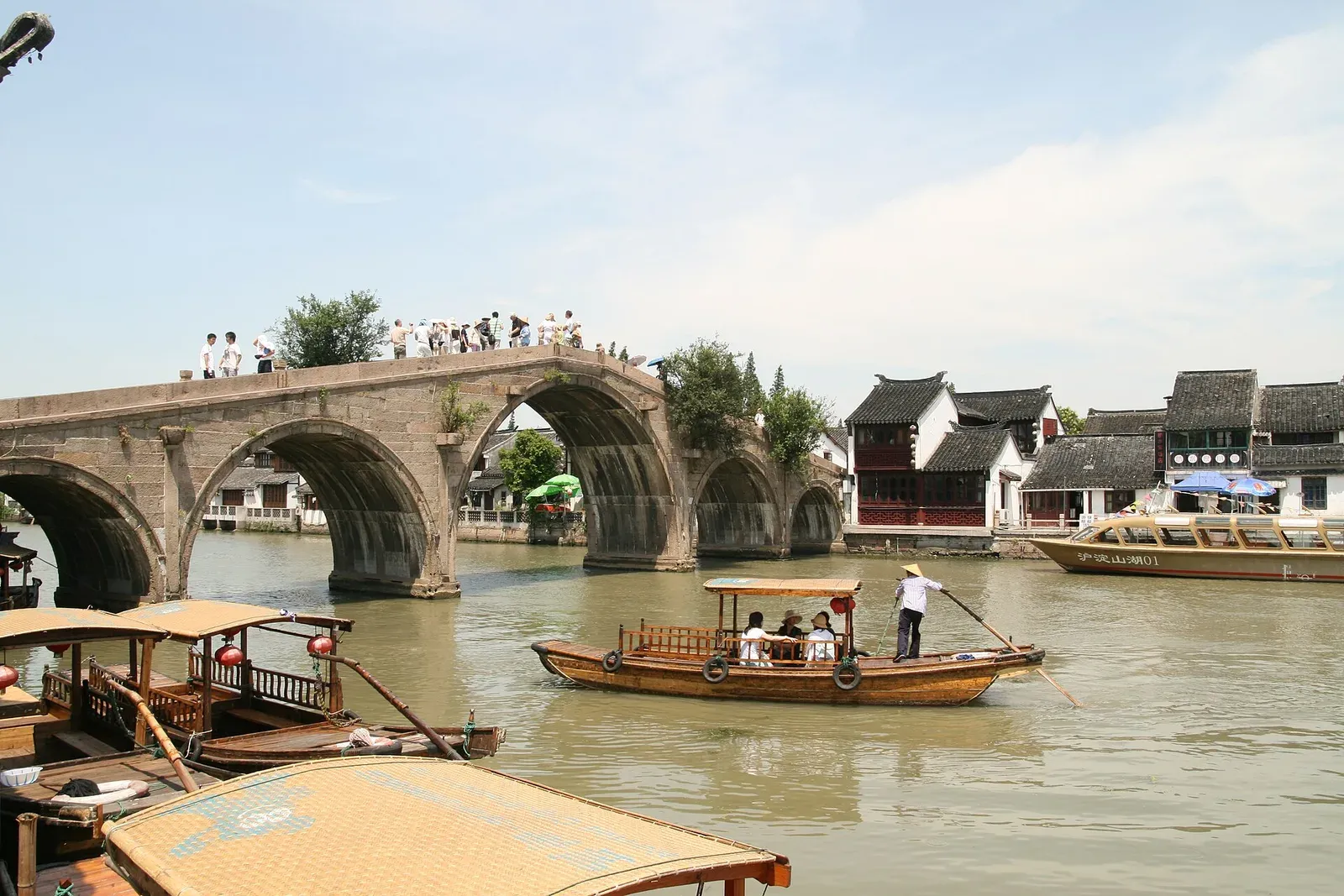
Hand-rowed wooden boats on the canals are priced per boat rather than per person, with a limit of 6 passengers per boat. You can buy tickets at small wooden kiosks near sights throughout the town. This option works well for families, and solo travelers can also pool together with others.
The wooden boats run on two routes. The short route costs 60 RMB per boat and travels back and forth along the main canal. The long route costs 120 RMB per boat and glides through the wider canal network under stone bridges and past waterside pavilions. In addition, large sightseeing boats to Dianshan Lake depart from 60 Dongjing Street. These charge per person, costing 40 to 60 RMB each for a 30-minute or 1-hour cruise, depending on the boat type.

| Boat type | Route | Fare | Capacity and ticketing location |
|---|---|---|---|
| Hand-rowed wooden boat (short) | Round trip along the main canal | 60 RMB per boat | Up to 6 passengers per boat; kiosks near sights |
| Hand-rowed wooden boat (long) | Across the town canal network | 120 RMB per boat | Up to 6 passengers per boat; kiosks near sights |
| Dianshan Lake cruise boat | Round trip between 60 Dongjing Street and Dianshan Lake | 40 to 60 RMB per person | Large boats charged per person; 30 minutes or 1 hour |
If you are traveling in a group of 4 to 6 people, chartering a long-route wooden boat through the inner waterways is a practical choice. If you are on your own and want to see open water, head to 60 Dongjing Street to buy an individual ticket for the Dianshan Lake cruise.
Which sights should you see in town and in what order?
The core historic conservation zone covers about 3 square kilometers and was designated among Shanghai's first batch of historical and cultural towns in February 1991. Rice trading flourished here during the late Ming and early Qing dynasties, fostering broader commerce that earned it the reputation of a three-li street with a thousand shops. A local saying also held that three jings could not match one jiao. You can follow the main streets and canal alleys to explore its historic landmarks in turn.
The most famous bridge in the town is Fangsheng Bridge (放生桥). First built in 1571 during the Longqing reign of the Ming dynasty and rebuilt in 1812 during the Jiaqing reign of the Qing dynasty, it measures 70.8 meters long and 5.8 meters wide. This five-arch stone bridge features a carving of eight dragons playing with a pearl on its central arch and stone lions at its ends, making it the largest surviving stone arched bridge in Shanghai. In the Ming dynasty, monk Xingchao of Cimen Temple set a rule that people could only release fish and turtles beneath the bridge rather than cast fishing nets. The bridge became a Shanghai protected cultural heritage site in 1987. North Street (Bei Dajie), also called One-Line Street, runs for about 1 kilometer from Fangsheng Bridge in the northeast to Tongtianhe Traditional Pharmacy in the southwest. Lined with century-old shops from the Ming and Qing eras, it was named one of Shanghai's Top 10 Leisure Streets in 2005.
Kezhi Garden was built in 1912 by wealthy merchant Ma Wenqing, taking 15 years and 300,000 taels of silver to complete. Combining Chinese garden design with European architectural elements, it divides into a main hall, a garden, and a rockery area. Its five-story pavilion is the tallest building in the ancient town. At the southwest end of Xihu Street stands the Qing Dynasty Post Office, one of the best-preserved Qing postal sites in East China, displaying antique Shanghai postcards and bamboo slip letters. At the northern end of Caohe Street sits the Buddhist temple Yuanjin Zen Temple, while the Taoist City God Temple stands in the middle section of the street before Qijixiang Bridge.
| Key sights | Architecture and history |
|---|---|
| Fangsheng Bridge | Built in 1571, this 70.8-meter bridge is the largest surviving five-arch stone bridge in Shanghai, with stone carvings of eight dragons playing with a pearl on the central arch |
| North Street (Bei Dajie) | A one-kilometer "One-Line Street" stretching from Fangsheng Bridge in the northeast to Tongtianhe Pharmacy in the southwest, lined with time-honored Ming and Qing shops |
| Kezhi Garden | Built in 1912, it blends Chinese garden and European architectural styles, with its five-story pavilion standing as the tallest building in the town |
| Qing Dynasty Post Office | Located at the southwest end of Xihu Street, this well-preserved Qing postal site in East China displays old Shanghai postcards and bamboo slips |
| Yuanjin Zen Temple | Located at the north end of Caohe Street, this is a well-known Buddhist temple |
| Zhujiajiao City God Temple | Located in the middle section of Caohe Street in front of Qijixiang Bridge, this is a Taoist temple |
Tip: Combo tickets for indoor sights range from 35 RMB (covering 4 sights) to 80 RMB (covering sights and a boat ride), valid only on the day of purchase, and most indoor venues close at 16:30. If you buy a combo ticket, tour indoor sites like Kezhi Garden and the Qing Dynasty Post Office first, then stroll along Fangsheng Bridge and North Street after 16:30.
What local dishes and canalside teahouses can you find here?
Signature local foods include zharou (braised pork belly wrapped in reed leaves), grandma's pork zongzi, braised pork trotters, and freshwater dishes like steamed whitefish, fried soy-sauce river shrimp, and stir-fried river snails. Street snacks and tea bites also include smoked green soybeans and sweet lotus root with osmanthus. Zharou is tied and braised in reed leaves, imparting a subtle herbal aroma into the rich braising sauce.
Riverside teahouses and specialty cafes cluster along Caohe Street and Donghu Street, preserving the waterside layout of traditional residences built along the canals. When buying milk tea or other drinks at the counter, you can scan a QR code with WeChat or Alipay to open a mini-program, then browse the menu, customize your order, and pay online.
| Food and drink category | Signature items and specialties |
|---|---|
| Pork specialties | Reed-wrapped braised pork belly (zharou), grandma's pork zongzi, and braised pork trotter |
| River delicacies | Steamed whitefish, oil-fried soy sauce shrimp, and stir-fried river snails |
| Tea snacks | Smoked green soybeans and osmanthus sweet lotus root |
| Riverside teahouses and cafes | Canalside teahouses and specialty cafes along Caohe Street and Donghu Street |
Tip: When spending money at street shops and teahouses, international travelers can pay directly using WeChat Pay or Alipay linked to an overseas credit card. Both apps provide an English interface. Scanning a QR code at the counter opens a mini-program to customize items and settle the bill directly, without needing to download a separate ordering app.
What mistakes do first-time visitors often make?
If you are visiting for the first time, specific rules apply to admission, closing times, and connecting transit. Knowing these details ahead of time makes organizing your day straightforward.
| Common misconceptions | Actual rules and what to do |
|---|---|
| Assuming an admission ticket is required to enter the town | Zhujiajiao Water Town's public streets are open and free to enter, so you can stroll along alleys and riverside walkways without buying a general admission ticket; tickets are only needed to enter individual indoor halls and sights |
| Assuming indoor halls inside the town are open all day | Most exhibition halls close at 16:30 and tickets are valid only on the day of purchase, so make sure to finish touring indoor sights before closing time |
| Assuming the metro station is far from the core area | Zhujiajiao Station on Metro Line 17 is about 1.5 km from the core scenic area; walk about 20 minutes from the exit, or take Bus Zhujiajiao 2 (1 RMB for two stops) directly to the South Gate |
When navigating narrow alleys, Apple Maps on iPhone pulls local data directly from Amap (Gaode), while Android users can use Amap's international version. Google Maps suffers from a coordinate offset of 100 to 700 meters and outdated data, making it unreliable for navigation in mainland China.
Sources
Tourists go cashless in China with WeChat Pay and Alipay for all purchases: even drone bubble tea - CNA Lifestyle
Best Map App for China: Does Google Maps Work & Didi Guide
Zhujiajiao Town - Wikipedia
Fangsheng Bridge - Wikipedia
Zhujiajiao Station - Wikipedia
Zhujiajiao - Wikipedia
Sources verified as of November 19, 2026
FAQ
Can you visit Zhujiajiao Ancient Town without buying an admission ticket?
Yes. The public streets of Zhujiajiao are free and open to everyone, allowing you to walk along canals, through alleyways, and across Fangsheng Bridge without an entry ticket. You only need to purchase individual or combo tickets if you want to enter indoor sights such as Kezhi Garden or the Qing Dynasty Post Office.
How much does a hand-rowed wooden boat ride cost?
Hand-rowed wooden boats on the canals are charged per boat, with a maximum of 6 passengers. The short route costs 60 RMB per boat for a round trip on the main canal, while the long route costs 120 RMB per boat through the full canal network. Tickets can be purchased at small wooden ticket booths next to sights.
Is it easy to take a taxi from downtown Shanghai to Zhujiajiao?
Taking a taxi from central Shanghai to Zhujiajiao usually costs between 150 and 200 RMB one way. International travelers can use the English version of the DiDi app with an overseas credit card for automatic payment, or book a ride through the DiDi mini-program inside Alipay.
How much is a combo ticket for the sights, and does it include a boat ride?
Combo tickets for the indoor sights cost between 35 RMB (covering 4 sights) and 80 RMB (covering sights and a boat experience). Tickets are valid only on the day of purchase, and most indoor venues close at 16:30.