Shanghai Weather: Monthly Temperatures and When to Go

Shanghai weather falls under a subtropical monsoon climate, with an average annual temperature of 17.5 degrees Celsius and average annual precipitation of 1336.6 millimeters. According to travel guides, the most comfortable months to visit are usually April, October, and November. Most rainfall occurs during the flood season from May to September, which accounts for about 60% of the annual total.
Which Months Offer the Most Comfortable Weather in Shanghai?
Travel guides suggest that the most comfortable months to visit Shanghai are usually April, October, and November. These months avoid the extreme heat of midsummer and the damp cold of deep winter, offering relatively pleasant conditions overall.
In October, temperatures range between 18°C and 25°C with clear, crisp skies that are suitable for walking around the city. In November, temperatures drop to between 10°C and 20°C, and you can see golden leaves falling from ginkgo and London plane trees along the streets.

How Hot Does Shanghai Get in Summer?
Summer in Shanghai is generally hot and humid. Influenced by the Meiyu rains, June temperatures stay between 25°C and 30°C with persistent high humidity. In July and August, temperatures often reach 30°C to 35°C or even approach 40°C, making the outdoors feel like a steamer.
Midsummer drought and extreme heat often occur from mid-July to mid-August, with an average of 14.5 days per year when daily highs exceed 35 degrees Celsius. If you visit Shanghai during the height of summer, it is advisable to schedule your sightseeing for early morning or evening.
How Much Rain Falls During the Meiyu and Flood Seasons?
On average, the Meiyu season in Shanghai begins on June 19 and ends on July 10. The citywide average rainfall during this period is 240.1 millimeters, while downtown Xujiahui Station records 262.5 millimeters.

Shanghai's flood season usually spans from June to September. During this time, the city must prepare for rainstorms, prolonged high temperatures, and the impact of wind and rain from 1 to 2 typhoons. Precipitation from May to September accounts for about 60% of the yearly total.
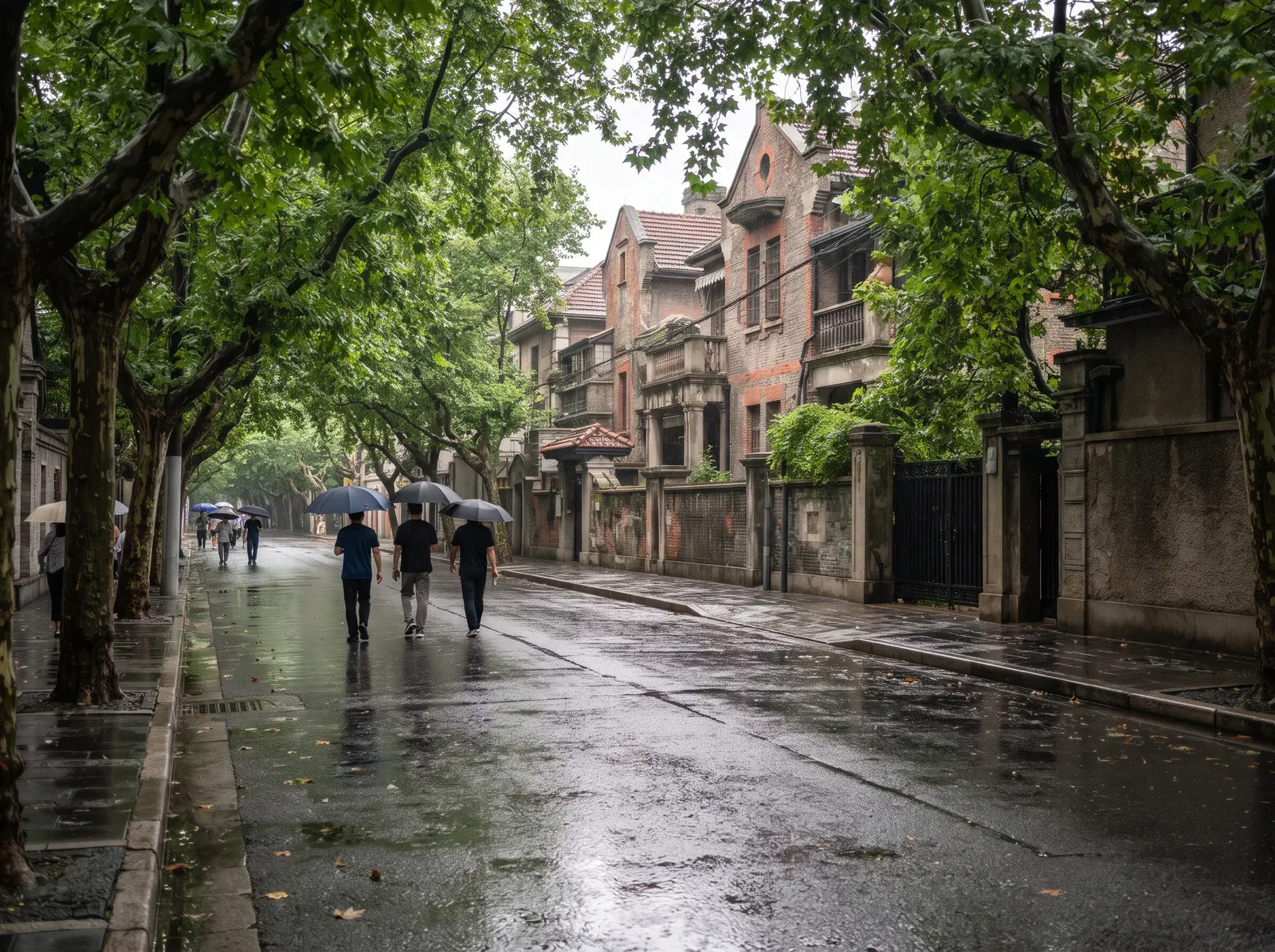
How Cold Is Shanghai in Winter, and Does It Snow?
January is the coldest month of the year in Shanghai, with an average temperature of 5.4 degrees Celsius; readings usually range from 0°C to 8°C. Although heavy snow is rare, high air humidity creates a piercing damp chill.
Cold air from the north brings frost to Shanghai. When strong cold air meets warm, moist air currents, the city can also see sleet or snowfall.
What Record Extreme Temperatures Have Been Measured in Shanghai?
Downtown Xujiahui Station recorded an extreme high of 40.9 degrees Celsius and an extreme low of minus 12.1 degrees Celsius.
Baoshan Station in the northern suburbs recorded an extreme high of 40.0 degrees Celsius and an extreme low of minus 10.1 degrees Celsius.
| Month or Period | Temperature | Climate and Precipitation Features |
|---|---|---|
| April | Mild and comfortable | Recommended by travel guides as one of the most comfortable months |
| June | 25°C to 30°C | Continuous high humidity from Meiyu, with average start on June 19 |
| July to August | 30°C to 35°C, approaching 40°C | Midsummer drought and extreme heat from mid-July to mid-August, averaging 14.5 days above 35°C |
| October | 18°C to 25°C | Crisp skies suitable for walking, ranked among the most comfortable months |
| November | 10°C to 20°C | Golden ginkgo and London plane leaves, comfortable feel |
| January | 0°C to 8°C, average 5.4°C | Coldest month of the year, noticeable damp chill, occasional frost or sleet |
| Meiyu Period | June 19 to July 10 | Citywide average rainfall of 240.1 mm, Xujiahui Station 262.5 mm |
| Flood Season (June to September) | Frequent sustained high temperatures | Need to watch for rainstorms and 1 to 2 typhoons, May to September rain accounts for about 60% of annual total |
| Weather Station | Location | Record High Temperature | Record Low Temperature |
|---|---|---|---|
| Xujiahui Station | Downtown | 40.9 degrees Celsius | Minus 12.1 degrees Celsius |
| Baoshan Station | Northern suburbs | 40.0 degrees Celsius | Minus 10.1 degrees Celsius |
How Should You Plan a Trip Around Shanghai Weather?
When planning a trip to Shanghai, it helps to match your itinerary with the seasonal climate. Spring and autumn suit outdoor exploring, while the heat of summer and the chill of winter are better balanced with visits to indoor cultural venues.
If you prefer a slower, hassle-free pace, you can ask a travel designer to arrange your itinerary according to the season, with your driver handling your daily pickups and drop-offs.
Sources
Shanghai - Wikipedia
Shanghai Entered Meiyu Season Yesterday, Facing Heavy Rain on Day One; Later End and More Rain Expected This Year with Full Response Across Transport and Agriculture - Shanghai Municipal People's Government
The sources above were verified on Nov 5, 2026.
FAQ
When does the Meiyu season in Shanghai usually start and end?
On average, Shanghai enters the Meiyu season on June 19 and leaves it on July 10. Temperatures during this rainy period stay between 25°C and 30°C with persistent high humidity. Citywide rainfall averages 240.1 millimeters, while downtown Xujiahui Station records 262.5 millimeters.
Which months are the hottest in Shanghai, and how high can temperatures reach?
Shanghai is hottest in July and August, when temperatures often reach 30°C to 35°C or approach 40°C, and midsummer drought brings severe heat from mid-July to mid-August. Xujiahui Station recorded an extreme high of 40.9 degrees Celsius, while Baoshan Station reached 40.0 degrees Celsius.
Does it snow during winter in Shanghai, and what does it feel like?
Heavy snow is very rare in Shanghai, but cold air from the north brings frost, and sleet or snow can occur when strong cold air meets warm, moist air currents. High humidity keeps January feeling damp and cold, with temperatures usually between 0°C and 8°C.
Are typhoons common during Shanghai's flood season?
Shanghai's flood season usually lasts from June to September. During this period, the city must prepare for rainstorms, persistent heatwaves, and the wind and rain brought by 1 to 2 typhoons.