
Dali, Lijiang, Shuhe, Baisha, Shaxi, Xizhou: Which to Pick

Among Dayan, Shuhe, and Baisha in Lijiang, travelers who want to avoid commercial noise usually prefer Shuhe Ancient Town, about 4 kilometers northwest of Dayan, or Baisha Ancient Town, about 8 kilometers to the north. Shaxi Ancient Town, midway between Dali and Lijiang, fully preserves the character of an ancient Tea Horse Road caravan hub, making it a good dedicated trip for visitors who prefer historic architecture and quiet surroundings. Dayan, the Shuhe residential compound, and the Baisha residential compound together form the Old Town of Lijiang on the UNESCO World Heritage list, where the average altitude is about 2,400 meters. On an 8-day or 11-day Yunnan itinerary, travelers can select among these towns based on personal preferences and overnight altitude pacing.
What is the difference between Dayan, Shuhe, and Baisha in Lijiang?
According to the UNESCO World Heritage list, the Old Town of Lijiang comprises three main sections: Dayan Old Town (including Black Dragon Pool), the Baisha residential compound, and the Shuhe residential compound. Located in the Lijiang basin in southwestern Yunnan, China, the Old Town of Lijiang sits at an average altitude of about 2,400 meters. Dayan is large and offers dense daily services, but its central streets have heavy foot traffic and concentrated commercial shops.
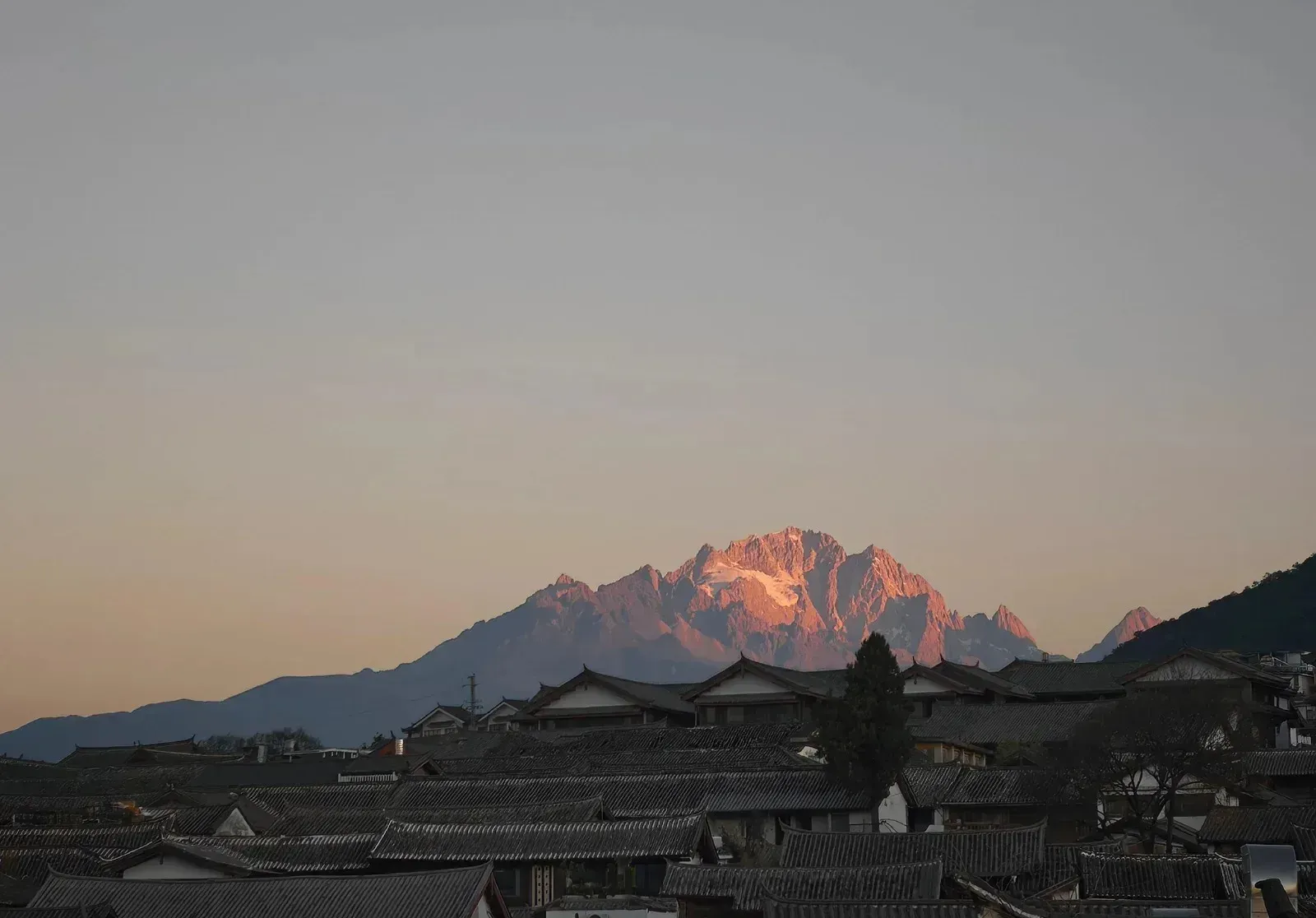
The Shuhe residential compound sits about 4 kilometers northwest of Dayan Old Town, blending into the surrounding mountains and streams. In practice, when trying Lijiang cured ribs hotpot, courtyard restaurants in Shuhe offer a quieter setting than the noisy bar streets of Dayan. For travelers who want convenient dining without the dense crowds, Shuhe provides an alternative option.
The Baisha residential compound was founded during the Song and Yuan dynasties, roughly 8 kilometers north of Dayan. Baisha Town in Yulong County contains Dabaoji Palace and Liuli Hall, both Major Historical and Cultural Sites Protected at the National Level, preserving many historical relics and an authentic village setting. If your main interest is seeing ancient murals and a rustic village atmosphere, Baisha is a better fit than Dayan or Shuhe.
Is Shaxi Ancient Town worth a dedicated trip?
Shaxi Ancient Town is in Jianchuan County, Dali Bai Autonomous Prefecture, roughly midway between Dali City and Lijiang City. Shaxi is regarded as the most intact surviving caravan town along the Tea Horse Road connecting Yunnan with Myanmar and Tibet, and has long been protected and restored jointly by ETH Zurich and the Jianchuan County government.
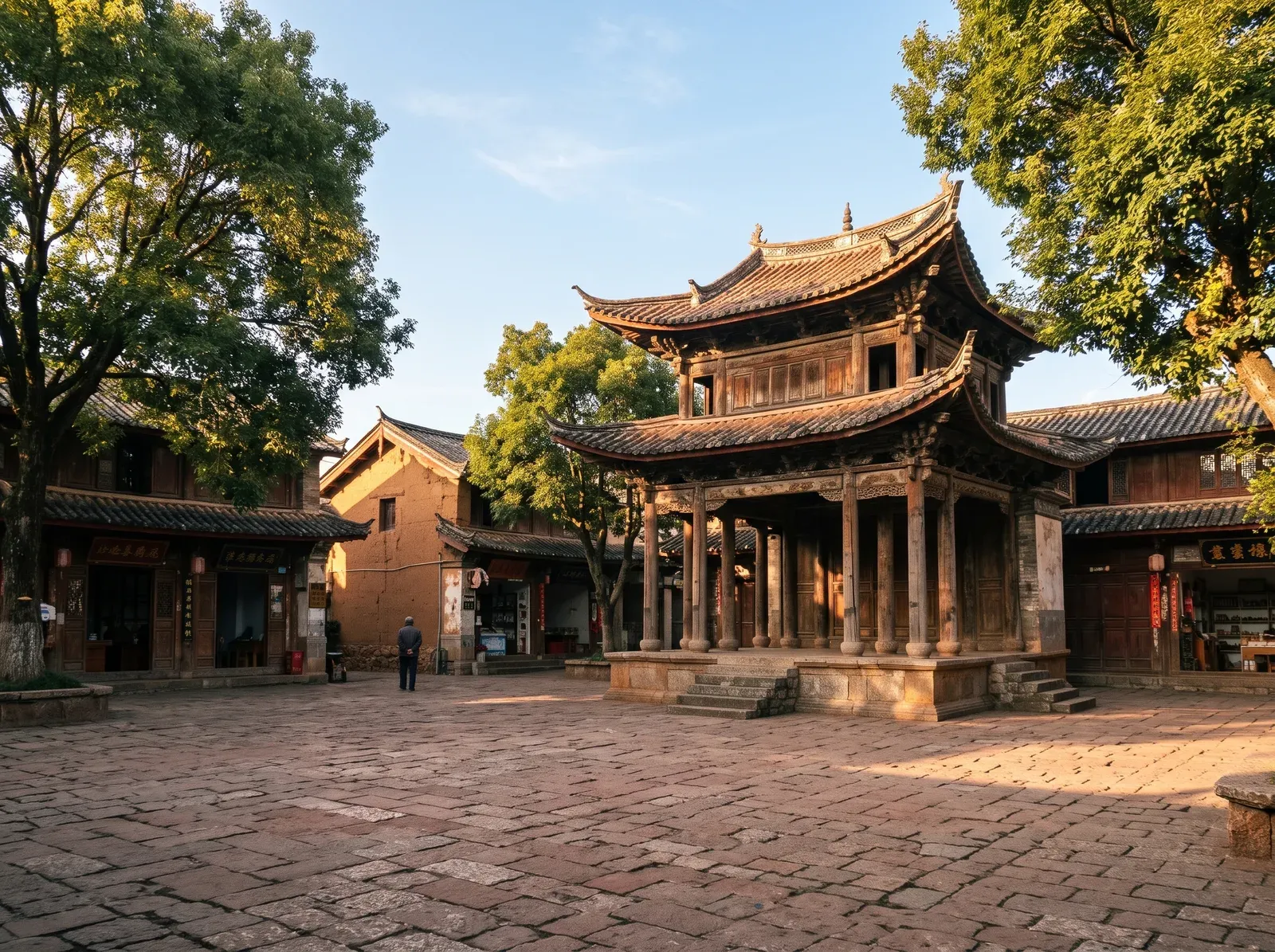
According to World Monuments Fund (WMF) records, the Sideng Street market square in Shaxi was placed on the list of endangered sites in 2001. Because it sits between Dali and Lijiang, Shaxi has no noisy bar clusters and keeps the quiet pace of a historic Tea Horse Road market. If you prefer authentic historic architecture and want to avoid crowds, a dedicated visit is worthwhile. However, if your total travel days are tight, you need to balance the extra transit time required for the detour.
Who are Dali Ancient City and Xizhou Town suited for?
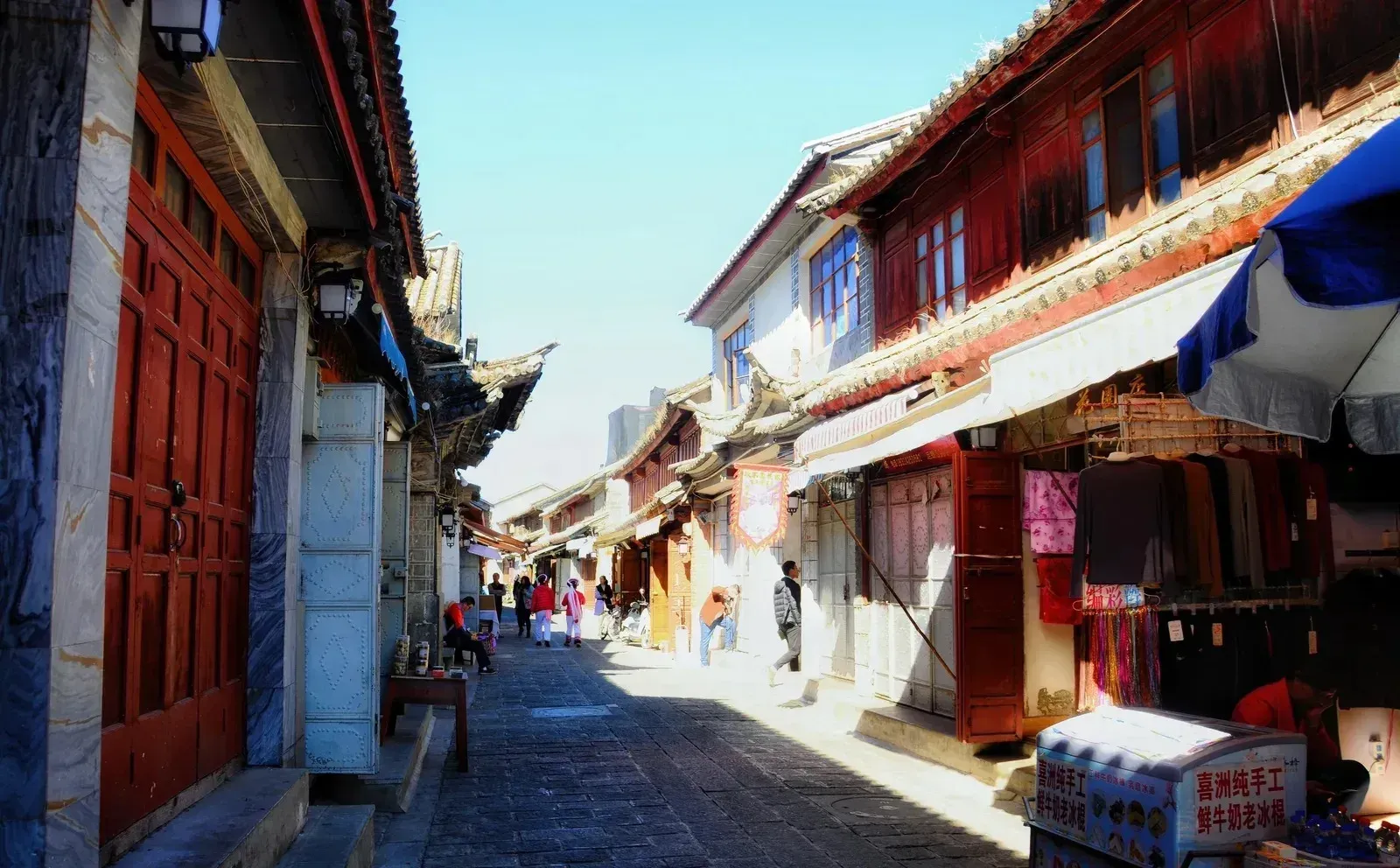
Dali Ancient City and Xizhou Town show different facets of Bai culture in Dali. After the Ming dynasty pacified Yunnan in 1381, a new Dali prefecture seat was built on its east side, which is today's Dali Ancient City. Foreigner Street in the northwestern part of the town was formerly called Huguo Road. It became an early gathering area for foreign travelers after the Dali Second Guesthouse opened there, and it is now the main bar area with an active commercial street life.
Xizhou Town is home to the Bai Ancient Architectural Complex of Xizhou, a Major Historical and Cultural Site Protected at the National Level. Typical courtyards include the Yan Family Compound and the Yang Pinxiang Residence. These traditional Bai homes commonly use the layouts of "three buildings with one screen wall" and "four compounds with five courtyards." Visitors can also try traditional Bai tie-dye craft in the town. While walking through Xizhou, trying freshly baked Xizhou baba is recommended, available in both sweet rose syrup and savory minced pork flavors.
How do the six Yunnan ancient towns compare?
To help you choose based on commercial activity, protection level, and location, here is an overview of official records and core features for Dali Ancient City, Xizhou Town, Dayan Old Town in Lijiang, Shuhe Ancient Town, Baisha Ancient Town, and Shaxi Ancient Town:
| Town | Location | Protection Status | Core Highlights and Features |
|---|---|---|---|
| Dali Ancient City | Between Cangshan Mountain and Erhai Lake in Dali City | Built in 1381 during the Ming dynasty as Dali prefecture seat | Foreigner Street (formerly Huguo Road, main bar area), lively local street life |
| Xizhou Town | Xizhou Town, Dali City | Major Historical and Cultural Site Protected at the National Level (Bai Ancient Architectural Complex) | Yan Family Compound, Yang Pinxiang Residence, Xizhou baba (sweet rose sugar and savory minced pork), tie-dye experience |
| Dayan Old Town in Lijiang | Lijiang basin (average altitude about 2,400 meters) | UNESCO World Heritage List | Includes Black Dragon Pool, concentrated bars and shops, comprehensive modern amenities |
| Shuhe Ancient Town | About 4 kilometers northwest of Dayan Old Town | UNESCO World Heritage List | Blended with mountain streams, courtyard restaurants with cured ribs hotpot, quiet courtyards |
| Baisha Ancient Town | About 8 kilometers north of Dayan Old Town | UNESCO World Heritage List (Song and Yuan dynasties) | Dabaoji Palace and Liuli Hall (National Key Protected Cultural Relics), authentic village setting |
| Shaxi Ancient Town | Between Dali City and Lijiang City (Jianchuan County) | Listed on the 2001 WMF World Monuments Watch | Sideng Street market square, caravan town jointly preserved with ETH Zurich |
How to combine these ancient towns in a custom itinerary
On Uncle Panda Travel's 8-day Yunnan classic private tour, the route balances town culture with gradual altitude acclimatization. Day 3 visits Xizhou Town, Day 4 covers Dali Ancient City before driving to Lijiang, and Day 5 visits quiet Shuhe Ancient Town after coming down from the snow mountain. Overnight altitudes rise gradually on this 8-day route: Kunming at 1,890 meters, Dali at 1,980 meters, Lijiang at 2,400 meters, and Shangri-La, before returning to Kunming at 1,890 meters.
If you have more time, Uncle Panda Travel's 11-day Northwest Yunnan Grand Loop explores these towns more deeply. Day 3 includes a tie-dye workshop in Xizhou, Day 4 visits Dali Ancient City, and Day 6 covers Yuhu Village and Baisha Ancient Town. Traveling with your driver, you can stroll through Baisha's village lanes and Ming dynasty halls at your own pace, away from crowded streets.
What factors and trade-offs should you consider?
Reactions to commercialization vary by traveler. While Dayan and Foreigner Street in Dali Ancient City have many shops and heavier foot traffic, they also offer the most complete modern amenities, hotels, and restaurants. Shuhe, Baisha, and Shaxi are much quieter, but they offer fewer nighttime dining and entertainment options than Dayan.
Town choices also depend on your total travel days and physical condition. Altitude adaptation requires gradual ascent: Dali sits at about 1,980 meters, and the Old Town of Lijiang averages about 2,400 meters. If you only have about one week, focusing on Dali Ancient City, Xizhou, and Shuhe along the main route is more practical. If you have plenty of time and prefer Tea Horse Road history, adding Shaxi and Baisha offers a quieter cultural experience.
Sources
Yunnan 8-Day Private Tour: Dali, Lijiang & Shangri-La
Old Town of Lijiang - UNESCO World Heritage Centre
Shaxi, Yunnan - Wikipedia
Dali Ancient City - Wikipedia
Xizhou Town - Wikipedia
Shuhe Subdistrict - Wikipedia
Baisha Town (Yulong County) - Wikipedia
Northwest Yunnan Grand Loop: Kunming, Dali, Lijiang, Lugu Lake & Shangri-La
Sources verified on November 8, 2026
FAQ
Between Dayan and Shuhe in Lijiang, which is better for dining and lodging?
Shuhe Ancient Town is quieter than Dayan Old Town, offering a more peaceful courtyard dining setting when trying Lijiang cured ribs hotpot. Dayan has more bars, shops, and a larger footprint, so travelers can choose based on whether they prefer lively activity or quiet surroundings.
Is Shaxi Ancient Town in Dali or Lijiang, and is it convenient to visit along the way?
Administratively, Shaxi Ancient Town belongs to Jianchuan County in Dali Bai Autonomous Prefecture, located roughly midway between Dali City and Lijiang City. Because of its location, it usually works well as a midway stop on a chartered drive between Dali and Lijiang in either direction.
What notable cultural relics can you visit in Baisha Ancient Town?
The Baisha residential compound dates to the Song and Yuan dynasties. The town is home to Dabaoji Palace and Liuli Hall, both Major Historical and Cultural Sites Protected at the National Level, featuring Ming dynasty murals and authentic vernacular dwellings.
What architecture and local food are worth experiencing in Xizhou Town?
Xizhou Town features the Bai Ancient Architectural Complex of Xizhou, a Major Historical and Cultural Site Protected at the National Level, including typical courtyards like the Yan Family Compound and Yang Pinxiang Residence. When trying freshly baked Xizhou baba, you can choose between sweet rose sugar and savory minced pork.