Yuexiu Park: Five Goat Statue and Zhenhai Tower
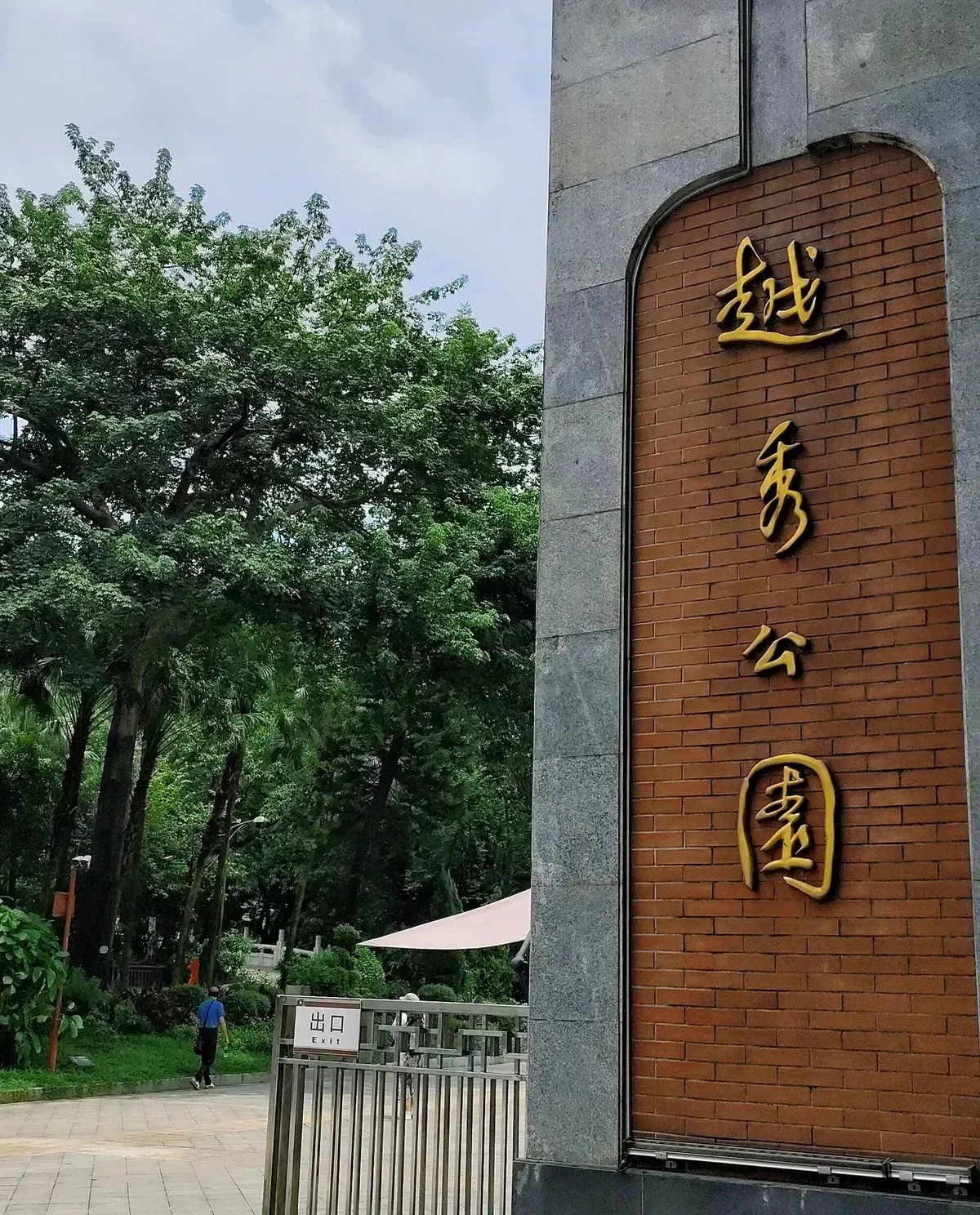
Yuexiu Park is a comprehensive urban park open free to the public, covering a total area of 860,000 square meters. The Five Goats Statue (also called the Five Rams) stands on Mukegang on the west side, while Zhenhai Tower, the main site of the National First-Grade Guangzhou Museum, dates back to 1380. To visit the grounds, you can take Metro Line 2 to Exit B1 of the dedicated station, or take Metro Line 5 to Xiaobei Station.
Which Hills and Lakes Make Up Yuexiu Park?
According to records, the park covers an area of 860,000 square meters and is entirely free to the public. The whole grounds consist of the main peak Yuejinggang and seven surrounding hills. The area also includes three artificial lakes: Dongxiu Lake, Nanxiu Lake, and Beixiu Lake.
You can travel to the site using the Guangzhou Metro. Passengers can take Metro Line 2 and leave through Exit B1 at the station to reach the grounds. In addition, taking Metro Line 5 to Xiaobei Station also leads to the park.
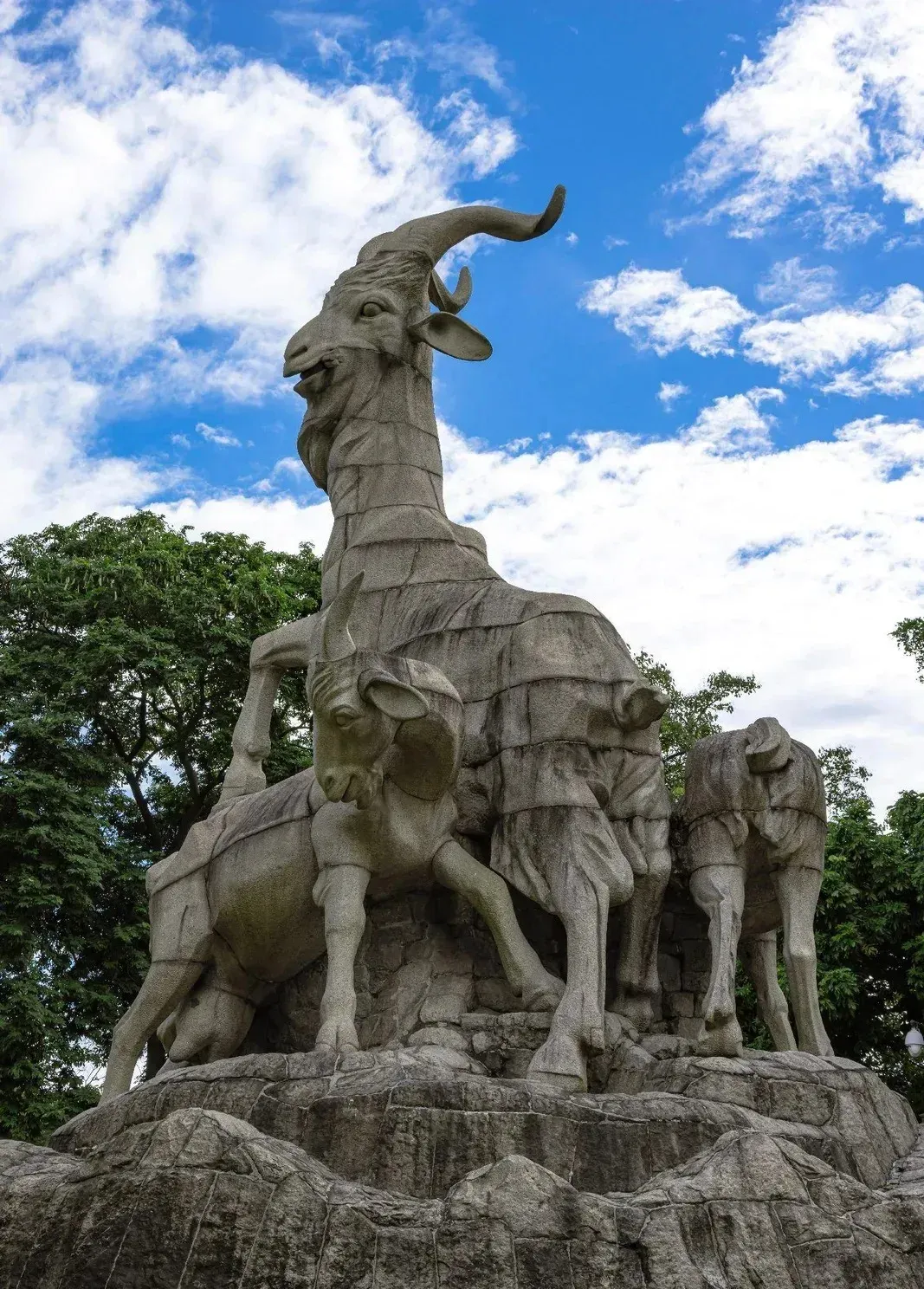
Where Is the Five Goats Statue and What Is Its Legend?
The Five Goats Statue is located on Mukegang on the west side of the park. Built in 1959 and sculpted by Yin Jichang, Chen Benzong, and Kong Fanwei, it is regarded as Guangzhou's city emblem. The entire stone sculpture is 11 meters high, with a volume of 53 cubic meters, carved from 130 pieces of granite. After leaving the metro station via Exit B1 on Line 2, visitors can walk up Mukegang to see the sculpture.
Folklore says that five immortals riding goats arrived in Guangzhou and gave ears of grain to the residents, which ended famine. Guangzhou is therefore known as the "City of Goats" (or City of Rams). The sculpture illustrates this exact legend of five immortals riding goats and presenting grain.
What Is the History of Zhenhai Tower and Guangzhou Museum?
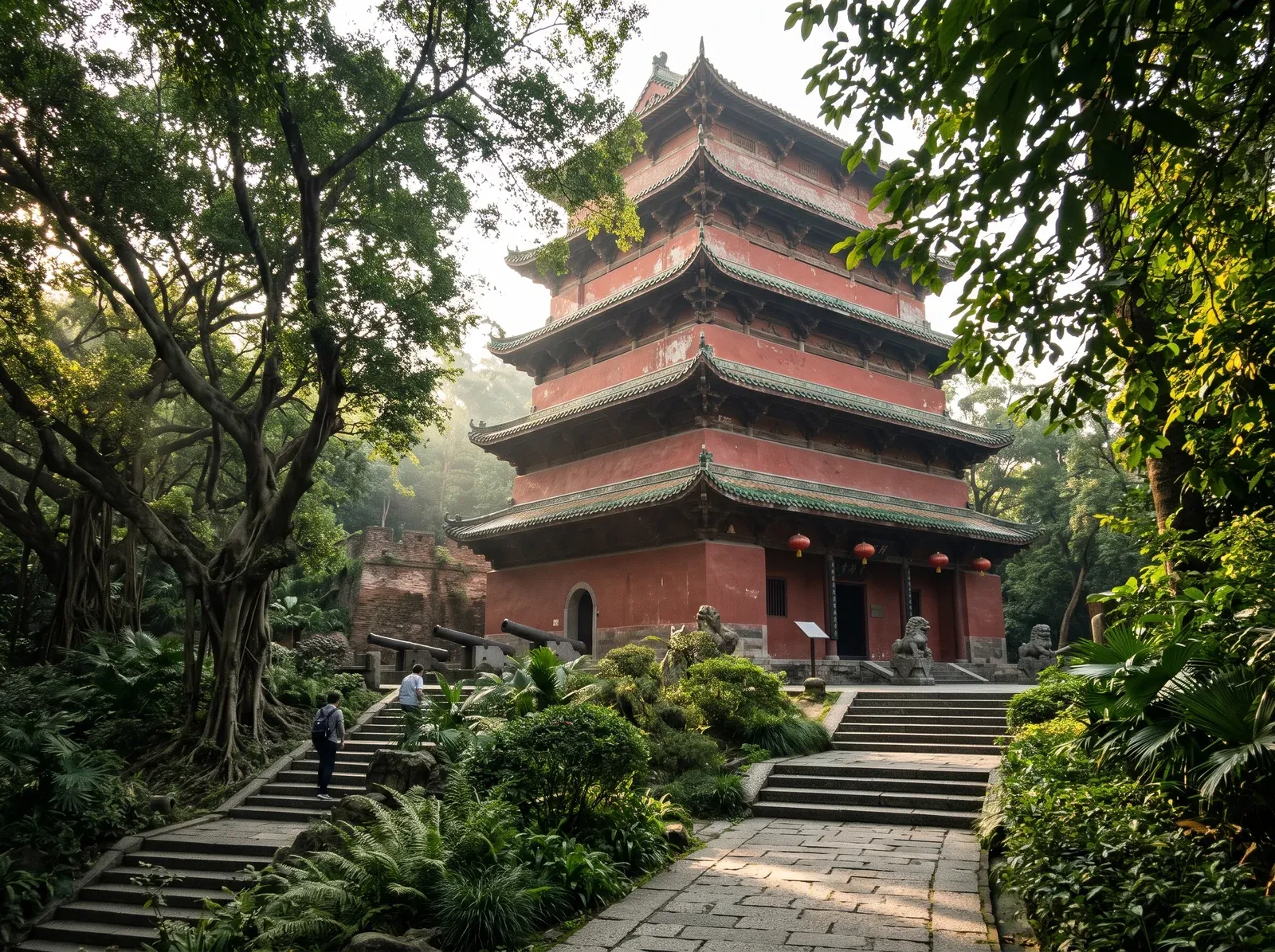
Standing inside the park, Zhenhai Tower (also called the Five-Story Pagoda) was first built in the 13th year of the Hongwu reign during the Ming dynasty (1380), under the direction of Zhu Liangzu, Marquis of Yongjia. The building is 28 meters high, 31 meters wide, and 16 meters deep. Since 1929, Zhenhai Tower has served as the main site of Guangzhou Museum, which is now a National First-Grade Museum in China.
Guangzhou Museum set up its primary permanent exhibition in Zhenhai Tower under the theme "City Landmark, City History: Guangzhou Historical Exhibition." The display traces Guangzhou's timeline through prehistoric and pre-Qin eras, the Wei and Jin dynasties, the Ming and Qing dynasties, and modern periods. Visitors can view exhibits from these different historical eras throughout the gallery.
When Is the Zhenhai Tower Exhibition Area Open?
According to the published schedule, the Zhenhai Tower exhibition area of Guangzhou Museum is open Tuesday through Sunday from 9:00 to 17:30. It is closed on Mondays and does not receive public visitors. The park itself is free to enter, but visiting the Zhenhai Tower exhibition requires going during these scheduled opening hours.
What Ming Dynasty Walls and Sports Relics Remain in the Park?
The Ming dynasty city walls inside the park were first built in 1380. The surviving section is about 1 kilometer long, with wall heights reaching up to 10 meters. The preserved city wall remains on Yuexiu Hill have been designated a Major Historical and Cultural Site Protected at the National Level in the People's Republic of China.
Yuexiushan Stadium sits at the foot of the hill inside the park and opened in October 1950. The stadium covers 43,000 square meters and holds up to 35,000 spectators. It once served as a competition venue for the 2010 Asian Games.
Key Details for Main Attractions in the Park
| Site or Structure | Year Built or Opened | Dimensions and Scale | Function or Heritage Status |
|---|---|---|---|
| Five Goats Statue | 1959 | 11 m high, 53 cubic meters volume, 130 granite blocks | Guangzhou city emblem sculpture |
| Zhenhai Tower (Five-Story Pagoda) | 1380 (13th year of Ming Hongwu) | 28 m high, 31 m wide, 16 m deep | Main site of Guangzhou Museum (National First-Grade Museum) |
| Ming Dynasty City Wall | 1380 | About 1 km long, up to 10 m high | Major Historical and Cultural Site Protected at the National Level in the People's Republic of China |
| Yuexiushan Stadium | October 1950 | Covers 43,000 square meters, capacity of 35,000 | Former 2010 Asian Games venue |
How Can You Tour the Grounds on a Custom Trip?
If you plan to visit Guangzhou, your travel designer can arrange an itinerary that includes the park, the Five Goats Statue, and Zhenhai Tower. You can refer to a Guangzhou 1-day private tour route, with private vehicle travel handled by your driver. If you would like guided commentary while exploring the Guangzhou historical exhibition, a separate licensed guide, arranged by your travel designer on request, can be provided in Chinese or English.
Sources
Yuexiu Hill - Wikipedia
Five Goats Statue - Wikipedia
Yuexiu Hill - Wikipedia
Zhenhai Tower (Guangzhou) - Wikipedia
Guangzhou Museum - Wikipedia
Guangzhou City Wall - Wikipedia
The above sources were verified on Nov 5, 2026
FAQ
Does the park require an entrance ticket?
The park is free to the public, and no admission ticket is required to enter. The Zhenhai Tower exhibition area of Guangzhou Museum inside the grounds is open Tuesday through Sunday from 9:00 to 17:30 and is closed on Mondays.
How do you take the metro to see the Five Goats Statue?
To see the statue, take Guangzhou Metro Line 2 to the station right outside and leave via Exit B1. After exiting, head to Mukegang on the west side of the grounds to see the 11-meter-tall Five Goats Statue.
Why is Guangzhou called the City of Goats?
Legend holds that five immortals riding goats arrived in Guangzhou and presented ears of grain to residents, ending famine. Guangzhou was practical nicknamed the "City of Goats," and the Five Goats Statue was erected on Mukegang in 1959.
What are the key facts about the Ming dynasty city walls in the park?
The Ming dynasty city walls in the park date back to 1380, with a surviving length of about 1 kilometer and wall heights reaching up to 10 meters. This surviving section is listed as a Major Historical and Cultural Site Protected at the National Level in the People's Republic of China.
What are the dimensions and capacity of Yuexiushan Stadium?
Located at the base of the hill, Yuexiushan Stadium opened in October 1950, covers 43,000 square meters, seats 35,000 people, and once hosted events for the 2010 Asian Games.