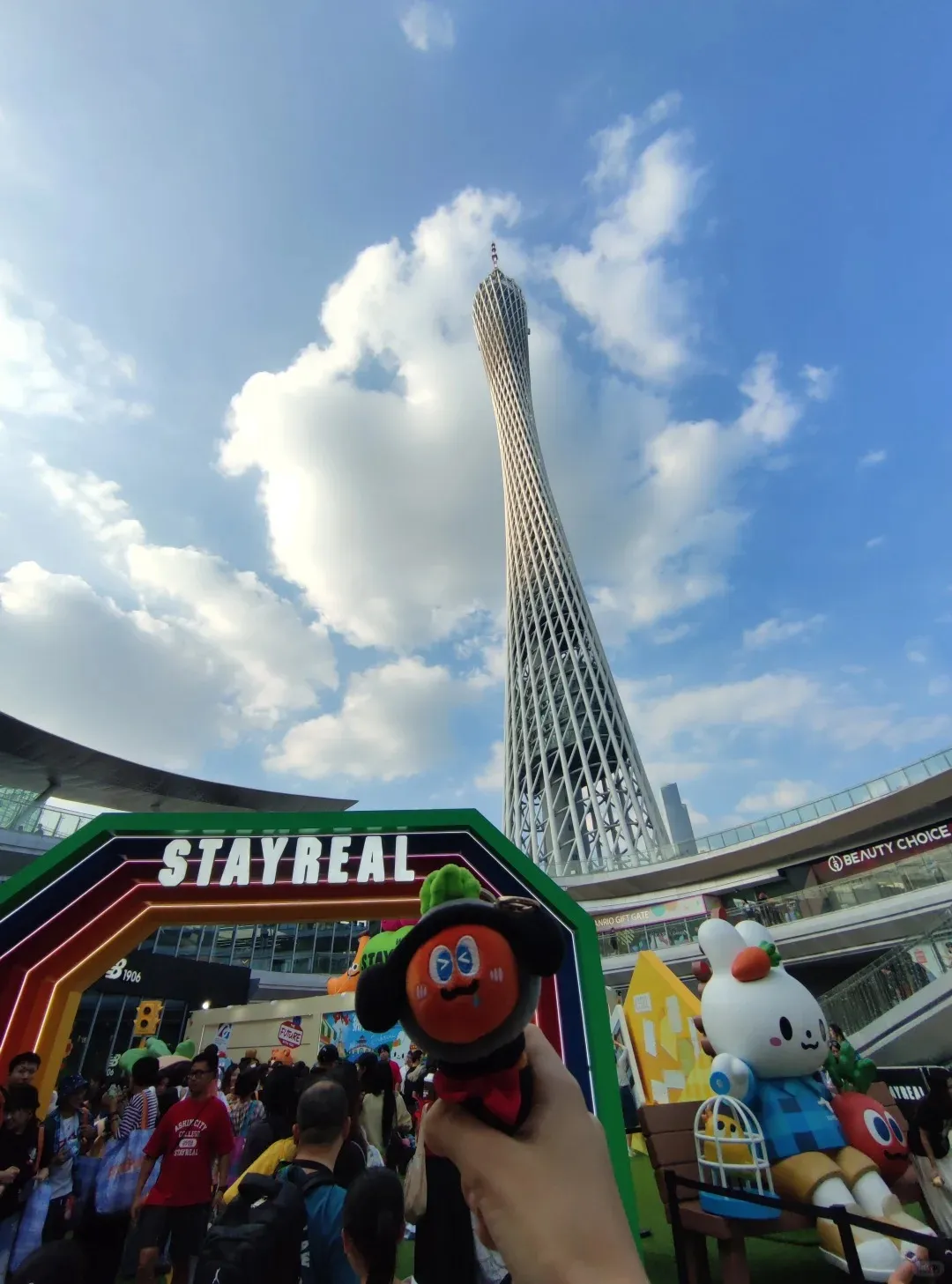
Guangzhou Map: Where the City Is and How to Get Around
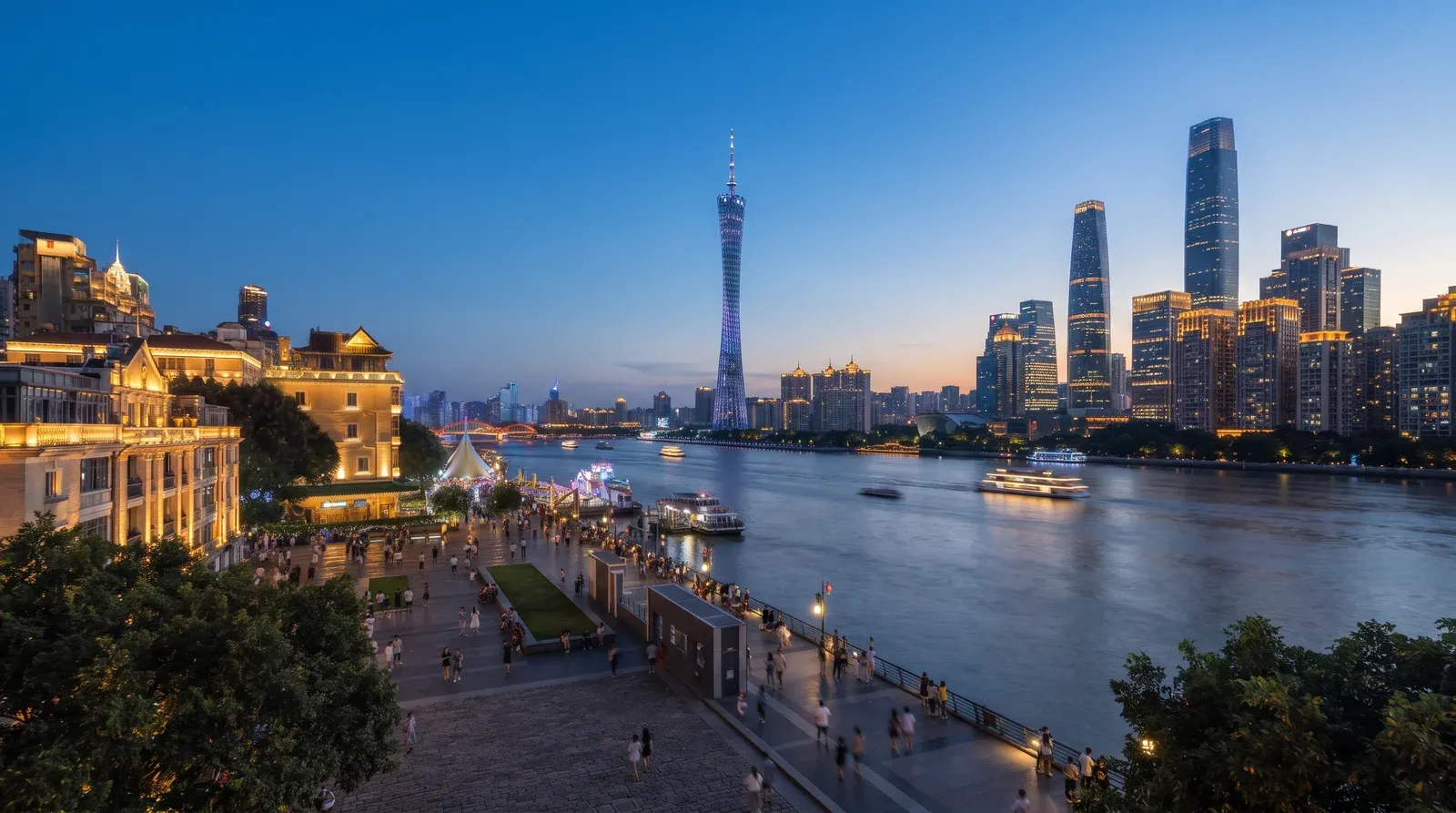
Guangzhou is in southern China and south-central Guangdong Province, on the northern edge of the Pearl River Delta, covering a total administrative area of 7,434.4 square kilometers. On a Guangzhou map, the main urban core sits on the north bank of the Pearl River, where visitors usually need just 1 day to connect the primary landmarks. The entire city consists of 11 districts, blending historic heritage with modern urban sights.
Where Is Guangzhou on the China Map?
Geographically, downtown Guangzhou sits at the top of the Pearl River Delta, more than 145 kilometers (90 miles) inland from the South China Sea. The terrain slopes from northeast down to southwest. The highest point in the north is Tiantang Peak in Conghua at 1,210 meters above sea level, Baiyun Mountain rises 382 meters north of the city center, and the southern section forms the alluvial plains of the Pearl River Delta. Guangzhou is a sub-provincial city that serves as a major transportation hub in South China.
How Are Districts Divided on Guangzhou Maps?
Guangzhou administers 11 districts: Yuexiu, Liwan, Haizhu, Tianhe, Baiyun, Huangpu, Panyu, Huadu, Nansha, Zengcheng, and Conghua. Among these 11 districts, Liwan, Yuexiu, and Tianhe make up the urban core and represent the three main sightseeing areas for travelers. Haizhu District on the south bank of the Pearl River and Panyu District to the south feature large exhibition complexes, a modern high-speed rail hub, and resort entertainment areas.
| District | Role and Geography | Key Landmarks and Highlights |
|---|---|---|
| Yuexiu District | Political and cultural center (including Dongshan), with 382-meter Baiyun Mountain north of the city center | Yuexiu Park, Zhenhai Tower built in 1380 (Guangzhou Museum), Sun Yat-sen Memorial Hall built in 1931, Beijing Road Pedestrian Street commercial area |
| Liwan District | Core area of traditional history and culture within the central city, with large flower and tea markets in Fangcun to the south | Western-style buildings on Shamian Island (former British and French concession), Xiguan Mansion residences, Shangxiajiu Pedestrian Street, Chen Clan Ancestral Hall |
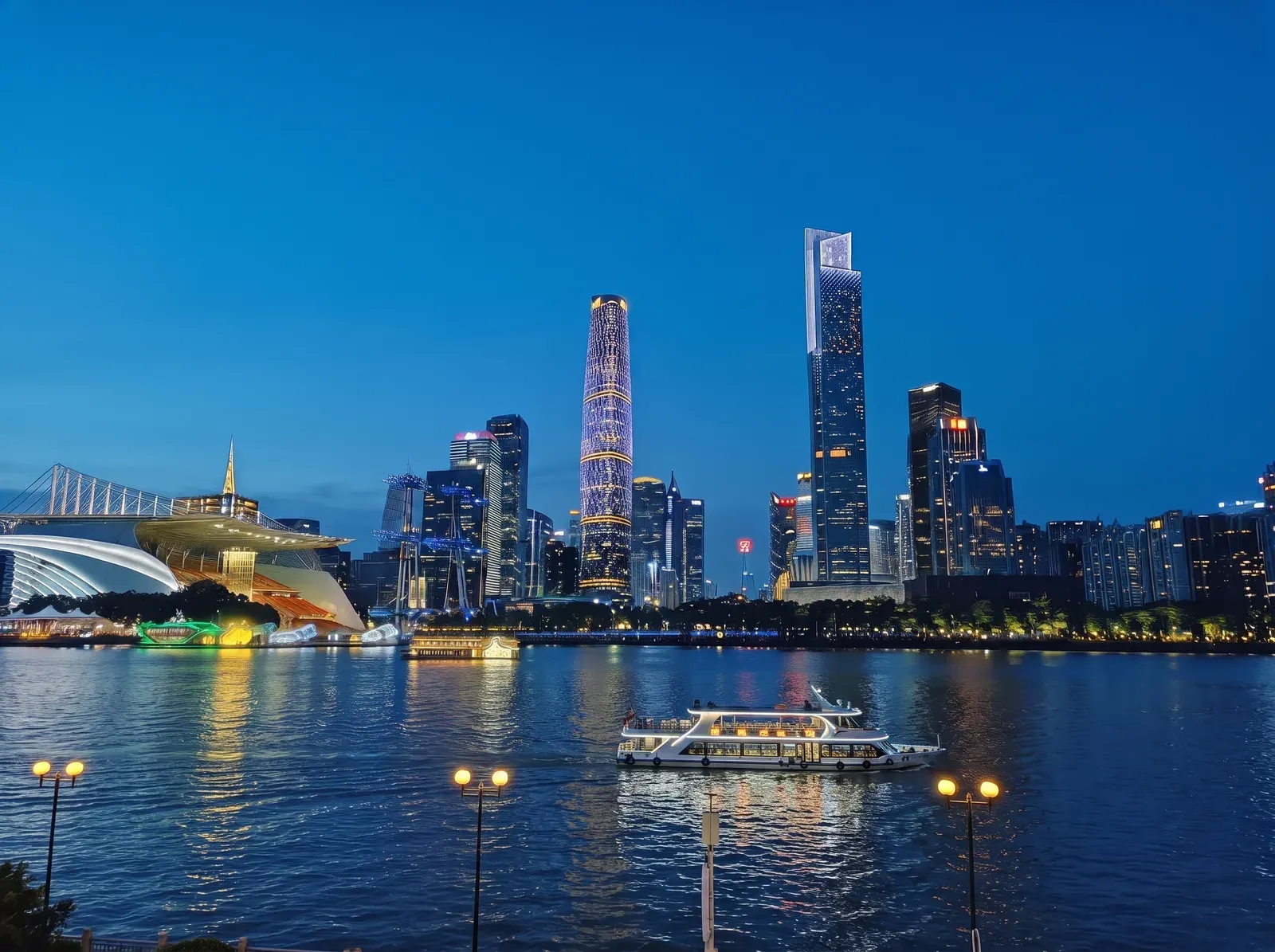
| Tianhe District | Central Business District (CBD), modern 21st-century center and expat gathering area | 103-story Guangzhou International Finance Center (West Tower), 111-story CTF Finance Centre (East Tower), Guangdong Museum, Guangzhou Library, Guangzhou Opera House |
| Haizhu District | Located on the south bank of the Pearl River, known for large trade fairs | Pazhou Guangzhou International Convention and Exhibition Center (host venue for the Canton Fair) |
| Panyu District | Located in the south, emerging area for tech, education, and entertainment, about 17 km from downtown Guangzhou | Guangzhou South Railway Station, Lotus Mountain, Guangzhou Higher Education Mega Center, large theme park clusters |
How Can Visitors Explore the Three Core Districts?
Yuexiu District is the political and cultural center of Guangzhou. Inside Yuexiu Park, a five-story red pagoda built in 1380 now houses the Guangzhou Museum. Just south of it stands Sun Yat-sen Memorial Hall, built in 1931, alongside the bustling Beijing Road pedestrian area. Liwan District holds the city's traditional heritage, featuring Xiguan Mansion residences, Shangxiajiu Pedestrian Street, Chen Clan Ancestral Hall, and Shamian Island, a former British and French concession known for European-style buildings. Tianhe District serves as Guangzhou's modern 21st-century hub and expat area, home to the 103-story Guangzhou International Finance Center, the 111-story CTF Finance Centre, Guangdong Museum, Guangzhou Library, and Guangzhou Opera House.
How Do City Transit and High-Speed Rail Hubs Work?
The Guangzhou Metro covers an operational length of 779.9 kilometers with 399 stations. Daily services usually run from 6:00 in the morning until midnight, handling over 7 million passenger trips each day. For travelers arriving or departing by high-speed train, Guangzhou South Railway Station in Shibi, Panyu District, is the primary modern rail hub in South China, located about 17 kilometers from the city center. It brings together lines including the Guangzhou-Shenzhen-Hong Kong Express Rail Link, Beijing-Guangzhou High-Speed Railway, Guiyang-Guangzhou Railway, Nanning-Guangzhou Railway, and Guangzhou-Zhuhai Intercity Railway, serving as an origin and terminal hub for Hong Kong West Kowloon, Shenzhen, and Beijing.
How to Plan Route and Pace for a Classic 1-Day Guangzhou Tour
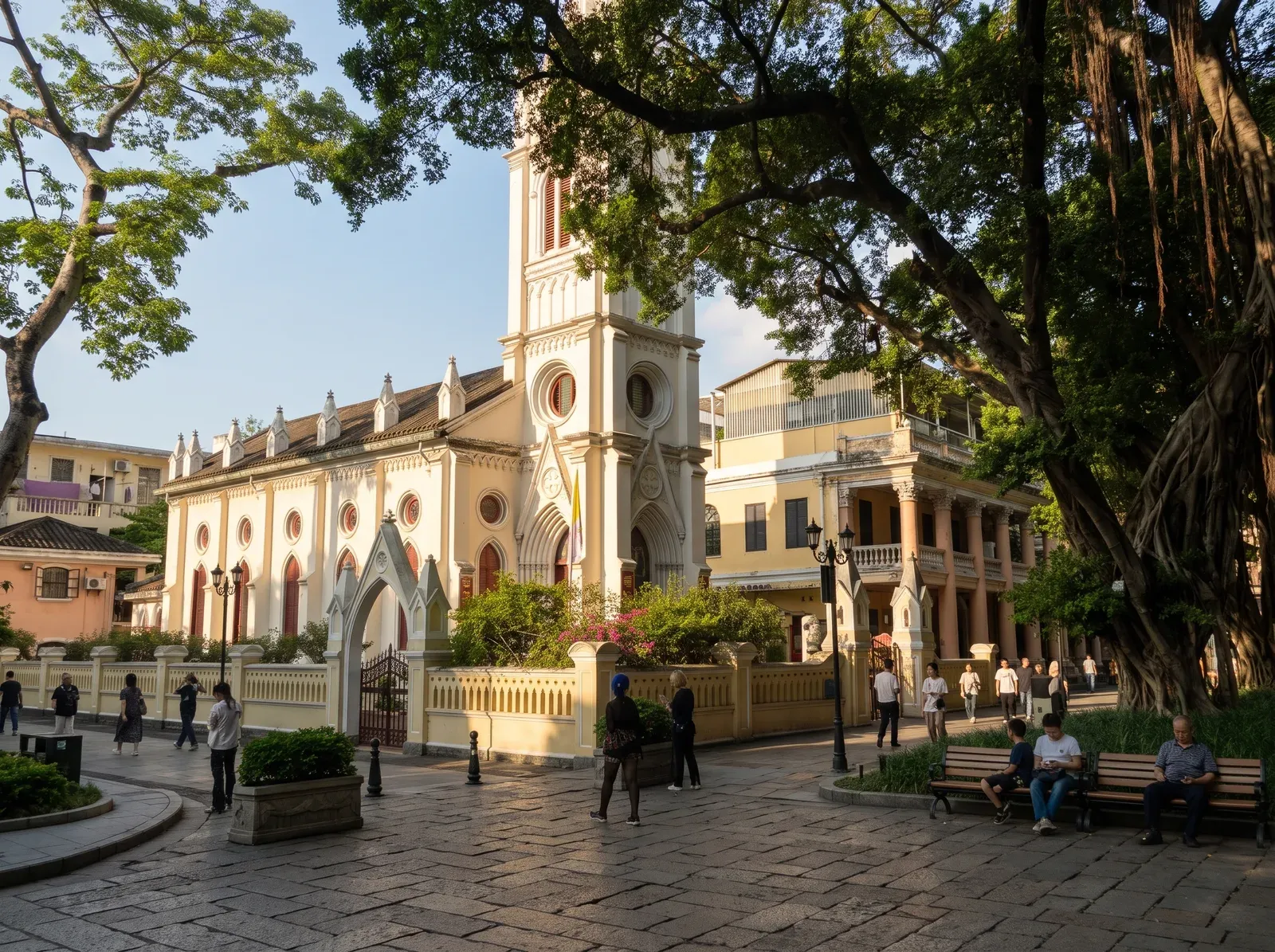
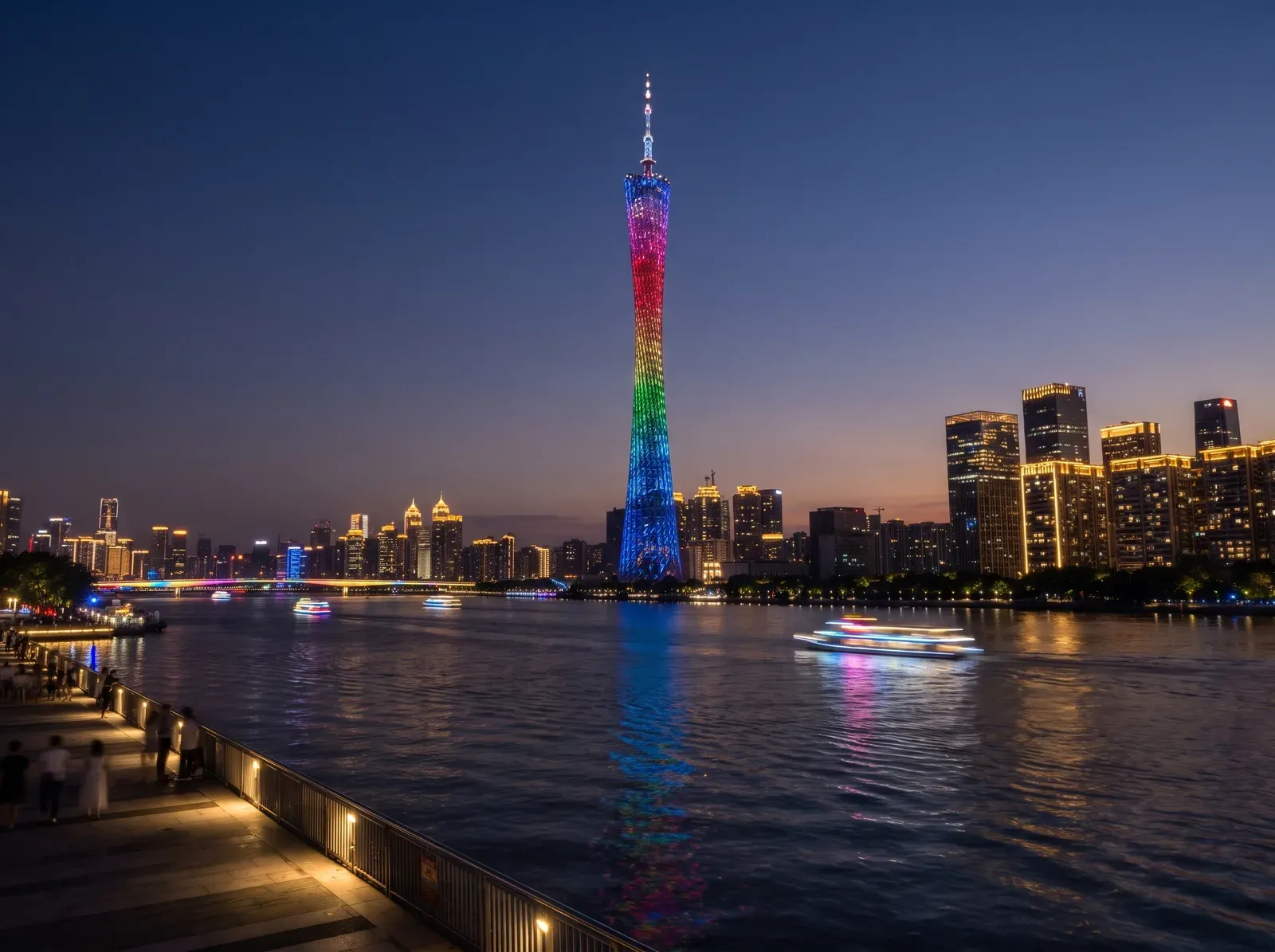
A classic 1-day private tour of urban Guangzhou covers a morning walk along the old Xiguan streets of Yongqing Fang and a visit to Sacred Heart Cathedral, an afternoon admiring European architecture on Shamian Island, an early evening ascent of Canton Tower for views, and a nighttime Pearl River cruise departing from Dashatou Pier. One-way drives between main stops take between 10 and 25 minutes, with total driving transfers across the city taking about 1.5 to 2 hours for the day. Walking totals around 10,000 steps, or about 5,500 steps for an easier pace. Your travel designer can adjust the tempo to your needs, while your driver handles transfers along the way so you skip the planning needed for public transit.
| Time of Day | Classic Sights and Experiences | Transfer and Pace Guide |
|---|---|---|
| Morning | Stroll through Yongqing Fang Xiguan old streets and visit Sacred Heart Cathedral | One-way drives between main sights take 10 to 25 minutes |
| Afternoon | Walk around Shamian Island to admire European-style architecture | City driving transfers total about 1.5 to 2 hours across the day |
| Evening to Night | Ascend Canton Tower for scenic views, then head to Dashatou Pier for a Pearl River night cruise | Around 10,000 steps for a standard day, or about 5,500 steps on an easy pace |
Sources
Guangzhou | History, Population, Map, Climate, & Facts | Britannica
Guangzhou - Wikipedia
List of administrative divisions of Guangzhou - Wikipedia
Guangzhou Metro - Wikipedia
Guangzhou South railway station - Wikipedia
Guangzhou Private 1-Day Tour: Canton Tower & River Cruise
Sources verified on Nov 8, 2026
FAQ
How far is downtown Guangzhou from the sea?
Downtown Guangzhou sits at the top of the Pearl River Delta, with the main urban center on the north bank of the Pearl River, more than 145 kilometers (90 miles) inland from the South China Sea. The southern portion consists of the Pearl River Delta alluvial plains.
Where is the main high-speed railway station in Guangzhou?
The main modern high-speed railway hub in South China is Guangzhou South Railway Station in Shibi, Panyu District. Located about 17 kilometers from downtown Guangzhou, it connects major lines including the Guangzhou-Shenzhen-Hong Kong Express Rail Link and the Beijing-Guangzhou High-Speed Railway.
Which core areas should first-time visitors explore in Guangzhou?
Liwan District, Yuexiu District, and Tianhe District make up the urban core and the three most appealing sightseeing zones for travelers, respectively showcasing traditional heritage, political and cultural landmarks, and the modern Central Business District.
How many steps does it take to see Guangzhou landmarks on a 1-day tour?
A classic 1-day Guangzhou tour requires about 1.5 to 2 hours of total driving transfers across the city, with one-way drives between sights taking 10 to 25 minutes. Walking totals around 10,000 steps on a standard route, or about 5,500 steps at a relaxed pace.