
Guangzhou Weather: Monthly Temperatures, Best Months, and What to Wear

Guangzhou weather belongs to a maritime subtropical monsoon climate. According to statistics, the annual average temperature ranges between 21.7 and 23.1 degrees Celsius, and the average relative humidity is 77%. The most comfortable months to visit are October and November, which bring clear, dry autumn days with mild warmth. Other months show distinct seasonal traits: March often sees humid dampness from the return of south wind, April to June is a rainy season with heavy downpours, July to September brings hot weather and typhoons, and December to February forms a cool winter.
What is Guangzhou weather like each month? Monthly temperatures and rainfall
According to routine China Meteorological Administration statistics, the annual average high is 27.2°C, the annual average low is 19.6°C, and annual rainfall reaches 1801.2 mm. Canton China temperature changes remain gentle through the year, with monthly average highs between 19.0°C and 33.7°C and monthly average lows between 10.8°C and 26.3°C. Rainfall concentrates heavily in specific seasons, with ample rain from April to September and noticeably less precipitation from October to the following February.
| Month | Average High | Average Low | Average Rainfall |
|---|---|---|---|
| January | 19.0°C | 10.8°C | 44.3 mm |
| February | 20.7°C | 13.5°C | 67.9 mm |
| March | 22.8°C | 15.9°C | 94.9 mm |
| April | 26.5°C | 20.0°C | 183.5 mm |
| May | 30.5°C | 23.3°C | 285.6 mm |
| June | 32.0°C | 25.1°C | 315.0 mm |
| July | 33.7°C | 26.3°C | 240.0 mm |
| August | 33.5°C | 25.9°C | 230.8 mm |
| September | 32.1°C | 24.7°C | 200.9 mm |
| October | 29.7°C | 21.6°C | 70.5 mm |
| November | 25.3°C | 16.5°C | 38.4 mm |
| December | 21.0°C | 12.0°C | 29.4 mm |
| Annual | 27.2°C | 19.6°C | 1801.2 mm |
Regarding rainfall extremes, the annual average rainfall in urban Guangzhou is about 1923 mm. In meteorological records, the city recorded its highest annual rainfall of 2637.8 mm in 2016 and its lowest annual rainfall of 1239.5 mm in 1990. Total precipitation shows fairly noticeable differences from year to year.
In terms of extreme temperatures, Guangzhou's verified official meteorological record for the highest temperature is 39.1°C, recorded on July 1, 2004. The lowest recorded temperature is 0.0°C, noted on February 11, 1957, and December 23, 1999. The city recorded its highest count of high-temperature days in 2014 with 65 days, and its lowest in 1975 with 0 days.

What are the seasonal climate features in Guangzhou?
The four seasons in the city show notable differences, with warming temperatures and high moisture in spring, followed by heat in summer and dry air in autumn. Temperatures start rising in March. Routine China Meteorological Administration data records an average high of 22.8°C and an average low of 15.9°C for the month. This period frequently brings the damp return of south wind, as warm and cold air masses meet and raise humidity significantly.
From April to June, the rainy season brings frequent downpours, with precipitation rising each month until June reaches the annual peak of 315.0 mm. From July to September, the subtropical high creates hot weather along with frequent typhoons. Average highs reach 33.7°C in July, 33.5°C in August, and 32.1°C in September. This period is hot and wet, with active subtropical high pressure and tropical cyclones.

October and November bring a clear, dry autumn with mild temperatures, as rainfall drops sharply compared to summer. Average rainfall is 70.5 mm in October and only 38.4 mm in November. December to February forms a cool winter. January has an average low of 10.8°C, and December sees an average rainfall of 29.4 mm, marking the period with the lowest rainfall and cooler temperatures of the year.
Located south of the Tropic of Cancer, Guangzhou has a minimal chance of winter snowfall. According to verified records, modern snowfall has occurred only on January 31, 1928, December 29, 1967, and January 24, 2016. In almost all years, the urban area records no snow during winter.
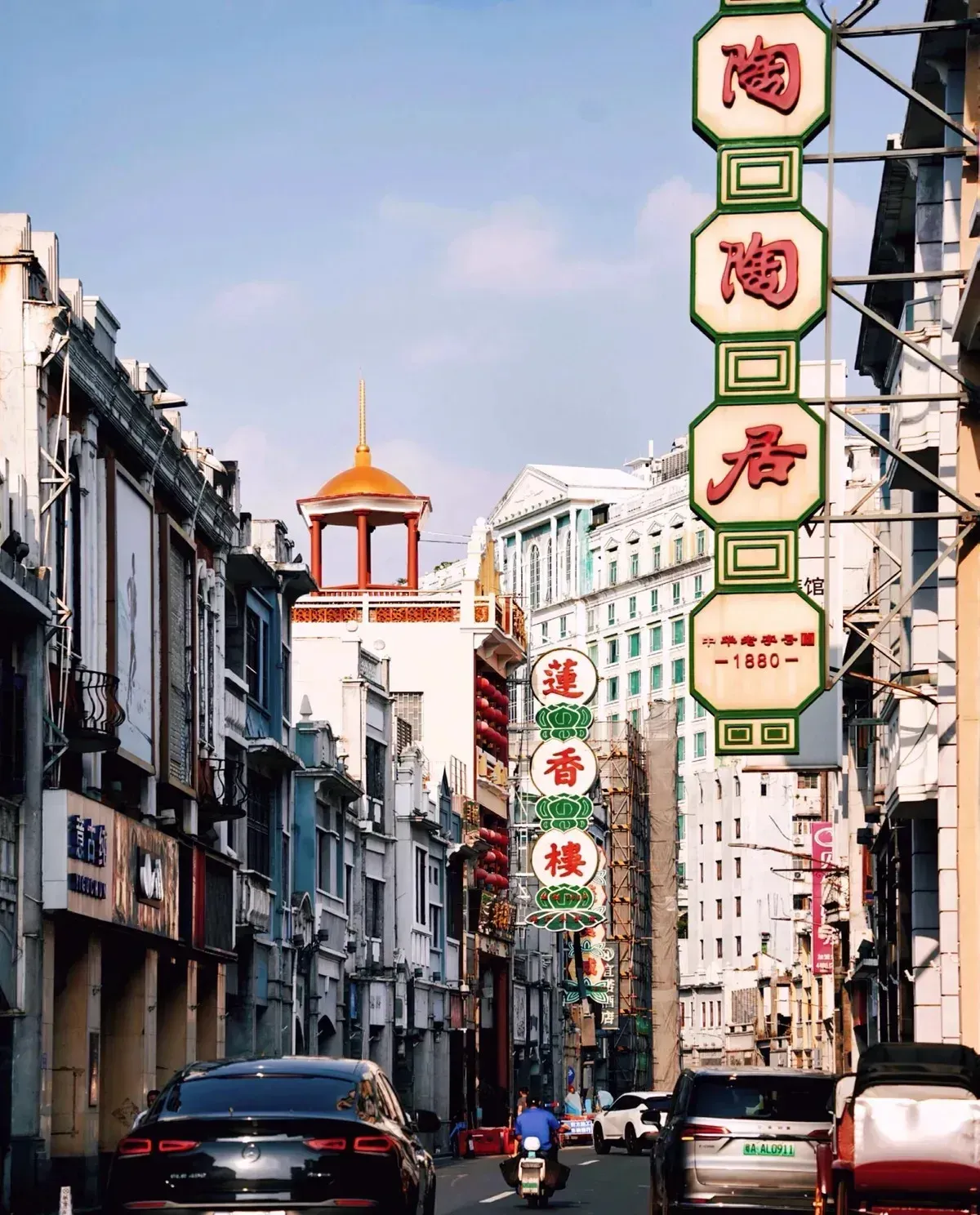
What should you wear when visiting Guangzhou in different months?
To prepare for Guangzhou temperature shifts, pack according to the heat and rainfall of each season. From March to May in spring, temperatures gradually climb from 22.8°C to 30.5°C, with higher humidity and increasing rain. It is helpful to choose lightweight, quick-drying clothing and carry rain gear. With frequent rainstorms from April to June, water-resistant footwear or a portable raincoat helps handle sudden showers.
Summer from June to September is hot, with monthly average highs staying between 32.0°C and 33.7°C. Breathable short-sleeved shirts, shorts, or light dresses work well, alongside sun protection outdoors. Carrying a light long-sleeved cardigan makes moving between air-conditioned indoor spaces and the outside heat more comfortable.
October and November provide a mild, dry autumn. October has an average high of 29.7°C and an average low of 21.6°C, while November sees an average high of 25.3°C and an average low of 16.5°C. You can wear breathable long-sleeved shirts or cotton T-shirts during the day and add a light jacket when morning and evening temperatures dip. In the cool winter from December to February, average lows sit between 10.8°C and 13.5°C, making sweaters, windbreakers, or warm jackets suitable for wind protection and warmth.
How do damp weather and typhoons affect travel?
Understanding weather in Canton, China requires paying attention to the damp return of south wind in March and severe convective weather in summer and autumn. During March's humid spell, air moisture nears saturation, causing condensation on building walls and floors, making clothes slow to dry, and allowing leather or wood items to mold easily. Travelers visiting then should wear non-slip flat shoes and run the dehumidifying mode on hotel air conditioners.
During the April to June rainy season with frequent downpours, check local weather observatory rainstorm warnings before heading out. From July to September, hot conditions and typhoons dominate under the subtropical high, and strong winds and rain may disrupt flights and high-speed trains. Keeping some flexibility in your schedule and limiting time spent in open outdoor areas on rainy days is advisable.
Sources
Guangzhou - Wikipedia
Huinantian - Wikipedia
Sources verified on November 8, 2026
FAQ
What is the coldest month in Guangzhou, and does it snow?
The coldest months in Guangzhou are January and February. According to China Meteorological Administration statistics, January has an average low of 10.8°C and February has an average low of 13.5°C. Located south of the Tropic of Cancer, Guangzhou has a minimal chance of winter snowfall, with modern verified records showing snow only on January 31, 1928, December 29, 1967, and January 24, 2016.
Why are October and November the most comfortable months to visit Guangzhou?
October and November bring a clear, dry autumn with mild temperatures. According to routine China Meteorological Administration statistics, October averages a high of 29.7°C and a low of 21.6°C, while November averages a high of 25.3°C and a low of 16.5°C. Monthly rainfall drops to 70.5 mm and 38.4 mm respectively, providing low precipitation and comfortable conditions.
What is Guangzhou's damp return of south wind, and how does it affect travelers?
The return of south wind mostly occurs in March as temperatures rise. During this phenomenon, relative humidity approaches saturation, causing moisture to condense on walls and floors, making laundry hard to dry, and predisposing leather and wooden items to mold.
Which months have the most rainfall in Guangzhou?
Guangzhou experiences its rainy season with frequent downpours from April to June. According to routine China Meteorological Administration statistics, average rainfall is 183.5 mm in April, 285.6 mm in May, and reaches 315.0 mm in June. In addition, July to September brings frequent typhoons, with average rainfall of 240.0 mm in July, 230.8 mm in August, and 200.9 mm in September.