
Yu the Great and Dayu Mausoleum in Shaoxing
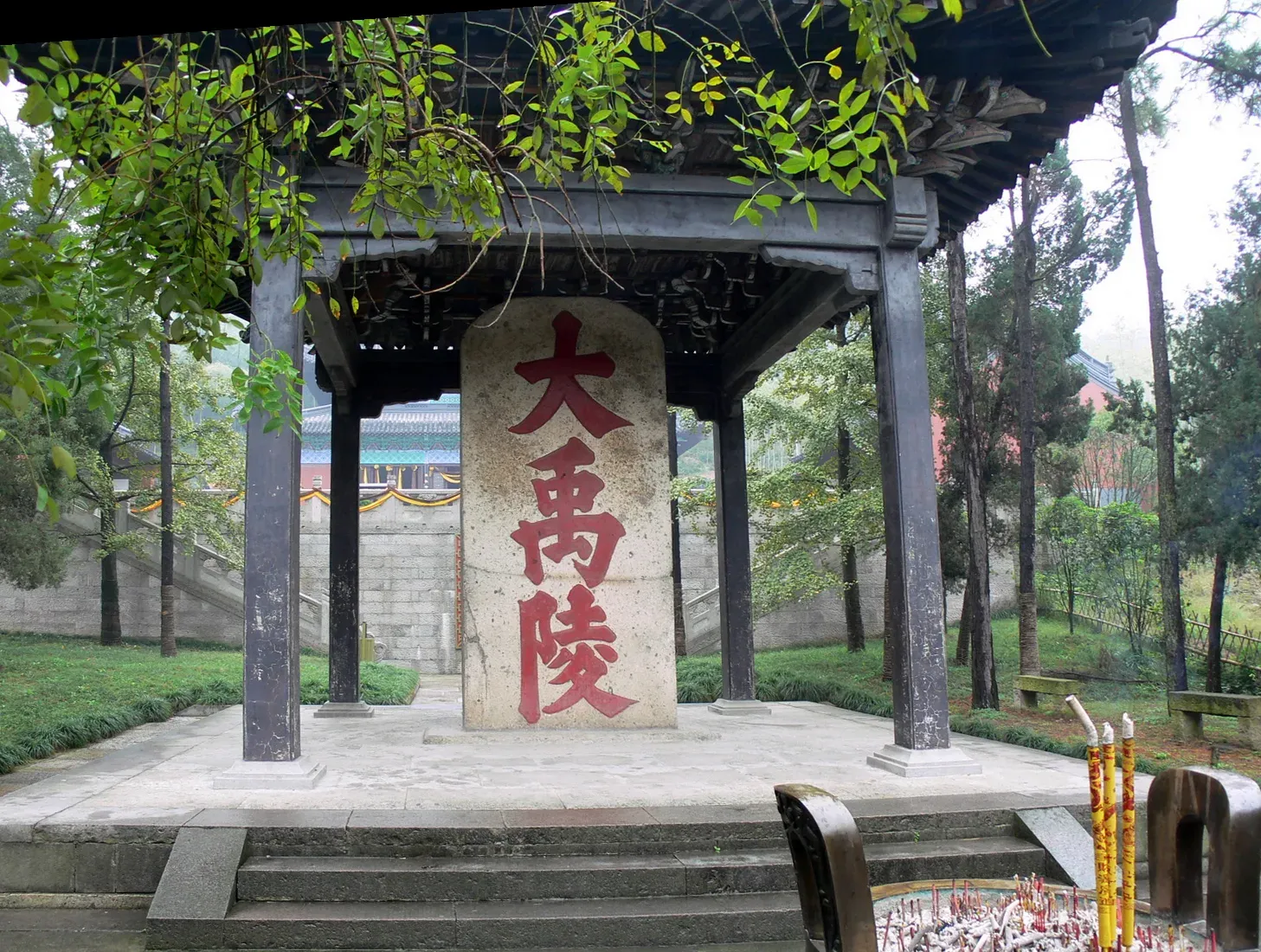
Photo: Gisling / Wikimedia Commons, CC BY-SA 3.0
Yu the Great is a legendary sage king in ancient China who founded the Xia dynasty. Tradition says he received the throne after controlling great floods and was buried at the foot of Mount Kuaiji in Shaoxing, Zhejiang, during an inspection tour in his later years. A standard timed adult ticket to the mausoleum scenic area costs 60 yuan, with a discount if you book one day ahead. The complex includes the tomb, Yu Ancestral Hall, and Yu Temple, bringing together flood control lore and imperial sacrificial rites.
| Item | Practical details |
|---|---|
| Opening hours | Year-round 08:00-17:00 (ticket sales and admission stop at 16:30) |
| Recommended visit time | 2 to 3 hours |
| Ticket prices | Full-price timed ticket 60 yuan (55 yuan if booked 1 day in advance, half-price ticket 30 yuan) |
| Location | Southeast corner of South Second Ring Road and Nanzhen Road, Yuecheng District, Shaoxing, Zhejiang |
| Direct bus routes | Bus 2, Bus 177, Bus 68, Dayu Express |
| Core sights | Spirit Way, Sacrificial Square, Dayuling Stele Pavilion, Yu Ancestral Hall, Yu Temple, bronze statue on Mount Shifan summit |
Who was Yu the Great? Flood control and the Xia dynasty
According to Wikipedia, Yu the Great was a legendary sage king credited with leading China's first successful state flood control project and founding the Xia dynasty. Before him, his father Gun spent more than nine years building dikes along rivers without success. Yu shifted tactics, cutting irrigation canals to divert floods into fields and dredging riverbeds. The effort took 13 years, during which he passed his own front door three times without stepping inside. Emperor Shun passed the throne to him for this feat. Yu took the throne at age 53, set his capital at Anyi (around modern Xia County in Shanxi), and founded the Xia dynasty. The Book of Documents (Shangshu: Yu Gong) records that he divided the realm into nine provinces: Ji, Yan, Qing, Xu, Yang, Jing, Yu, Liang, and Yong. The Bamboo Annals records that he reigned for 45 years.
For historical evidence, Wikipedia notes that contemporary records for Yu as a verified historical figure are lacking. The earliest physical archaeological artifact mentioning him is a bronze vessel dating about 1,000 years after his legendary era.
| Item | Historical records and key points | Source |
|---|---|---|
| Flood control project | Lasted 13 years, built canals to divert water to fields and dredged riverbeds | Wikipedia |
| Accession and dynasty | Took throne at age 53, set capital at Anyi, founded Xia dynasty | Wikipedia |
| Division of realm | Divided land into nine provinces: Ji, Yan, Qing, Xu, Yang, Jing, Yu, Liang, and Yong | Book of Documents (Shangshu: Yu Gong) |
| Years on throne | Reigned for 45 years | Bamboo Annals |
| Archaeological evidence | Earliest artifact dates about 1,000 years after his legendary era (bronze vessel) | Wikipedia |
Why is he buried at Mount Kuaiji in Shaoxing?
Legend says he died and was buried at Mount Kuaiji south of Shaoxing during an eastern inspection tour. The Yue Jue Shu records that he died of illness. Xianglu Peak is the highest point of Mount Kuaiji at 354.7 meters above sea level, and Mount Kuaiji is revered as the Southern Zhen among China's five great guardian mountains. Wikipedia notes that Western Han historian Sima Qian climbed Mount Kuaiji to explore Yu's tomb site, and emperors across dynasties, including Qin Shi Huang, visited in person to offer sacrifices.
After his burial at Mount Kuaiji, tomb guarding traditions continued for thousands of years. Baidu Baike's entry for the mausoleum notes that more than 200 residents in the guardian village (Yuling Village) carry the surname Si, while only a few thousand people nationwide share this clan name. Chinese Wikipedia records that after his burial, his son Qi built an ancestral hall here and sent envoys each spring and autumn to conduct sacrifices. If you are interested in clan heritage, you can visit the guardian village to learn how the Si clan guarded the tomb across generations. If you prefer mountain scenery, Mount Kuaiji offers a setting shaped by imperial rites dating back to the Qin and Han dynasties.
What sights and buildings make up the complex?
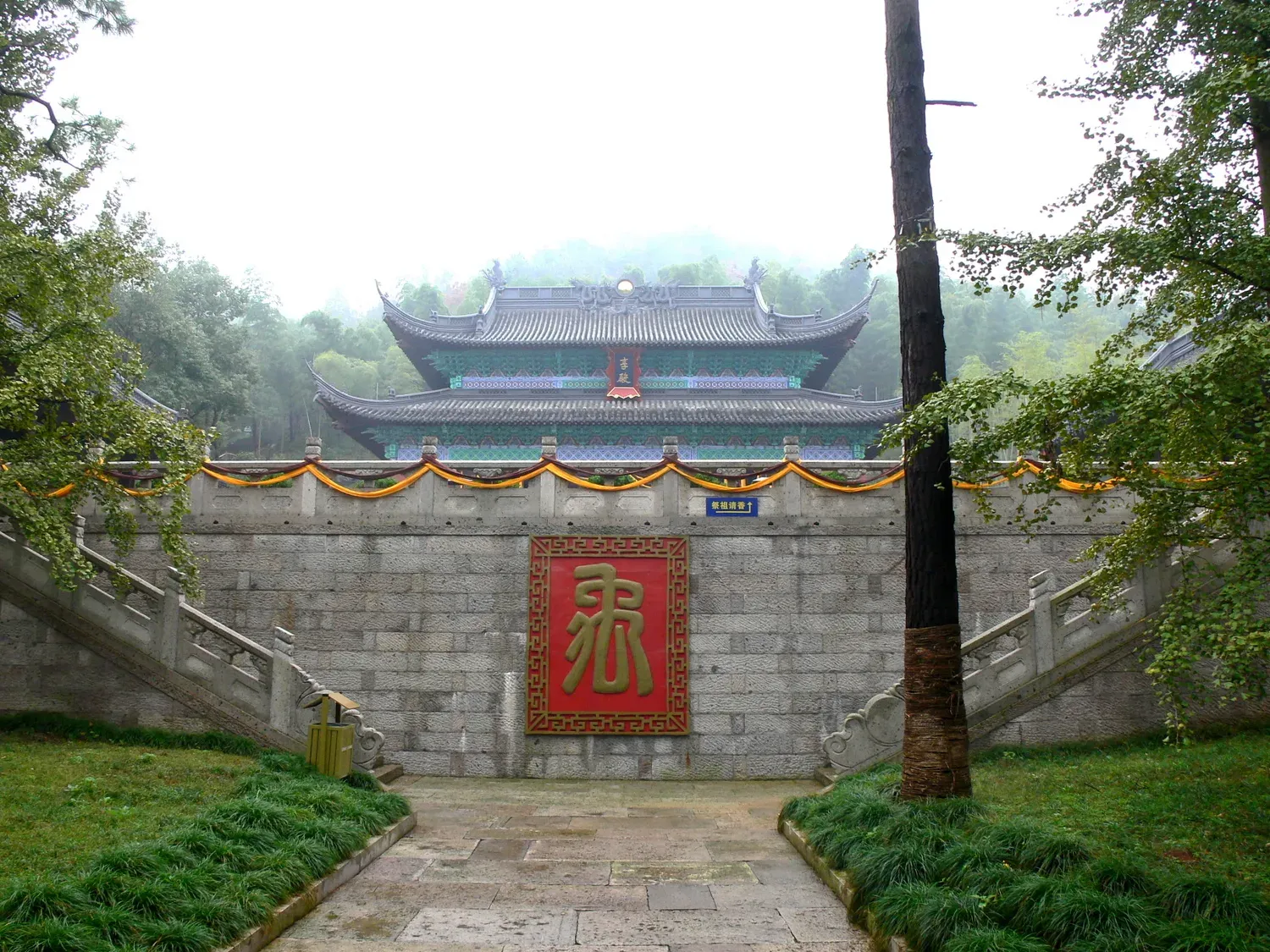
The present complex was first established during the Southern and Northern Dynasties in the 6th century. The tomb sits at the foot of Mount Kuaiji, facing west from an east orientation. According to the scenic area official website, the site includes the Spirit Way, Sacrificial Square, Yu Mausoleum, Xiang Hall, Yu Ancestral Hall, Yu Temple, Dayu Memorial Hall, and Dayu Research Institute. For heritage protection, official records show it was designated a Major Historical and Cultural Site Protected at the National Level in 1996, and named a national 4A tourist attraction in 2005.
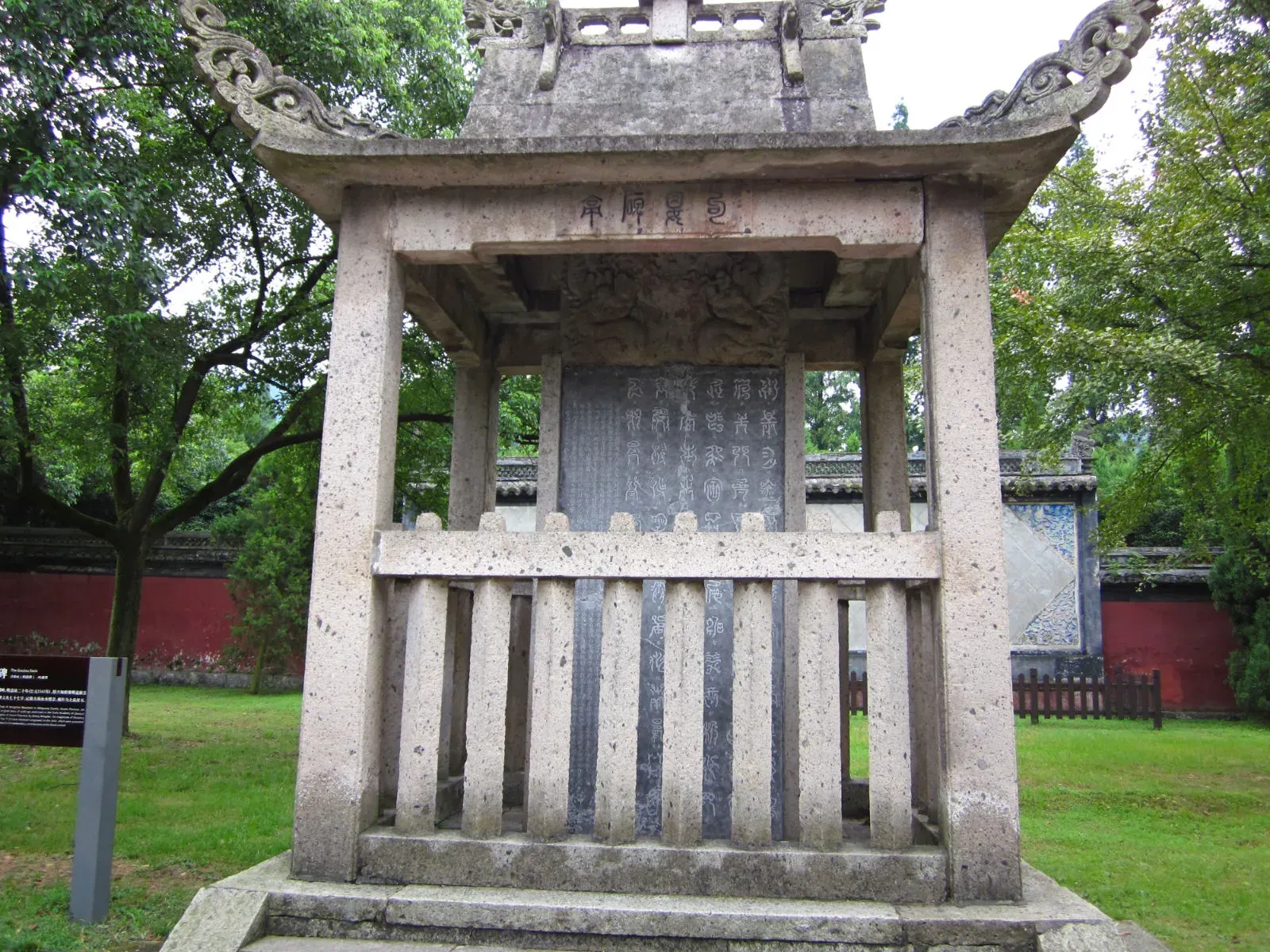
The key stone carvings and structures date from different eras. In 1540 (the 19th year of the Jiajing reign), Shaoxing prefect Nan Daji erected the Dayuling stele, which stands 4.05 meters tall and 1.9 meters wide. The bronze statue on top of Mount Shifan stands 21 meters high, weighs 118 tons, and was completed in 2001. In 2003, the stone animal statues along the Spirit Way were expanded from five pairs to twelve pairs. Inside Yu Temple, the layout climbs gradually through a screen wall, the Goulou Stele, Wu Gate, worship hall, and main hall. Turning right outside the main hall brings you to the Bian Stone Pavilion, which houses an ancient burial stone.
| Structure or relic | Historical records and layout features |
|---|---|
| Dayu Mausoleum | First built in the Southern and Northern Dynasties (6th century); the tomb of Yu the Great sits at the foot of Mount Kuaiji, facing west from the east |
| "Dayuling" Stele | Erected in 1540 (19th year of Jiajing) by Shaoxing prefect Nan Daji; 4.05 meters tall and 1.9 meters wide |
| Bronze statue of Yu the Great on Mount Shifan | Completed in 2001; the bronze statue is 21 meters tall and weighs 118 tons |
| Spirit Way stone beasts | Increased from 5 pairs to 12 pairs in 2003 |
| Yu Ancestral Hall | Origins trace back to Qi of the Xia dynasty founding the hall; people were sent to offer sacrifices to Yu in spring and autumn each year |
| Yu Temple | Screen wall, Goulou Stele, Wu Gate, worship hall, and main hall rise step by step |
| Stele Corridor | The relatively tall "Kuaiji Inscribed Stone" stele is a relic from the Qianlong era |
Tip: Wikipedia records the mausoleum as 4 kilometers southeast of Shaoxing's urban center, while Chinese Wikipedia lists it as 8 kilometers southeast in Yuling Village of Yuling Township. When driving or taking public transit, set your navigation to the southeast corner of South Second Ring Road and Nanzhen Road.
How to plan your walking route and climb?
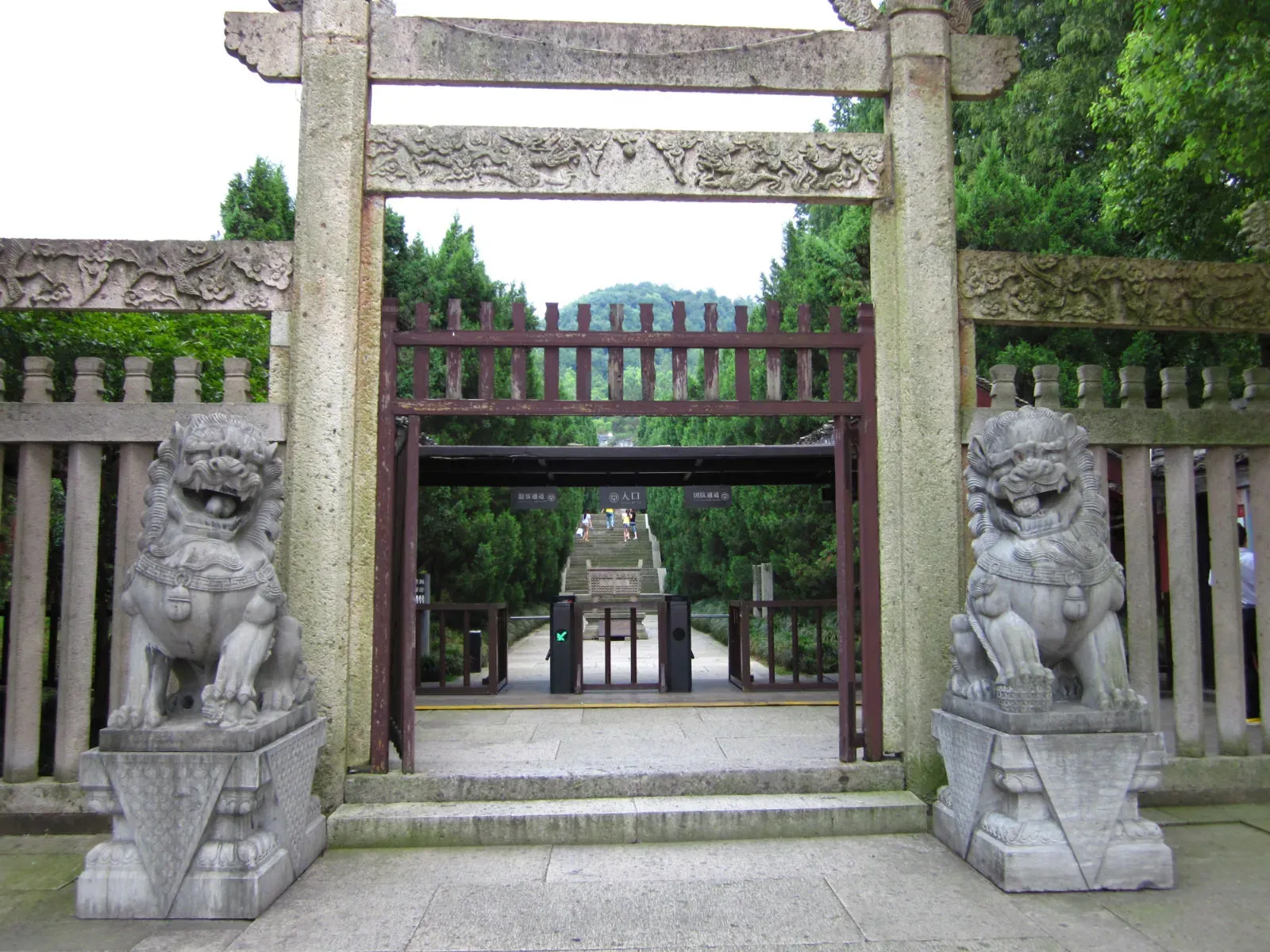
According to travel guides, visitors usually spend 2 to 3 hours here and pass two ticket checkpoints. You start through the memorial paifang gate and walk along the Spirit Way to the Sacrificial Square. Drivers can park at the square's lot and continue on foot. After crossing a stone bridge, you reach the second checkpoint at Lingxing Gate. Once inside the core area, the common touring route runs through the Dayuling Stele Pavilion, Yu Ancestral Hall on the right, the Stele Corridor (where the tall Kuaiji Carved Stone stele dates to the Qianlong period), Yu Temple, and the Bian Stone Pavilion to the right of the main hall.
According to visitor travelogues, stone steps on the north side of the tomb lead to the summit statue, offering views over Shaoxing. While the stone steps are paved, certain sections are steep, so bring water and snacks before heading up. The park generally closes the trail after 16:00. If you want city views, hike up Mount Shifan after seeing the level ground heritage sites. If you are traveling with seniors or have limited stamina, you can turn back after visiting Yu Temple and the Bian Stone Pavilion.
| Tour stop | Site | Route and details |
|---|---|---|
| First stop | Paifang, Spirit Way, and Sacrificial Square | First pass the Dayuling paifang and walk along the Spirit Way to the Sacrificial Square; visitors driving themselves park at the Sacrificial Square parking lot and continue on foot |
| Second stop | Lingxing Gate | After crossing the stone bridge, you reach the second ticket gate at Lingxing Gate |
| Third stop | "Dayuling" Stele Pavilion and Yu Ancestral Hall | Visit the "Dayuling" Stele Pavilion, then visit Yu Ancestral Hall on the right |
| Fourth stop | Stele Corridor and Yu Temple | The relatively tall "Kuaiji Inscribed Stone" stele in the corridor is a relic from the Qianlong era; Yu Temple rises step by step through the screen wall, Goulou Stele, Wu Gate, worship hall, and main hall |
| Fifth stop | Bian Stone Pavilion | Turn right after exiting the main hall of Yu Temple to arrive |
| Optional climb | Statue of Yu the Great on Mount Shifan | Climb the stone steps on the north side of the mausoleum to the summit to overlook Shaoxing; you usually cannot go up the mountain after 16:00 |
Ticket prices, bookings, and discounts
Travel guides note that tickets must be booked in advance. The scenic area is open year-round from 08:00 to 17:00, with entry and ticket sales ending at 16:30. According to the official website, a standard timed ticket booked one day ahead costs 55 yuan, a half-price timed ticket costs 30 yuan, and a discounted ticket for veterans costs 48 yuan. Travel guides outline concession rules: full-time undergraduate students and below pay half price with a student ID; seniors aged 60 to under 70 pay half price; visitors aged 70 and older, people with disabilities, and active military personnel enter free with valid ID; children aged 6 and under or 1.2 meters tall and under enter free.
Shaoxing residents also receive special concessions, though holiday restrictions apply. Travel guides note that local residents enter Dayu Mausoleum free with a valid personal ID card, but statutory holidays such as Golden Weeks (National Day, Spring Festival) and short holidays (New Year's Day, Qingming, Dragon Boat Festival, Mid-Autumn Festival, May Day) are generally excluded. If anyone in your group qualifies for student, senior, or child concessions, carry their original valid IDs for ticket inspection at the entrance.
| Ticket type and eligibility | Ticket price |
|---|---|
| Full-price timed ticket | 60 yuan |
| Full-price timed ticket (1 day in advance) | 55 yuan |
| Half-price timed ticket (full-time undergraduate students and below with student ID, seniors aged 60 to under 70) | 30 yuan |
| Military veteran discount ticket | 48 yuan |
| Free concession (seniors aged 70 and older, people with disabilities, active military personnel with valid ID; children aged 6 and under or 1.2 meters and under in height) | 0 yuan |
| Local resident free admission (with valid personal ID card, statutory holidays like Golden Weeks and short holidays excluded) | 0 yuan |
How to get there by public transit
The scenic area website footer notes that Bus 2, 177, 68, and Dayu Express run directly to the site. If you arrive at Shaoxing's main transit hubs from elsewhere, travel guides note direct routes: take Bus 2 from Shaoxing Railway Station directly to the mausoleum for 2 yuan, or take Bus 25 from Shaoxing Passenger Transport Center for 1 yuan. The site is located at the southeast corner of South Second Ring Road and Nanzhen Road, Yuecheng District, Shaoxing, Zhejiang. The service center inquiry number is 0575-88366666, operating from 8:00 to 17:00.
| Departure point | Bus route | Fare | Arrival details |
|---|---|---|---|
| Shaoxing Railway Station | Bus 2 direct | 2 yuan | Direct to the mausoleum |
| Shaoxing Passenger Transport Center | Bus 25 | 1 yuan | Arrives at the mausoleum |
| Key stops in Shaoxing | Bus 177, 68, Dayu Express | Standard city bus fare | Direct to the mausoleum scenic area |
When does the memorial ceremony take place?
According to the official website, the sacrificial ceremony was inscribed onto the National Intangible Cultural Heritage list by the State Council in 2006, raised to a state-level ceremony the following year, and scheduled annually during Guyu (Grain Rain) on the lunar calendar. The official schedule for the 2026 ceremony listed it on April 20, 2026 (Guyu) at the scenic area in Yuecheng District, Shaoxing. Regarding the exact timing, some travel guides note that a public memorial ceremony takes place every Qingming Festival, which contradicts the official website's Guyu schedule. Follow the official scenic area website for the confirmed ceremony date.
If you want to observe a national intangible cultural heritage ritual, check Shaoxing's ceremony schedule around lunar Guyu. If you prefer to avoid crowds and event closures, plan your visit on a regular weekday outside festivals.
Common mistakes to avoid on your first visit
| Common misconception | Actual rule and advice |
|---|---|
| Mistaking 16:30 for park closing time | Open year-round 08:00-17:00; 16:30 is when entry and ticket sales end, so enter earlier |
| Assuming Mount Shifan can be climbed anytime | The mountain trail usually closes after 16:00; sections are steep, so bring water and snacks beforehand |
| Assuming Shaoxing locals enter free all year | Local residents are not free during statutory holidays (National Day, Spring Festival, New Year's Day, Qingming, Dragon Boat, Mid-Autumn, May Day); free entry requires a valid ID on regular days |
| Thinking the memorial ceremony is held at Qingming | Some travel guides record it as Qingming, but the official mausoleum ceremony takes place during lunar Guyu |
| Assuming full-price tickets can only be bought on site | Tickets require advance booking; reserving online one day ahead discounts the standard ticket to 55 yuan |
Sources
Yu the Great - Wikipedia
Dayu Mausoleum - Chinese Wikipedia
Dayu Mausoleum - Baidu Baike
Mount Kuaiji - Chinese Wikipedia
Scenic Area Overview - Shaoxing Dayu Development and Investment Co., Ltd.
Surrounding Transport - Shaoxing Dayu Development and Investment Co., Ltd.
Sacrificial Rites Page - Shaoxing Dayu Development and Investment Co., Ltd.
Sources verified on November 18, 2026
FAQ
Do you need to book Dayu Mausoleum tickets in advance?
Travel guides note that tickets must be booked in advance. The official standard timed ticket costs 60 yuan, with a discounted price of 55 yuan if purchased one day ahead.
Are the mausoleum, Yu Temple, and Yu Ancestral Hall in the same scenic area?
Yes. The complex includes the Spirit Way, Sacrificial Square, Yu Mausoleum, Xiang Hall, Yu Ancestral Hall, Yu Temple, Dayu Memorial Hall, and the summit bronze statue, all within one nationally protected heritage site.
What time limits apply to climbing Mount Shifan for the statue?
Visitor travel notes indicate that hikers usually cannot head up the stone steps north of the tomb after 16:00. Because parts of the trail are steep, prepare drinking water and snacks before you climb.
How do you get to Dayu Mausoleum from Shaoxing Railway Station?
You can take Bus 2 directly from Shaoxing Railway Station to the mausoleum for 2 yuan. Within the city, Bus 177, 68, or the Dayu Express also run directly to the site.