Xi'an Travel Guide: Key Sights and Itinerary Ideas
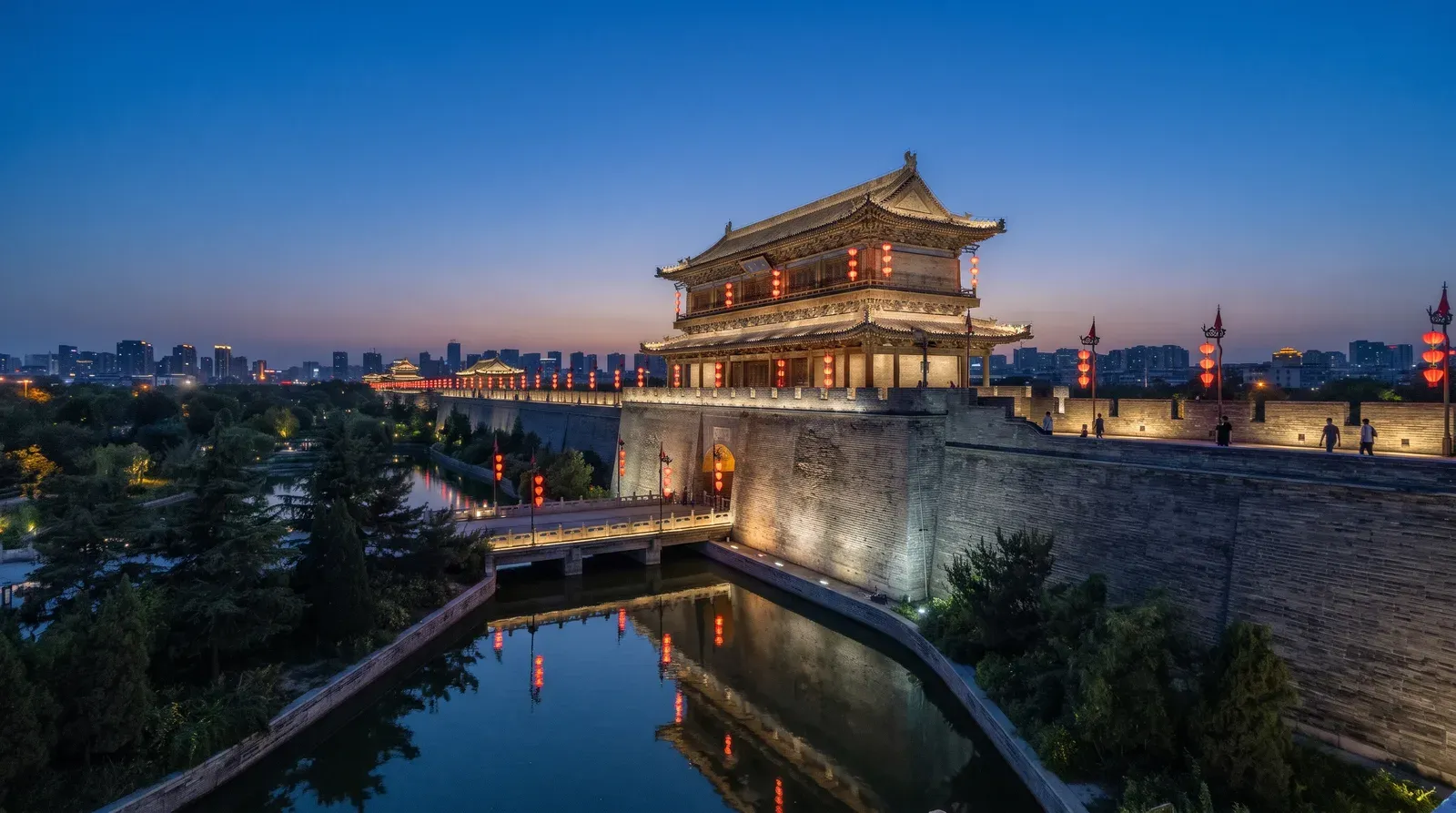
When traveling to Xi'an, China, Lonely Planet recommends planning at least 3 days. A 3-day trip can cover the Terracotta Army museum about 37.5 kilometers east of the city center, the Muslim Quarter, and an evening walk at the illuminated South Gate of the Ming City Wall.
What Are the Opening Hours and Booking Rules for Major Sights in Xi'an?
Both the Emperor Qinshihuang's Mausoleum Site Museum and the Shaanxi History Museum require advance ticket reservations. The mausoleum museum follows different opening hours for peak and low seasons, while the Shaanxi History Museum and its Qinhan Branch have specific ticketing and entry rules.
| Attraction | Opening and Ticket Hours | Closing Time | Reservation Policy |
|---|---|---|---|
| Emperor Qinshihuang's Mausoleum Site Museum (Peak season: Mar 16 to Nov 15) | Open and tickets sold 8:30 to 17:00 | Closes at 18:30 | Real-name booking required via official website or WeChat official account, including visitors from Hong Kong, Macao, Taiwan, and abroad |
| Emperor Qinshihuang's Mausoleum Site Museum (Low season: Nov 16 to Mar 15 of next year) | Open and tickets sold 8:30 to 16:30 | Closes at 18:00 | Real-name booking required via official website or WeChat official account, including visitors from Hong Kong, Macao, Taiwan, and abroad |
| Shaanxi History Museum | Tickets released 5 days in advance at 17:00 daily | Entry based on booked time slot | Real-name booking required in advance |
| Qinhan Branch of Shaanxi History Museum | Open from 8:30, last entry at 17:00 | Closes at 18:00 | Entry follows venue regulations |
How Should You Visit the Mausoleum of the First Qin Emperor and the Terracotta Army?
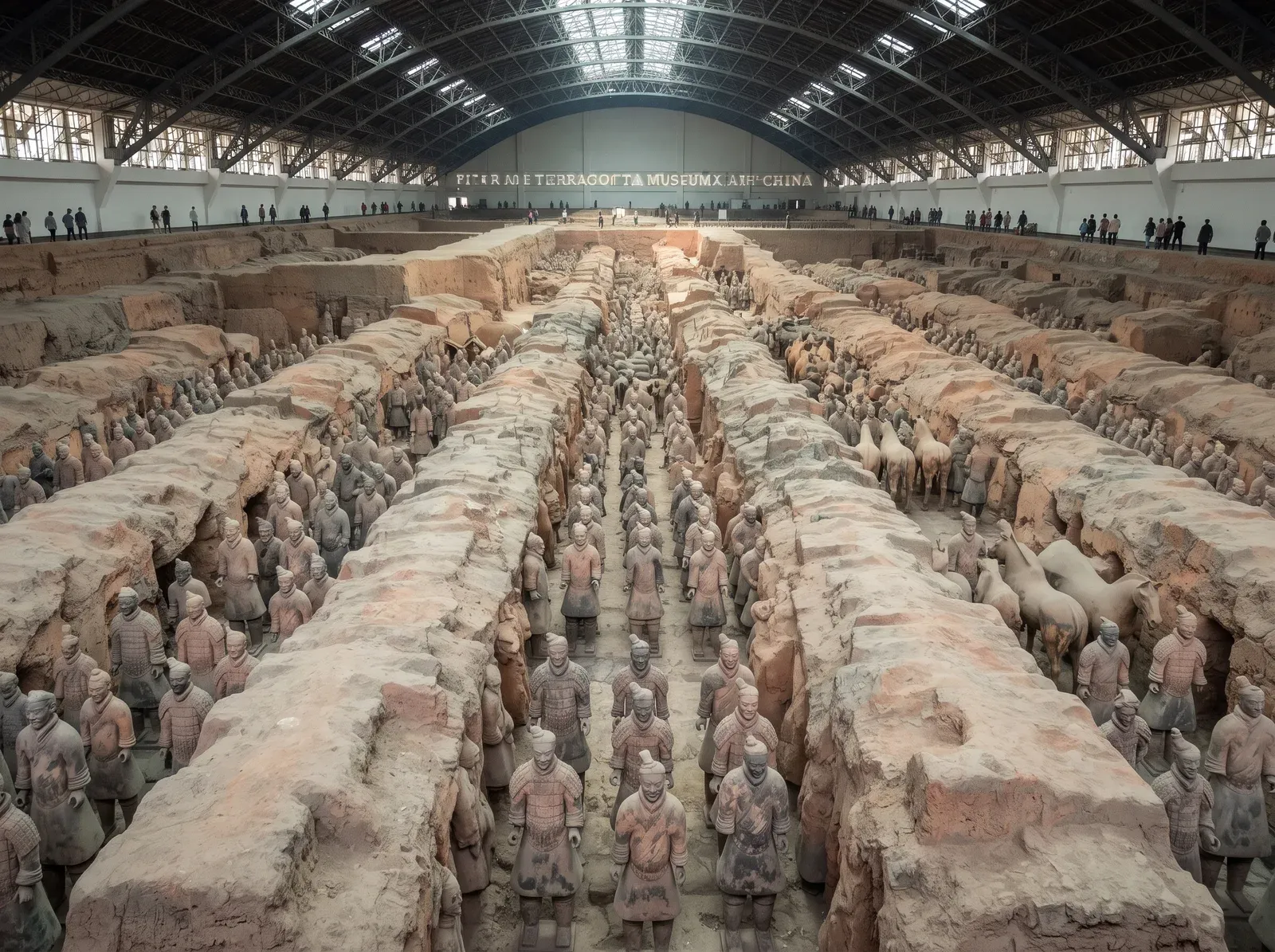
Visiting the Terracotta Army takes about half a day, and an admission ticket includes free shuttle bus rides between the two main areas. Emperor Qinshihuang's Mausoleum Site Museum consists of the Terracotta Warriors Museum and Lishan Garden. According to museum guidelines, each area takes about 1.5 hours to tour.
The Mausoleum of the First Qin Emperor and the Terracotta Warriors pits were inscribed on the UNESCO World Heritage List in 1987. Today, excavation sites and unearthed terracotta figures in Pit 1, Pit 2, and Pit 3 are open to the public. The museum is located about 37.5 kilometers east of the city center, at the northern foot of Mount Li, 7.5 kilometers east of Lintong District.
If you choose public transportation, the Tourism Bus Line 5 (Route 306) runs between the Fangzhicheng Transportation Hub and the Terracotta Army. The first departure is at 8:10 and the last is at 19:00, with fares starting at 2 RMB and costing 5 RMB for the full journey.
What Are the Highlights and Tips for the Ming City Wall and Bell Tower?
When touring the city wall, it helps to prepare for sun exposure and pick the right time of day. According to Wikivoyage, summer midday is hot with intense sunshine, so you should avoid walking on the unshaded wall during peak daytime hours.

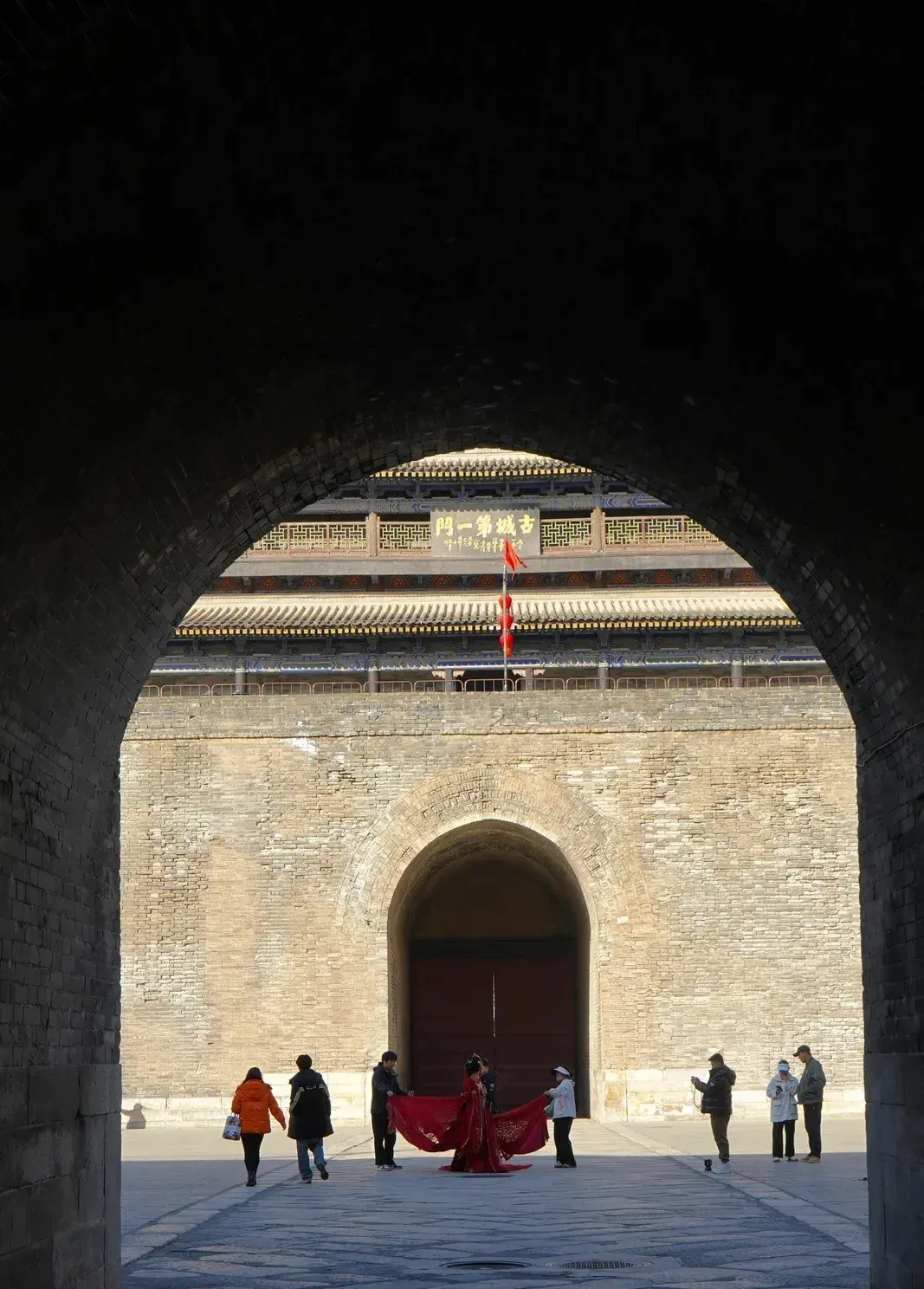
The existing city wall has a perimeter of 13.74 kilometers, stands 12 meters high, measures 15 to 18 meters wide at the base, and 12 to 14 meters wide at the top. The east wall is 2,683 meters long, the west wall is 2,626 meters, the south wall is 4,194 meters, and the north wall is 4,134 meters, enclosing an area of about 12 square kilometers. The wall currently has 18 gates. The 4 main gates built during the Ming dynasty that remain today are Yongning Gate (South Gate), Anyuan Gate (North Gate), Changle Gate (East Gate), and Anding Gate (West Gate).
The Bell Tower in the city center was originally built in 1384, during the seventeenth year of the Hongwu reign in the Ming dynasty. In 1582, during the tenth year of the Wanli reign, it was moved as a whole to the intersection of the four main east, west, south, and north avenues because the city center had shifted eastward. It once served as the central timekeeping and alarm facility for the Ming prefecture.
What Do Historical Records Say About Giant Wild Goose Pagoda and the Silk Road?
Giant Wild Goose Pagoda is a Tang dynasty structure built to store Buddhist scriptures brought back from the west, located inside Da Ci'en Temple. According to historical records, monk Xuanzang oversaw its construction in 652, the third year of the Yonghui reign in the Tang dynasty, to preserve the scriptures and Buddha statues he gathered. Originally five stories tall, it was rebuilt during the Wu Zetian period and repaired across dynasties, becoming the seven-story square brick pagoda standing today.
The Tang dynasty monk Xuanzang traveled westward along the Silk Road between 629 and 654 to seek Buddhist scriptures, recording his observations of the Western Regions after returning. Venetian traveler Marco Polo also arrived at the Yuan capital of Khanbaliq along overland Silk Road routes in 1275 and traveled across Asia for 24 years. UNESCO inscribed the roughly 5,000-kilometer Silk Roads: the Routes Network of Chang'an-Tianshan Corridor in 2014 and the Zarafshan-Karakum Corridor in 2023 on the World Heritage List.
What Are the Classic Local Dishes?
Shaanxi Biangbiang noodles, also known as oil-splashed hand-ripped noodles, originate from Shaanxi cuisine. Because the noodles are as wide and thick as a belt, they are listed as one of the Eight Strange Wonders of Shaanxi.
Shaanxi Roujiamo usually features chopped pork slow-cooked with spices for several hours, tucked inside a baked leavened flatbread called Baijimo, while Gansu versions often use mutton or lamb.
How Do Airport and High-Speed Railway Transfers Work?
Travelers can take the metro directly to and from Xi'an Xianyang International Airport. Metro Line 14 runs between North Railway Station (North Square) and Airport West (T1, T2, T3) stations, with a one-way trip taking about 40 minutes. Civil Aviation Administration of China statistics for 2025 show that annual passenger throughput at the airport reached 48,535,594 passengers, ranking eleventh nationwide.
For intercity travel, the Xi'an to Chengdu high-speed railway opened on Dec 6, 2017. Stretching 510 kilometers with an operating speed of 250 km/h, it shortened rail travel time between the two cities from 16 hours to under 3 hours. Within the city, most city buses charge a flat fare of 2 RMB and accept WeChat Pay, Alipay, and the Chang'an Tong card.
How Does Uncle Panda Travel Pace an Itinerary Here?
Uncle Panda Travel's slow-paced private tour devotes a separate day to the eastern Lintong route, covering the Terracotta Army and Huaqing Palace. Sights inside the city are grouped across days, including the morning market by the city wall, the Bell and Drum Towers, Yongxingfang, Giant and Small Wild Goose Pagodas, and the Grand Tang Mall, with daily walking kept around 9,500 to 10,500 steps. Tours are completely private for just your travel party, with no shopping stops along the way.
Private tours match vehicles to group size: 2 to 3 people travel in a 5-seat sedan or SUV, 4 to 5 people in a 7-seat MPV minivan, and 6 to 7 people in a 9-seat passenger van. On the 14-day classic Beijing, Shaanxi, and Shanghai cultural itinerary, only one hotel is booked per city, avoiding the hassle of constantly repacking and moving heavy luggage. Reference room rates for 4-diamond hotels here are about 400 RMB per room per night, with higher prices during peak seasons.
What Are the Seasonal Factors and Visa-Free Policies?
Regarding seasons, Wikivoyage notes that spring and autumn are the most pleasant times to visit, while summer midday brings strong sun and high heat. If you plan to climb the city wall in summer, avoiding midday hours is recommended.
For transit visa exemptions, eligible citizens of 55 countries holding onward tickets to a third country can enter through designated ports and receive a 240-hour (10-day) transit visa exemption. This allows cross-provincial travel across designated areas in 24 provinces and municipalities, including Shaanxi, Beijing, Shanghai, Sichuan, and Chongqing.
Sources
List of the busiest airports in China - Wikipedia
Biangbiang noodles - Wikipedia
Roujiamo - Wikipedia
Silk Roads: the Routes Network of Chang'an-Tianshan Corridor - UNESCO World Heritage Centre
About the Silk Roads | UNESCO
Silk Road - Facts, History & Location | HISTORY
Silk Road - Wikipedia
Beijing, Xi'an & Shanghai 14-Day Private Tour, Slow Pace
Visa policy of mainland China - Wikipedia
Emperor Qinshihuang's Mausoleum Site Museum Official Website
Xi'an to Chengdu high-speed railway - Wikipedia
Terracotta Army - Wikipedia
Xi'an City Wall - Wikipedia
Shaanxi History Museum - Wikipedia
Giant Wild Goose Pagoda - Wikipedia
Xi'an Bell Tower - Wikipedia
The above sources were verified on Nov 7, 2026.
FAQ
How do international visitors book tickets for the Emperor Qinshihuang's Mausoleum Site Museum?
Emperor Qinshihuang's Mausoleum Site Museum implements real-name reservations. All visitors, including those eligible for free admission policies, visitors from Hong Kong, Macao, and Taiwan, and international travelers, can book tickets online through the official website and WeChat official account.
What time does the Qinhan Branch of Shaanxi History Museum stop admissions?
The Qinhan Branch is open daily from 8:30 to 18:00, with last entry at 17:00. Planning your visit ahead of time is recommended.
How long does the high-speed train take from Xi'an to Chengdu?
Traveling on the Xi'an-Chengdu high-speed railway, with an operating speed of 250 km/h over 510 kilometers, has cut travel time between the two cities from 16 hours to under 3 hours.