Shaanxi China Itinerary: Xi'an, Yan'an, and Mount Hua
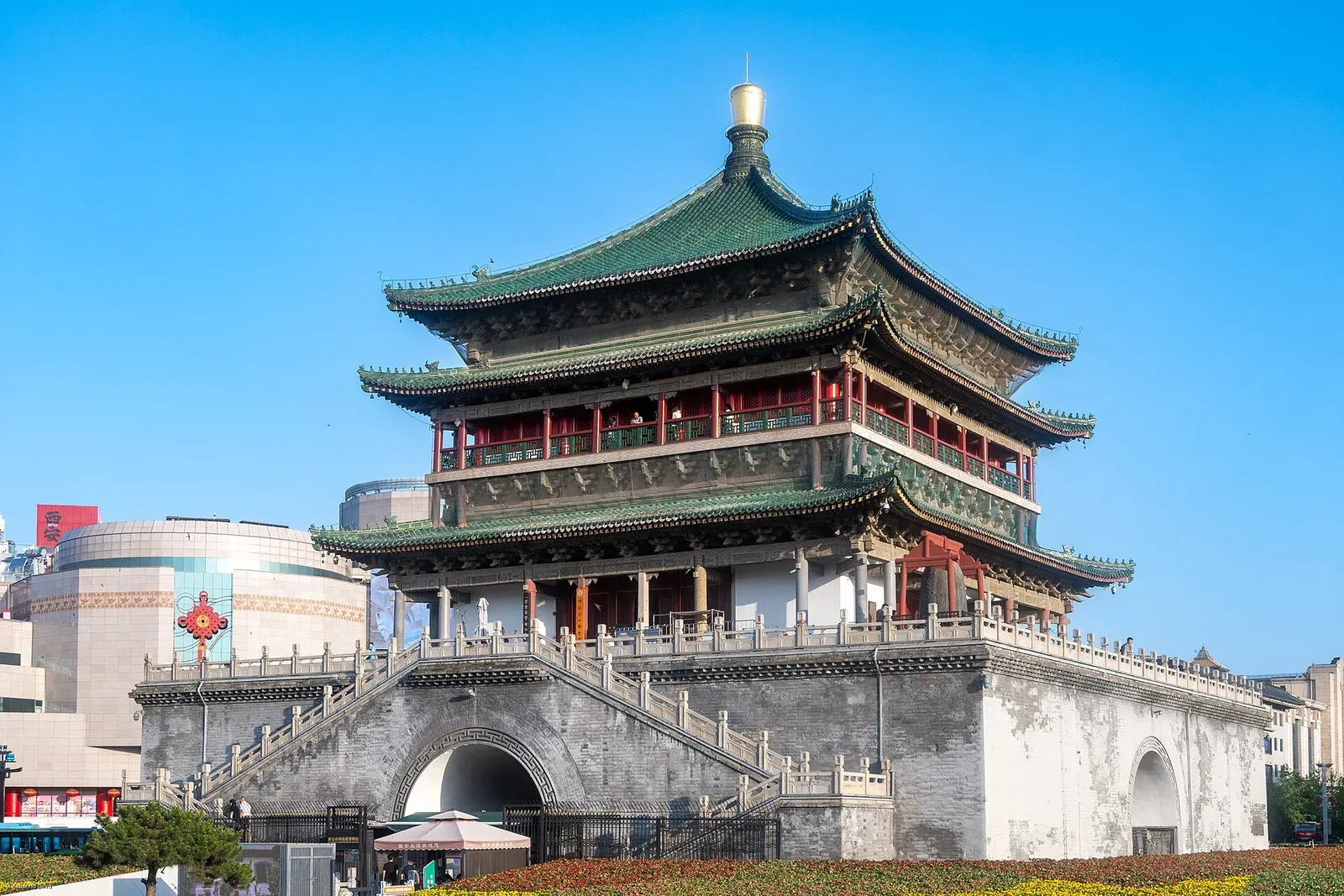
Photo: xiquinhosilva / Wikimedia Commons, CC BY 2.0
A classic route through Shaanxi, China usually centers on Xi'an, linking Mount Hua to the east and Yan'an in northern Shaanxi. We recommend planning 5 to 6 days for the trip. If you ride the cable car to tour the main peaks of Mount Hua, the visit usually takes 5 to 6 hours. Shaanxi Province in China spans distinct climate zones from north to south, with varied scenery across the Guanzhong Plain and the northern Loess Plateau, smoothly linked by rail lines and major highways. Whether you explore historical remains from the Zhou, Qin, Han, and Tang dynasties or take in the sheer peaks of Mount Hua and the Yellow River canyon, allocating enough days to each area is key to a smooth trip.
| Planning Item | Details and Recommendations |
|---|---|
| Suggested travel days | 5 to 6 days (2 days in Xi'an Old Town and Lintong, 1 day at Mount Hua, 2 days in Yan'an) |
| Core geographic areas | Guanzhong Plain (Xi'an City Wall, Terracotta Army), Weinan Mount Hua (five peaks), northern Yan'an (Pagoda Hill, Yellow River Hukou Waterfall) |
| Climate differences | Northern Shaanxi is arid with cold winters and hot summers; most rain on the Guanzhong Plain falls during warm months |
| Key ticket booking rules | Emperor Qinshihuang's Mausoleum Site Museum requires real-name booking; Shaanxi History Museum releases tickets 5 days in advance |
| Signature local dishes | Roujiamo with braised pork, liangpi cold noodles, oil-splashed noodles, beef and mutton paomo, and hulutou pork intestine soup |
How to Plan a Shaanxi, China Itinerary: How Many Days for Xi'an, Mount Hua, and Yan'an?
For a classic loop across the province, a 5-day, 4-night or 6-day, 5-night plan works best. Spend the first 2 days visiting central Xi'an and the eastern Lintong route on the Guanzhong Plain, seeing the Emperor Qinshihuang's Mausoleum Site Museum, the Giant Wild Goose Pagoda, and the Xi'an City Wall. On day 3, head to Huayin in Weinan to take on Mount Hua. On days 4 and 5, travel north by high-speed train or expressway to explore historic sites in Yan'an and the Yellow River Hukou Waterfall along the Jin-Shan Gorge.
If you prefer natural wonders and mountain hiking, focus on Mount Hua and Hukou Waterfall. If ancient history interests you more, spend most of your time in Xi'an's historic center and eastern Lintong. Traveling between these areas is simple, with direct bullet trains linking the Guanzhong Plain to the Loess Plateau, alongside expressways and tourist bus routes connecting major sights.
Heart of Guanzhong: How to Tour Xi'an and the Eastern Lintong Route
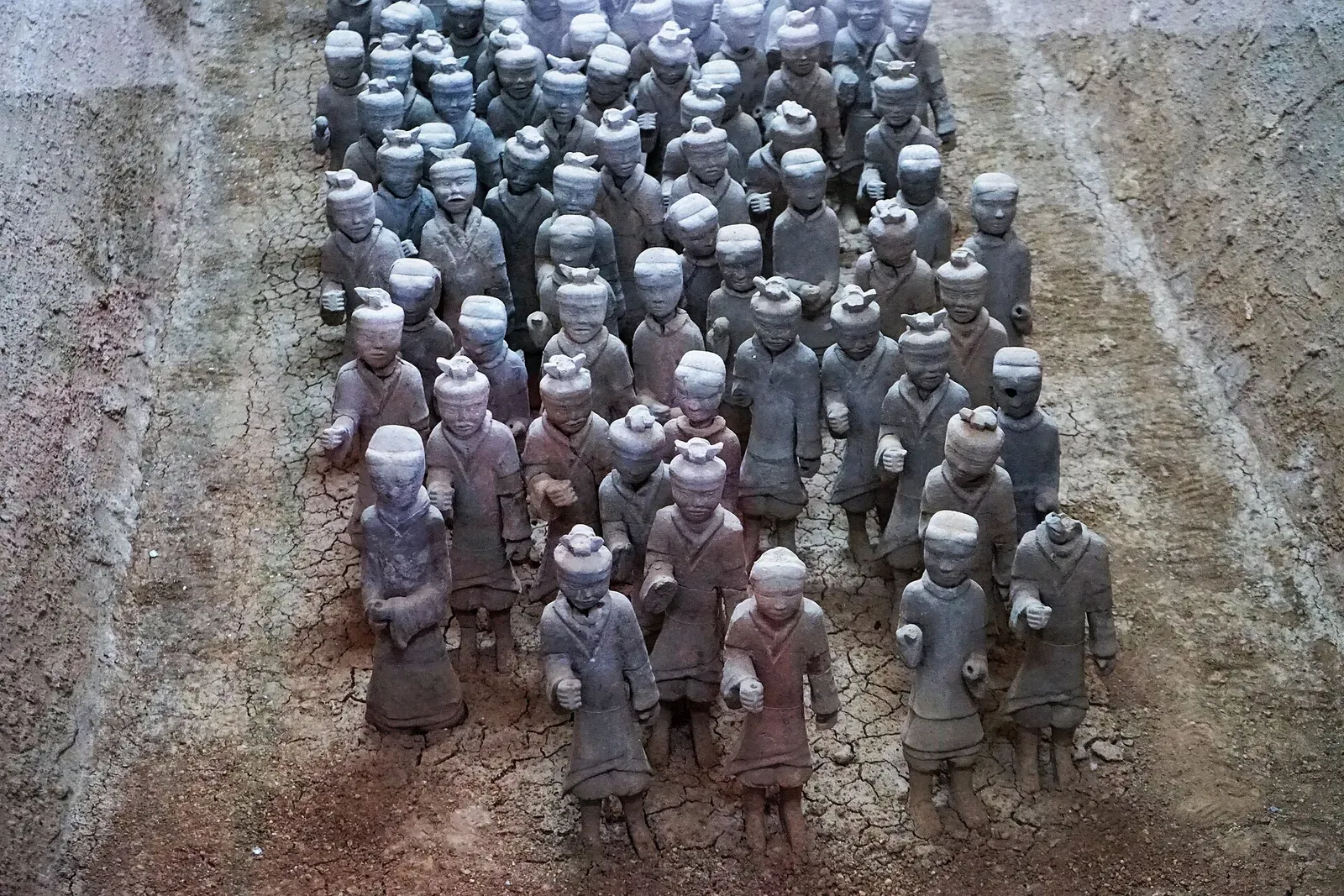
Xi'an serves as the starting point and main transport hub for the trip. To the east in Lintong, the Terracotta Army Museum lies about 37.5 kilometers east of downtown Xi'an. The scenic area consists of two parts: the Terracotta Warriors Museum and Lishan Garden. Each section takes around 1.5 hours to tour, and ticket holders can take the free shuttle bus between them. Walking into Pit 1, Pit 2, and Pit 3, you can view the excavated Qin dynasty terracotta formation at close range. Also in Lintong, Huaqing Palace, an imperial retreat of the Tang dynasty, originated as Tangquan Palace built in the 18th year of Zhenguan, and was renamed Huaqing Palace and expanded in the 6th year of Tianbao.
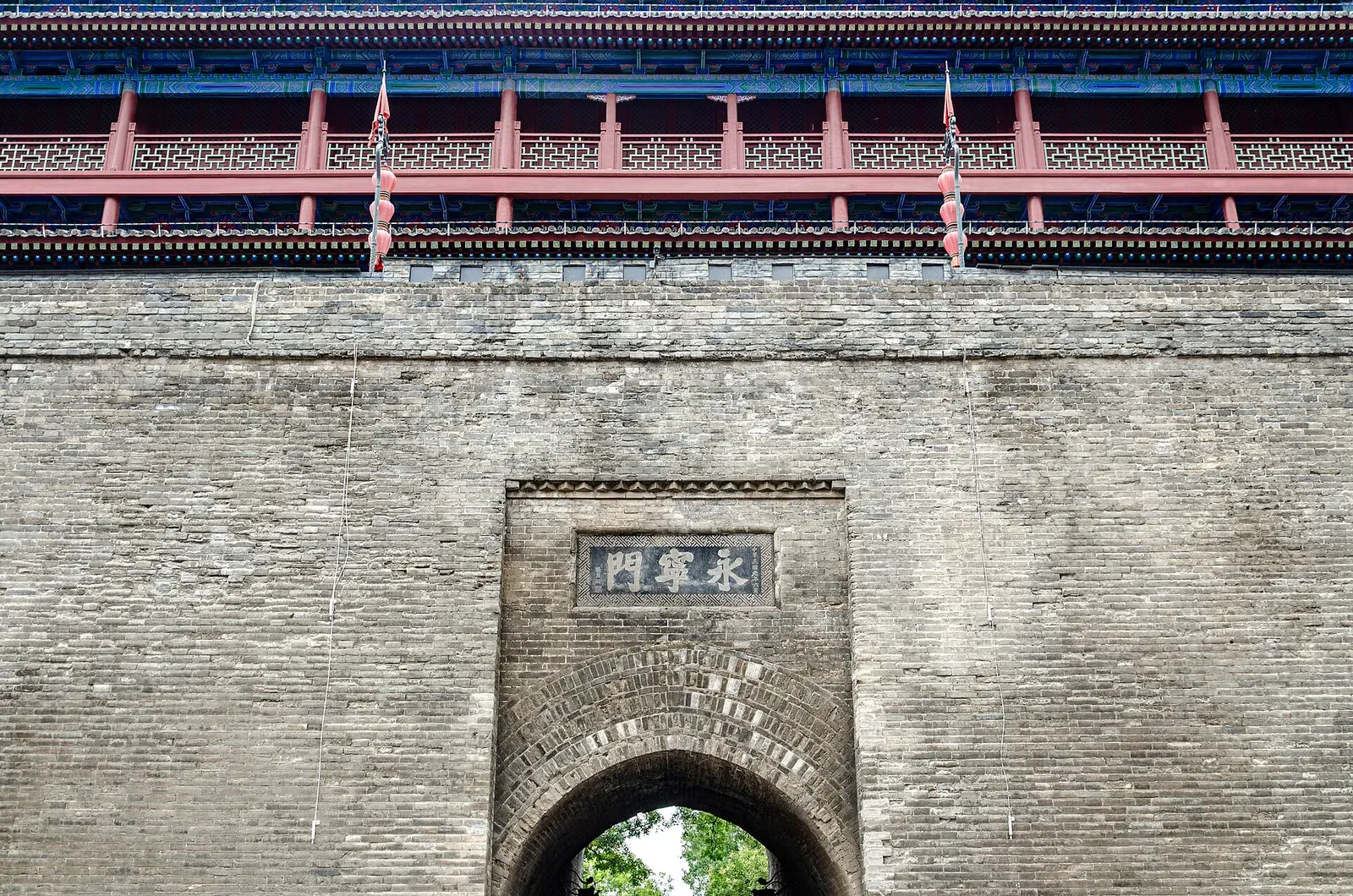
In urban Xi'an, the existing perimeter of the Xi'an City Wall is 13.74 kilometers, with the east wall measuring 2,683 meters, the west wall 2,626 meters, the south wall 4,194 meters, the north wall 4,134 meters, and an inner area of about 12 square kilometers. Visitors can climb the wall to rent bicycles. Single bicycles cost 45 yuan for 180 minutes, tandem bicycles cost 90 yuan for 180 minutes, and a 100-yuan deposit is required. In addition, the Giant Wild Goose Pagoda inside Da Ci'en Temple was first built in the 3rd year of Yonghui during the Tang dynasty; the surviving structure is a seven-story square brick pagoda formed by Wu Zhou reconstruction and later restorations. The Qin-Han branch of Shaanxi History Museum is open daily from 8:30 to 18:00.
Tip: Emperor Qinshihuang's Mausoleum Site Museum enforces real-name booking for all visitors, including eligible free-entry guests, foreign travelers, and visitors from Hong Kong, Macao, and Taiwan, who must reserve tickets in advance on the official website or WeChat official account. Opening hours at gates of the Xi'an City Wall vary: Yongning Gate (South Gate) and Jianguo Gate remain open until 22:00, while Changle Gate, Wenchang Gate, and Hanguang Gate close access at 18:00.

| Attraction | Opening Hours | Booking and Ticket Rules |
|---|---|---|
| Emperor Qinshihuang's Mausoleum Site Museum | Peak season 8:30 to 18:30 (low season 8:30 to 18:00) | Real-name booking on official website and WeChat public account; free round-trip shuttle between the Terracotta Army and Lishan Garden with ticket |
| Xi'an City Wall | Yongning Gate and Jianguo Gate 8:00 to 22:00 (Wenchang Gate and Hanguang Gate 8:00 to 18:00) | Online real-name ticket booking; adult tickets 54 yuan, student tickets 27 yuan |
| Qin-Han Branch of Shaanxi History Museum | Daily 8:30 to 18:00 (last entry at 17:00) | Shaanxi History Museum tickets release 5 days in advance (daily release time is 17:00) |
Mount Hua: Day Hike or Overnight Trek for Sunrise?
Mount Hua sits south of Huayin in Weinan, about 120 kilometers east of Xi'an, and was listed among the first national key scenic spots in 1982. It features five main peaks: South Peak (Luoyan), the summit, rises to 2,154.9 meters; West Peak (Lianhua), shaped like a lotus blossom, reaches 2,082 meters; North Peak (Yuntai) stands at 1,614.7 meters; and East Peak (Chaoyang) is the prime spot for watching the sunrise. The West Gate of Mount Hua stays open 24 hours a day, while the East Gate opens from 7:00 to 19:00 during peak season. Admission tickets are valid for 2 days and cover the Xiyue Temple scenic area and Xianyu.
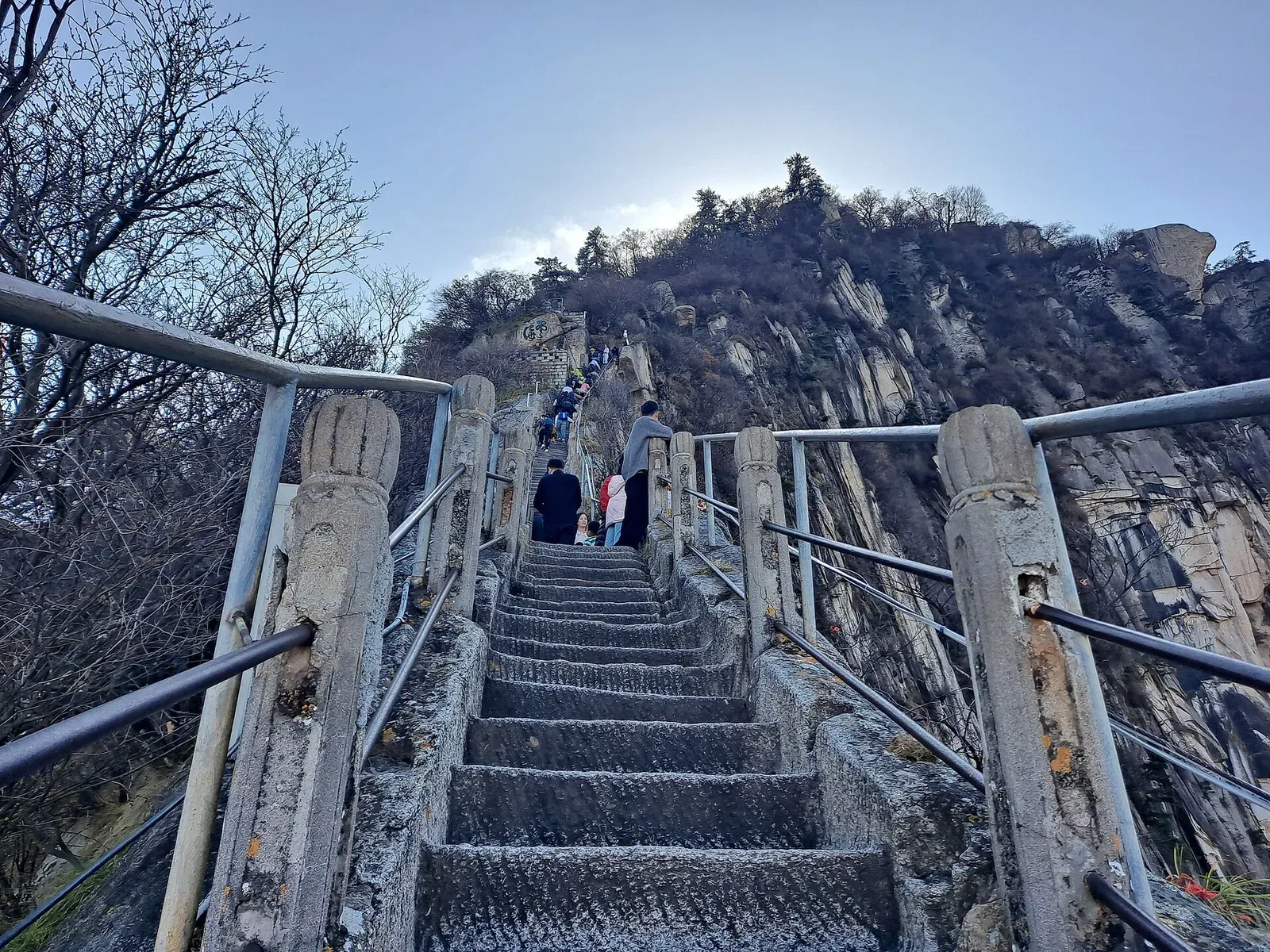
For visitors with limited stamina or those planning a single-day round trip, taking the cable car to reach the summit and tour the central peaks requires 5 to 6 hours. Moving from North Peak to the other four main peaks requires climbing more than 300 meters along the narrow ridge of Canglong Ridge, though the scenic area built a new bypass trail on the east side of Canglong Ridge in 1998. If you enjoy hiking adventures and climbing to watch the sunrise, the traditional trail links core sights including Qianchizhang, Baichixia, the Chaoyang Platform on East Peak, Yaozi Fanshen (Sparrow Hawk Turning), the Chess Pavilion, the South Gate of Heaven, the Plank Walk in the Sky, the South Peak summit, and the Axe Split Rock on West Peak. A classic night climb typically sets out from Huashan Gate at 9 p.m., climbs through Qianchizhang and Baichixia, and reaches the East Peak sunrise viewing platform around 5 a.m. the next morning.
| Main Peaks of Mount Hua | Landform Features and Sights |
|---|---|
| South Peak (Luoyan Peak) | The highest peak and summit of Mount Hua, elevation 2,154.9 meters, surrounded by the Plank Walk in the Sky and South Gate of Heaven |
| West Peak (Lianhua Peak) | Elevation 2,082 meters, shaped like a lotus and offering the most striking scenery, home to the Axe Split Rock on West Peak |
| North Peak (Yuntai Peak) | Elevation 1,614.7 meters; traveling to the other four main peaks requires climbing more than 300 meters along the narrow ridge of Canglong Ridge |
| East Peak (Chaoyang Peak) | The spot for watching sunrise, with a hotel available for overnight stays, and nearby Chaoyang Platform and the Chess Pavilion |
Northern Shaanxi: Key Highlights of Yan'an Historic Sites and Hukou Waterfall
Yan'an sits on the Loess Plateau in northern Shaanxi Province, China, covering a total area of 37,031 square kilometers as a national historical and cultural city. The city preserves numerous historical sites. In Wangjiaping, the Yan'an Revolutionary Memorial Hall has a main building area of 29,853 square meters, operates as a national first-grade museum, and opens free to the public; the Zaoyuan Revolutionary Site also offers free entry. The urban landmark Pagoda Hill rises to an elevation of 1,135.5 meters, topped by a 44-meter-tall nine-story octagonal brick pavilion pagoda dating to the Ming dynasty, where you can look out over urban Yan'an and the Yan River.
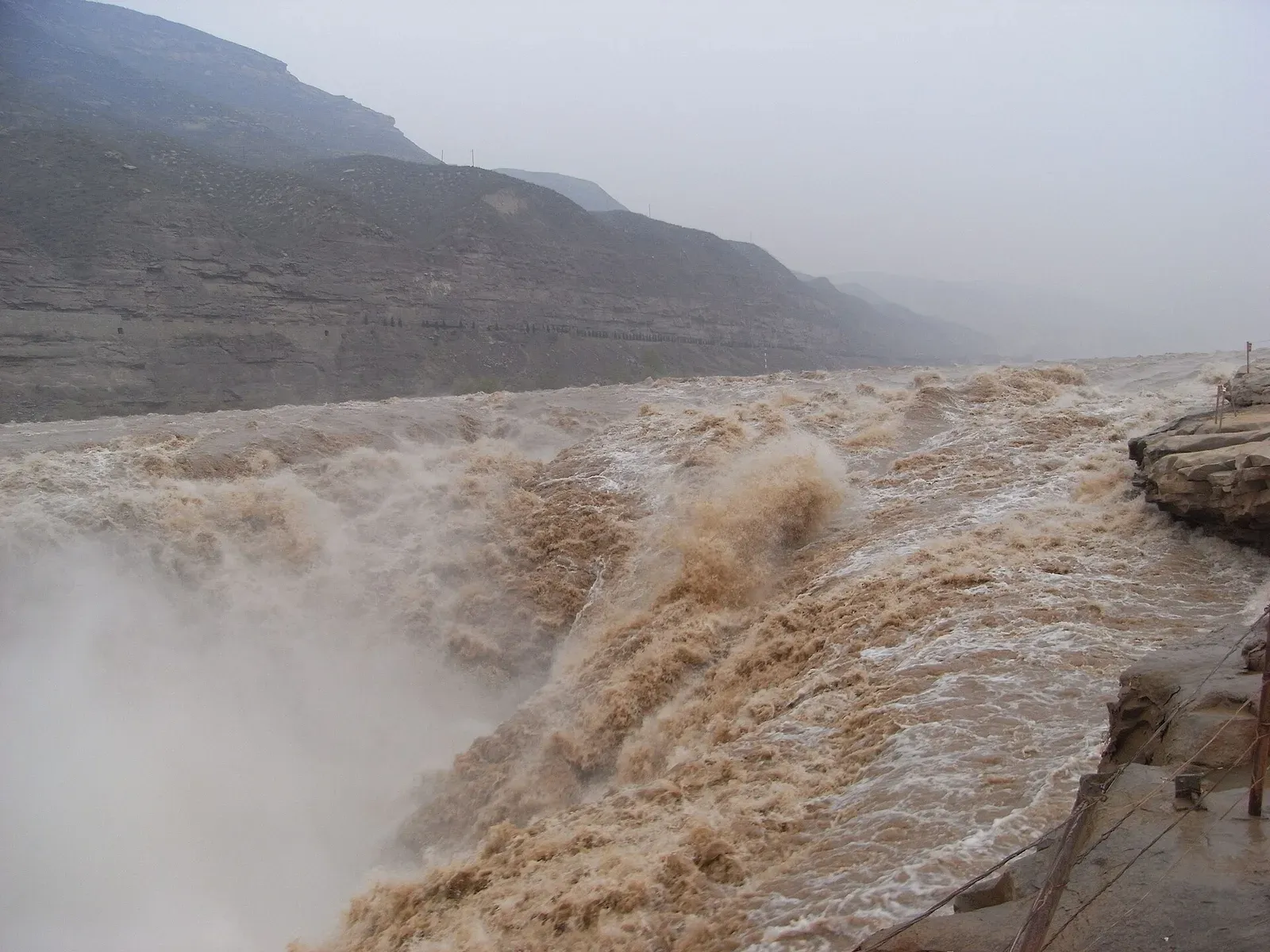
Beyond the city center's historic landmarks, surrounding natural and cultural sites form major highlights of northern Shaanxi. The Yellow River Hukou Waterfall, located in the Jin-Shan Gorge in Hukou Township of Yichuan County, spans 30 meters wide and about 50 meters deep. With an annual average temperature of 9.9°C, rainfall concentrates between June and September, with total precipitation in July and August exceeding 100 millimeters, creating its most powerful torrents. On the way south from Yan'an back to Xi'an, you can stop at Mount Qiao in Huangling County to visit the Mausoleum of the Yellow Emperor, which was included in imperial sacrificial ceremonies in the 5th year of Dali during the Tang dynasty and designated among the first national key cultural relics protection units in 1961. As this guide provides a province-wide overview, you can check our dedicated Yan'an travel guide for in-depth itineraries.
Tip: Yan'an Revolutionary Memorial Hall is open daily from 8:00 to 16:00, but stops admissions at 15:30, so plan your afternoon visit early. Admission to Pagoda Hill is 65 yuan, with an additional 10-yuan fee if you wish to enter the pagoda itself.
Intercity Transport: How to Travel from Xi'an to Mount Hua and Yan'an
Connecting Mount Hua and Yan'an from Xi'an is straightforward thanks to modern transport links. For airport and rail transfers, travelers can take Xi'an Metro Line 14 between Beikezhan (Beiguangchang) Station and Airport West (Jichangxi) Station, which takes about 40 minutes one way. To reach the Terracotta Army from downtown Xi'an, you can take Tourist Bus 5 (Route 306) from the Fangzhicheng transport hub; the first bus leaves at 8:10 and the last at 19:00, with fares starting at 2 yuan up to 5 yuan for the full route.
Heading toward Mount Hua, Huayin is served by the Longhai Railway and the Xuzhou-Lanzhou High-Speed Railway. Huashan North Station, a second-class passenger station, sits about 5.3 kilometers from the Mount Hua scenic area, with local shuttles connecting directly to the gate. Toward northern Yan'an, the city lies 371 kilometers north of Xi'an, connected by the 305-kilometer Yanxi Expressway. By rail, high-speed and bullet trains run from Xi'an North Station to Yan'an Station in about 2 hours and 15 minutes. If you take the high-speed train to Yan'an, city buses outside Yan'an Station take you straight to Pagoda Hill or the Revolutionary Memorial Hall. Yan'an city buses charge a flat fare of 2 yuan for air-conditioned buses or 1 yuan for standard buses; Yan'an Naniwan Airport operates direct shuttle buses to downtown with a flat fare of 20 yuan across all lines.
Tip: When traveling between regions, store large heavy luggage at your hotel in Xi'an and carry a light daypack on the high-speed train for a day trip to Mount Hua. For Yan'an in northern Shaanxi, pack a change of clothes for a 2-day, 1-night stay before returning to Xi'an, avoiding the hassle of dragging bulky suitcases between sights.
| Route Section | Transport Mode | Travel Time, Distance, or Fare |
|---|---|---|
| Xi'an North Station to Yan'an Station | Bullet trains and high-speed trains | Travel time is about 2 hours and 15 minutes |
| Beikezhan North Square Station to Airport West Station | Xi'an Metro Line 14 | One-way travel time is about 40 minutes |
| Fangzhicheng Hub to Terracotta Army | Xi'an Tourist Bus 5 (Route 306) dedicated line | Starting fare 2 yuan (full fare 5 yuan, first bus 8:10, last bus 19:00) |
| Yan'an Naniwan Airport to downtown | Airport shuttle bus | Flat fare of 20 yuan across all routes |
| Huashan North Station to Mount Hua Scenic Area | Station-to-scenic area connection | The station is about 5.3 kilometers from Mount Hua Scenic Area |
| Regular bus routes in downtown Yan'an | City public bus | Flat fare of 2 yuan for air-conditioned buses or 1 yuan for regular buses |
Shaanxi Specialties and Practical Travel Advice
Shaanxi has a deep food culture. Classic dishes across the Guanzhong Plain include roujiamo with braised pork, liangpi cold noodles, oil-splashed noodles, hulutou pork intestine soup, bangbang pork, and beef or mutton paomo. Shaanxi roujiamo typically pairs spiced pork stewed for hours, finely chopped, inside a baked leavened flatbread called baijimo; some versions in Xi'an use beef, while nearby Gansu often uses mutton. Shaanxi biangbiang noodles, also known as oil-splashed hand-pulled noodles, are famously wide like a belt and ranked among the 'Eight Curiosities of Shaanxi,' topped with chili flakes and scallions sizzled in boiling oil. In northern Shaanxi, meals center around clear-broth stewed mutton and coarse grain noodles.
Based on the on-site rules at scenic areas in Shaanxi, China, keep several common misconceptions in mind on a first trip: first, Emperor Qinshihuang's Mausoleum Site Museum consists of the Museum of Qin Terracotta Warriors and Horses and Lishan Garden, each taking about 1.5 hours to tour, and visitors can take the free round-trip shuttle between the two sites with their ticket; second, Xi'an City Wall tickets cost 54 yuan for adults and 27 yuan for students, single bicycle rentals cost 45 yuan for 180 minutes with an extra 5 yuan charged for every 10 minutes overdue, and a 100-yuan deposit is required; third, taking the cable car to reach the summit and tour the central peaks of Mount Hua requires 5 to 6 hours, and night climbs to watch the sunrise usually set out from Huashan Gate at 9 p.m.; fourth, Yan'an Revolutionary Memorial Hall is open daily until 16:00 but stops admission at 15:30, so pay attention to the closing time when scheduling an afternoon visit.
Sources
Biangbiang noodles - Wikipedia
Roujiamo - Wikipedia
Yan'an - Wikipedia
Emperor Qinshihuang's Mausoleum Site Museum Official Website
Terracotta Army - Wikipedia
Xi'an City Wall - Wikipedia
Shaanxi History Museum - Wikipedia
Giant Wild Goose Pagoda - Wikipedia
Huaqing Pool - Wikipedia
Shaanxi cuisine - Wikipedia
Mount Hua - Wikipedia
Huashan North Railway Station - Wikipedia
Mount Hua - Wikipedia
Yan'an - Wikipedia
Hukou Waterfall - Wikipedia
Pagoda Hill - Wikipedia
Yan'an Revolutionary Memorial Hall - Wikipedia
Huayin - Wikipedia
Mausoleum of the Yellow Emperor - Wikipedia
Sources verified on November 19, 2026
FAQ
Should I visit Mount Hua or Yan'an first on a Shaanxi trip?
We usually suggest visiting Xi'an and Lintong first, followed by a day trip to Mount Hua, and finally heading north to Yan'an. Mount Hua is closer to Xi'an, and hiking it requires substantial energy. Taking the high-speed train back to Xi'an to rest before taking the bullet train north to Yan'an makes for a much smoother pace.
Do I have to do the full night hike to see the sunrise on Mount Hua? Can I stay overnight on the mountain?
You do not have to hike overnight to see the sunrise on Mount Hua. East Peak (Chaoyang Peak) has a hotel on its summit for overnight stays. You can take the cable car up during the day, check in at the East Peak Hotel, and walk straight to Chaoyang Platform early the next morning. This avoids the exhaustion of walking all night while still letting you catch the morning view.
How many days in advance should I book tickets for the Terracotta Army, and how do international visitors buy tickets?
Emperor Qinshihuang's Mausoleum Site Museum requires real-name booking for all visitors, including eligible free-entry guests, visitors from Hong Kong, Macao, and Taiwan, and foreign travelers, who can reserve tickets online through the official website or WeChat official account. Ticket sales during peak season run from 8:30 to 17:00, so book on official platforms as soon as your travel dates are set.
Which months have the highest water volume at the Yellow River Hukou Waterfall?
Precipitation at Hukou Waterfall concentrates between June and September each year, with July and August recording over 100 millimeters of rainfall. During this period, the Yellow River flows at high volume, creating its most thunderous cascades and offering prime conditions to see the gorge torrents.
How much are admission tickets for Pagoda Hill and Yan'an Revolutionary Memorial Hall in downtown Yan'an?
Yan'an Revolutionary Memorial Hall is free to the public and open daily from 8:00 to 16:00. Admission to the Pagoda Hill scenic area is 65 yuan, with an additional 10-yuan fee if you want to climb inside the nine-story Ming dynasty brick pagoda.