
What Do Chinese People Eat for Breakfast? Classic Dishes
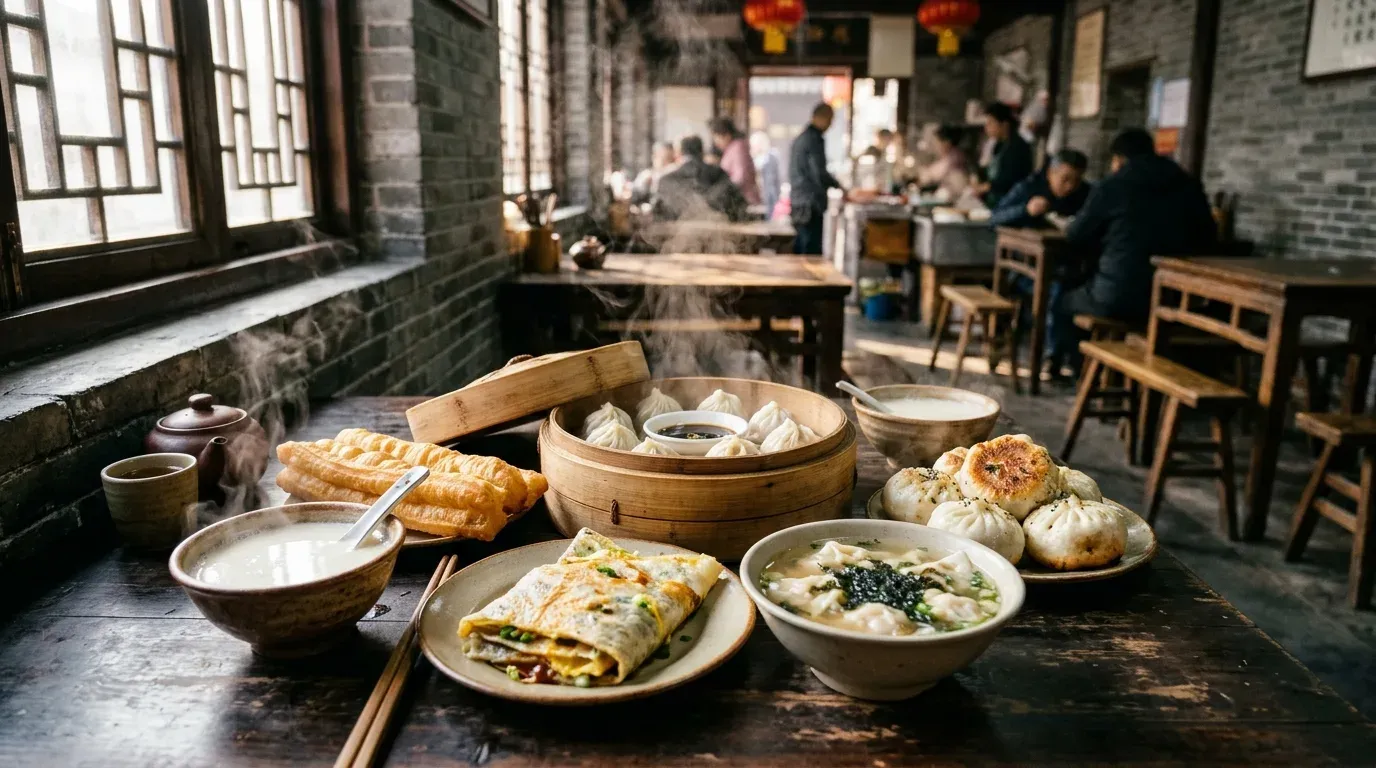
When asking what do Chinese people eat for breakfast, most morning meals are savory, served hot, and boldly seasoned, though sweet items are also common. Some street eateries fire up their stoves as early as 5:00 am, and buying freshly cooked breakfast from street stalls or neighborhood diners is a widespread daily routine across the country. The most common breakfast foods are starchy carbohydrates, including noodles, congee, dumplings, steamed buns, and griddled flatbreads, while soy products like soy milk and douhua (tofu pudding) are enjoyed nationwide.
| Breakfast Item | Region | Preparation and Ordering |
|---|---|---|
| Tianjin jianbing guozi | Tianjin | Pure mung bean crepe spread with sweet bean sauce, sprinkled with scallions, and wrapped around a youtiao; cooked fresh to order on a round griddle, requiring a few minutes in line |
| Lanzhou beef noodles | Lanzhou | Characterized by one clear broth, two white radish, three red chili oil, four green herbs, and five yellow noodles; diners can specify noodle thickness when ordering |
| Wuhan hot dry noodles | Wuhan | Seasoned with thick sesame paste, soy sauce, pickled yardlong beans or pickled radish, then tossed and served within a few minutes |
| Cantonese morning tea and steamed rice rolls | Guangdong | Diners order a pot of hot tea with two baskets of dim sum in teahouses; smooth, thin pure rice sheets roll around meat or seafood and are drizzled with seasoned soy sauce |
| Shanghai pan-fried buns | Shanghai | A classic Shanghai breakfast specialty with a crisp golden bottom, soft tender top dough, and savory, juicy meat filling |
What wheat-based and savory flavors define classic northern breakfasts?
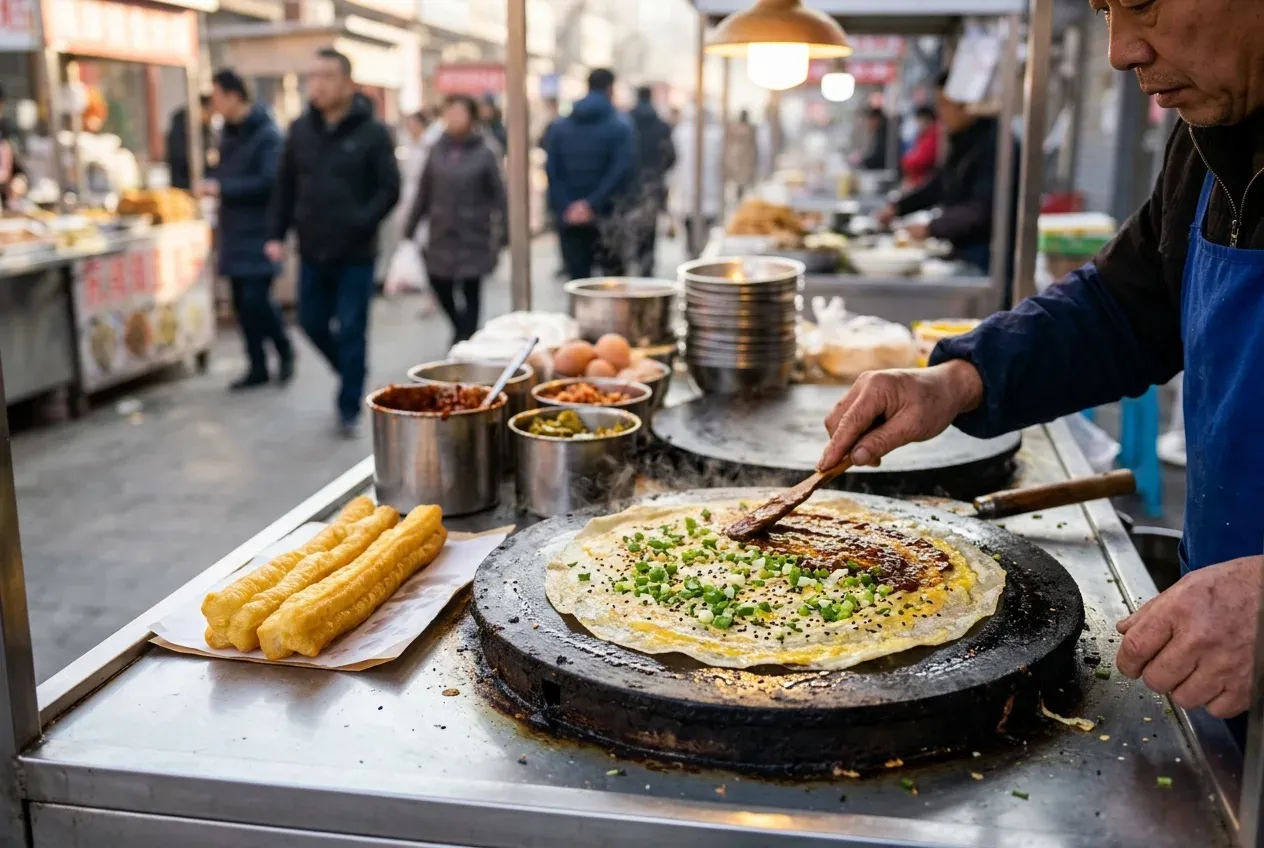
Tianjin jianbing (煎饼果子) is a northern street classic. Vendors spread pure mung bean batter over a circular flat griddle, brush it with sweet bean sauce, scatter chopped scallions, and roll up a golden, crisp youtiao (fried dough stick). Unlike Shandong multigrain jianbing, which commonly wraps a brittle fried cracker, the Tianjin version has a softer texture from the mung bean flour and usually wraps a youtiao. Street jianbing is never made ahead of time. Every portion is spread and rolled fresh after you order to keep the dough stick crisp, which usually means waiting in line for a few minutes.
The craftsmanship of Lanzhou beef noodles was officially added to China's National Intangible Cultural Heritage list in 2021. A standard bowl features five clear hallmarks: clear beef broth, white radish slices, red chili oil, green cilantro and garlic sprouts, and yellow hand-pulled noodles. When ordering, you can specify your preferred noodle thickness from traditional options: maoxi (capillary thin), xi (fine), sanxi (third fine), erxi (second fine), cu (thick), jiuye (flat leek-leaf width), kuan (wide), and dakuan (extra wide).
The most traditional breakfast pairing for Beijing locals is fermented douzhi (fermented mung bean milk) served with fried crispy dough rings (jiaoquan). Douzhi tastes most authentic when sipped piping hot fresh from the pot. Northern baked shaobing flatbreads come in savory and sweet versions: savory ones can hold braised beef, smoked pork, or spiced minced meat, while sweet ones often feature red bean paste or black sesame. People also sandwich a youtiao inside a sesame shaobing to eat together as shaobing jia youtiao.
Tip: If you find the sour fermented taste of Beijing douzhi challenging on your first try, the classic local way is to take it together with a bite of crispy jiaoquan and shredded pickled vegetables.
How do southern breakfasts showcase rice dishes, dim sum, and bold flavors?
In Wuhan, having breakfast is called guozao in the local dialect. A bowl of hot dry noodles usually costs between 4 and 6 RMB and is tossed and served in just a few minutes. Typical seasonings include thick sesame paste, soy sauce, pickled yardlong beans or pickled radish cubes, minced scallions and garlic, and red chili oil. In Chongqing, locals like to start the day with a bowl of street-style Chongqing noodles (xiaomian) packed with numbing spice, making it one of the most heavily seasoned and spicy morning dishes in China.
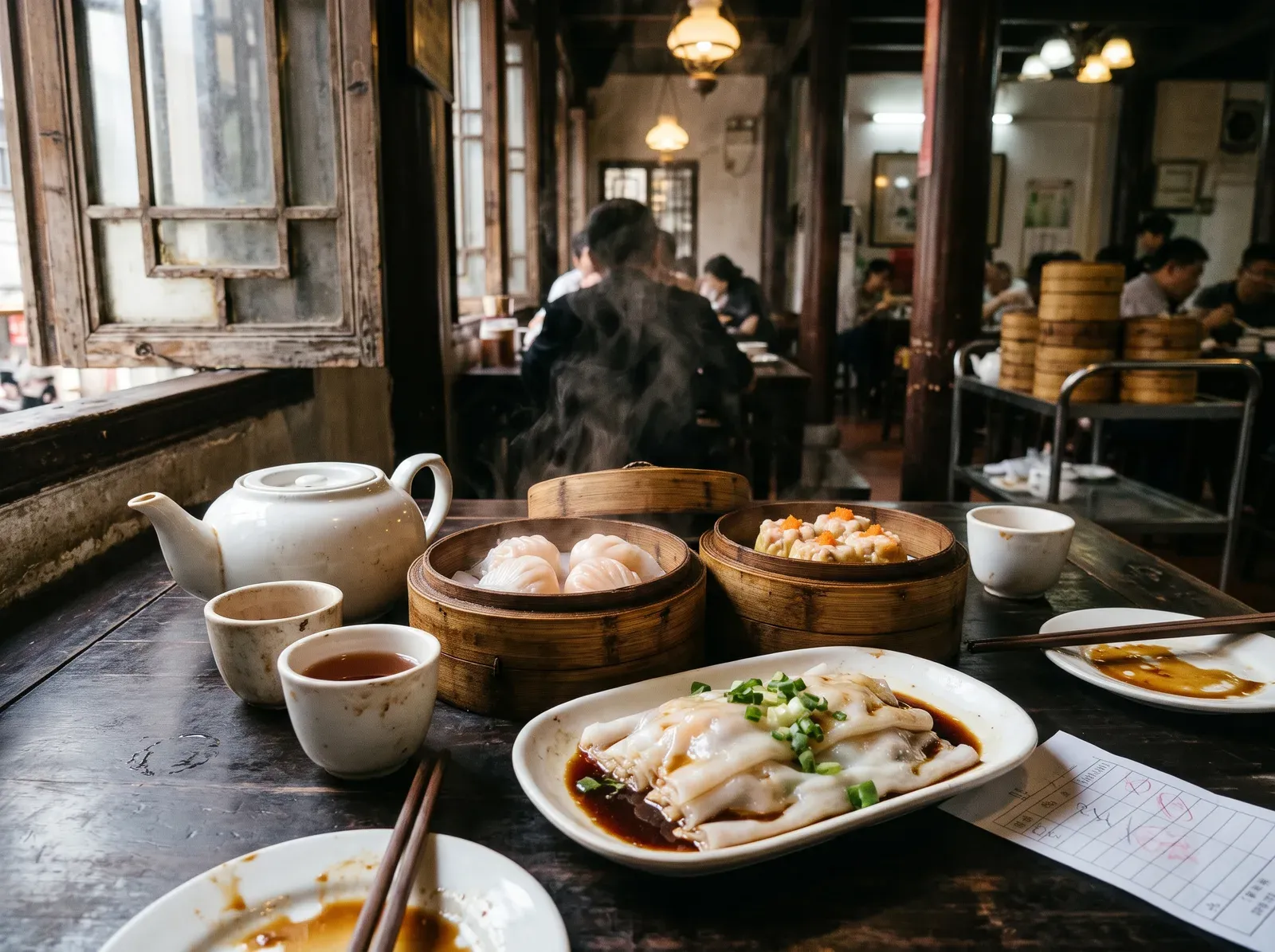
Cantonese morning tea culture traditionally centers on 'one pot and two pieces', where diners order a pot of hot tea alongside two baskets of delicate dim sum at a teahouse. Another staple of Guangdong mornings is steamed rice noodle rolls (changfen). Pure rice slurry is steamed into thin, slippery sheets, rolled around meat or seafood, and drizzled with seasoned soy sauce, fitting the southern rice-growing culinary tradition.
Shanghai's traditional breakfast revolves around the 'Four Heavenly Kings': soy milk, youtiao, flatbread (dabing), and sticky rice rolls (cifantuan). The city's signature pan-fried buns (shengjianbao) feature a golden crisp bottom, a soft doughy top, and a savory, juicy pork filling. Across the Jiangnan region, soup dumplings (xiaolongbao) are usually paired with Zhenjiang aromatic vinegar and ginger shreds to balance the richness, often served alongside a bowl of clear broth in traditional shops.
Tip: Freshly steamed xiaolongbao contain scalding hot broth, so gently bite a small opening first to sip the soup before eating the dumpling to avoid burning your tongue.
How do douhua and soy milk differ between northern and southern China?
Douhua (tofu pudding) highlights a clear regional divide across China, with each region following its own seasoning style. Northern savory douhua is seasoned with a soy-sauce-based gravy; inland cities often top it with minced meat, pickled mustard stems, and wood ear mushrooms, while northern coastal cities frequently add dried seaweed and tiny dried shrimp. The southwestern Sichuan and Chongqing region prefers a numbing spicy seasoning, while southern China and Hong Kong serve sweet douhua topped with brown sugar syrup or ginger syrup.
| Soy Product Category | Region | Seasoning and Toppings |
|---|---|---|
| Savory douhua | Northern inland cities | Seasoned with soy-sauce gravy, often paired with minced meat, pickled mustard stem, and wood ear mushrooms |
| Savory douhua | Northern coastal cities | Seasoned with soy-sauce gravy, typically with added seaweed and tiny dried shrimp |
| Douhua | Southwestern Sichuan-Chongqing | Flavored with a numbing spicy taste |
| Sweet douhua | Southern China and Hong Kong | Served with brown sugar or ginger syrup |
| Savory soy milk | Shanghai | Made with seaweed, dried shrimp, chopped pickled mustard stem, and scallions with soy sauce, served with sliced pieces of fried youtiao soaked inside |
Shanghai's savory soy milk is seasoned not with plain salt, but with seaweed, dried shrimp, chopped pickled mustard stem, scallions, and a splash of soy sauce, with pieces of fried youtiao submerged inside. As China's most widespread breakfast fried dough, youtiao is dipped into sweet or savory soy milk, paired with plain rice congee, or eaten with hot sweetened milk; in places like Shanghai, it is also rolled inside glutinous rice to make cifantuan.
If you prefer savory, rich flavors, you can try gravy-topped douhua in the north or loaded savory soy milk in Shanghai. If you prefer light and sweet tastes, southern China offers smooth douhua drizzled with sweet syrup.
What should you know when ordering at street stalls or teahouses?
Ordering at Chinese street stalls and curbside eateries usually moves at a brisk pace, so knowing local dining customs and etiquette helps everything go smoothly. Whether picking up freshly cooked snacks at an open stall or sitting down for dim sum at a teahouse, each setting has established practices.
| Breakfast Item and Setting | Dining Etiquette and Customs |
|---|---|
| Street jianbing guozi | Never made ahead of time; each serving is cooked fresh on a round griddle to keep it crisp, usually requiring a few minutes in line |
| Cantonese teahouse tea-pouring etiquette | When someone pours tea for you, tap the table twice with your index and middle fingers as a silent thank-you gesture |
| Refilling teapots in Cantonese teahouses | No need to shout; simply lift the teapot lid or tilt it across the rim, and servers will come over to refill the hot water |
| Cantonese teahouse pre-meal custom | Use the first steep of hot tea to rinse bowls, chopsticks, cups, and spoons before eating, then discard the water into a basin or large bowl provided |
| Eating soup dumplings | Fresh from the steamer, they hold scalding soup; gently bite a small hole to sip the broth first to avoid burns, paired with Zhenjiang aromatic vinegar and ginger shreds |
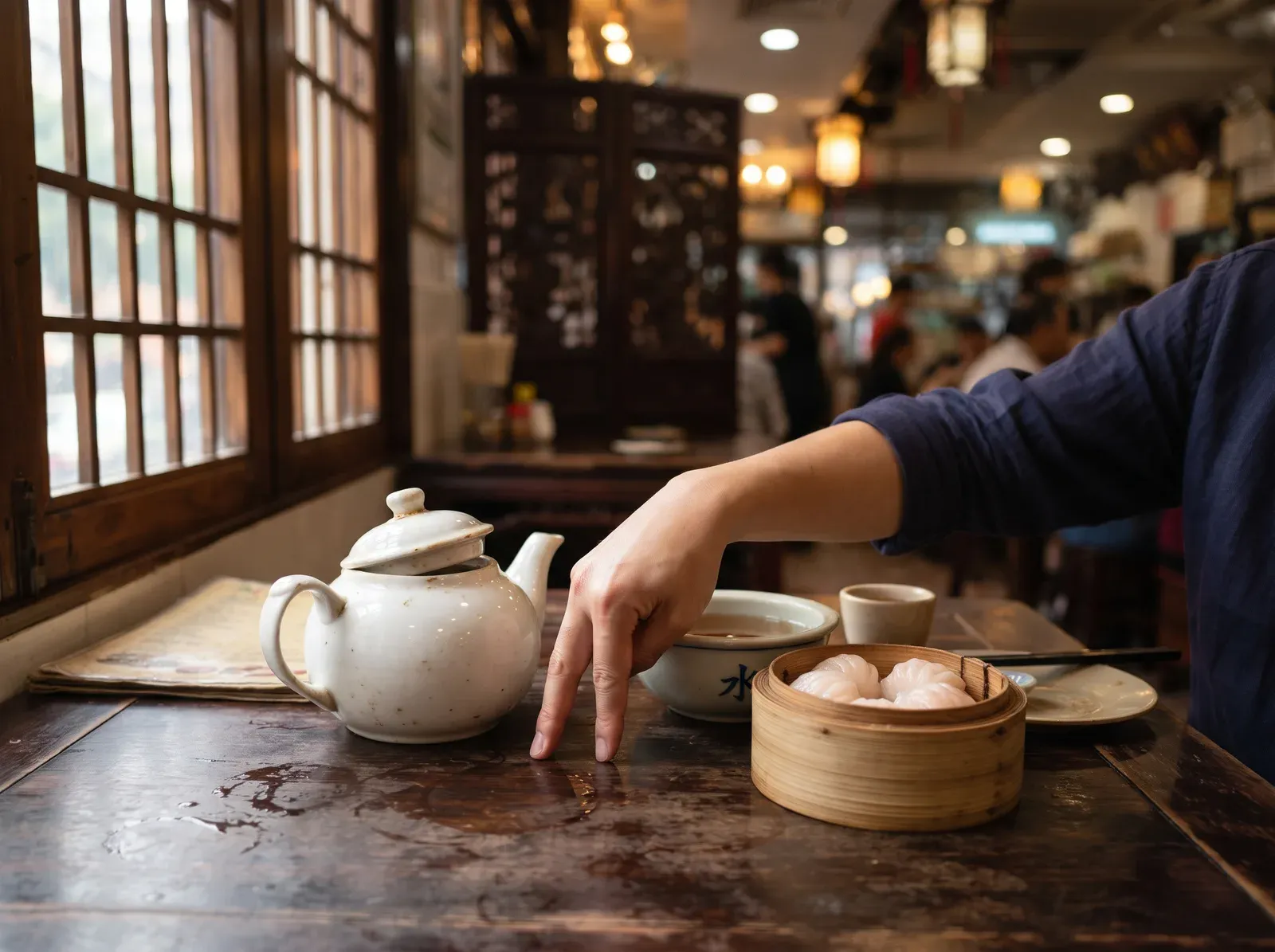
When having morning tea at a Cantonese teahouse, tap the table twice with your index and middle fingers to show gratitude when someone pours tea for you. If your pot needs hot water, there is no need to shout; simply lift the lid or rest it sideways across the teapot opening, and servers will notice and refill it. Teahouses also follow the habit of using the first brew of hot tea to rinse bowls, chopsticks, and spoons before the meal, with a designated basin or large bowl placed on the table for discarding the rinse water.
Where do northern and southern morning favorites cross regional boundaries?
With modern urban migration and the growth of dining options, many regional morning dishes have crossed geographic borders. Century egg and pork congee, which originated in Guangdong, is now one of the most frequently ordered congees across major cities nationwide, found readily along northern streets and neighborhood eateries.
Tea eggs, the most common portable high-protein breakfast item sold at street stalls and convenience stores, usually cost around 2 RMB each and serve as a universal grab-and-go choice for commuters across both north and south. Northern baked shaobing also embraces both savory spiced meats and sweet red bean or sesame fillings, and iconic regional breakfast tastes now sit side by side in cities across the country.
Sources
Jianbing - Wikipedia
Lanzhou beef noodles - Wikipedia
Xiaolongbao - Wikipedia
Hot dry noodles - Wikipedia
Dim sum - Wikipedia
Yum cha - Wikipedia
Douhua - Wikipedia
Youtiao - Wikipedia
Congee - Wikipedia
Tea egg - Wikipedia
Shaobing - Wikipedia
Sources verified on November 18, 2026
FAQ
Do Chinese people cook breakfast at home or buy it outside?
In China, buying freshly made breakfast from street stalls or curbside diners is an extremely common way of daily life, with many people picking up made-to-order items in the morning to take away or eat on site.
Is douhua sweet or savory?
Douhua has a clear regional split across China: the north mainly seasons it with a savory soy-sauce gravy, adding minced meat, wood ear mushrooms, and pickled vegetables inland, or dried seaweed and shrimp along the coast; the southwest favors numbing chili oil; while southern China and Hong Kong serve sweet tofu pudding with brown sugar or ginger syrup.
What dining etiquette should you follow during morning tea in Guangzhou?
Tap the table twice with your index and middle fingers to thank someone for pouring tea; uncover the teapot lid or tilt it across the rim when you need a hot water refill; and use the first brew of tea to rinse bowls, chopsticks, and cups before pouring the liquid into the shared wash basin on the table.
What should you do if the sour taste of Beijing douzhi is hard to handle at first?
Douzhi is most authentic when sipped hot right from the pot. If the fermented sour flavor feels overwhelming on your first try, the classic local approach is to eat it alongside crisp jiaoquan rings and shredded pickled vegetables.