Shanghai Noodles Guide: Top Picks and How to Order
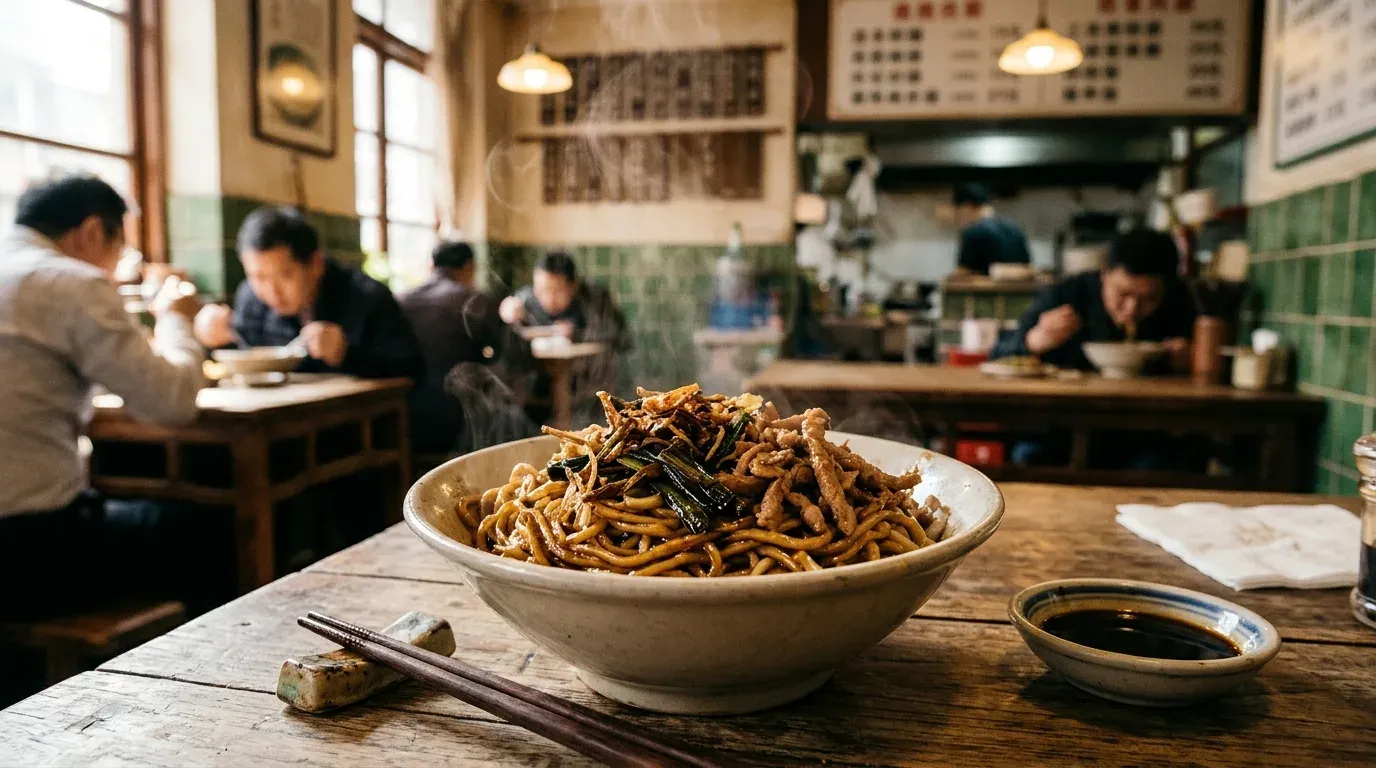
Shanghai noodles include thin soup noodles, scallion oil mixed noodles, and pan-fried two-sided yellow noodles. According to food guides, an average bowl at most historic budget noodle shops costs around 20 RMB. Diners can customize their broth volume and amount of scallions, and bowls are meant to be mixed and eaten immediately while hot.
| Item | Practical Information |
|---|---|
| Reference price per bowl | Around 20 RMB at most historic budget noodle shops (food guide data) |
| Classic noodle styles | Thin noodles folded neatly like a carp's back, along with thick fried noodles and pan-fried two-sided yellow noodles |
| Main broth types | Broth simmered slowly from pork shank or eel bone, divided into red soup with soy gravy and white soup without soy sauce |
| Ordering slang categories | Kuan tang (more broth, less noodles), jin tang (less broth, more noodles), zhong qing (extra scallions and garlic leaves), guo qiao (toppings served on a separate plate) |
| Main payment methods | Primarily mobile payments via WeChat Pay and Alipay, with no transaction fees on linked international credit cards for single purchases under 200 RMB |
How are the broth and noodles prepared for Shanghai noodles?
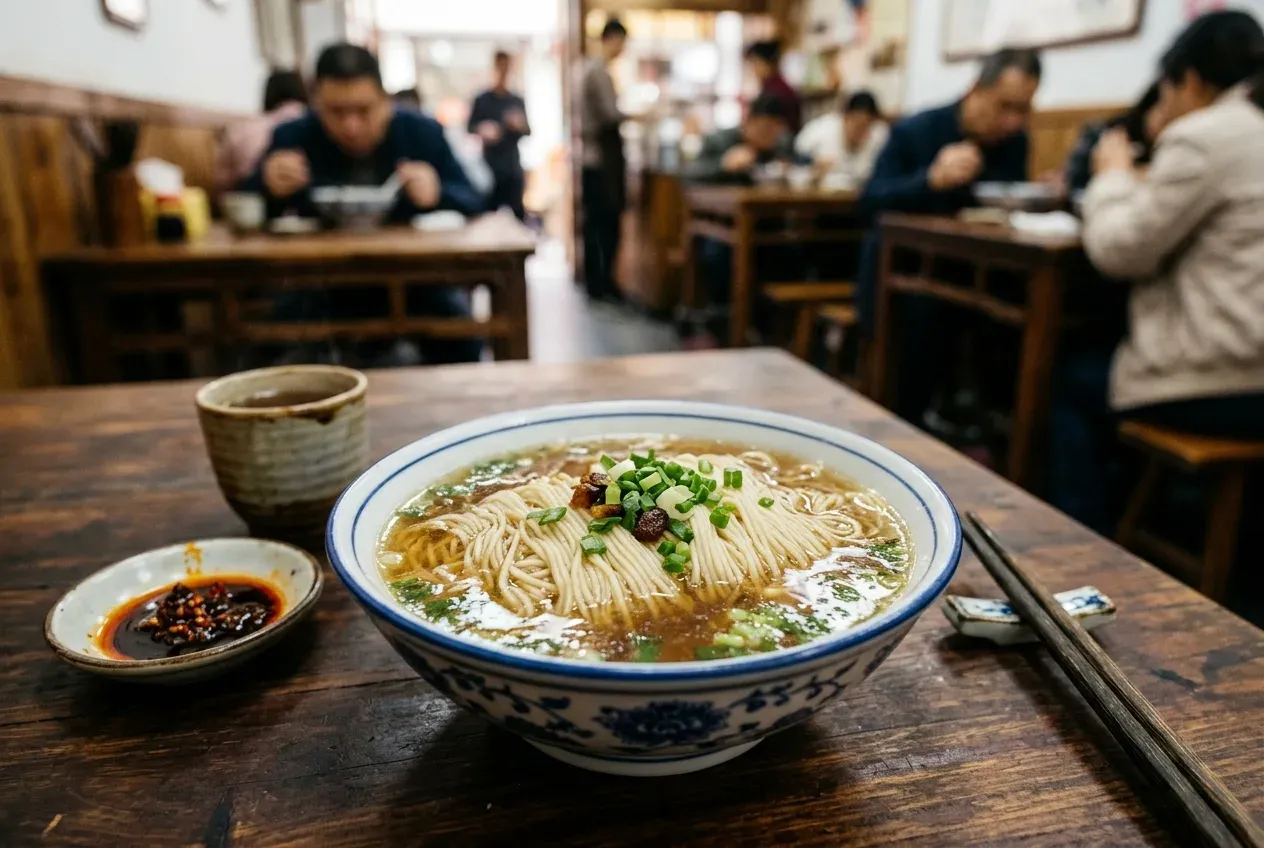
In Jiangnan and Shanghai, soup noodles usually feature thin noodles neatly folded into a raised shape called a carp's back (jiyubei). The broth is slowly simmered over low heat using pork shank or eel bones. By tradition, the soup is split into two types: red soup (hongtang), flavored with soy sauce and meat gravy, and white soup (baitang), made without soy sauce. Besides thin soup noodles, plain Yangchun noodles (yangchunmian), also known as clear soup noodles or bare noodles, are widely eaten across the city. They come with almost no toppings, seasoned simply with lard, soy sauce, and broth. Meanwhile, Shanghai fried noodles use thicker noodles stir-fried over high heat with soy sauce, greens, and shredded pork or beef.
If you prefer a lighter, original taste, you can choose white soup noodles without soy sauce. If you prefer a richer soy flavor, you can try red soup noodles seasoned with soy gravy or thick stir-fried noodles cooked with rich dark soy sauce.
What are the classic toppings to try with Shanghai noodles?
The heart of Shanghai noodles lies in the wide variety of toppings, ranging from slow-stewed meats and seasonal river seafood to specialty sauces. Among slow-stewed meats, historic shops are famous for braised pork shank (menti), known for its tender, melt-in-the-mouth texture and balanced sweet and savory flavor, often paired with potherb mustard and thin noodles in red soup. Spicy pork noodles (laroumian) feature diced pork in fragrant chili oil as a topping. Other shops are popular among local diners for tender, deeply braised pork intestines. Freshly stir-fried river seafood toppings include tender yellow croaker served in rich broth with winter bamboo shoots and potherb mustard, sizzling shredded eel cooked with white pepper and garlic, and stir-fried clams with thinly sliced pork liver in a thick sauce with scallion oil and shiitake mushrooms. In early summer, the seasonal three-shrimp (sanxia) topping combines shrimp meat, shrimp roe, and shrimp brain. There are also crab meat noodles made with fresh crab meat and crab roe.
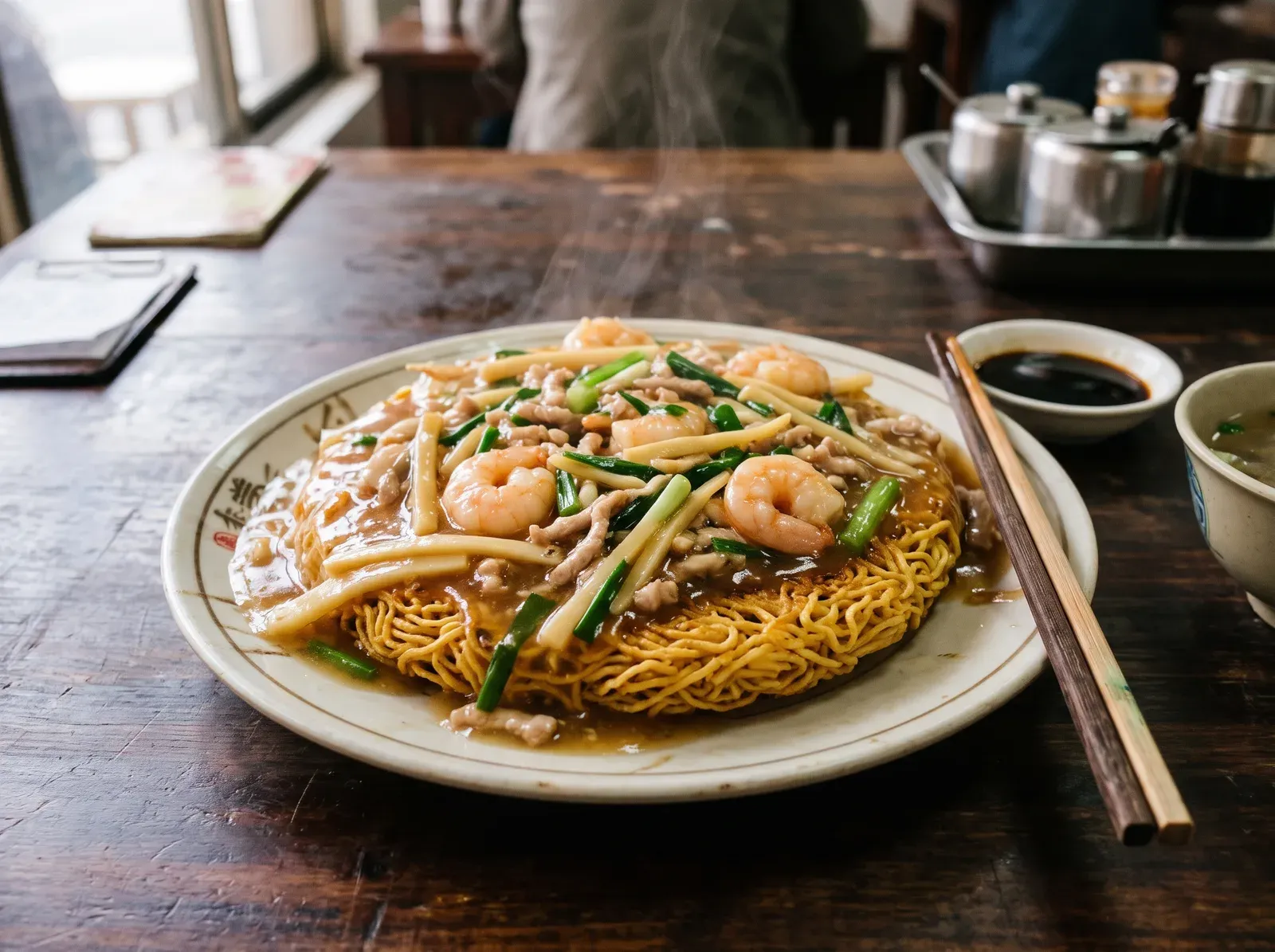
Dry tossed noodles and pan-fried noodles are equally signature choices. Scallion oil noodles (congyou banmian) use scallion oil extracted by frying scallions until golden and crisp, which is then tossed thoroughly with soy sauce and noodles. Liangmianhuang, or two-sided yellow noodles, are made by flattening cooked noodles into a round cake and frying them until golden and crispy on both surfaces while staying tender inside. Once plated, a hot, thick gravy with shrimp or shredded pork is poured on top, allowing the noodle cake to soak up the savory sauce.
What do ordering terms like kuan tang and guo qiao mean at traditional noodle shops?
In Jiangnan and Shanghai soup noodle culture, diners use specific ordering slang to tell the kitchen their preferences for soup volume, garnishes, and how toppings are served. These terms directly shape how your bowl arrives.
| Slang Term | Meaning and Kitchen Preparation |
|---|---|
| Kuan tang (宽汤) | More soup and fewer noodles |
| Jin tang (紧汤) | Less soup and more noodles |
| Zhong qing (重青) | Extra garlic leaves and chopped scallions |
| Mian qing (免青) | No scallions |
| Guo qiao (过桥) | Toppings served on a separate dish instead of on top of the noodles |
Tip: If you order freshly stir-fried toppings or want to keep them crisp and fragrant, say guo qiao when ordering so the kitchen serves the toppings and noodles on separate plates.
Where can you find authentic Shanghai noodles?
To taste authentic bowls, you can visit century-old shops or specialty noodle parlors in central areas like Huangpu District. Each shop has its own specialty preparation techniques. The table below lists the full details.
| Restaurant | Founded Year and Address | Signature Dishes and Specialties |
|---|---|---|
| Dexing Guan (德兴馆) | Founded in 1878, main branch at 471 Guangdong Road | Braised pork shank noodle with potherb mustard (tender pork shank with sweet-savory flavor, served with thin noodles in red soup) |
| Chun Yuan Si Ru Chun (春园四如春) | Founded in 1929, located at 183 South Chongqing Road | Yellow croaker noodle with winter bamboo shoots and potherb mustard; recognized as the birthplace of Shanghai cold noodles |
| Dong Tai Xiang (东泰祥) | Century-old history, located at 188 North Chongqing Road | Signature spicy pork noodle (diced pork topping in fragrant chili oil) |
| Wei Xiang Zhai (味香斋) | Founded over 80 years ago, located at 14 Yandang Road | Michelin Bib Gourmand sesame paste noodles, with summer cold noodles equally popular |
| Huxi Lao Nongtang Noodle Restaurant (沪西老弄堂面馆) | 1st Floor, World Trade Tower, 500 Guangdong Road | Freshly stir-fried clam and pork liver noodles (constant queues, thick sauce coating clams and thin liver slices) |
| Du She Noodle Restaurant (独舌面馆) | Located at 287 Jiuhu Road | Freshly stir-fried sizzling eel noodles (seasoned with pepper and garlic, available in soup or dry) |
| Dachang Mian (大肠面) | Founded in 1985, 1st Floor, 686 South Xizang Road | Pork intestine noodle (tender, savory intestine topping, popular for 40 years) |
| Yunhe Noodle (云和面馆) | Located at 344 Changle Road | Michelin-recommended crab meat noodles, early-summer three-shrimp noodles (plain or spinach noodles), deep-fried yellow croaker with seaweed |
| Ding Te Le (顶特勒) | Lane 494, Middle Huaihai Road | White-sauce scallion oil shredded pork noodles (noodles with a little bone broth and browned scallions) |
| Wang Jia Sha (王家沙点心店) | Founded in 1945, main store on West Nanjing Road | Two-sided yellow noodles (one of the four signature house specialties) |
| Shen Da Cheng (沈大成) | Founded in 1875, main branch on East Nanjing Road Pedestrian Street | Two-sided yellow noodles, soft Suzhou-style rice cakes, and xiaolongbao |
| Cang Lang Ting (沧浪亭) | Opened in Shanghai in May 1950 | Representative chain brand serving Suzhou-style soup noodles, scallion oil noodles, and various toppings |
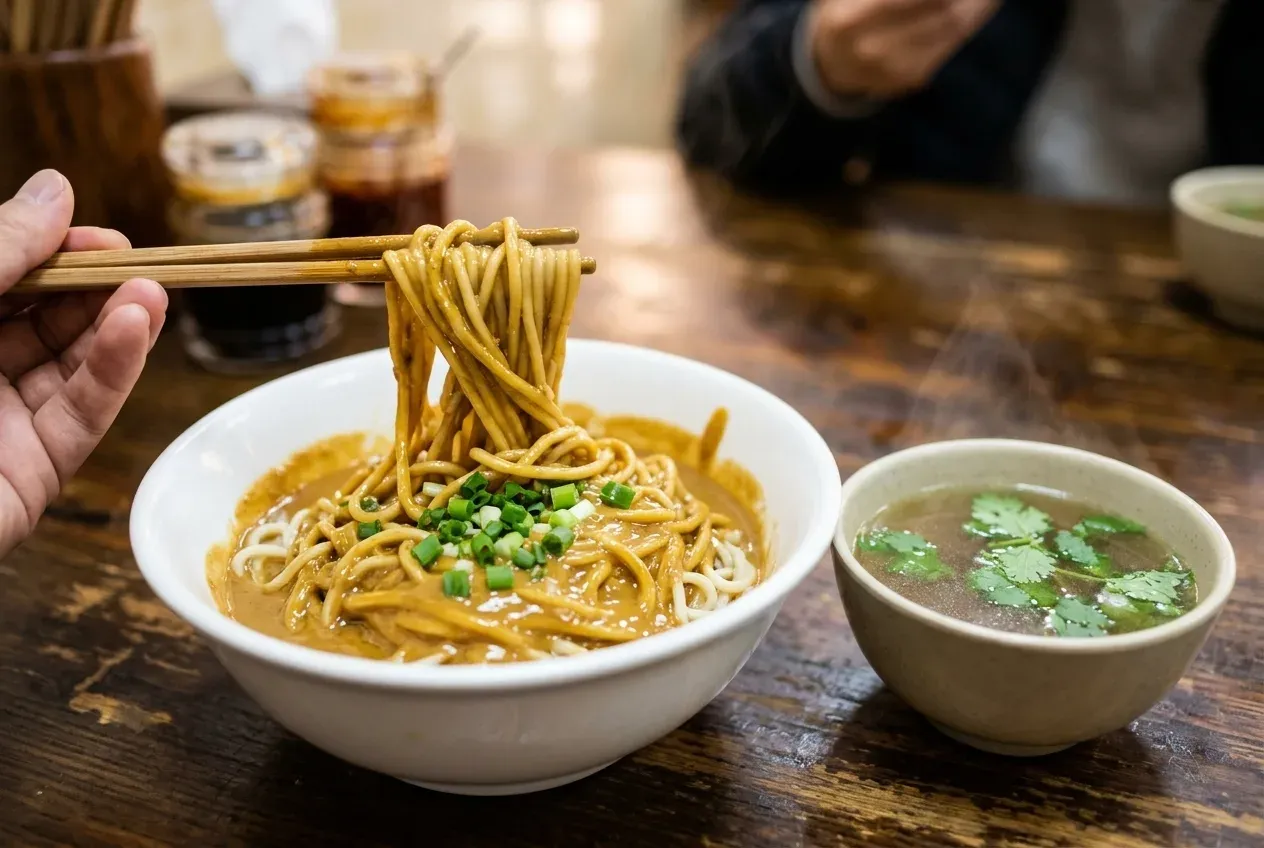
According to the Michelin Guide, the menu at Wei Xiang Zhai, founded over 80 years ago, is split into two columns: noodles on one side and toppings on the other. Seasoned diners typically order sesame paste noodles, which coat the noodles in a rich peanut and sesame sauce, paired with a small plate of spicy pork topping and a bowl of clear beef broth.
What are the ordering steps and dining etiquette at Shanghai noodle shops?
Dining at a traditional noodle shop usually follows a set routine: order and pay at the register first, find a seat with your receipt, and share a table with other diners. According to travel bloggers, you order and pay at the counter on the left when entering Wei Xiang Zhai, receive a receipt ticket, take a seat, and wait for the staff to collect your ticket and bring your meal. When it comes to timing and seasoning, sesame paste noodles must be mixed immediately when served, as leaving them too long causes them to clump together. When eating Ding Te Le's white-sauce scallion oil shredded pork noodles or a fried pork chop, locals like to add a spoonful of Taikang Yellow Label spicy soy sauce, a tangy and mildly spicy condiment derived from Worcestershire sauce.
In Chinese dining etiquette, never stick your chopsticks upright into a bowl of food, as this resembles incense sticks placed at an altar. Set your chopsticks down when drinking soup rather than holding a spoon and chopsticks at the same time, and avoid digging through shared dishes with your chopsticks. For payments, over 90% of transactions in Chinese cities are handled through apps like WeChat or Alipay, though cash remains legal tender by law. When international visitors pay with WeChat Pay or Alipay linked to an overseas credit card, single purchases of 200 RMB or less incur no transaction fee, while amounts over 200 RMB carry a 3% fee.
Tip: Food guides point out that most historic budget noodle shops in Shanghai do not provide English menus. First-time visitors can point to what neighboring diners are eating to place an order. At many modern counters, you can also scan a QR code with WeChat or Alipay to open a mini-program, browse the menu, customize your order, and pay without waiting in line.
Sources
Tourists go cashless in China with WeChat Pay and Alipay for all purchases: even drone bubble tea - CNA Lifestyle
Shanghai cuisine - Wikipedia
Wang Jia Sha - Wikipedia
Shen Da Cheng - Wikipedia
Etiquette in Asia - Wikipedia
Savoring Shanghai: A guide to Huangpu's popular noodle joints
Suzhou-style noodle soup - Wikipedia
Yangchun noodles - Wikipedia
Liangmianhuang (Shanghai) - Wikipedia
Cang Lang Ting (Shanghai) - Wikipedia
Worcestershire sauce - Wikipedia
Shanghai fried noodles - Wikipedia
Sources verified on November 18, 2026.
FAQ
What is the difference between red soup and white soup at Shanghai noodle shops?
Broth in Jiangnan and Shanghai is typically simmered slowly from pork shank or eel bones, divided into red soup seasoned with soy gravy and white soup made without soy sauce. Red soup is darker, full-bodied, and rich with soy flavor, while white soup is clear, light, and fresh on the palate.
Why do you need to mix sesame paste noodles right after they are served?
According to travel bloggers, the sesame paste noodles at Wei Xiang Zhai are coated in a thick blend of peanut and sesame sauce. If left unmixed for too long after serving, the noodles easily clump into a solid mass and lose their texture, so they should be mixed thoroughly right away.
Can you swipe foreign credit cards directly at Shanghai noodle shops?
Over 90% of transactions across the city are processed through WeChat or Alipay. International travelers can link an overseas credit card to WeChat Pay or Alipay to scan and pay. Single transactions of 200 RMB or less have no transaction fee, while amounts over 200 RMB incur a 3% fee. Cash is also legal tender by law.
What is the spicy soy sauce commonly found in traditional Shanghai noodle shops?
The Taikang Yellow Label sauce stocked in local noodle shops originates from Worcestershire sauce. It has a sharp acidity with a mild peppery kick. Locals use it as a key dipping condiment for fried pork chops and pork chops with rice cakes, and they often splash a spoonful over noodles such as white-sauce scallion oil shredded pork noodles.