
Northern Song Dynasty: Emperors, Bianjing, and Exams
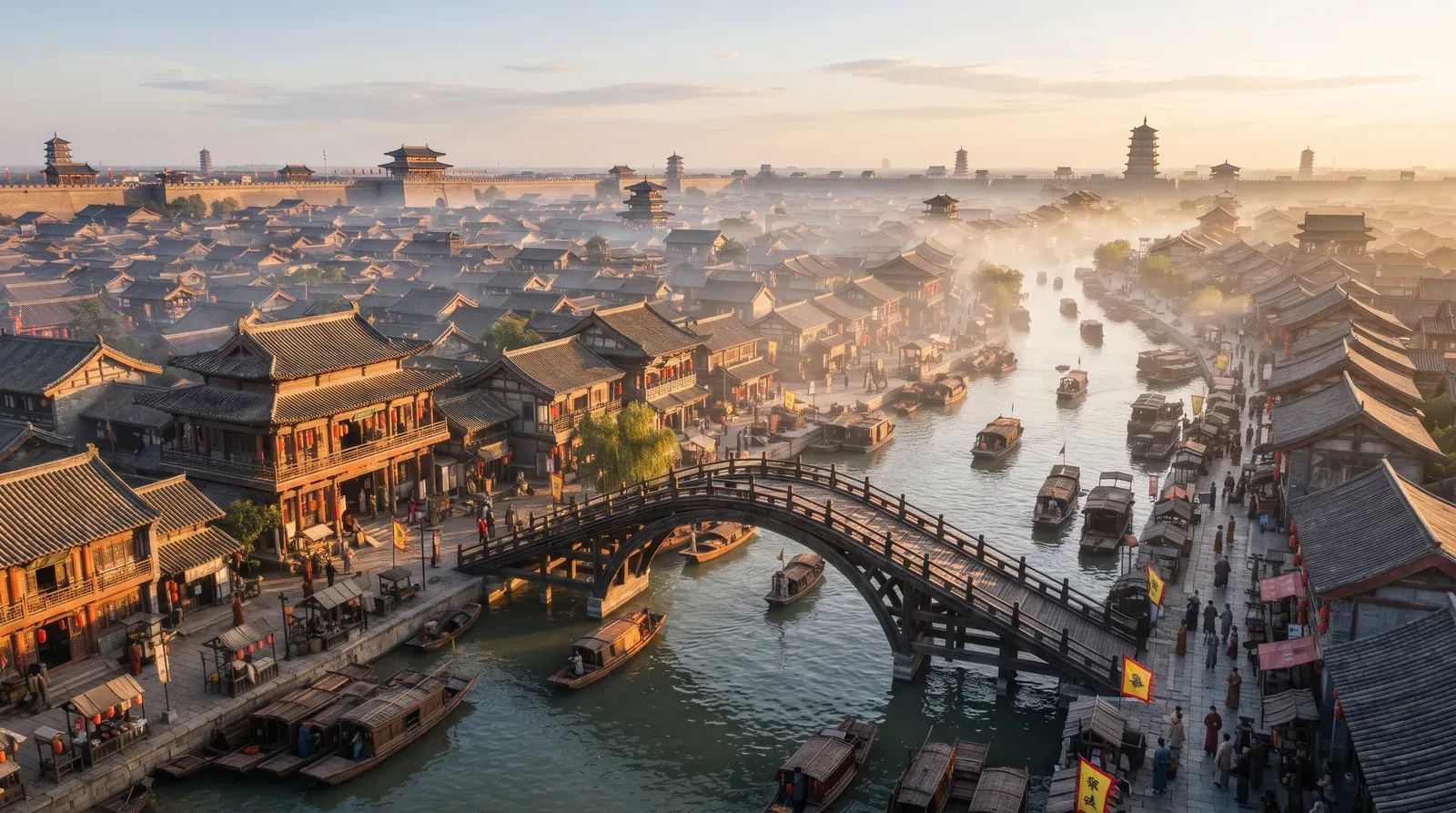
The Northern Song Dynasty lasted 167 years, founded on February 4, 960, and falling on March 20, 1127. Its founding emperor, Emperor Taizu Zhao Kuangyin, set the capital at Bianjing (modern Kaifeng, Henan Province) and pacified rival regimes to end the Five Dynasties and Ten Kingdoms period. During this era, commerce in Kaifeng flourished beyond old market boundary walls, and the imperial court formalized examination rules such as triennial exams and the palace exam.
How Was the Northern Song Dynasty Founded?
In the first lunar month of 960, Zhao Kuangyin, the Palace Command inspector of the Later Zhou, led troops north to meet enemies. When his army reached Chenqiao Station, soldiers mutinied and draped him in a yellow imperial robe, proclaiming him emperor. Zhao returned to the capital, forced Emperor Gong of Later Zhou to abdicate, established the Song dynasty, and made Bianjing the capital.
Emperor Taizu adopted the strategy of taking the south before the north proposed by Chancellor Zhao Pu. He successively conquered Jingnan and Hunan, eliminated Later Shu, Southern Han, and Southern Tang, and step by step ended the division of the Five Dynasties and Ten Kingdoms. To centralize military authority, Emperor Taizu relieved Shi Shouxin and other senior imperial guards, as well as regional military commissioners, of their commands in 961 and 969. This event is known historically as releasing military power over a cup of wine.
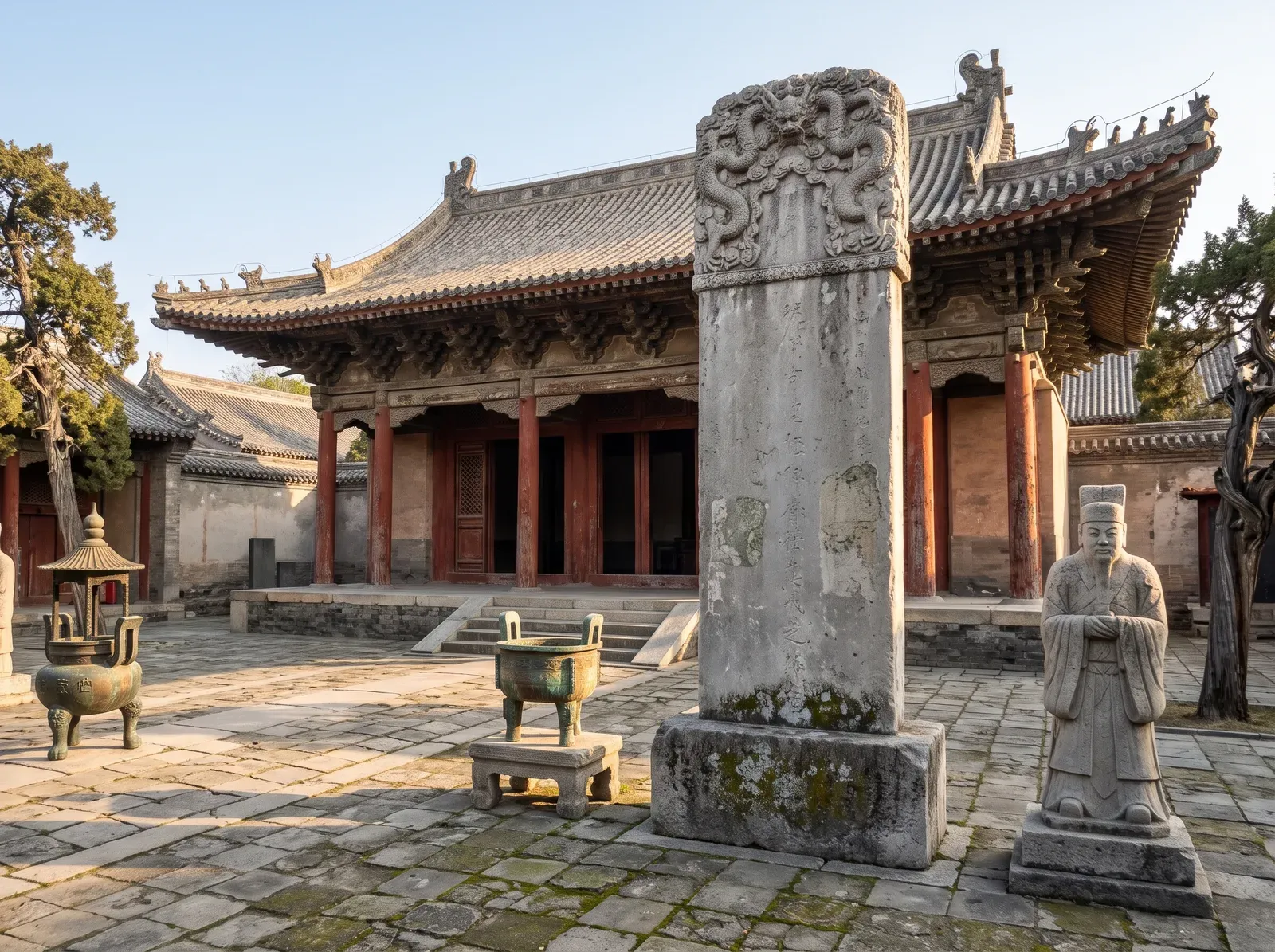
In a side room of the Song imperial ancestral temple stood the Taizu Oath Stele. Its three major pledges included not executing scholar-officials or people who petitioned the throne with advice, and treating the descendants of the Chai royal family well.
What Major Milestones Did Key Northern Song Emperors Experience?
Ruled by nine emperors, the dynasty underwent multiple institutional adjustments in economy, political reform, and foreign relations. Key years and events across major reigns are listed below:
| Key Ruler | Key Years | Important Historical Events and Institutional Reforms |
|---|---|---|
| Emperor Taizu (Zhao Kuangyin) | 960, 961, 969, 973 | Established Song Dynasty through Chenqiao mutiny in 960; released military power over cups of wine in 961 and 969; made palace exam an established rule in 973 (sixth year of Kaibao) |
| Emperor Zhenzong | 1004, 1021 | Signed Treaty of Shanyuan in 1004 to keep a century of peace; Jiaozi paper money appeared in four circuits of Sichuan and Shaanxi in 1021 |
| Emperor Renzong (Zhao Zhen) | 1022 to 1063 (reigned 41 years), 1023, 1043 | Longest-reigning Song emperor and first in history given the temple name Renzong; set up Jiaozi Office in 1023; launched Qingli Reforms in 1043 |
| Emperor Yingzong | 1065 | Established triennial exams and three-tier exam system in 1065 (second year of Zhiping) |
| Emperor Shenzong | 1079 and during the reform period | Appointed Wang Anshi to carry out Xining Reforms; Crow Terrace Poetry Affair occurred in 1079 (second year of Yuanfeng) |
| Emperor Huizong (Zhao Ji) and Emperor Qinzong | 1100 to 1126 (Huizong reign), 1127 | Huizong created Slender Gold calligraphy and built Genyue with Flower and Stone Network; Jin troops captured Kaifeng in 1127 Jingkang Incident, ending the Northern Song |
In 1004 (first year of Jingde under Emperor Zhenzong), the Liao and Song signed the Treaty of Shanyuan, agreeing to treat each other as brother states. Song provided Liao with 200,000 bolts of silk and 100,000 ounces of silver each year, maintaining basic peace for a century. In 1021 (fifth year of Tianxi), Jiaozi, the earliest paper money in the world, appeared in the four circuits of Sichuan and Shaanxi.
Emperor Renzong Zhao Zhen reigned for 41 years (1022 to 1063), making him the longest-reigning emperor in the Song dynasty and the first emperor in history given the temple name Renzong. His reign was praised by later generations as the Renzong Governance of Prosperity. In 1023 (first year of Tiansheng), the imperial court set up the Jiaozi Office to bring paper money under state issuance. In 1043 (third year of Qingli), Fan Zhongyan proposed ten reform policies, including clarifying promotions and demotions, curbing favoritism, and refining civil exams, to launch the Qingli Reforms. Due to conservative opposition, the effort was halted after one year and four months.
After taking the throne, Emperor Shenzong appointed Wang Anshi to carry out the Xining Reforms, gradually issuing laws such as equitable transport, green sprouts, agricultural irrigation, service exemption, market exchange, baojia militia, square-field tax equalization, and horse maintenance. In 1079 (second year of Yuanfeng), the Crow Terrace Poetry Affair took place. Su Shi was impeached by censors for mocking the new policies in his poems and gratitude memorial, leading to his imprisonment. He was later released and demoted to deputy militia commissioner of Huangzhou.
During his reign from 1100 to 1126, Emperor Huizong Zhao Ji created the Slender Gold calligraphy style and established the Hanlin Academy of Painting and Calligraphy to raise the status of court artists, but he neglected state affairs and lived luxuriously. He tasked figures like Zhu Mian with gathering rare flowers and stones across Jiangnan and transporting them to Bianjing to build Genyue, a large imperial garden. Known as the Flower and Stone Network, this project drained resources and burdened the people along the route. In 1127 (second year of Jingkang), Jin soldiers breached Kaifeng, captured Emperor Huizong, Emperor Qinzong, and the imperial clan, and took them north. This ended the Northern Song, known historically as the Jingkang Incident. In the fifth lunar month of that same year, Prince Kang Zhao Gou took the throne in Yingtian Prefecture to found the Southern Song.
Why Did Capital Bianjing Show Such High Commercial Prosperity?
Dongjing Kaifeng, capital of the Northern Song, was encircled by three layers of walls: the outer city, inner city, and imperial city. Between 1013 and 1127, it was considered the largest city in the world at the time. According to relevant historical records, Kaifeng reached a population of 600,000 to 700,000 in the eleventh century, with some accounts claiming over one million. The national population grew from 32.5 million in 980 (fifth year of Taiping Xingguo) to about 113 million in 1110 (fourth year of Daguan).
Bianjing broke through the ward and market restrictions of the Tang dynasty, giving rise to morning markets and overnight markets. Along the main Imperial Way, military patrol posts stood every two to three hundred paces. Entertainment quarters with fenced theatres spread across the city, holding thousands of spectators for historical storytelling, variety plays, song, and dance.
Along the River During the Qingming Festival, painted by court painter Zhang Zeduan, vividly depicts scenes in Bianjing and merchants along the Bian River during the Xuanhe era, showing nearly six hundred figures on the scroll. The ten-volume Dongjing Meng Hua Lu (The Eastern Capital: A Dream of Splendors), written by Meng Yuanlao in the Southern Song, recounts in detail Bianjing's walls, rivers, streets, shops, Zhouqiao night market, and seasonal customs during the Xuanhe era.
What Core Rules Did the Imperial Examination System Establish?
Starting in 973 (sixth year of Kaibao under Emperor Taizu), the palace exam became a regular institution hosted personally by the emperor to determine rankings. Candidates were considered students of the Son of Heaven, and the number admitted expanded significantly compared to earlier dynasties, reaching several hundred per session. All jinshi graduates chosen in the palace exam received direct government appointments without taking a secondary test from the Ministry of Personnel.
Starting in 1065 (second year of Zhiping under Emperor Yingzong), civil examinations officially adopted a triennial schedule, forming a three-tier system: prefecture exams (jieshi), metropolitan exams under the Ministry of Rites (shengshi), and palace exams (dianshi). The examination system also established cheating-prevention mechanisms, including locking examiners in sequestered quarters (suoyuan), sealing names on exam papers (huming), and having scribes recopy papers (tenglu).
When Wang Anshi enacted the Xining reforms, he reformed the examinations by eliminating tests on memorizing classics, oral explanations, and poetry. Instead, he shifted the focus to classical meaning, essays, and policy questions to emphasize practical statecraft.
What Exceptions Occurred in Implementing Reforms and Keeping Peace?
Regarding reforms, the Qingli Reforms led by Fan Zhongyan ended after one year and four months due to conservative pushback. During Wang Anshi's reforms, Su Shi was jailed and demoted in 1079 (second year of Yuanfeng) after censors accused his poems of mocking the new measures. Reforms did not always proceed smoothly.
In terms of external peace, the Treaty of Shanyuan signed under Emperor Zhenzong granted Liao 200,000 bolts of silk and 100,000 ounces of silver annually, maintaining basic peace for a century. However, in 1127 (second year of Jingkang), Jin forces broke through Kaifeng and took Emperor Huizong and Emperor Qinzong north, ultimately bringing an end to the Northern Song.
Sources
Northern Song dynasty - Wikipedia
Zhao Kuangyin - Wikipedia
Emperor Renzong of Song - Wikipedia
Emperor Shenzong of Song - Wikipedia
Emperor Huizong of Song - Wikipedia
Imperial examination - Wikipedia
Kaifeng - Wikipedia
Dongjing Meng Hua Lu - Wikipedia
Sources checked on November 17, 2026
FAQ
What were the dates and duration of the Northern Song Dynasty?
The Northern Song Dynasty lasted 167 years, established on February 4, 960 by Emperor Taizu Zhao Kuangyin and falling on March 20, 1127.
When did Jiaozi, the world's earliest paper money, appear in the Northern Song?
According to historical records, Jiaozi appeared in 1021 (fifth year of Tianxi under Emperor Zhenzong) across the four circuits of Sichuan and Shaanxi. In 1023 (first year of Tiansheng under Emperor Renzong), the imperial court set up the Jiaozi Office to bring paper money under official government issuance.
Which period of Bianjing does Along the River During the Qingming Festival depict?
Painted by court artist Zhang Zeduan, Along the River During the Qingming Festival vividly depicts Bianjing and merchants along the Bian River during the Xuanhe era, showing nearly six hundred figures on the scroll.
How often were imperial examinations held during the Northern Song?
Starting in 1065 (second year of Zhiping under Emperor Yingzong), imperial examinations were officially held every three years, establishing a three-tier system: prefecture exams, metropolitan exams, and palace exams.