
Lunar New Year Foods: Reunion Feast Dishes and Auspicious Meanings
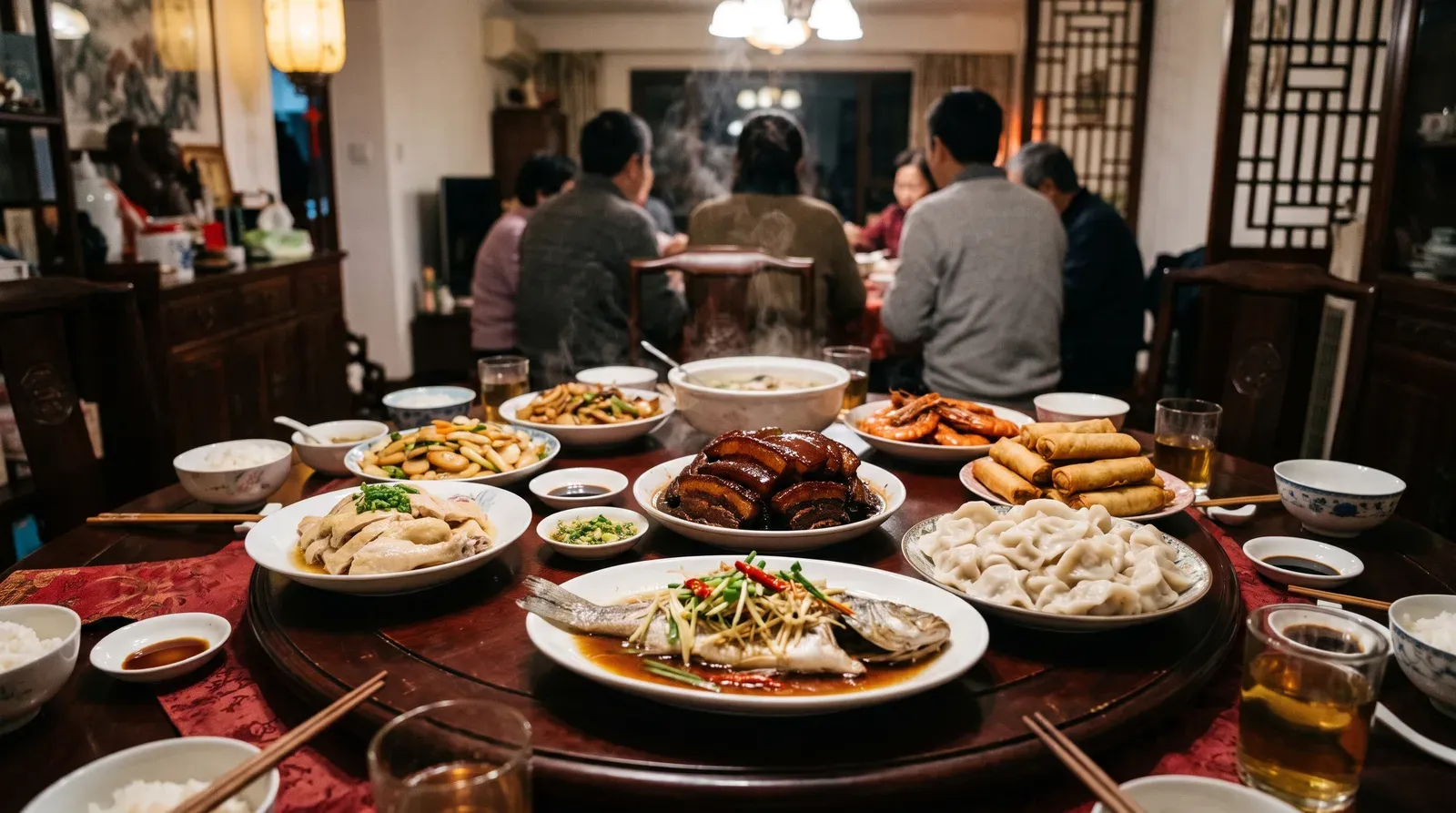
Traditional lunar new year foods center on symbolic dishes that welcome abundance, reunion, and wealth. Classic items on the New Year's Eve table usually include whole fish, dumplings, rice cakes (nian gao), sweet rice balls (tangyuan), whole chicken, and spring rolls. According to the Hong Kong Observatory calendar, the first day of the 2027 Lunar New Year falls on Feb 6, 2027. While staying up late to welcome the new year, families rely on wordplay, food shapes, and the completeness of ingredients to express their hopes for the months ahead.
What Are the Classic Lunar New Year Foods? A Quick Feast Guide
This family reunion meal on New Year's Eve goes by different names across regions: nian ye fan in northern China, tuannian fan in Jiangnan and Guangdong, zuo sui in Fujian, and wei lu in Taiwan and southern Fujian. Traditionally, people sit down to eat after ancestor worship rituals. Core dishes in Chinese new year cuisine correspond to specific good luck wishes. The table below lists common festive dishes and their meanings.
| Dish | Representative Region or Form | Symbolism and Customs |
|---|---|---|
| Whole fish | Essential across regional feasts | Symbolizes surplus year after year; the fish must remain whole and cannot be finished |
| Dumplings | Northern China and northern reunion dinners | Resemble Ming Dynasty gold ingots; symbolize bringing in wealth and ringing out the old |
| Rice cakes (nian gao) | Southern regions and Guangdong | Sounds like rising higher; symbolizes yearly growth in life, study, or career |
| Sweet rice balls (tangyuan) | Southern New Year's Eve and Lantern Festival | Sounds close to reunion; symbolizes family harmony and completeness |
| Spring rolls | Lunar New Year nationwide | Deep-fried golden cylinders that look like gold bars; symbolize wealth and good fortune |
| Whole chicken | Essential across regional feasts | Symbolizes family reunion, wholeness, and prosperity, meaning a good beginning and end |
| Longevity noodles | Celebrations and birthday banquets | Long and uncut, sometimes exceeding one foot; symbolize long life and enduring health |
| Poon choi (basin dish) | New Territories walled villages and Guangdong-Hong Kong | Ingredients are layered from top to bottom, with prawns and chicken above and radish and pig skin below |
| Fat choy with dried oysters | Classic Cantonese reunion dish | Fat choy sounds like striking rich, and dried oysters sound like good markets; paired with lettuce to symbolize business prosperity |
| Yusheng (lo hei) | Singapore and Malaysia | Diners toss raw fish slices and shredded colorful ingredients together to welcome rising fortune and prosperity |
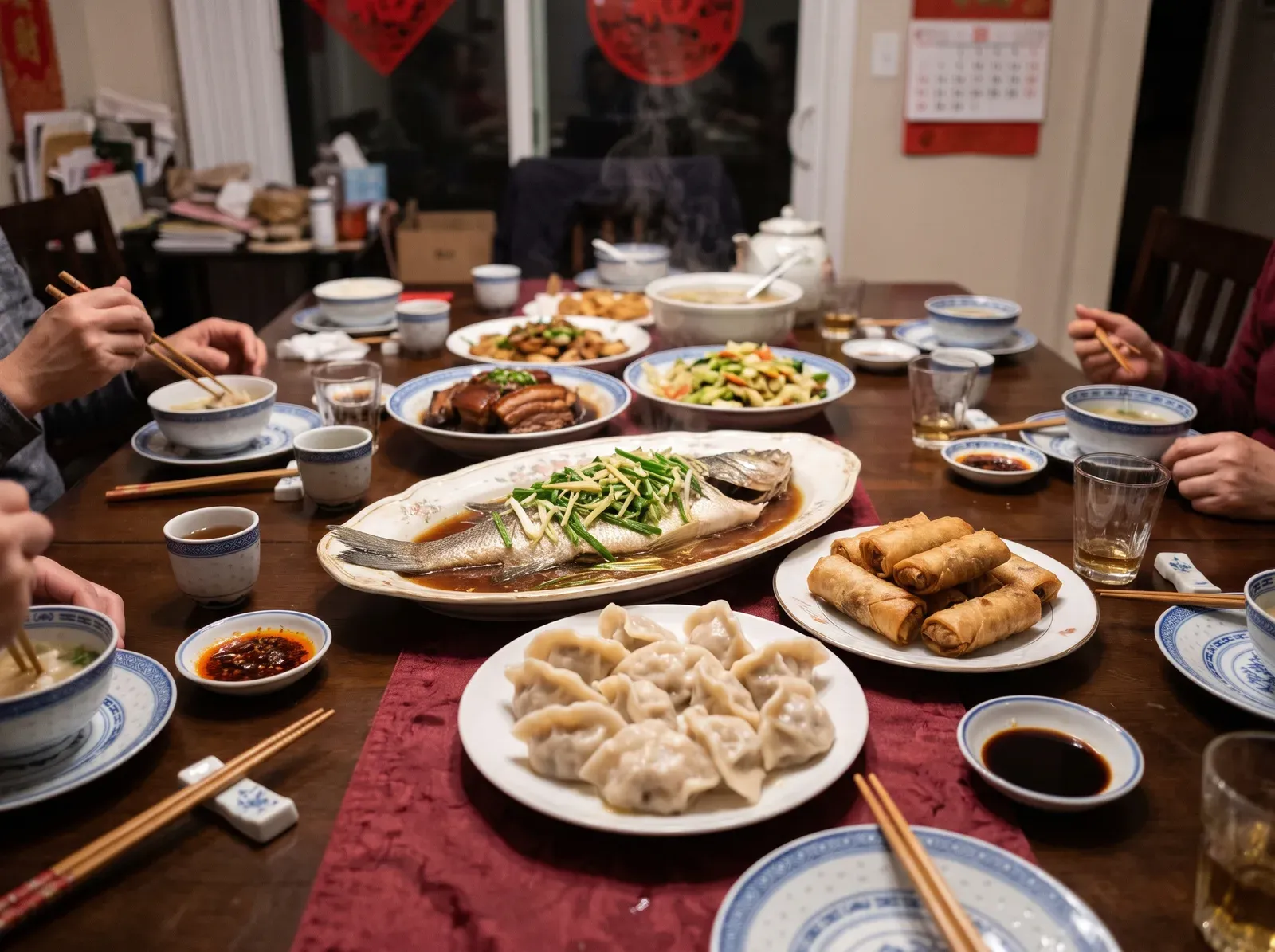
Why Must the Fish and Chicken Be Served Whole?
Holiday banquets emphasize completeness. Serving a whole chicken represents family unity, completeness, and prosperity, signifying a good beginning and end. A whole fish symbolizes having a surplus year after year. Traditional custom requires cooking and serving the fish intact without cutting it into pieces. Longevity noodles follow the same rule: the long, thin noodles are never cut, sometimes stretching over one foot long, and eating them during New Year or birthday banquets symbolizes good health and long life.
Tip: When serving a whole fish at the reunion dinner, traditional custom asks that you do not finish it completely. Leaving leftovers symbolizes carrying abundance into the coming year.
What Are the Traditions Behind Dumplings, Rice Cakes, and Tangyuan?
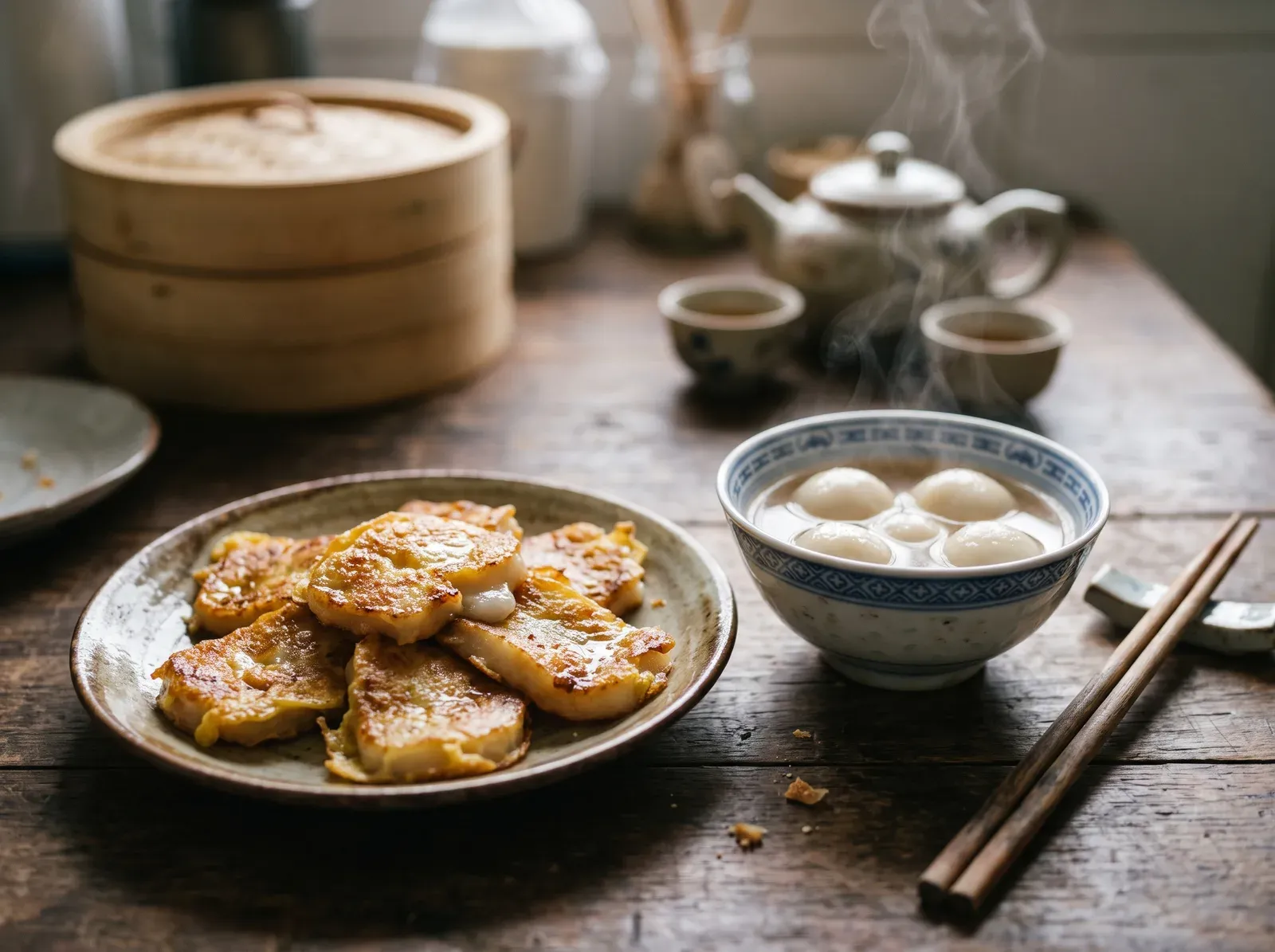
In northern China, eating dumplings symbolizes wealth because their shape resembles Ming Dynasty gold ingots, and their name sounds like jiaozi, an early paper currency. Many families eat dumplings at midnight on New Year's Eve to welcome wealth and leave the old behind. People often wash a coin clean and wrap it in one dumpling as divination; whoever bites into it is believed to enjoy financial luck. In the south, popular food for Chinese New Year includes rice cakes (nian gao) and tangyuan. Rice cakes sound like growing taller, symbolizing promotion step by step, while tangyuan represents family togetherness.
Traditional Cantonese sweet nian gao is made with brown sugar, giving it a deep amber color. Slices are often coated in egg wash and pan-fried, creating a crisp exterior and a soft, stretchy center. In preparation, southern tangyuan uses moist glutinous rice dough wrapped by hand around soft fillings. Northern yuanxiao starts with firm filling cubes dipped in water and rolled repeatedly in a basket of dry glutinous rice flour. The two methods produce very different textures.
If you prefer savory wheat dishes and midnight traditions, you can boil ingot dumplings at midnight on New Year's Eve. If you lean toward soft sweets, you can cook sweet soup balls on the morning of New Year's Day or enjoy pan-fried brown sugar nian gao dipped in egg.
How Do You Eat Cantonese Poon Choi and Southeast Asian Yusheng?
In the New Territories walled villages of Hong Kong and across the Canton region, the classic poon choi stacks ingredients in layers from top to bottom. Expensive prawns and sliced chicken sit on top, while turnip and pork skin sit at the bottom to absorb juices. You eat poon choi layer by layer from the top down, rather than stirring from the bottom. Cantonese reunion feasts also feature fat choy (which sounds like striking rich) cooked with dried oysters (which sounds like good markets), served over lettuce to symbolize growing wealth.
Among Chinese communities in Singapore and Malaysia, yusheng is a staple lunar new year food. Diners stand around the table with chopsticks, tossing raw fish slices and shredded colorful ingredients high into the air while shouting 'lo hei,' expressing hopes for rising prosperity and vitality.
According to records of Southeast Asian Chinese customs, diners stand around the table and toss the ingredients as high as possible, calling out auspicious phrases as the energy builds, making it a distinctive holiday dining ritual.
What Are the Eating Traditions from Day 1 to Day 5?
On the first day of the new year, meals lean light and simple. After honoring ancestors, families often eat Luohan zhai (Buddha's delight) prepared with eight or more vegetarian ingredients, while stir-fried lettuce is another regular vegetable dish because its name sounds like generating wealth. In Guangdong, Hong Kong, and Macau, the second day calls for a feast known as kai nian fan, featuring roast pork to symbolize robust health, alongside lettuce over enoki mushrooms to represent wealth and prosperity. The fifth day is called Po Wu. Northern custom calls for eating dumplings, where pinching the edges tightly is called 'pinching the gossip's mouth,' paired with firecrackers to welcome the God of Wealth.
Tip: When folding dumplings on the fifth day, pinch the pleated edges tight to follow the folk tradition of warding off gossip. For Buddha's delight on the first day, make sure to include eight or more vegetarian ingredients.
First Time at a New Year Banquet? Common Mistakes to Avoid
Displaying and gifting fruit during the holiday involves clear rules. Tangerines, oranges, and pomelos are common choices because their names sound like luck, dreams fulfilled, and abundance. You should always give them in pairs, ideally attached to stems with fresh green leaves to symbolize vitality and longevity. Giving a single fruit or stripping off the leaves misses the tradition. When eating longevity noodles, never bite or cut the strands with chopsticks or scissors; you should eat them whole.
Tip: When visiting relatives and friends, choose pairs of tangerines or oranges that still carry leafy stems, symbolizing complete fortune and vitality.
Sources
Hong Kong Observatory: Gregorian-Lunar Calendar Conversion Table
Lunar New Year Food: 10 of the Holiday’s Symbolic Dishes | HISTORY
Reunion dinner - Wikipedia
Jiaozi - Wikipedia
Nian gao - Wikipedia
Tangyuan - Wikipedia
Poon choi - Wikipedia
Yusheng - Wikipedia
Spring Festival - Wikipedia
These sources were verified on Nov 17, 2026.
FAQ
Why shouldn't you finish the whole fish at the reunion dinner?
A whole fish symbolizes having a surplus year after year. Traditional custom requires serving the fish intact, and leaving some behind on purpose symbolizes carrying abundance into the coming year.
What is the difference between southern tangyuan and northern yuanxiao?
Southern tangyuan is made by wrapping soft filling in moist glutinous rice dough and rolling it by hand. Northern yuanxiao is made by dipping firm filling cubes in water and shaking them repeatedly in a basket of dry glutinous rice flour. The preparation methods and textures are very different.
What is Southeast Asian lo hei yusheng?
Yusheng is a traditional Lunar New Year custom popular among Chinese communities in Singapore and Malaysia. Diners gather around the table to toss raw fish slices and shredded colorful ingredients high with chopsticks while shouting 'lo hei,' expressing hopes for booming fortune and rising vitality.
Why do people eat dumplings on the fifth day of the new year?
The fifth day of the lunar month is called Po Wu, when northern custom calls for eating dumplings. Pinching the dumpling edges tightly is known in folklore as pinching the gossip's mouth, and families set off firecrackers to welcome the God of Wealth.
What are the rules for gifting tangerines and oranges?
Tangerines sound like good luck and oranges sound like dreams fulfilled. People give them in pairs during the holiday, ideally with leafy stems attached, to symbolize vitality and long life.