
Introduction to Yuan Dynasty History: Kublai Khan and the Rise of Dadu
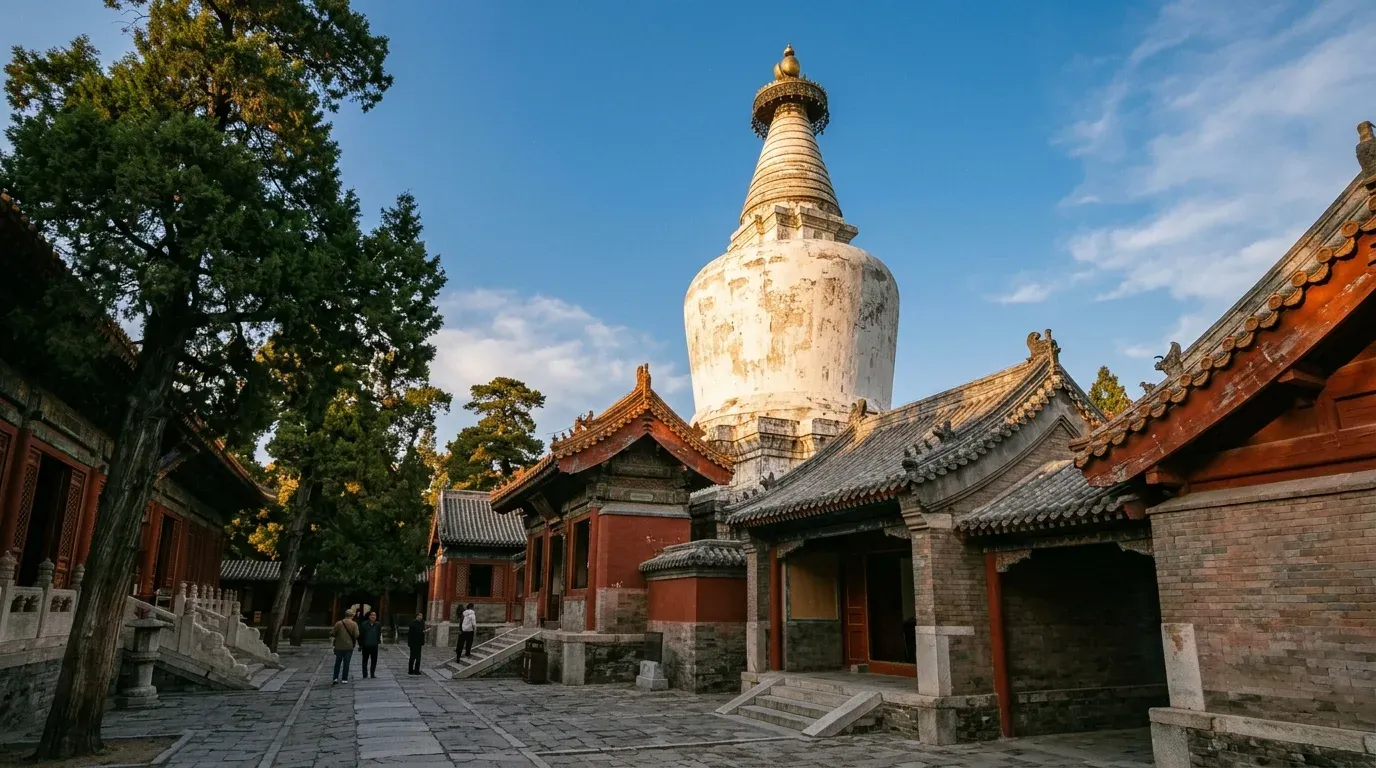
On December 18, 1271 (the eighth year of the Zhiyuan era), Kublai Khan accepted the suggestion of the Han official Liu Bingzhong and issued the Edict on the Dynastic Name, officially setting the Chinese dynastic name as the Great Yuan and founding the Yuan Dynasty. The Yuan Dynasty was the first unified dynasty in Chinese history to make Beijing, then named Dadu, its official national capital, establishing Beijing's role as the country's capital for more than 700 years. On March 19, 1279, Yuan forces eliminated the remaining Southern Song forces at the Battle of Yamen to fully unify the realm, ending more than 520 years of division in China since the An Lushan Rebellion.
How Did Kublai Khan Establish the Great Yuan and Unify China?
Kublai Khan first established an imperial title in the north based on the Han administrative system. On May 5, 1260, he proclaimed himself emperor of the Mongol Empire in Kaiping and adopted the era name Zhongtong, becoming the first ruler of the Mongol Empire to use a Han-style imperial title and era name.
The basis for the dynastic name came from traditional Chinese classics. On December 18, 1271 (the eighth year of Zhiyuan), Kublai Khan issued the Edict on the Dynastic Name to designate the country as the Great Yuan. This proposal was put forward by the Han official Liu Bingzhong and drawn from the phrase "how great is Qian, the origin" in the Book of Changes.
On March 19, 1279, Yuan forces wiped out the remnants of the Southern Song at the Battle of Yamen, completing the total unification of the realm. This military victory brought an end to more than 520 years of political division in China since the An Lushan Rebellion.
How Was Dadu Sited, Planned, and Developed Under the Dual-Capital System?
The site for Dadu was chosen around Qionghua Island, where the Daning Palace, a Jin dynasty secondary palace, was located. In 1267, Kublai Khan decided to move the capital to Yanjing (Zhongdu) and planned the new capital centered on Qionghua Island. Liu Bingzhong, an official of the Central Secretariat, served as the general director, and the Arab designer Ikhtiyar al-Din was responsible for designing the new palaces.
In March 1272, Kublai Khan renamed Zhongdu to Dadu (known in Turkic as Khanbaliq) and designated Kaiping Prefecture (Shangdu) as the auxiliary capital, officially instituting the dual-capital system. On the first day of the first lunar month in 1274 (the eleventh year of Zhiyuan), the palace compound was completed, and Kublai Khan held his first New Year imperial court assembly in the main palace hall, Daming Hall, accepting congratulations from officials and envoys from Goryeo.

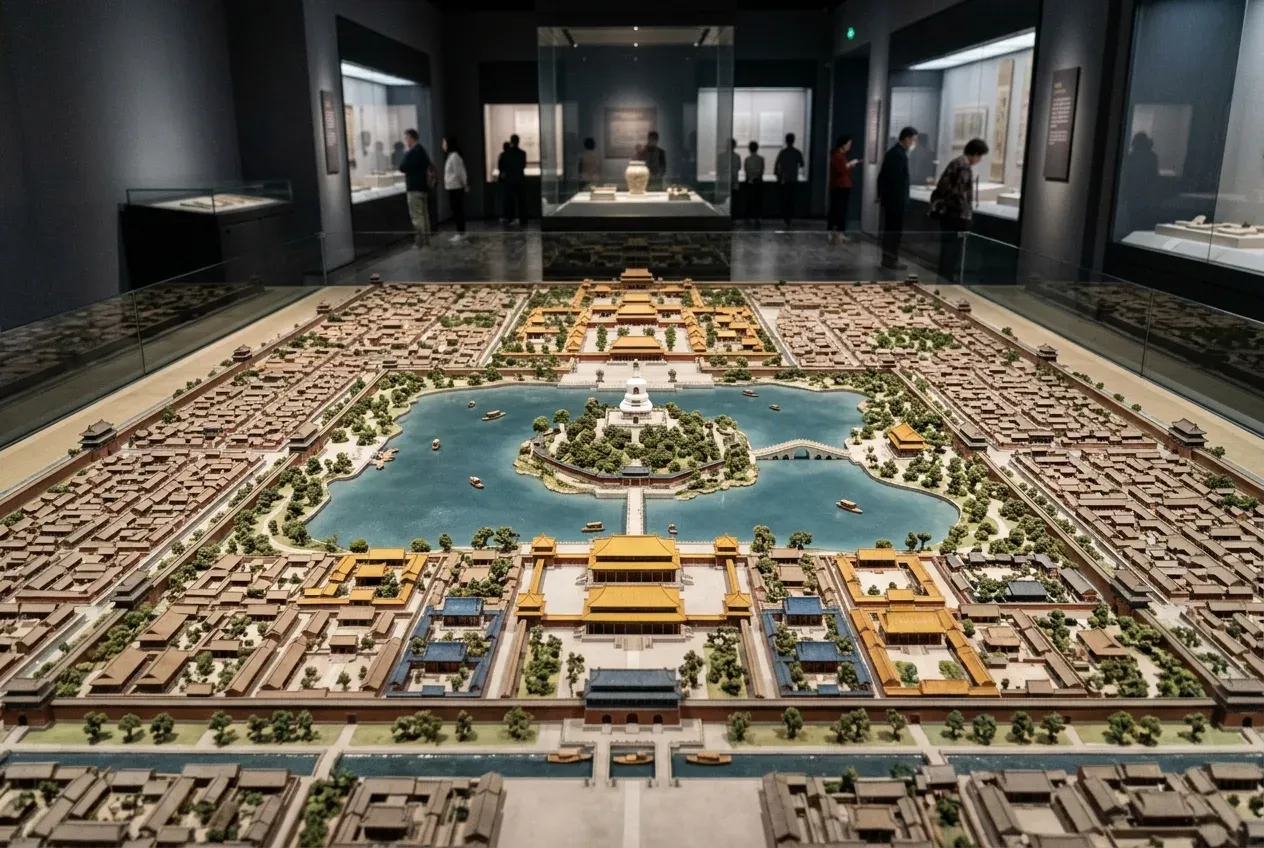
How Did Dadu's City Walls and Street Layout Reflect Traditional Urban Planning Rules?
Dadu was rectangular in layout, with city walls measuring 60 li and 240 bu in perimeter (about 28.6 kilometers) and eleven gates in total. The city layout strictly followed the planning principles in the Rites of Zhou: Kaogongji, including nine north-south and nine east-west avenues, the palace court in front and the market behind, and the ancestral temple on the left with the altar of soil and grain on the right.
Street planning inside Dadu was divided into three tiers: main avenues, secondary streets, and hutongs. Main avenues were 24 bu wide (about 25 meters), secondary streets were 12 bu wide (12.5 meters), and hutongs were 6 bu wide (6 to 7 meters).
This three-tier street network laid the foundational pattern for Beijing's siheyuan courtyards and hutong neighborhoods. The regular grid fabric organized residential blocks and commercial markets orderly across the capital.
How Did Guo Shoujing's Water Engineering Connect the Grand Canal?
The Yuan dynasty hydraulic engineer Guo Shoujing directed the construction of the Tonghui River project. The canal channeled water into the city from Baifu Village in Changping to Jishuitan, allowing grain tribute boats from the Grand Canal to sail directly to the Jishuitan docks inside Dadu.
The Grand Canal of the Yuan period ran from Hangzhou in the south to Dadu in the north, spanning 1,794 kilometers and connecting five major river basins. By straightening curves and taking direct routes, it was shortened by more than 900 kilometers compared to the Sui dynasty Grand Canal.
Canal transport, combined with a nationwide network of roads and post stations (Örtöö, or zhanchi), enabled the vast empire to foster the most extensive domestic and international exchanges and foreign trade prior to modern times.
What Is the Timeline of the Founding of the Yuan and the Construction of Dadu?
| Year or Date | Key Historical Event | Key Figures or Groups | Layout and Historical Impact |
|---|---|---|---|
| May 5, 1260 | Kublai Khan declared himself emperor of the Mongol Empire in Kaiping | Kublai Khan | Established the Zhongtong era name, becoming the first ruler to adopt a Han-style imperial title and era name |
| 1267 | Decided to move the capital to Yanjing (Zhongdu) and plan the new capital | Liu Bingzhong, Ikhtiyar al-Din | Planned with Qionghua Island as the center, with the Arab designer creating the new palaces |
| Dec 18, 1271 | Issued the Edict on the Dynastic Name to designate the country as the Great Yuan | Kublai Khan, Liu Bingzhong | Accepted Liu Bingzhong's proposal, drawing from the Book of Changes phrase "how great is Qian, the origin" |
| Mar 1272 | Renamed Zhongdu to Dadu and instituted the dual-capital system | Kublai Khan | Kaiping Prefecture (Shangdu) became the auxiliary capital, and Dadu was known in Turkic as Khanbaliq |
| First day of the first lunar month, 1274 | Palace complex completed and the first New Year imperial court assembly held | Kublai Khan | First assembly held in Daming Hall to receive congratulations from officials and Goryeo envoys |
| Mar 19, 1279 | Remnants of Southern Song destroyed at the Battle of Yamen, completing full unification | Yuan military forces | Ended more than 520 years of division since the An Lushan Rebellion |
| 1368 | Ming forces captured Dadu and renamed it Beiping | Ming military forces | The northern wall was retracted in the early Ming, preserving the original northern rampart as the Tucheng ruins |
Which Historical Sites Related to Dadu Can Still Be Found in Beijing Today?
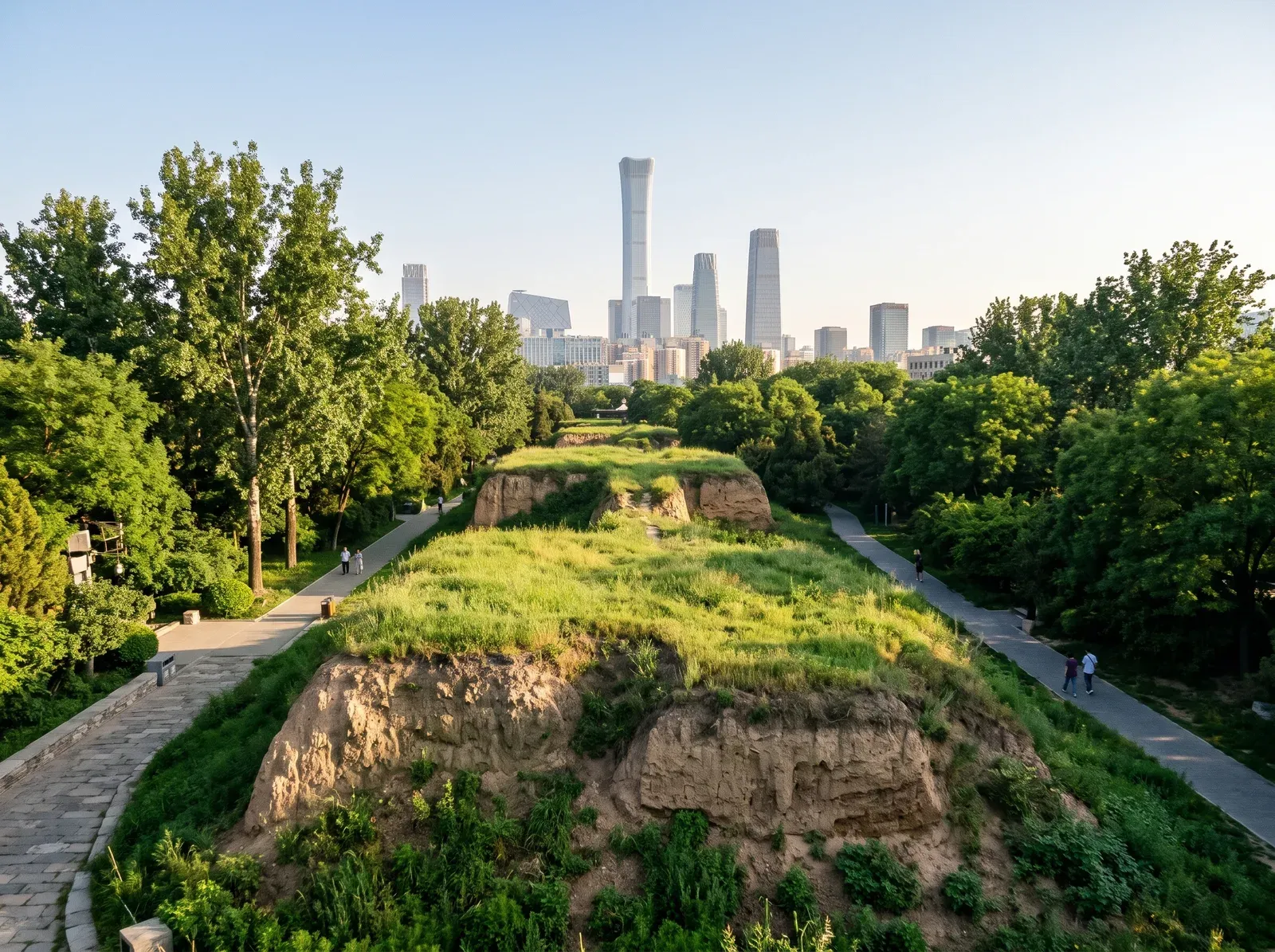
In 1368, after Ming troops captured Dadu, the city was renamed Beiping, and the northern city wall was rebuilt further south in the early Ming dynasty. Today, the original northern wall of Dadu survives as the Tucheng (Earthen Wall) ruins in Chaoyang District and Haidian District of Beijing.
The Beijing Central Axis runs 7.8 kilometers from the Bell and Drum Towers in the north to Yongdingmen in the south, passing through Wanning Bridge, Jingshan Park, and the Palace Museum. Among them, Wanning Bridge preserves the historical route where grain tribute transport on the Tonghui River entered the city.
Jingshan in Jingshan Park is an artificial hill with an elevation of 89.2 meters and a relative height of 45.7 meters. It was piled up in 1420, during the eighteenth year of the Yongle reign in the Ming dynasty, using debris from the demolished Yuan dynasty palaces and soil excavated from the Forbidden City's moat.
Sources
Jingshan Park - Wikipedia
Eight World Cultural Heritage Sites
Kublai Khan - Wikipedia
Yuan Dynasty - Wikipedia
Khanbaliq - Wikipedia
Yuan dynasty | History, Achievements, Art, & Facts | Britannica
The sources above were verified on November 14, 2026.
FAQ
Where does the Yuan dynastic name Great Yuan originate?
It comes from the phrase "how great is Qian, the origin" in the Book of Changes. On December 18, 1271 (the eighth year of Zhiyuan), Kublai Khan accepted the proposal of Han official Liu Bingzhong and issued the Edict on the Dynastic Name, officially setting the Chinese dynastic name as the Great Yuan.
Which two cities made up the dual-capital system of the Yuan Dynasty?
It refers to Dadu and Kaiping Prefecture (Shangdu). In March 1272, Kublai Khan renamed Zhongdu to Dadu and designated Kaiping Prefecture as the secondary capital, formally establishing the dual-capital system.
Why was Dadu also called Khanbaliq?
Khanbaliq was the Turkic name for the capital. After Kublai Khan renamed Zhongdu to Dadu in March 1272, the name became widely used across Eurasia.
Can the city walls of Dadu still be seen in Beijing today?
Yes. After Ming troops captured Dadu in 1368, the northern wall was rebuilt further south in the early Ming dynasty. The original northern rampart survives today in Beijing's Chaoyang and Haidian districts as the Tucheng ruins.
How were the street widths in Dadu regulated?
Streets were planned in three tiers: main avenues, secondary streets, and hutongs. Main avenues were 24 bu wide (about 25 meters), secondary streets were 12 bu wide (12.5 meters), and hutongs were 6 bu wide (6 to 7 meters), laying the foundation for Beijing's siheyuan neighborhoods.