
CNY Food: Dumplings, Rice Cake and Fish Meanings
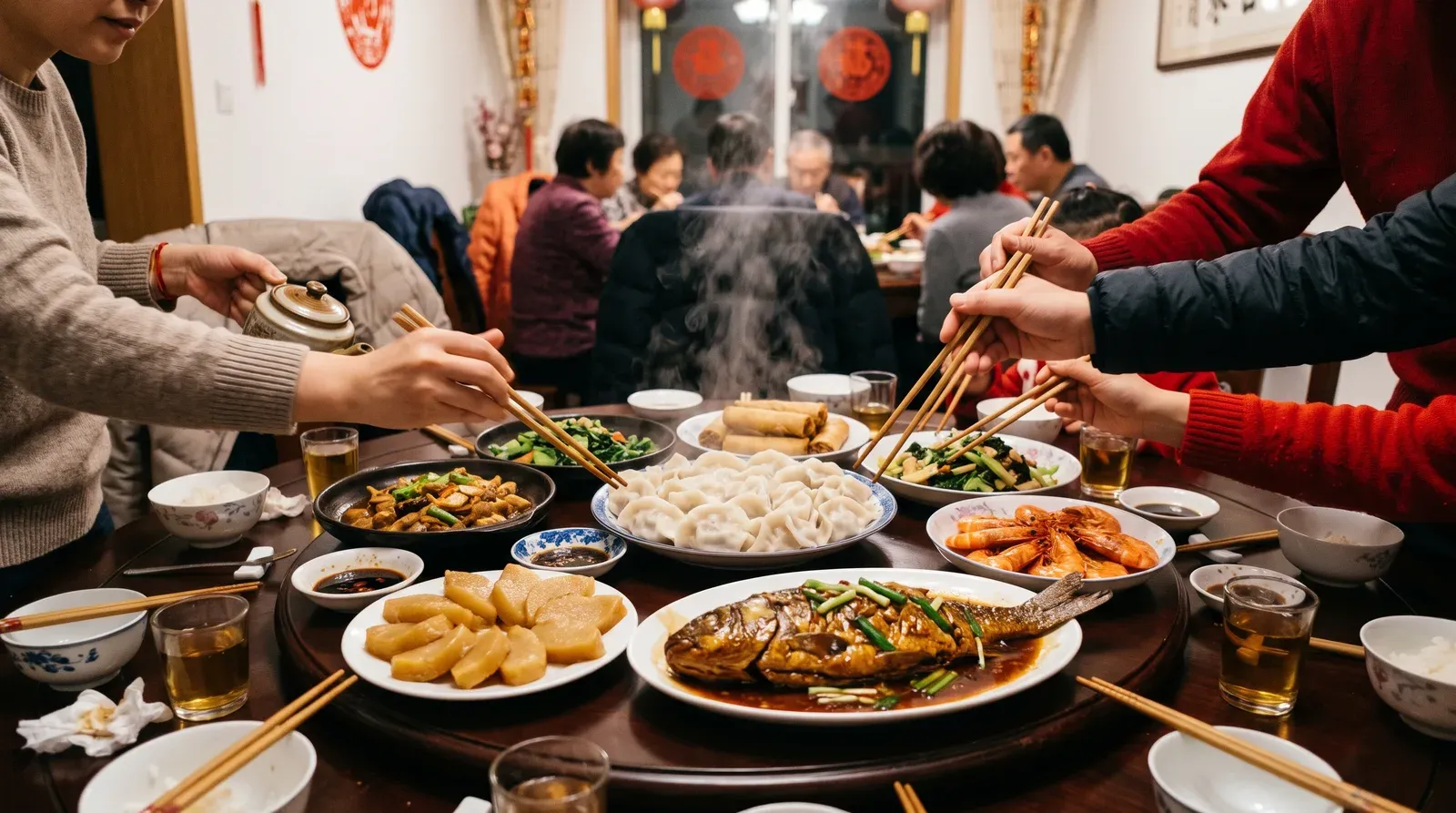
What do people eat during Spring Festival? A holiday table usually features classic CNY foods such as dumplings, niangao, fish, tangyuan, and spring rolls. The history of making niangao dates back to the Northern and Southern Dynasties between 386 and 589 CE, while serving fish on New Year's Eve and wrapping dumplings at midnight are long-standing customs. These lunar new year food traditions use puns and symbolic shapes to express traditional wishes for surplus, advancement, and wealth.
What Are Common CNY Food Choices and Their Meanings?
Serving traditional Chinese food for Lunar New Year often carries auspicious meanings. Folk traditions use the sounds of food names or their physical shapes to convey different blessings.
| Food | Traditional Symbolism | Preparation and Appearance | Regions and Timing |
|---|---|---|---|
| Dumplings | Symbolizes wealth, good fortune, and abundant riches | Shaped like gold and silver ingots, often wrapped and boiled at midnight on New Year's Eve, sometimes with a clean coin inside | Staple in northern China, eaten at midnight on New Year's Eve and throughout the year |
| Niangao | Sounds like "higher year", symbolizing yearly advancement and prosperity | Often made with brown sugar, dipped in egg, and pan-fried in Guangdong; mostly white, stir-fried, or boiled in soup in Jiangnan and Shanghai | Recorded between 386 and 589 CE, eaten on New Year's Eve and during Kitchen God rituals |
| Fish | Sounds like "surplus", symbolizing yearly abundance and wealth surplus | A whole fish must be prepared for the New Year's Eve reunion dinner | New Year's Eve reunion dinner across China |
| Tangyuan and Yuanxiao | Sounds like "reunion", symbolizing togetherness and completeness | Soft filling hand-wrapped into wet rice dough in the south; firm filling dipped in water and rolled in dry flour baskets in the north | South and north, during Lunar New Year and Lantern Festival |
| Spring Rolls | Symbolizes welcoming spring blessings and golden bars of wealth | Thin wrappers rolled with fresh seasonal vegetables, deep-fried until golden and round | Lichun and Lunar New Year period |
| Fat Choy, Dried Oysters, and Changnian Cai | Sounds like wealth and good business, symbolizing longevity and prosperity | Guangdong often serves fat choy with dried oysters, or prepares whole spinach and mustard greens with roots attached | New Year's Eve dinner in Guangdong and select regions |
Why Must a Fish Be Served at the New Year's Eve Dinner?
A fish must be served at the New Year's Eve dinner because the word for fish sounds like surplus. The dish symbolizes having a surplus every year, representing an abundant life and leftover wealth.
Family gatherings and drinking on New Year's Eve were recorded in ancient times. According to Jingchu Suishiji by Zong Lin in the Liang Dynasty of the Southern Dynasties, families prepared dishes, gathered at their seats to welcome the new year, and drank together at the end of the year. A whole fish often serves as an important dish on this reunion dinner table.
What Are the Meanings and Legends Behind Dumplings?
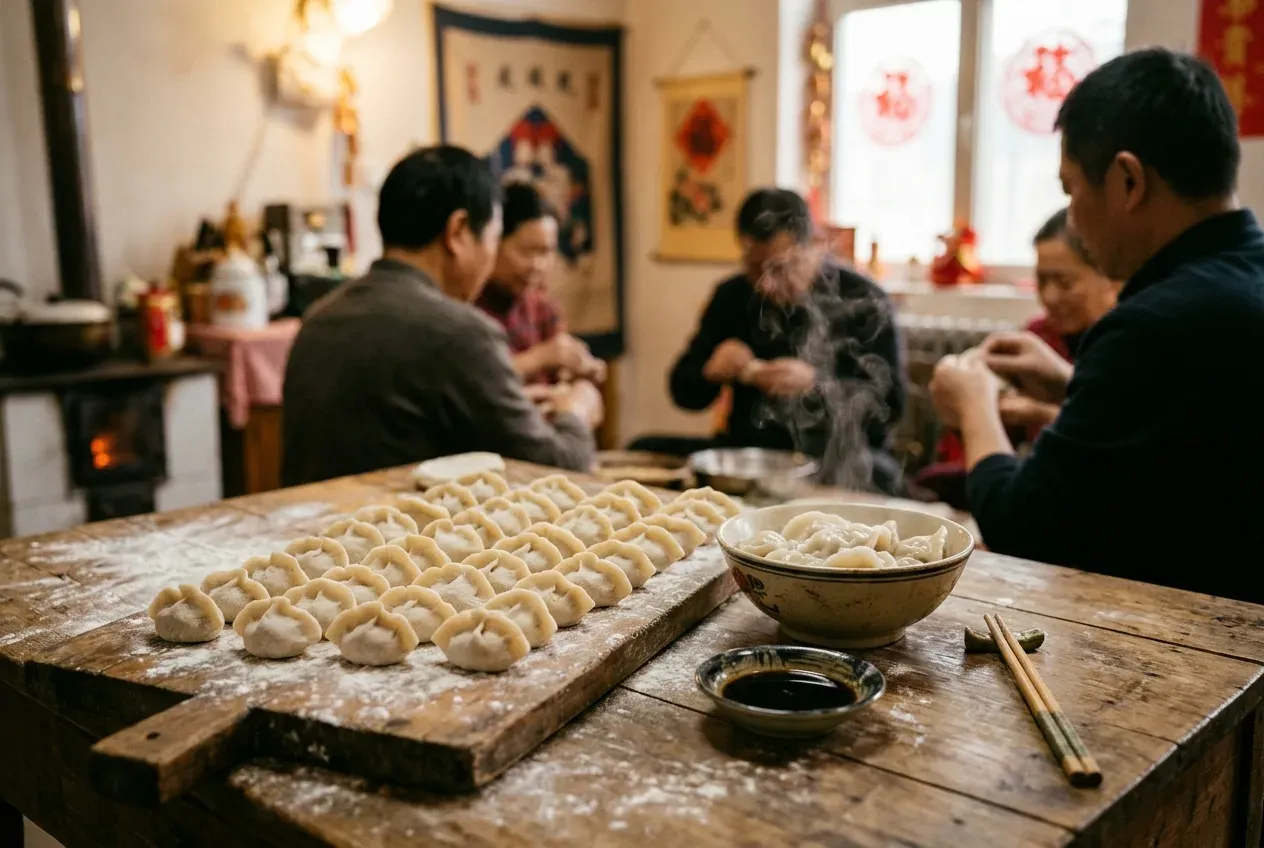
Dumplings resemble ancient Chinese gold and silver ingots, so they symbolize wealth and good fortune in holiday traditions. They are one of the most important traditional staple foods for Lunar New Year in northern China, where families also make and eat them throughout the year.
Many northern families wrap and boil dumplings at midnight on New Year's Eve. Some families also place a washed coin inside a dumpling, and whoever finds it is believed to enjoy incoming wealth in the new year.
Folk tradition credits the Eastern Han physician Zhang Zhongjing with inventing dumplings, originally called jiao'er. Legend says he first cooked mutton and warming herbs into a soup to treat people suffering from frostbitten ears, which later evolved into a New Year food custom.
How Did Niangao Develop and How Does It Differ by Region?
According to Wikipedia, eating niangao during Spring Festival is considered lucky because the name sounds like rising higher year by year, symbolizing annual advancement or prosperity. The history of making niangao traces back to the Northern and Southern Dynasties between 386 and 589 CE, when Shici, cited in the Northern Wei agricultural text Qimin Yaoshu, recorded a sticky rice food called ye.
Folk legends describe niangao as a traditional sweet offering to the Kitchen God before New Year's Eve. Its sticky texture was intended to seal the Kitchen God's mouth so he could not speak ill of the family in front of the Jade Emperor.
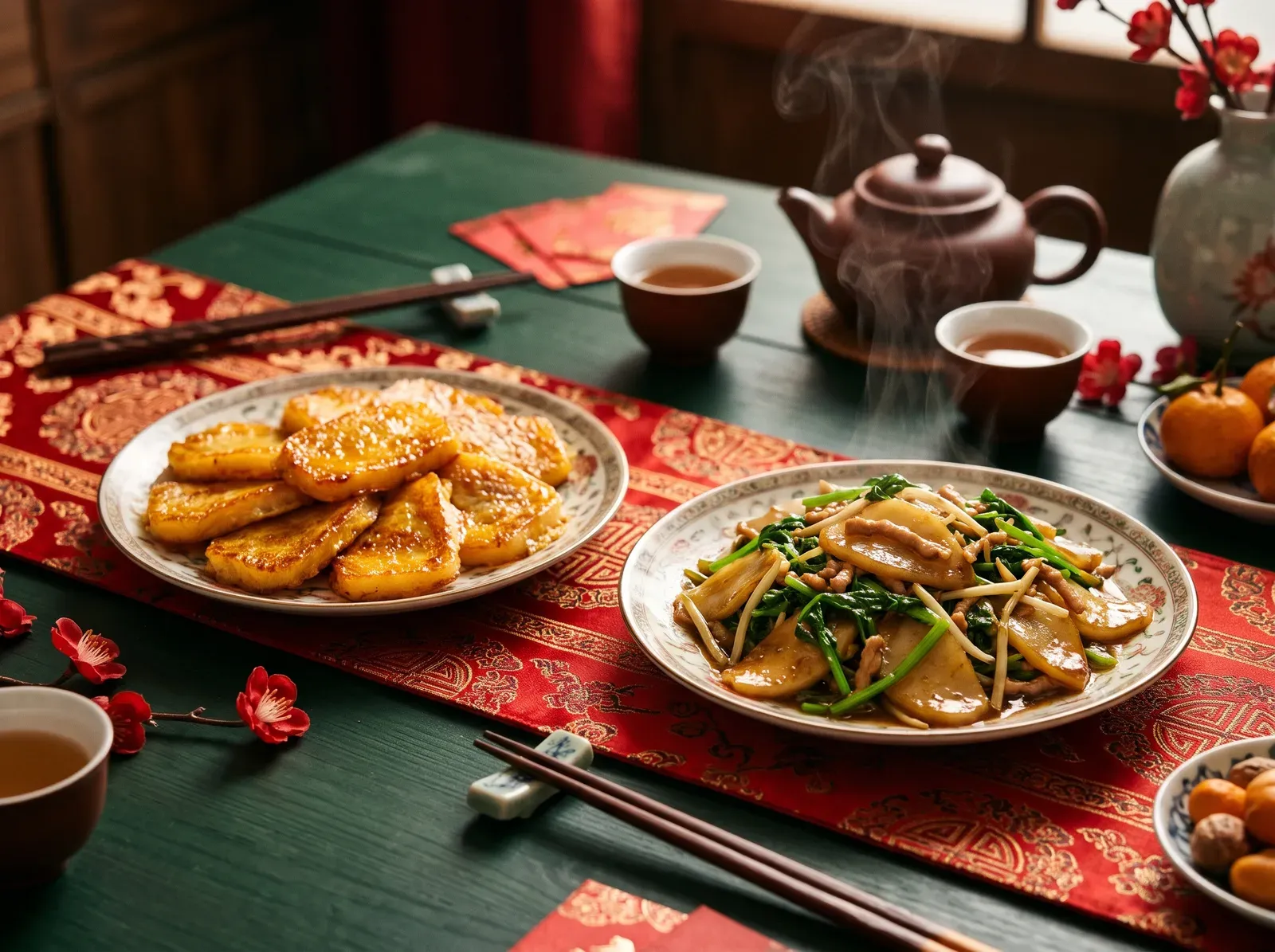
Traditional Cantonese niangao is made with brown sugar, giving it a deep yellow color, and is often sliced thick, coated in beaten egg, and pan-fried until crispy outside and chewy inside. In Jiangnan and Shanghai, niangao is mostly white, ground from a blend of rice and glutinous rice, and typically stir-fried with shepherd's purse or shredded pork, or cooked in soup.
What Do Tangyuan, Spring Rolls, and Holiday Dishes Symbolize?
Because tangyuan sounds like tuanyuan, meaning reunion, its round shape symbolizes togetherness and harmony, making it an essential food during Lunar New Year and the Lantern Festival. Spring rolls were originally thin pancakes wrapped around fresh seasonal greens during Lichun or early spring, and when fried to a golden round shape, they symbolize welcoming spring blessings and gold bars of wealth.
Southern tangyuan is made by wrapping soft filling by hand into moist glutinous rice dough and rolling it into balls. Northern yuanxiao is made by dipping firm filling cubes in water and rolling them repeatedly in a basket of dry glutinous rice flour.
Reunion dinner dishes often focus on lucky meanings. Guangdong frequently serves fat choy and dried oysters because their names sound like gaining wealth and good market business, while many places prepare whole changnian cai with roots attached, such as spinach or mustard greens, to symbolize longevity.
When Do These Lunar New Year Food Traditions Vary?
Dumplings are one of the most important traditional staple foods for Lunar New Year in northern China, but they are not the New Year's Eve staple for all families. Many southern regions eat steamed rice or niangao instead on New Year's Eve.
In addition, fat choy and dried oysters are prepared mainly in Guangdong, and whole changnian cai with intact roots is prepared only in certain places. These associations with wealth and longevity come from folk tradition rather than scientific conclusions.
Sources
Nian gao - Wikipedia
Jiaozi - Wikipedia
New Year's Eve dinner - Wikipedia
Tangyuan - Wikipedia
Spring roll - Wikipedia
Sources verified on November 5, 2026
FAQ
What does the fish at New Year's Eve dinner stand for?
A fish dish has to be on the table at the New Year's Eve dinner. The Chinese word for fish, yu, sounds like the word for surplus, so it stands for "surplus every year": a comfortable life with money left over each year.
Why is a coin wrapped inside northern New Year's Eve dumplings?
Many northern families wrap a clean coin inside a dumpling at midnight on New Year's Eve. Custom holds that whoever eats the dumpling with the coin will gain wealth in the coming year.
What is the difference between making tangyuan and yuanxiao?
Southern tangyuan is made by wrapping soft filling by hand into moist glutinous rice dough and rolling it into balls. Northern yuanxiao is made by dipping firm cubes of filling in water and rolling them repeatedly in a basket of dry glutinous rice flour.
What is the difference between Guangdong niangao and Shanghai niangao?
Traditional Cantonese niangao is made with brown sugar into a deep yellow cake, sliced thick, coated in egg, and pan-fried. In Shanghai and Jiangnan, niangao is white, made from rice and glutinous rice, and mostly stir-fried with shepherd's purse or shredded pork, or cooked in soup.