
The Four Great Inventions of Ancient China: What to Know
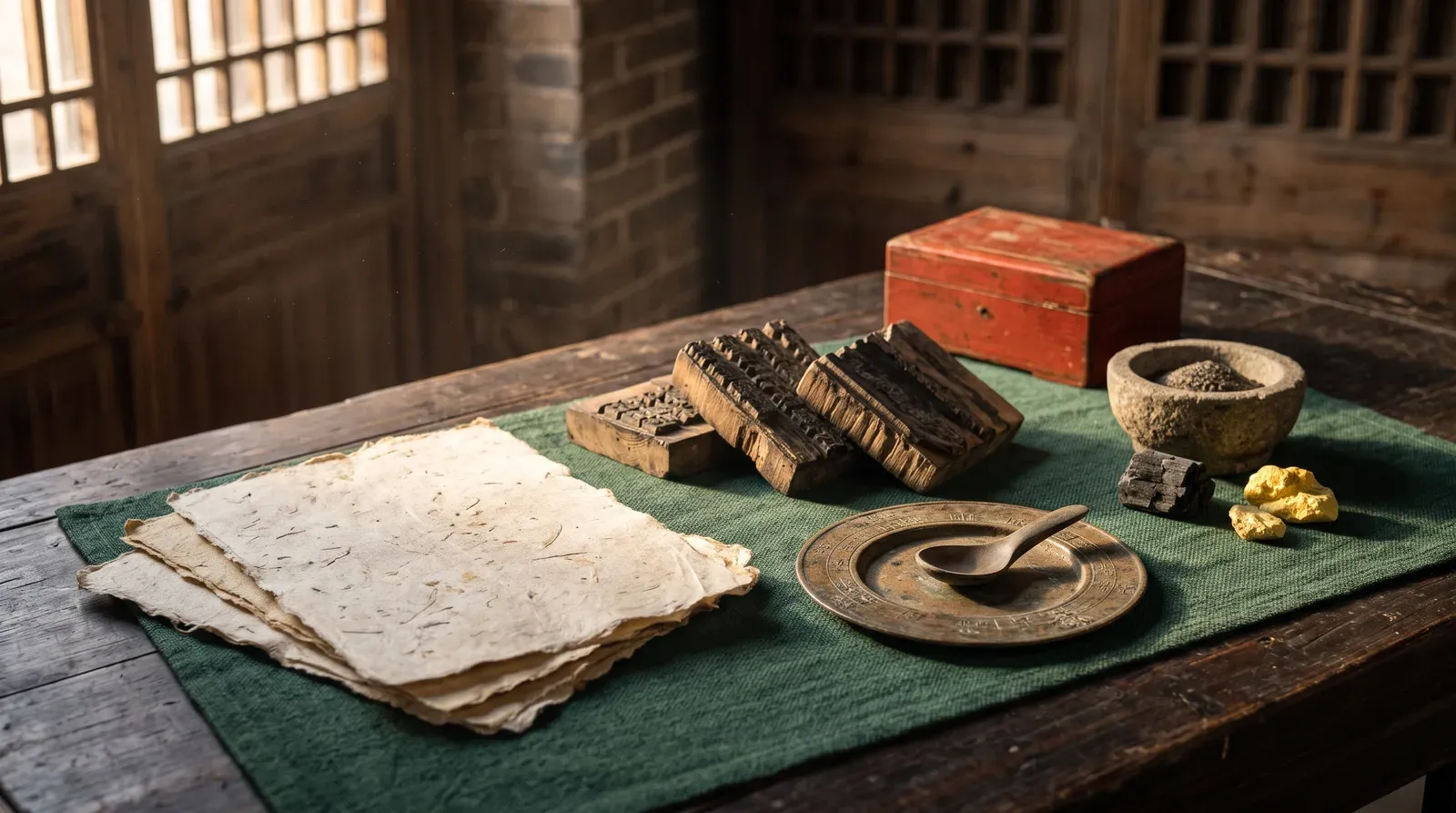
The four great inventions of ancient China are papermaking, printing, gunpowder and the compass. By tradition, papermaking goes back to Cai Lun in 105 AD. The other three appeared in the Tang dynasty, in the 9th century and in the Warring States period. They do not come from one age.
| Item | Information |
|---|---|
| Which four | Papermaking, printing, gunpowder, the compass |
| Time span | From the Sinan of the Warring States period to firearms of the mid 12th century Song |
| Where the term comes from | Adapted from Europe's idea of "three great inventions"; the American scholar Carter first set out "four great inventions" in 1925 |
| See objects in Beijing | National Museum of China, China Science and Technology Museum, China Printing Museum |
| Book ahead | The China Science and Technology Museum uses online real-name ticket sales and checks, so tickets must be booked in advance |
When did each of the four appear?
The four are far apart in time. The Sinan, the forerunner of the compass, already existed in the Warring States period. Woodblock printing only arrived in the Tang. Gunpowder waited until the 9th century, and firearms with killing power were a Song dynasty matter.
| Invention | Who or what marks its appearance | Key text or object | How it spread |
|---|---|---|---|
| Papermaking | Cai Lun in the Eastern Han made paper from mulberry bark and other bast fibers, fishing nets, worn cloth and hemp ends | A paper fragment with writing found at the Chaqerte beacon tower site in Alxa League | Some Western scholars hold that papermaking has clear evidence of passing from China to the West |
| Printing | An edict of Emperor Wen of Sui is the earliest mention of printing; woodblock printing appeared in the Tang | The printed Diamond Sutra | Woodblock printing on cloth reached Europe through the Islamic world |
| Gunpowder | Alchemists made it while looking for an elixir of long life | The Taishang Shengzu Jindan Mimi recorded the earliest formula | In the 13th century it may have spread across Eurasia with the Mongol campaigns |
| Compass | Its forerunner was the Sinan, made from natural lodestone | Shen Kuo's Dream Pool Essays recorded magnetic declination and a magnetized embroidery needle | Reached the Arab world in the late 12th and early 13th centuries, then Europe |
Tip: In the Warring States and Han periods the compass was a lodestone spoon, not a needle. A compass with a magnetized steel needle only shows up in Shen Kuo's account.
Who came up with the term "four great inventions"?
The term came from the West, adapted from the popular European idea of "three great inventions". In 1620 Francis Bacon wrote in Instauratio magna that printing, gunpowder and the nautical compass changed the face of the world: the first in learning, the second in warfare, the third in navigation.
Joseph Edkins, a missionary and sinologist who worked in China, was the first to add papermaking to the three. The American scholar Carter first clearly put forward "four great inventions" in the preface to his 1925 book The Invention of Printing in China and Its Spread Westward. In the 20th century Joseph Needham, a British biochemist, historian and sinologist, made the list widely known and expanded it.
Tip: When exhibitions and talks mention the "three great inventions", they mean printing, gunpowder and the nautical compass, the same three Bacon listed in 1620. Papermaking is not among them.
Papermaking: did Cai Lun invent paper?
Cai Lun was not the inventor of paper. He was the improver. Paper was used in China for wrapping and padding from the 2nd century BC, and the paper map from Fangmatan in Tianshui dates to the 2nd century BC. Paper bearing Chinese characters and dating to 8 BC has been found in Gansu.
The earliest known piece of paper with writing on it came from the beacon tower ruins at Chaqerte in Alxa League and dates to 110 AD. Paper only became common as a writing material in the 3rd century.
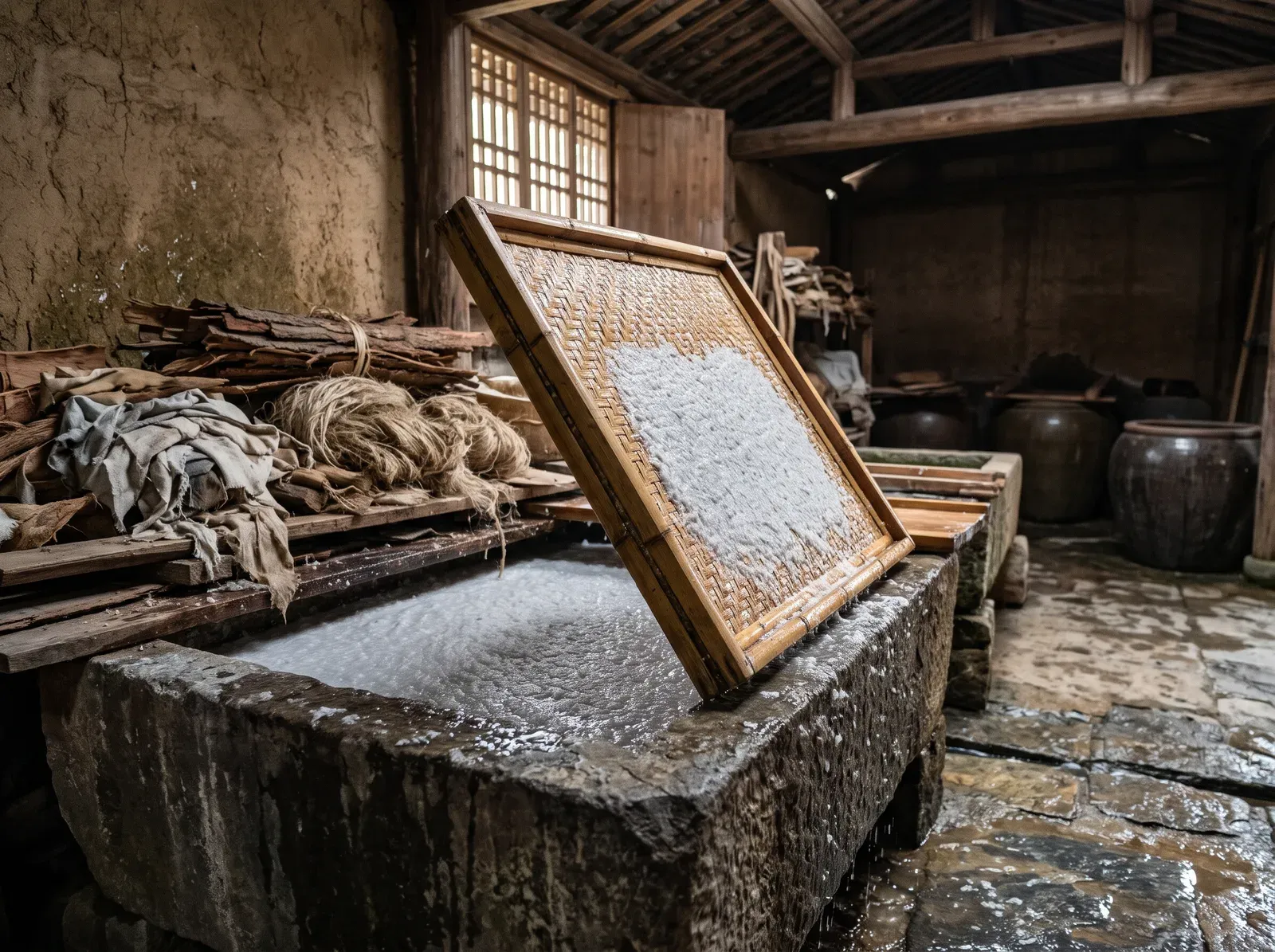
In the Eastern Han, Cai Lun made paper from mulberry bark and other bast fibers, fishing nets, worn cloth and hemp ends. The process: boil the raw material into a pulp, beat it with a wooden or stone mallet, add plenty of water, lift the fibers out on a wooden screen, drain and dry. The product was called Marquis Cai paper.
Before paper, Chinese writing went on pottery, animal bone and stone, was cast into bronze, or was written on bamboo slips, wooden slips and silk. Those materials were either too heavy or too expensive.
Once paper spread, its uses kept growing. China was using paper for toilet paper by the 6th century, folded and stitched paper bags for storing tea in the Tang, and in the Song the government became the first to issue paper money.
Cai Lun was a eunuch of the Eastern Han, and among the early figures behind the four inventions only his name survived. He was born in Guiyang Commandery, today's Leiyang in Hunan. His home region is still an active papermaking center, and in China he is honoured as the god of papermaking.
Printing: woodblock or movable type, which was the mainstream?
Woodblock was the mainstream. Until the late Qing in the 19th century, most printing in China used woodblocks. Movable type was not widely used inside China: the character set is huge, so you need a great many pieces of type, and it is not as simple as an alphabet. Unearthed movable type objects are also few.
Printing appeared in China in the Tang. The earliest mention of printing is a 593 edict of Emperor Wen of Sui ordering printed Buddha images and sutras. The Diamond Sutra printed in 868 is a scroll 5.18 metres long, dated the 15th day of the 4th month of the 9th year of Xiantong, under Emperor Yizong of Tang.
This Diamond Sutra was found in 1900 in the Library Cave at Dunhuang. In 1907 Wang Yuanlu, the Daoist who guarded the cave, sold it to Aurel Stein. It is now in the British Library.
| Type | Who made it | Date |
|---|---|---|
| Clay movable type | Bi Sheng, recorded by Shen Kuo | 990 to 1051 |
| Wooden movable type | Wang Zhen, who also made a rotating type table arranged by rhyme | active 1290 to 1333 |
| Bronze movable type | Hua Sui | a print of 1490 |
| Porcelain plates | Xu Zhiding | 1718 |
Woodblock printing on cloth was already seen in China by about 220 AD, several centuries before text printing. It reached Europe through the Islamic world in the 14th century or earlier.
Tip: The dynasties of the movable type men are easy to mix up. Bi Sheng was Northern Song, Wang Zhen was Yuan, Hua Sui was Ming and Xu Zhiding was Qing.
Gunpowder: how did alchemists looking for long life end up with gunpowder?
Gunpowder was invented in 9th century China by alchemists searching for an elixir of immortality. Its first use was in fireworks for festivals and big occasions. The alchemists gave the mixture the name huoyao, fire powder, and that is still its name in Chinese.
| Text | Year | What it records |
|---|---|---|
| The Taishang Shengzu Jindan Mimi | 808 | 6 parts sulfur, 6 parts saltpeter, 1 part of a herb |
| The Wujing Zongyao | 1044 | Several formulas with saltpeter between 27% and 50%; the original is lost and the surviving copy is a 1510 Ming edition |
| The Huolongjing | 14th century | Saltpeter from 12% to 91%, with cast iron cannon and land mines |
About 50 years later, the Zhenyuan Miaodao Yaolue warned that heating sulfur, realgar and saltpeter together with honey gives off smoke and catches fire, burning hands and faces and even houses.
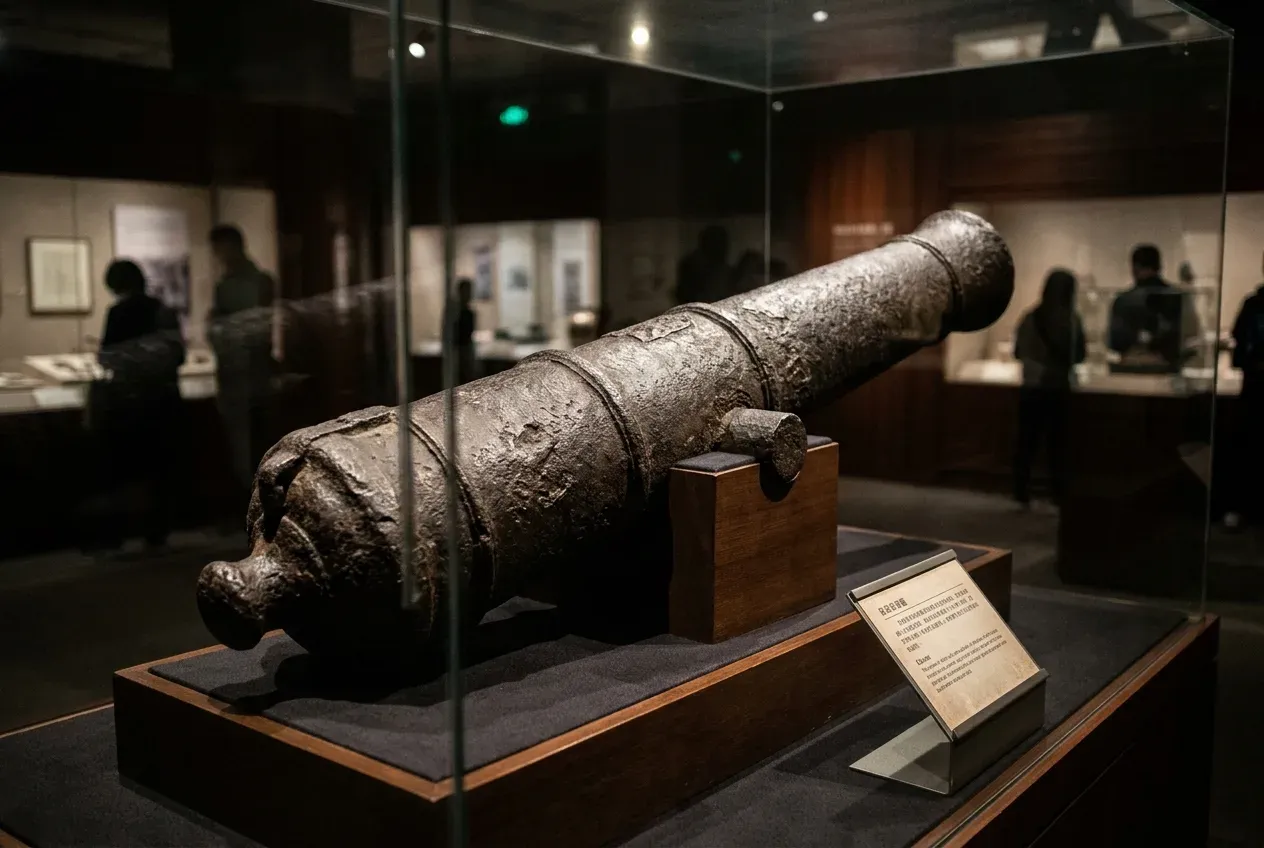
By the mid 12th century of the Song there were hand cannon and multi-barrel hand cannon. Practical firearms were in use in China about five centuries before Europe. At the Battle of Caishi in 1161, thunderclap bombs carried on Song naval ships defeated the Jin army.
The Yuan used iron bombs in the two invasions of Japan in 1274 and 1281.
In 1280 a large gunpowder store at Weiyang caught fire and blew up. A week later, people who came to inspect concluded that 100 guards had died on the spot.
Gunpowder knowledge may have spread quickly across Eurasia in the 13th century with the Mongol campaigns. Written formulas appear in the Middle East between 1240 and 1280. In Europe it shows up in Roger Bacon's Opus Majus in 1267.
Tip: Arab writers gave these gunpowder products from the East names that included "Chinese": saltpeter was "Chinese snow", fireworks "Chinese flowers" and rockets "Chinese arrows".
The compass: from the Sinan to the fish, how were directions found?
The forerunner of the compass was a natural lodestone pointer called the Sinan, from the Warring States period. From the Han, people used a spoon shaped pointer ground from natural lodestone for divination and feng shui, not yet for navigation.
Wang Chong of the Eastern Han wrote in the Lunheng: "The ladle of the Sinan is thrown on the ground, and its handle points south."
The Northern Song Wujing Zongyao records how to make a direction-finding fish: cut an iron or steel sheet into a fish shape, heat it red in a charcoal fire, then lay it in water with its tail pointing north at an angle. It picks up remanent magnetism and can be floated in a bowl of water to point south.
Shen Kuo, in his 1088 Dream Pool Essays, was the first to describe magnetic declination accurately, and he also described a compass made with a magnetized embroidery needle.
The compass reached the Arab world around the late 12th and early 13th centuries and from there passed into Europe. Europe later developed the dry compass, which came back to China through Japan in the Ming dynasty.
The whole story of the four in one table
Tip: A single row often holds two things. The Wujing Zongyao, for example, records both the direction-finding fish and several gunpowder formulas, so read them separately.
| Year | Event |
|---|---|
| 2nd century BC | The Fangmatan paper map from Tianshui; paper products for padding and wrapping |
| 110 | The earliest known paper with writing, from the beacon tower ruins at Chaqerte in Alxa League |
| 220 | Woodblock printing on cloth already seen in China |
| 593 | Emperor Wen of Sui orders printed Buddha images and sutras, the earliest record of printing |
| 808 | The Taishang Shengzu Jindan Mimi records the earliest gunpowder formula |
| 868 | The printed Diamond Sutra, a scroll 5.18 metres long |
| 1044 | The Wujing Zongyao records the direction-finding fish and several gunpowder formulas |
| 1088 | Shen Kuo's Dream Pool Essays describes magnetic declination |
| 1161 | The Battle of Caishi, where thunderclap bombs on Song naval ships defeated the Jin army |
| 1280 | A gunpowder store at Weiyang catches fire and explodes |
| Year | Event |
|---|---|
| 1490 | Hua Sui's bronze movable type print |
| 1718 | Xu Zhiding develops porcelain plate printing |
| 1900 | The Library Cave at Dunhuang is discovered |
| 1907 | Wang Yuanlu sells the Diamond Sutra print to Aurel Stein |
| 2017 | The idea of "four new inventions" becomes popular in China |
Where to see ancient China inventions in Beijing
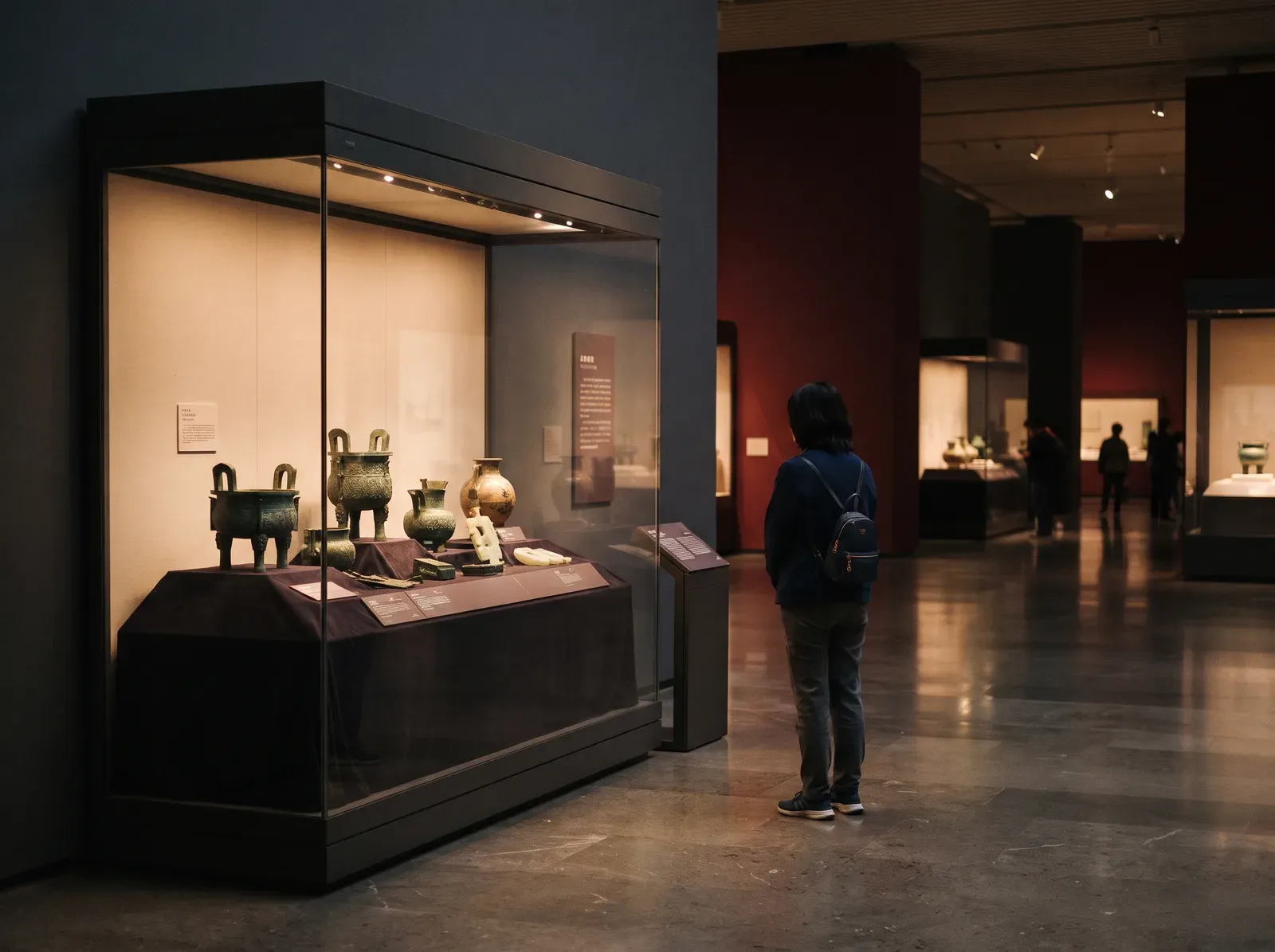
Three places in Beijing are connected to these objects: the National Museum of China, the China Science and Technology Museum and the China Printing Museum.
At the National Museum of China, the permanent Ancient China exhibition and the special exhibition The Power of Science and Technology are in several galleries across the north and south wings and in the No. 2 Central Hall.
The China Science and Technology Museum requires online real-name booking in advance. Booking opens at 18:00, up to 7 days before your visit.
The China Printing Museum is on Xinghua North Road, Qingyuan Subdistrict, Daxing District, on the campus of the Beijing Institute of Graphic Communication. It has an Ancient Origins gallery, a modern gallery and a printing equipment gallery, and it is the largest museum of its kind in the world.
| Venue | Opening hours |
|---|---|
| National Museum of China | Opens 9:00, last entry 16:00, closes 17:00; closed Mondays (except national holidays) |
| China Science and Technology Museum | Tuesday to Sunday, opens 9:30, closes 17:00; closed Mondays (except national holidays), and also closed on New Year's Eve and the first two days of the Lunar New Year |
Tip: At the China Science and Technology Museum you enter through security at the west gate, and the museum has no parking.
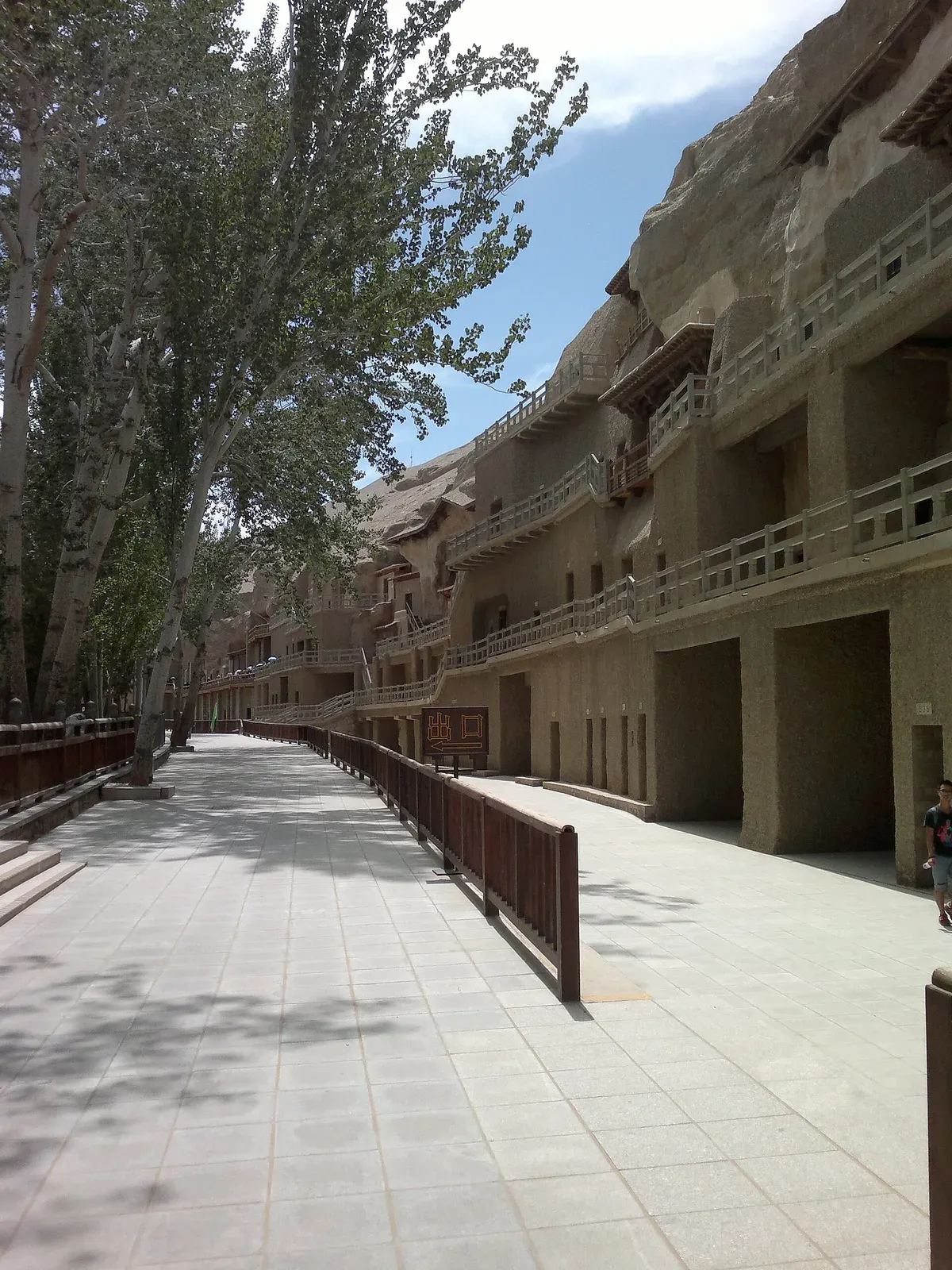
The Mogao Caves are 25 km southeast of Dunhuang city center, with 500 caves. They became a World Heritage Site in 1987, and the number of visitors is now capped.
In 1900 Wang Yuanlu found the sealed Library Cave at Mogao. The Dunhuang Academy's Mogao booking site lists a visitor enquiry line: 400-833-3715.
The documents in the cave date from 406 to 1002, about 50,000 items by estimate. The largest collections are now in Beijing, London, Paris and Berlin.
What are the "four new inventions" today?
In 2017 the idea of the "four new inventions" became popular in China. It refers to high-speed rail, mobile payment, e-commerce and shared bikes.
Tip: This is an internet phrase that only appeared in 2017, a different kind of thing from the four ancient objects above.
First time reading about them, what do people get wrong most often?
| Common mistake | More accurate |
|---|---|
| China came up with the four inventions itself | The concept came from the West, adapted from Europe's "three great inventions"; the American scholar Carter first set it out clearly in the preface to The Invention of Printing in China and Its Spread Westward |
| Cai Lun invented paper | Cai Lun improved it; maps and wrapping made of paper existed in the 2nd century BC, and paper with writing dates to 110 |
| Movable type replaced woodblock printing | Before the late Qing in the 19th century, most Chinese printing used woodblocks and movable type was not widely used |
| The compass was used for navigation from the start | Han spoon pointers were used for divination and feng shui, not navigation |
| Gunpowder was a weapon from the start | Its first use was fireworks for festivals and big occasions |
Tip: The last one is the easiest to get wrong. Some Western scholars hold that apart from papermaking, which has clear evidence of passing from China to the West, there is no direct evidence that gunpowder, the compass and movable type were carried from China to Europe, and each may have been invented separately. But gunpowder appears in Europe two centuries later than in China.
Sources
Four Great Inventions - Wikipedia
Cai Lun - Wikipedia
Four Great Inventions - Wikipedia (Chinese)
History of gunpowder - Wikipedia
Diamond Sutra - Wikipedia
China Printing Museum - Wikipedia (Chinese)
China Science and Technology Museum
National Museum of China official site
Mogao Caves - Wikipedia
Mogao Caves booking site: home
Sources checked on Nov 18, 2026
FAQ
Which of the four appeared first?
On the available material, the Sinan, the forerunner of the compass, existed in the Warring States period, earlier than the other three. Paper only became common as a writing material in the 3rd century.
Did Cai Lun really invent paper?
No. Paper was used in China for wrapping and padding from the 2nd century BC, and paper with Chinese characters dating to 8 BC has been found in Gansu. Cai Lun improved the process in the Eastern Han, and the product was called Marquis Cai paper.
Why didn't movable type replace woodblock printing?
The character set is huge, so you need a great many pieces of type, and it is not as simple as an alphabet. Unearthed movable type objects are also few. Before the late Qing in the 19th century, most Chinese printing used woodblocks.
How did gunpowder go from alchemy to weapons?
9th century alchemists invented it while looking for an elixir of immortality, and it was first used in fireworks for festivals and big occasions. By the mid 12th century of the Song there were hand cannon and multi-barrel hand cannon, and thunderclap bombs were used at the Battle of Caishi in 1161.
Where in Beijing can I see objects related to the four inventions?
The National Museum of China has them in its permanent Ancient China exhibition and in the special exhibition The Power of Science and Technology; the China Science and Technology Museum and the China Printing Museum are the other two. The science museum needs online real-name booking in advance and is closed Mondays (except national holidays).