
Xuzhou
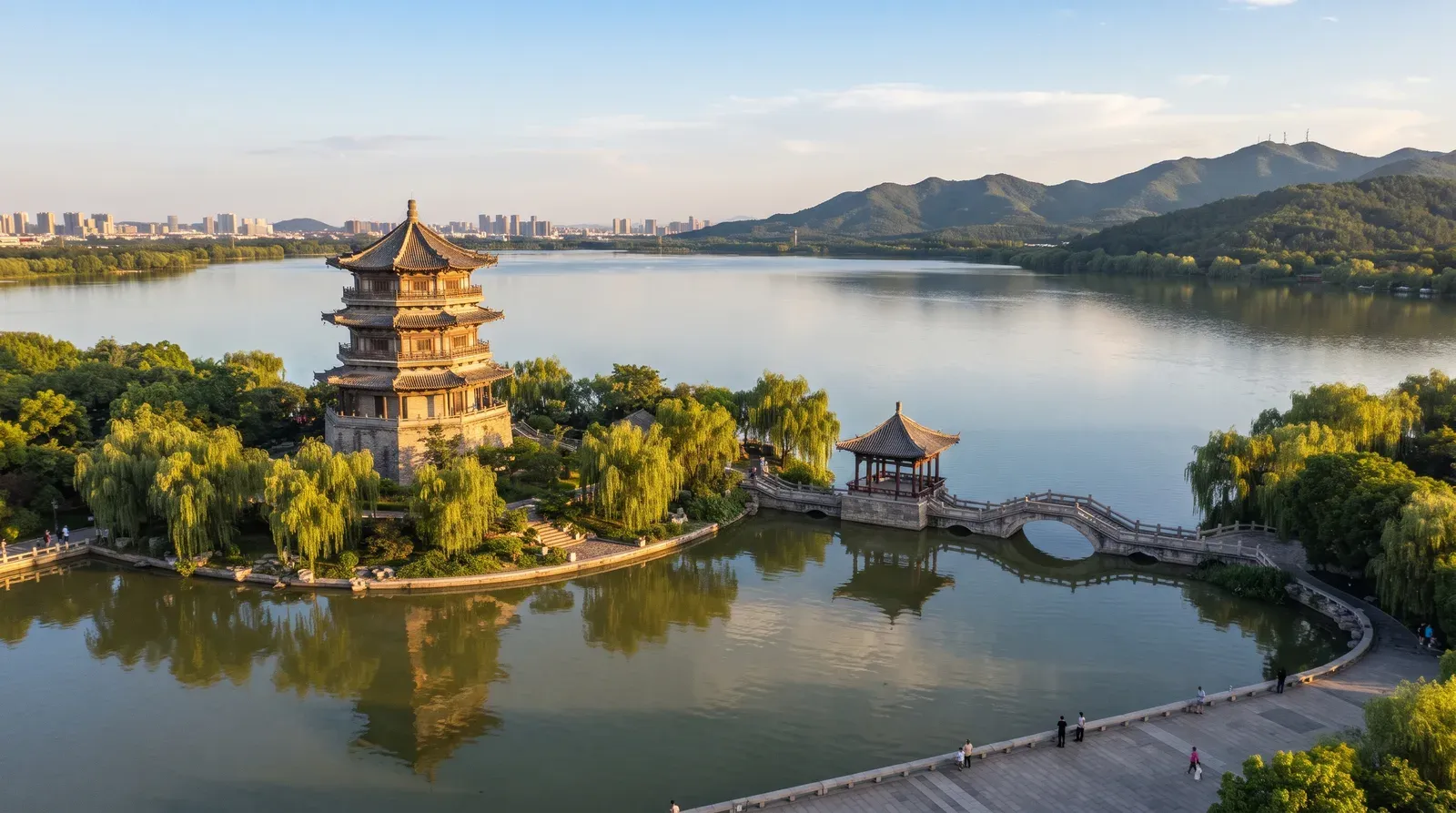
Xuzhou, abbreviated as Xu and formerly called Pengcheng, sits in northwestern Jiangsu Province in the southeast Huanghuai Plain, where Jiangsu, Shandong, and Anhui meet. As a major birthplace of Han dynasty culture, it preserves royal tombs and Chu-Han historical sites, alongside wide lakes and hills within the city. It suits travelers who enjoy cultural history and relaxed touring. Visiting Xuzhou's main cultural sights and city landmarks usually takes 2 to 3 days.
Key points
Visiting Xuzhou's core cultural sights and city landmarks generally takes 2 to 3 days. Spring and autumn offer mild weather for outdoor visits, while 60% of the annual precipitation occurs during the rainy season. Travelers interested in culinary traditions can visit during the one-month summer Fuyang Festival, with three metro lines charging 2 to 6 yuan for city travel.
Xuzhou, abbreviated as Xu and formerly called Pengcheng, sits in northwestern Jiangsu Province in the southeast Huanghuai Plain, where Jiangsu, Shandong, and Anhui meet. As a major birthplace of Han dynasty culture, it preserves royal tombs and Chu-Han historical sites, alongside wide lakes and hills within the city. It suits travelers who enjoy cultural history and relaxed touring. Visiting Xuzhou's main cultural sights and city landmarks usually takes 2 to 3 days.
When is a good time to visit Xuzhou?
Xuzhou sits on the northern edge of the northern subtropical monsoon climate zone with four distinct seasons. It has an annual average temperature of 15.3°C and annual average precipitation of 845.5 mm, with rainy season rainfall accounting for 60% of the yearly total. Spring and autumn are mild, making them pleasant for mountain hikes and outdoor historical sites. If you prefer folk customs and food culture, summer is also a good time to visit. The Xuzhou Fuyang Festival begins on the first day of Chufu (the initial dog days) each year and lasts for one month. Locals have a tradition of eating mutton and drinking mutton soup during the hottest summer days, a custom listed as intangible cultural heritage of Xuzhou City in 2008.
How to get to Xuzhou and get around the city?
Xuzhou is an important national transportation hub. For flights, Xuzhou Guanyin International Airport is a national Class-I airport and one of three major airports in Jiangsu Province, with Terminal 1 and Terminal 2 covering a total area of 58,000 square meters. The rail network is even more developed, as Xuzhou serves as the junction of the Beijing-Shanghai High-Speed Railway and the Xuzhou-Lanzhou High-Speed Railway. Xuzhou East Railway Station is one of the seven main stations on the Beijing-Shanghai line and the eastern starting point of the Xuzhou-Lanzhou line, allowing you to arrive efficiently via the China high-speed train network.
For travel within the city, the Xuzhou Metro operates Line 1, Line 2, and Line 3 with a total length of 64.1 km, and fares range from 2 to 6 yuan based on distance. Line 1 connects Xuzhou East Railway Station directly with the main urban area. You can refer to this city metro guide to travel between major stops easily. For an easier transfer, your travel designer can also arrange your driver to accompany you.
What are the top places to visit in Xuzhou?
In the late Qin dynasty, Xuzhou served as the capital of Xiang Yu, the Hegemon-King of Western Chu. In 206 BC, after making Pengcheng his capital, Xiang Yu built the Horse Training Terrace (Ximatai) on the south mountain to watch his soldiers train and ride horses, making it the oldest surviving historic site in Xuzhou. After Liu Bang, Emperor Gaozu of Han, unified China, he enfeoffed his younger brother Liu Jiao as the King of Chu based in Pengcheng, leaving behind grand underground royal tombs. The Han Chu King Tomb at Shizi Mountain has a total north-south length of 117 meters, covers 851 square meters, and contains 12 burial chambers. More than 2,000 sets of burial objects, including jade, gold, and silver items, were unearthed from the site. Nearby, the Shizi Mountain Han terracotta warriors are spread across four pits, yielding more than 2,300 figurines across over 10 categories, including officials, guards, and armored soldiers. In addition, the Guishan Han Tomb, the joint burial site of Liu Zhu (the sixth King of Chu, King Xiang of Western Han) and his wife, is also representative. Its two passageways are about 56 meters long, with 15 chambers carved into the rock, covering an area of more than 700 square meters.
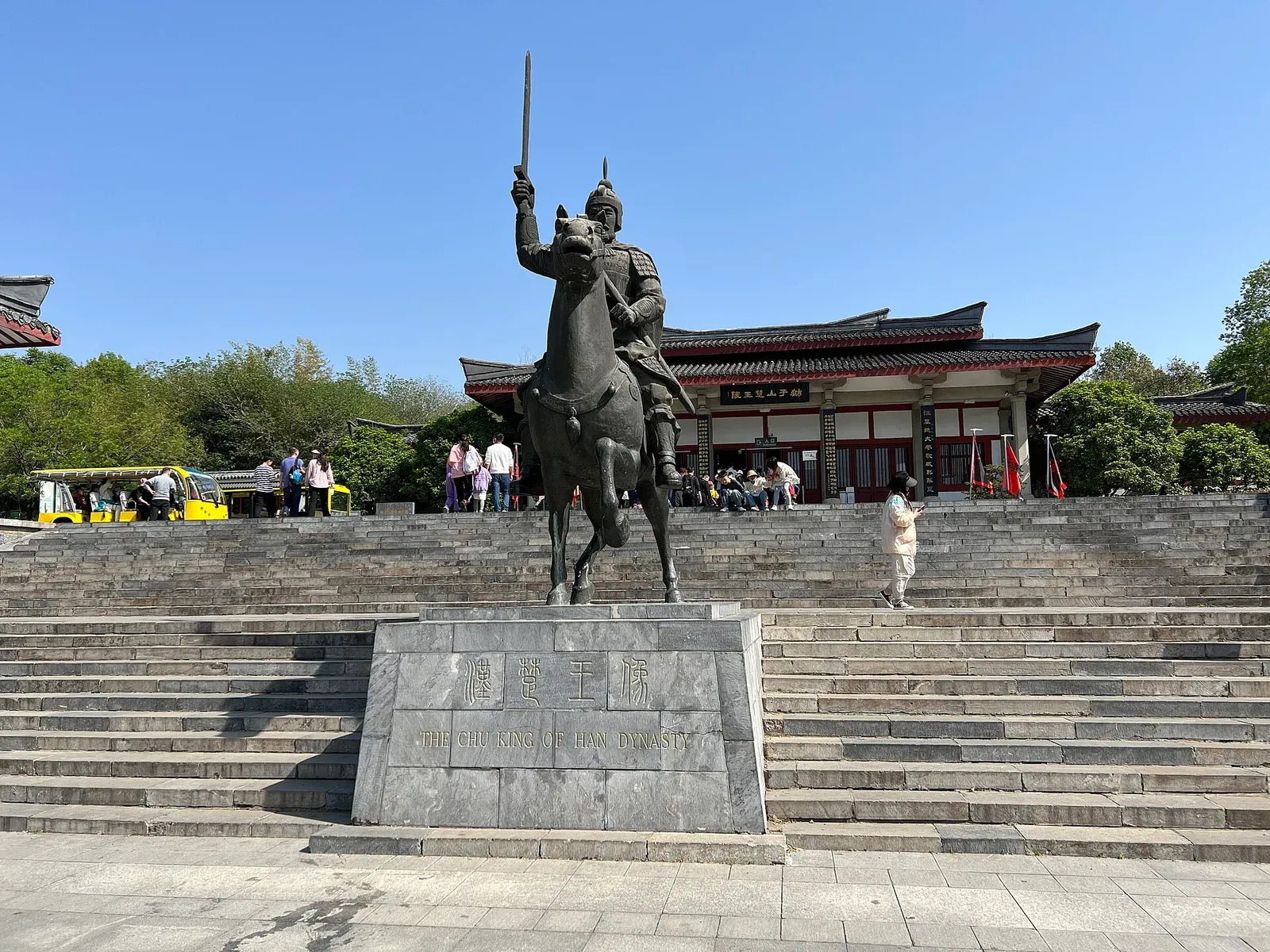
Xuzhou Museum gathers rich historical relics from the Han dynasty. Founded in 1959, the museum is a national 4A tourist attraction with an exhibition area of 6,500 square meters. It features nine permanent exhibition sections, including Ancient Pengcheng, Grand Han Glory, and Han Jade Craftsmanship. It houses a large collection of Han dynasty artifacts, the most prized being the national treasure jade shroud sewn with gold thread unearthed from the Western Han Chu King Tomb. For Ming and Qing architecture, the Hubushan Ancient Architecture Complex retains 13 complete residential courtyards with more than 500 rooms. The Yu Family Compound and Zhai Family Compound now serve as the Xuzhou Folk Museum. For nature, Yunlong Lake, historically known as Shigou Lake, is surrounded by mountains on three sides with wide open water. In August 2016, it was rated a national 5A tourist attraction. During his tenure as governor of Xuzhou, the Northern Song literary master Su Dongpo left behind historic sites such as the Crane Releasing Pavilion, Su Dike, Yellow Tower, Kuaizai Pavilion, and Dongpo Stone Bed, which are well worth exploring.
How to pace your visit and what dishes to taste?
A 2 to 3 day visit is recommended for Xuzhou to keep a balanced pace. The first two days can focus on Xuzhou Museum, Hubushan, the Shizi Mountain Han Chu King Tomb, and the Guishan Han Tomb to learn about Han dynasty history. Then set aside half a day to stroll around Yunlong Lake and Mount Yunlong, enjoying the lakeside scenery and the literary traces left by Su Shi. Beyond sightseeing, you can taste Xuzhou's signature dish, diguoji (iron pot chicken). Diguoji simmers chicken in an iron pot with dough flatbreads stuck to the rim, allowing the bread and stew to absorb each other's flavors into a single dish. If you want to plan a deeper journey into Huaihai culture, feel free to consult your travel designer for a customized itinerary.
Sources
Xuzhou - Wikipedia
Xuzhou Museum - Wikipedia
Mausoleum of the King of Chu at Shizi Mountain - Wikipedia
Guishan Han Tomb - Wikipedia
Yunlong Lake - Wikipedia
Ximatai - Wikipedia
Ancient Architectural Complex of Hubushan - Wikipedia
Diguoji - Wikipedia
Fuyang Festival - Wikipedia
The sources above were verified on November 17, 2026.
Related travel tips
Replies 08:30–22:00 your time · Free to ask.