
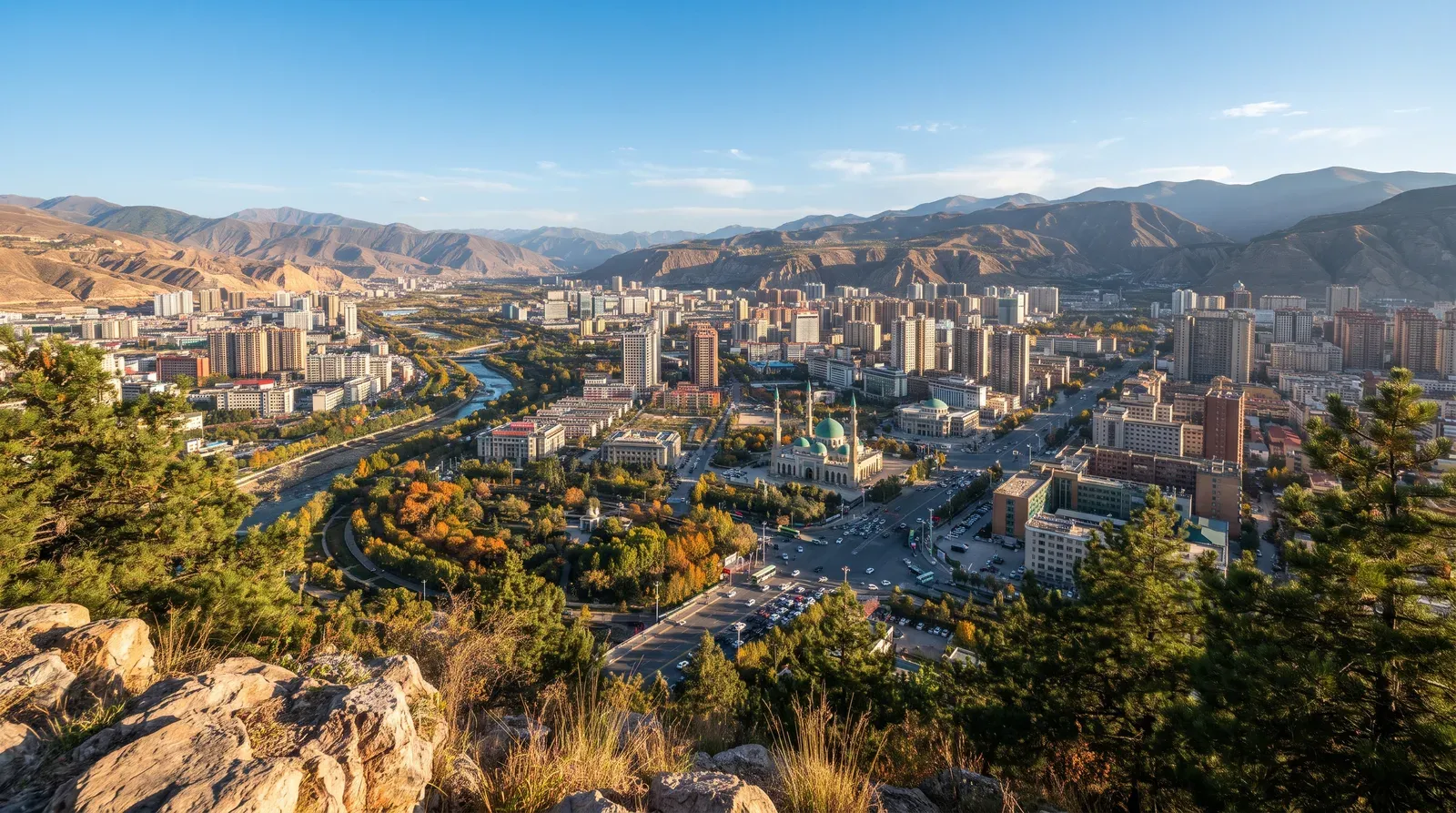
Xining
Located in the Hehuang Valley of the Qinghai-Tibet Plateau, Xining sits at an average elevation of about 2,200 meters (about 2,261 meters in the urban area) and is the largest city on the plateau. It has an urban history of more than 2,100 years at the crossroads of the Southern Silk Road and the Tang-Tibet Ancient Road. In 1104, during the third year of the Chongning era in the Northern Song dynasty, it was given its present name, which means "peace in the west". The city serves well as a base to adapt to the altitude and explore local culture. Spending 1 to 2 days is usually recommended for the urban area, while 3 days or more suit trips heading to surrounding areas such as Qinghai Lake.
Key points
Visiting urban Xining typically takes 1 to 2 days, while exploring surrounding areas like Qinghai Lake requires 3 days or more. Situated at an average elevation of about 2,200 meters, the city sees average July temperatures of 17.5°C to 19°C, with daily temperature differences often exceeding 15°C. Your travel designer recommends packing a windproof and warm jacket.
Located in the Hehuang Valley of the Qinghai-Tibet Plateau, Xining sits at an average elevation of about 2,200 meters (about 2,261 meters in the urban area) and is the largest city on the plateau. It has an urban history of more than 2,100 years at the crossroads of the Southern Silk Road and the Tang-Tibet Ancient Road. In 1104, during the third year of the Chongning era in the Northern Song dynasty, it was given its present name, which means "peace in the west". The city serves well as a base to adapt to the altitude and explore local culture. Spending 1 to 2 days is usually recommended for the urban area, while 3 days or more suit trips heading to surrounding areas such as Qinghai Lake.
When Is the Weather Most Suitable?
Summers here are cool and pleasant. The average July temperature is about 17.5°C to 19°C, and the temperature difference between day and night often reaches over 15°C, earning it the nickname "Summer Capital of China". Your travel designer suggests packing a windproof and warm jacket when traveling here.
Which Places Are Worth Visiting?
The seventh national population census shows a permanent population of about 2.468 million, with Han accounting for 71.43%, Hui 16.95%, Tibetan 6.49%, and Tu 2.69%, forming a blend of diverse ethnic cultures. Key places to visit include:
Kumbum Monastery: Located in Lushaer Town, Huangzhong District, it was built in 1583. It is one of the six major monasteries of the Gelug school of Tibetan Buddhism and the birthplace of Tsongkhapa, the founder of the Gelug school. The monastery's butter sculptures, murals, and barbola embroidery are known as the "Three Marvels of Art", and the butter sculptures were included in the first batch of national intangible cultural heritage lists in 2006.
Dongguan Mosque: Built in 1380 (the 13th year of the Hongwu era in the Ming dynasty), it covers an area of 11,940 square meters and is one of the largest ancient religious complexes in Qinghai Province.
Qinghai Museum and Qinghai Tibetan Culture Museum: The Qinghai Museum in the urban area is free to the public, systematically presenting Hehuang history and Silk Road culture. The Qinghai Tibetan Culture Museum houses an artistic treasure: a giant thangka measuring over 600 meters in length.
How to Arrive and Get Around?
For intercity transport, Caojiabao International Airport sits about 15 kilometers from the urban center, offering regular direct flights to major cities including Beijing, Shanghai, Chengdu, and Xi'an. The railway station integrates regular trains and the Lanzhou-Xinjiang High-Speed Railway. It is also the starting station of the Qinghai-Tibet Railway, the highest railway in the world, where all passenger trains entering and leaving Tibet stop or originate for transfers. For train travel, please refer to the China train travel guide.
Within the city, local public transit is convenient. Regular bus fares are usually 1 yuan. Daytime taxi fares start at 8 yuan (covering 3 kilometers), followed by 1.3 yuan per additional kilometer.
How to Plan the Pace and Surrounding Routes?
The city is an essential transit hub for heading to Qinghai Lake (China's largest inland saltwater lake, about 100 kilometers west of the city at an elevation of 3,205 meters) and Chaka Salt Lake. In peak season, direct tourist trains and passenger buses operate, and you can travel at your own pace accompanied by your driver. For dining, beef, mutton, and plateau flour dishes predominate. Representative traditional foods include Qinghai pulled noodles (Mian Pian), dry-mixed noodles (Gan Ban), and street roast mutton skewers.
Sources
City Overview - Wikipedia
Chinese Wikipedia Entry
Qinghai-Tibet Railway - Wikipedia
Kumbum Monastery - Wikipedia
Kumbum Monastery in Chinese - Wikipedia
Dongguan Mosque - Wikipedia
Qinghai Lake - Wikipedia
Sources above verified on Nov 17, 2026
Related travel tips
Replies 08:30–22:00 your time · Free to ask.