
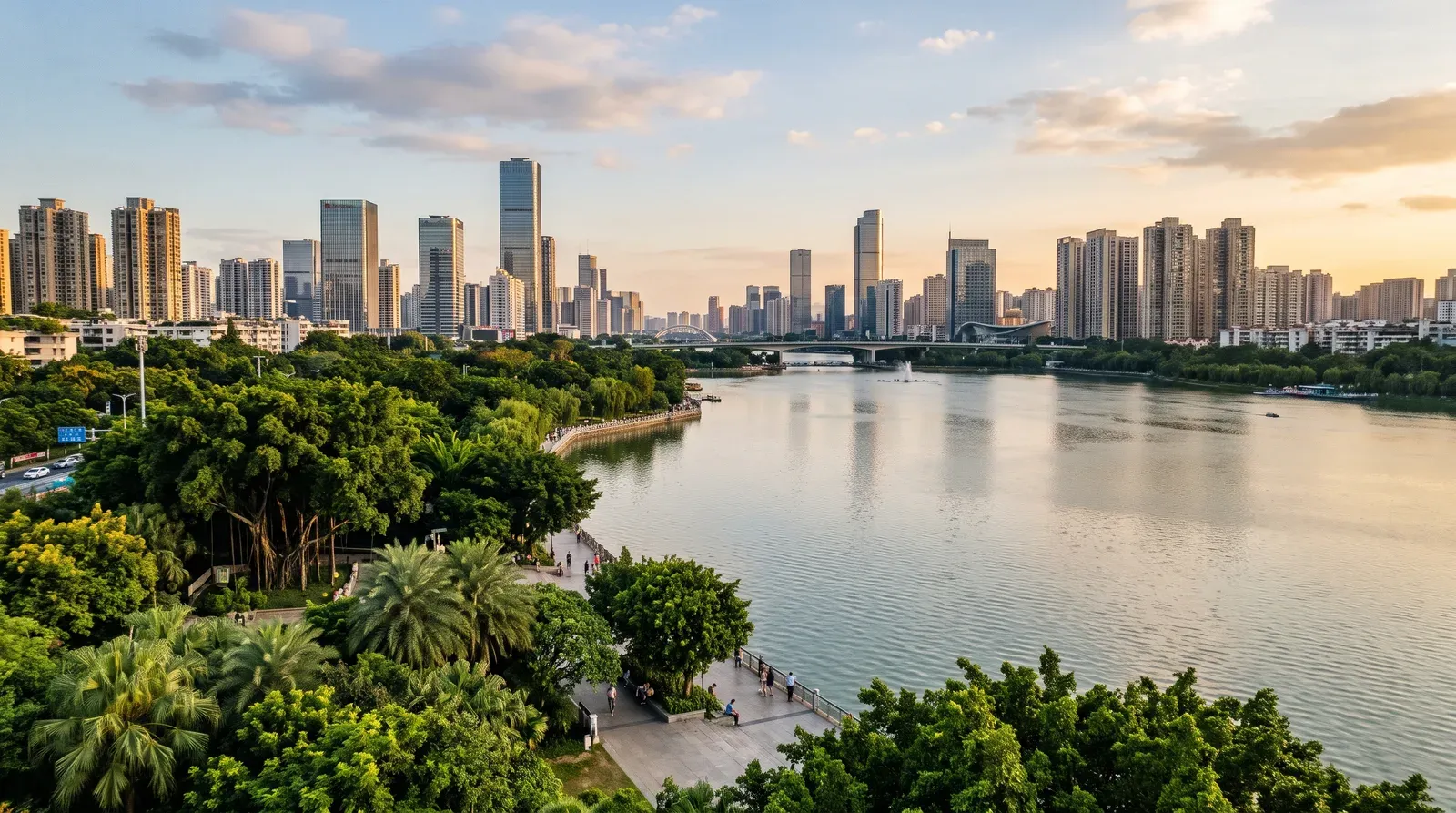
Nanning
Nanning, often called Yong (邕), was historically part of the Baiyue lands. It has a history of over 1,700 years since its administrative founding in 318, during the first year of the Daxing era in the Eastern Jin Dynasty, and is known as China's Green City. It offers a good look into Lingnan history and ethnic minority customs, while serving as a transit hub between China and Vietnam. A stay of 2 to 3 days is usually recommended.
Key points
A stay of 2 to 3 days is recommended when visiting Nanning, where 5 metro lines operate and Qingxiu Mountain admission is 20 yuan per person. Pack rain gear between May and October, and verify whether your train departs from Nanning Station or Nanning East Station. For your first taste of tangy, spicy Laoyou noodles, start with a small portion.
Nanning, often called Yong (邕), was historically part of the Baiyue lands. It has a history of over 1,700 years since its administrative founding in 318, during the first year of the Daxing era in the Eastern Jin Dynasty, and is known as China's Green City. It offers a good look into Lingnan history and ethnic minority customs, while serving as a transit hub between China and Vietnam. A stay of 2 to 3 days is usually recommended.
When is the weather most comfortable in Nanning?
The annual average temperature in Nanning is 22.3°C. July is the hottest month, with an average temperature of 28.5°C, while January is the coldest, averaging 13.3°C. Rain is frequent from May to October, and annual precipitation reaches around 1,286 mm.
The third day of the third lunar month (Sanyuesan) is a traditional singing festival for ethnic minorities. Guangxi designated it as a local statutory public holiday in 2014, with a two-day break across the region.
Tip: If you travel during the rainy season from May to October, bring rain gear when heading out. If you plan to experience singing festival traditions during the Sanyuesan holiday, arrange your plans in advance. For more on traditional Chinese festivals, you can also check our guide to Chinese holidays.
How to get to Nanning and travel around the city?
The main passenger railway stations in urban Nanning are Nanning Railway Station and Nanning East Railway Station. The local airport is Nanning Wuxu International Airport, located 32 km southwest of the city center (see our guide to Chinese airports).
For urban transit, Nanning was the first autonomous region capital in China to open a metro system, currently operating Lines 1, 2, 3, 4, and 5 (see our guide on how to use the metro in China). In the city center, daytime taxi fares start at 9 yuan for the first 2 km, while night fares (23:00 to 06:00 the next day) start at 11 yuan, with an additional 2 yuan per kilometer beyond 2 km.
In addition, the T8701/8702 international passenger train runs between Nanning and Hanoi, Vietnam. The route covers about 400 km and takes around 12 hours one way.
Tip: When booking train tickets, check carefully whether your station is Nanning Railway Station (南宁站) or Nanning East Railway Station (南宁东站). They are in different locations, so confirm your departure station before heading out.
How to visit Qingxiu Mountain Scenic Area?
At the national 5A-level Qingxiu Mountain scenic area, standard admission is 20 yuan per person. Children aged 6 and under, or under 1.2 meters tall, enter for free with valid identification, as do seniors aged 65 and older.
An electronic all-in-one ticket for sightseeing transport at Qingxiu Mountain costs 55 yuan per person. It allows unlimited rides on sightseeing shuttles and the mini train during operating hours on the day of purchase.
Tip: You can buy the 55 yuan electronic pass to ride the shuttles and mini train inside Qingxiu Mountain, which cuts down on walking.
What local specialties should you try in Nanning?
The preparation craft for Laoyou rice noodles (老友粉) is recognized as Guangxi intangible cultural heritage. Cooks stir-fry minced meat, minced garlic, fermented black beans, and shredded sour bamboo shoots in a hot wok before adding broth and rice noodles, giving the dish a tangy, spicy, and savory taste.
Lemon duck from Wuming in Nanning is one of Guangxi's top ten classic dishes, known for its distinct tangy and savory flavor that cuts through the richness of the meat.
Street stalls across Nanning popularize suanye (酸嘢), made from pickled unripe seasonal fruits and vegetables cured with sugar and vinegar. They are typically eaten using a bamboo skewer to dip each piece in chili salt.
Both Laoyou noodles and suanye feature sour bamboo shoots and vinegar-pickled fruits or vegetables, leaning toward tangy and spicy flavors. If you rarely eat fermented sour bamboo shoots or chili salt, start with a small portion or ask for mild spice on your first try. For dining customs across China, you can check our guide to Chinese dining customs.
Sources
Nanning - Wikipedia
Qingxiu Mountain Scenic Spot Official Website - Ticket Information
Xinhua Net - Nanning Laoyou Rice Noodles Intangible Cultural Heritage
China Daily - The Sour Flavors of Guangxi Cuisine
All sources verified on Nov 17, 2026.
Related travel tips
Replies 08:30–22:00 your time · Free to ask.