
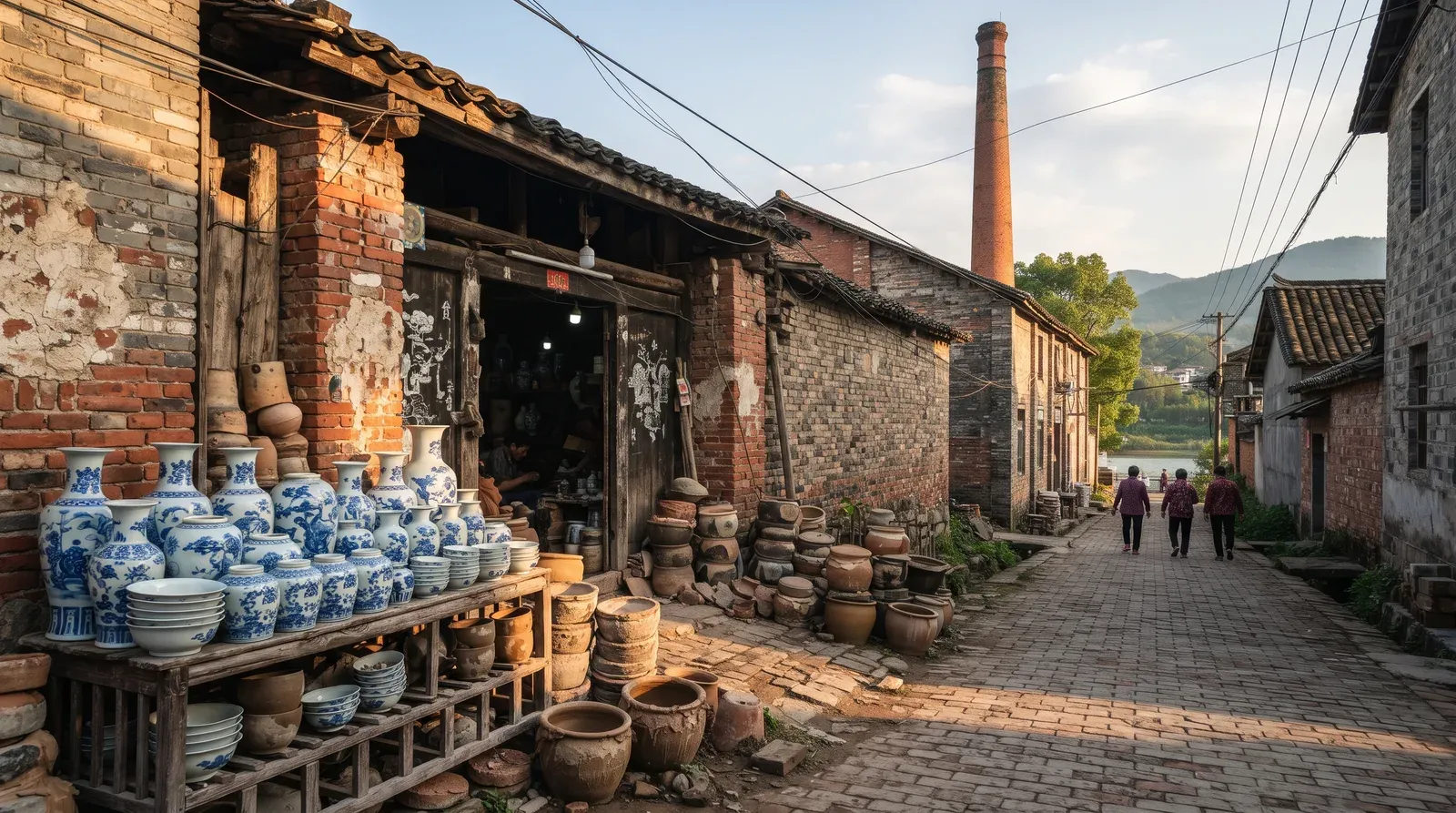
Jingdezhen
Jingdezhen sits in the northeast of Jiangxi province. The city covers 5,256 square kilometers, and the seventh national census in 2020 counted 1,618,979 residents. The city government is at 666 Cidu Avenue. It runs two districts, Changjiang and Zhushan, and one county, Fuliang, and it administers Leping, a county-level city. The city is known for its ceramics, which makes it a good fit for travelers who like crafts, design shops and a slower pace in the countryside. For the city and the old towns around it, 2 to 3 days is usually enough.
Key points
A trip to Jingdezhen and its surrounding old towns takes 2 to 3 days, with high-speed trains reaching the city from Nanchang in about 50 minutes. April to June is the wettest period, accounting for over 46% of annual rainfall, so bring rain gear. Plan separate days for downtown sites like the Imperial Kiln Factory and day trips to Yaoli town, about 55 km away.
Jingdezhen sits in the northeast of Jiangxi province. The city covers 5,256 square kilometers, and the seventh national census in 2020 counted 1,618,979 residents. The city government is at 666 Cidu Avenue. It runs two districts, Changjiang and Zhushan, and one county, Fuliang, and it administers Leping, a county-level city. The city is known for its ceramics, which makes it a good fit for travelers who like crafts, design shops and a slower pace in the countryside. For the city and the old towns around it, 2 to 3 days is usually enough.
When is a good time to visit Jingdezhen?
The average temperature in Jingdezhen over the year is 17.4°C. April to June is the wettest stretch of the year and accounts for more than 46% of the annual rainfall, so bring rain gear. If you are planning a wider trip, our guide to the best time to visit China covers rainfall and climate by province.
How to get to Jingdezhen and get around town
The Changjinghuang high-speed rail line, the Huangchang section of the Hangzhou to Nanchang railway, opened on Dec 27, 2023. On China's high-speed trains, Nanchang to Jingdezhen takes about 50 minutes at the fastest. Inside the city, a taxi starts at 8 yuan for the first 2 km. If you prefer door-to-door transfers, your travel designer can arrange a private car with your driver between the city and nearby sights.
What is worth seeing in Jingdezhen?
Jingdezhen was called Changnan in earlier times. A folk story says Emperor Zhenzong of Song renamed Changnan town Jingdezhen in 1004 after his reign title, Jingde. Thanks to the ceramics industry, young artists from all over China have gathered here, and people call them Jingpiao, the Jingdezhen floaters. These are the main places to put on your list:
- Jingdezhen Ancient Kiln Folk Customs Expo Area: 1 Guyao Road, Cidu Avenue, Changjiang District. A national 5A scenic area built around the Zhen Kiln of the Qing dynasty, it shows kilns from different periods and traditional porcelain making skills.
- Jingdezhen Imperial Kiln Factory: in Zhushan District, set up in 1369, the second year of the Hongwu reign of Ming. For more than 400 years under the Ming and Qing it made porcelain for the imperial court, and many remains of the official kilns are still there.
- Gaoling village, Fuliang County: the English name of the mineral kaolin comes from the pinyin of Gaoling village in Ehu town, Fuliang County.
- Yaoli town: the old name means "inside the kiln". It sits in the northeast of Fuliang County, about 55 km from downtown Jingdezhen, and forest covers over 94% of the land. Fuliang County has also been known for tea since early times; Bai Juyi of the Tang dynasty wrote in Song of the Pipa, "Last month I went to Fuliang to buy tea."
How to pace a visit and what to try locally
It usually works well to keep the city and the surrounding villages on separate days. On day one you can walk the Imperial Kiln Factory in Zhushan District and the Ancient Kiln Folk Customs Expo Area in Changjiang District to learn about the old official kilns and traditional kiln buildings. On day two head to Fuliang County for Gaoling village and Yaoli old town, for forest and old village scenery. Between walks, try the local snacks, including jiaozi ba (rice-flour dumplings), jianshui ba (alkaline rice cakes) and cold dressed thick rice noodles (lengfen). They show up most often at breakfast and as a late-night snack. For more cities and trip ideas, see our China city destinations.
Sources
Jingdezhen (Chinese Wikipedia)
Jingdezhen (Wikipedia)
Kaolinite (Wikipedia)
Imperial Kiln Factory (Chinese Wikipedia)
Jingdezhen Ancient Kiln Folk Customs Expo Area (Chinese Wikipedia)
Yaoli town (Chinese Wikipedia)
Hangzhou to Nanchang high-speed railway (Chinese Wikipedia)
Fuliang County (Chinese Wikipedia)
Sources checked on Nov 17, 2026.
Related travel tips
Replies 08:30–22:00 your time · Free to ask.