
Zhongyuan Festival: Water Lanterns and Ancestor Worship
By the Chinese lunar calendar, the Zhongyuan Festival falls on the night of the 15th day of the seventh lunar month, though parts of southern China mark it on the 14th day. The Mulian Opera, a traditional drama centered on filial piety and redemption, was added to the national intangible cultural heritage list in 2006. Core customs focus on offering fresh early autumn crops to ancestors, floating water lanterns to light the way for spirits, and burning paper offerings, later blending Daoist beliefs about pardoning sins with Buddhist Ullambana offerings.
| Item | Traditional customs and rules |
|---|---|
| Festival timing | Night of the 15th day of the 7th lunar month (14th day in parts of the south) |
| Historical roots | Pre-Qin autumn crop offerings to ancestors, Daoist day of official pardon, Buddhist Ullambana Sutra offerings |
| Worship practices | Preparing hearty meals with empty seats, burning sorted paper offerings, placing grains and vegetables in fields |
| Water rituals | Floating lanterns shaped like lotus leaves or flowers on water, setting up salvation flags |
| Performance customs | Staging Mulian Opera and divine performances, distributing blessed peace rice after ceremonies |
How Does Ancestor Worship at the Zhongyuan Festival Differ from Qingming?
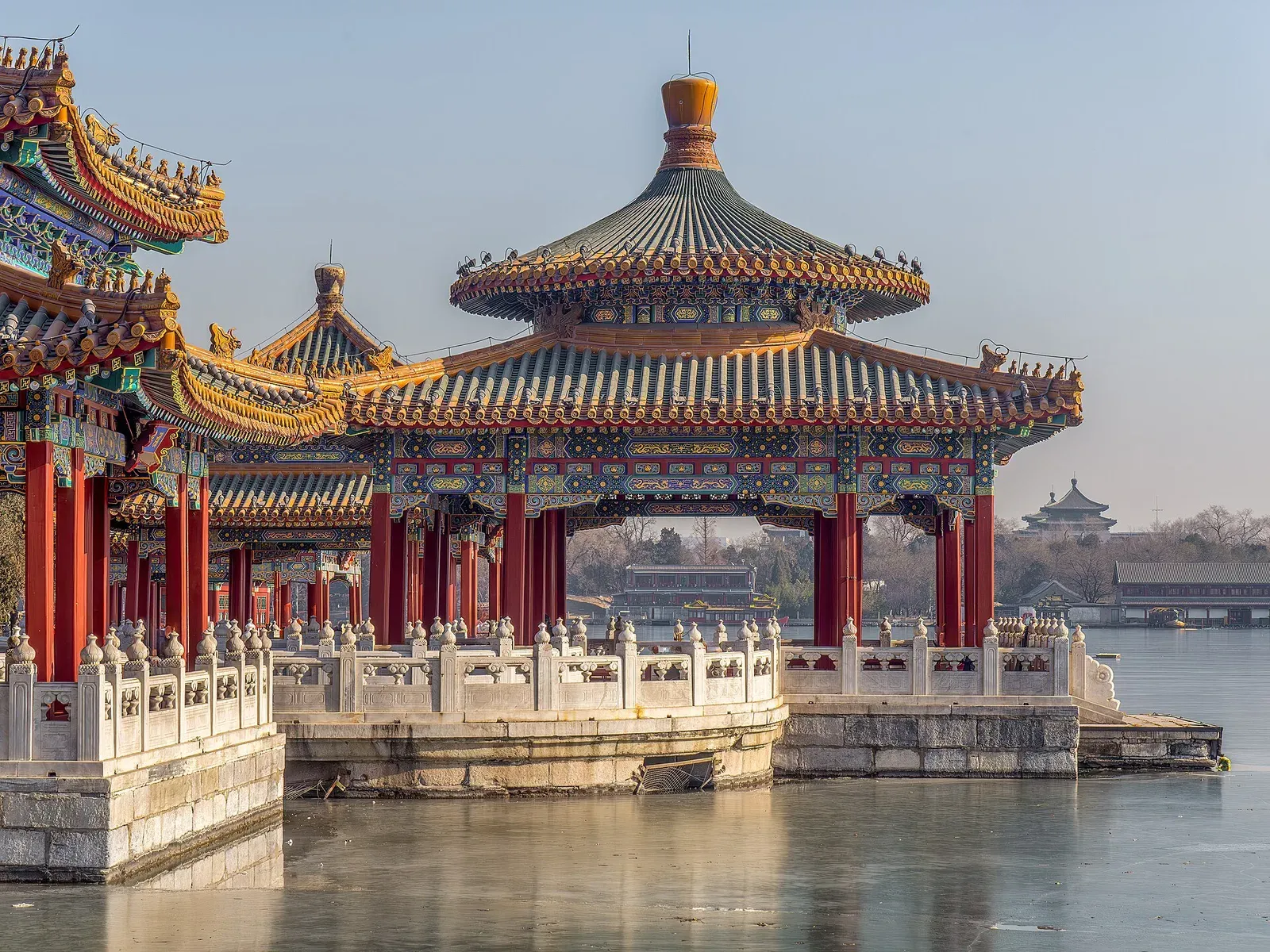
The festival differs fundamentally in direction from Qingming in spring and the Chongyang Festival in autumn. Under folk beliefs, Qingming and Chongyang involve living descendants visiting graves to pay respects, whereas during this summer festival, spirits return to the living world to visit relatives. The Shouhuang Hall complex on Beijing's central axis, north of Jingshan Park, was an imperial ancestor worship hall during the Qing Dynasty, once housing portraits and spirit tablets of eight emperors and their empresses from the Kangxi to Guangxu reigns.
For home ceremonies, families prepare hearty meals (often including vegetarian dishes) and keep empty seats for each deceased relative, honoring the tradition of serving the dead as if they were living. In the Qing Dynasty, farming households across northern China also preserved the custom of worshipping field gods and presenting fresh harvests, placing grains, melons, and vegetables at field crossroads and hanging five-colored paper flags on field ridges to pray for a good harvest.
Tip: Never stick chopsticks upright into a bowl of rice or food during meals or rituals, because that resembles burning incense at funerals and is a major taboo.
| Paper offering type | Recipient | Traditional purpose |
|---|---|---|
| Gold joss paper | Deities and gods | Dedicated to offerings for immortals and gods |
| Silver joss paper | Ancestors and relatives | Expresses remembrance from descendants to deceased kin |
| Copper coin paper | Newly deceased or nameless spirits | Used to assist wandering souls who have no one to worship them |
Why Are Water Lanterns Floated During the Festival?
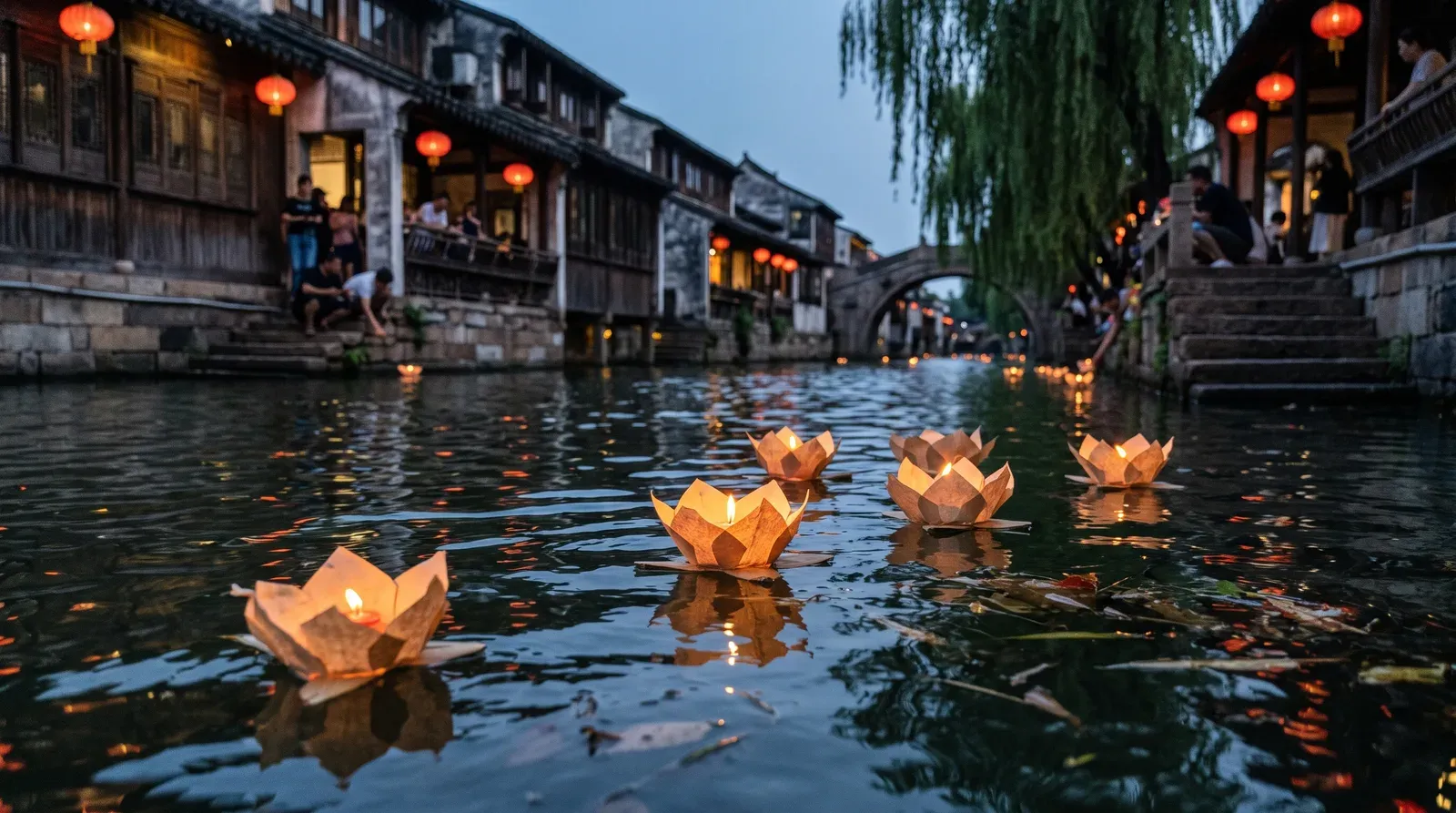
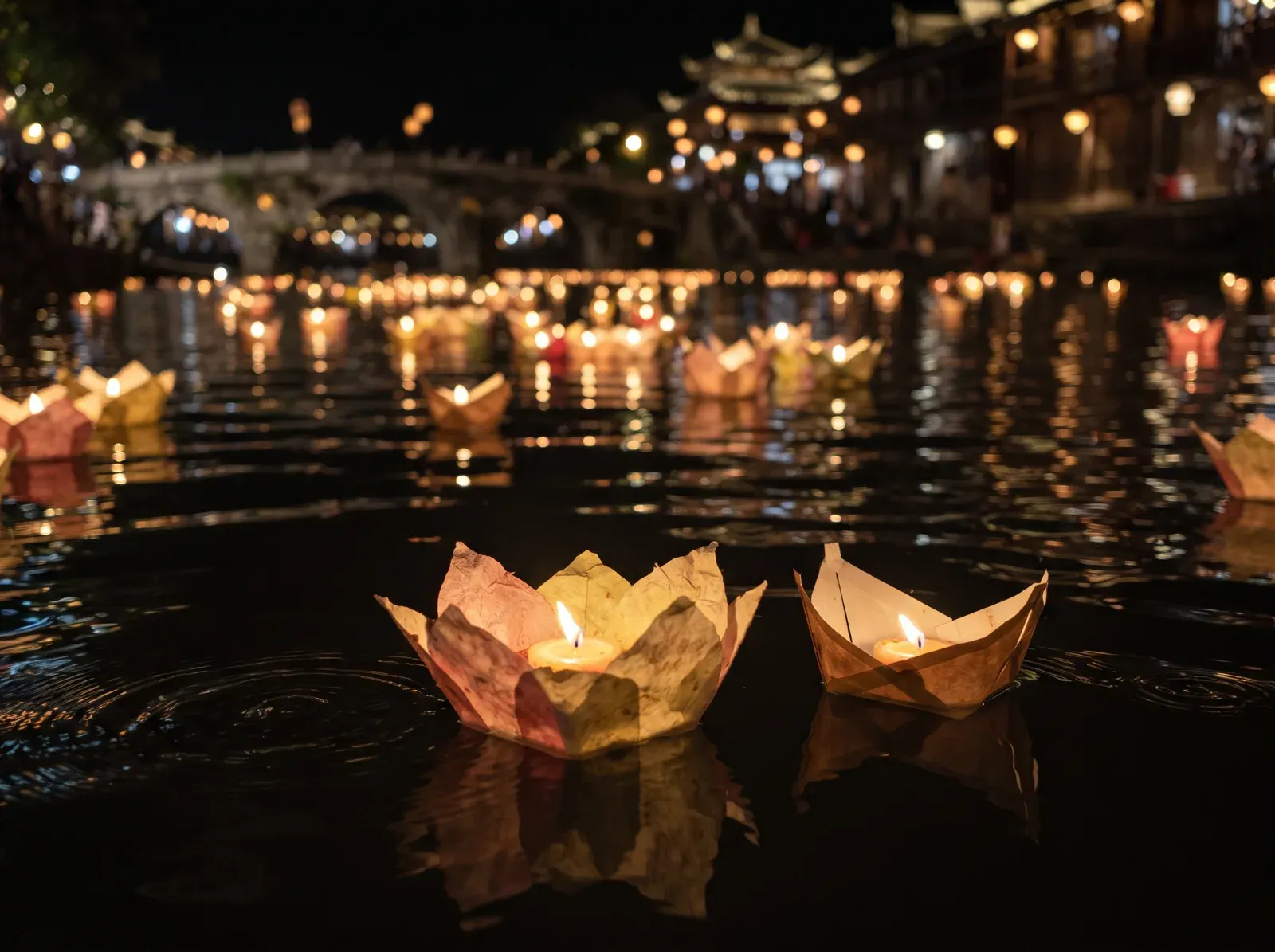
Releasing lanterns into rivers, lakes, and waterways guides spirits of the drowned and invites them to receive offerings. Historical records show that after Nanjing became the capital in the early Ming Dynasty, lanterns were lit along the Qinhuai River during this period. Works such as Dijing Jingwulüe and the Qing Dynasty's Dijing Suishi Jisheng record that Ullambana altars were built in Beijing, and thousands of candle-lit lotus leaves and glass lotus lanterns were floated along banks from the 13th to 15th days of the seventh month, symbolizing universal salvation.
Besides natural lotus leaves and petals, traditional water lanterns were crafted from paper, silk, or colored glass into shapes like bowls, small boats, ingots, or lotus blossoms. Those releasing them often attach small salvation flags or write respectful phrases such as celebrating the festival, extending universal relief, or shining light on the underworld, adding their own names so the receiving spirits know who offered them.
Tip: Many places now limit floating lanterns to protect water quality, requiring releases in designated areas where authorities set up catch nets and retrieve the floating lanterns after events.
What Customs Surround Divine Opera and Street Rituals?
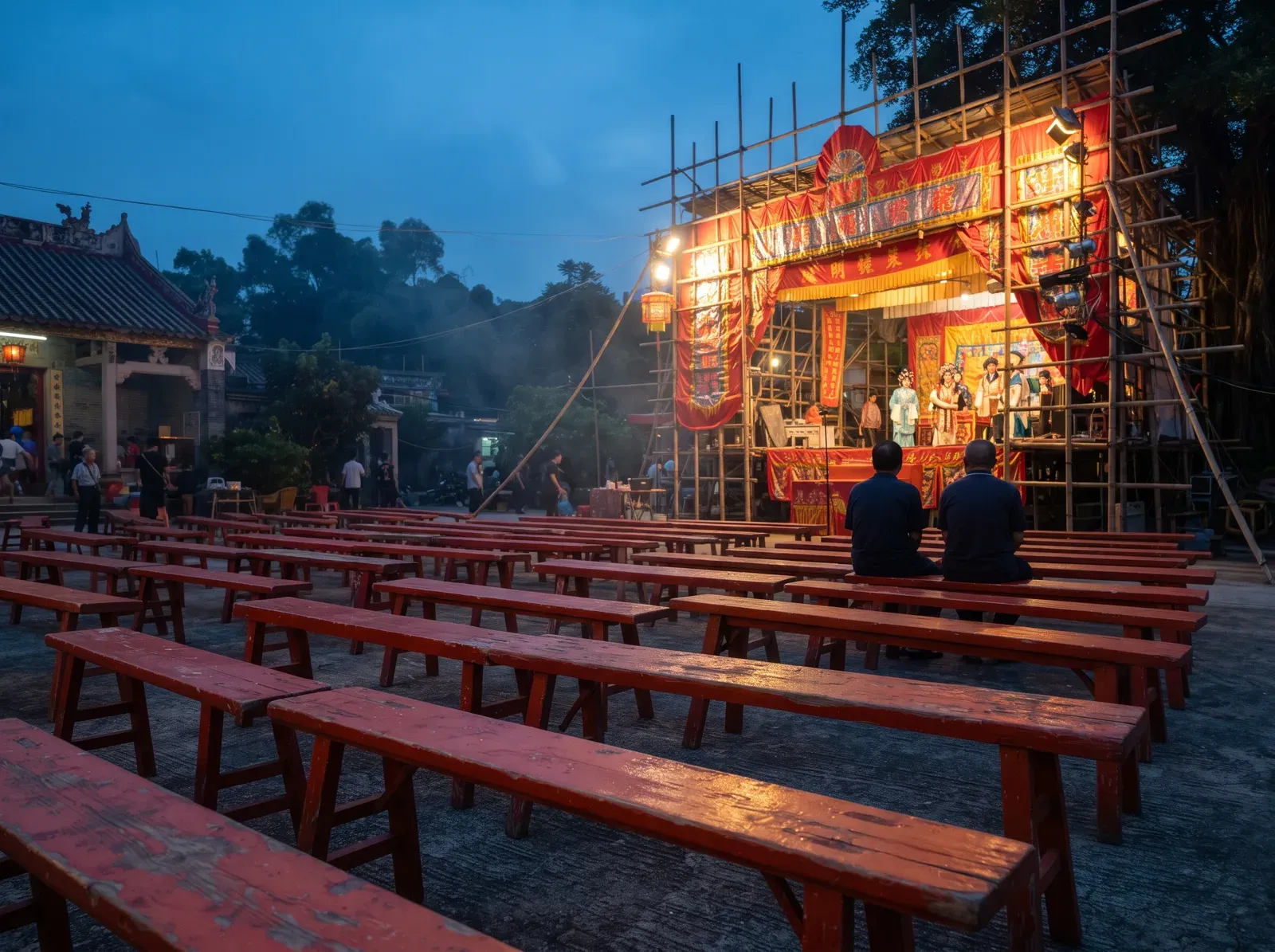
At open-air stages for divine opera or seventh-month concerts, the front row of seats is kept empty for visiting spirits, so regular audience members should avoid sitting there. The Mulian Opera is often performed at this time of year, based on the story of Mulian saving his mother, expressing themes of filial piety and redemption.
In southern China and nearby areas, the Chiu Chow Hungry Ghost Festival in Hong Kong held during the seventh lunar month includes inviting deities, staging opera performances, and handing out rice, and was listed as national intangible cultural heritage in 2011. The peace rice given to the public was originally placed on ritual altars as offerings, and distributing it after the ceremonies earns merit and aids those in need.
Tip: City regulations generally restrict or ban burning joss paper on public roads and green spaces, encouraging flower tributes and eco-friendly burners; if you see chalk circles on sidewalks in the evening with burning paper, simply walk around them.
How Did Pre-Qin, Daoist, and Buddhist Beliefs Shape the Festival?
The roots of the occasion reach back to pre-Qin autumn harvest rituals. According to the Book of Rites, ancient rulers offered newly harvested grains to ancestral temples in early autumn, establishing the agricultural basis of ancestral worship. Over time, Daoist and Buddhist beliefs merged into the seasonal observance, with Daoism designating this date as one of its three major holidays, when the Earth Official pardons sins.
Buddhism refers to the day as the Ullambana Festival. The term Ullambana comes from Sanskrit, referring to a vessel for rescuing those hanging upside down, drawn from the Ullambana Sutra where Mulian rescues his mother. The text recounts devotees offering basins of seasonal fruits and delicacies to the Buddha and monastic community, using spiritual merit to relieve hungry ghosts from intense suffering, which shaped the tradition of universal salvation and charity.
Sources
Customs and etiquette in Chinese dining - Wikipedia
Jingshan Park
Ghost Festival - Wikipedia
Zhongyuan Festival and Ullambana Festival - Wikipedia
Water Lantern - Wikipedia
Joss paper - Wikipedia
Ancestor worship - Wikipedia
Mulian Rescues His Mother - Wikipedia
Chiu Chow Hungry Ghost Festival in Hong Kong - Wikipedia
Sources verified on Nov 17, 2026
FAQ
How does ancestor worship during this festival differ from Qingming?
Qingming involves descendants traveling to gravesites to pay respects. In contrast, folk tradition holds that spirits visit living relatives at Zhongyuan, so families prepare hearty meals and leave empty seats for them.
What words are typically written on water lanterns?
People often attach small salvation flags or write respectful phrases such as celebrating the festival, extending universal relief, or shining light on the underworld, along with the donor's name.
Why is the front row of divine opera performances usually left empty?
Under folk customs, the front row at divine opera or seventh-month performances is reserved specifically for visiting spirits, so regular guests should not sit there.
What environmental rules apply to floating lanterns in modern cities?
Many cities now restrict lantern floating to designated waterways, using catch nets and retrieving all lanterns promptly after events to protect the water.