
Yunnan Food: Crossing the Bridge Noodles and More
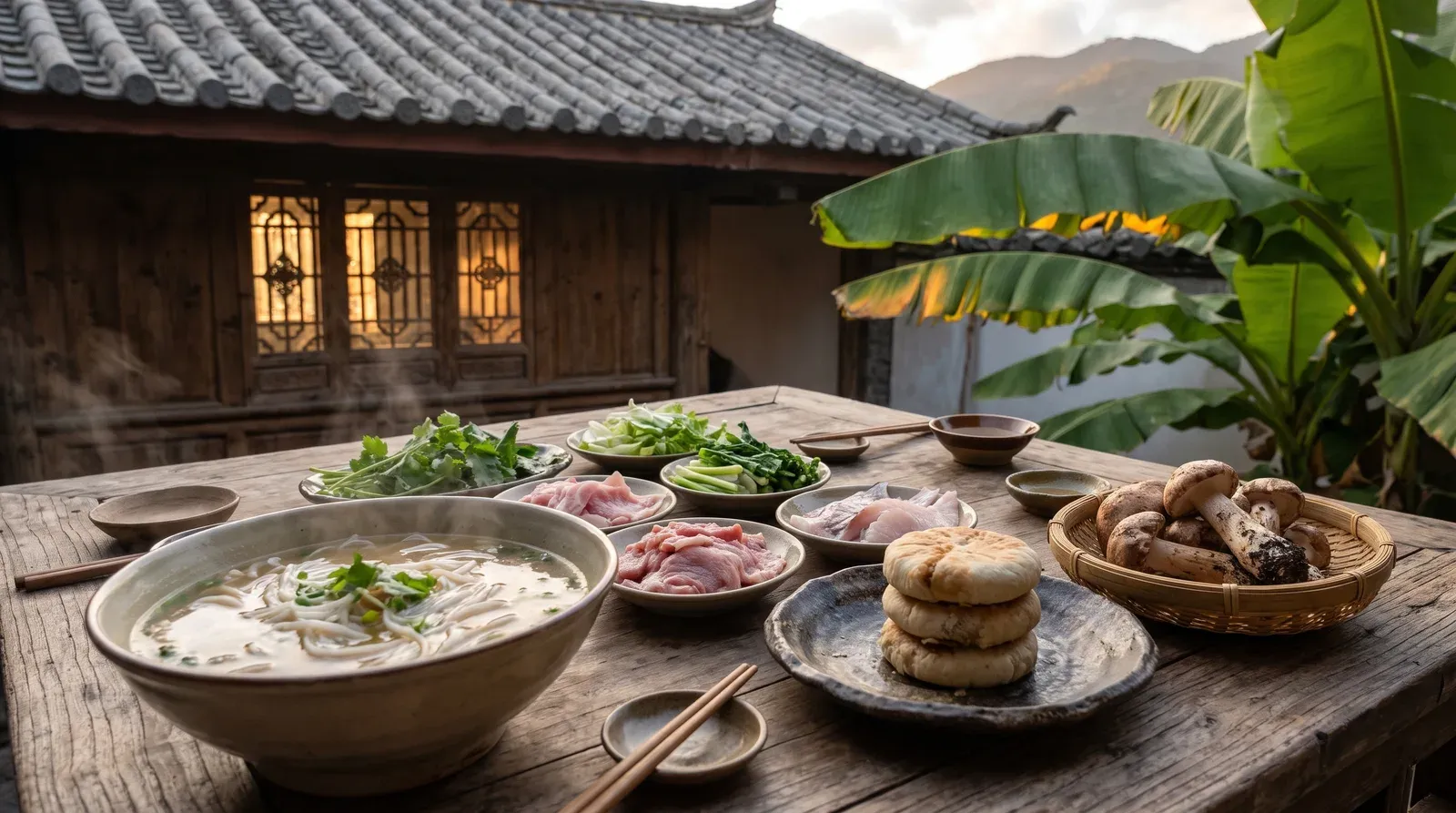
Representative foods to try in Yunnan include crossing the bridge noodles, wild mushrooms, Jianshui steam pot chicken cooked in purple clay, rose flower cakes, and Dali specialties such as rushan (dried milk fan), rubing (milk cake), and Xizhou baba. Wild mushrooms are in season mainly from June to September each year. The noodle soup keeps its heat thanks to a thin layer of oil floating on the surface, and Xizhou baba baked over a charcoal fire for about 10 minutes comes out with a crisp crust and a soft center. Knowing the right order to order and eat these dishes matters.
How do crossing the bridge noodles stay hot, and how do you eat them?
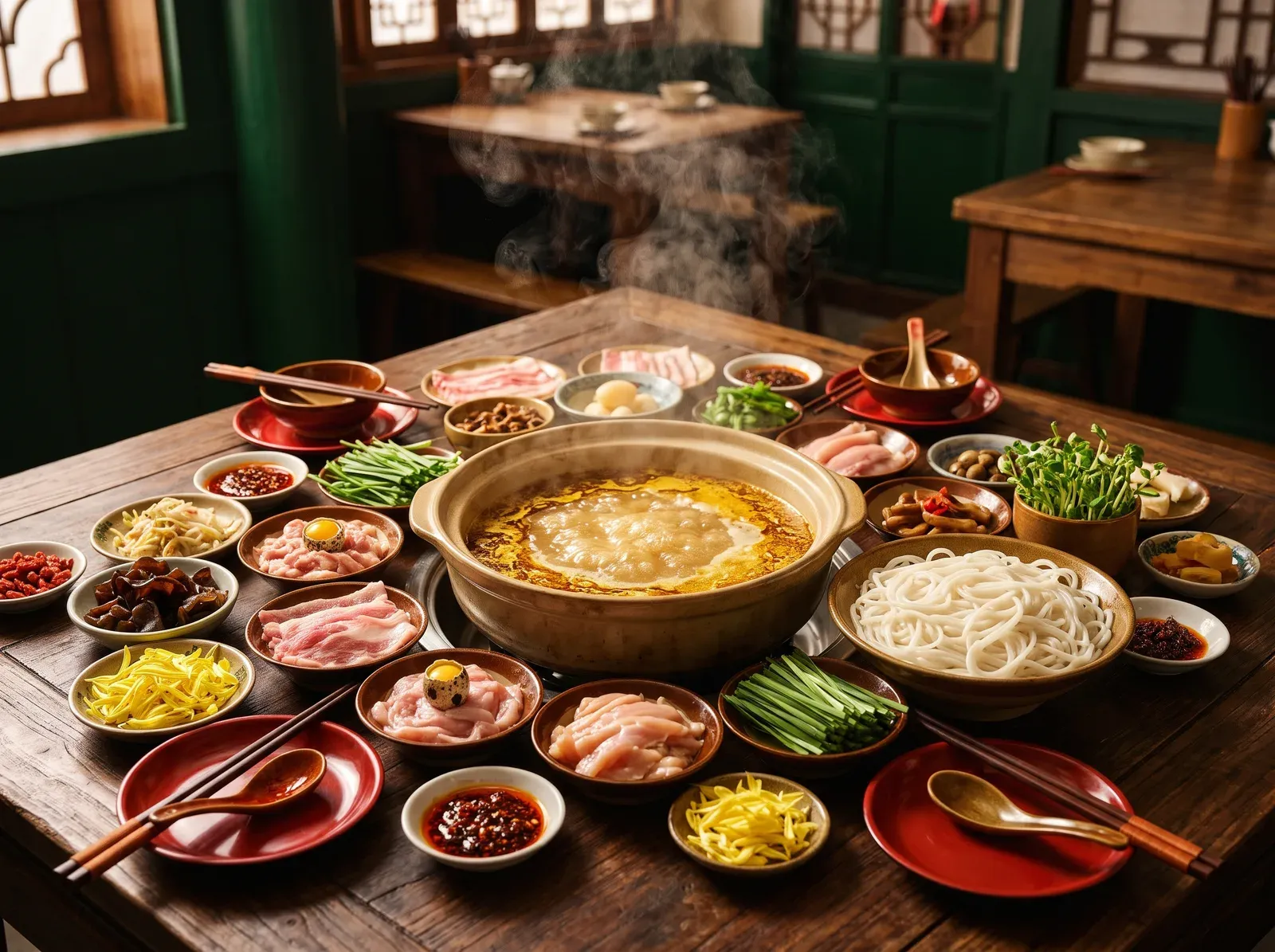
This dish is served with boiling broth, noodles, and toppings in separate bowls. The layer of oil floating on the surface traps heat and keeps the broth very hot. Serving the noodles separately also keeps them from becoming soggy. When the bowl reaches the table, the surface looks calm, but the soup beneath is extremely hot.
When eating the dish, diners follow the order of raw before cooked, and meat before vegetables. First slide the sliced meat and quail eggs into the hot soup and stir to cook them. Next, add the vegetables. Finally, lift the rice noodles into the bowl to complete the bridge-crossing step. Doing this smoothly ensures that the meat cooks through while staying tender.
When is Yunnan wild mushroom season, and how do you eat them safely?
Yunnan wild mushrooms are in season from June to September each year. To taste fresh seasonal mushrooms, choose established and licensed restaurants. Wild mushrooms are tender and delicious, but undercooked or wrongly identified varieties can cause health risks.
Jianshouqing is one of the most common wild mushrooms eaten in Yunnan, but it is also a frequent cause of poisoning. If eaten without proper cooking, it can cause neuropsychiatric hallucinations, such as seeing little dancing figures before your eyes.
According to food safety standards, jianshouqing is conditionally edible. It requires thorough stir-frying at high heat and should never be served cold in a salad. Wild mushrooms should be cooked thoroughly, consumed in limited amounts of one variety at a time, and eaten at licensed restaurants.

What makes Jianshui steam pot chicken and flower cakes special?
Steam pot chicken, a famous Yunnan dish, originated in Jianshui County. It was already popular across southern Yunnan more than 200 years ago during the Qianlong era of the Qing Dynasty. Its unique feature is that no extra water is added during cooking. The broth comes entirely from the steam trapped by the clay pot.
The pot works by letting steam from boiling water below enter through a central funnel into the pot. The steam condenses into distilled water, cooking the chicken into a pure broth. This method keeps the natural flavor of the meat and produces a clear, clean soup.
Yunnan flower cakes are traditional Yunnan pastries filled with edible flowers such as roses. Once baked, they are flaky, crisp, and fragrant with floral aroma. They are common gifts and tea snacks found in cities across Yunnan.
What to eat in Dali: how to order rushan, rubing, and Xizhou baba?
Dali rushan mainly comes from the Dengchuan area of Dali. Creamy yellow or off-white, it is a traditional solid dairy product of the Bai people recorded as early as the Ming Dynasty in Nanzhao Yeshi (Unofficial History of Nanzhao). In Bai communities, rushan can be eaten raw wrapped with sugar, grilled, deep-fried until crisp and dusted with salt or sugar, or torn into pieces to soak in hot tea such as Bai three-course tea.
Rubing is a firm cheese made from cow milk or goat milk by the Bai people and the Sani people of the Yi ethnic group. It looks like a block of tofu. Locals eat it in various ways, most often raw dipped in white sugar or pan-fried.
Xizhou baba is a traditional flatbread from the ancient town of Xizhou in Dali, recognized in the third batch of intangible cultural heritage items in Dali Prefecture. Baked over a charcoal stove for about 10 minutes, it has a crisp crust and a soft interior. It usually comes in two flavors: sweet rose or savory minced pork with scallions.
What are the key features and eating methods of Yunnan specialties?
| Dish | Origin or Popular Region | History or Cooking Time | Key Features and How to Eat |
|---|---|---|---|
| Crossing the bridge noodles | Yunnan | Scalded fresh at the table | An oil layer traps heat; cook meat then vegetables, then add noodles |
| Steam pot chicken | Jianshui County, Yunnan | Qianlong era of the Qing Dynasty (over 200 years ago) | Purple pottery pot condenses steam into pure broth with no added water |
| Wild mushrooms (jianshouqing) | Yunnan | Best from June to September each year | Conditionally edible; requires thorough stir-frying at high heat in licensed restaurants, never served cold |
| Flower cakes | Yunnan | Traditional Yunnan baking | Filled with edible flowers like roses; flaky, crisp, and floral |
| Dali rushan | Dengchuan area, Dali, Yunnan | Recorded in the Ming Dynasty Nanzhao Yeshi | Bai solid dairy product; eaten raw with sugar, grilled, fried, or steeped in tea |
| Rubing | Yunnan | Bai and Yi Sani tradition | Block cheese made from cow or goat milk resembling tofu; eaten raw with sugar or pan-fried |
| Xizhou baba | Xizhou Ancient Town, Dali, Yunnan | Baked for about 10 minutes | Third batch of Dali intangible cultural heritage; crisp outside and soft inside; sweet rose or savory minced pork and scallion |
What precautions and conditions should you know before tasting Yunnan specialties?
Fresh wild mushrooms are not available year-round. Their season is concentrated between June and September each year, making it difficult to find fresh seasonal mushrooms in other months. Because jianshouqing is conditionally edible and can cause neuropsychiatric hallucinations if cooked improperly, it should never be served cold and requires thorough cooking over high heat in licensed restaurants.
The soup for crossing the bridge noodles may look calm and steam-free, but the layer of surface oil keeps it scalding hot inside, so avoid taking large gulps right away to prevent burns. Diners should also cook raw meat and eggs first before adding the noodles, rather than adding noodles first and leaving the meat undercooked.
If you want to explore authentic flavors across Dali and northwest Yunnan, your driver will help you choose reliable licensed restaurants to taste seasonal wild mushrooms and local specialties on a customized Yunnan itinerary with Uncle Panda. You will not have to worry about ordering errors or eating undercooked mushrooms.
Sources
Northwest Yunnan Grand Loop: Kunming, Dali, Lijiang, Lugu Lake & Shangri-La
Crossing-the-bridge noodles - Wikipedia
Steam pot chicken - Wikipedia
Flower cake - Wikipedia
Rushan (cheese) - Wikipedia
Rubing - Wikipedia
Seeing Ancient Villages: Yunnan Xizhou Village - Xinhua
Mushroom Season Arrives: How to Eat Safely and Happily - People's Daily Online
Sources verified on November 5, 2026
FAQ
Can the hot soup fully cook the raw meat slices in crossing the bridge noodles?
The broth is covered with a layer of oil that seals in heat, keeping it at a very high temperature. As long as you follow the order of raw before cooked and meat before vegetables by sliding the meat slices and quail eggs into the broth and stirring, the scalding soup cooks the thin meat slices quickly.
Why do people see dancing figures after eating wild mushrooms in Yunnan?
This is a poisoning reaction caused by eating improperly cooked jianshouqing, which leads to neuropsychiatric hallucinations. Jianshouqing is conditionally edible. It requires thorough stir-frying at high heat in a licensed restaurant and should never be eaten cold.
How is Dali rushan usually eaten?
Dali rushan can be eaten raw wrapped with sugar, or grilled or deep-fried until crisp and sprinkled with salt or sugar. In addition, local Bai tradition includes tearing rushan into pieces and steeping it in hot tea, such as Bai three-course tea.
What flavors does Xizhou baba have, and how long does it take to bake?
Xizhou baba usually comes in two flavors: sweet rose and savory minced pork with scallions. It is baked over a charcoal stove for about 10 minutes and has a signature crisp crust with a soft interior.