
Where Is the Great Wall of China? Its Start, End and Layout
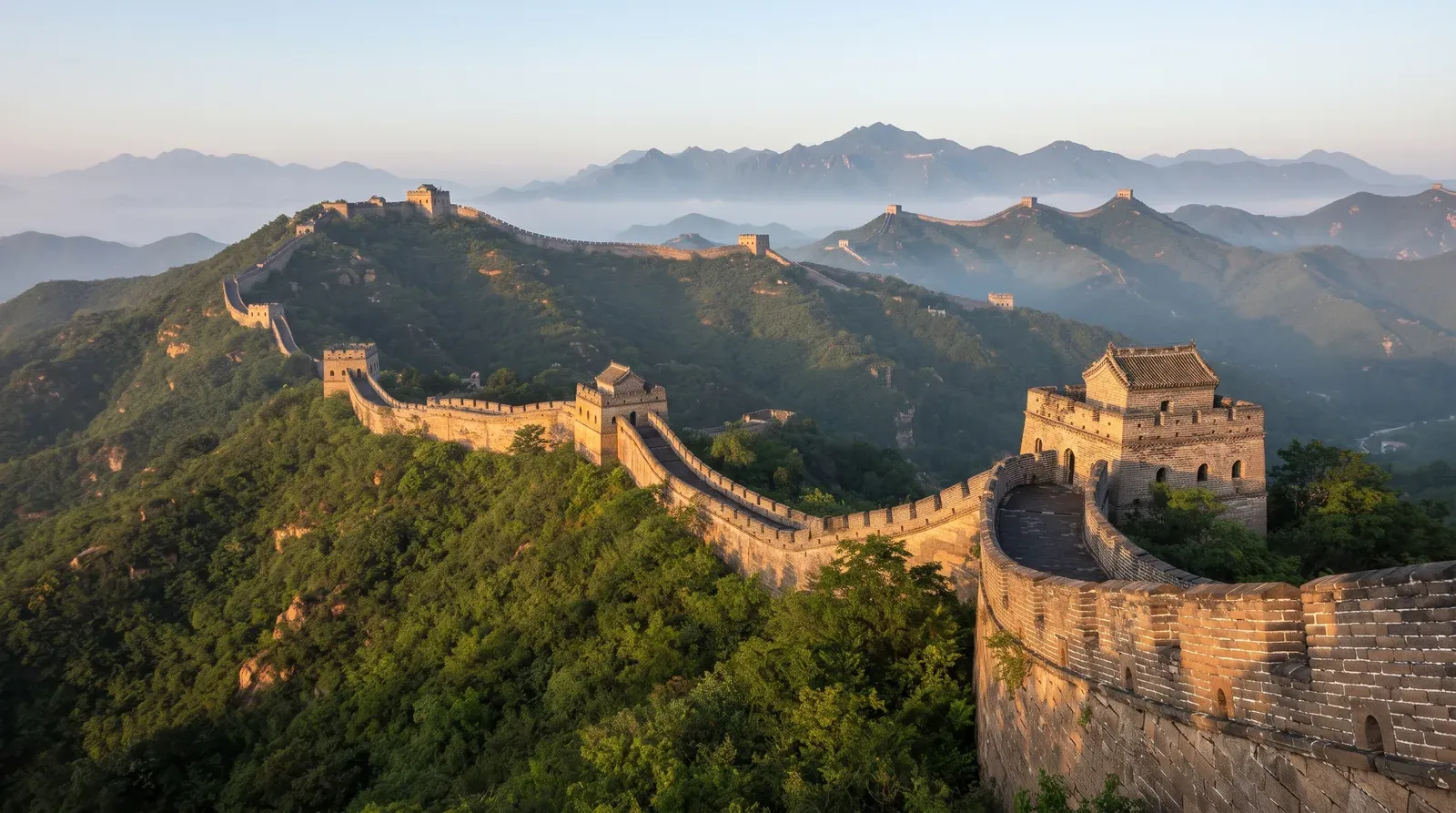
The Great Wall of China mainly stretches across northern China. According to the National Cultural Heritage Administration, Great Wall resources from various dynasties are spread across 15 provincial-level regions, with remaining walls and trenches totaling 21,196.18 kilometers. The Ming Great Wall, which travelers visit most often, measures 8,851.8 kilometers, running from Jiayuguan in Gansu in the west to Hushan Great Wall in Liaodong in the east. UNESCO inscribed it on the World Heritage List in 1987.
Where Is the Great Wall Located Across Chinese Provinces?
According to survey results confirmed by the National Cultural Heritage Administration, Great Wall resources from all historical periods are distributed across 15 provincial-level regions: Beijing, Tianjin, Hebei, Shanxi, Inner Mongolia, Liaoning, Jilin, Heilongjiang, Shandong, Henan, Shaanxi, Gansu, Qinghai, Ningxia, and Xinjiang. The total length of wall and trench relics across these periods is 21,196.18 kilometers. The wall was officially inscribed on the World Heritage List by UNESCO in 1987.
The Great Wall does not consist entirely of man-made brick and stone. Archaeological surveys measured the Ming Great Wall at 8,851.8 kilometers in total, which includes 6,259 kilometers of man-made walls, 359 kilometers of trenches, and 2,232 kilometers of natural defensive barriers such as steep mountain slopes and rivers. The Ming Dynasty combined human construction with these natural barriers.
| Defense Structure Type | Relic Length (km) | Architectural Form and Function |
|---|---|---|
| Man-made walls | 6,259 | Walls built by hand using stone masonry and rammed earth |
| Natural barriers of mountains and rivers | 2,232 | Natural protection formed by steep mountain ridges and rivers |
| Trenches | 359 | Defensive trenches excavated by hand |
| Total length of Ming Great Wall | 8851.8 | Total length including walls, trenches, and natural barriers |
Where Are the Starting and Ending Points of the Ming Great Wall?
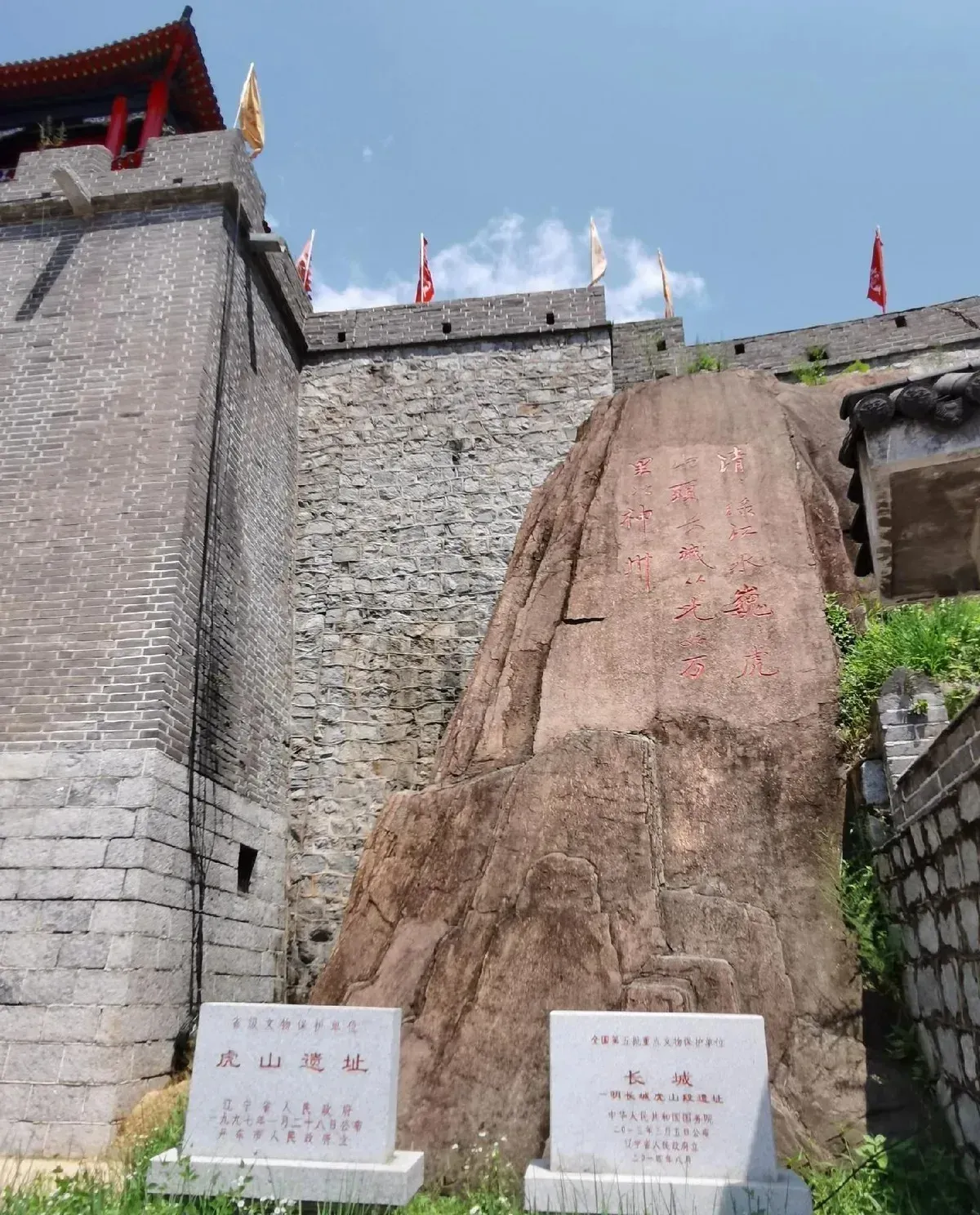
The Ming Great Wall runs from Jiayuguan in Gansu in the west to Hushan Great Wall in Liaodong in the east, covering 8,851.8 kilometers. Hushan Great Wall is located in Hushan Village, Hushan Town, Kuandian Manchu Autonomous County, Dandong City, Liaoning Province, serving as the eastern terminus of the Ming wall.
Traditionally, people long considered Shanhaiguan in Hebei Province as the eastern starting point of the wall. Surveys conducted since the 1990s confirmed that it actually extends east across Liaoning Province all the way to Hushan Great Wall.
Shanhaiguan is located in Shanhaiguan District, Qinhuangdao City, Hebei Province, between the Yan Mountains and the Bohai Sea. It is the easternmost pass of the Ming Great Wall, known as the First Pass Under Heaven. The Laolongtou stone section at Shanhaiguan extends into the sea, measuring 22.4 meters long, 8.3 meters wide, and 9.2 meters high. Built on coastal reefs, it is the only section of the wall in China that enters the sea.
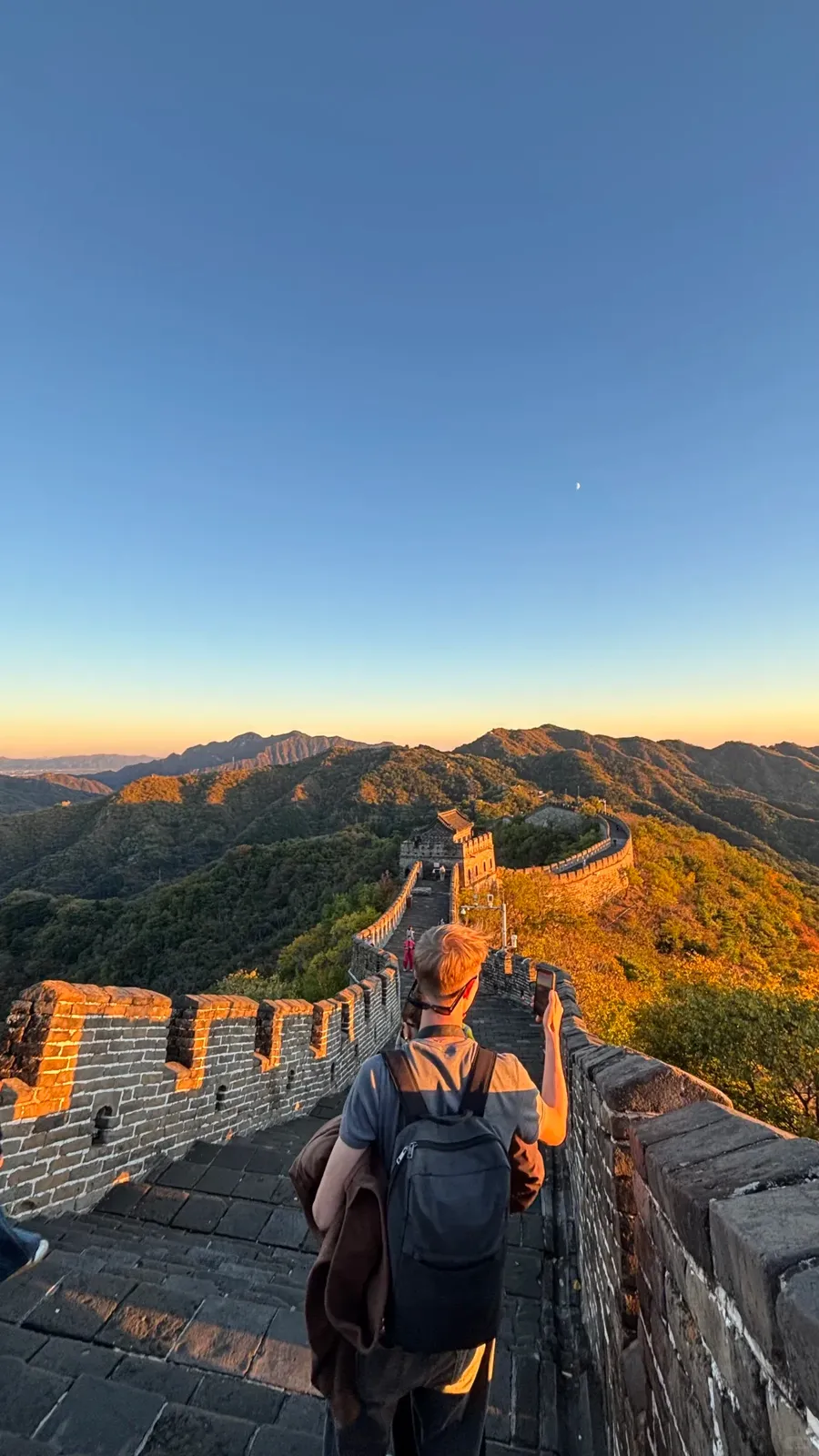
Jiayuguan was first built during the Ming Dynasty in a narrow mountain pass between the Qilian Mountains and Longshou Mountain. Controlling the Hexi Corridor, it served as the westernmost pass of the Ming wall. Shanhaiguan and Jiayuguan stand at opposite eastern and western ends of the Ming wall.
Where Did the Qin and Han Great Walls Start and End?
Beyond the Ming Dynasty, walls built in the Qin and Han periods were also massive. According to the Records of the Grand Historian in the Biography of Meng Tian, Emperor Qin Shi Huang sent Meng Tian to build walls after unifying the country, starting from Lintao and reaching Liaodong, extending for more than 10,000 li.
The wall built during the Han Dynasty ran west from Ershi City in Dayuan to the mouth of the Taedong River south of Pyongyang, Korea, spanning nearly 10,000 kilometers in total. The Han Dynasty wall was the longest wall built in Chinese history.
| Dynasty | Western Starting Point | Eastern Ending Point | Total Length or Scale | Recorded Source |
|---|---|---|---|---|
| Qin Dynasty | Lintao | Liaodong | Extending over 10,000 li | Records of the Grand Historian (Biography of Meng Tian) |
| Han Dynasty | Ershi City in Dayuan | Taedong River estuary south of Pyongyang, Korea | Nearly 10,000 kilometers | Han Dynasty construction records |
| Ming Dynasty | Jiayuguan in Gansu | Hushan Great Wall in Liaodong | 8851.8 km | National Cultural Heritage Administration archaeological survey |
Where Is the Great Wall of China in Huairou District, China?
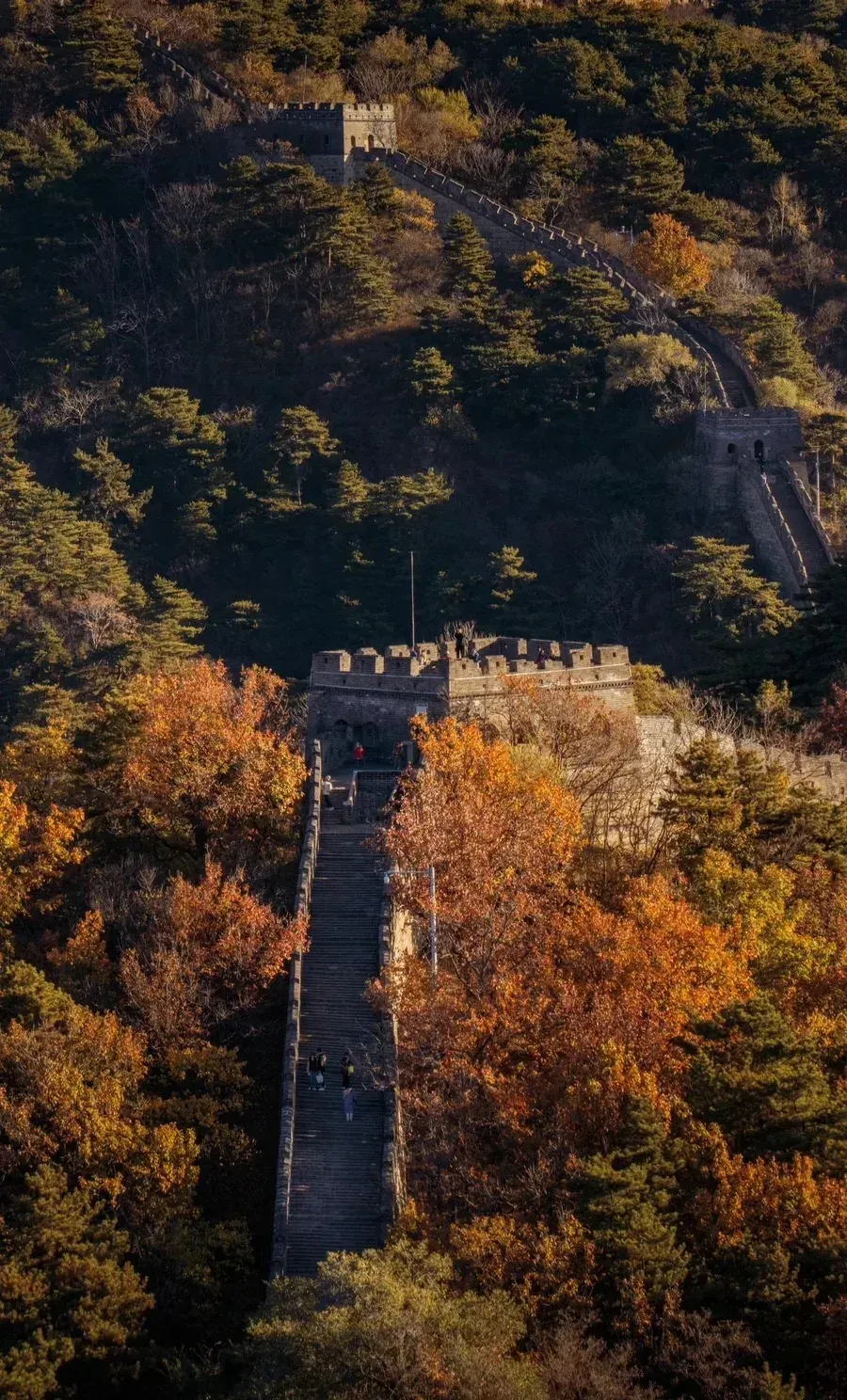
The wall passes through Huairou District in Beijing, which includes Mutianyu and Huanghuacheng Water Great Wall in Huanghuacheng Village, Jiuduhe Town. Mutianyu is located about 70 kilometers from central Beijing, connecting to Jiankou to the west and Lianhuachi to the east.
Mutianyu was first built in the mid-6th century during the Northern Qi Dynasty, and was rebuilt to its current scale under General Xu Da during the Ming Dynasty. This section stands 7 to 8.5 meters high and 4 to 5 meters wide at the top, featuring 22 watchtowers spaced closely along its 2,250-meter open sightseeing section.
Where Are the Four Major Passes of the Great Wall Located?
Among the fortress passes along the wall, Dajingmen in Zhangjiakou, Hebei; Shanhaiguan in Qinhuangdao, Hebei; Juyongguan in northwestern Beijing; and Jiayuguan in Gansu are known as the four great passes of the Great Wall. These four fortresses sit across different geographic positions in northern China.
Shanhaiguan lies between the Yan Mountains and the Bohai Sea in Qinhuangdao, Hebei, while Jiayuguan guards the Hexi Corridor between the Qilian Mountains and Longshou Mountain in Gansu. Juyongguan is located in northwestern Beijing, and Dajingmen sits in Zhangjiakou, Hebei.
What to Keep in Mind About the Great Wall of China Location and Layout
When examining the location, starting points, and ending points of the Great Wall, it helps to distinguish between different dynasties, as well as between passes and continuous walls. Shanhaiguan is the easternmost pass of the Ming Great Wall, but the actual eastern end of the wall structure extends to Hushan Great Wall in Kuandian Manchu Autonomous County, Dandong City, Liaoning Province.
The wall was never a single unbroken masonry rampart across history. It also relied on trenches and natural barriers such as steep ridges and rivers. Archaeological surveys measured the Ming wall's man-made sections at 6,259 kilometers, while its total defensive network reached 8,851.8 kilometers.
Sources
Great Wall of China on Wikipedia
Ming Great Wall on Wikipedia
Hushan Great Wall on Wikipedia
Great Wall of China on Britannica
Shanhaiguan on Wikipedia
The Great Wall at UNESCO World Heritage Centre
Mutianyu on Wikipedia
Huairou District on Wikipedia
Sources verified on November 8, 2026
FAQ
Is the eastern starting point of the Ming Great Wall Shanhaiguan or Hushan?
The eastern terminus of the Ming Great Wall is Hushan Great Wall, located in Hushan Village, Hushan Town, Kuandian Manchu Autonomous County, Dandong City, Liaoning Province. Traditional belief long held Shanhaiguan as the eastern starting point, but surveys since the 1990s confirmed that the wall extends east through Liaoning Province, leaving Shanhaiguan as its easternmost famous pass.
Where is the only section of the Great Wall that enters the sea in China?
The only section of the Great Wall in China that enters the sea is the Laolongtou stone section in Shanhaiguan District, Qinhuangdao City, Hebei Province. Built on coastal reefs, the Laolongtou structure measures 22.4 meters long, 8.3 meters wide, and 9.2 meters high.
Which dynasty built the longest Great Wall in history?
The Han Dynasty built the longest wall in history. Running from Ershi City in Dayuan in the west to the mouth of the Taedong River south of Pyongyang, Korea in the east, the Han Great Wall reached nearly 10,000 kilometers in total.
Which famous sections of the Great Wall are located in Huairou District, Beijing?
The wall runs through Huairou District in Beijing, featuring Mutianyu Great Wall and Huanghuacheng Water Great Wall in Huanghuacheng Village, Jiuduhe Town. Mutianyu connects to Jiankou to the west and Lianhuachi to the east, with 22 watchtowers situated along its 2,250-meter open sightseeing section.
Where are the four major passes of the Great Wall located?
The four major passes of the Great Wall are Shanhaiguan in Qinhuangdao, Hebei; Jiayuguan in Gansu; Juyongguan in northwestern Beijing; and Dajingmen in Zhangjiakou, Hebei.