
Traditional Chinese Clothing: Hanfu, Qipao, and Tangzhuang
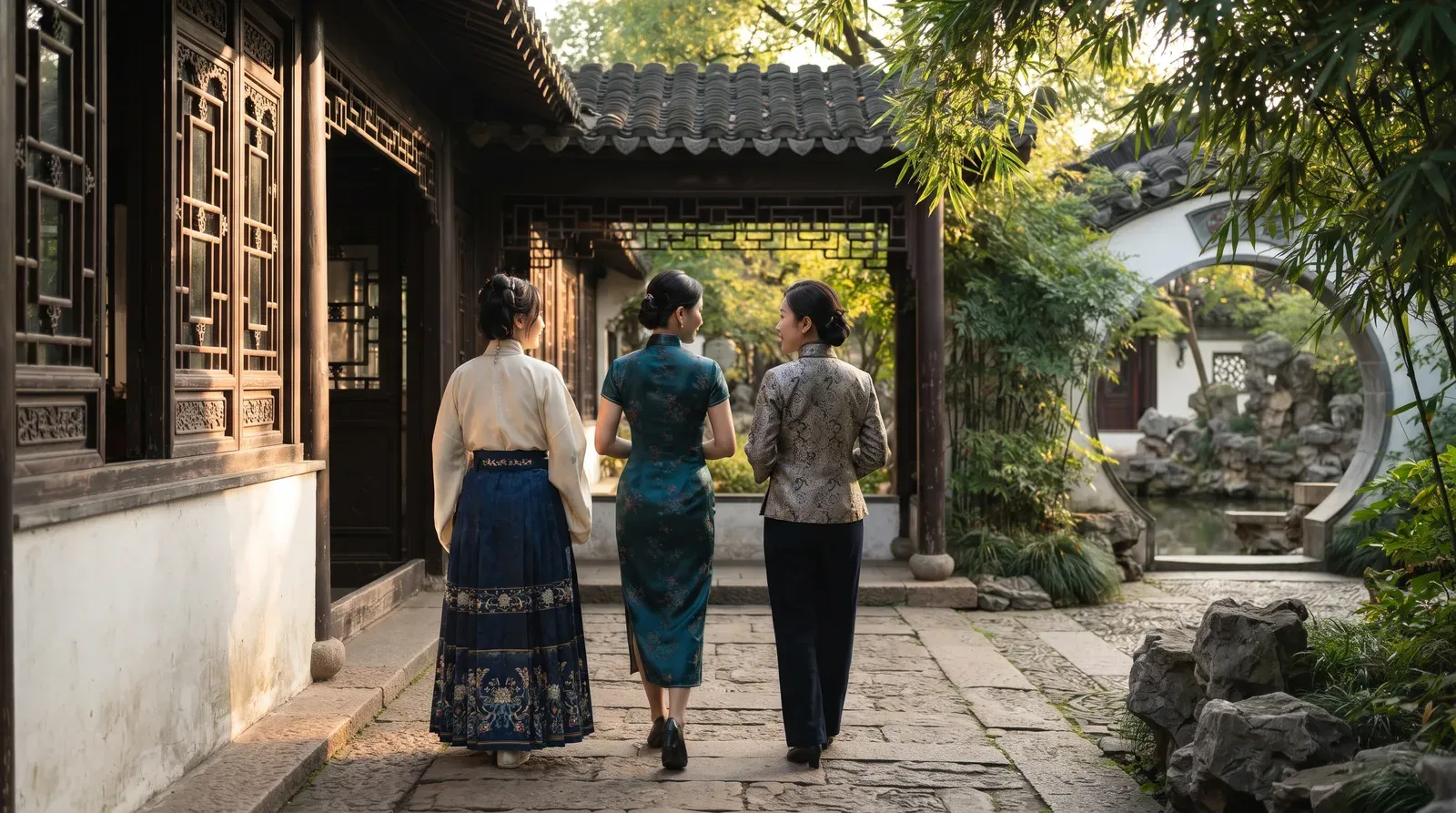
Traditional Chinese clothing mainly includes classic styles such as Hanfu, the qipao, and Tangzhuang, with garment codes tracing back to the two-piece top and skirt system (shangyi xiachang) set in the Western Zhou dynasty. Hanfu uses a crossed collar that wraps left over right and ties with fabric ribbons. The qipao, which took shape in the 1910s and 1920s, is recognized by its fitted one-piece dress shape, standing collar, asymmetric right front flap, high side slits, and Chinese frog fasteners. The two styles differ clearly in cut, neckline, and fastening method.
| Style system | Typical shape and structure | Fastening and cut | Representative craft or details |
|---|---|---|---|
| Hanfu | Ruqun, aoqun, beizi, shenyi, shirt and trousers | Crossed collar wrapping right, ribbon ties | Two-piece top and skirt system, separate or combined in shenyi |
| Qipao | Fitted one-piece dress, standing collar, high side slits | Asymmetric right front flap, Chinese frog fasteners | Edging crafts including gun, xiang, qian, and dang |
| Tangzhuang | Standing collar, centered front opening | Frog button fastening, three-dimensional cut | Woven circular peony patterns |
| Changshan | Men's long Chinese robe | Fastened with frog buttons or ties | Refers specifically to men's robes in modern Standard Mandarin |
Core Shapes and Structural Details of Hanfu
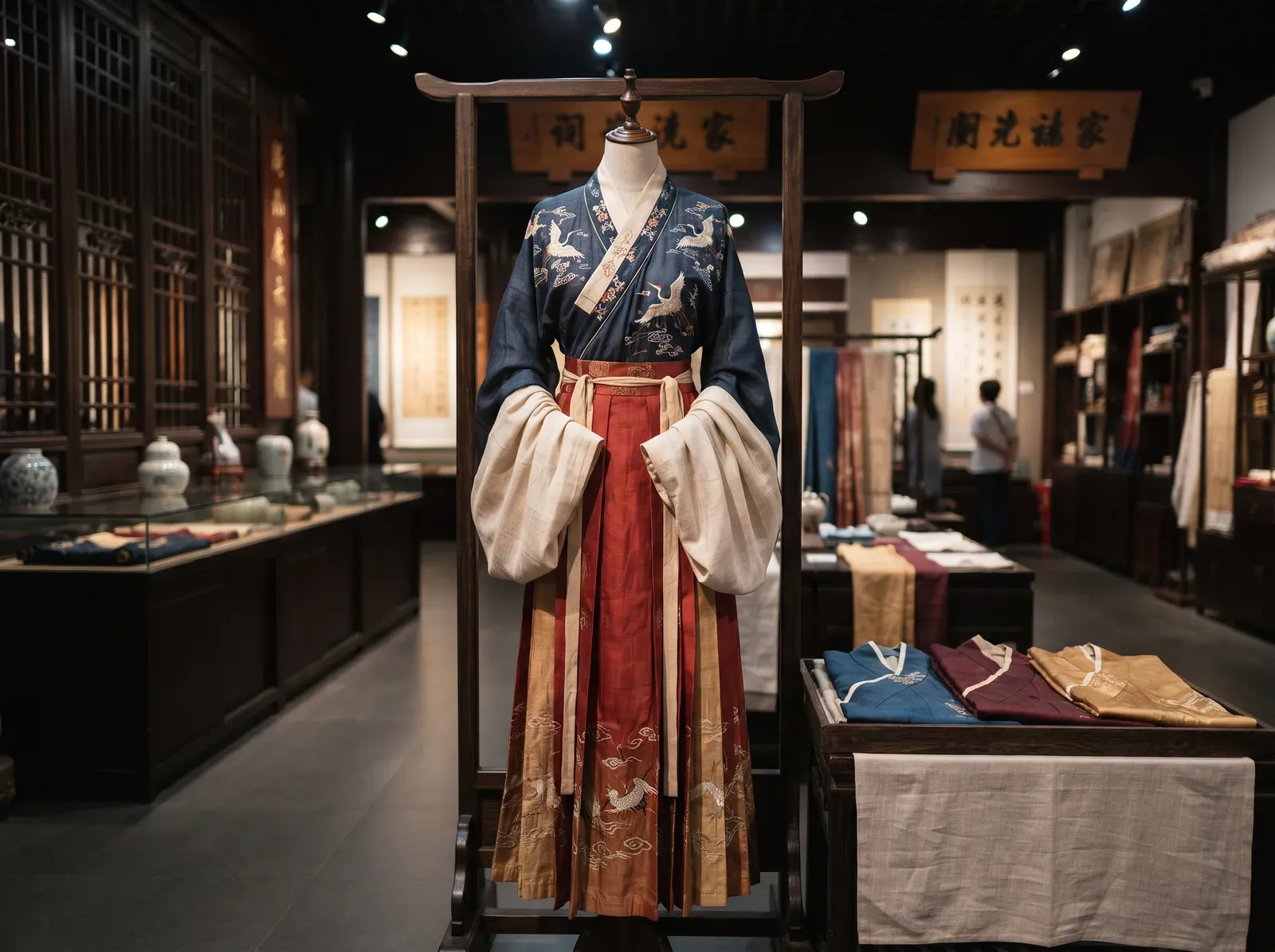
Classic Hanfu styles include combinations such as ruqun, aoqun, beizi, shenyi, and shan-ku (shirt and trousers). The Western Zhou dynasty established the rule of separate tops and skirts (shangyi xiachang). Even after the one-piece shenyi appeared later, having separate upper and lower pieces remained the foundation for ceremonial dress, such as mianfu and court robes.
The typical Hanfu top uses a crossed collar where the left lapel wraps over to the right and fastens at the right waist, a style called youren, usually secured with knotted fabric ties. In ancient official attire, Ming dynasty officials wore everyday robes with embroidered rank badges (buzi) measuring about 40 to 50 centimeters square sewn onto the chest and back. Civil officials had birds embroidered on their badges, while military officers had beasts, marking the nine ranks of office.
Qipao Tailoring: Differences Between Beijing and Shanghai Styles
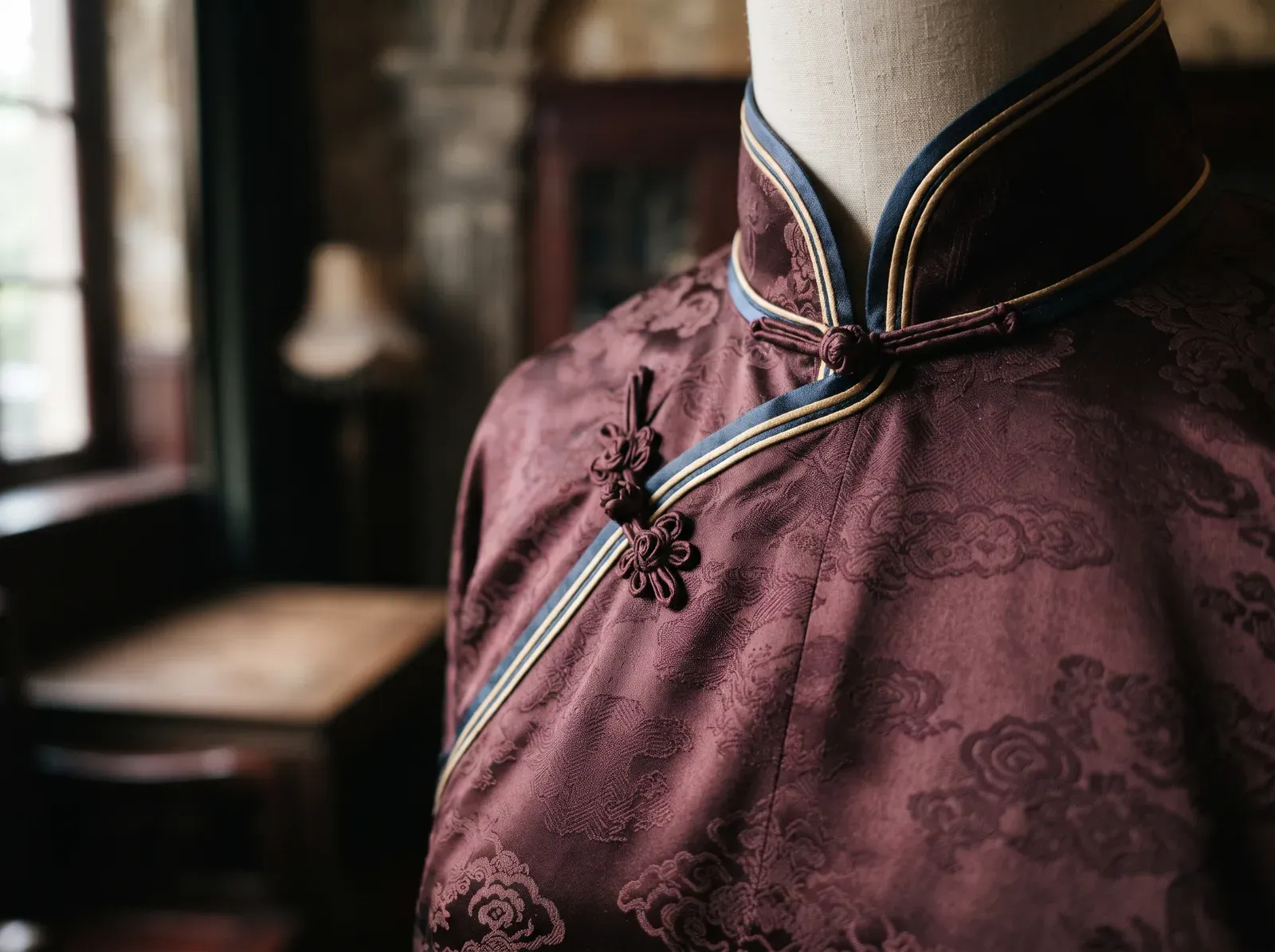
The qipao took shape in the 1910s and 1920s. Its standard cut is a fitted one-piece dress with a standing collar, an asymmetric right front flap, high side slits, and Chinese frog fasteners. In modern Standard Mandarin, this style of traditional Chinese dress for women is called a qipao, while changshan refers specifically to men's long robes.
Traditional qipao making includes four main edge-trimming crafts: gun (piping), xiang (bordering), qian (inserting), and dang (inlaying). Modern tailoring most often uses the gun method, which rolls narrow fabric strips along the edges. The qipao blends Chinese and Western clothing traditions. It keeps traditional Chinese silk fabrics, the standing collar, and the right flap, while its fitted cut and move away from traditional fabric ties came from Western tailoring methods.
Over time, the dress split into two major styles: Beijing style (Jingpai) and Shanghai style (Haipai). Beijing-style qipao dresses are more traditional and modest, keeping a flat, straight, or A-line outline with full hand stitching, rich embroidery, and wide piped trims. Shanghai-style qipao dresses adopted Western tailoring methods, adding waist and bust darts with curved seams to highlight the natural shape of the body.
If you prefer a straight silhouette with wide borders and hand embroidery, a Beijing-style qipao fits well. If you value a close fit with waist darts and curved tailoring, a Shanghai-style qipao suits you better.
Classic Shapes of Modern Tangzhuang and Men's Traditional Chinese Outfits
The modern Tangzhuang centers on a Chinese standing collar, a symmetrical front opening, and frog buttons. At the 2001 APEC summit in Shanghai, attending world leaders wore standing-collar Tangzhuang jackets woven with circular peony patterns and frog buttons, which helped make modern Tangzhuang popular worldwide.
Along with modern Tangzhuang, common men's styles in recent history include the changshan and the Sun Yat-sen suit (Zhongshan suit). Promoted by Sun Yat-sen, this suit has four front pockets representing the four traditional virtues of propriety, justice, honesty, and honor, along with five front buttons.
What Is the Difference Between Hanfu and Qipao?
Hanfu and the qipao show distinct structural and historical differences within the national dress of China. Hanfu is defined by its crossed collar wrapping to the right and its ribbon fastenings, carrying forward the Western Zhou two-piece system. The qipao took shape in the 1910s and 1920s, marked by a standing collar, an asymmetric right front flap, Chinese frog buttons, and a high-slit long dress cut with Western tailoring techniques.
| Comparison | Hanfu features | Qipao features |
|---|---|---|
| Typical styles | Ruqun, aoqun, beizi, shenyi, and shan-ku | Fitted one-piece long dress, high side slits |
| Collar and flap | Crossed collar, with the left flap wrapping right (youren) | Standing collar, asymmetric right front flap |
| Fastening method | Usually secured with knotted fabric ties, without hard buttons | Fastened with Chinese frog buttons, leaving behind fabric ties |
| Cut and structure | Follows the Western Zhou two-piece system, separate or combined as shenyi | Blends Western tailoring, with Shanghai cuts using waist darts and curved seams |
| Main crafts and decoration | Ming dynasty official robes had rank badges measuring about 40 to 50 cm sewn on the chest and back | Includes four edge trims (gun, xiang, qian, dang), with rolled gun piping most common today |
Sources
Hanfu - Wikipedia
Qipao - Wikipedia
Cheongsam | Encyclopedia.com
Tangzhuang - Wikipedia
Mao suit - Wikipedia
Chinese clothing - Wikipedia
Sources verified on 21 November 2026.
FAQ
What should you do if Hanfu ribbons come undone while trying it on?
Hanfu tops fasten with knotted ribbons. If they loosen while you move, wrap the left flap across to your right waist again, smooth the fabric flat, and re-tie the ribbons.
What should you keep in mind when walking or sitting in a high-slit qipao?
A standard qipao has high side slits and a fitted skirt. Take smooth, natural steps when walking, and gently smooth the back of the skirt before sitting down.
How do the terms for men's changshan and women's qipao match up?
In modern Standard Mandarin, changshan refers specifically to men's long robes, while the matching robe style for women is called a qipao. Both are formal traditional Chinese outfits.