Terracotta Army Tourist Guide: Highlights and Visit Tips
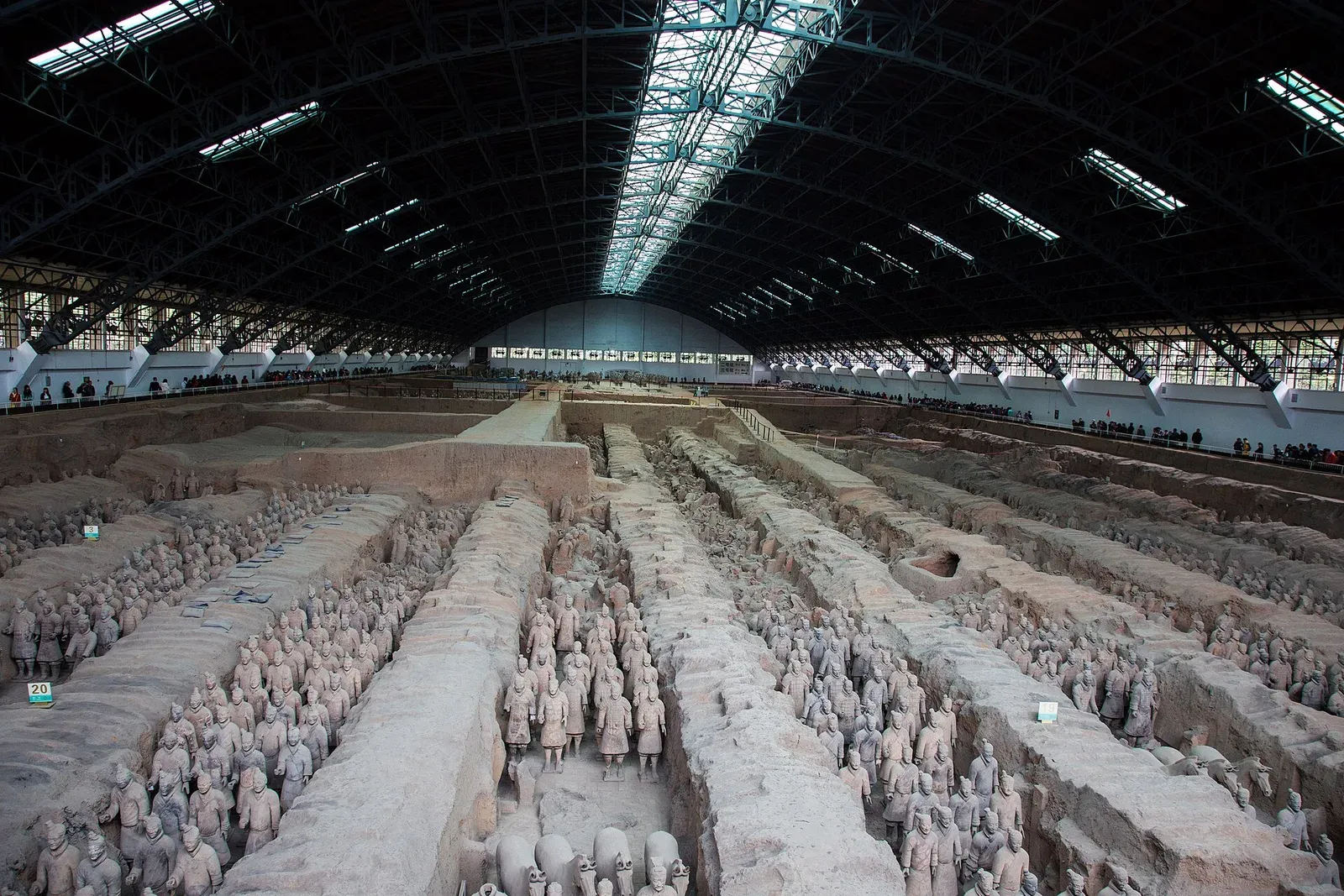
Photo: Jmhullot / Wikimedia Commons, CC BY 3.0
For any Terracotta Army tourist heading to Emperor Qinshihuang's Mausoleum Site Museum in Xi'an, adult tickets cost a standard 120 yuan year-round. A single ticket covers both the Museum of Qin Terracotta Warriors and Horses and Lishan Garden, and each site takes about 1.5 hours to tour normally. The scenic area uses real-name online reservations with timed entry slots. Tickets are valid for one person on the day of issue, with three ticket checks throughout the visit, and your ticket lets you ride the free round-trip shuttle between the two sites.
| Item | Key Information |
|---|---|
| Ticket prices | Adult ticket 120 yuan; full-time undergraduate students and below 60 yuan with ID; seniors aged 65 and above and minors aged 16 and below reserve for free |
| Tour scope | Museum of Qin Terracotta Warriors and Horses, Lishan Garden (free round-trip shuttle between both sites with ticket) |
| Suggested visit duration | About 1.5 hours each for the Terracotta Warriors Museum and Lishan Garden (half a day recommended) |
| Peak season hours (March 16 to November 15) | Ticket sales 8:30 to 17:00; closes at 18:30 |
| Low season hours (November 16 to March 15 next year) | Ticket sales 8:30 to 16:30; closes at 18:00 |
| Entry and exit routes | North Gate is entry only, East Gate is exit only; arrive at North Gate 30 minutes before your reserved time to scan original ID |
Before You Go: How to Book Tickets and On-Site Fees
Emperor Qinshihuang's Mausoleum Site Museum requires real-name online reservations for all visitors, including eligible free-ticket visitors, travelers from Hong Kong, Macao, and Taiwan, and foreign visitors. Everyone must book under their real name in advance through the official website or WeChat official account. Cancellations must be processed online before ticket inspection; once a ticket is scanned at the turnstile, no refund can be issued. Successfully refunded amounts return to the original payment account within 3 to 5 days.
| Service Item | Price |
|---|---|
| Official commentary (1 to 5 people) | 90 yuan per session |
| Official commentary (6 to 11 people) | 100 yuan per session |
| Official commentary (12 or more people) | 110 yuan per session |
| Headset equipment rental | 8 yuan per person per session |
| One-way electric cart inside the first gate of the Terracotta Warriors Museum | 5 yuan per person |
| Electric cart inside the ticket gate of Lishan Garden | 15 yuan per person |
Tip: The museum runs a one-way visitor flow where the North Gate is entry only and the East Gate is exit only, so arrive at the North Gate ticket checkpoint 30 minutes before your reserved time slot to scan your original valid ID.
How Can a Terracotta Army Tourist Plan the Three Pits and Highlights?
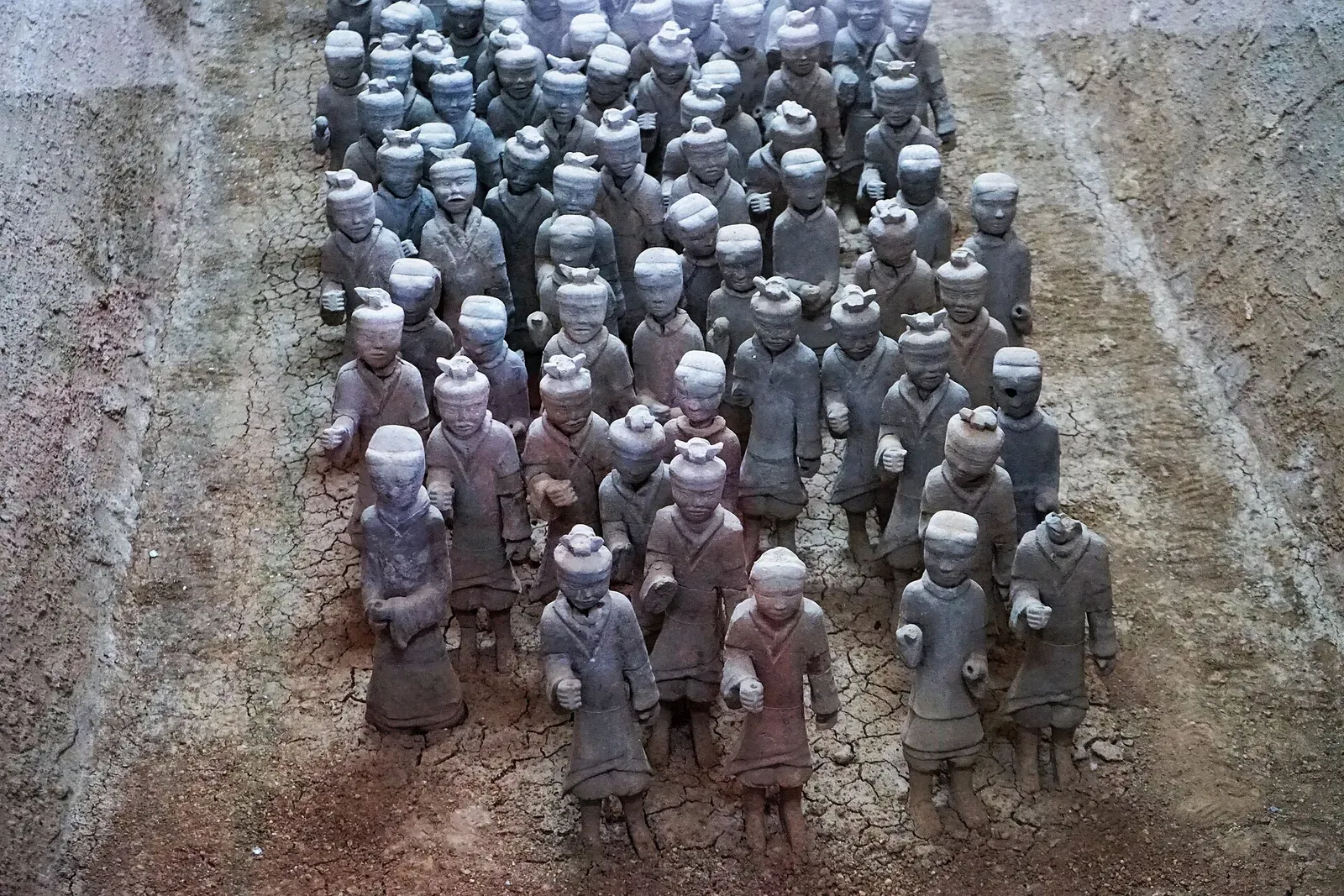
The museum has opened the excavation sites of Pit 1, Pit 2, and Pit 3 to the public, and following the order of Pit 1 for the grand battle formation, Pit 3 for the command center, and Pit 2 for elite close-ups and display cases works well. Pit 1 opened first on October 1, 1979. It measures 230 meters long and 62 meters wide, with 11 parallel brick-paved corridors over 3 meters wide. Excavations here have cleared over 500 life-sized pottery figures, 24 pottery horses, and 6 chariots, with over 3,000 pottery figures unearthed so far. The figures usually stand between 1.75 meters and about 2 meters tall. Craftsmen used at least 10 basic face molds and added hand-carved details. They were originally coated with more than ten types of mineral pigments, including barium copper silicate known as Han purple, though the colors often oxidized and peeled within minutes after contact with dry air upon excavation.
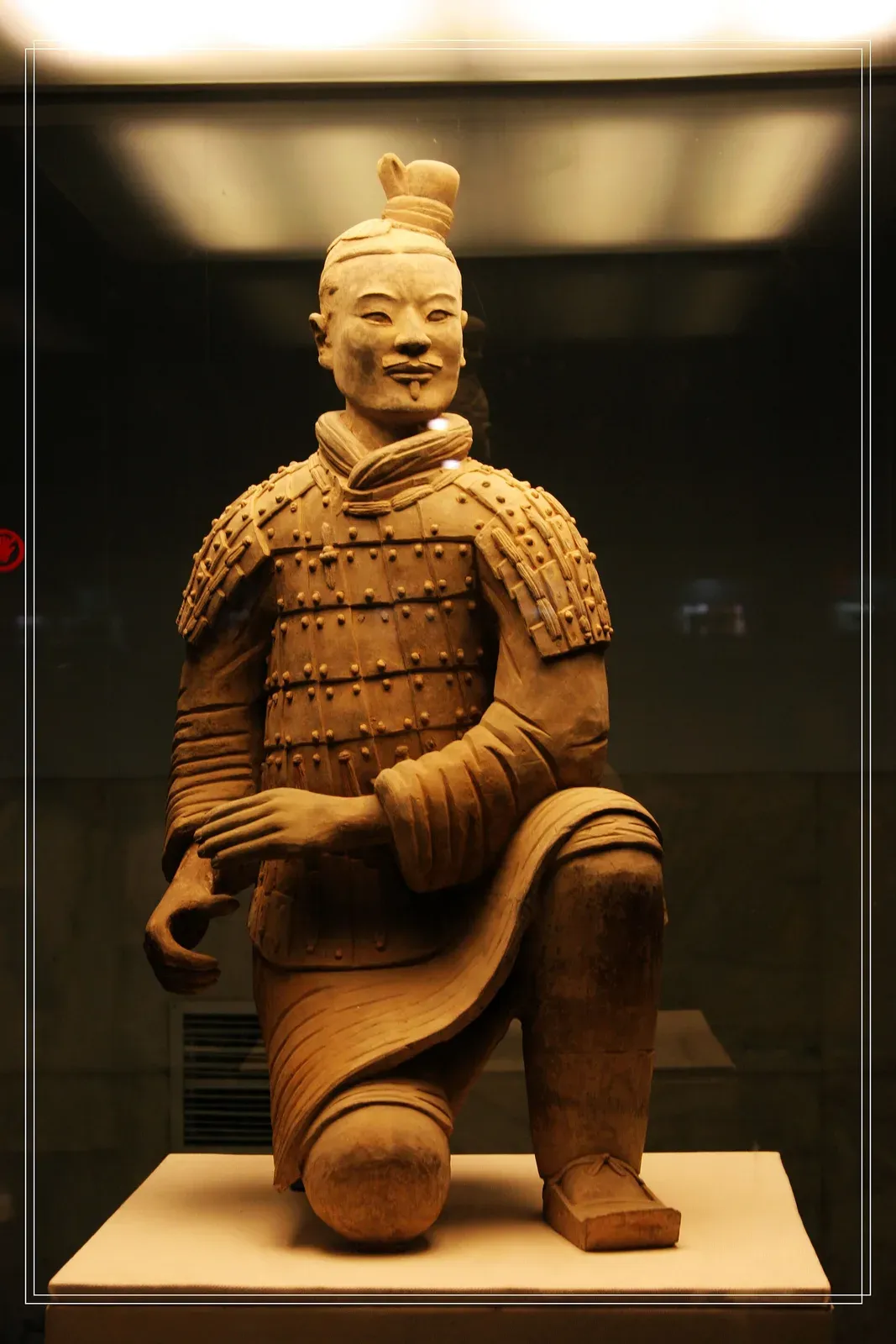
Pit 3 opened officially in September 1991 as the military headquarters for Pit 1 and Pit 2, and it is the only pit that escaped fire damage. Pit 2 opened in September 1994 with an excavate-while-exhibiting setup, housing a mixed force of cavalry, infantry, and chariots, while Pit 4 is an empty pit. In front of the standalone glass cases in the eastern section of Pit 2, you can take a close look at the kneeling archer squatting on the left leg with the right knee on the ground in bow-holding drill posture, complete with finely carved stitching on the square-toed shoe soles. Standing archers wear lightweight battle robes on the front line of the crossbow formation. The cavalry figures unearthed from Pit 2 wear tight-sleeved tunics, short armor, and short boots, representing the earliest physical cavalry relics found in Chinese archaeological history.
| Pit Name | Floor Area | Formation Nature and Key Unearthed Relics | Exhibition Features |
|---|---|---|---|
| Pit 1 | 14,260 square meters | Main battle formation pit, estimated to hold about 6,000 pottery figures and horses | Largest scale, with an on-site restoration and conservation workshop at the rear |
| Pit 2 | About 6,000 square meters | L-shaped mixed force with 939 crossbow, chariot, infantry, and cavalry figures, plus 89 chariots | Standalone cases for close-up viewing of kneeling archers, standing archers, and cavalry figures |
| Pit 3 | About 520 square meters | Command center directing Pit 1 and Pit 2, with 68 pottery figures and 1 command chariot unearthed | The only pit not burned by fire, with vivid painted colors preserved on figures when unearthed |
If you want to take in the sheer scale of the Qin battle array first, head straight past the ticket checkpoint to the front viewing platform of Pit 1. If you are more interested in ancient weapons, gear, and micro carving details, you can spend more time around the standalone glass cases in the center of the Pit 2 exhibition hall.
Transferring to Lishan Garden: What to See at the Bronze Chariot Museum and Mausoleum Area?
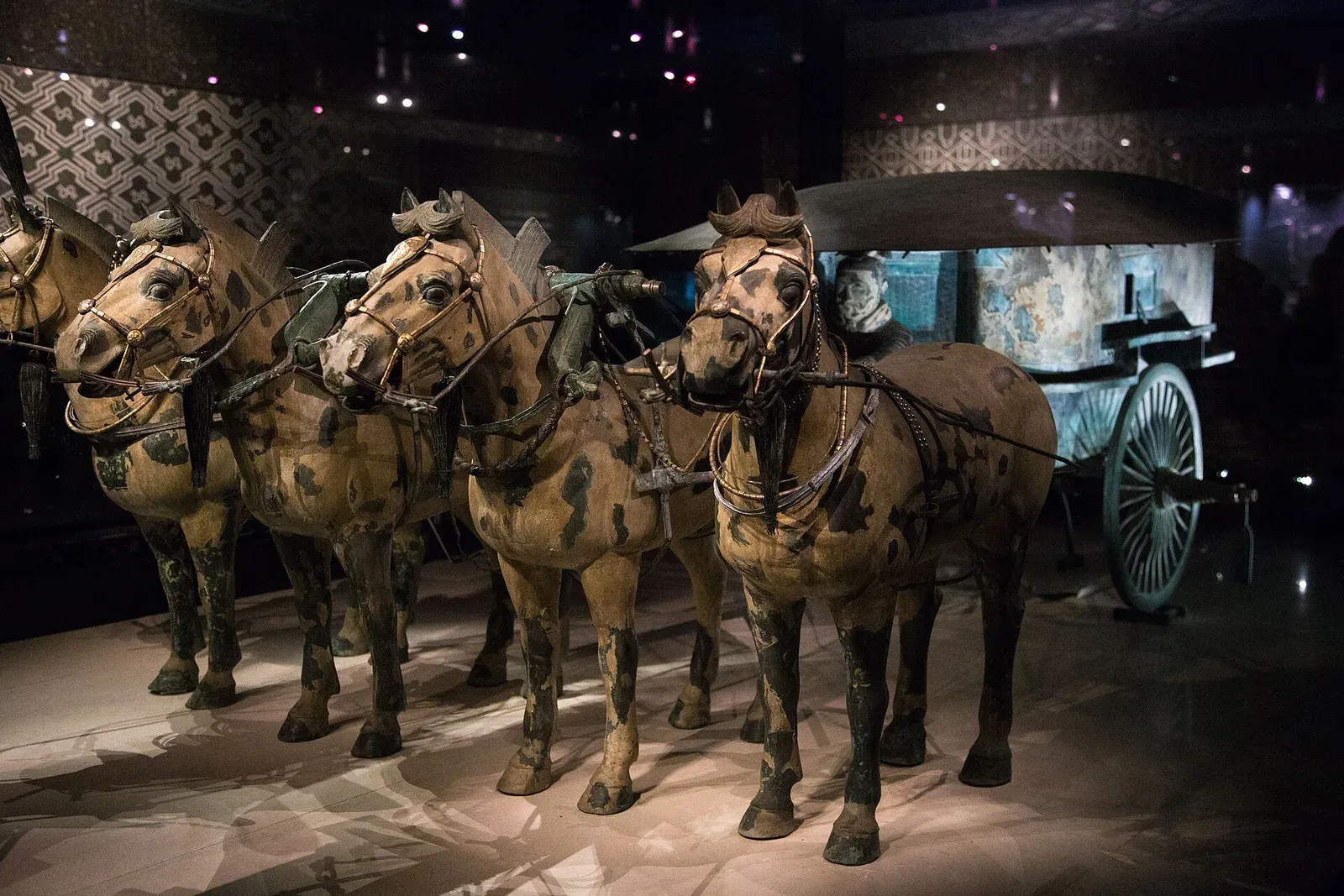
The core area inside the outer wall of Emperor Qinshihuang's Mausoleum Site Park (Lishan Garden) covers about 2.13 square kilometers, while the entire park spans over 50 square kilometers, with more than 180 burial pits and nearly 200 companion tombs surveyed. The existing main burial mound measures 350 meters north to south, 345 meters east to west at the base, and 76 meters high. A massive underground waterproof dam system was built around the underground palace. In 1987, the Mausoleum of the First Qin Emperor and the Terracotta Warriors pits were inscribed on the UNESCO World Heritage List. Two large painted Qin bronze chariots were unearthed in 1980 on the west side of the burial mound. Cast at half life-size using techniques such as casting, welding, hinge joints, and snap-fastener connections, they took 8 years to restore and were relocated in May 2021 to the Bronze Chariot Museum in Lishan Garden for display.
Inside the Bronze Chariot Museum, Bronze Chariot No. 1 is a standing chariot topped with an umbrella and carrying a 91-centimeter-tall bronze charioteer figure equipped with a bronze crossbow and shield. Bronze Chariot No. 2 is an enclosed four-horse chariot with a domed roof divided into front and rear compartments. In addition, Burial Pit 9901 (the Acrobatics Pit) in Lishan Garden is about 5 meters deep and 40 meters long, structured as an east-west T-shaped underground pit of earth and wood. Unearthed from this pit in 1999, the acrobat figures wear only loincloths with bare torsos, and the dynamic rendering of their bones and muscle joints shows the realistic sculpting skill of the Qin Dynasty.
Tip: After touring the Terracotta Warriors Museum, leave through the East Gate and show your original ticket beside the parking lot to board the free shuttle to Lishan Garden, which takes about 5 to 10 minutes.
How Do You Get from Downtown Xi'an to the Lintong Museum?
The Museum of Qin Terracotta Warriors and Horses is located on Qinling North Road in Lintong District, Xi'an, Shaanxi Province, situated at the northern foot of Mount Li 7.5 kilometers east of Lintong District and about 37.5 kilometers east of central Xi'an. Traveling from downtown Xi'an to the site, you can choose metro transfers, dedicated tourist bus lines, or private driving. The Lianhuo Expressway is the primary eight-lane dual-carriageway link between downtown Xi'an and Lintong, though slow-moving traffic and congestion often occur on this highway during public holidays.
| Transport Option | Routes and Stops | Operating Hours and Route Details |
|---|---|---|
| Xi'an Metro Line 9 transfer | 25.2 km in total with 15 stations, connecting urban Xi'an and Lintong District | Opened on December 28, 2020; passengers transfer to feeder buses after exiting the station to reach the Terracotta Army |
| Tourist Bus Line 5 (Bus 306) | Fangzhicheng Transit Hub to the Terracotta Army | Departs Fangzhicheng from 8:10 to 19:00, with fares starting at 2 yuan and costing 5 yuan for the full route |
| Regular Bus 307 | Tang City Wall Section 9 Bus Dispatch Station to the Terracotta Army (via Giant Wild Goose Pagoda and Huaqing Pool) | Departs Tang City Wall Section 9 between 6:30 and 18:30, with a full fare of 8 yuan |
| Lianhuo Expressway corridor | Main highway corridor connecting urban Xi'an and Lintong (eight lanes in both directions) | Traffic congestion easily occurs on the section from Xi'an to the Terracotta Army during holidays |
Tip: If you take the dedicated bus, catch Tourist Bus Line 5 (Bus 306) at Fangzhicheng Transit Hub for a 5-yuan fare; if driving or hiring a car on holidays, aim to set off before morning opening hours to avoid highway traffic.
What Do First-Time Visitors Get Wrong? Common Pitfalls and Practical Tips
| Common Mistakes | Rules and Correct Practices |
|---|---|
| Bringing large luggage into the museum | A luggage deposit desk is behind the LED screen east of the ticket hall, offering free storage after security check (cooked food, pets, and valuables are not accepted) |
| Ticket cancellation deadline | Ticket cancellations must be made before ticket check; tickets cannot be refunded once verified, and refunds return to the original account within 3 to 5 days after cancellation |
| Using the wrong gates | A one-way route is enforced, with the North Gate serving only as the entrance and the East Gate only as the exit; visitors must swipe their original ID documents at the North Gate for entry half an hour before the reserved time slot |
| Assuming separate tickets are needed for both sites | The admission ticket includes both the Terracotta Warriors Museum and Lishan Garden and is valid on the day of visit; visitors can ride the round-trip shuttle bus for free with their ticket |
Sources
Emperor Qinshihuang's Mausoleum Site Museum Official Website
Mausoleum of the First Qin Emperor - Wikipedia
Terracotta Army - Wikipedia
Terracotta Army - Wikipedia
Bronze Chariots - Wikipedia
Mausoleum of the First Qin Emperor - Wikipedia
Xi'an Metro Line 9 - Wikipedia
Emperor Qinshihuang's Mausoleum Site Museum Visitor Guide - Shaanxi Provincial Cultural Heritage Administration
Tickets
Sources verified on November 19, 2026
FAQ
Does the Terracotta Army ticket include Lishan Garden, and how do you travel between them?
Emperor Qinshihuang's Mausoleum Site Museum charges a standard 120 yuan adult ticket year-round, which includes both the Museum of Qin Terracotta Warriors and Horses and Lishan Garden. Touring each site takes about 1.5 hours. Tickets are valid for one person on the day of purchase with three ticket checks in total, and visitors can ride the free round-trip shuttle between the two sites using their ticket.
Do you need a guide when visiting the Terracotta Army, and what are the official fees?
Emperor Qinshihuang's Mausoleum Site Museum offers official guide commentary services priced at 90 yuan per session for 1 to 5 people, 100 yuan for 6 to 11 people, and 110 yuan for 12 or more people, with headset rental at 8 yuan per person per session. The official guide inquiry phone numbers are 029-81399047 and 029-81399048.
How do foreign visitors, seniors, and children buy tickets to the Terracotta Army?
The museum enforces real-name online reservations for all visitors. Foreign travelers and visitors from Hong Kong, Macao, and Taiwan must book under their real names via the official website or official WeChat account. Seniors aged 65 and above and minors aged 16 and below can reserve free admission, while full-time undergraduate students and below enjoy a half-price concession of 60 yuan with valid student ID.
What route order is recommended for touring the three Terracotta Army pits?
It is recommended to visit in the order of Pit 1, Pit 3, and Pit 2. Start at the front of Pit 1 to take in the grand scale of the main battle formation, then move to Pit 3 to see the command post layout for Pits 1 and 2, and finish at Pit 2 to view elite units like kneeling archers, standing archers, cavalry figures, and the standalone glass display cases.