
Paddy Fields in China: Longji or Yuanyang, When to Go
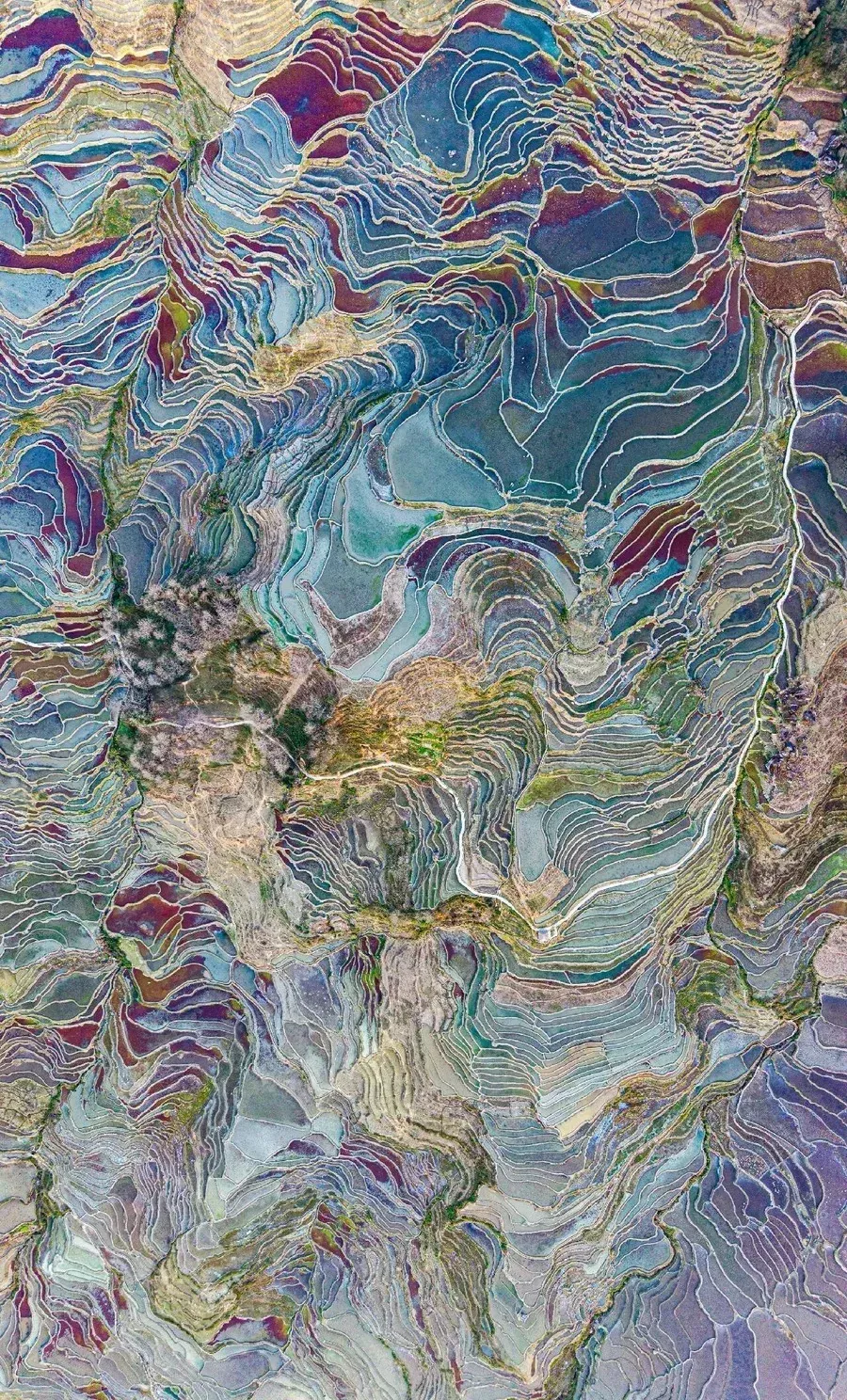
When exploring paddy fields in China and classic Chinese rice fields, the two most representative places are the Longji Rice Terraces in Longsheng Autonomous County, Guangxi, and the Yuanyang Hani Rice Terraces in southern Yunnan. Longji sits about 100 km from Guilin, with most fields carved around 650 years ago between 300 and 1,100 meters above sea level. The core area of the Yuanyang Hani Terraces covers 16,603 hectares, maintained by the Hani people over the past 1,300 years and reaching from below 500 meters to above 1,800 meters. Choosing between them depends on whether you prefer Zhuang and Yao village scenery or the steep cloud-wrapped ridges of the Ailao Mountains, as well as whether you travel during the winter-spring mirror period or the autumn golden season.
Choosing Paddy Fields in China: Longji or Yuanyang?
Your choice depends on your preference for slope angles, overall scale, and ethnic villages. Longji Terraces sit in Longji Town within Longsheng Autonomous County, Guangxi, featuring slopes up to 50 degrees and divided into two main scenic areas: Jinkeng (Dazhai) Yao Terraces and Ping'an Zhuang Terraces. Yuanyang Terraces stretch from the Ailao Mountains down to the Red River banks in southern Yunnan, where the terrain is steeper, with slopes reaching up to 70 degrees and some sections stacking as many as 3,000 tiers.
The living environments of the local communities also differ clearly. Yuanyang County has a resident population of about 370,000 people, with nearly 90% belonging to ethnic minorities. Hani villagers live across 82 villages located between mountaintop forests and terraced paddies, known for traditional mushroom-shaped houses with thatched roofs. Farming in Yuanyang still relies on water buffalo and traditional hand tools today, while Longji Terraces are centered around long-settled Zhuang and Yao villages.
| Comparison | Longji Terraces (Longsheng Terraces) | Honghe Hani Terraces (Yuanyang Terraces) |
|---|---|---|
| Location | Longji Town, Longsheng Autonomous County, Guangxi (about 100 km from Guilin) | From the Ailao Mountains to the Red River banks in southern Yunnan (Yuanyang County) |
| History | Mostly built around 650 years ago | Carved and maintained by Hani people over the past 1,300 years |
| Elevation range | Between 300 and 1,100 meters above sea level | From below 500 meters to above 1,800 meters above sea level |
| Maximum slope | Slopes up to 50 degrees | Maximum slope reaches 70 degrees |
| Core scenic areas | Jinkeng (Dazhai) Yao Terraces, Ping'an Zhuang Terraces | Bada scenic area, Duoyishu scenic area, Laohuzui scenic area |
| Villages and housing | Settled Zhuang and Yao villages | 82 villages, nearly 90% ethnic minorities, traditional mushroom houses with thatched roofs |
| Farming methods | Traditional rice cultivation | Cannot use modern machines like tractors, still relying on water buffalo and traditional hand tools |
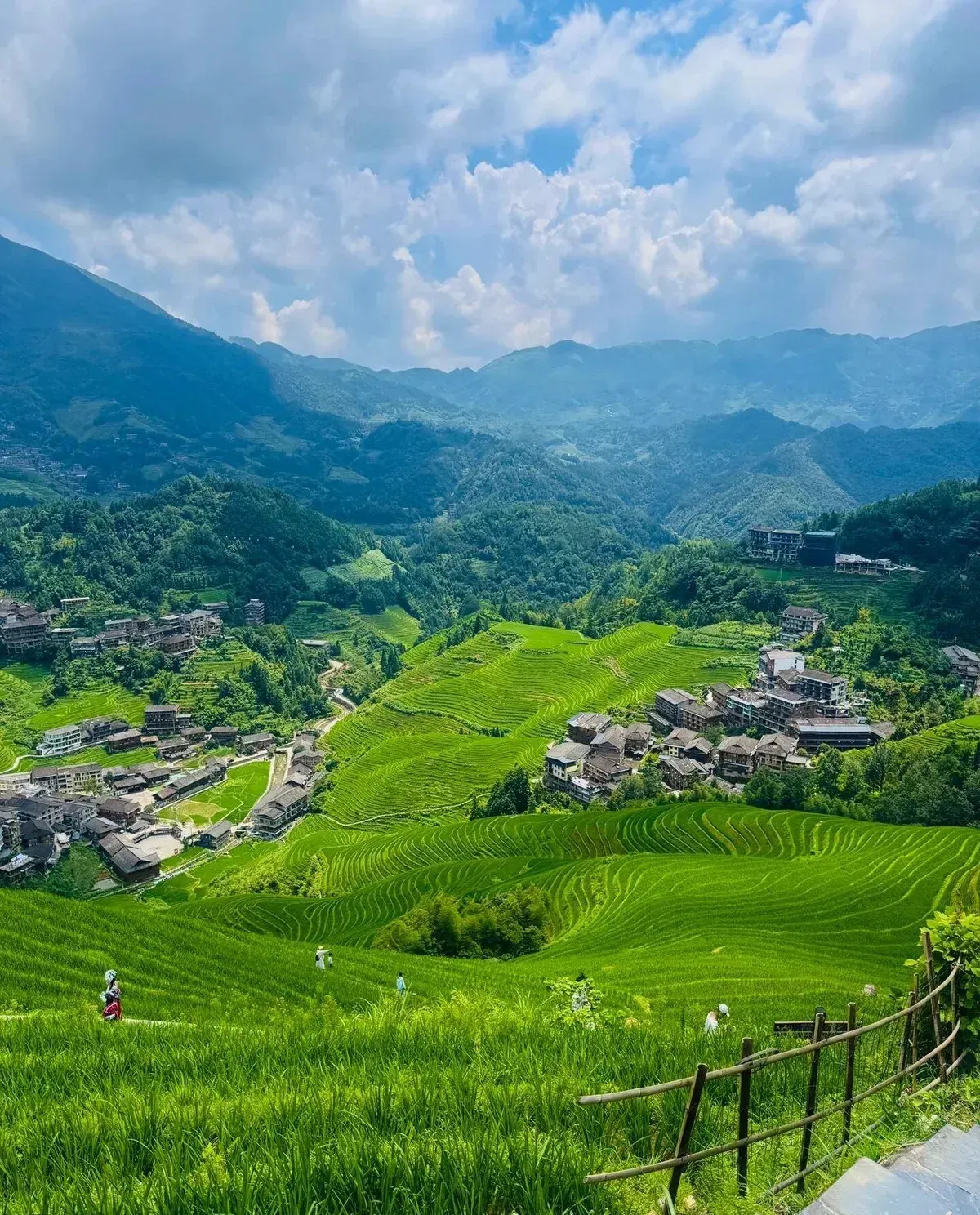
Which Months to Visit China Rice Fields for Mirror Waters and Golden Crops?
To see mirror-like water reflections, the suitable months for Yuanyang Terraces run from November to late April of the following year, while for Longji Terraces they run from mid-April to mid-to-late June. In Yuanyang, fields are filled with water from November to late April, reflecting sunrise and sunset light like mirrors. Longji enters its water-filling and seedling planting phase from mid-April to mid-to-late June. These two water-filled periods are classic times for capturing light and shadows on the water surface.
If you prefer golden rice waves, the period at Longji Terraces falls between mid-to-late September and mid-November. Yuanyang Terraces grow only one crop of rice each year, showing vivid green during the summer growing season. Longji Terraces stay lush green from July to mid-September, and from mid-to-late December to mid-February they may be covered in snow.
| Time period | Longji Terraces features | Yuanyang Hani Terraces features |
|---|---|---|
| Mid-April to mid-to-late June | Water-filling and transplanting period, terraced water surfaces reflect like mirrors | Water-filled mirror period before late April, then shifting into the growing season |
| July to mid-September | Slopes turn lush green with growing rice seedlings | Summer growing season, showing vivid green |
| Mid-to-late September to mid-November | Golden rice waves appear, entering the autumn harvest stage | The single crop of red rice matures and is harvested |
| November to late April | Possible snow from mid-to-late December to mid-February | Terraces are flooded with water, reflecting sunrise and sunset like mirrors |
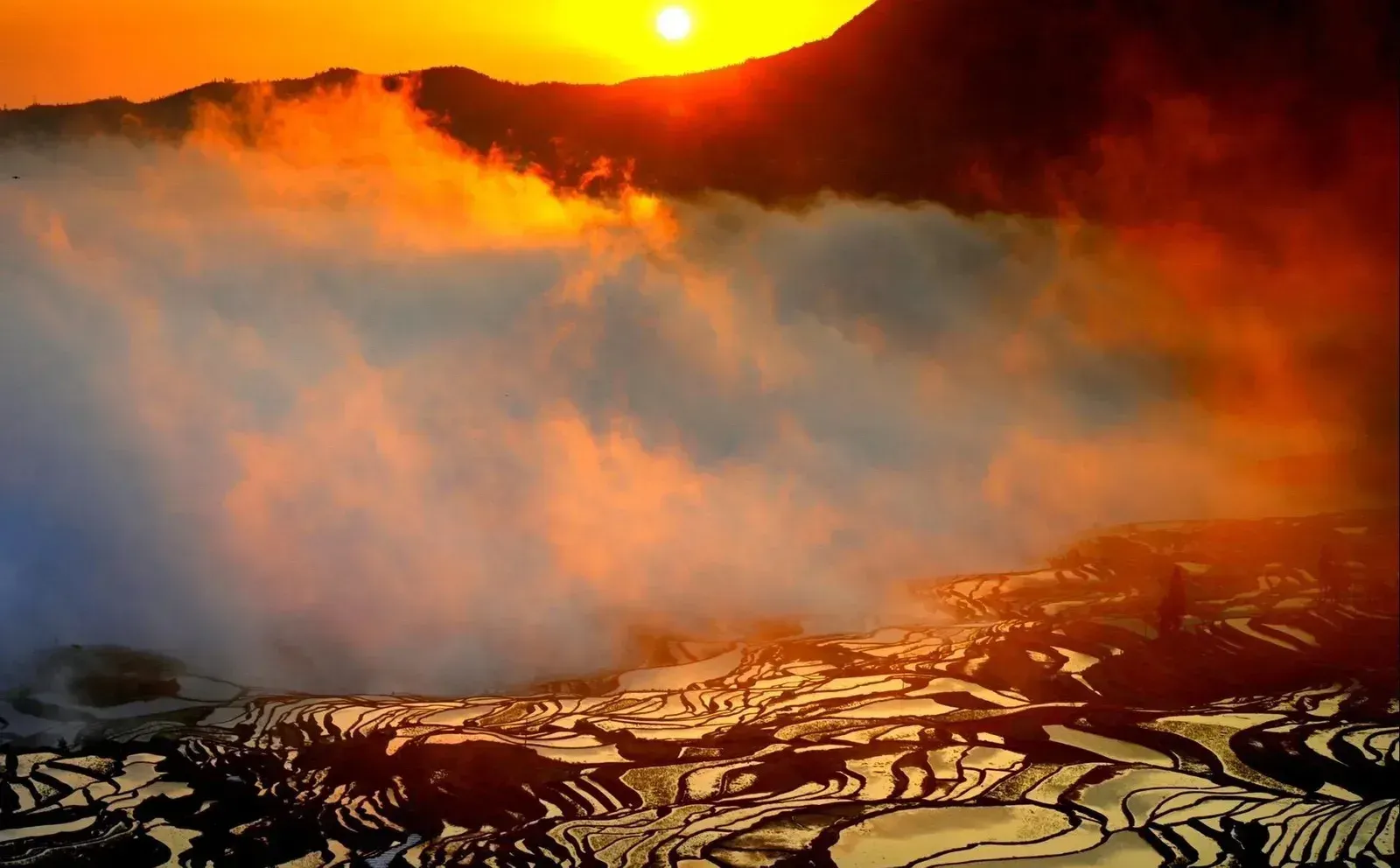
How to Choose Between Areas in Longji Terraces?
Longji Terraces are mainly divided into two large areas: the Jinkeng (Dazhai) Yao Terraces and the Ping'an Zhuang Terraces. The Jinkeng Dazhai Red Yao area includes three main viewpoints: West Hill Music (Xishan Shaole), Large-Scale Thousand-Layer Terraces (Dajie Qianceng Tianti), and Golden Buddha Peak (Jinfoding). Ping'an Terraces feature two core scenic spots: Nine Dragons and Five Tigers, and Seven Stars with the Moon.
The fields in both scenic areas spread across mountain ridges between 300 and 1,100 meters above sea level. You can choose based on the signature vistas you want to see. Jinkeng Dazhai is known for wide open views over thousands of layered terraces, while Ping'an Zhuang Terraces are known for the tighter curves of Nine Dragons and Five Tigers and Seven Stars with the Moon.
What to See at the Yuanyang Hani Terraces?
The core area of the Yuanyang Hani Terraces covers 16,603 hectares. The World Heritage property mainly includes three scenic areas: Bada, Duoyishu, and Laohuzui. According to topographical records from the World Heritage nomination, the Bada area has gentler slopes, Duoyishu is steeper, and Laohuzui is very steep.
The farming ecosystem here is distinctive. The Honghe Hani Terraces display an integrated four-part ecosystem connecting mountaintop forests, water systems, villages, and downhill terraces. The primary crop in Yuanyang is red rice, supported by a symbiotic farming system combining rice, ducks, fish, water buffalo, and river snails, with terraces climbing from riverbanks below 500 meters to misty mountain peaks above 1,800 meters.
What Conditions and Constraints Should Visitors Keep in Mind?
The appearance of the terraces is strictly shaped by farming cycles, and the scenery is not the same year-round. Golden rice waves are visible at Longji only from mid-to-late September to mid-November, disappearing as soon as harvesting finishes. Water-mirror reflections in Yuanyang appear only during the flooded period from November to late April, while the fields hold green rice during other months.
Terrain and working conditions along the fields are also important to understand before you set out. Because the ground is narrow, steep, and knee-deep with water, modern machines like tractors cannot work in Yuanyang. Farming still depends on water buffalo and traditional hand tools, leaving field ridges narrow and muddy. When heading to terraced areas with large drops in elevation, watch for slippery ground and steep stone steps.
Sources
Longsheng Rice Terraces - Wikipedia
Longji Rice Terraces - Baidu Baike
Cultural Landscape of Honghe Hani Rice Terraces - UNESCO World Heritage Centre
The marvel of China's multi-generational rice terraces - BBC Travel
The sources above were verified on November 5, 2026.
FAQ
How far are the Longji Terraces from downtown Guilin?
The Longji Terraces (also known as Longsheng Terraces) are located in Longji Town, Longsheng Autonomous County, Guangxi, about 100 km from Guilin.
Why are tractors still not used in the Yuanyang Terraces?
Because the terraces in Yuanyang are narrow, steep, and knee-deep with water, modern machines like tractors cannot enter the fields. The Hani people continue to rely on water buffalo and traditional hand tools for farming.
Which terraces might see snow in winter?
According to local seasonal records, Longji Terraces may be covered in snow from mid-to-late December to mid-February, while Yuanyang Terraces spend the winter filled with water, reflecting light like mirrors.
What core elements make up the Yuanyang Hani Terraces ecosystem?
The Honghe Hani Terraces show an integrated four-part ecosystem combining mountaintop forests, water systems, villages, and downhill terraces, where red rice is the primary crop alongside a symbiotic mix of rice, ducks, fish, water buffalo, and river snails.