
How to Visit Longyou Caves in Zhejiang: Highlights and Transit Guide for the Ancient Underground Caves
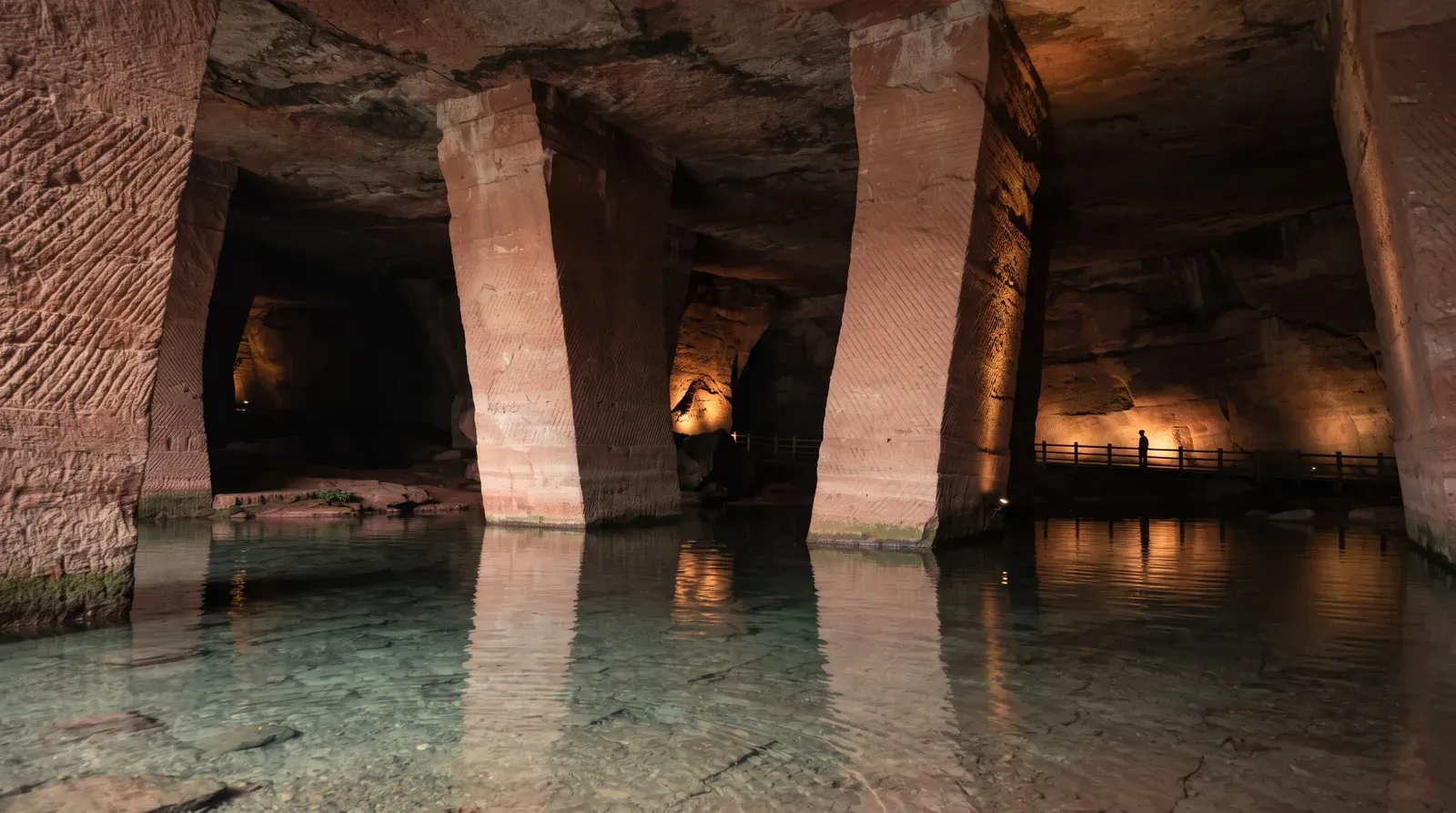
A visit to the Longyou Caves focuses on 5 underground caverns that have been drained and cleared of silt for visitors. The complex sits on Fenghuang Hill, 3 kilometers north of the Qu River in Longyou County. A total of 24 caves are spread across a 0.38-square-kilometer hill. The average floor area of a single cave exceeds 1,000 square meters, with ceiling heights reaching 30 meters. You can walk down into the red sandstone chambers to see regular parallel chisel marks and stone engineering structures.
How Many Caverns Are Open at the Longyou Caves?
According to records, 24 caverns are distributed across the 0.38-square-kilometer hill. The local area excavated 7 of them over time, but 2 flooded again from surface runoff. Currently, 5 caves have been drained and cleared of silt for public visits.
For generations, these underground structures remained flooded and were known locally as "bottomless ponds." On June 9, 1992, four local villagers, including Wu Anai, used four water pumps for 17 consecutive days to drain the water, revealing the underground cave complex.
| Engineering and Distribution Metric | Details and Specifications |
|---|---|
| Distribution area | 0.38 square kilometers |
| Total discovered caverns | 24 |
| Caverns drained, cleared, and open to visitors | 5 |
| Caverns reflooded by surface water | 2 |
| Average floor area per cavern (according to English Wikipedia) | Over 1,000 square meters |
| Ceiling height (according to English Wikipedia) | Up to 30 meters |
| Total area covered by the cave complex (according to English Wikipedia) | Over 30,000 square meters |
| Thickness of shared walls between adjacent caverns | Evenly maintained at 50 centimeters |
What Are the Key Sights and Engineering Mysteries Inside?
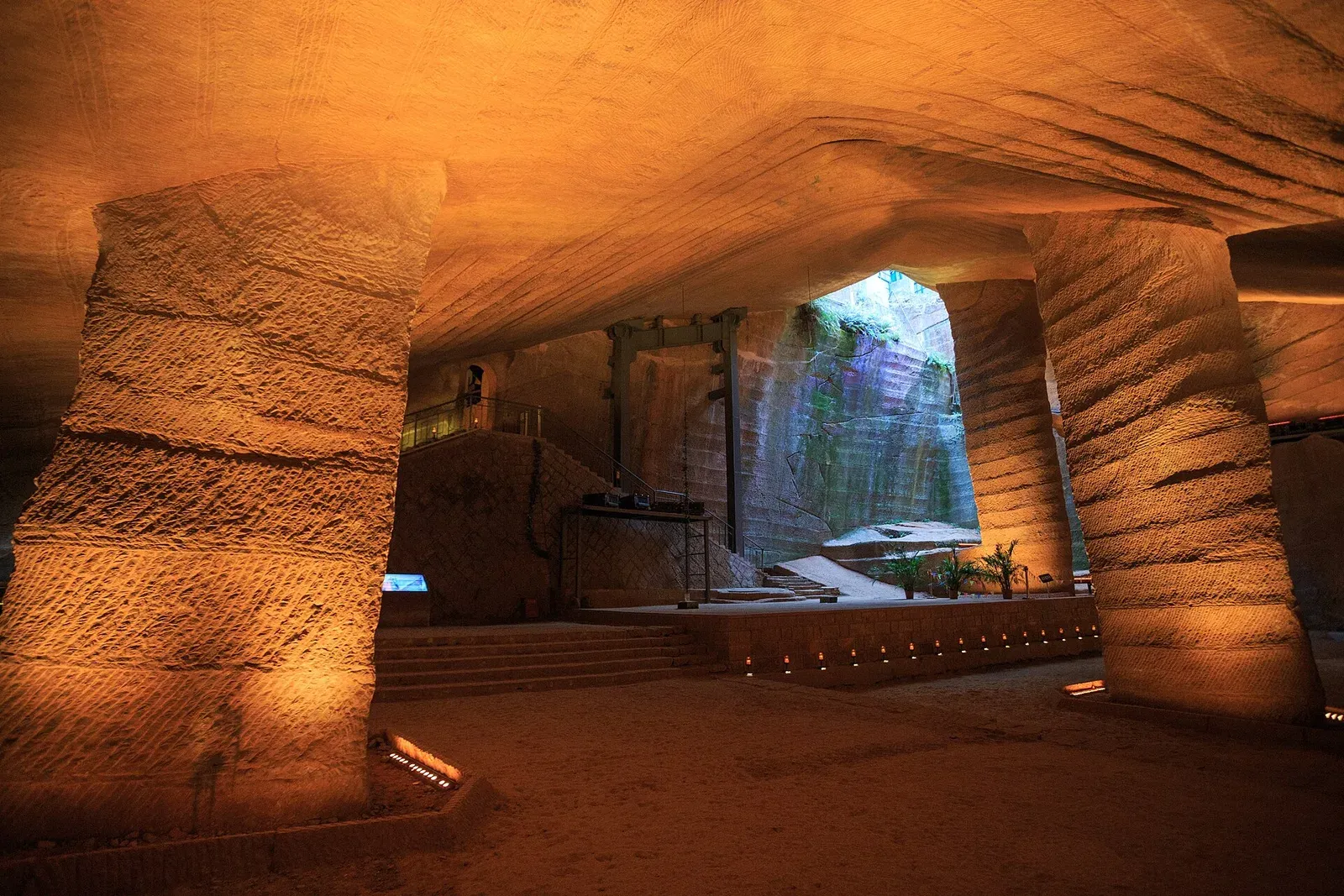
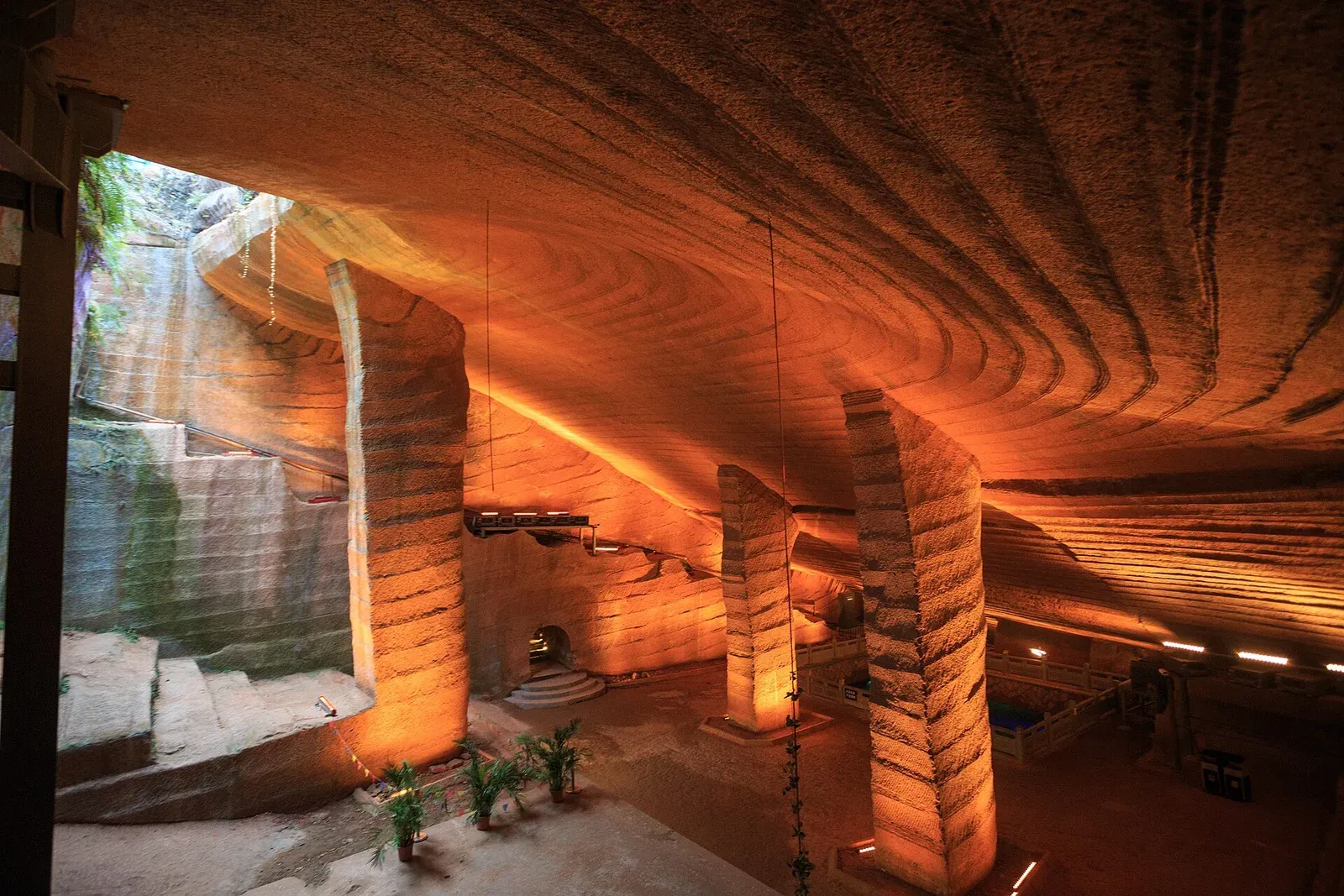
The caverns were carved out of red sandstone hills, and every chamber was designed with a vertical shaft entrance. As you enter, the stone staircase drops about one story from the opening. Inside, there are no soot marks or traces left by torch lighting.
The ceilings, walls, and pillars are covered with parallel bands about 60 centimeters wide, with chisel marks angled at about 60 degrees to the band axis. Many neighboring chambers share a single partition wall that stays evenly at 50 centimeters thick without breaking through.
Although the caverns sit close together with similar layouts, no horizontal passages connect them. Each cavern remains an isolated underground space, reflecting a distinctive ancient excavation pattern.
What Were the Caverns Used for in History?
Scholars have proposed different theories regarding the construction period and practical purpose of the site. After studying historical records, Dr. Chu Liangcai of Zhejiang University suggested a granary and depot theory dating to Emperor Xuan of Western Han. He proposed that the chambers were first built to store grain, goods, and military weapons, and were later known as the North Changping Granary during the Sui Dynasty.
Yang Hongxun, a researcher at the Institute of Archaeology of the Chinese Academy of Social Sciences, suggested another view. He proposed that King Goujian of Yue might have excavated the chambers as a covert underground garrison to station troops and rebuild his state.
These conclusions are academic hypotheses based on historical records and site features. The exact historical background of the excavation remains open to debate.
How to Plan High-Speed Rail and Local Transit to the Caves
The site sits in the Jinhua-Quzhou Basin on Fenghuang Hill, 3 kilometers north of the Qu River in Longyou County, near the confluence of the Qu and Lingshan rivers in the Qiantang River basin. If you travel by train, Longyou County has Longyou Railway Station and Longyou South Railway Station, served by the Shanghai-Kunming High-Speed Railway, the Shanghai-Kunming Railway, and the Quzhou-Ningde Railway, making it fast to reach by high-speed train.
After arriving in Longyou County, you can take a taxi to the scenic area. According to taxi rate standards in Quzhou and surrounding areas, the base fare is 10 yuan for the first 2.5 kilometers, plus 2.5 yuan per kilometer beyond 2.5 kilometers. Trips exceeding 8 kilometers one-way incur a 50% surcharge, and night trips incur a 20% surcharge.
| Pricing Rule | Taxi Fare Standards in Quzhou and Nearby Areas |
|---|---|
| Base fare | 10 yuan for 2.5 kilometers |
| Distance fare | 2.5 yuan per kilometer beyond 2.5 kilometers |
| One-way distance over 8 kilometers | 50% surcharge |
| Nighttime service | 20% surcharge |
Nearby Attractions and Local Food Around Longyou
The site was named a national 4A-level scenic area in December 2003, making it the first 4A attraction in Quzhou, and was listed in the seventh batch of Major Historical and Cultural Sites Protected at the National Level in May 2013. Around the county seat, you can also visit the Jimingshan Ancient Residential Garden, a relocated preservation complex of ancient homes, and the national 4A-level Rosewood Town, which can easily be combined into a one-day trip.
Longyou County has a subtropical monsoon climate with an annual average temperature of 17.4°C and four distinct seasons. Summers are hot and rainy, while spring and autumn are mild and comfortable. During your visit, you can try local National Geographical Indication agricultural products such as Longyou steamed sponge cake (fagao), Longyou chili peppers, Longyou selenium-rich white lotus seeds, and Longyou yellow tea.
Quzhou's regional flavors feature the spicy signature "Three Heads and One Palm" (duck head, rabbit head, fish head, and duck palm), along with traditional refreshing treats like mint crystal cake and Shaoyongfeng sesame cakes.
Sources
Longyou Caves - Wikipedia
Longyou Caves - Wikipedia
Longyou County - Wikipedia
Quzhou - Wikipedia
Sources verified on November 17, 2026
FAQ
How were the Longyou Caves discovered?
The site was long submerged in water and known locally as "bottomless ponds." On June 9, 1992, four villagers, including Wu Anai, used four water pumps for 17 straight days to drain the water, uncovering the underground complex.
How many caverns are currently open to visitors?
Out of 24 caverns scattered across a 0.38-square-kilometer hill, 7 were initially excavated. Two flooded again from surface runoff, leaving 5 caverns drained, cleared of silt, and open to the public.
Which railway station should I use when arriving by high-speed train?
Longyou County is served by Longyou Railway Station and Longyou South Railway Station along the Shanghai-Kunming High-Speed Railway, Shanghai-Kunming Railway, and Quzhou-Ningde Railway, offering quick rail access.
Where exactly are the Longyou Caves located?
The caverns are situated in the Jinhua-Quzhou Basin on Fenghuang Hill, 3 kilometers north of the Qu River in Longyou County, near the confluence of the Qu and Lingshan rivers in the Qiantang River basin.